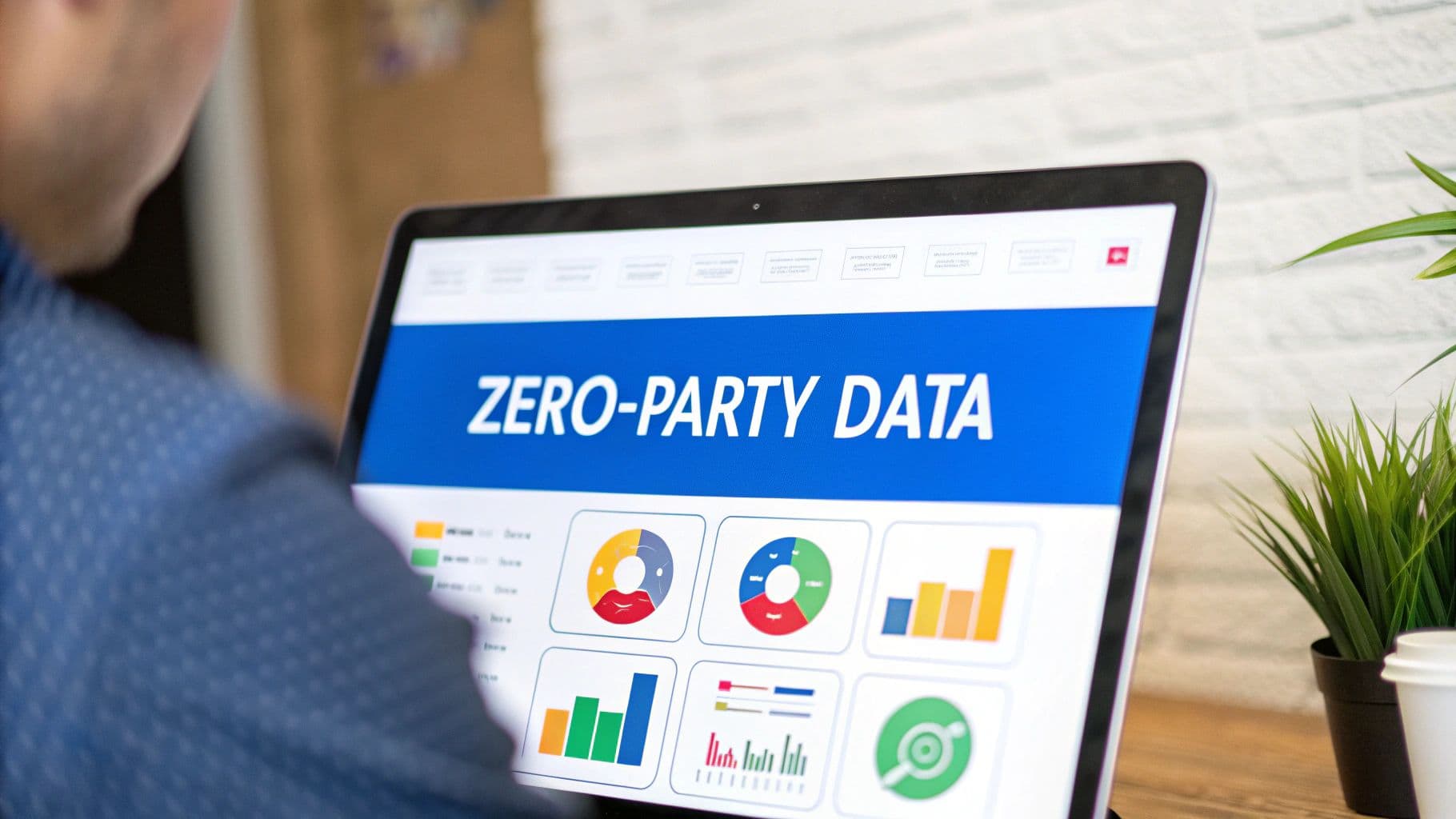
Think of zero-party data as the information your customers willingly and intentionally hand over to you. It’s the difference between secretly listening in on a conversation (like with third-party data) and having a genuine, one-on-one chat with your audience.
The End of Cookies and the Dawn of Direct Data
The digital marketing world is in the middle of a major shake-up. For years, we all leaned heavily on third-party cookies—those little bits of code that followed users around the web—to piece together a picture of customer behavior. But that era is officially over.
As the big browsers pull the plug on these trackers, the old playbook of "borrowing" data from other sources is going extinct. This leaves a huge gap for marketers who still need to create personal experiences and figure out if their campaigns are actually working. To get the full story on this shift, check out our guide on saying goodbye to third-party cookies.
This isn't just a technical hurdle; it's a push toward being more open and honest about how we get customer insights. Instead of guessing what people want based on their digital footprints, the new standard is simple: just ask them. This is exactly where zero-party data steps into the spotlight.
A New Foundation Built on Trust
The term itself was brought into the mainstream by Forrester Research, which describes it as data a customer proactively shares—things like what they plan to buy, their communication preferences, or what they're looking for in a product. It's not inferred from their behavior (like first-party data); it's given freely. For another perspective, you can find more on this concept on Qualtrics.com.
This explicit, consent-based approach makes it the gold standard in a privacy-first, post-cookie world.
When you collect zero-party data, you're not just gathering intel. You're building a marketing strategy on a foundation of transparency and mutual respect. It’s a fundamental shift from tracking users to collaborating with them.
This direct line of communication with your customers is incredibly powerful. Here’s why:
- Unmatched Accuracy: The information comes straight from the source. No more guesswork.
- Enhanced Personalization: You can create experiences that are genuinely relevant because they’re based on what people have told you they want.
- Stronger Customer Relationships: Asking for and using this data thoughtfully builds incredible trust and loyalty.
At the end of the day, this isn't just about adapting to new technology. It’s a chance to build more authentic, effective, and lasting relationships with the people who matter most—your customers.
Understanding the Full Spectrum of Customer Data
To really understand why zero-party data is such a big deal, you have to see where it fits in the grand scheme of things. Customer data isn't just one monolithic block; it’s a spectrum that runs from vague, anonymous signals to deeply personal, explicit information. Each type gives you a different level of insight and requires a different level of trust with your customer.
Think of it like getting to know someone. Third-party data is like hearing a rumor about them from a complete stranger. It’s secondhand, often wrong, and you have no idea where it originally came from. Second-party data is a bit better—it’s like getting a tip from a mutual acquaintance. The information is probably more reliable, but it’s still not coming directly from the source.
Then there’s first-party data, which is like observing someone's behavior from across the room. You can see what they do—which products they look at, what they put in their cart, which emails they open. It’s incredibly useful, but you're still making educated guesses about what they actually want. If you want a full breakdown, we cover all the details in our guide on what is first-party data.
This is where zero-party data changes the game. It’s like walking up and starting a conversation. You just ask them what they’re looking for.
This diagram shows how these data types stack up, with zero-party data sitting at the very top of the pyramid—the most valuable because it comes straight from the customer.
 What Is Zero Party Data and How Does It Reshape Marketing
As you can see, there's a clear hierarchy. The closer you get to the customer, the more consent, trust, and value you unlock.
Comparing Different Customer Data Types
Let’s break down exactly what makes each data type different. The table below outlines the four main categories, highlighting where the data comes from, the level of user consent involved, and a common example of how it’s used.
Customer data can be grouped into several categories based on how it is collected and the level of consent involved. Zero-party data is information that customers deliberately and proactively share with a brand. This type of data is provided with explicit consent, as users intentionally supply it in exchange for value, such as completing a quiz to receive personalized product recommendations.
First-party data is collected directly through a customer’s interactions with your brand, including your website, app, or owned platforms. Consent is generally implicit, since the user agrees to data collection by choosing to engage with your experience. An example of first-party data is tracking which pages a visitor views on an e-commerce site to understand browsing behavior.
Second-party data refers to another company’s first-party data that is shared or purchased through a partnership. Consent is indirect, because while the original company collected the data with user permission, that consent was not explicitly given to you. A common example is an airline sharing customer flight data with a partner hotel chain to support joint marketing efforts.
Third-party data is aggregated from multiple sources by external data brokers and sold to businesses. This data typically involves no direct consent or relationship between the user and the data collector. For example, a data broker might sell a list of “new homeowners” to a furniture retailer without those individuals knowingly providing their information for that purpose.
The key takeaway is simple: as you move from third-party to zero-party data, you trade ambiguity and scale for accuracy and trust.
Why This Matters for Marketers
Each data type plays a role, but they are far from equal, especially in an era where privacy and accuracy are paramount.
Zero-party data cuts through all the guesswork. Instead of asking, "What did this person do?" it lets you ask, "What does this person want?" It’s the difference between watching a shopper wander through your store and having them walk up and hand you their shopping list.
This direct approach takes the inference out of marketing. You’re no longer just observing—you're collaborating with your customer. By simply asking, you can gather incredibly precise, actionable information about their purchase intent, personal preferences, and how they want you to communicate with them.
And the best part? It’s all done with their full consent and cooperation. This is the foundation for building real, authentic relationships with customers who feel seen and understood.
How to Collect Zero-Party Data by Offering Real Value
Let's be honest: customers are savvy. They understand their personal information is a valuable asset, and they aren't just going to hand it over for nothing. If you want to gather meaningful zero-party data, you have to move past simply asking for it. You need to create a clear, compelling value exchange.
Think of it as a transaction where everyone wins. This isn't about pulling a fast one on people to get their data. It's about being genuinely useful. When you offer something tangible in return for their input, the whole dynamic shifts from an intrusive ask to a helpful conversation. You get the insights you need to serve them better, and they get a more personalized, relevant experience.
 What Is Zero Party Data and How Does It Reshape Marketing
Create Engaging Collection Methods
The secret is to weave your questions into interactive tools that feel more like a helpful service and less like a boring survey. Instead of a generic popup asking about their "preferences," build experiences that give them something valuable right away. When you get this right, these tools become some of your most powerful conversion assets.
Here are a few of the most effective ways to collect zero-party data through a fair value exchange:
- Interactive Quizzes: These are fantastic for steering customers to the perfect product. A skincare brand could ask, "What are your top skin concerns?" to build a custom routine. A coffee subscription box might use a quiz to match a customer with their ideal roast. The customer gets an expert recommendation, and you learn exactly what they need.
- Guided Product Finders: Much like quizzes, these tools help people cut through the noise of a large product catalog. By asking a few simple questions—about style, budget, or how they plan to use the product—you can instantly serve up a curated selection. This takes the guesswork out of shopping for the customer while giving you crystal-clear data on their purchase intent.
- Preference Centers: Stop guessing and let customers tell you exactly how they want to hear from you. A simple preference center in their account dashboard can let them choose email frequency, the topics they care about (like "new arrivals" or "sale alerts"), and their favorite way to be contacted. Giving them this control is a huge trust-builder and keeps your engagement rates healthy. To learn more, check out our guide on building smart interactive web forms.
The Win-Win Scenario
Every one of these methods is built on a simple premise: you give first, then you get. The data you collect is a natural outcome of a positive brand interaction, not the entire point of it. This isn't just a more effective way to operate; it builds a healthier, more transparent relationship with your audience.
By putting the customer's needs first, you create a situation where they want to share information with you. The data becomes a tool for mutual benefit—they get a better experience, and you get the insights needed to deliver it.
Let's break down what this exchange looks like in the real world:
Customer ActionCustomer Benefit (Value)Business Benefit (Data)Answers a style quizPersonalized outfit recommendationsStyle preferences, size, budgetCompletes a "pet profile"Tailored pet food suggestionsPet's age, breed, dietary needsFills out a post-purchase surveyA 15% discount on their next orderProduct feedback, satisfaction level
This approach feels helpful, not creepy. By framing data collection as a service, you encourage people to participate and end up with high-quality, actionable insights you can use to improve everything from your ad targeting to your email marketing.
Using Zero-Party Data to Power Personalization
Once you’ve collected all this great information directly from your customers, the real fun begins. Gathering zero-party data is just the first step; the magic happens when you use those direct insights to create a genuinely better, more relevant customer experience. It’s all about translating what people tell you they want into tangible actions that build trust and drive results.
This is where you shift from generic, one-size-fits-all marketing to a dynamic, one-to-one conversation. Instead of showing everyone the same homepage, you can feature products that align with a user’s stated interests. Instead of blasting your entire email list with the same promotion, you can send targeted offers that feel like they were made just for them.
 What Is Zero Party Data and How Does It Reshape Marketing
From Raw Data to Real Results
Turning customer preferences into personalized campaigns doesn't have to be complicated. The key is to connect the data you collect directly to your marketing channels. Think of each piece of information a customer gives you as a clear signal that can trigger a more tailored interaction.
Here are a few practical examples of how this looks in the real world:
- Quiz Results to Tailored Emails: A customer completes your "Find Your Perfect Skincare Routine" quiz and identifies "dry skin" as their main concern. That answer can automatically segment them into a specific email flow. Now, their welcome series can feature hydrating products, skincare tips for dry skin, and testimonials from customers with similar needs.
- Purchase Intent to Dynamic Website Content: A visitor uses your guided product finder and indicates they're shopping for a "men's wedding suit." The next time they visit your homepage, why not have the hero banner showcase your wedding collection instead of general new arrivals? This simple change makes your site feel instantly more relevant and helpful.
- Stated Interests to Curated Product Recommendations: In their preference center, a user selects "hiking" and "camping" as their favorite activities. Your product recommendation engine can now prioritize hiking boots, tents, and outdoor gear across your site and in retargeting ads, rather than just showing them random best-sellers.
To deliver these kinds of experiences, you need to get good at audience segmentation. If you want to dive deeper, you can explore more about what email segmentation is and how it powers these strategies.
Enriching Marketing Attribution with Clear Signals
Beyond just personalization, zero-party data provides critical context that makes your marketing attribution so much smarter. Most attribution models rely on behavioral signals—clicks, page views, and conversions. These are useful, but they don't tell the full story. Zero-party data adds the "why" behind the "what."
For example, a customer might tell you in a survey that they are "just browsing for a gift" or that their budget is "under $50." This explicit information is a goldmine for attribution platforms like Cometly. It helps you understand the true intent behind a user's actions and more accurately measure the impact of your marketing. By mapping out these explicit signals, you can build a much more complete picture with a customer journey builder.
When a customer tells you they found out about your brand from a friend's recommendation, that's a zero-party data point that fills a massive gap in your attribution. It confirms the value of word-of-mouth marketing in a way that click tracking never could.
This deeper context allows you to make more confident decisions about where to invest your marketing budget. Well-designed quizzes and surveys can achieve completion rates of 20%–60%, and using these insights can lift campaign performance by 10% to 40% compared to using inferred signals alone. By combining what customers tell you with what they do, you get a much clearer, more accurate view of what’s truly driving your growth.
Building Trust and Ensuring Compliance with Zero-Party Data
Switching to a zero-party data strategy is about a whole lot more than just getting better marketing results—it's a fundamental shift in how you do business. The entire approach is built on a foundation of transparency, which helps you tackle two of the biggest headaches for any modern brand: earning real customer trust and navigating the maze of privacy regulations.
Let's be honest, people are more skeptical than ever about how their data is being used. When you're upfront about the information you're asking for and offer something valuable in return, you completely change the conversation. You're no longer a company snooping in the background; you're a partner helping them find exactly what they're looking for.
This straightforward exchange is what builds genuine loyalty. By putting customers in the driver's seat, you're showing them you respect their privacy, and that makes your brand stand out as one they can trust.
Simplifying Regulatory Compliance
Beyond just fostering better relationships, focusing on zero-party data makes life so much easier when it comes to compliance. Think about major regulations like GDPR in Europe or CCPA in California—they're all about giving people rights over their own information, and the fines for getting it wrong can be crippling.
The beautiful thing about zero-party data is that it’s given to you explicitly and voluntarily. The consent is already baked right in, which is exactly what regulators want to see.
By collecting data directly from the source with a clear purpose, you sidestep so many of the legal risks that come with the murky, inferred consent tied to first- and third-party data.
This reality check is a huge reason why so many companies are making the switch. As browsers kill off third-party cookies and privacy laws get stricter, businesses are rightly shifting their budgets away from buying data and toward collecting it themselves. Analysts often call zero-party data a "privacy-first" signal because it’s provided with clear customer intent, lowering your regulatory risk, a point well-covered in this article on Braze.com.
A Sustainable Foundation for the Future
Adopting this strategy is really about future-proofing your business. It lines up your marketing efforts with what customers actually want and where global privacy laws are headed. That alignment creates a data foundation that's not just more ethical, but far more sustainable.
Here’s how it strengthens your brand in the long run:
- Enhanced Reputation: You earn a name as a company that truly respects its customers.
- Reduced Risk: The clear consent model keeps you out of hot water with regulators.
- Stronger Loyalty: Customers who feel respected and in control stick around.
Ultimately, investing in zero-party data isn't just a defensive play against new rules. It’s a proactive move to build a brand that's more resilient and genuinely trusted. To dive deeper into ethical data practices and stay on the right side of the rules, a good GDPR email compliance guide is a great resource. And if you'd like to see how we put these principles into practice at Cometly, feel free to review our privacy policy.
Got Questions About Zero-Party Data? We’ve Got Answers.
Jumping into a zero-party data strategy can feel like a huge shift, but it doesn’t have to be overwhelming. Most marketers ask the same questions when they're just getting started. We’ll tackle the most common ones here, giving you practical answers to help you get moving with confidence.
We'll cover everything from taking those first small steps to proving your efforts are paying off and keeping your customers happy to share their information.
How Do I Start Without Overhauling Everything?
You don't need to build a massive, complicated system right out of the gate. The smartest way to begin is by picking one high-impact initiative that gives customers something valuable in return for their input. Choose a single, clear goal and build a simple experience around it.
For instance, instead of redesigning your entire website, try one of these:
- Add a post-purchase survey. After a customer completes a purchase, ask them one simple question: "What was the main reason you chose us today?" As a thank you, offer a 10% discount on their next order. This simple step gives you a direct line into what motivates your buyers.
- Launch a simple product finder quiz. If you have a deep product catalog, a basic three-question quiz on your most popular category page can work wonders. You'll guide shoppers to the perfect product while learning exactly what they need.
- Tweak your email signup form. Add just one optional field to your newsletter signup, asking, "What are you most interested in?" with a few pre-set choices. Just like that, you can start sending more relevant content to your newest subscribers.
The goal here is to score a quick, manageable win. You get to test the waters, collect your first batch of valuable data, and show everyone internally how powerful this approach can be before you go bigger.
How Do I Actually Measure the ROI on This?
Measuring the return on investment for your zero-party data efforts is all about connecting those insights to your core business metrics. It's not enough to just collect the data; you have to prove it's driving better results.
To do this right, you need to link your data collection directly to performance.
The biggest mistake people make is treating data collection as a standalone project. It’s not. Think of it as fuel for your conversion and personalization efforts. When you do that, the ROI becomes crystal clear in your performance metrics.
Here are a few specific metrics you should be tracking:
- Lift in Conversion Rate: Compare the conversion rates of visitors who interact with your zero-party data experiences (like a quiz) against those who don't. A higher conversion rate for the engaged group is pure ROI.
- Increase in Average Order Value (AOV): Are you using the preference data you've gathered to recommend relevant upsells or bundles? If so, track whether it leads to customers spending more each time they buy.
- Higher Email Engagement: Look at the open and click-through rates for segmented email campaigns that are powered by zero-party data. If they're outperforming your generic email blasts, you know the data is creating more relevance.
- Better Ad Performance: When you use zero-party data to build sharper lookalike audiences or smarter retargeting segments, it should result in a lower cost per acquisition (CPA).
By tying your efforts to these tangible business outcomes, you can easily show the financial impact of building a marketing strategy around what your customers willingly share with you.
At Cometly, we help you connect these valuable zero-party signals to your attribution data, giving you a complete picture of what’s driving revenue. Our platform makes it easy to see how customer-provided insights directly impact your campaign performance and ROI. Discover how to get a clearer view of your marketing.