Accurate conversion tracking has become one of the most critical challenges facing digital marketers in 2026. Between iOS App Tracking Transparency restrictions, ongoing third-party cookie deprecation, and increasingly complex cross-device customer journeys, traditional pixel-based tracking methods are leaving marketers with incomplete data and blind spots. The result? Wasted ad spend on campaigns that appear to perform well but don't actually drive revenue, while genuinely effective strategies get overlooked because their contributions go untracked.
Here's the reality: your conversion data is only as good as your tracking infrastructure. When your tracking is incomplete or inaccurate, every decision you make—from budget allocation to creative testing to audience targeting—is based on flawed information. You're essentially flying blind, hoping your campaigns work rather than knowing they do.
The good news? Modern tracking solutions have evolved to address these challenges. Server-side tracking, CRM integration, and sophisticated attribution models now make it possible to capture the complete customer journey with accuracy that browser-based tracking alone can't match. But implementing these solutions requires following proven best practices that ensure data quality, consistency, and actionability.
In this guide, we'll walk through eight essential best practices for tracking conversions accurately in today's privacy-first landscape. These strategies will help you build a tracking foundation that captures every touchpoint, connects marketing activity to actual revenue, and gives you the confidence to scale your winning campaigns. Whether you're running a small business or managing millions in ad spend, these practices will transform how you measure and optimize your marketing performance.
1. Implement Server-Side Tracking as Your Foundation
The Challenge It Solves
Browser-based tracking pixels face significant limitations in 2026. Ad blockers prevent pixels from firing, iOS privacy features restrict data collection, and browser updates continue to limit third-party cookies. These restrictions create data gaps that make your conversion reports incomplete and unreliable. When 30-40% of your conversions go untracked because they happen on iOS devices or through browsers with strict privacy settings, you can't make informed optimization decisions.
The Strategy Explained
Server-side tracking moves conversion data collection from the user's browser to your server infrastructure. When a conversion happens, your server sends the event directly to ad platforms and analytics tools, completely bypassing browser restrictions. This approach captures first-party data at the source, ensuring that conversions are recorded regardless of the user's device, browser settings, or ad blocker usage.
Think of it like this: browser-based tracking is like asking someone to deliver a message through a crowded, noisy room where half the people might not pass it along. Server-side tracking is like making a direct phone call—the message gets through every time, without interference or loss.
The technical implementation involves setting up tracking endpoints on your server that receive conversion events, then forwarding those events to your ad platforms through their Conversion APIs. This creates a reliable, persistent connection that isn't subject to client-side limitations.
Implementation Steps
1. Set up server-side tracking infrastructure either through your development team or using a platform that handles the technical complexity for you.
2. Configure Conversion API integrations with your primary ad platforms like Meta (CAPI) and Google (Enhanced Conversions) to receive server-side events.
3. Implement event forwarding from your server to ad platforms whenever conversions occur, ensuring all relevant conversion data including value, customer information, and source attribution is included.
4. Run parallel tracking with both browser pixels and server-side implementation initially to validate data accuracy and catch any discrepancies before fully transitioning.
Pro Tips
Don't completely abandon browser-based tracking—use a hybrid approach where server-side tracking serves as your primary data source while browser pixels provide backup and additional context. This redundancy ensures maximum data capture. Also, prioritize implementing server-side tracking for your highest-value conversion events first, then expand to secondary events as you validate the setup.
2. Define and Standardize Your Conversion Events
The Challenge It Solves
Inconsistent conversion naming and unclear event definitions create chaos in your analytics. When your team tracks "purchase" in one platform, "completed_order" in another, and "sale" in a third, you can't accurately compare performance or aggregate data. Even worse, when conversion definitions vary—like one platform counting abandoned cart recoveries as new purchases while another doesn't—your reports become unreliable and your optimization decisions suffer.
The Strategy Explained
Creating a documented conversion taxonomy means establishing clear definitions for every conversion event you track, standardized naming conventions across all platforms, and explicit rules for how events should be counted and deduplicated. This documentation becomes your single source of truth that ensures everyone on your team—and every platform you use—speaks the same language about conversions.
Your conversion taxonomy should define primary events like purchases and leads, but also micro-conversions like email signups, demo requests, and content downloads. Each event needs a clear definition of what qualifies, what data should be captured, and how it should be named across different platforms.
The real power comes from deduplication rules. When a customer completes a purchase, you might fire conversion events from your website pixel, your server, and your CRM. Without deduplication logic, that single purchase gets counted three times, inflating your conversion numbers and making your ROAS calculations meaningless.
Implementation Steps
1. Document every conversion event you currently track or plan to track, including the business definition, when it should fire, and what data it should include.
2. Create a standardized naming convention using a consistent format like "event_type_descriptor" (e.g., "conversion_purchase_completed", "lead_demo_requested") and apply it across all platforms.
3. Establish deduplication rules that specify which data source takes priority when the same conversion is reported multiple times, typically prioritizing server-side events over browser pixels.
4. Share this documentation with your entire marketing team and development team, making it easily accessible and requiring all new tracking implementations to follow the established standards.
Pro Tips
Include conversion value tiers in your taxonomy. Not all purchases or leads are equal—a $50 purchase should be tracked differently from a $5,000 purchase so your ad platforms can optimize for high-value conversions. Also, review and update your taxonomy quarterly as your business evolves and new conversion types become relevant.
3. Connect Your Ad Platforms to Your CRM
The Challenge It Solves
Ad platforms optimize based on the conversion data they receive, but they can't see what happens after the initial conversion. When a lead you marked as "converted" turns into a $50,000 customer three months later, your ad platform has no idea. It treats that high-value customer the same as someone who filled out a form and never responded. This disconnect means ad algorithms optimize for volume rather than quality, driving leads that look good initially but don't convert to revenue.
The Strategy Explained
CRM integration closes the loop between marketing activity and actual business outcomes by syncing revenue events, customer lifecycle stages, and deal values back to your ad platforms. When a lead becomes a qualified opportunity, closes as a customer, or generates repeat revenue, that information flows back to Meta, Google, and other platforms so their algorithms understand the true value of different audience segments and traffic sources.
This creates a feedback loop that dramatically improves ad platform optimization. Instead of optimizing for "form submissions," the algorithm learns to optimize for "form submissions that turn into customers." Over time, your campaigns naturally shift toward audiences and creative approaches that drive actual revenue, not just surface-level conversions.
If you're evaluating vendors, our AI UGC generator breakdown can help.
The integration also enables powerful analysis. You can compare which campaigns drive the highest customer lifetime value, which audiences have the best conversion-to-customer rates, and which channels contribute to deals that actually close.
Implementation Steps
1. Map your CRM lifecycle stages to conversion events that matter for your business, such as "marketing qualified lead," "sales qualified opportunity," "closed won," and "repeat purchase."
2. Set up automated syncs that send these CRM events back to your ad platforms as offline conversions, including revenue values and customer identifiers that match the original ad click data.
3. Configure your ad platform conversion optimization to prioritize these downstream CRM events rather than just initial form submissions or clicks.
4. Create custom audiences in your ad platforms based on CRM segments like "high-value customers" or "closed deals" to inform lookalike targeting and exclusion strategies.
Pro Tips
Don't wait until deals close to sync data back to ad platforms. Send intermediate conversion events like "opportunity created" or "demo completed" so the algorithms get faster feedback signals. Also, include negative signals—when leads are marked as unqualified or deals are lost, send that information back so platforms learn to avoid similar audiences.
4. Use UTM Parameters Consistently Across All Campaigns
The Challenge It Solves
Without consistent UTM parameters, you lose the ability to accurately attribute conversions to specific campaigns, ad sets, or even individual ads. When your team uses different UTM structures—or forgets to add them entirely—your analytics tools can't tell which marketing efforts are actually driving results. You end up with conversions attributed to "direct traffic" or generic campaign names that don't provide actionable insights for optimization.
The Strategy Explained
UTM parameters are tags you add to your campaign URLs that carry attribution information through the entire customer journey. When implemented consistently, they create a reliable attribution trail from initial click through conversion, regardless of how many sessions or touchpoints happen in between. The five standard UTM parameters—source, medium, campaign, term, and content—work together to provide granular visibility into exactly which marketing activities drive conversions.
If you're evaluating vendors, our AI UGC content generator breakdown can help.
The key is consistency. When everyone on your team follows the same UTM framework, your analytics tools can automatically group and compare performance across campaigns. You can instantly see which ad creative variations perform best, which audience segments convert most efficiently, and which campaigns justify increased budget.
Think of UTM parameters as the metadata that travels with every click. Without them, you're tracking anonymous traffic. With them, you're tracking attributable customer journeys that reveal exactly what's working and what's not.
Implementation Steps
1. Create a UTM naming convention document that specifies exactly how each parameter should be formatted, including capitalization rules, separator characters, and approved values for each field.
2. Build a UTM parameter generator spreadsheet or use a URL builder tool that enforces your naming conventions and prevents manual errors when team members create campaign links.
We compare the leading options in our AI UGC ad generator roundup.
3. Establish a review process where all campaign URLs are validated before launch to ensure UTM parameters are present, properly formatted, and consistent with your standards.
4. Set up automated alerts in your analytics platform to flag traffic sources without UTM parameters or with non-standard parameter formats so you can catch and fix issues quickly.
Pro Tips
Use the utm_content parameter to test ad variations at a granular level—include creative format, headline variations, or CTA types so you can identify exactly which elements drive performance. Also, avoid using spaces or special characters in UTM values; stick to lowercase letters, numbers, and underscores to prevent tracking breaks from URL encoding issues.
5. Track the Complete Customer Journey, Not Just Last Click
The Challenge It Solves
Last-click attribution gives 100% credit to the final touchpoint before conversion, completely ignoring all the marketing efforts that introduced the customer to your brand, nurtured their interest, and built trust over time. This creates a distorted view where bottom-funnel tactics like retargeting and branded search appear incredibly effective while top-funnel awareness campaigns that actually initiated the customer journey get zero credit. The result? You systematically underinvest in channels that drive new customer acquisition and overinvest in channels that simply capture existing demand.
The Strategy Explained
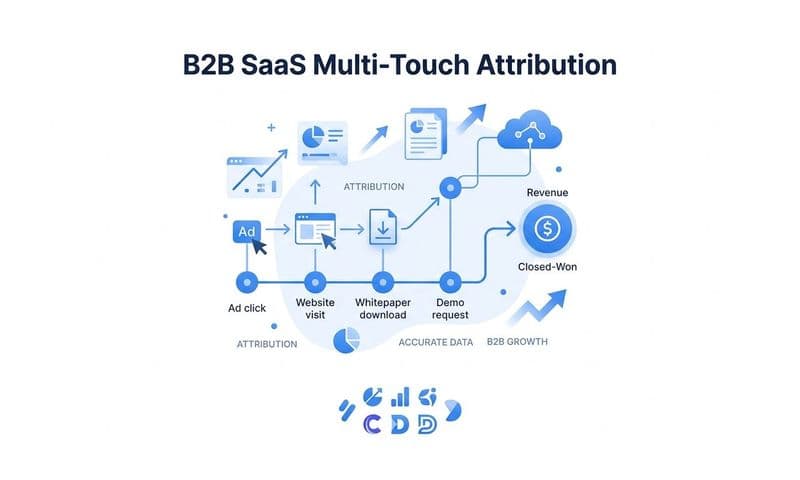
Multi-touch attribution distributes conversion credit across all the touchpoints in a customer's journey, revealing how channels work together to drive conversions. Instead of giving 100% credit to the last click, you can see that a customer first discovered you through a Facebook ad, researched via organic search, engaged with your email campaign, and finally converted through a retargeting ad. Each channel played a role, and multi-touch attribution quantifies that contribution.
Different attribution models distribute credit in different ways. Linear attribution splits credit evenly across all touchpoints. Time-decay gives more credit to recent interactions. Position-based (U-shaped) emphasizes the first and last touchpoints while still crediting middle interactions. The right model depends on your business and sales cycle, but any multi-touch model provides more accurate insights than last-click alone.
Understanding the complete journey transforms how you allocate budget. You'll discover that channels you thought were underperforming actually play crucial roles early in the customer journey. You'll identify channel combinations that work synergistically. And you'll make smarter decisions about where to invest for sustainable growth.
Implementation Steps
1. Implement cross-channel tracking that captures and stores every touchpoint in a customer's journey, from first anonymous visit through conversion and beyond.
2. Choose attribution models that align with your business reality—if you have a long sales cycle, time-decay or position-based models often provide more actionable insights than linear attribution.
3. Compare different attribution models side-by-side to understand how credit distribution changes and identify channels that are systematically over-credited or under-credited in last-click reporting.
4. Use multi-touch attribution insights to rebalance budget allocation, typically shifting some investment toward top-funnel channels that drive new customer acquisition but get minimal last-click credit.
Pro Tips
Don't abandon last-click attribution entirely—use it alongside multi-touch models to get a complete picture. Last-click shows you what's closing deals right now, while multi-touch reveals what's building your pipeline for future conversions. Also, segment your attribution analysis by customer value—high-value customers often have different journey patterns than low-value ones, and optimizing for both requires different strategies.
6. Validate Tracking Accuracy with Regular Audits
The Challenge It Solves
Tracking implementations break silently. A website redesign removes a tracking script. A platform update changes how events are processed. A developer accidentally overwrites a conversion tag. These failures don't trigger obvious errors—they just quietly stop recording conversions, and you don't realize it until you've wasted weeks of ad spend optimizing based on incomplete data. By the time you notice the discrepancy between reported conversions and actual sales, you've made multiple bad decisions based on flawed information.
The Strategy Explained
Regular tracking audits involve systematically comparing your tracked conversions against actual business outcomes to catch discrepancies before they impact decisions. This means matching conversion counts in your analytics platforms against actual orders in your e-commerce system, leads in your CRM, or revenue in your accounting software. When the numbers don't align, you investigate immediately to identify and fix the tracking issue.
Audits should happen at multiple levels. Daily checks ensure your tracking is functioning at a basic level—are conversions being recorded at all? Weekly reviews compare conversion volumes to historical patterns to catch sudden drops that might indicate tracking failures. Monthly deep-dives reconcile tracked conversions with actual business data to verify accuracy and identify systematic issues.
The goal isn't perfect alignment—there will always be some variance due to attribution windows, processing delays, and legitimate differences in how platforms count conversions. But significant discrepancies signal problems that need immediate attention.
Implementation Steps
1. Establish baseline conversion rates and volumes for each major traffic source and conversion type so you can quickly identify when numbers fall outside normal ranges.
2. Create automated reports that compare tracked conversions in your analytics platforms against source-of-truth data from your CRM, e-commerce platform, or payment processor.
3. Schedule weekly review sessions where you examine these reports, investigate any discrepancies, and document findings and fixes in a tracking issue log.
4. Test your tracking after any website changes, platform updates, or new campaign launches by completing test conversions and verifying they appear correctly in all your tracking systems.
Pro Tips
Build a tracking validation checklist that your team uses before launching any new campaign or making website changes. Include items like "verify conversion pixels are present on thank-you pages," "confirm UTM parameters are properly formatted," and "complete test conversion and verify it appears in analytics." Also, set up automated alerts that notify you when conversion volumes drop below expected thresholds so you catch tracking failures within hours, not weeks.
7. Feed Enriched Conversion Data Back to Ad Platforms
The Challenge It Solves
Ad platform algorithms optimize based on the conversion data they receive, but basic conversion events lack the context needed for sophisticated optimization. When you send a "purchase" event without including the order value, customer type, or product category, the algorithm treats a $20 impulse buy the same as a $2,000 considered purchase. It can't optimize for high-value conversions because it doesn't know which conversions are high-value. This limitation means your campaigns drive volume rather than quality, and you leave significant revenue on the table.
The Strategy Explained
Enriched conversion data includes additional context beyond the basic "conversion happened" signal. This means sending conversion value, product categories, customer lifetime value predictions, lead quality scores, and customer identifiers that help platforms understand which conversions matter most. When ad algorithms receive this enriched data, they can optimize for outcomes that actually drive business results rather than just maximizing conversion volume.
For e-commerce businesses, this means sending purchase events with accurate order values, product categories, and whether the customer is new or returning. For lead generation businesses, it means including lead quality scores, estimated deal values, and whether the lead matches your ideal customer profile. For subscription businesses, it means sending customer lifetime value predictions and churn risk indicators.
The impact on campaign performance can be dramatic. When algorithms know which conversions are valuable, they naturally shift spend toward audiences and placements that drive those high-value outcomes. Your cost per conversion might increase slightly, but your revenue per conversion increases significantly, improving overall ROAS.
Implementation Steps
1. Identify the conversion context data that best predicts business value for your model—order value, lead score, customer segment, product margin, or predicted lifetime value.
2. Modify your conversion tracking implementation to capture and send this enriched data with every conversion event, ensuring all relevant context is included in the data payload.
3. Configure value-based optimization in your ad platforms, setting them to maximize conversion value or prioritize high-value conversion events rather than just maximizing conversion volume.
4. Create custom conversion events for high-value actions like "high-value purchase" or "qualified lead" so you can optimize campaigns specifically for these outcomes.
Pro Tips
Don't wait until you have perfect data enrichment—start with what you have and improve over time. Even basic conversion value data significantly improves optimization compared to binary conversion tracking. Also, use predicted values when actual values aren't immediately available. For lead generation, send estimated deal values based on lead characteristics rather than waiting months for deals to close before feeding data back to ad platforms.
8. Implement Cross-Device and Cross-Platform Identity Resolution
The Challenge It Solves
Modern customer journeys span multiple devices and sessions. A potential customer might discover your brand on their phone during their morning commute, research on their work computer during lunch, and finally convert on their tablet at home that evening. Without identity resolution, these three sessions look like three different people, fragmenting your understanding of the customer journey and making attribution impossible. You can't optimize for cross-device conversions when you don't know they're happening.
The Strategy Explained
Identity resolution uses first-party identifiers like email addresses, phone numbers, or customer IDs to stitch together touchpoints across devices and sessions into unified customer profiles. When someone browses anonymously on their phone, then later signs in on their laptop, identity resolution connects those sessions as belonging to the same person. This creates a complete view of the customer journey regardless of device switching or session gaps.
The technical approach involves capturing identifiers whenever they become available—when someone signs in, fills out a form, or makes a purchase—and retroactively connecting those identifiers to previous anonymous sessions. This means that when a customer converts, you can look back and see all their previous touchpoints, even ones that happened on different devices before they identified themselves.
Cross-platform identity resolution extends this concept beyond devices to include different marketing platforms. When you connect the same customer identifier across your website, email platform, ad platforms, and CRM, you can track their complete journey across every channel and touchpoint, revealing the true path to conversion.
Implementation Steps
1. Implement a first-party identifier strategy that captures email addresses, phone numbers, or customer IDs as early as possible in the customer journey through progressive profiling and strategic form placements.
2. Configure your tracking infrastructure to associate these identifiers with all touchpoints, both retroactively connecting past anonymous sessions and prospectively tracking future interactions.
3. Sync these unified customer profiles across all your marketing platforms so each tool understands the complete customer journey and can contribute accurate attribution data.
4. Use identity-resolved data to create cross-device conversion reports that show how customers actually move between devices and sessions before converting.
Pro Tips
Prioritize capturing identifiers early in the customer journey without creating friction. Offer valuable content downloads, email courses, or tools in exchange for email addresses so you can start building unified profiles before customers are ready to convert. Also, respect privacy by being transparent about how you use customer data and providing clear opt-out mechanisms—identity resolution only works when customers trust you with their information.
Putting It All Together
Accurate conversion tracking isn't a one-time setup—it's an ongoing practice that requires consistent attention, regular validation, and continuous improvement. The eight best practices we've covered work together to create a comprehensive tracking foundation that captures the complete customer journey and provides the data quality you need to make confident, profitable marketing decisions.
Start with the fundamentals: implement server-side tracking to bypass browser limitations and ensure reliable data collection. Connect your CRM to close the loop between marketing activity and actual revenue. These two practices form the foundation that makes everything else possible.
Next, layer in consistency and structure: standardize your conversion events and UTM parameters so your data is clean and comparable. Implement multi-touch attribution to understand how channels work together. These practices transform raw data into actionable insights.
Finally, maintain and optimize: schedule regular tracking audits to catch failures before they impact decisions. Enrich your conversion data to improve ad platform optimization. Implement identity resolution to capture cross-device journeys. These practices ensure your tracking infrastructure continues delivering accurate data as your business evolves.
The competitive advantage goes to marketers who master these practices. While competitors make decisions based on incomplete data and flawed attribution, you'll have clear visibility into what's actually driving revenue. You'll confidently scale winning campaigns, cut underperforming spend, and optimize for outcomes that matter to your business.
The difference between accurate tracking and unreliable tracking isn't just better reports—it's fundamentally better marketing performance. When you know what's working, you can do more of it. When you understand the complete customer journey, you can optimize every touchpoint. When your data is trustworthy, your decisions become confident rather than hopeful.
Ready to elevate your marketing game with precision and confidence? Discover how Cometly's AI-driven recommendations can transform your ad strategy—Get your free demo today and start capturing every touchpoint to maximize your conversions.