You're staring at your ad dashboard, and the numbers don't add up. Facebook says you got 50 conversions this week. Google Analytics shows 38. Your actual sales? Only 32. Which number do you trust? Which one do you optimize against?
This isn't a reporting glitch—it's the new reality of digital marketing. Ever since iOS 14.5 dropped App Tracking Transparency, browser-based tracking has been bleeding data. Ad blockers strip out pixels. Safari blocks third-party cookies by default. Privacy regulations restrict what you can track. And your ad platforms? They're optimizing campaigns based on incomplete information, making decisions with one hand tied behind their back.
Server-side conversion tracking fixes this fundamental problem. Instead of relying on JavaScript pixels that fire in someone's browser—where they can be blocked, restricted, or simply fail to load—server-side tracking sends conversion data directly from your server to ad platforms. No browser middleman. No tracking blockers. Just clean, complete data flowing where it needs to go.
This isn't some bleeding-edge experiment anymore. It's quickly becoming table stakes for marketers who want accurate attribution and effective campaign optimization. If you're still running purely client-side tracking in 2026, you're flying blind more often than you realize.
The Browser-Based Tracking Problem You're Already Experiencing
Let's rewind to how tracking used to work—and technically still does for most marketers. You run a Facebook ad. Someone clicks it, lands on your website, and eventually converts. A small piece of JavaScript code (the Meta Pixel) fires in their browser, sending a conversion event back to Facebook. Simple enough.
Except that simple system has become increasingly fragile. That JavaScript pixel only works if the browser allows it to run. And modern browsers have gotten extremely aggressive about blocking tracking scripts.
When Apple launched iOS 14.5 in April 2021, they introduced App Tracking Transparency—a feature that requires apps to ask permission before tracking users across other apps and websites. Most users said no. Suddenly, Facebook lost visibility into a massive chunk of iOS conversions. The 7-day attribution window got compressed. Conversion data became spotty at best.
But iOS restrictions are just one piece of the puzzle. Safari has been blocking third-party cookies since 2017. Firefox followed suit. Chrome is phasing them out. Ad blockers like uBlock Origin and Privacy Badger strip pixel tracking entirely. Even users who aren't privacy-conscious often have ad blockers installed without realizing it.
The result? Your tracking pixels fire successfully for maybe 60-70% of actual conversions. The rest disappear into a data black hole. Your ad platforms think certain campaigns aren't working when they actually are. They think certain audiences don't convert when they do. And they optimize accordingly—shifting budget away from what's actually driving revenue.
Here's where it gets worse: ad platform algorithms need data to learn. When Facebook's algorithm only sees 60% of conversions, it's optimizing for the wrong patterns. It's like trying to complete a puzzle with 40% of the pieces missing. You might get close, but you'll never see the full picture.
The downstream effects compound quickly. Your attribution windows shrink. You can't track conversions that happen days after the initial click. Offline conversions—like phone calls or in-store purchases—never get connected back to the original ad. CRM events that happen weeks later remain invisible to your ad platforms.
You end up making budget decisions based on incomplete data, wondering why campaigns that "should" work according to your analytics aren't actually driving the revenue you expected. The disconnect between what your tracking shows and what your bank account reflects keeps growing.
How Server-Side Tracking Actually Works
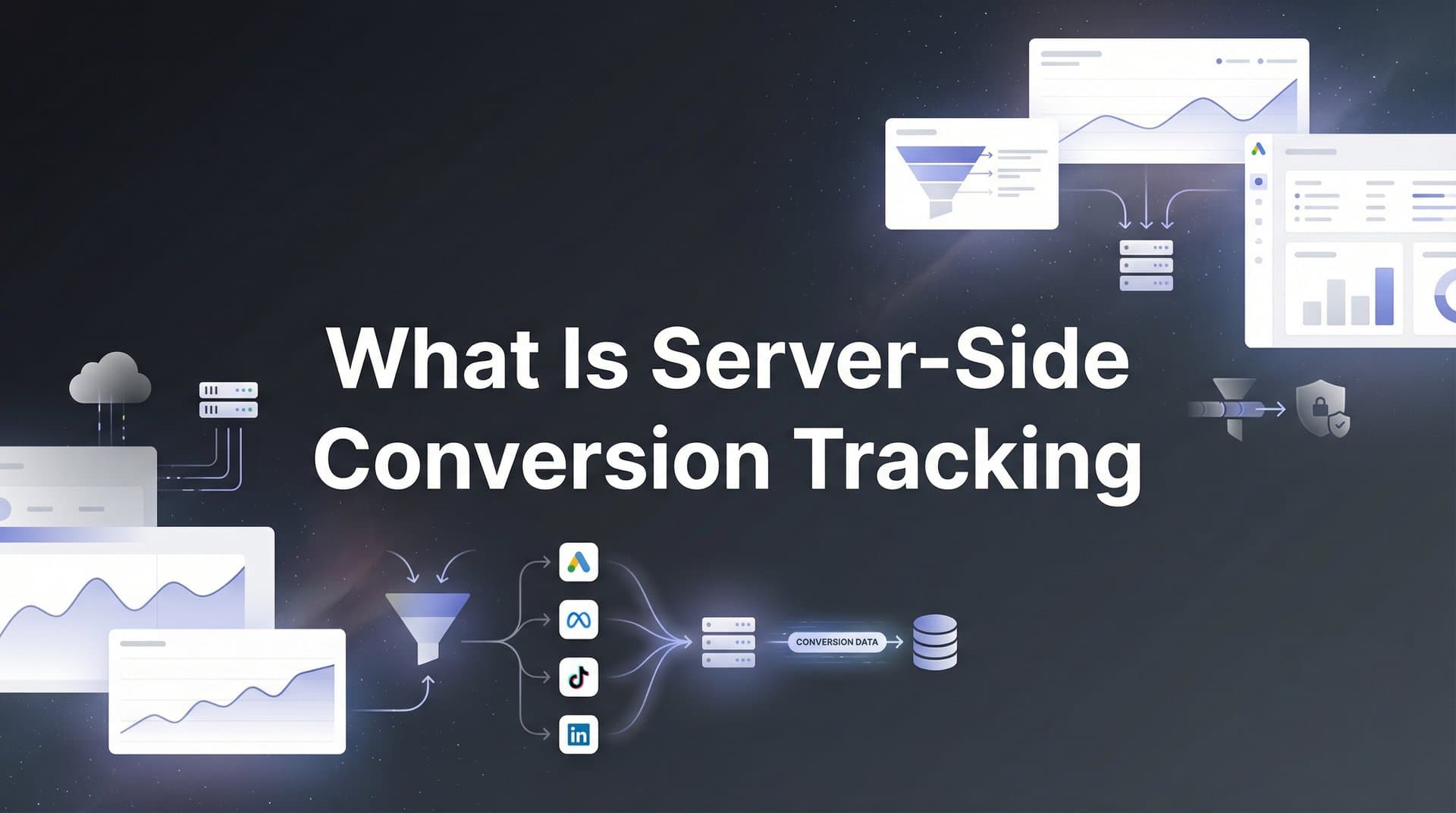
Server-side tracking flips the entire model. Instead of relying on code that runs in a user's browser, the conversion event fires from your server infrastructure. The user's browser never enters the equation.
Here's the flow: Someone clicks your ad and lands on your website. They browse, add items to cart, and complete a purchase. Your server processes that transaction—it has to, that's how e-commerce works. At the moment the purchase completes, your server also sends a conversion event directly to Meta's Conversions API or Google's Enhanced Conversions API.
The data travels server-to-server via secure API calls. No JavaScript pixels. No browser dependencies. No opportunity for ad blockers or privacy settings to interfere. Your server knows a conversion happened because it processed the transaction. It tells the ad platform directly.
This approach bypasses every browser-based restriction that's been plaguing marketers. Safari's cookie blocking? Irrelevant—no cookies involved. iOS App Tracking Transparency? Doesn't apply to server-side data transmission. Ad blockers? They only block client-side scripts, not server-to-server API calls.
The technical implementation requires your server to communicate with ad platform APIs. For Meta, that means sending events to the Conversions API with specific parameters: event name, timestamp, user identifiers, and conversion value. For Google, you're sending enhanced conversion data that includes hashed customer information to improve match rates.
The key advantage is data completeness. Your server captures 100% of conversions because it processes 100% of transactions. There's no data loss from blocked pixels or failed script loads. Every conversion that happens on your site gets reported to your ad platforms.
But there's a matching challenge: ad platforms need to connect server-side conversion events back to the original ad click. This is where parameters like Facebook's fbclid (Facebook Click ID) or Google's gclid (Google Click ID) become critical. When someone clicks your ad, these IDs get passed through the URL. Your server captures and stores them, then includes them when sending conversion events back to the platform.
This matching process ensures that when your server reports a conversion, Meta or Google can attribute it to the specific ad, campaign, and audience that drove it. Without proper matching, you'd have conversion data but no attribution—you'd know sales happened, but not which ads caused them.
Client-Side vs. Server-Side: A Direct Comparison
Most marketers aren't choosing between client-side and server-side tracking anymore—they're using both. But understanding the differences helps you implement each method effectively.
Data Accuracy and Completeness: Client-side tracking captures conversions that happen immediately in the browser. It's great for instant events like page views, button clicks, and form submissions. But it misses conversions when pixels are blocked, when users have ad blockers, or when conversions happen offline. Server-side tracking captures everything your server processes, including delayed conversions, CRM events, and offline transactions. It doesn't miss data, but it requires proper implementation to connect those conversions back to ad clicks.
Technical Requirements: Client-side tracking is plug-and-play. Drop a pixel code in your website header, and you're tracking. No server infrastructure needed. No API knowledge required. Server-side tracking requires server access, API integration, and ongoing maintenance. You need to handle authentication, format data correctly for each platform's API, and manage rate limits. It's more complex but delivers more reliable data.
Privacy and Compliance: Client-side tracking faces increasing privacy scrutiny. Browsers actively block it. Users can opt out. Regulations like GDPR require explicit consent for tracking cookies. Server-side tracking operates in a different space—you're sending data your server already collected as part of normal business operations. You still need to comply with privacy regulations, but you're not dependent on browser permissions or third-party cookies. Understanding privacy compliant conversion tracking methods is essential for both approaches.
Attribution Windows: Client-side pixels have compressed attribution windows—often just 7 days for view-through conversions on iOS. Server-side tracking extends those windows because you control when conversion events get sent. If someone converts 14 days after clicking your ad, your server can still report that conversion with the original click ID. Learning about conversion window attribution helps you maximize this advantage.
The hybrid approach—running both client-side pixels and server-side tracking simultaneously—gives you redundancy. When client-side tracking works, you get immediate data. When it fails, server-side tracking fills the gaps. Ad platforms can also use both data sources to validate conversions and improve their algorithms.
Think of it like this: client-side tracking is fast but unreliable. Server-side tracking is reliable but requires setup. Using both gives you the speed of client-side with the completeness of server-side. Your ad platforms get more data points, which means better optimization and more accurate attribution.
The Tangible Benefits for Your Ad Campaigns
Better data isn't just about cleaner reports—it directly impacts campaign performance. When ad platforms receive complete conversion data through server-side tracking, their algorithms can optimize more effectively.
Improved Algorithm Performance: Facebook's algorithm learns from conversion patterns. When it only sees 60% of conversions due to tracking limitations, it's learning from a skewed dataset. Feed it complete conversion data through the Conversions API, and it starts identifying the right patterns. It understands which audiences actually convert, which creative resonates, which placements drive results. The algorithm gets smarter because it's working with better information. This is why accurate Facebook conversion tracking matters so much for campaign performance.
Google's Smart Bidding works the same way. It uses machine learning to predict conversion likelihood and adjust bids accordingly. Incomplete data means inaccurate predictions. Complete server-side data means the algorithm can bid more confidently on users who are actually likely to convert.
Extended Attribution and Offline Conversions: Many conversions don't happen instantly. Someone might click your ad, research for a week, then purchase. With client-side tracking alone, you'd lose that attribution. Server-side tracking lets you report conversions that happen days or weeks later, as long as you've stored the original click ID.
Even better: you can track conversions that happen completely offline. Phone calls that lead to sales. In-store purchases. Consultations booked through your CRM. Your server can send these events back to ad platforms, closing the loop on attribution. Now your Facebook campaign gets credit for the phone call it generated, not just the website visit. Implementing offline conversion tracking becomes straightforward with server-side infrastructure in place.
Better ROAS Visibility and Budget Decisions: When you're capturing 100% of conversions instead of 60%, your ROAS metrics become trustworthy again. That campaign showing a 2x ROAS might actually be delivering 3.5x when you account for missed conversions. You stop cutting budgets on campaigns that are actually profitable.
This visibility transforms budget allocation. You can confidently scale campaigns that truly drive revenue. You can test new audiences knowing you'll see accurate results. You can compare channels fairly because each one is reporting complete data.
The strategic advantage compounds over time. As your ad platforms accumulate more accurate conversion data, their optimization improves. Your cost per acquisition drops. Your conversion rates increase. Your targeting gets sharper. All because the algorithms are finally working with complete information instead of fragments.
Implementation Approaches: From DIY to Platform Solutions
You have options for implementing server-side tracking, ranging from building everything yourself to using platforms that handle it automatically. The right choice depends on your technical resources and complexity needs.
The Manual Implementation Path: Building server-side tracking yourself means integrating directly with each ad platform's API. For Meta, you'll implement the Conversions API—setting up server endpoints that send properly formatted event data with parameters like event_name, event_time, user_data, and custom_data. For Google, you'll implement Enhanced Conversions, sending hashed customer information to improve match rates. A comprehensive conversion tracking setup guide can help you navigate these technical requirements.
This requires backend development work. Your server needs to capture conversion events, format them according to each platform's specifications, handle authentication tokens, and make secure API calls. You'll need to store click IDs from ad platforms, match them to conversions, and include them in your API requests for proper attribution.
The technical challenges multiply when you're tracking across multiple platforms. Meta's Conversions API uses different data formats than Google's Enhanced Conversions API. TikTok's Events API has its own requirements. Each platform has unique authentication methods, rate limits, and error handling needs. You're essentially building and maintaining multiple integrations simultaneously.
The Ongoing Maintenance Burden: Manual implementation isn't a one-time project—it requires continuous maintenance. Ad platforms update their APIs regularly. Meta might change required parameters. Google might introduce new data fields. Your server-side tracking breaks until you update your code to match the new specifications.
You'll spend time troubleshooting connection issues, debugging data formatting errors, and monitoring API rate limits. When conversions stop flowing to an ad platform, you need to identify whether it's an authentication problem, a data formatting issue, or an API change. This operational overhead adds up quickly, especially for small marketing teams without dedicated developers.
Data privacy compliance adds another layer of complexity. You need to hash personally identifiable information correctly before sending it to ad platforms. You need to respect user consent preferences. You need to ensure your server-side tracking complies with GDPR, CCPA, and other regulations. Get this wrong, and you're facing legal risk on top of technical problems. Understanding first party data tracking principles helps you build compliant systems from the start.
How Attribution Platforms Simplify Server-Side Tracking: This is where platforms like Cometly provide significant value. Instead of building and maintaining server-side integrations yourself, attribution platforms handle the technical complexity automatically. They connect to your ad platforms, CRM, and website, capturing conversion events across the entire customer journey.
Cometly's server-side tracking works by integrating with your marketing stack once, then automatically syncing conversion data to Meta, Google, and other ad platforms. When a conversion happens—whether it's a website purchase, a CRM event, or an offline sale—Cometly captures it and sends properly formatted data to each platform's API. No custom development required.
The platform handles API authentication, data formatting, error handling, and rate limit management. When Meta updates the Conversions API, Cometly updates its integration automatically. You don't touch code or debug API calls. The server-side tracking just works, feeding your ad platforms the complete conversion data they need to optimize effectively.
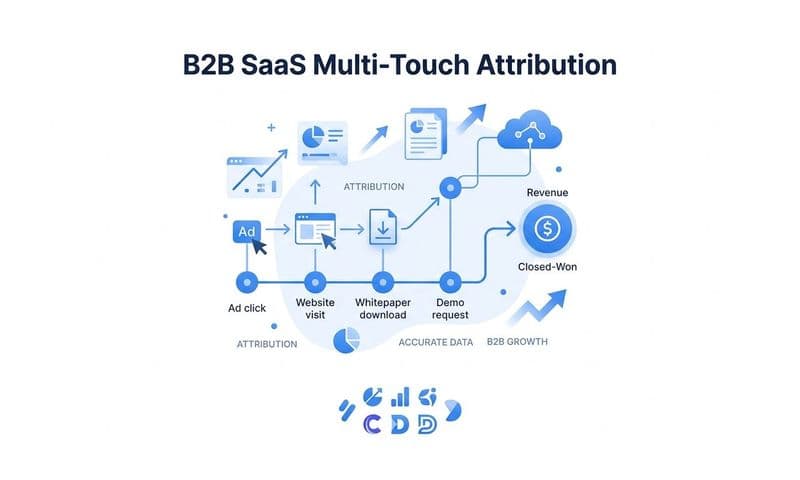
Beyond basic server-side tracking, attribution platforms provide additional value through multi-touch attribution, AI-powered insights, and unified reporting across all marketing channels. You're not just solving the tracking problem—you're getting a complete view of which ads and channels actually drive revenue. Exploring customer journey tracking reveals how these platforms connect every touchpoint in your marketing funnel.
Putting It All Together: Making Server-Side Tracking Work for You
Server-side conversion tracking addresses the fundamental data gaps that have plagued digital marketing since iOS 14.5 and browser privacy restrictions transformed the landscape. By sending conversion data directly from your server to ad platforms, you bypass browser limitations entirely—capturing complete conversion data that client-side pixels miss.
The impact goes beyond cleaner reports. When you feed ad platform algorithms complete conversion data, they optimize more effectively. Facebook's algorithm learns the right patterns. Google's Smart Bidding makes better predictions. Your campaigns perform better because they're making decisions based on reality, not fragments.
Implementation complexity varies dramatically based on your approach. Building server-side tracking manually requires significant development resources and ongoing maintenance. Each ad platform has unique API requirements. Updates break integrations. Troubleshooting consumes time your marketing team doesn't have. Following best practices for tracking conversions accurately helps you avoid common pitfalls regardless of your implementation method.
Attribution platforms like Cometly eliminate this complexity by handling server-side tracking automatically. They capture every touchpoint across your customer journey—from initial ad clicks through CRM events—and sync conversion data back to ad platforms without requiring custom development. You get complete attribution visibility while feeding ad platform AI the better data it needs to improve targeting and optimization.
The strategic advantage is clear: marketers who implement server-side tracking gain more accurate attribution, better campaign performance, and confident budget allocation decisions. Those who don't are optimizing campaigns based on incomplete data, wondering why their ROAS doesn't match expectations.
Start by evaluating your current tracking setup. How much conversion data are you losing to browser restrictions and ad blockers? Which conversions—offline sales, CRM events, delayed purchases—aren't getting attributed back to your ads? Where are the gaps in your attribution that prevent you from making confident optimization decisions? Resources on fixing conversion tracking gaps can help you identify and address these issues systematically.
Then consider how server-side tracking fits your marketing stack. If you have development resources and want full control, manual implementation gives you flexibility. If you want to focus on marketing strategy rather than API maintenance, attribution platforms handle the technical complexity while providing the complete customer journey visibility you need.
Ready to elevate your marketing game with precision and confidence? Discover how Cometly's AI-driven recommendations can transform your ad strategy—Get your free demo today and start capturing every touchpoint to maximize your conversions.