The privacy landscape has fundamentally changed how marketers track conversions. With third-party cookies on their way out, iOS restrictions limiting traditional tracking, and regulations like GDPR and CCPA imposing strict data requirements, many advertisers are watching their attribution data become increasingly unreliable.
Yet the need to understand what drives revenue hasn't diminished—if anything, it's more critical than ever when every ad dollar counts.
The good news? Privacy-compliant tracking isn't about accepting worse data. It's about adopting smarter methods that respect user privacy while still giving you the insights needed to optimize campaigns.
This guide walks through seven proven approaches that balance compliance with accuracy, helping you maintain visibility into your customer journey without running afoul of regulations or eroding user trust.
1. Server-Side Tracking
The Challenge It Solves
Browser-side tracking has become increasingly unreliable. Ad blockers, Intelligent Tracking Prevention (ITP), Enhanced Tracking Protection (ETP), and iOS App Tracking Transparency have created massive gaps in your conversion data. When tracking pixels fire only in the browser, you're missing a significant portion of your actual conversions—sometimes upward of 30-40% depending on your audience demographics.
The problem compounds when you realize that ad platforms need accurate conversion data to optimize their algorithms. Incomplete data means worse targeting, higher costs, and campaigns that never reach their full potential.
The Strategy Explained
Server-side tracking moves the data collection process from the user's browser to your own server infrastructure. When a conversion happens—a purchase, form submission, or sign-up—your server captures that event and sends it directly to your analytics platforms and ad networks.
This approach bypasses browser restrictions entirely because the communication happens server-to-server rather than through browser-based pixels. You maintain control over your first-party data while ensuring that conversion events reach their destinations regardless of browser settings or ad blockers.
Think of it like this: instead of relying on someone's phone to deliver an important message, you're making the call yourself from a landline that never gets blocked.
Implementation Steps
1. Set up a server-side tracking container using Google Tag Manager Server-Side or a similar solution that can receive events from your website or app.
2. Configure your website to send conversion events to your server endpoint first, then have your server forward these events to analytics platforms and ad networks.
3. Implement proper event validation and deduplication logic to ensure you're not double-counting conversions that fire from both client-side and server-side sources.
4. Test thoroughly by comparing conversion counts across platforms and verifying that events contain all necessary parameters like transaction value, user identifiers, and product details.
Pro Tips
Start with your highest-value conversion events rather than trying to move everything server-side at once. Focus on purchases, qualified leads, and other revenue-generating actions first. Also, maintain your client-side tracking as a backup during the transition—you can gradually shift reliance to server-side as you validate accuracy.
2. First-Party Data Collection with Consent Management
The Challenge It Solves
Privacy regulations require explicit consent before you can track user behavior, but many marketers treat consent as a legal checkbox rather than a strategic opportunity. The result? Low opt-in rates that cripple your tracking capabilities and leave you with incomplete data about your best customers.
You need a consent infrastructure that maximizes opt-ins while staying fully compliant with GDPR, CCPA, and other regulations. The challenge is making users actually want to share their data rather than reflexively clicking "reject all."
The Strategy Explained
A consent-first approach treats user permission as the foundation of your data strategy. Instead of hiding a consent banner at the bottom of the page and hoping users ignore it, you build clear value exchanges that give people compelling reasons to opt in.
This means implementing a robust consent management platform (CMP) that handles the technical compliance requirements while also designing consent experiences that communicate benefits. When users understand what they get in return for sharing data—personalized recommendations, exclusive content, better product suggestions—opt-in rates increase dramatically.
The key is connecting consent to immediate, tangible value rather than vague promises about "improving your experience."
Implementation Steps
1. Deploy a consent management platform that integrates with your marketing stack and automatically manages consent preferences across all tools and platforms.
2. Design consent prompts that clearly explain what data you collect, why you need it, and what specific benefits users receive in exchange for opting in.
3. Create granular consent categories that let users choose what they're comfortable with—analytics, personalization, advertising—rather than forcing an all-or-nothing decision.
4. Build progressive consent flows that ask for permission at contextually relevant moments, like offering personalized product recommendations right before requesting consent for personalization tracking.
Pro Tips
Test different consent prompt designs and value propositions to find what resonates with your audience. Some segments respond better to privacy-focused messaging while others prioritize convenience and personalization. Also, make it genuinely easy for users to change their consent preferences later—transparency builds trust and can actually increase long-term opt-in rates.
3. Conversion APIs
The Challenge It Solves
Ad platforms like Meta, Google, and TikTok rely on conversion data to optimize their algorithms and improve targeting. When browser-based pixels fail to fire due to tracking restrictions, these platforms receive incomplete signals about which ads actually drive results. This creates a vicious cycle: worse data leads to worse optimization, which leads to higher costs and lower performance.
The gap between actual conversions and reported conversions can be substantial, especially for audiences with high iOS usage or privacy-conscious users who block tracking.
The Strategy Explained
Conversion APIs allow you to send conversion events directly from your server to ad platforms, creating a reliable data pipeline that doesn't depend on browser pixels. When someone completes a purchase or submits a lead form, your server immediately notifies the ad platform with detailed conversion information.
This server-to-server communication ensures that ad platforms receive accurate conversion signals even when browser-side tracking fails. The platforms can then use this data to optimize delivery, improve lookalike modeling, and provide better attribution reporting.
Think of it as giving ad platforms a direct phone line to your conversion data rather than making them rely on spotty cellular reception from user browsers.
Implementation Steps
1. Set up the Conversions API for Meta, Google's Enhanced Conversions, and TikTok Events API by generating access tokens and configuring server endpoints for each platform.
2. Map your conversion events to the standard event types each platform expects, ensuring you include all required parameters like event name, timestamp, user identifiers, and conversion value.
3. Implement event matching by sending hashed user identifiers (email, phone number) along with conversion data to help platforms match events to specific ad interactions.
4. Configure event deduplication using event IDs to prevent the same conversion from being counted twice when both pixel and API fire successfully.
Pro Tips
Send conversion events as quickly as possible after they occur—ideally within seconds. Platforms use recency as a signal for optimization, and fresh data helps algorithms learn faster. Also, include as many user matching parameters as you can (hashed email, phone, external ID) to improve match rates and attribution accuracy.
4. Probabilistic Modeling and Statistical Attribution
The Challenge It Solves
Even with the best privacy-compliant tracking methods, you'll have gaps in your deterministic data. Not every user consents to tracking, not every conversion can be matched to a specific touchpoint, and cross-device journeys remain difficult to track with perfect accuracy.
Relying solely on deterministic tracking in 2026 means accepting blind spots in your attribution. You need methods that can estimate channel impact and marketing effectiveness even when you can't track every individual user.
The Strategy Explained
Probabilistic modeling uses statistical techniques to infer marketing impact when direct tracking isn't available. Media mix modeling (MMM) analyzes historical performance data to understand how different channels contribute to conversions, even without user-level tracking. Incrementality testing measures the actual lift your marketing generates by comparing results with and without specific campaigns.
These approaches work at an aggregate level rather than tracking individuals. You're analyzing patterns across your entire customer base to understand what's driving results, filling in the gaps that deterministic tracking leaves behind.
It's like using weather patterns and historical data to predict tomorrow's temperature rather than measuring it directly—less precise for any individual moment, but remarkably accurate for understanding broader trends.
Implementation Steps
1. Implement media mix modeling by collecting historical data on marketing spend, impressions, and conversions across all channels, then using regression analysis to understand each channel's contribution to outcomes.
2. Run incrementality tests by creating holdout groups that don't see specific campaigns, then comparing conversion rates between exposed and unexposed audiences to measure true lift.
3. Build geo-based experiments where you test different marketing intensities in similar geographic regions, measuring the incremental impact of increased spend or new channels.
4. Combine probabilistic insights with deterministic data to create a complete attribution picture—use modeling to fill gaps and validate what your tracked data is telling you.
Pro Tips
Media mix modeling works best with at least 18-24 months of historical data and requires consistent measurement across channels. Don't expect it to provide daily optimization insights—it's better suited for strategic budget allocation and understanding long-term channel effectiveness. For tactical optimization, combine it with shorter-term incrementality tests that can run in weeks rather than months.
5. Privacy-Preserving Identity Resolution
The Challenge It Solves
Users interact with your brand across multiple devices, browsers, and channels before converting. Someone might discover you on Instagram, research on their laptop, and purchase on their phone. Without connecting these touchpoints to the same person, you can't understand the customer journey or give proper credit to early-stage awareness channels.
Traditional identity resolution relied on third-party cookies and device graphs that are either restricted or outright banned under privacy regulations. You need methods that connect the dots without violating user privacy or regulatory requirements.
The Strategy Explained
Privacy-preserving identity resolution uses first-party identifiers and CRM data to match users across touchpoints without exposing personal information. When users log in, provide an email address, or authenticate in any way, you create a hashed identifier that can connect their activities across sessions and devices.
The key is using one-way hashing and encryption to create matching keys that can't be reverse-engineered to reveal personal data. You can match a hashed email address from your CRM to the same hashed email in your analytics platform without ever exposing the actual email address in plain text.
This approach gives you cross-device visibility and accurate attribution while keeping personal data secure and compliant with privacy regulations.
Implementation Steps
1. Implement authentication flows that encourage users to create accounts or log in early in their journey, providing you with a consistent identifier across sessions and devices.
2. Hash all personal identifiers (email, phone number, user ID) using SHA-256 or similar one-way hashing before sending them to analytics platforms or using them for matching.
3. Integrate your CRM with your marketing analytics platform to enable matching of known users across all touchpoints where they've provided identifying information.
4. Create fallback logic that uses probabilistic matching for anonymous users based on behavioral signals, device fingerprints, and timing patterns when deterministic matching isn't possible.
Pro Tips
Incentivize account creation by offering genuine value—saved preferences, order history, personalized recommendations—rather than gating content arbitrarily. The more users who authenticate, the more complete your identity resolution becomes. Also, be transparent about how you use hashed identifiers and give users control over their data to maintain trust.
6. Contextual and Cohort-Based Tracking
The Challenge It Solves
Individual-level tracking isn't always possible or appropriate, especially for users who decline consent or in contexts where privacy regulations are particularly strict. Yet you still need insights about campaign performance, audience behavior, and conversion patterns to make informed marketing decisions.
The challenge is finding meaningful signals when you can't track individual users across sessions or build detailed behavioral profiles.
The Strategy Explained
Contextual and cohort-based approaches analyze groups of users rather than individuals. Contextual tracking focuses on the environment where ads appear—the content topic, page category, user intent signals—rather than following specific people around the web. Cohort analysis groups users by shared characteristics (acquisition date, traffic source, device type) and tracks aggregate behavior patterns.
Google's Privacy Sandbox initiatives like FLoC (now evolved into Topics API) exemplify this approach: instead of saying "this specific person is interested in running shoes," the system says "users in this cohort show interest in fitness content." You lose individual precision but gain privacy compliance and aggregate insights that still inform optimization.
It's similar to how TV advertising works—you target shows that attract your desired audience rather than tracking individual viewers.
Implementation Steps
1. Implement contextual targeting by analyzing the content, keywords, and topics of pages where your ads perform best, then expanding to similar contexts rather than following individual users.
2. Build cohort analysis into your analytics by grouping users based on acquisition source, first-visit date, or initial engagement level, then tracking how different cohorts convert over time.
3. Use aggregated conversion data to understand which traffic sources, content types, or campaign themes drive results without needing to track individual user journeys.
4. Test Privacy Sandbox APIs and similar browser-based cohort technologies as they become available, evaluating whether they provide useful signals for your specific use cases.
Pro Tips
Cohort analysis becomes more powerful with larger sample sizes, so focus on meaningful groupings that have enough volume to show statistical significance. Also, combine contextual signals with time-of-day, seasonality, and other environmental factors to build rich targeting profiles that don't rely on individual tracking.
7. Unified Attribution Platforms
The Challenge It Solves
Managing privacy-compliant tracking across multiple methods creates data fragmentation. Your server-side tracking captures some conversions, Conversion APIs report others, first-party data lives in your CRM, and probabilistic models provide different insights. Without a unified view, you can't understand the complete customer journey or make confident optimization decisions.
Spreadsheets and manual data aggregation don't scale when you're working with multiple tracking methods, dozens of campaigns, and complex attribution models. You need a system that connects all your data sources and makes sense of them together.
The Strategy Explained
A unified attribution platform serves as the central hub that ingests data from all your tracking methods—server-side events, Conversion APIs, CRM records, ad platform data—and creates a single source of truth for marketing performance. These platforms use sophisticated matching logic to deduplicate events, connect touchpoints across channels, and apply attribution models that account for the entire customer journey.
Modern attribution platforms increasingly incorporate AI to identify patterns humans might miss, recommend budget optimizations, and predict which campaigns will drive the best results. They handle the complexity of privacy-compliant tracking so you can focus on strategy rather than data engineering.
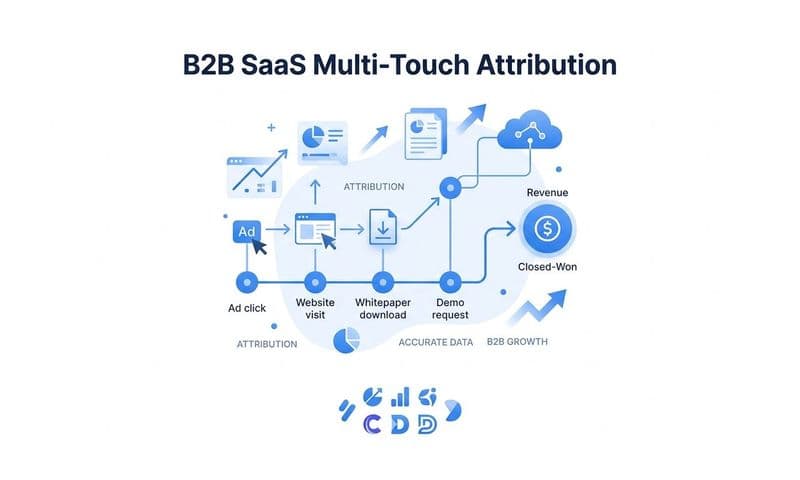
Platforms like Cometly exemplify this approach by capturing every touchpoint—from initial ad clicks to CRM events—and using AI to analyze the complete customer journey, providing recommendations on which ads and campaigns actually drive revenue.
Implementation Steps
1. Select an attribution platform that integrates with your ad networks, analytics tools, CRM, and server-side tracking infrastructure, ensuring it can ingest data from all your sources.
2. Configure event mapping to ensure that conversions from different sources (pixel, API, CRM) are recognized as the same event type and properly deduplicated using event IDs or timestamps.
3. Set up multi-touch attribution models that reflect your actual customer journey—first-touch, last-touch, linear, time-decay, or custom models based on your business logic.
4. Enable AI-powered features that analyze performance patterns across channels and provide optimization recommendations based on what's actually driving conversions.
Pro Tips
Start by connecting your highest-volume data sources first to establish baseline accuracy, then progressively add more specialized tracking methods. Also, regularly audit your attribution platform's matching logic to ensure it's correctly identifying duplicate events and attributing conversions appropriately—small matching errors can compound into significant misattribution over time.
Implementing Your Privacy-Compliant Tracking Stack
The marketers who thrive in this privacy-first era won't be those who find workarounds—they'll be those who build sustainable, compliant systems that actually deliver better data quality.
Start with server-side tracking as your foundation. This single change immediately improves data accuracy by bypassing browser restrictions that plague traditional pixel-based tracking. Once your server-side infrastructure is stable, layer in Conversion APIs for your major ad platforms to ensure they receive the signals needed for optimization.
Build robust consent management next. You can't maximize first-party data collection without genuine user buy-in, and that requires consent experiences that communicate value rather than just legal requirements. The data you collect with explicit consent is more reliable and defensible than anything you might capture through technical workarounds.
Use unified attribution to connect all your touchpoints and data sources. Fragmented data leads to fragmented decisions. When everything flows into a single platform that can deduplicate events, apply sophisticated attribution models, and surface AI-powered insights, you gain the clarity needed to scale confidently.
Fill remaining gaps with probabilistic modeling and cohort-based analysis. These methods won't replace deterministic tracking, but they provide valuable context and help you understand aggregate trends when individual-level data isn't available.
The implementation roadmap is straightforward: prove value with one method, then expand systematically. Don't try to deploy all seven approaches simultaneously. Start with server-side tracking and Conversion APIs because they deliver immediate impact. Then build out consent management, identity resolution, and unified attribution as your infrastructure matures.
Remember that privacy-compliant tracking isn't a compromise—it's an opportunity to build more resilient marketing operations. The methods outlined here don't just keep you compliant; they often deliver more accurate data than the cookie-dependent tracking they replace.
Ready to elevate your marketing game with precision and confidence? Discover how Cometly's AI-driven recommendations can transform your ad strategy—Get your free demo today and start capturing every touchpoint to maximize your conversions.