Facebook advertising can deliver exceptional results—but only when you can actually measure what's working. The challenge? Between iOS privacy updates, browser restrictions, and cross-device customer journeys, getting accurate conversion data from Facebook has become increasingly difficult.
Many marketers find themselves making budget decisions based on incomplete or misleading data, essentially flying blind with their ad spend. You're pouring thousands into campaigns, but your reporting shows conversions that don't match your actual sales. Or worse—you're missing conversions entirely because your tracking can't see the full picture.
This guide walks you through setting up Facebook conversion tracking that actually reflects reality. You'll learn how to configure your Pixel correctly, implement server-side tracking to capture data that browser-based tracking misses, verify your setup is working, and optimize your conversion events for better ad performance.
Whether you're starting fresh or troubleshooting an existing setup, these steps will help you build a tracking foundation you can trust. Let's get started.
Step 1: Audit Your Current Tracking Setup and Identify Gaps
Before you fix anything, you need to understand what's actually broken. Think of this like a health checkup for your tracking—you're looking for symptoms that indicate deeper problems.
Start by opening Facebook Events Manager and navigating to your Pixel. Look at the event activity over the past 30 days. Are events firing consistently? Do you see sudden drops or spikes that don't align with actual business activity?
Pay attention to event match quality scores. These scores tell you how well Facebook can match your conversion data to specific users. Scores below 6.0 indicate significant data gaps that hurt both attribution accuracy and ad optimization.
Check your domain verification status next. If your domain isn't verified, you're limited in how you can configure conversion events, especially for iOS users. Navigate to Business Settings, then Brand Safety, then Domains to verify your status.
Now review your Aggregated Event Measurement configuration. iOS privacy restrictions limit you to eight prioritized conversion events per domain. Are your most business-critical events ranked at the top? If "ViewContent" is ranked higher than "Purchase," your tracking priorities need adjustment.
Document which conversion events matter most for your business decisions. If you're an e-commerce brand, Purchase events with accurate revenue data are non-negotiable. For lead generation, Lead or CompleteRegistration events need to be rock-solid. For SaaS, you might care most about trial signups or demo requests.
Look for common red flags: events firing multiple times for single actions, significant delays between when conversions happen and when they appear in reporting, or conversions showing in your CRM that never appear in Facebook at all. Understanding inaccurate Facebook Pixel tracking symptoms helps you identify these issues faster.
Compare your Facebook-reported conversion counts against your actual sales or lead data. If Facebook shows 100 purchases but your Shopify store recorded 150, you've got a 33% data gap. That's 33% of your conversion signal that Facebook's algorithm can't use to optimize your campaigns.
This audit gives you a baseline. Now you know what needs fixing.
Step 2: Configure Your Facebook Pixel with Proper Event Structure
Your Facebook Pixel is the foundation of browser-based tracking. Even with server-side tracking added later, you need this base layer configured correctly.
First, verify your Pixel base code is installed on every page of your website. The base code should be in the header section, loading before any event tracking fires. Use Facebook's Pixel Helper browser extension to confirm the Pixel is active on key pages: homepage, product pages, checkout, and thank-you pages.
Now define your conversion events based on your business model. Facebook offers standard events like Purchase, Lead, AddToCart, InitiateCheckout, and CompleteRegistration. Use these standard events whenever possible—they're optimized for Facebook's machine learning and come with built-in reporting.
For E-commerce: Your critical events are ViewContent, AddToCart, InitiateCheckout, and Purchase. Each should pass value and currency parameters so Facebook knows the revenue associated with each conversion.
For Lead Generation: Focus on Lead and CompleteRegistration events. If you have multi-step forms, consider tracking InitiateCheckout when someone starts the form and Lead when they complete it.
For SaaS or Service Businesses: Track Lead for demo requests, CompleteRegistration for trial signups, and consider custom events for key activation milestones.
Implement event parameters correctly. For Purchase events, always include value (the purchase amount), currency (USD, EUR, etc.), and content_ids (product SKUs). These parameters aren't optional extras—they're what enable conversion value optimization and dynamic ad features.
For a deeper dive into this space, see our Shopify dynamic ad generator guide.
Here's what proper parameter passing looks like: when someone completes a $150 purchase of two products, your Purchase event should include value: 150, currency: 'USD', content_ids: ['product-123', 'product-456'], and content_type: 'product'.
Decide between standard events and custom conversions. Standard events should handle 90% of your needs. Only create custom conversions when you need to track something highly specific to your business that doesn't fit standard event definitions. For a deeper dive into Facebook Pixel tracking configuration, review the technical requirements carefully.
Test each event manually. Add a product to cart on your site—does the AddToCart event fire immediately in Events Manager's Test Events tool? Complete a purchase—does the Purchase event show the correct value?
If you're using Google Tag Manager, double-check that event triggers are configured correctly and that dataLayer variables are passing through to Facebook. A common mistake is setting up the event tracking but forgetting to push the necessary data into the dataLayer first.
Your Pixel should now be capturing browser-based conversion data. But here's the reality: this alone isn't enough anymore.
Step 3: Implement Server-Side Tracking via Conversions API
Browser-based Pixel tracking has fundamental limitations in 2026. Ad blockers, browser privacy features, and iOS restrictions mean you're missing significant conversion data if you rely on Pixel alone.
This is where Facebook's Conversions API changes everything. Instead of relying on browser tracking that can be blocked or restricted, Conversions API sends event data directly from your server to Facebook. Think of it as a direct line that bypasses all the obstacles between your customer's browser and Facebook's servers.
Setting up Conversions API requires backend integration, but the accuracy improvement is worth it. You'll need access to your server or a platform that supports CAPI integration—most major e-commerce platforms and marketing tools now offer this. Understanding why server side tracking is more accurate helps justify the implementation effort to stakeholders.
Start by generating a Conversions API access token in Events Manager. Navigate to Settings, then scroll to Conversions API. Generate a new access token and keep it secure—this token allows direct data transmission to your ad account.
Choose your integration method. If you're on Shopify, WooCommerce, or another major platform, use their native CAPI integration—it's the fastest path to implementation. If you're working with custom infrastructure, you'll need to set up server-side code that sends events to Facebook's Graph API endpoint.
Configure which events to send via CAPI. At minimum, send all conversion events: Purchase, Lead, CompleteRegistration. The more conversion data Facebook receives through CAPI, the better its algorithm can optimize your campaigns.
Here's the critical part: event deduplication. When you're running both Pixel and CAPI, you need to prevent the same conversion from being counted twice. Facebook uses event_id parameters to deduplicate events. When a conversion happens, your Pixel and your CAPI integration should both send the same event with the same event_id. Facebook sees both, recognizes they're the same conversion, and counts it once.
Proper deduplication looks like this: User completes purchase → Pixel fires with event_id: 'purchase_12345' → Your server sends the same Purchase event via CAPI with event_id: 'purchase_12345' → Facebook receives both, deduplicates, counts one conversion.
Send enriched customer data with your CAPI events. Include email addresses, phone numbers, and other customer information when available. This dramatically improves Event Match Quality because Facebook can more accurately attribute conversions to specific users and ad interactions.
Connect your CRM or backend systems to capture offline conversion tracking data. If customers call your sales team after clicking an ad, or if conversions happen days after the initial interaction, CAPI can capture these events that browser tracking would miss entirely.
Test your CAPI integration using the Test Events tool. Send a test event from your server and confirm it appears in Events Manager with proper parameters and customer information.
Server-side tracking is no longer optional—it's essential for accurate attribution in the current privacy landscape.
Step 4: Verify Tracking Accuracy with Testing Tools
Implementation is only half the battle. You need to verify everything is actually working as intended.
Open Facebook's Test Events tool in Events Manager. This real-time testing interface shows exactly which events are firing, where they're coming from (Pixel or CAPI), and what data they're carrying. Keep this tool open while you manually test your conversion flow.
Walk through your entire conversion process as a customer would. Visit a product page—does ViewContent fire with the correct product ID? Add to cart—does AddToCart fire immediately? Complete checkout—does Purchase fire with accurate value, currency, and order details?
Check Event Match Quality scores for both Pixel and CAPI events. EMQ scores range from 0 to 10, with higher scores indicating better data quality. Scores above 8.0 are excellent. Scores below 6.0 need improvement.
If your EMQ scores are low, you're likely missing customer information parameters. Add email hashes, phone hashes, and other customer data to your events. Even partial information helps—city, state, and zip code can improve matching when email isn't available.
Validate that server-side events are being received and deduplicated properly. In Test Events, you should see events marked with both "Browser" and "Server" sources when deduplication is working. If you see duplicate events without deduplication, you're inflating your conversion counts.
Compare Facebook-reported conversions against your source of truth—your actual sales data, CRM records, or order management system. Pull a report of conversions from Facebook for the past 30 days, then compare it to your actual conversion records for the same period. This process of fixing conversion tracking gaps requires systematic comparison between platforms.
If Facebook reports significantly fewer conversions than actually occurred, you've got tracking gaps to address. If Facebook reports more conversions, you might have duplicate tracking or attribution window issues.
Test edge cases. What happens if someone uses an ad blocker? What if they switch devices mid-journey? What if they convert days after clicking your ad? Your tracking should handle these scenarios, especially with CAPI capturing what browser tracking misses.
Document your testing results. Note which events work perfectly, which need adjustment, and any patterns in where tracking breaks down. This documentation becomes invaluable when troubleshooting future issues.
Accurate tracking isn't a one-time achievement—it requires regular verification to catch issues before they impact your data.
Step 5: Optimize Your Conversion Data for Better Ad Performance
Now that your tracking is accurate, you can leverage that data to improve campaign performance. Facebook's algorithm is only as good as the data you feed it.
Send enriched conversion data back to Facebook to improve ad targeting. When you pass detailed customer information with conversion events, Facebook can identify patterns in who converts and find more people like them. This means better lookalike audiences and more efficient campaign optimization.
Configure conversion value optimization if you're running purchase-focused campaigns. Instead of optimizing for conversions regardless of value, Facebook will prioritize showing ads to people likely to make higher-value purchases. In your campaign settings, switch from "Conversions" objective to "Conversion Value" and ensure your Purchase events include accurate value parameters.
Set up proper attribution windows that match your actual customer buying cycle. Facebook defaults to 7-day click and 1-day view attribution, but this might not reflect your reality. If you sell high-consideration products where customers research for weeks before buying, consider extending to 28-day click attribution.
Review your attribution window settings in Events Manager under Attribution Settings. Match these windows to your typical sales cycle—shorter for impulse purchases, longer for considered B2B decisions. Learn more about Facebook attribution tracking to understand how different windows affect your reported performance.
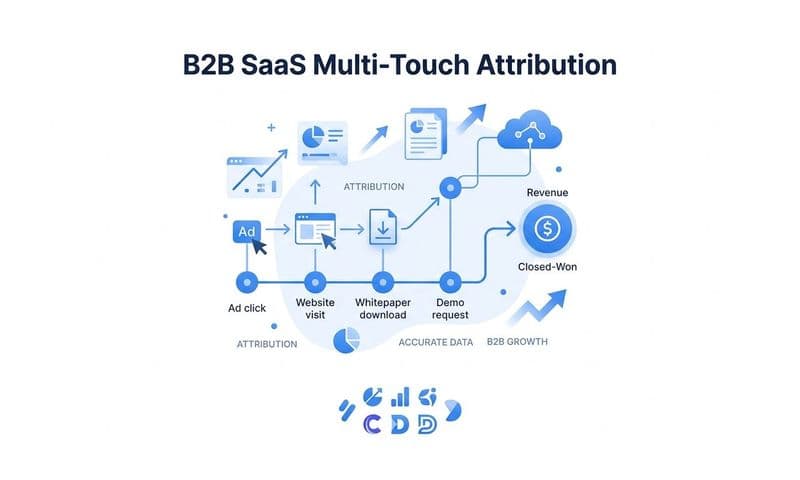
Use multi-touch attribution insights to understand which ads truly drive conversions. Facebook's default last-click attribution often misses the full story. An awareness campaign might introduce customers who convert weeks later through a retargeting ad. Both campaigns deserve credit.
Platforms like Cometly specialize in multi-touch attribution that shows the complete customer journey across all touchpoints. This gives you visibility into which campaigns work together to drive conversions, not just which ad gets the last click.
Prioritize your conversion events in Aggregated Event Measurement based on actual business impact. If you're limited to eight events for iOS users, rank them by importance: Purchase should typically be #1, followed by InitiateCheckout, AddToCart, and so on.
Feed better data to Facebook's algorithm by maintaining high Event Match Quality scores. The more accurately Facebook can match conversions to users and ad interactions, the better it can optimize delivery and targeting.
Monitor your cost per conversion and conversion rate trends as you implement these optimizations. Better data quality typically leads to improved campaign efficiency within 2-3 weeks as Facebook's algorithm learns from the enhanced signal.
Your tracking infrastructure now supports data-driven optimization, not just reporting.
Step 6: Establish Ongoing Monitoring and Maintenance
Tracking accuracy isn't a set-it-and-forget-it situation. Website updates, platform changes, and privacy regulations evolve constantly, and any of these can break your carefully configured setup.
Create a weekly tracking health check routine. Every Monday morning, open Events Manager and review the past seven days of event activity. Look for sudden drops, unusual spikes, or changes in Event Match Quality scores. These are early warning signs of tracking issues.
Check your Pixel and CAPI event volumes. If you normally see 500 Purchase events per week and this week shows 200, something broke. Investigate immediately—every day of broken tracking is conversion data you'll never recover. Understanding Facebook Pixel missing conversions patterns helps you diagnose problems quickly.
Set up automated alerts for tracking disruptions. Facebook offers diagnostics in Events Manager that can flag issues like Pixel errors, missing events, or drops in data quality. Configure email notifications so you're alerted the moment problems arise, not days later when you check the dashboard.
Keep documentation of your tracking setup. Document which events you're tracking, what parameters they include, where the Pixel code is installed, how CAPI is configured, and any custom implementations. When something breaks at 3 PM on a Friday, this documentation is your lifeline.
Include technical details: Pixel ID numbers, CAPI access token locations (not the tokens themselves—just where they're stored), integration methods, and any custom code or Tag Manager containers involved. Future team members will thank you.
Plan for regular audits as Facebook updates its platform. Every quarter, run through your complete tracking setup as if you were implementing it fresh. Test all conversion events, verify CAPI is still functioning, check Event Match Quality, and compare reported conversions against actual data. Following best practices for tracking conversions accurately ensures your setup remains reliable over time.
Stay informed about privacy regulation changes. When Apple releases iOS updates, when browsers change cookie policies, or when new privacy laws take effect, assess how these changes impact your tracking and adapt accordingly.
Review your attribution window settings quarterly. As your business evolves, your typical customer journey might change. A product that once sold immediately might become more considered, requiring longer attribution windows to capture the full impact of your ads.
Test your tracking after any website updates, platform migrations, or major campaign changes. A seemingly unrelated website redesign can break Pixel implementation. A new checkout flow can disrupt event firing. Always verify tracking after changes.
Ongoing monitoring transforms tracking from a fragile setup that breaks unexpectedly into a robust system you can trust for critical business decisions.
Taking Control of Your Attribution
Accurate Facebook conversion tracking isn't a one-time setup—it's an ongoing practice that directly impacts your advertising ROI. By implementing both browser-based Pixel tracking and server-side Conversions API, verifying your data quality, and maintaining regular monitoring, you'll have the reliable insights needed to scale what works and cut what doesn't.
Here's your quick implementation checklist: Pixel installed and events firing correctly across all key pages, Conversions API configured with proper deduplication between browser and server events, Event Match Quality scores optimized above 6.0 (ideally above 8.0), tracking verified against actual conversion data from your CRM or sales system, and a monitoring routine established to catch issues before they impact your data.
The difference between guessing and knowing which campaigns drive revenue comes down to tracking accuracy. When you can trust your data, you make better decisions. You scale winning campaigns with confidence. You cut losing campaigns without second-guessing. You optimize based on reality, not incomplete signals.
But Facebook is just one piece of your marketing puzzle. Your customers interact with multiple ads, visit from different sources, and convert across various touchpoints. Understanding the complete journey—not just what Facebook sees—is where attribution becomes truly powerful.
Ready to elevate your marketing game with precision and confidence? Discover how Cometly's AI-driven recommendations can transform your ad strategy—Get your free demo today and start capturing every touchpoint to maximize your conversions. See how server-side tracking and multi-touch attribution can give you the complete picture across all your ad platforms, not just Facebook.