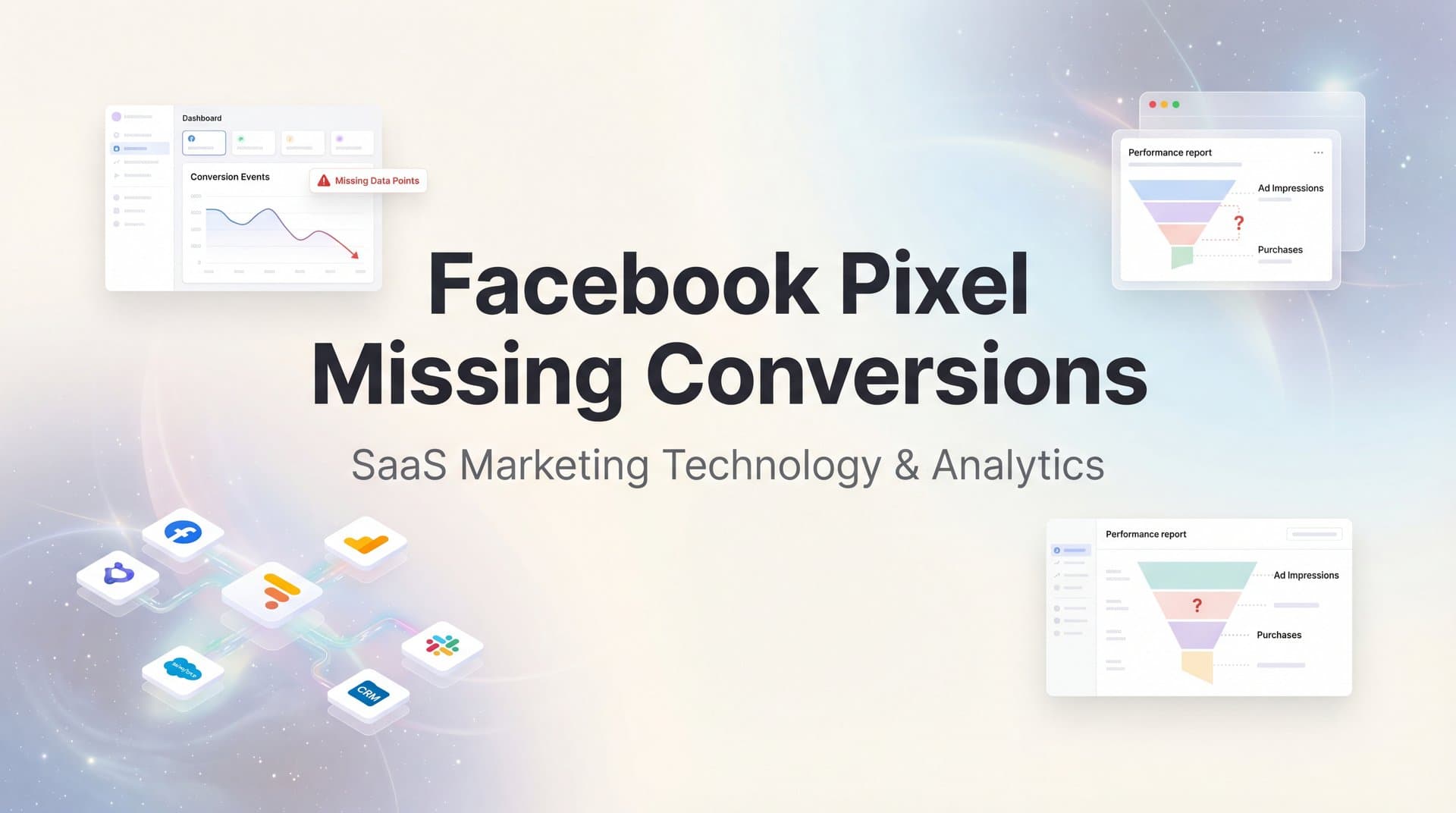
You're running Facebook ads, checking your Events Manager, and something doesn't add up. Your backend shows 50 sales this week, but Meta only registered 32. Missing conversions aren't just frustrating—they're actively sabotaging your campaigns. When Meta's algorithm can't see your real results, it can't optimize properly, which means you're likely overpaying for conversions and scaling the wrong ads.
Here's what's actually happening: privacy updates, browser restrictions, and technical misconfigurations are creating blind spots in your tracking. Meta's AI needs accurate conversion data to find your best customers, but if it's only seeing a fraction of your results, it's optimizing toward incomplete information.
The good news? Most pixel tracking issues stem from a handful of common causes, and you can systematically diagnose and fix them. This guide walks you through exactly how to identify why your Facebook pixel is missing conversions and implement solutions that restore accurate tracking.
We'll cover how to verify your pixel is firing correctly, understand the privacy landscape causing tracking gaps, implement server-side solutions that capture what your pixel can't see, and establish ongoing monitoring to catch issues before they impact your campaigns. By the end, you'll have a clear action plan to capture the conversion data you're currently losing.
Step 1: Verify Your Pixel Is Actually Firing on Conversion Pages
Before diving into complex solutions, start with the basics. Your first task is confirming that your Facebook pixel is actually installed and firing on the pages where conversions happen. This sounds obvious, but you'd be surprised how often the issue is simply a missing or incorrectly placed pixel.
Install the Facebook Pixel Helper browser extension for Chrome. This free tool from Meta shows you exactly which pixels are active on any page you visit, what events they're firing, and whether there are any errors. Navigate to your website and complete a test conversion—add a product to cart, go through checkout, and land on your thank-you page.
Watch the Pixel Helper icon in your browser toolbar. On your thank-you page, it should light up and show your pixel ID along with a "Purchase" event (or whatever conversion event you're tracking). Click the icon to see the details: the event name, parameters being sent like value and currency, and any warnings or errors.
Common issues you'll catch here: the pixel isn't installed on your thank-you page at all, you're using the wrong pixel ID, or the pixel is firing a "PageView" event but not your actual conversion event. Another frequent problem is the pixel firing before the conversion is complete—if your thank-you page redirects immediately or loads asynchronously, the pixel might not have time to send data before the page changes. Understanding what a tracking pixel is and how it works can help you troubleshoot these timing issues more effectively.
Open your Events Manager in Meta Business Suite and navigate to the Test Events tab. Trigger another test conversion while watching this dashboard in real-time. You should see your event appear within seconds, showing the exact parameters your pixel sent. If nothing appears, or if the data looks wrong, you've confirmed a pixel installation issue.
Check your pixel code placement. The base pixel code should be in the header of every page, and your conversion events should fire on specific pages or actions. If you're using Google Tag Manager, verify that your tags are set to fire on the correct triggers. A common mistake is setting up the pixel to fire "on all pages" without configuring specific conversion events for checkout completion.
If you're using a platform like Shopify, WooCommerce, or another e-commerce system, double-check that your Facebook integration is properly configured and that the correct pixel ID is entered in your settings. Sometimes updates to your platform or theme can break existing integrations.
Step 2: Check for iOS 14.5+ and Browser Privacy Impacts
Even if your pixel is firing perfectly, browser-based tracking is fundamentally broken for a significant portion of your audience. This is the hard truth that many marketers are still coming to terms with: client-side tracking alone now misses a substantial percentage of conversions.
Apple's App Tracking Transparency framework, introduced with iOS 14.5, requires apps to ask permission before tracking users across other companies' apps and websites. When users opt out—and the majority do—Facebook can't track their activity through the pixel. This affects anyone browsing through the Facebook or Instagram app on iOS, as well as Safari users who have tracking prevention enabled.
We compare the leading options in our Facebook ads companies roundup.
Safari's Intelligent Tracking Prevention and Firefox's Enhanced Tracking Protection actively block third-party cookies and limit the lifespan of first-party cookies. Ad blockers and privacy extensions add another layer of interference, preventing the Facebook pixel from loading or sending data entirely. These limitations have led many advertisers to explore Facebook pixel alternatives that can capture data more reliably.
To estimate your tracking gap, compare your Facebook pixel conversion data to your actual backend data over the same time period. Pull a report from your CRM, e-commerce platform, or payment processor showing total conversions. Then check Events Manager for the same date range. The difference between these numbers represents your tracking blind spot.
Many advertisers discover they're missing 30-60% of their actual conversions. The percentage varies based on your audience composition—if you sell primarily to iOS users or privacy-conscious demographics, your gap will be larger. Geographic location matters too, as privacy regulations like GDPR in Europe create additional tracking limitations.
This tracking gap has a cascading effect on your campaigns. Meta's algorithm receives incomplete data, so it can't accurately identify which ads, audiences, and placements are actually driving results. This leads to suboptimal optimization decisions, higher costs per acquisition, and scaling the wrong campaigns while pausing ones that are actually performing well. These Facebook ads reporting discrepancies can significantly impact your ability to make data-driven decisions.
We compare the leading options in our Facebook ads software roundup.
Understanding this context is crucial because it shifts your approach from "fixing the pixel" to "implementing tracking that works despite browser limitations." The pixel isn't broken—the environment it operates in has fundamentally changed. That's why the next steps focus on solutions that bypass these privacy restrictions entirely.
Step 3: Audit Your Event Configuration and Aggregated Event Measurement
Meta's Aggregated Event Measurement system was introduced to handle iOS 14.5+ tracking limitations, but it comes with specific requirements that, if not configured correctly, can cause conversion tracking failures. This step ensures your domain and events are set up to work within these new constraints.
Navigate to Events Manager and select your pixel. Click on "Aggregated Event Measurement" in the left sidebar. Here you'll see your verified domains and the conversion events prioritized for each domain. This is critical: for iOS 14.5+ users who haven't granted tracking permission, Meta can only track up to eight events per domain, and they're reported in the priority order you set.
Verify that your domain is actually verified in Business Settings. Go to Business Settings, then Brand Safety, then Domains. Your website domain should appear here with a verified checkmark. If it's not verified, Meta can't properly attribute conversions from iOS users, and you'll see significant data loss. Domain verification requires adding a meta tag to your website header or uploading an HTML file to your server.
Review your event priority order. Your most valuable conversion events should be at the top of the list. Typically, this means Purchase or Lead at position one, followed by InitiateCheckout, AddToCart, and ViewContent in descending order of importance. If you have more than eight events configured, the ones beyond position eight won't be tracked for iOS users at all.
A common mistake is prioritizing awareness events like PageView or ViewContent above conversion events. This means Meta might successfully track someone viewing your product but miss the actual purchase. Rearrange your events so the ones that directly indicate business value are prioritized highest.
Check your event parameters. Click on any event in Events Manager to see the parameters being sent with each conversion. For Purchase events, you should see value, currency, content_ids, and other relevant data. Missing or incorrect parameters reduce your Facebook Event Match Quality score, which directly impacts tracking accuracy and campaign performance.
Event Match Quality appears in Events Manager as a score from Poor to Good. This score indicates how well the customer information you're sending matches Facebook user profiles. Higher scores mean better attribution and optimization. To improve it, send as many customer data parameters as possible: email (hashed), phone (hashed), first name, last name, city, state, country, and zip code.
Test your priority events by triggering each one manually and confirming it appears in the Test Events tab with all expected parameters. If an event isn't firing or is missing critical data, you've identified a configuration issue that needs fixing before moving forward.
Step 4: Implement Server-Side Tracking with Conversions API
This is where you move beyond browser-based tracking limitations and implement a solution that captures conversions regardless of privacy settings, ad blockers, or browser restrictions. Meta's Conversions API sends conversion data directly from your server to Meta, bypassing the client-side pixel entirely.
Conversions API works fundamentally differently than the pixel. Instead of relying on JavaScript running in a user's browser, your server sends conversion events directly to Meta's servers when specific actions occur—like when your payment processor confirms a purchase or when your CRM records a new lead. This means iOS restrictions, Safari tracking prevention, and ad blockers can't interfere with the data transmission.
The implementation approach depends on your platform. If you're using Shopify, WooCommerce, or another major e-commerce platform, you'll likely have access to a native integration or plugin that handles Conversions API setup. These integrations typically require you to generate a Conversions API access token in Events Manager and enter it in your platform's Facebook integration settings. Learning how to sync conversion data to Facebook Ads properly is essential for maximizing your tracking accuracy.
We compare the leading options in our WooCommerce ad creative tool roundup.
For custom setups or platforms without native integrations, you'll need to implement the Conversions API through code. Meta provides SDKs for various programming languages, or you can send events via direct HTTP requests to Meta's API endpoint. The key is triggering these server events when conversions happen in your backend system—after payment confirmation, form submission, or whatever constitutes a conversion for your business.
Deduplication is crucial when running both pixel and Conversions API simultaneously. Without proper deduplication, Meta will count the same conversion twice—once from the pixel and once from the server event—inflating your conversion numbers and skewing your data. To deduplicate, include an event_id parameter that's identical between the pixel event and the corresponding server event.
Here's how deduplication works: when your pixel fires a Purchase event, it sends an event_id like "order_12345" along with the conversion data. When your server sends the same purchase through Conversions API, it includes the same event_id. Meta recognizes these as the same conversion and counts it only once. The event_id should be unique per conversion but identical across both tracking methods for that conversion.
After implementing Conversions API, monitor your Events Manager to confirm events are coming through both the pixel and server-side. You'll see a "Connection Method" column showing whether each event came from browser, server, or both. Initially, you should see "Both" for most conversions as you're running dual tracking. Over time, you'll notice some conversions only appear via server-side—these are the ones you were previously missing due to browser limitations.
Many advertisers see a 20-40% increase in tracked conversions after implementing Conversions API, though the exact improvement depends on your audience composition and the extent of browser-based blocking affecting your traffic. More importantly, Meta's algorithm now has access to complete conversion data, which means better optimization decisions and improved campaign performance.
Step 5: Validate Tracking Accuracy with Backend Data Comparison
Implementing technical solutions is only half the battle. You need ongoing validation to ensure your tracking remains accurate and to catch new issues before they impact your campaigns. This step establishes a systematic approach to monitoring tracking accuracy.
Create a conversion reconciliation report that compares your source of truth—your CRM, payment processor, or e-commerce platform—against what Meta Events Manager reports. Pull data for the same time period from both systems and calculate the match rate. Your goal is to get as close to 100% as possible, though perfect parity is rare due to legitimate factors like return fraud, failed payments that initially tracked as conversions, or timing differences in when events are recorded.
Break down your analysis by dimensions to identify patterns in missing data. Compare tracking accuracy across device types (iOS vs. Android vs. desktop), browsers (Safari vs. Chrome vs. Firefox), geographic regions, and traffic sources. You might discover that Safari users on iOS are significantly undertracked compared to Android users on Chrome, which tells you where to focus your improvement efforts.
Set up a weekly or bi-weekly cadence for this reconciliation process. Export your backend conversion data and your Meta conversion data, align them by date, and calculate the variance. Track this over time to spot trends—if your match rate suddenly drops from 85% to 65%, you know something broke and can investigate immediately rather than discovering it weeks later after wasted ad spend. Following best practices for tracking conversions accurately will help you maintain consistent data quality.
Look for specific conversion events that have lower match rates than others. If your Purchase events match well but your Lead events show significant discrepancies, you've identified a specific tracking issue to troubleshoot. This targeted approach is more efficient than trying to fix everything at once.
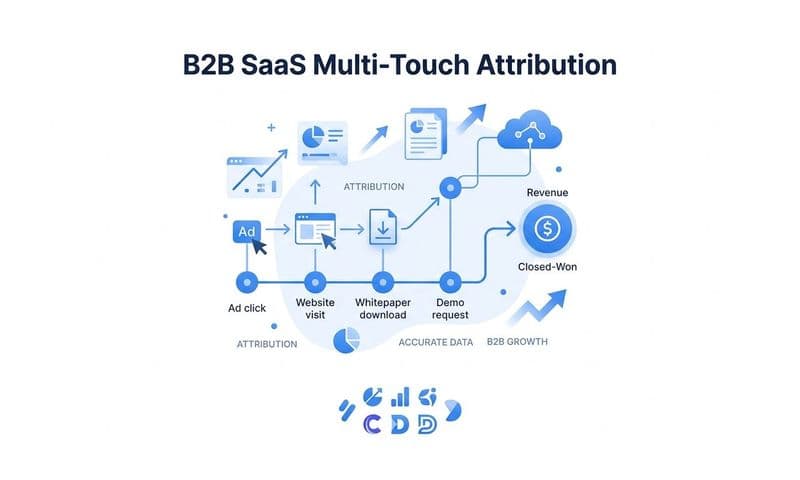
Attribution platforms like Cometly provide complete conversion visibility by connecting your ad clicks directly to CRM events and backend conversions. Instead of relying solely on browser-based tracking, Cometly captures every touchpoint in the customer journey—from the initial ad click through CRM interactions to final purchase—giving you a complete picture of what's actually driving revenue.
This approach solves the fundamental limitation of pixel-based tracking: it doesn't rely on browsers or cookies that can be blocked. By tracking at the server level and connecting ad interactions to your actual business outcomes, you get accurate attribution even when traditional tracking methods fail. You can see exactly which campaigns, ad sets, and individual ads are generating real results, not just pixel fires.
Step 6: Feed Better Data Back to Meta for Improved Optimization
Accurate tracking isn't just about reporting—it directly impacts your cost per acquisition and overall campaign performance. When you feed Meta's algorithm complete, high-quality conversion data, it can make smarter optimization decisions that reduce your costs and improve your results.
Meta's machine learning system uses conversion data to identify patterns in who converts and optimize toward finding more people like them. When you're missing 40% of your conversions, the algorithm is learning from an incomplete and potentially biased dataset. It might think certain audiences, placements, or ad creatives don't work when they actually do—you just weren't tracking the conversions they generated.
With complete conversion data flowing through Conversions API and proper event configuration, Meta's algorithm can accurately assess performance. This means better audience targeting, more efficient bid strategies, and smarter budget allocation across your campaigns. You'll notice improvements in metrics like cost per purchase, return on ad spend, and conversion rate as the algorithm optimizes with better information. Mastering Facebook conversion optimization requires this foundation of accurate data.
Use enriched conversion events to provide Meta with more context about your conversions. Beyond just sending "a purchase happened," include the purchase value, product categories, customer lifetime value indicators, and other parameters that help Meta understand what makes a valuable conversion. This allows you to optimize for high-value customers rather than just any conversion.
Set up conversion value optimization if you're tracking revenue with your purchases. This tells Meta to optimize for total conversion value rather than just conversion volume, which is crucial if your products have varying price points. The algorithm will learn to find customers who spend more, not just customers who buy.
Sending server-side events through Conversions API improves ad platform AI targeting in another critical way: it provides more accurate and complete user data. The customer information parameters you send with each conversion—email, phone, location data—help Meta match conversions to user profiles with higher confidence. This improves your Event Match Quality score and enables better lookalike audience creation.
Monitor your campaign performance metrics after implementing these tracking improvements. You should see cost per acquisition decrease over time as the algorithm optimizes with better data. Your attribution window insights will become more reliable, and you'll have greater confidence in your scaling decisions because you know the data reflects reality. Understanding Facebook ads attribution helps you interpret these improvements correctly.
Your Path to Complete Conversion Visibility
Missing conversions aren't a minor inconvenience—they're costing you money on every campaign you run. When Meta's algorithm optimizes with incomplete data, you're making decisions based on a distorted view of reality. You might be pausing winning campaigns because you can't see their true performance, or scaling losing ones because the conversions you're tracking aren't representative of actual results.
By working through these steps, you've learned how to diagnose pixel issues, understand the privacy landscape causing tracking gaps, and implement server-side solutions that capture conversions your pixel alone can't see. You've established a framework for ongoing validation to catch issues before they impact your campaigns.
Your action checklist: verify your pixel fires correctly on all conversion pages using Pixel Helper, audit your Aggregated Event Measurement setup to ensure proper domain verification and event prioritization, implement Conversions API to bypass browser-based tracking limitations, and establish weekly conversion reconciliation between your backend data and Meta's reporting.
These technical implementations will recover a significant portion of your missing conversions, but they require ongoing maintenance and monitoring. Every platform update, website change, or new privacy restriction can introduce new tracking gaps. The most successful advertisers treat conversion tracking as a continuous process, not a one-time setup.
For marketers who need complete conversion visibility without the technical complexity, Cometly connects your ad platforms directly to your CRM and backend systems, automatically capturing every touchpoint in the customer journey. Instead of piecing together data from multiple sources and hoping your tracking is accurate, you get a unified view of what's actually driving revenue—from first click to final purchase and beyond.
Cometly feeds enriched, conversion-ready events back to Meta, Google, and other ad platforms, improving their AI targeting and optimization. The result? Better optimization, lower costs, and confidence that you're scaling the right campaigns based on complete, accurate data.
Ready to elevate your marketing game with precision and confidence? Discover how Cometly's AI-driven recommendations can transform your ad strategy—Get your free demo today and start capturing every touchpoint to maximize your conversions.