$50,000 monthly Facebook ad spend. Ads Manager reports 200 conversions. Your CRM shows 87. Your bank account reflects revenue from maybe 60 customers.
Which number is real? And more importantly—which one should you use to make budget decisions?
If you've stared at these three wildly different numbers trying to figure out what's actually working, you're not alone. This isn't a technical glitch or a setup problem. It's the new reality of Facebook advertising in 2026, and it's costing advertisers millions in misallocated budget every single day.
The uncomfortable truth: Facebook's attribution reporting has become fundamentally unreliable. Not because Facebook is trying to deceive you, but because Apple's iOS privacy changes in 2021 created a "before and after" moment that broke the tracking infrastructure digital advertising was built on. When Apple gave users the choice to opt out of cross-app tracking, roughly 75-85% said no. Facebook lost visibility into the majority of user behavior overnight.
What you're looking at in Ads Manager today isn't a complete picture—it's a combination of limited actual tracking and statistical modeling. Facebook is essentially trying to track your customers' journey through a store, but can only see them in 3 out of 10 aisles. The rest is educated guesswork.
This creates a dangerous situation: you're making budget decisions—scaling campaigns, cutting ad sets, hiring agencies—based on data that's increasingly disconnected from reality. The campaigns that look profitable in Ads Manager might be losing money. The ones you cut might have been your best performers.
This guide cuts through the confusion with honest answers. You'll learn exactly how Facebook ads attribution works in 2026, what the platform can and can't track, why your numbers don't match across systems, and most importantly—how to build an attribution system that shows real revenue impact instead of platform-reported vanity metrics.
No fluff. No theoretical concepts that don't apply to your business. Just the practical knowledge you need to stop flying blind and start making confident budget decisions backed by accurate data.
Let's start with what Facebook ads attribution actually is—and why it's more broken than most advertisers realize.
What Is Facebook Ads Attribution (And Why It's More Broken Than You Think)
You're staring at three completely different conversion numbers. Facebook Ads Manager says 200. Your CRM shows 87. Your actual revenue? Maybe 60 paying customers.
Which one is telling the truth?
This isn't a technical glitch you can fix with better pixel implementation. It's the fundamental reality of Facebook advertising in 2026—and it's costing you real money every time you make a budget decision based on incomplete data.
The problem runs deeper than most advertisers realize. When Apple launched iOS 14.5 in April 2021, they didn't just add a privacy feature—they broke the tracking infrastructure that digital advertising was built on. Roughly 75-85% of iOS users opted out of cross-app tracking when given the choice. Facebook lost visibility into the majority of user behavior overnight.
What you see in Ads Manager today isn't complete tracking. It's a hybrid of limited actual data and statistical modeling—Facebook's educated guesses about what probably happened when they couldn't actually track it. The platform is trying to map your customers' journey through a store while only being able to see them in 3 out of 10 aisles.
This creates a dangerous disconnect. The campaigns that look profitable in your dashboard might be losing money. The ad sets you paused last week might have been your best performers. You're flying blind while thinking you can see clearly.
Here's what makes this particularly insidious: Facebook isn't trying to deceive you. The platform is doing the best it can within Apple's privacy constraints. But "the best it can" still means your attribution data is fundamentally unreliable—and most advertisers don't realize how unreliable until they've already made expensive scaling mistakes.
Whether you're working with a facebook ads company or managing campaigns in-house, understanding these attribution limitations is critical. Many facebook ads companies are still making optimization decisions based on platform data alone, which can lead to misallocated budgets and missed opportunities.
This guide confronts the uncomfortable truth about Facebook ads attribution in 2026. You'll learn exactly what Facebook can and can't track, why your numbers don't match across systems, how attribution windows inflate your results, and most importantly—how to build an attribution system that shows real revenue impact instead of platform-reported estimates.
No theoretical concepts. No surface-level explanations that ignore the iOS elephant in the room. Just honest answers about what's broken, why it matters, and what you can do about it.
Because the first step to fixing your attribution isn't implementing better tracking—it's understanding exactly what you're up against.
What Facebook Actually Tracks Now (And What It Guesses)
Facebook's attribution system operates in two fundamentally different modes: deterministic tracking and modeled conversions. Understanding the difference between these two is critical because most of what you see in Ads Manager today falls into the second category—educated guesses rather than confirmed data.
Deterministic tracking is the gold standard. This happens when Facebook can definitively connect a user who clicked your ad to a conversion action. The user clicks your ad while logged into Facebook, lands on your website, and completes a purchase—all while Facebook's pixel can track their journey with certainty. This is real, verifiable data.
The problem? After iOS 14.5, deterministic tracking only works for a small fraction of your traffic. When 75-85% of iOS users opted out of tracking, Facebook lost the ability to follow them across apps and websites. The pixel can still fire, but it can't connect that user back to the ad they clicked.
This is where modeled conversions enter the picture. When Facebook can't track a conversion directly, it uses statistical modeling to estimate what probably happened. The platform looks at patterns from users it can track, applies those patterns to users it can't track, and generates estimated conversion numbers.
Here's what that modeling process actually looks like. Facebook identifies users with similar characteristics—demographics, interests, behaviors—to the ones it lost visibility into. If trackable users with profile X convert at 3%, Facebook assumes untrackable users with profile X also convert at roughly 3%. It applies this logic across your entire audience and generates modeled conversion estimates.
The distinction matters because modeled conversions aren't facts—they're statistical probabilities. Facebook might estimate 200 conversions when you actually had 87. Or it might undercount if your untrackable audience behaves differently than your trackable one. You're making budget decisions based on probability distributions, not confirmed customer actions.
Most facebook ads software solutions rely on these same modeled estimates, which means the reporting discrepancies persist across platforms. Even sophisticated facebook ppc ads campaigns can't escape the fundamental limitation: if Facebook can't track the user, it has to guess.
The platform doesn't clearly distinguish between deterministic and modeled data in your reports. Both types of conversions appear in Ads Manager with equal confidence. There's no column that says "confirmed" versus "estimated." You're looking at blended numbers that combine hard data with statistical modeling, with no way to know which is which.
This creates a particularly dangerous situation for scaling decisions. When you see a campaign performing well in Ads Manager, you don't know if that performance is based on actual tracked conversions or modeled estimates. Scale based on modeled data, and you might be pouring budget into campaigns that aren't actually driving results.
The modeling also introduces systematic biases. Facebook's algorithm tends to be optimistic in its estimates—the platform has an incentive to show results that encourage continued ad spend. Independent analyses consistently show that Facebook's reported conversions exceed actual conversions when compared to first-party data sources like CRMs and analytics platforms.
Even more problematic: the modeling accuracy varies dramatically by audience segment. Facebook can model conversions more accurately for large, well-defined audiences where it has substantial training data. For smaller, niche audiences or new customer segments, the modeling becomes increasingly speculative. Your attribution accuracy depends on factors completely outside your control.
The iOS privacy changes didn't just reduce Facebook's tracking capabilities—they fundamentally changed what "Facebook ads attribution" means. You're no longer looking at a record of what happened. You're looking at a combination of partial tracking and statistical inference, presented as if it were complete data.
This is why your numbers don't match across systems. Your CRM shows actual conversions—people who definitely became customers. Facebook shows a blend of confirmed conversions and modeled estimates. Your analytics platform shows yet another number based on its own tracking limitations. None of them are wrong, exactly. They're just measuring different things.
The question isn't which number is correct. The question is which number should you trust when making budget decisions—and that's where most attribution strategies fall apart.
Why Your Numbers Don't Match (Attribution Windows Explained)
You've probably noticed that Facebook reports more conversions than your CRM. Sometimes significantly more. This isn't a tracking error—it's a feature of how attribution windows work, and understanding this mechanism is critical to interpreting your data correctly.
An attribution window is the time period after someone clicks or views your ad during which Facebook will credit that ad for a conversion. If someone clicks your ad on Monday and purchases on Wednesday, Facebook attributes that sale to your ad—assuming it falls within your attribution window settings.
Facebook offers several attribution window options: 1-day click, 7-day click, 1-day view, and 7-day view. The "click" windows track users who clicked your ad. The "view" windows track users who saw your ad but didn't click. These windows can be combined, so a "7-day click, 1-day view" setting means Facebook attributes conversions that happen within 7 days of a click or 1 day of a view.
Here's where the inflation happens. Longer attribution windows capture more conversions, but they also capture conversions that might have happened anyway. Someone who clicked your ad 6 days ago might have been planning to buy your product regardless. Facebook attributes that sale to your ad, but did the ad actually cause the purchase?
The view-through attribution is even more problematic. If someone scrolls past your ad in their feed without clicking, then purchases within the view window, Facebook counts that as a conversion. The user might not have even consciously registered seeing your ad. They might have been planning to buy for weeks. Facebook still takes credit.
This creates systematic over-reporting. Facebook is essentially claiming credit for any conversion that happens after any interaction with your ad, regardless of whether the ad actually influenced the decision. Your CRM, by contrast, simply records who became a customer. It doesn't try to attribute that customer to a specific marketing touchpoint.
The discrepancy gets worse when you consider multi-touch attribution. A user might see your Facebook ad, then click a Google ad, then visit your website directly before purchasing. Facebook attributes the sale to your Facebook ad (within the attribution window). Google attributes the same sale to your Google ad. Your analytics platform might attribute it to direct traffic. Everyone claims credit for the same conversion.
When learning how to run facebook ads effectively, understanding these attribution window mechanics is essential. Many advertisers scale campaigns based on inflated attribution window data, only to discover later that the actual revenue impact was much smaller. A proper facebook ads reporting dashboard should account for these discrepancies and provide clearer visibility into true performance.
Most advertisers don't realize they can adjust these windows. Facebook defaults to 7-day click and 1-day view attribution, which is relatively aggressive. You can shorten these windows in your Ads Manager settings, but doing so will reduce your reported conversion numbers—which is why most advertisers never change them. Nobody wants to see their performance metrics drop, even if the new numbers are more accurate.
The attribution window problem compounds with the iOS tracking limitations. Facebook is already using modeled conversions for users it can't track. Now it's applying generous attribution windows to those modeled conversions. You're looking at estimated conversions that might have happened anyway, attributed to ads that might not have influenced the decision.
This is why your Facebook numbers are always higher than your CRM numbers. Facebook is counting every conversion that happened after any ad interaction, including modeled conversions and view-throughs. Your CRM is counting actual customers. These are fundamentally different metrics, but most advertisers treat them as if they should match.
The solution isn't to distrust all Facebook data. It's to understand what the data actually represents and adjust your decision-making accordingly. Your Facebook numbers are useful for relative comparisons—this campaign versus that campaign—but they're unreliable for absolute performance measurement. You can't look at Facebook's reported ROAS and assume that's your actual return on ad spend.
The attribution window issue also affects how you should optimize campaigns. If you're using a 7-day attribution window, you're optimizing based on conversions that might have happened anyway. Shorten the window to 1-day click, and you're optimizing based on conversions that happened quickly after ad interaction—a stronger signal of ad influence. Your optimization strategy should match your attribution window settings.
Most importantly, you need a source of truth outside Facebook's attribution system. This means tracking conversions in your CRM or analytics platform and comparing those numbers to Facebook's reports. The gap between these numbers tells you how much attribution inflation you're dealing with. That gap is your reality check.
Because at the end of the day, your bank account doesn't care about Facebook's attribution windows. It only cares about actual revenue from actual customers. And that's the number you should be optimizing for.
Building an Attribution System That Actually Works
Facebook's attribution data is unreliable. Your CRM shows different numbers. Your analytics platform shows yet another set of metrics. So what do you actually optimize for?
The answer isn't choosing one system over another—it's building a multi-source attribution framework that triangulates truth from incomplete data. This requires combining platform data, first-party tracking, and revenue verification into a coherent decision-making system.
Start with first-party tracking as your foundation. Implement server-side tracking that captures conversion data directly in your database, independent of Facebook's pixel or any platform's tracking limitations. This gives you an unbiased record of what actually happened—who became a customer, when they converted, and what they purchased.
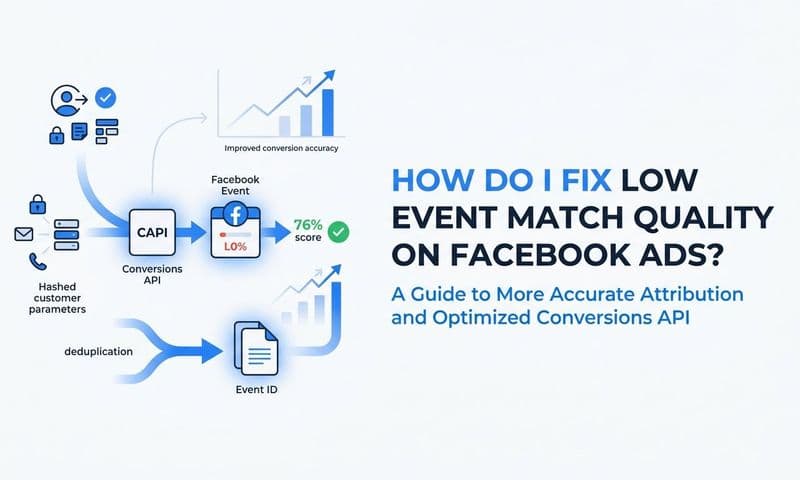
Server-side tracking works by sending conversion data from your server to Facebook's Conversions API, bypassing browser-based tracking entirely. When someone completes a purchase, your server sends that conversion event directly to Facebook with identifying information—email, phone number, or Facebook click ID. This method isn't affected by iOS privacy restrictions because it doesn't rely on cookies or cross-app tracking.
The Conversions API won't solve all your attribution problems, but it significantly improves data accuracy. Facebook can match server-side conversion events to users more reliably than pixel-based tracking, which means less reliance on modeled conversions. You're giving Facebook actual conversion data instead of forcing it to guess.
Next, implement UTM parameter tracking on all your Facebook ads. Every ad should have unique UTM parameters that identify the campaign, ad set, and specific ad. When someone clicks your ad and converts, your analytics platform captures these parameters and attributes the conversion to the specific ad that drove it.
UTM tracking provides a platform-independent attribution record. Even if Facebook's pixel fails, even if iOS blocks tracking, your analytics platform still knows which ad the user clicked because that information is embedded in the URL. This creates a parallel attribution system that you can compare against Facebook's reported data.
For agencies focused on running facebook ads for clients, this multi-source approach is essential for maintaining client trust. When clients question the ROI of their ad spend, having independent verification beyond Facebook's reporting makes all the difference. Many facebook ads management service providers now build custom attribution dashboards that combine platform data with first-party tracking to give clients a clearer picture of actual performance.
Now comes the critical step: revenue reconciliation. At the end of each month, compare three numbers: Facebook's reported conversions, your first-party tracked conversions, and your actual revenue. The gaps between these numbers reveal your attribution accuracy.
If Facebook reports 200 conversions but your first-party tracking shows 150, you know Facebook is over-attributing by about 33%. If your actual revenue matches 120 customers, you know there's additional leakage—possibly from refunds, cancellations, or fraudulent orders. These gaps become your calibration factors.
Use these calibration factors to adjust your optimization decisions. If Facebook consistently over-reports by 30%, mentally discount all Facebook metrics by 30% when making scaling decisions. If a campaign shows a 3x ROAS in Facebook but you know the platform over-attributes by 30%, your real ROAS is probably closer to 2.1x. Make budget decisions based on the adjusted number, not the reported number.
This approach requires discipline because it means ignoring the optimistic numbers Facebook shows you. It's psychologically difficult to look at a campaign reporting 4x ROAS and treat it as if it's actually 2.8x. But this discipline is what separates profitable advertisers from those who scale into losses.
Implement cohort-based analysis to track long-term customer value. Don't just measure immediate conversions—track how customers acquired through Facebook ads perform over 30, 60, and 90 days. Some campaigns might show strong immediate ROAS but acquire low-quality customers who cancel quickly. Others might show weaker immediate ROAS but acquire high-LTV customers who stick around.
Your attribution system should also account for incrementality. Run periodic holdout tests where you pause all Facebook ads for a segment of your audience and measure how many conversions still happen. This tells you what your baseline conversion rate is without ads—the conversions that would have happened anyway. The difference between your baseline and your ads-on performance is your true incremental impact.
Incrementality testing is uncomfortable because it often reveals that your ads are less effective than attribution reports suggest. You might discover that 40% of your attributed conversions would have happened without ads. But this knowledge is valuable—it prevents you from over-investing in channels that aren't actually driving incremental growth.
Build a custom dashboard that combines all these data sources. Don't rely on Facebook Ads Manager as your single source of truth. Create a reporting system that shows Facebook's reported metrics alongside first-party tracked conversions, actual revenue, and calibrated performance estimates. This dashboard becomes your decision-making interface.
The dashboard should make discrepancies visible, not hidden. Show the gap between Facebook's numbers and your first-party numbers. Display your calibration factors. Make it obvious when Facebook is over-attributing so you don't accidentally make decisions based on inflated metrics.
Finally, accept that perfect attribution is impossible. Even with server-side tracking, UTM parameters, revenue reconciliation, and incrementality testing, you'll never have complete certainty about which ads drove which conversions. The goal isn't perfect attribution—it's good enough attribution to make confident budget decisions.
Good enough means knowing your numbers are directionally correct even if they're not precisely accurate. It means having calibration factors that account for known biases. It means building decision-making frameworks that work with imperfect data rather than waiting for perfect data that will never arrive.
Because in 2026, the advertisers who win aren't the ones with perfect tracking. They're the ones who build robust attribution systems that work despite imperfect tracking—and make better decisions than competitors who are still flying blind based on platform-reported vanity metrics.
Ready to elevate your marketing game with precision and confidence? Discover how Cometly's AI-driven recommendations can transform your ad strategy—**Get your free demo** today and start capturing every touchpoint to maximize your conversions.