Your Facebook Ads Manager shows 89 conversions this month. Your Shopify dashboard shows 52 actual orders. You're optimizing campaigns based on data that's 41% wrong—and Facebook's algorithm is learning from those same phantom conversions.
This isn't a minor tracking glitch. It's the hidden reason your "winning" campaigns lose money when you scale them.
Here's what's actually happening: Every time Facebook's algorithm receives incomplete conversion data, it draws the wrong conclusions about who your customers are. It finds more people who click your ads but don't buy. It allocates budget to audiences that look promising but don't convert. It scales creative that generates engagement but not revenue.
The problem got dramatically worse after iOS 14.5 introduced App Tracking Transparency. Browser-based tracking now misses 30-40% of actual conversions for most advertisers. Multi-device journeys break attribution chains. Privacy settings block cookies. Time delays exceed attribution windows.
And here's the painful part: Most optimization advice assumes your tracking works perfectly. Test new creative. Refine your audiences. Adjust your bidding strategy. All of that is built on a foundation of bad data.
You can't optimize what you can't measure accurately.
This guide takes a different approach. We're going to fix your data layer first, then optimize everything else. You'll learn how to diagnose exactly where your conversion tracking breaks down, implement server-side tracking that captures the conversions Facebook Pixel misses, configure your conversion events so the algorithm optimizes for revenue instead of vanity metrics, and systematically test and scale based on accurate attribution data.
The outcome? Facebook's algorithm finally learns the right lessons about who actually converts. Your cost per acquisition drops. Your return on ad spend improves. And when you scale, campaigns stay profitable instead of falling apart.
This isn't theoretical. Fixing attribution accuracy is the single highest-leverage optimization most advertisers never make. The initial setup takes 2-3 hours. Ongoing optimization requires about 30 minutes weekly. But the impact compounds over time as Facebook's algorithm gets smarter about finding your real customers.
Let's walk through how to optimize your Facebook conversions step-by-step, starting with the foundation most marketers skip.
Step 1: Diagnose Your Attribution Accuracy
You can't fix what you can't measure. Before touching campaign settings or creative, you need to know exactly how inaccurate your current tracking is.
Most advertisers skip this step. They assume their Facebook Pixel is working because it shows "Active" in Events Manager. But a functioning pixel doesn't mean accurate attribution. It just means events are firing—not that they're capturing the complete picture of who actually converts.
Here's how to diagnose your attribution gaps systematically.
The Facebook Data vs. Reality Test
Start by comparing Facebook's reported conversions to your actual business results. This reveals your baseline attribution accuracy.
Export the last 30 days of conversion data from Facebook Ads Manager. Go to Ads Manager, click the date range selector, choose the past 30 days, then export your results to CSV. You want the total number of conversions Facebook attributes to your campaigns.
Now pull your actual sales or leads from your source of truth—your Shopify dashboard, CRM, payment processor, or lead management system. Count every transaction or qualified lead that occurred in the same 30-day period.
Calculate your attribution gap using this formula: (Facebook conversions minus actual conversions) divided by actual conversions, multiplied by 100. This percentage tells you how far off Facebook's data is from reality.
If Facebook shows 127 conversions but you only had 84 actual orders, your attribution gap is 51%. That means Facebook's algorithm is optimizing based on data that's off by half—it's finding people who click but don't buy, then looking for more people just like them.
Document which specific conversion events show the largest discrepancies. Purchase events might be 40% inflated while lead events are only 15% off. This tells you where to focus your tracking improvements.
Identify Your Conversion Leak Points
Now you need to understand where and why your tracking fails. Attribution gaps don't happen randomly—they follow predictable patterns.
The biggest leak is multi-device journeys. Someone clicks your Facebook ad on their phone during lunch, then comes back on their laptop that evening to complete the purchase. Facebook Pixel tracked the mobile click but can't connect it to the desktop conversion three hours later. The sale happens, but Facebook never knows about it.
These conversion leaks stem from fundamental attribution challenges that affect all digital advertising platforms. Understanding comprehensive multi-touch attribution reveals why single-touch models like Facebook's default attribution miss 30-40% of the actual customer journey. For Facebook specifically, this means your Pixel captures the last click but misses the awareness touchpoints that made that click possible.
Long consideration cycles create another leak point. B2B leads that convert 14 days after first touch fall outside Facebook's default 7-day attribution window. The conversion happens, but Facebook's already stopped counting it. Your CRM shows the lead came from Facebook, but Facebook's algorithm never learns from that success.
Cross-channel attribution adds complexity. Facebook drives initial awareness, but the prospect converts through a Google Ads search three days later. Facebook played a crucial role, but gets zero credit. Your Google campaigns look like heroes while Facebook appears ineffective, leading to budget misallocation across channels.
Step 2: Implement Server-Side Conversion Tracking
Browser-based tracking is dying. Facebook Pixel alone now misses 30-40% of actual conversions because of iOS privacy changes, cookie restrictions, and ad blockers. If you're optimizing campaigns based only on what your Pixel sees, you're teaching Facebook's algorithm to find the wrong customers.
Server-side tracking fixes this. Facebook's Conversions API (CAPI) sends conversion data directly from your server to Facebook, bypassing browser limitations entirely. It captures cross-device journeys, delayed conversions, and purchases that happen days after the initial ad click—all the conversions your Pixel misses.
This isn't optional anymore. It's the foundation of accurate attribution in 2025.
Set Up Facebook Conversions API
Access your Facebook Events Manager and navigate to Data Sources. You'll see your existing Pixel listed—now you're adding a server-side companion to it.
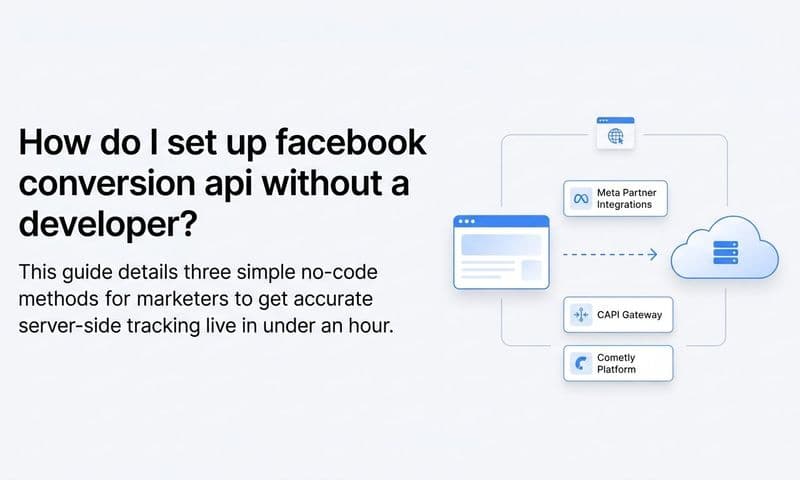
You have two implementation paths. Partner platforms integrate CAPI automatically through your e-commerce platform, CRM, or analytics tool. This is the fastest route—most integrations take 15-30 minutes and require no coding. Manual API implementation gives you complete control but requires developer resources and ongoing maintenance.
For most advertisers, partner platforms make sense. Modern attribution software handles CAPI setup automatically while providing cross-platform tracking, unified dashboards, and advanced attribution modeling—eliminating the technical complexity of manual implementation.
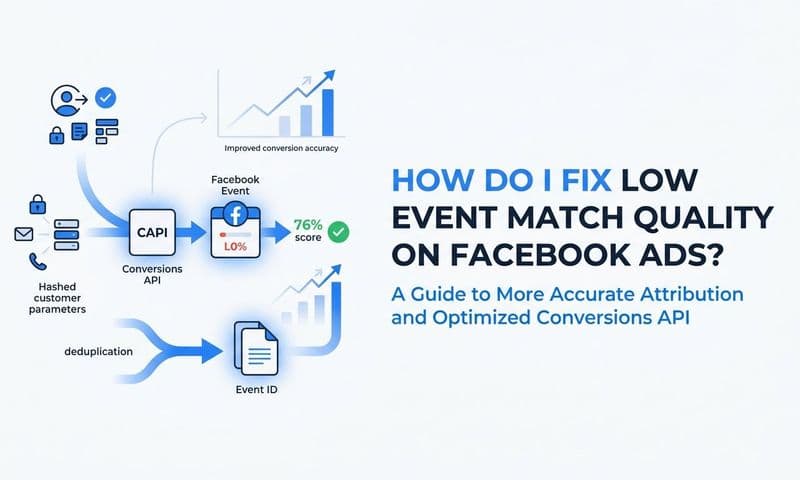
Whichever path you choose, you'll need to configure server event parameters. Every conversion event needs an event name (Purchase, Lead, CompleteRegistration), event time (when it actually happened, not when it was sent), user data (hashed email, phone, name, location), and custom data (order value, product IDs, quantity).
Generate your Conversions API access token in Events Manager and store it securely. This token authenticates your server's connection to Facebook—treat it like a password. Test that events flow from your server to Facebook within minutes by triggering a test conversion and checking Events Manager for the "Server" event source.
Enrich Your Conversion Data
Here's what most advertisers miss: CAPI isn't just about capturing more conversions. It's about sending higher-quality data that trains Facebook's algorithm more effectively.
Include every customer data parameter you have: hashed email, phone number, first name, last name, city, state, zip code, country. Pass complete order details: value, currency, contentids, contenttype, number of items. Attach UTM parameters and Facebook click IDs (fbclp and fbc) to maintain attribution chains.
The more parameters you include, the better Facebook's algorithm understands who your customers are. This shows up in your Event Match Quality score—a metric that grades your data completeness on a scale of 0-10.
Manually passing enriched data to Facebook's API requires ongoing developer resources and maintenance. Modern conversion sync technology automates this process, continuously sending enriched conversion data from your CRM, payment processor, and analytics platforms directly to Facebook's Conversions API. This automation ensures your Event Match Quality stays consistently high without manual intervention.
For lead generation businesses, connect CRM events beyond the initial form submission. Send "Qualified Lead," "Sales Call Scheduled," and "Closed Won" events back to Facebook so the algorithm learns which leads actually convert to revenue, not just which ones fill out forms.
Step 3: Configure Value-Based Conversion Events
Facebook's algorithm optimizes for whatever you tell it to optimize for. If you're tracking "Purchase" events without passing order values, Facebook finds people who buy—but not necessarily people who buy a lot.
This is why two advertisers in the same industry can get wildly different results. One optimizes for any purchase and gets customers who spend $20. The other optimizes for purchase value and gets customers who spend $200. Same product, same audience, different optimization signal.
Value-based conversion events teach Facebook's algorithm to prioritize quality over quantity.
Set Up Purchase Value Tracking
Every purchase event you send to Facebook should include the actual order value. This single parameter transforms how the algorithm optimizes your campaigns.
In your Facebook Pixel code, add the value parameter to your Purchase event: fbq('track', 'Purchase', {value: 127.50, currency: 'USD'}). The value should be the actual order total, and currency must match your ad account currency.
For Conversions API, include the same parameters in your server event: "eventname": "Purchase", "customdata": {"value": 127.50, "currency": "USD"}. Consistency between Pixel and CAPI events is critical—Facebook uses both signals to improve attribution accuracy.
If you sell multiple products with different margins, consider passing profit instead of revenue. A $100 sale with 60% margin is more valuable than a $150 sale with 20% margin. Teaching Facebook to optimize for profit rather than revenue can dramatically improve your actual ROI.
Test your value tracking by making a test purchase and checking Events Manager. The Purchase event should show the correct dollar amount. If it shows $0.00 or a static value like $1.00, your value parameter isn't passing correctly.
Create Custom Conversion Events for High-Value Actions
Not all conversions are created equal. A lead who books a sales call is worth more than someone who downloads a free guide. A customer who buys your premium product is more valuable than someone who buys your entry-level offer.
Custom conversion events let you teach Facebook these distinctions. Instead of optimizing for generic "Lead" events, you can optimize for "Qualified Lead" or "High-Intent Lead" events that represent prospects more likely to close.
Create custom events in Facebook Events Manager by going to Data Sources, selecting your Pixel, and clicking "Create Custom Conversion." Define the rules that trigger this event—URL contains "/thank-you-premium" or event name equals "HighValuePurchase."
For e-commerce, create separate events for different product tiers. Track "Premium Purchase" for orders over $200, "Standard Purchase" for orders $50-200, and "Entry Purchase" for orders under $50. Run separate campaigns optimizing for each tier to see which audience segments convert at which price points.
For lead generation, implement proper conversion tracking throughout your entire funnel—not just at form submission. Track when leads become qualified, when they book calls, when they show up to appointments, and when they close. This multi-stage tracking reveals which traffic sources generate leads that actually convert to revenue.
Implement Lead Quality Scoring
If you're running lead generation campaigns, Facebook needs to know which leads are actually valuable. Otherwise, it optimizes for form submissions regardless of lead quality.
Connect your CRM to Facebook through Conversions API and send lead quality signals back. When a lead qualifies, send a "Qualified Lead" event. When they book a call, send "Call Scheduled." When they become a customer, send "Purchase" with the deal value.
This closed-loop feedback teaches Facebook's algorithm the difference between tire-kickers and serious buyers. Over time, the algorithm gets better at finding people who don't just submit forms—they become customers.
For B2B companies with long sales cycles, understanding big query ga4 marketing attribution helps connect initial ad clicks to eventual revenue months later. This long-term attribution view reveals which campaigns drive qualified pipeline, not just which ones generate immediate form fills.
Set up offline conversion tracking if your sales happen outside your website. Upload closed deals to Facebook with the original lead ID so the algorithm can connect ad clicks to revenue. This is critical for high-ticket B2B offers where the sale happens weeks or months after the initial ad interaction.
Step 4: Optimize Campaign Structure for Conversion Learning
Facebook's algorithm needs data to learn. If your campaigns are structured in ways that fragment conversion data across dozens of ad sets, the algorithm never gets enough signal to optimize effectively.
This is the hidden reason consolidation often outperforms segmentation. It's not that targeting doesn't matter—it's that the algorithm needs volume to learn patterns.
Consolidate to Accelerate Learning
Facebook's algorithm needs about 50 conversions per week per ad set to exit the learning phase and optimize effectively. If you're spreading conversions across 10 ad sets, each getting 5 conversions weekly, none of them ever learn properly.
Audit your current campaign structure and count weekly conversions per ad set. Any ad set getting fewer than 50 conversions per week is probably stuck in limited learning mode—Facebook shows a "Learning Limited" warning when this happens.
Consolidate underperforming ad sets into fewer, higher-volume ad sets. Instead of running 8 ad sets targeting different interest audiences, run 2-3 broader ad sets and let Facebook's algorithm find the right people within those audiences.
Use Campaign Budget Optimization (CBO) to let Facebook allocate budget to the ad sets that drive the most conversions. CBO shifts spend toward what's working in real-time, rather than locking budget into predetermined allocations that might not match performance.
For proper implementation of these tracking fundamentals, follow comprehensive guides on setting up conversion tracking that work across platforms. While that guide focuses on Google Ads, the principles of proper event configuration, value tracking, and conversion validation apply equally to Facebook campaigns.
Choose the Right Campaign Objective
Your campaign objective tells Facebook what to optimize for. Choose wrong, and the algorithm optimizes for the wrong outcome—no matter how good your targeting or creative is.
For direct sales, use Sales campaigns with Purchase conversion events. Facebook finds people likely to buy and optimizes for transaction value when you pass purchase values correctly.
For lead generation, use Lead Generation campaigns if you're using Facebook's native forms, or Traffic/Conversions campaigns if leads submit forms on your website. Optimize for the conversion event that best represents a qualified lead—not just form submissions.
Avoid Engagement or Traffic objectives unless you specifically need awareness. These objectives optimize for clicks and interactions, not conversions. You'll get lots of engagement from people who never buy.
Match your bid strategy to your business model. If you know your target cost per acquisition, use Cost Cap bidding to maintain profitability while scaling. If you're testing new audiences and don't have cost targets yet, use Lowest Cost bidding to gather data quickly.
Set Appropriate Attribution Windows
Facebook's default 7-day click, 1-day view attribution window works for impulse purchases. But if your product has a longer consideration cycle, you're undercounting conversions and confusing the algorithm.
For high-ticket offers, B2B products, or anything with a consideration cycle longer than a week, extend your attribution window to 28-day click, 7-day view. This captures conversions that happen after prospects research, compare options, and make decisions.
Check your actual conversion lag in Facebook Analytics. If 30% of your conversions happen 8-14 days after ad click, you're missing those conversions with a 7-day window. The algorithm thinks those campaigns underperform when they're actually driving delayed conversions.
Balance attribution accuracy with optimization speed. Longer windows capture more conversions but slow down learning because the algorithm waits longer to see results. For most businesses, 7-day click works well for optimization while 28-day click provides accurate reporting.
Step 5: Test and Scale with Data Integrity
Now that your tracking is accurate and your campaigns are structured for learning, you can actually trust your optimization decisions. This is where most advertisers finally see breakthrough results—not because they found some secret targeting hack, but because they're making decisions based on accurate data.
Run Proper Conversion Lift Tests
Facebook's Conversion Lift studies show you the true incremental impact of your ads by comparing conversion rates between people who saw your ads and people who didn't.
This is the gold standard for measuring ad effectiveness because it accounts for people who would have converted anyway. Your attribution reports might show 100 conversions, but lift tests reveal that only 60 of those were actually caused by your ads—the other 40 would have happened regardless.
Set up a conversion lift test in Experiments Manager. Facebook splits your audience into test and control groups, shows ads only to the test group, then measures the conversion rate difference. The test requires at least 200 conversions to reach statistical significance.
Use lift test results to validate your attribution model. If Facebook attributes 100 conversions but your lift test shows only 60 incremental conversions, your attribution is inflated by 40%. This tells you to discount reported ROAS by that percentage when making budget decisions.
Scale Winning Campaigns Methodically
Once you've identified campaigns that drive profitable conversions based on accurate data, scale them systematically to avoid resetting the learning phase.
Increase budgets by no more than 20% every 3 days. Larger increases reset Facebook's learning phase, temporarily tanking performance while the algorithm relearns optimal delivery.
Duplicate winning ad sets rather than just increasing budgets. This lets you scale faster while maintaining multiple learning paths. If one ad set hits performance ceilings, others continue optimizing.
Expand targeting gradually by broadening interest audiences or testing Advantage+ audience expansion. Let Facebook's algorithm find new pockets of high-converting users within broader targeting parameters.
Monitor your attribution accuracy as you scale. Tracking that works at $1,000/day might break at $10,000/day if your server infrastructure can't handle the increased event volume. Regular audits ensure your data stays accurate as spend increases.
Maintain Ongoing Attribution Hygiene
Attribution accuracy isn't a one-time fix. It requires ongoing maintenance as platforms update, tracking methods change, and your business evolves.
Run monthly attribution audits comparing Facebook's reported conversions to actual business results. If your attribution gap grows beyond 15%, investigate what changed—new iOS updates, tracking implementation errors, or shifts in customer behavior.
Monitor your Event Match Quality score weekly. Scores below 6.0 indicate data quality issues that limit Facebook's optimization effectiveness. Fix missing parameters, improve data hashing, or enhance your server-side implementation.
Test your tracking after any website changes, platform updates, or integration modifications. A seemingly minor update to your checkout flow can break conversion tracking entirely. Catch these issues immediately rather than optimizing based on incomplete data for weeks.
Document your attribution methodology so your entire team understands how conversions are tracked, what the limitations are, and how to interpret the data correctly. This prevents optimization decisions based on misunderstood metrics.
The advertisers who consistently win with Facebook aren't the ones with the best creative or the smartest targeting. They're the ones whose data is accurate enough to make the right optimization decisions consistently. Fix your attribution foundation first, then optimize everything else. That's how you turn Facebook campaigns from a frustrating money pit into a predictable growth engine.
Ready to elevate your marketing game with precision and confidence? Discover how Cometly's AI-driven recommendations can transform your ad strategy—Get your free demo today and start capturing every touchpoint to maximize your conversions.