You're spending thousands on ads across Meta, Google, TikTok, and LinkedIn. Your dashboard shows clicks and impressions, but when a sale comes through, you have no idea which ad actually drove it. Was it the Facebook ad they saw last week? The Google search they did yesterday? Or that retargeting campaign running in the background?
This is the attribution black box that drains marketing budgets and kills growth. Without accurate attribution, you're flying blind—scaling campaigns that might not work while pausing the ones that actually drive revenue.
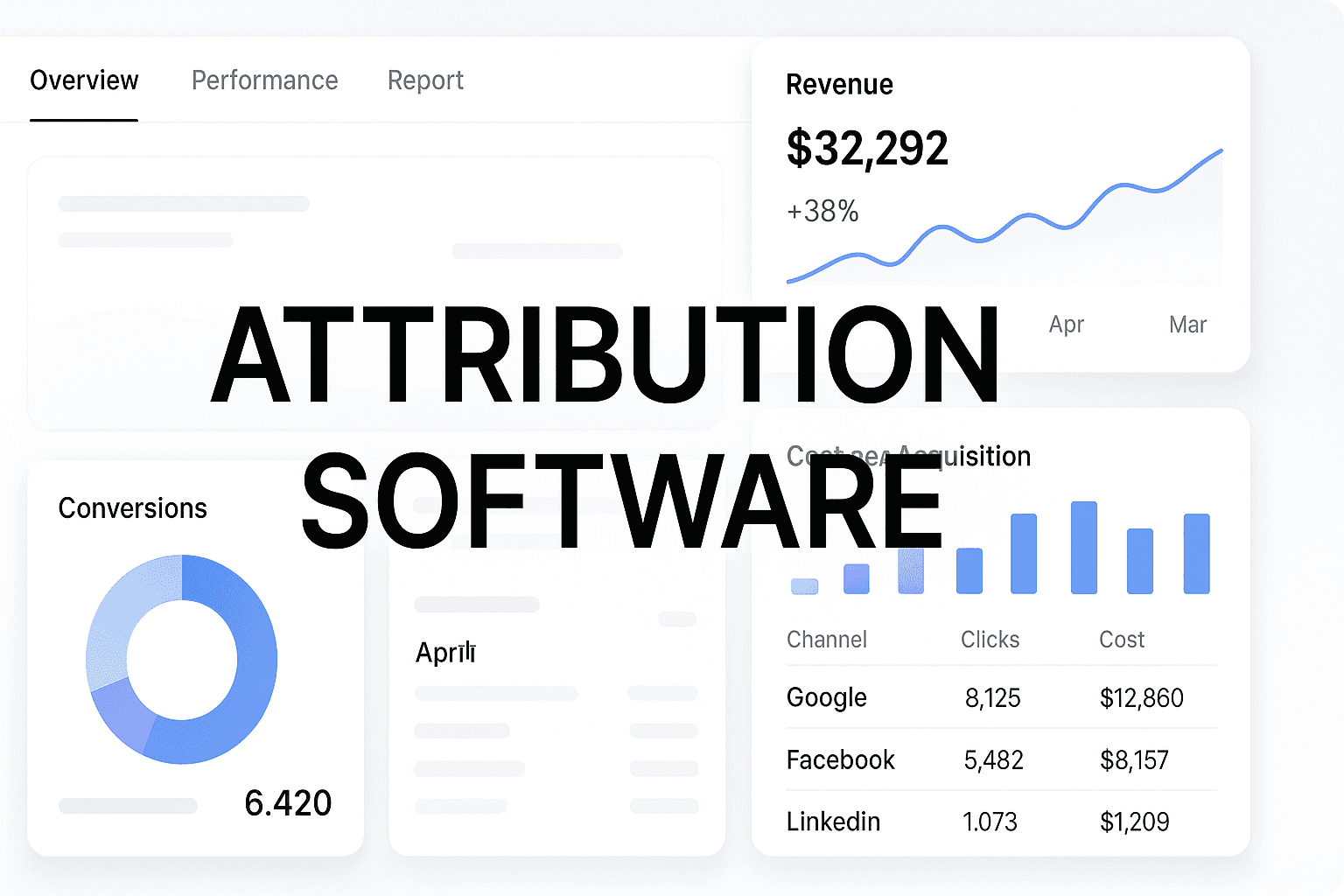
Modern attribution software solves this by connecting every customer touchpoint to actual revenue. These platforms track the full customer journey across channels, devices, and sessions, then use sophisticated models to show which marketing efforts deserve credit for conversions.
The right attribution tool transforms how you make decisions. Instead of guessing which campaigns to scale, you see exactly which ads, keywords, and channels generate profitable customers. You can compare attribution models, analyze customer paths, and feed better data back to ad platforms to improve their AI targeting.
Here are the leading attribution software platforms for 2026, compared by their strengths, features, and ideal use cases so you can find the right fit for your marketing stack.
1. Cometly
Best for: Marketers and agencies who need AI-powered attribution with complete customer journey tracking and seamless ad platform integration
Cometly is a marketing attribution and analytics platform built specifically for performance marketers who demand accuracy beyond what ad platforms report natively.
 9 Best Attribution Software Tools To Track Revenue In 2026
Where This Tool Shines
Cometly captures every touchpoint in the customer journey—from initial ad click through CRM events—giving you a complete, enriched view of how customers convert. Unlike basic analytics tools that only track surface-level metrics, Cometly connects every interaction to actual revenue so you know what's really driving results.
The platform's AI analyzes performance across all ad channels simultaneously, identifying high-performing campaigns and providing specific recommendations for scaling. This isn't just reporting—it's intelligence that tells you exactly where to invest your next dollar. The AI-powered insights help you spot patterns that manual analysis would miss, especially when managing campaigns across Meta, Google, TikTok, and other platforms.
What sets Cometly apart is how it feeds enriched conversion data back to ad platforms through Conversions API integration. This creates a feedback loop where your ad platforms receive better signals, improving their AI targeting and optimization over time. You're not just tracking performance—you're actively improving it.
Key Features & Capabilities
Complete Journey Tracking: Captures every touchpoint across all ad platforms, website interactions, and CRM events for a unified customer view.
AI-Powered Recommendations: Identifies winning campaigns and provides specific optimization suggestions based on performance patterns across channels.
Multiple Attribution Models: Compare first-touch, last-touch, linear, time-decay, and data-driven approaches to understand which channels deserve credit from different analytical perspectives.
Server-Side Tracking: Implements reliable data collection that works beyond browser limitations while feeding enriched signals back to Meta, Google, and TikTok.
Real-Time Revenue Dashboard: Shows which sources actually convert to revenue, not just clicks or impressions, enabling faster optimization decisions.
Custom Event Tracking: Monitor lead quality, lifetime value, and post-purchase behavior to understand which channels bring your best customers.
Agency Workspace Management: Handle multiple client accounts with separate data access and reporting for each business.
Best For / Ideal Users
Cometly is built for performance marketers, growth teams, and agencies managing significant ad spend across multiple channels. It's ideal if you're frustrated with platform attribution discrepancies where Meta claims one conversion number and Google claims another—Cometly provides the source of truth.
2. HubSpot Marketing Analytics
Best for: B2B companies already using HubSpot CRM who need attribution integrated with their entire marketing and sales stack
HubSpot Marketing Analytics connects marketing activities directly to closed deals in your CRM, providing attribution that spans the entire revenue cycle from first touch to final sale.
 6 Best Attribution Modeling For Marketing Platforms That Track Real ROI
Where This Tool Shines
HubSpot's attribution power comes from its ecosystem integration. When your email campaigns, landing pages, social posts, blog content, and paid ads all live in HubSpot, the platform automatically tracks how these touchpoints influence deals in your pipeline. This matters for B2B marketers because you're not just tracking immediate conversions—you're seeing which content assets and interactions influence buying decisions across sales cycles that span weeks or months.
The native CRM connection eliminates the data silos that plague most attribution efforts. Marketing sees which campaigns generate qualified leads. Sales sees which marketing touchpoints influenced their deals. Leadership sees marketing's actual revenue contribution. Everyone works from the same attribution data, which transforms how teams collaborate and allocate budget.
Key Features & Capabilities
Multi-Touch Attribution Models: Choose between first-touch, last-touch, linear, time-decay, and custom models to analyze how different touchpoints contribute throughout the buyer journey.
Revenue Attribution Reports: Connect marketing campaigns directly to closed revenue, showing which efforts generate pipeline and which drive deals across the finish line.
Contact Timeline Tracking: View every interaction a contact has with your brand—email opens, page views, form submissions, ad clicks—in chronological order before conversion.
Campaign Performance Dashboard: Track ROI across email, social, ads, and content in one unified view that shows cost per lead and cost per customer by campaign.
Custom Report Builder: Create attribution reports for specific customer segments, deal stages, or time periods to answer precise business questions.
Deal Influence Analytics: See which marketing assets influenced specific deals, helping sales teams understand what content resonates with prospects.
Best For / Ideal Users
HubSpot attribution works best for B2B companies with defined sales processes who already use HubSpot for CRM and marketing automation. It's ideal if you need to prove marketing's revenue contribution to leadership or align marketing and sales teams around shared performance metrics.
The platform fits companies where most marketing activities happen within HubSpot's ecosystem. If you're running significant campaigns outside HubSpot, you'll need additional integration work to capture complete attribution data.
Pricing
Attribution reporting is included in HubSpot Marketing Hub Professional ($800/month) and Enterprise plans. The CRM is required for full attribution functionality, which adds to the total cost.
3. Google Analytics 4
Best for: Businesses needing free, basic attribution across web and app properties with Google Ads integration
Google Analytics 4 offers multi-channel attribution modeling at no cost, making it accessible for businesses of any size.
 10 Best Enterprise Channel Analytics Software To Maximize Marketing ROI
Where This Tool Shines
GA4's biggest advantage is its price—free—and its universal adoption. The platform tracks user journeys across websites and apps, providing basic multi-touch attribution through its data-driven model. For businesses heavily invested in Google Ads, the native integration shows how search campaigns interact with other channels before conversion.
GA4's machine learning fills in gaps from cookie limitations, estimating user behavior when direct tracking isn't possible. The data-driven attribution model analyzes actual conversion paths to assign credit based on impact rather than predetermined rules. While not as sophisticated as dedicated attribution platforms, it provides foundational insights without additional software costs or complex implementation.
Key Features & Capabilities
Data-Driven Attribution Model: Uses machine learning to assign conversion credit based on how different touchpoints actually influence conversions in your data.
Cross-Device Tracking: Attempts to unify user journeys across devices when users are signed into Google accounts, connecting mobile research to desktop conversions.
Google Ads Integration: Native connection shows how search campaigns work with other channels, with automatic import of campaign data and conversion tracking.
Conversion Path Reports: Shows the sequence of channels users interact with before converting, revealing common journey patterns.
Event-Based Tracking: Flexible event structure allows tracking custom conversions and user actions beyond standard pageviews.
Audience Building: Create segments based on attribution insights for retargeting campaigns across Google's advertising network.
Best For / Ideal Users
GA4 works for small to mid-sized businesses starting their attribution journey, or companies primarily focused on organic traffic and Google Ads. It's ideal if you need basic multi-channel visibility without budget for specialized tools.
The platform suits businesses with straightforward customer journeys where most conversions happen within a few sessions. Companies running primarily Google Ads campaigns benefit most from the native integration and seamless data flow.
GA4 makes sense as a starting point before investing in advanced attribution platforms, or as a complementary tool alongside other analytics systems for cross-validation.
Pricing
Google Analytics 4 is free for standard use with no limits on basic reporting features. Google Analytics 360 (enterprise version) starts around $50,000 annually and includes advanced attribution features, unsampled data, BigQuery integration, and dedicated support.
4. Ruler Analytics
Best for: Marketing teams that need to connect offline conversions and phone calls back to original marketing sources
Ruler Analytics is a marketing measurement platform that specializes in closed-loop attribution, tracking leads from first click through to closed revenue while capturing offline conversions that most tools miss.
 9 Best Attribution Software Tools To Track Revenue In 2026
Where This Tool Shines
Ruler solves the critical gap that frustrates B2B and service-based businesses—connecting phone calls and offline conversions back to the marketing campaigns that generated them. While most attribution tools stop at form submissions or website conversions, Ruler tracks phone calls, live chat interactions, and form fills back to their original marketing source, then follows those leads through your CRM to closed deals.
This matters enormously for businesses where phone calls drive significant revenue. Traditional analytics shows you got clicks and website visits, but when a prospect picks up the phone and becomes a customer, that conversion disappears from your data. Ruler's call tracking attributes those phone conversions to specific keywords, ads, and campaigns—finally showing which marketing efforts generate actual customers, not just website traffic.
The platform's CRM integrations mean you can track the complete journey from anonymous visitor to closed deal. You see which marketing channels generate leads that actually convert to revenue, not just which ones generate the most form submissions. This transforms ROI reporting from vanity metrics to actual business outcomes that leadership cares about.
Key Features & Capabilities
Call Tracking with Source Attribution: Assigns phone conversions back to the original marketing source, keyword, or campaign that drove the call.
Form and Lead Capture Tracking: Monitors form submissions and live chat interactions with full source attribution across all channels.
CRM Integration for Revenue Tracking: Connects with popular CRM platforms to follow leads through your sales process and attribute closed revenue to marketing sources.
Multi-Touch Attribution Models: Analyzes the full customer journey with first-touch, last-touch, linear, and custom attribution models.
Marketing Mix Modeling: Provides aggregate analysis of channel contribution to understand overall marketing effectiveness.
Automated Data Sending: Feeds conversion data back to Google Ads and Facebook to improve their targeting algorithms with offline conversion signals.
Best For / Ideal Users
Ruler Analytics is built for B2B companies, professional services firms, and high-ticket B2C businesses where phone calls represent a primary conversion method. Law firms, financial services, home services, healthcare providers, and B2B SaaS companies with sales teams all benefit from connecting calls to campaigns.
The platform works best when you have a defined sales process tracked in a CRM and need to prove which marketing channels generate actual revenue, not just leads. If your business relies on phone consultations or sales calls to close deals, Ruler fills the attribution gap that other platforms miss.
5. Mixpanel
Best for: Product-led companies and SaaS businesses that need event-based attribution and user behavior analytics to understand which acquisition channels drive valuable, engaged customers
Mixpanel is a product analytics platform that tracks user behavior through event-based analysis, connecting acquisition sources to in-product engagement, activation, and long-term retention.
 6 Best Enterprise Conversion Path Analytics Tools To Maximize ROI In 2026
Where This Tool Shines
Mixpanel excels at answering the question most attribution tools miss: which channels bring users who actually stick around? While traditional software on attribution shows which campaigns drive signups, Mixpanel reveals which campaigns drive users who activate features, engage regularly, and convert to paid plans.
The platform's event-based tracking captures every meaningful action users take inside your product—from feature adoption to upgrade triggers. This matters because a signup from Facebook might look identical to one from Google in basic analytics, but Mixpanel shows that Facebook users activate 40% faster while Google users have higher 90-day retention. These insights transform how you allocate acquisition budget.
For SaaS and app-based businesses, Mixpanel's cohort analysis becomes invaluable. You can segment users by acquisition source, then track how each cohort performs over weeks or months. This reveals whether that expensive paid social campaign actually delivers users with strong lifetime value, or just vanity metrics that churn quickly.
Key Features & Capabilities
Event-Based Tracking: Captures specific user actions (feature clicks, page views, purchases) rather than just sessions, providing granular insight into behavior patterns by acquisition channel.
Cohort Analysis: Groups users by acquisition source and tracks their behavior over time, revealing which channels bring users with the best retention and engagement metrics.
Funnel Reports: Shows conversion rates from acquisition through activation, engagement, and monetization, with breakdowns by traffic source to identify drop-off points.
Retention Analysis: Measures how long users from different channels continue engaging with your product, connecting acquisition quality directly to long-term value.
User Profiles: Creates complete timelines showing each user's journey from first touch through all product interactions, making it easy to understand paths to conversion.
A/B Testing Integration: Connects experiment results to acquisition channels, showing which sources bring users most likely to respond positively to product changes.
Best For / Ideal Users
Mixpanel is built for product teams, growth marketers, and SaaS companies where product engagement determines success. It's ideal if your business model depends on activation and retention rather than just initial conversions.
The platform works especially well for mobile apps, web applications, and subscription businesses where understanding user behavior post-acquisition is critical to growth strategy and budget allocation decisions.
6. Segment
Best for: Companies needing a customer data platform that feeds attribution data to multiple marketing and analytics tools
Segment acts as the data infrastructure layer that makes accurate attribution possible across your entire marketing stack.
 9 Best Attribution Software Tools To Track Revenue In 2026
Where This Tool Shines
Segment isn't an attribution platform itself—it's the foundation that ensures every attribution tool in your stack gets complete, consistent data. The platform captures customer interactions once from websites, mobile apps, servers, and cloud tools, then distributes that data to your attribution software, CRM, email platforms, and analytics systems in real-time.
This solves the critical "data silo" problem where different tools have incomplete pictures of the customer journey. Your attribution platform might see website behavior but miss app interactions. Your CRM might track sales calls but not know which ad drove them. Segment unifies all these touchpoints, creating what they call a "Golden Profile" that compiles every customer interaction in one place.
For companies with complex tech stacks, Segment eliminates the engineering burden of building and maintaining custom integrations between every tool. The platform's identity resolution connects user behavior across devices and sessions, ensuring your attribution analysis tracks the same person even when they switch from mobile to desktop or clear their cookies.
Key Features & Capabilities
Single API Collection: Capture customer data from all sources—web, mobile, server-side, and cloud applications—through one unified implementation.
300+ Pre-Built Integrations: Connect to marketing, analytics, and attribution tools without custom development work.
Real-Time Data Streaming: Ensure all platforms receive current information for immediate attribution analysis and optimization.
Identity Resolution: Unify user behavior across devices, sessions, and platforms so attribution tracks complete customer journeys.
Event Tracking Standardization: Ensure all tools interpret data consistently, eliminating discrepancies between platforms.
Data Governance Controls: Manage privacy compliance and data quality with built-in governance features.
Best For / Ideal Users
Segment is ideal for mid-market to enterprise companies running multiple marketing tools that need consistent data across platforms. It's especially valuable if you're switching attribution tools, adding new marketing channels, or struggling with data quality issues that undermine attribution accuracy.
The platform works best for organizations with technical resources to implement the initial integration, though Segment's documentation and support make this process straightforward. Companies with complex customer journeys spanning multiple devices and touchpoints benefit most from Segment's identity resolution capabilities.
Pricing
Segment offers a free tier for up to 1,000 monthly tracked users, suitable for testing the platform. Paid Team plans start around $120/month, with Business and Enterprise tiers using custom pricing based on data volume and feature requirements.
7. Rockerbox
Best for: E-commerce and DTC brands spending $500K+ annually on paid marketing who need to prove true incremental impact beyond standard attribution models
Rockerbox is a marketing measurement platform that combines multi-touch attribution with marketing mix modeling and incrementality testing to show which channels actually drive new revenue versus which ones just capture existing demand.
 9 Best Attribution Software Tools To Track Revenue In 2026
Where This Tool Shines
Rockerbox addresses a critical flaw in standard attribution: models that assign credit without proving incrementality. Many attribution platforms tell you which channels get the last click or first touch, but they can't answer whether those channels actually created new customers or just intercepted people who would have converted anyway.
The platform layers marketing mix modeling on top of user-level tracking to measure true lift. For DTC brands running heavy paid social and display campaigns, this reveals whether you're expanding your customer base or just paying to reach the same people across multiple channels. Rockerbox's deduplication logic prevents the common problem of over-attributing conversions when customers interact with multiple campaigns before purchasing.
Key Features & Capabilities
Multi-Touch Attribution: Tracks customer journeys across all digital marketing channels with multiple model options for analyzing conversion credit.
Marketing Mix Modeling: Uses aggregate statistical analysis to measure true incremental impact of each channel on overall revenue.
Incrementality Testing: Runs controlled experiments to validate which channels drive new customers versus capturing existing demand.
Deduplication Logic: Prevents double-counting when customers interact with multiple campaigns, showing true unique contribution of each channel.
Budget Optimization: Provides recommendations based on marginal ROI, showing where additional spend will generate the best returns.
Competitive Intelligence: Offers market trend analysis and channel performance benchmarks to inform strategic decisions.
E-commerce Integration: Connects directly with Shopify and other platforms for automatic revenue tracking and customer data syncing.
Best For / Ideal Users
Rockerbox is built for e-commerce and DTC brands with substantial paid marketing budgets who need to prove incrementality to investors or executive teams. The platform works best when you're spending across multiple channels and need to optimize budget allocation based on true incremental contribution.
It's particularly valuable if you're scaling aggressively and need confidence that increased spend actually grows the business rather than just shifting credit between channels. Companies with sophisticated marketing teams who understand the difference between correlation and causation will extract the most value.
Pricing
Rockerbox uses custom pricing based on ad spend volume and data complexity. Typical engagements for mid-market brands start around $2,000 monthly, with enterprise pricing scaling based on revenue and feature requirements.
8. Northbeam
Best for: Performance marketers running high-volume paid campaigns who need real-time attribution and creative-level insights
Northbeam is a marketing intelligence platform that combines multi-touch attribution with media mix modeling, powered by machine learning to help businesses optimize ad spend and drive profitable growth.
 9 Best Attribution Software Tools To Track Revenue In 2026
Where This Tool Shines
Northbeam's differentiator is speed and creative-level granularity. The platform updates attribution data in real-time, so you can make optimization decisions within hours instead of days. This matters when you're testing multiple ad variations simultaneously and need to know immediately which ones are driving quality customers.
More importantly, Northbeam tracks performance down to individual ad creatives—showing which specific images, videos, or copy variations drive the best customers. For performance marketers testing dozens of creative variations weekly, this creative-level attribution is invaluable. You're not just seeing that "Facebook campaigns performed well"—you're seeing that the specific video ad with the product demo outperformed the lifestyle image by 40% in customer acquisition cost.
The platform's machine learning models adapt quickly to changes in customer behavior, making it particularly effective during high-velocity testing periods or seasonal campaigns where traditional models lag behind market shifts.
Key Features & Capabilities
Real-time attribution updates: Get immediate visibility into campaign performance for fast optimization decisions without waiting for daily reports.
Creative Analytics: Track performance at the individual ad asset level across all platforms to identify which specific creatives drive the best results.
Multi-touch attribution with customizable weighting: Choose from various attribution models or create custom models that reflect your actual customer journey.
Media mix modeling: Understand the holistic impact of your marketing efforts, including top-of-funnel and awareness campaigns that traditional attribution often misses.
Northbeam Apex: Optimize ad platform algorithms using first-party data to improve targeting and campaign performance over time.
Cohort analysis: Track long-term customer value by acquisition source to understand which channels bring customers who stick around.
Automated alerts: Receive Slack and email notifications when significant performance changes occur, so you can react immediately to campaign shifts.
Server-side tracking: Capture more accurate data beyond browser limitations, especially important as privacy restrictions increase.
Best For / Ideal Users
Northbeam is designed for performance marketing teams and agencies managing significant paid social and paid search budgets. The platform works best when you're running multiple campaigns simultaneously across platforms like Meta, Google, TikTok, and others.
It's ideal if you run high-volume creative testing where understanding which specific ad assets drive results determines your scaling decisions and budget allocation strategy.
9. Triple Whale
Best for: Shopify merchants who want attribution, analytics, and business intelligence in one unified dashboard
Triple Whale is an all-in-one analytics platform built specifically for Shopify stores, combining attribution tracking with profit analysis and operational metrics.
 9 Best Attribution Software Tools To Track Revenue In 2026
Where This Tool Shines
Triple Whale eliminates the need for Shopify merchants to juggle multiple analytics tools by consolidating attribution, customer analytics, and business metrics in one place. The platform automatically syncs data from Shopify, Meta, Google, TikTok, and email platforms to show a complete picture of store performance without manual data exports or spreadsheet work.
What makes Triple Whale particularly valuable for e-commerce is its understanding of metrics that matter to online retailers—repeat purchase rates, customer lifetime value, and profit margins after accounting for cost of goods sold and ad spend. The mobile app lets you monitor attribution insights and store performance from anywhere, making it easy to check campaign results without logging into multiple platforms.
Key Features & Capabilities
Native Shopify Integration: Automatic data syncing pulls order data, customer information, and product performance directly from your store.
Multi-Touch Attribution: Tracks customer journeys across paid ads, email campaigns, organic channels, and influencer partnerships to show which sources drive first purchases and repeat orders.
Profit Tracking: Calculates true profitability by accounting for COGS, shipping costs, ad spend, and other expenses—not just revenue.
Customer Journey Mapping: Visualizes the path from first touchpoint through purchase, showing which channels influence new customer acquisition versus repeat purchases.
Creative Analytics: Tracks performance down to individual ad creatives, showing which images and videos drive the best return across platforms.
Pixel Management: Helps maintain tracking accuracy across Meta, Google, and TikTok pixels with health monitoring and troubleshooting.
Collaborative Workspace: Team members can access the same data with role-based permissions, and the Slack integration sends performance alerts directly to your team channels.
Best For / Ideal Users
Triple Whale is designed for Shopify store owners and e-commerce teams who need attribution insights without the complexity of enterprise analytics platforms. It works especially well if you're running paid campaigns across multiple platforms and need to understand which channels drive profitable customers, not just conversions.
The platform is ideal for DTC brands spending $10K+ monthly on ads who want to move beyond basic Shopify analytics but don't need the advanced features of enterprise attribution tools. It's also valuable for agencies managing multiple Shopify client accounts who need consolidated reporting.
Pricing
Triple Whale offers tiered pricing based on monthly order volume, starting around $129/month for stores with up to 500 orders monthly, scaling to custom enterprise pricing for high-volume merchants.
Making the Right Choice
The right attribution software depends on where you are in your growth journey and what you need to prove. If you're running serious ad spend across multiple channels and need AI-powered insights that actually improve campaign performance, Cometly delivers complete journey tracking with actionable recommendations. For B2B teams already invested in HubSpot, the native attribution reports connect marketing directly to closed deals without additional tools.
Budget-conscious businesses can start with Google Analytics 4 for basic multi-channel visibility, while companies where phone calls drive revenue need Ruler Analytics to close that tracking gap. SaaS and product-led companies get more value from Mixpanel's event-based approach, and e-commerce brands benefit from Rockerbox's incrementality testing or Triple Whale's Shopify-specific analytics.
The common thread across successful attribution implementations? They all start with clear goals. Know what questions you need answered—which channels drive profitable customers, how touchpoints work together, where to scale next—then choose the tool built to answer those specific questions.
Ready to see which campaigns actually drive revenue? Cometly's AI-powered attribution platform captures every touchpoint, feeds better data to your ad platforms, and shows you exactly where to invest for growth. Get your free demo and start making data-driven decisions that scale your best-performing campaigns.