You've just spent $10,000 on Facebook ads this month. Traffic is up. Your dashboard looks promising. But when you check your bank account, something doesn't add up. Which campaigns actually drove sales? Which audiences are worth scaling? You have no idea—because your conversion tracking isn't set up properly.
This is the reality for countless marketers running campaigns without accurate conversion tracking. You're making decisions based on incomplete data, essentially guessing which ads deserve more budget and which should be cut. It's like driving with a foggy windshield—you can see shapes moving, but you can't make out the details that matter.
Proper conversion tracking is the foundation of profitable advertising. It connects every ad click to actual business outcomes, showing you exactly which campaigns drive revenue, not just clicks. Without it, you're optimizing for vanity metrics while your competitors use real data to scale what works.
This guide walks you through the complete process of setting up conversion tracking across your marketing stack. We'll cover everything from defining what to track, installing the necessary code, configuring each ad platform, implementing server-side tracking for accuracy, connecting your CRM data, and validating that everything works correctly. By the end, you'll have a working conversion tracking system that shows the true path from ad click to revenue.
Let's build the tracking infrastructure that turns your ad spend into measurable ROI.
Step 1: Define Your Conversion Events and Goals
Before installing a single line of code, you need to know exactly what you're tracking. This step determines everything that follows, so take the time to get it right.
Start by identifying the specific actions that matter to your business. These aren't generic metrics like page views or time on site—they're concrete actions that indicate real business value. For an e-commerce store, this might be purchases and add-to-cart events. For a SaaS company, it could be trial signups, demo bookings, and paid conversions. For a service business, it might be form submissions, phone calls, and consultation requests.
Think about your customer journey from first touch to final conversion. What are the critical milestones along the way? Understanding your conversion funnel tracking requirements will help you identify every meaningful touchpoint.
Now distinguish between micro-conversions and macro-conversions. Macro-conversions are your primary business goals—purchases, qualified leads, closed deals. These directly impact revenue. Micro-conversions are smaller steps that indicate progress—email signups, content downloads, product page views. They don't immediately generate revenue, but they signal intent and help you understand the path to conversion.
Track both, but prioritize macro-conversions. Your ad platforms will optimize toward whatever you tell them matters most.
Next, assign realistic values to each conversion type. If you sell products, this is straightforward—use the actual purchase value. For lead generation, calculate the average value of a customer and work backward. If your average customer is worth $5,000 and you close 20% of qualified leads, each qualified lead is worth approximately $1,000. If 30% of form submissions become qualified leads, each form submission is worth about $300.
These values don't need to be perfect, but they should be reasonable. They'll help ad platforms optimize for high-value conversions and give you accurate ROI calculations.
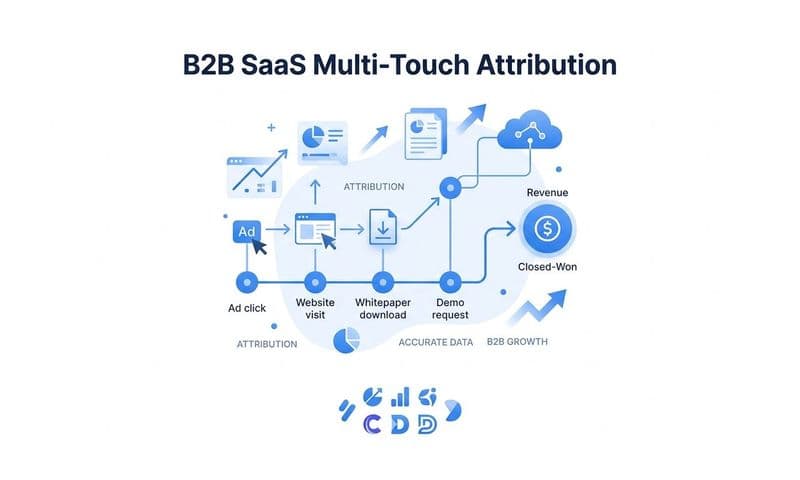
Map your customer journey to identify all trackable touchpoints. A typical SaaS journey might look like this: ad click → landing page view → trial signup (micro-conversion) → product activation → paid conversion (macro-conversion). An e-commerce journey might be: ad click → product page view → add to cart (micro-conversion) → initiate checkout → purchase (macro-conversion).
Document everything in a simple spreadsheet. List each conversion event, its type (micro or macro), assigned value, and where it occurs in the customer journey. Aim for 3-7 priority events—enough to understand behavior without drowning in data.
Success indicator: You have a documented list of priority conversion events with assigned values, and you can explain why each one matters to your business. This document becomes your tracking blueprint.
Step 2: Install Your Base Tracking Code
Now it's time to get technical. Your base tracking code is the foundation that captures visitor behavior and sends it to your ad platforms.
You have three main options for installation: manual code placement, Google Tag Manager, or a server-side solution. Manual installation means adding pixel code directly to your website's header. It's straightforward but becomes difficult to manage as you add more platforms. Google Tag Manager acts as a container that holds all your tracking codes in one place, making updates easier without touching your site code. Server-side solutions route data through your own server before sending it to ad platforms, improving accuracy and privacy compliance.
For most marketers, Google Tag Manager strikes the best balance between ease of use and flexibility. If you're serious about accurate tracking, plan to implement server-side tracking later—we'll cover that in Step 4.
Start by placing your base tracking code in the header section of your website, right after the opening head tag. This ensures it loads on every page before visitors take any actions. If you're using Google Tag Manager, you'll install the GTM container code instead, then add individual pixels through the GTM interface.
Install platform-specific pixels for each ad channel you use. The Meta Pixel tracks Facebook and Instagram ad performance. Google Ads uses the global site tag (gtag.js). LinkedIn has the Insight Tag. TikTok has its own pixel. Each platform provides installation instructions with code snippets specific to your account.
Here's the critical part: make sure each pixel fires on every page of your website. Partial installation creates blind spots in your data. If your pixel only fires on the homepage, you'll miss conversions that happen on checkout pages or thank-you pages.
Watch out for duplicate installations—one of the most common tracking mistakes. This happens when you install a pixel manually and also through Google Tag Manager, or when multiple team members install the same code without coordinating. Duplicate pixels cause inflated metrics, making it look like you're getting twice as many page views or conversions as you actually are.
Check for duplicates by opening your browser's developer tools (right-click anywhere on your site and select "Inspect"), going to the Network tab, and filtering for "pixel" or the specific platform name. You should see each pixel fire once per page load, not multiple times.
Use Meta's Pixel Helper browser extension or Google Tag Assistant to verify your installation. These free tools show which pixels are active on any page you visit and flag common errors.
Success indicator: Your base tracking code fires on every page of your website. You can verify this by visiting different pages and checking that pixels appear in your browser's developer tools or tag assistant extensions. No duplicate installations, no missing pages.
Step 3: Configure Conversion Events in Each Ad Platform
Installing pixels is just the first step. Now you need to tell each ad platform which events matter and how to count them.
Start with Meta Ads Manager. Navigate to Events Manager and select your pixel. You'll see standard events (like Purchase, Lead, CompleteRegistration) and the option to create custom conversions. Standard events are pre-defined by Meta and come with built-in optimization features. Use them whenever possible—they're more powerful than custom conversions. For detailed guidance on accurate Facebook conversion tracking, ensure you're following Meta's latest best practices.
Match your defined conversion events to Meta's standard event names. If you're tracking purchases, use the Purchase event. For form submissions, use Lead. For trial signups, use CompleteRegistration. Configure each event to pass the conversion value—this is crucial for value-based optimization.
Set your aggregated event measurement priority if you're tracking iOS users. Due to privacy restrictions, Meta can only optimize for eight events per domain for iOS traffic. Rank your events by business importance, with your most valuable macro-conversion at the top.
In Google Ads, go to Tools & Settings → Conversions → New Conversion Action. You'll configure conversion actions for each event you want to track. Google needs to know the conversion name, value, and how to count it. Our guide on Google Ads conversion tracking covers the complete setup process.
Here's where counting methods matter. "Every" means Google counts every time the conversion happens—useful for e-commerce purchases where multiple transactions from the same person are valuable. "One" means Google counts only one conversion per ad click—better for lead generation where duplicate form submissions don't add value.
Set your attribution window—the time period after an ad interaction during which conversions are counted. Google Ads defaults to 30 days for clicks, but you can adjust based on your sales cycle. If people typically convert within a week, a shorter window gives you faster optimization signals. If your sales cycle is months long, extend the window to capture delayed conversions.
For LinkedIn, navigate to Account Assets → Insight Tag → Conversions. Create conversion events that match your priority actions. LinkedIn's conversion tracking is simpler than Meta or Google, but the same principles apply—name your events clearly, set values when possible, and choose appropriate counting methods.
If you're running TikTok ads, go to Events Manager and configure your conversion events there. TikTok's interface is similar to Meta's, with standard events and custom options.
The key is consistency across platforms. If you're calling something a "Trial Signup" in Meta, use the same naming convention in Google Ads and LinkedIn. This makes cross-platform tracking and reporting much easier later.
Success indicator: Each platform shows your conversion events as "active" in their respective interfaces. Run a test conversion (complete the action yourself) and verify it appears in each platform's reporting within a few hours. You should see the event name, value, and attribution details.
Step 4: Implement Server-Side Tracking for Accurate Data
Browser-based pixels are no longer enough. Privacy restrictions, ad blockers, and cookie limitations mean you're missing a significant portion of your conversions if you rely solely on client-side tracking.
Here's why: When Apple introduced App Tracking Transparency with iOS 14.5, it gave users the ability to block tracking across apps and websites. Many users opted out, creating blind spots in your data. Ad blockers prevent pixels from firing entirely. Third-party cookie restrictions in browsers like Safari and Firefox limit how long you can track users. Browser-based tracking can miss 20-30% of actual conversions, sometimes more.
Server-side tracking solves this by sending conversion data directly from your server to ad platforms, bypassing browser restrictions entirely. Instead of relying on a pixel in someone's browser, your server communicates directly with Meta, Google, and other platforms through their APIs.
Start with Meta's Conversions API (CAPI). This works alongside your Meta Pixel, not as a replacement. The pixel captures what it can from the browser, while CAPI sends the same events from your server. Meta automatically deduplicates these events, so you're not double-counting—you're filling in the gaps the pixel misses. Our conversion API setup guide walks through the technical implementation step by step.
Setting up CAPI requires technical implementation. You'll need to send event data from your server to Meta's API endpoint, including parameters like event name, event time, user data (email, phone, etc.), and custom data (value, content IDs). Meta provides detailed documentation, but many marketers use conversion API gateways or attribution platforms to handle the technical complexity.
For Google Ads, implement enhanced conversions. This feature sends hashed customer data (email addresses, phone numbers, names, addresses) along with conversion events, allowing Google to match conversions more accurately even when cookies are blocked. Enhanced conversions can significantly improve your conversion tracking match rates.
The setup involves modifying your conversion tracking tag to include customer data parameters. If you're using Google Tag Manager, you can configure enhanced conversions through the tag settings. If you're using gtag.js directly, you'll add the user-provided data to your conversion event code.
Now connect your CRM to send offline conversions back to ad platforms. This is crucial if your sales process involves phone calls, in-person meetings, or any interactions that happen outside your website. When a lead from a Facebook ad eventually closes in your CRM weeks later, that conversion data should flow back to Facebook so the algorithm knows that campaign is working. Learn more about offline conversion tracking to capture these valuable data points.
Most modern CRMs offer native integrations or can connect through tools like Zapier. The key is matching the ad click to the eventual conversion. This requires passing click IDs (fbclid for Meta, gclid for Google) through your forms and storing them in your CRM along with the lead record.
This is where marketing attribution platforms like Cometly become valuable. Rather than piecing together multiple tracking implementations, Cometly captures the complete customer journey from ad click through CRM conversion, implementing server-side tracking implementation automatically and feeding enriched conversion data back to ad platforms. The platform tracks every touchpoint—ad clicks, website visits, form submissions, CRM events—giving you a complete view of what's driving revenue.
Success indicator: Your event match quality score in Meta Events Manager shows above 6.0 (ideally 8.0+). In Google Ads, you can see match rates for enhanced conversions in your conversion action settings. Higher scores mean more accurate tracking and better ad optimization.
Step 5: Connect Your CRM and Revenue Data
Ad platforms show you clicks and website conversions. Your CRM shows you which leads actually closed and generated revenue. Connecting these two systems is how you move from tracking activity to tracking outcomes.
Start by linking your CRM to your conversion tracking system. Popular CRMs like HubSpot, Salesforce, and Pipedrive offer integrations with ad platforms, but you'll need to configure them properly to pass the right data.
The goal is to track leads through your entire sales funnel, not just the initial form submission. A form fill is interesting, but it doesn't pay the bills. You need to know which ad campaigns generate leads that actually become customers.
Map your CRM stages to conversion events. A typical B2B funnel might look like this: Lead Created (form submission) → Marketing Qualified Lead (MQL) → Sales Qualified Lead (SQL) → Opportunity Created → Closed-Won. Each stage represents a more valuable conversion. Configure your tracking to send these milestone events back to your ad platforms as they happen.
This is where conversion values become crucial. When you send a Closed-Won event back to Facebook with the actual deal value ($10,000, for example), Facebook's algorithm learns that this type of lead is extremely valuable. It will then optimize to find more people like this, rather than just optimizing for cheap form fills that never convert.
Set up proper UTM parameters and click ID tracking for attribution. UTM parameters (utm_source, utm_medium, utm_campaign) tell you which marketing channel drove each visitor. Click IDs (gclid for Google, fbclid for Meta) allow ad platforms to match conversions back to specific ad clicks. A proper attribution tracking setup ensures you capture this data consistently.
Here's the implementation: Add UTM parameters to all your ad URLs. Most ad platforms can do this automatically—Meta has dynamic parameters, Google Ads has auto-tagging. Make sure these parameters pass through your forms and get stored in your CRM along with the lead record.
For click IDs, you'll need to capture them when someone lands on your site and pass them through to your CRM. This typically involves JavaScript that reads the URL parameters and stores them in hidden form fields. When the form is submitted, the click IDs go into your CRM with the lead data.
Now when that lead closes three weeks later, you can trace it back to the exact ad that started the journey. Your CRM sends the Closed-Won event back to Meta or Google, including the original click ID, and the ad platform attributes the revenue to the right campaign.
This creates a feedback loop that makes your advertising smarter over time. Ad platforms learn which audiences and creative approaches generate high-value customers, not just clicks.
Success indicator: You can open a closed deal in your CRM and see the complete attribution trail—which ad, campaign, and platform originally brought that customer to you. When you send test conversions with revenue values, they appear in your ad platform reporting with the correct values attached.
Step 6: Test and Validate Your Tracking Setup
You've done the setup work. Now it's time to verify everything actually works before you trust this data to guide your ad spend decisions.
Start with Meta's Test Events tool. In Events Manager, select your pixel and click "Test Events." This shows real-time data as events fire, including all the parameters being passed. Open your website in another browser tab, complete a conversion action, and watch it appear in the Test Events feed. Check that the event name is correct, the value is passing through, and all the user data parameters are populated.
For Google Ads, use Tag Assistant by Google (a Chrome extension). It shows which Google tags are firing on your page and whether they're configured correctly. Complete a test conversion and verify it appears in Tag Assistant with the correct conversion action name and value. Understanding event tracking in Google Analytics can help you validate your setup across Google's ecosystem.
Now complete test conversions in each ad platform and confirm they appear in reporting. This is crucial—just because an event fires doesn't mean it's being counted correctly. Go through your actual conversion flow: click on an ad (or simulate one by using your ad preview), land on your site, and complete the conversion action. Within 24 hours, check each platform's conversion reporting to confirm it recorded the event.
Check for data discrepancies between platforms. Some variance is normal and expected—different platforms use different attribution models and tracking methods. But if Meta is reporting 100 conversions and Google Ads is reporting 20 for the same time period, something is wrong. A discrepancy of 10-20% is typical. Anything beyond that indicates a tracking issue that needs investigation. If you're seeing major gaps, our guide on fixing conversion tracking gaps can help you diagnose the problem.
Validate that conversion values are passing correctly. If you're selling products, check that the purchase value matches the actual order total. If you're using assigned values for leads, verify those values appear in the conversion data. Missing or incorrect values will break value-based optimization.
Watch for common issues. Events firing multiple times is usually caused by duplicate pixel installations or improper event configuration. Missing parameters often mean your data layer isn't set up correctly or form fields aren't passing through. Incorrect event names happen when there's a mismatch between what your website sends and what the ad platform expects. For troubleshooting help, check out our resource on how to fix broken conversion tracking.
Use your browser's developer tools to debug issues. Open the Network tab, filter for the specific pixel or conversion API, and examine the data being sent. You'll see the exact parameters in each request, which makes it easy to spot what's missing or wrong.
Test across different browsers and devices. Your tracking might work perfectly in Chrome on desktop but fail in Safari on iPhone due to privacy restrictions. That's exactly why you implemented server-side tracking in Step 4—but you should still verify the complete experience.
Run test conversions from different traffic sources. If you're tracking UTM parameters, verify they're captured correctly when someone comes from Facebook versus Google versus email. Check that click IDs are being stored properly for each platform.
Success indicator: Test conversions appear in all platforms within 24 hours with correct event names, values, and attribution data. Your event match quality scores are strong (above 6.0 in Meta). There are no significant unexplained discrepancies between platforms. When you complete a conversion, you can trace it through your entire tracking system from pixel fire to ad platform reporting to CRM record.
Putting It All Together
You now have a complete conversion tracking system that connects ad clicks to actual revenue. Here's your quick-reference checklist to confirm everything is working:
Step 1 Complete: You have a documented list of 3-7 priority conversion events with assigned values that reflect real business impact.
Step 2 Complete: Your base tracking code fires on every page of your website with no duplicate installations.
Step 3 Complete: Each ad platform shows your conversion events as active, with proper values and counting methods configured.
Step 4 Complete: Server-side tracking is implemented with event match quality scores above 6.0 and enhanced conversions configured.
Step 5 Complete: Your CRM is connected, passing revenue data back to ad platforms with proper attribution through UTM parameters and click IDs.
Step 6 Complete: Test conversions appear correctly across all platforms with accurate values and attribution data.
Remember that conversion tracking isn't a set-it-and-forget-it task. Your website changes, you add new products, you launch new campaigns. Plan to audit your tracking quarterly to ensure data stays accurate. Check for broken pixels after website updates. Verify that new landing pages have tracking installed. Monitor your event match quality scores and address any drops.
The marketers who win aren't the ones with the biggest budgets—they're the ones with the best data. Accurate conversion tracking gives you the visibility to make confident decisions about where to invest, what to scale, and what to cut. You're no longer guessing which campaigns work. You know.
As your tracking matures, you'll want unified attribution across all platforms to see the complete customer journey. Many marketers find that people interact with multiple touchpoints before converting—they might see a Facebook ad, later search on Google, then return through email before finally purchasing. Understanding these multi-touch journeys helps you allocate budget more effectively.
This is where platforms like Cometly become essential. Rather than looking at each ad platform in isolation, Cometly captures every touchpoint from first click to final conversion, providing AI-powered recommendations on which campaigns and channels deserve more investment. The platform feeds enriched conversion data back to ad platforms, improving their optimization algorithms while giving you a complete view of what's actually driving revenue.
Ready to elevate your marketing game with precision and confidence? Discover how Cometly's AI-driven recommendations can transform your ad strategy—Get your free demo today and start capturing every touchpoint to maximize your conversions.
Now go run a test campaign and watch the conversion data flow in. You've built the foundation for profitable, data-driven advertising. Every click, every conversion, every dollar of revenue—tracked, measured, and ready to guide your next decision.