Running ads across Meta, Google, TikTok, and LinkedIn simultaneously? You're likely facing the same challenge most marketers encounter: fragmented data that makes it nearly impossible to understand which campaigns actually drive revenue.
Each platform reports conversions differently. Your CRM shows one number, Google Analytics shows another, and your ad dashboards tell completely different stories. Meanwhile, you're making budget decisions based on incomplete information—scaling campaigns that might not actually be profitable while pausing ones that could be your best performers.
Cross-platform tracking solves this by connecting all your marketing touchpoints into a unified view of the customer journey. Instead of piecing together data from five different dashboards, you see exactly how prospects interact with your brand across every channel before they convert.
This guide walks you through setting up comprehensive cross-platform tracking from scratch—covering everything from initial platform connections to advanced attribution analysis. By the end, you'll have a system that captures every interaction, attributes conversions accurately, and feeds better data back to your ad platforms for improved optimization.
Let's build your tracking foundation step by step.
Step 1: Audit Your Current Tracking Infrastructure
Before you build anything new, you need to understand what you're working with. Think of this like surveying a construction site before breaking ground—you need to know what's already there, what's working, and what's creating problems.
Start by creating a comprehensive inventory of every active marketing channel. List out Meta, Google Ads, TikTok, LinkedIn, email campaigns, organic social, SEO—everything that drives traffic to your properties. For each channel, document whether you're currently tracking it and how.
Next, map out all your existing tracking implementations. Where have you installed pixels? Which platforms are receiving conversion events? Do you have Google Analytics set up? Are you using UTM parameters consistently across campaigns? Write it all down.
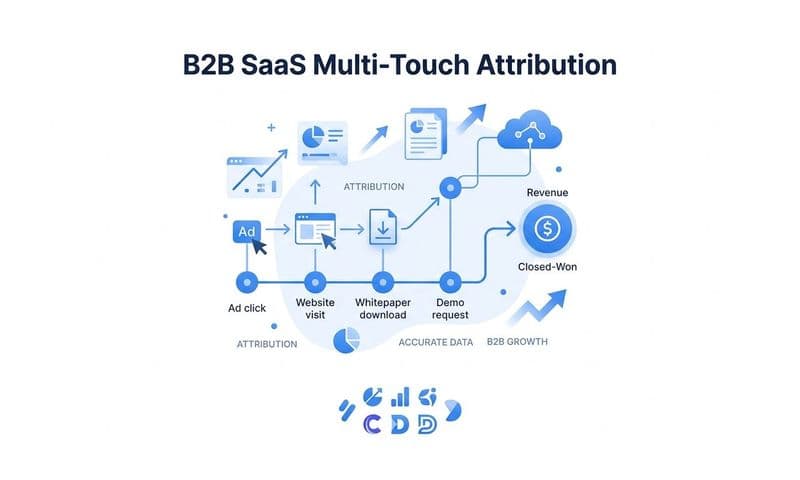
Here's where it gets revealing: identify your data gaps. When someone clicks a LinkedIn ad, visits your site, leaves, then returns three days later through a Google search and converts—can you see that entire journey? Most marketers discover they're losing visibility at multiple points.
Document every conversion point that matters to your business. This includes obvious ones like purchases and form submissions, but don't stop there. Track demo bookings, qualified lead status changes in your CRM, trial signups, account activations, and closed deals. These downstream events are often where the real value lives.
Pay special attention to cross-device behavior. If someone researches on mobile but converts on desktop, are you connecting those dots? With iOS privacy changes, many marketers have massive blind spots here. Understanding cross-device user tracking challenges is essential for building accurate attribution.
Review your current UTM parameter conventions. Are different team members using inconsistent naming? Is your paid social team tagging campaigns differently than your paid search team? These inconsistencies create chaos in your reporting later.
Check your CRM integration status. Are conversion events from your website flowing into your CRM? More importantly, are valuable CRM events like "qualified lead" or "closed deal" flowing back to your ad platforms? Most setups miss this crucial piece.
Success indicator: You should have a complete spreadsheet listing every marketing channel, every tracking pixel, every conversion point, and—most importantly—every place where you're currently losing visibility into the customer journey. These gaps are what you're about to fix.
Step 2: Establish Your Unified Tracking Foundation
Now that you know what's broken, let's build the foundation that fixes it. This step is about creating a single source of truth that captures every marketing interaction, regardless of where it happens.
The cornerstone of modern cross-platform tracking is server-side implementation. Unlike traditional pixel-based tracking that relies on browser cookies and client-side JavaScript, server-side tracking sends data directly from your server to your analytics platform and ad channels.
Why does this matter? Browser privacy changes have decimated traditional tracking accuracy. Safari's Intelligent Tracking Prevention, Firefox's Enhanced Tracking Protection, and iOS App Tracking Transparency have created massive data loss for client-side pixels. A proper server-side tracking implementation bypasses these limitations entirely.
Start by implementing a centralized attribution platform that becomes your command center. This platform should connect to all your ad channels, your website, and your CRM. It captures every touchpoint in the customer journey and stores it in a unified database.
Configure first-party data collection on your website and landing pages. This means tracking user behavior through your own domain rather than relying on third-party cookies. First-party data is more accurate, privacy-compliant, and future-proof against ongoing browser changes. Exploring cookieless tracking implementation ensures your setup remains effective as privacy regulations evolve.
Set up your tracking to capture both anonymous browsing behavior and identified user actions. When someone first visits your site, track their journey anonymously. The moment they submit a form or create an account, connect their previous anonymous journey to their identified profile. This creates a complete picture of the path to conversion.
Implement event tracking for all meaningful user actions. Beyond just page views, track button clicks, video plays, scroll depth, time on page, and any interaction that signals interest. The more granular your data, the better your attribution analysis becomes.
Configure your server-side setup to handle both real-time event streaming and batch data processing. High-value conversions should sync immediately to ad platforms, while lower-priority events can process in batches to optimize performance.
Build in data enrichment capabilities. When someone converts, automatically append valuable context: which ad they clicked, what content they viewed, how many times they visited, what device they used, and how long the journey took. This enriched data becomes crucial for both attribution analysis and feeding back to ad platforms.
Success indicator: You have a centralized system capturing every website interaction and marketing touchpoint, storing it in a unified database that becomes your single source of truth. No more reconciling five different dashboards—everything flows into one place.
Step 3: Connect Your Ad Platforms and CRM
Your tracking foundation is built. Now it's time to connect every marketing channel and business system to it. This step transforms your isolated data islands into a connected ecosystem.
Start with your ad platform integrations. Connect Meta Ads, Google Ads, TikTok, LinkedIn, and any other paid channels you're running. Most modern attribution platforms offer native integrations that pull in ad spend, impressions, clicks, and platform-reported conversions automatically.
For each platform, you'll need API access. This typically means generating API keys or OAuth tokens within each ad platform's business settings. Follow each platform's documentation carefully—Meta requires Business Manager access, Google needs API credentials from Google Cloud Console, and LinkedIn uses Campaign Manager API access.
Configure bidirectional data flow for each platform. You want to pull performance data in—that's the easy part. But you also need to push conversion data out. This means setting up conversion APIs (Meta's CAPI, Google's Enhanced Conversions, TikTok Events API) that send your unified conversion data back to each platform.
Connect your CRM next. This is where many marketers stop short, but it's arguably the most valuable integration. Your CRM holds the truth about which leads actually matter—qualified opportunities, closed deals, customer lifetime value. Implementing revenue tracking through your attribution platform connects marketing efforts directly to business outcomes.
Map your conversion events consistently across all systems. If someone books a demo, that event should have the same name and parameters whether it's sent to Meta, Google, your attribution platform, or your CRM. Inconsistent event naming creates attribution chaos.
Set up your event hierarchy thoughtfully. Not all conversions are equal. A form submission is valuable, but a qualified SQL is more valuable, and a closed deal is most valuable. Configure your system to track this progression and attribute revenue appropriately.
Test each integration thoroughly. Send test conversions through each platform and verify they appear in your unified dashboard with all the correct attribution data. Check that ad spend numbers match, click counts align, and conversion events flow bidirectionally.
Success indicator: Open your unified dashboard and see live data flowing in from every ad platform and your CRM. Click on any conversion and see its complete journey—every ad click, every page view, every touchpoint that contributed to the outcome.
Step 4: Configure Multi-Touch Attribution Models
Now that you're capturing complete customer journeys, you need to decide how to distribute conversion credit across all those touchpoints. This is where attribution modeling transforms guesswork into strategic insight.
Understanding your options matters. First-touch attribution gives all credit to the initial interaction—useful for understanding what drives awareness. Last-touch credits only the final touchpoint before conversion—showing what closes deals. Linear attribution splits credit equally across all touchpoints. Time-decay gives more credit to recent interactions. Data-driven attribution uses machine learning to assign credit based on actual conversion patterns.
Choose your primary model based on your sales cycle. If you sell low-cost products with quick purchase decisions, last-touch or time-decay models work well. For B2B with long sales cycles and multiple stakeholders, multi-touch marketing attribution provides more accurate insight into what's actually working.
Here's the thing: you shouldn't choose just one model. Configure multiple attribution models and compare them. When you see a campaign perform well in first-touch attribution but poorly in last-touch, you know it's great at driving awareness but weak at closing. That insight changes how you optimize it.
Set your attribution windows thoughtfully. The attribution window determines how long after an ad interaction you'll credit that touchpoint for a conversion. A seven-day window works for e-commerce, but B2B often needs 30, 60, or even 90 days.
Consider separate attribution windows for different conversion types. Someone might book a demo within seven days of clicking an ad, but take 45 days to close as a customer. Configure your system to handle these different timeframes.
Compare your unified attribution data against what individual platforms report. Platforms use last-click attribution within their own ecosystem, often with very short windows. Your attribution platform shows the full picture. Understanding the differences between Google Analytics and dedicated attribution platforms helps you interpret these discrepancies correctly.
Document your expected variance ranges. If Google Ads reports 100 conversions but your attribution platform shows 85, is that concerning? It depends. If 15 of those conversions had other touchpoints that deserve partial credit, the variance makes sense. Understanding these patterns helps you make confident decisions.
Success indicator: You can pull up any campaign and see exactly how it performs under different attribution models. You understand which channels drive awareness, which nurture consideration, and which close deals. Budget allocation decisions become strategic instead of reactive.
Step 5: Implement Conversion Sync for Ad Platform Optimization
You've built a system that shows you the truth about which ads drive results. Now it's time to feed that truth back to your ad platforms so their algorithms can optimize better. This step often delivers the biggest performance improvement.
Ad platforms like Meta and Google use machine learning to optimize delivery. But they can only optimize based on the conversion signals they receive. When your tracking is incomplete or inaccurate, their algorithms make decisions on flawed data. Conversion sync fixes this.
Configure your attribution platform to send enriched conversion events back to each ad channel. This goes beyond what their native pixels capture. You're sending conversions that happened offline, conversions that occurred after someone switched devices, and high-value CRM events like qualified leads and closed deals.
Set up event prioritization for each platform. Meta's algorithm, for example, should know that a demo booking is more valuable than a whitepaper download. Configure your conversion values to reflect actual business impact—if a qualified lead is worth $500 and a closed deal is worth $5,000, send those values with the conversion events.
Implement real-time syncing for high-priority conversions. When someone books a demo or makes a purchase, that conversion should reach your ad platforms within minutes. Fast feedback loops help algorithms optimize more effectively. Platforms that offer real-time conversion tracking give you a significant advantage in campaign optimization.
For lower-priority events or high-volume conversions, batch uploads work fine. You don't need to sync every page view in real-time, but purchases and qualified leads should flow immediately.
Configure deduplication logic carefully. If someone converts and both your pixel and server-side tracking capture it, you don't want to send duplicate conversions to ad platforms. Your attribution platform should deduplicate automatically, but verify this is working correctly.
Monitor your conversion sync status regularly. Most platforms provide delivery reports showing how many conversions were sent, how many were accepted, and how many were rejected. Rejected events usually indicate data formatting issues or privacy-related blocks.
Pay attention to match rates—the percentage of conversions that ad platforms can match back to specific users. Higher match rates mean better optimization. Server-side tracking with proper user identification typically achieves 80-95% match rates, compared to 40-60% for traditional pixel tracking. Learning how to improve ad tracking accuracy directly impacts your campaign performance.
Success indicator: Your ad platforms are receiving complete, accurate conversion data—including high-value CRM events they never saw before. You notice campaign performance improving as algorithms optimize with better signals. Your cost per qualified lead decreases as platforms learn which audiences actually convert.
Step 6: Validate and Test Your Tracking Setup
Your cross-platform tracking system is configured. Before you trust it with real budget decisions, you need to validate that everything works correctly. This testing phase catches issues before they corrupt your data.
Run controlled test conversions through each platform. Click a Meta ad, complete a conversion, and verify that conversion appears in your unified dashboard with correct attribution to Meta. Repeat this for Google, TikTok, LinkedIn, and every other channel.
Check for duplicate tracking issues. If you have both pixel-based and server-side tracking running, you might be counting conversions twice. Look for suspiciously doubled conversion numbers or individual users showing duplicate conversion events.
Test cross-device tracking specifically. Click an ad on your mobile device, then convert on desktop. Does your system connect these as a single journey? With proper implementation, it should. Reviewing cross-device conversion tracking methods helps ensure you're capturing these journeys accurately.
Validate your CRM integration thoroughly. Create a test lead in your CRM, move it through your pipeline stages, and verify each status change appears in your attribution platform with proper attribution to the original marketing touchpoint.
Compare your unified data against individual platform reporting. Pull conversion numbers from Meta Ads Manager, Google Ads, and your attribution platform for the same time period. Document the variance. Some discrepancy is expected—platforms use different attribution models and windows—but major differences indicate tracking problems.
Test your conversion sync by checking each platform's events manager. In Meta Events Manager, you should see both pixel events and server events coming through. In Google Ads, check your conversion tracking to confirm enhanced conversions are being received.
Review your data for common tracking issues. Look for sudden drops in traffic or conversions—these often indicate broken tracking. Check for unrealistic conversion rates—if a campaign shows a 90% conversion rate, something's wrong with your tracking setup.
Document your expected variance ranges. After testing, you'll understand that your attribution platform might show 10-15% fewer conversions than platforms report natively because it's using more sophisticated attribution. This variance is normal and expected—document it so you don't panic later.
Set up monitoring and alerts for tracking health. Configure notifications if conversion volume drops significantly, if any platform integration breaks, or if data quality metrics fall outside normal ranges.
Success indicator: You've run multiple test conversions through every channel, verified they appear correctly with proper attribution, and documented expected variance between your unified data and platform reporting. You're confident your data is accurate and complete.
Putting It All Together
You've built something powerful. Let's recap what you've accomplished.
Your cross-platform tracking checklist:
✓ Current tracking infrastructure audited and gaps identified
✓ Server-side tracking foundation established
✓ All ad platforms and CRM connected to unified system
✓ Multi-touch attribution model configured for your sales cycle
✓ Conversion sync feeding accurate data back to ad platforms
✓ Complete validation testing performed
With this system in place, you can finally answer the question every marketer needs to know: which ads and channels actually drive revenue? You're no longer making budget decisions based on last-click attribution from individual platforms. You see the complete customer journey.
When your CEO asks which marketing channels are worth the investment, you have data to back up your answer. When your CFO questions ad spend, you can show exactly how it connects to closed deals. When platform algorithms claim a campaign drove 200 conversions but your CRM shows only 50 became customers, you understand why—and you optimize accordingly.
The transformation goes beyond reporting. Your ad platforms now receive complete conversion signals, including high-value CRM events they never saw before. Their algorithms optimize with better data, finding audiences that actually convert into customers, not just leads that go nowhere.
Start with your audit today, and work through each step systematically. The initial setup takes effort, but the clarity you gain transforms how you allocate budget and scale campaigns. You'll catch underperforming campaigns faster, identify hidden winners sooner, and scale what works with confidence.
Ready to elevate your marketing game with precision and confidence? Discover how Cometly's AI-driven recommendations can transform your ad strategy—Get your free demo today and start capturing every touchpoint to maximize your conversions.