You're spending $50,000 a month on ads across Meta, Google, and TikTok. Leads are coming in, but you can't tell which platform actually drives revenue. Your CFO wants proof that marketing works, and "we got 500 clicks" isn't going to cut it.
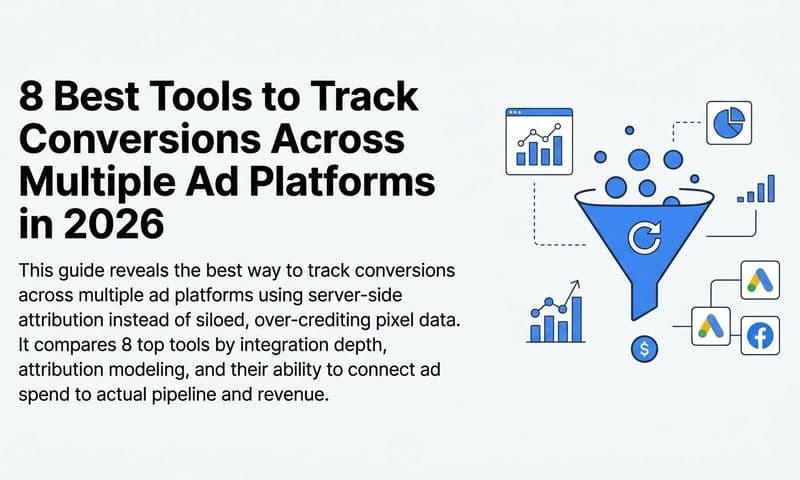
Marketing attribution platforms solve this by tracking every customer touchpoint—from first ad click through website visits and CRM interactions to final purchase—then showing which campaigns deserve credit for conversions. The best platforms go beyond basic reporting: they support multiple attribution models, integrate with your entire marketing stack, and use AI to identify which ads actually generate revenue.
But choosing the right platform matters. Some excel at cross-channel tracking for e-commerce brands, others specialize in B2B pipeline attribution, and a few focus on feeding enriched conversion data back to ad platforms for better targeting. For teams managing six-figure monthly ad budgets, the right platform means knowing exactly where every dollar goes instead of guessing at performance.
Here are ten platforms that consistently deliver the most comprehensive attribution capabilities for modern marketing teams.
1. Cometly
Best for: Marketers who need AI-powered attribution with server-side tracking and real-time revenue visibility across all channels.
Cometly is a marketing attribution and analytics platform built specifically for performance marketers and agencies who demand accurate, actionable data.
 8 Best Marketing Attribution Platforms Offer The Most Accurate Revenue Tracking
Where This Tool Shines
Cometly captures the complete customer journey—from initial ad click through CRM events to final conversion—giving you an enriched view that most platforms miss. The platform excels at connecting surface-level metrics to actual revenue, showing not just which ads get clicks but which sources convert into paying customers.
Its AI recommendation engine analyzes performance across every ad channel, identifying high-performing campaigns you should scale and underperformers you should pause. For marketers tired of making budget decisions based on incomplete data, Cometly provides the clarity needed to optimize with confidence.
Key Features & Capabilities
Complete Journey Tracking: Captures every touchpoint from ad platforms, website interactions, and CRM events for full attribution visibility.
AI-Powered Recommendations: Identifies top-performing ads and campaigns across channels, with specific scaling suggestions.
Server-Side Tracking: Bypasses browser limitations and ad blockers for more accurate conversion data.
Enhanced Conversions API: Sends enriched, conversion-ready events back to Meta, Google, and TikTok to improve ad platform targeting and optimization.
Multi-Model Attribution: Compare first-touch, last-touch, linear, time-decay, and data-driven models in one dashboard.
Real-Time Revenue Attribution: See which campaigns drive actual revenue, not just leads or clicks.
Cross-Channel Analytics: Unified reporting across Meta, Google, TikTok, LinkedIn, and other paid channels.
Best For / Ideal Users
Cometly is ideal for performance marketing teams, agencies, and DTC brands running significant paid ad budgets across multiple channels. It's particularly valuable for marketers who've struggled with iOS 14+ tracking limitations or who need to prove ROI to stakeholders with revenue-level attribution data.
The platform works best for teams spending $10,000+ monthly on paid advertising who make frequent optimization decisions based on performance insights.
Pricing
Cometly offers tiered pricing based on monthly tracked conversions, starting with plans for growing teams and scaling to enterprise-level attribution needs. A free
2. HubSpot Marketing Analytics
Best for: B2B companies already using HubSpot CRM who need attribution tied directly to their sales pipeline.
HubSpot Marketing Analytics provides native attribution reporting for teams using the HubSpot ecosystem.
 6 Best Attribution Tools For Marketing To Track Real Revenue In 2025
Where This Tool Shines
HubSpot's attribution strength lies in its seamless CRM integration. Since marketing and sales data live in the same platform, you can track a prospect from first website visit through every email interaction, sales call, and demo request until they become a customer.
The multi-touch attribution reports show which campaigns influenced deals at each stage, making it easy to justify marketing spend to sales leadership. For teams already invested in HubSpot, the attribution software features require no additional integration work—everything flows automatically from your existing setup.
Key Features & Capabilities
Native CRM Integration: Attribution data connects directly to deals, contacts, and revenue without third-party tools.
Multi-Touch Attribution Models: Compare first-touch, last-touch, linear, time-decay, U-shaped, and W-shaped models.
Campaign Performance Reports: See which campaigns generate the most contacts, MQLs, SQLs, and closed revenue.
Content Attribution: Track how blog posts, landing pages, and resources influence conversions.
Ad Platform Integration: Connect Google Ads, Facebook Ads, and LinkedIn Ads for unified reporting.
Custom Attribution Reports: Build reports showing attribution by channel, campaign, content type, or custom properties.
Best For / Ideal Users
HubSpot Marketing Analytics works best for B2B companies with established HubSpot CRM implementations, particularly those with sales cycles longer than 30 days.
It's ideal for marketing teams who need to prove campaign impact on pipeline and revenue to sales leadership, especially when both departments share responsibility for revenue goals.
The platform suits organizations where marketing and sales require shared visibility into which campaigns generate quality leads that actually close into customers.
Pricing
Attribution reporting is included in HubSpot Marketing Hub Professional ($800/month) and Enterprise ($3,600/month) plans. The Professional tier covers basic multi-touch attribution, while Enterprise adds custom attribution modeling and advanced revenue reporting.
3. Google Analytics 4
Best for: Businesses seeking free, comprehensive web analytics with basic cross-channel attribution capabilities.
Google Analytics 4 represents Google's latest analytics platform, designed for cross-device and cross-platform measurement.
 10 Best Enterprise Channel Analytics Software To Maximize Marketing ROI
Where This Tool Shines
GA4 excels at providing free, robust analytics for businesses of all sizes. The platform's data-driven attribution model uses machine learning to assign conversion credit based on actual user behavior patterns, going beyond simple rule-based models like first-click or last-click.
The integration with Google Ads creates a seamless attribution experience for paid search and display campaigns. GA4's Advertising workspace shows how different channels work together to drive conversions, revealing insights like how organic search interactions influence paid ad performance or how YouTube views impact website conversions. For companies with limited attribution budgets, GA4 delivers sophisticated measurement capabilities without licensing costs.
Key Features & Capabilities
Data-Driven Attribution: Machine learning model analyzes actual conversion patterns to assign credit intelligently across touchpoints.
Cross-Platform Tracking: Unified measurement across websites, iOS apps, and Android apps with consistent user identification.
Google Ads Integration: Native connection for campaign performance tracking and conversion optimization without additional setup.
Custom Event Tracking: Flexible event structure allows tracking any user interaction that matters to your business.
Conversion Path Reports: Visualize the complete sequence of touchpoints leading to conversions across channels.
Predictive Metrics: AI-powered predictions for purchase probability, churn likelihood, and revenue forecasting.
Best For / Ideal Users
GA4 suits businesses seeking comprehensive web analytics without platform costs, particularly those heavily invested in Google's advertising ecosystem. It works well for content-driven sites, e-commerce stores, and companies with straightforward conversion paths.
The platform is ideal for small to mid-sized businesses that need solid attribution capabilities but can't justify dedicated attribution platform costs. Marketing teams managing Google Ads campaigns benefit most from the native integration and seamless conversion tracking.
Pricing
Google Analytics 4 is free for standard implementations. Google Analytics 360 (enterprise version) starts at $50,000 annually and adds features like unsampled reports, BigQuery integration, and guaranteed SLAs.
4. Ruler Analytics
Best for: Marketing agencies and B2B companies that need to connect phone calls, form fills, and offline conversions to specific marketing sources.
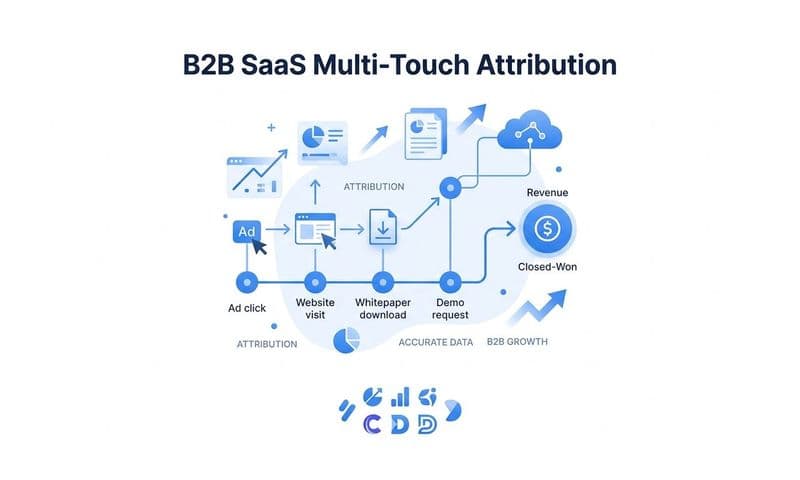
Ruler Analytics specializes in closed-loop attribution, tracking leads from first website visit through CRM stages to final revenue.
 7 Best Marketing Attribution SaaS Platforms in 2026
Where This Tool Shines
Ruler's standout capability is matching anonymous website visitors to known leads and customers, then attributing revenue back to the original marketing source. The platform tracks phone calls with dynamic number insertion, captures form submissions with hidden fields, and integrates with CRMs to pull closed deal data.
This creates a complete attribution picture showing not just which campaigns generate leads, but which ones produce actual customers and revenue. For agencies reporting to clients or internal teams justifying marketing spend, Ruler provides the revenue-level proof that matters most. The platform automatically reveals which marketing channels drive the best leads, closing the loop between marketing activity and sales outcomes.
Key Features & Capabilities
Call Tracking Integration: Dynamic number insertion attributes phone conversions to specific campaigns and keywords.
Form Tracking: Captures hidden field data showing the marketing source for every form submission.
CRM Revenue Sync: Pulls closed deal data from Salesforce, HubSpot, Pipedrive, and other CRMs to connect marketing to revenue.
Multi-Touch Attribution: Compare first-click, last-click, linear, time-decay, and custom models in unified dashboards.
Marketing Mix Modeling: See how different channels work together to drive conversions and influence each other.
Offline Conversion Tracking: Connect in-person events, sales meetings, and phone calls to digital campaigns.
Lead Management: Track lead progression through your sales funnel with full attribution visibility at each stage.
Best For / Ideal Users
Ruler Analytics is ideal for B2B companies with phone-heavy sales processes where calls represent significant conversion value. Marketing agencies managing multiple client accounts benefit from the white-label reporting and multi-account management capabilities.
The platform particularly suits businesses with long sales cycles where offline interactions play a significant role in closing deals. Companies that struggle to prove which marketing channels drive actual revenue—not just leads—find Ruler's closed-loop attribution especially valuable.
Pricing
Ruler Analytics pricing starts around £199/month.
5. Mixpanel
Best for: Product-led companies and SaaS businesses that need to attribute conversions to in-app behavior and product usage patterns.
Mixpanel is a product analytics platform that tracks what users actually do inside your application—which features they engage with, how often they return, what actions predict upgrades—and connects those behaviors back to their original marketing sources.
 8 Best Marketing Attribution Platforms Offer The Most Accurate Revenue Tracking
Where This Tool Shines
Mixpanel excels at showing how product usage influences conversion and retention. The platform tracks individual user journeys through your application, identifying which features drive upgrades, which usage patterns predict churn, and which onboarding flows convert trial users to paid customers.
For SaaS companies, this product-level attribution reveals insights that traditional marketing attribution software misses. You can see that users who engage with a specific feature within their first week convert at higher rates, or that customers acquired through organic search demonstrate stronger product engagement than those from paid social. This connection between acquisition source and product behavior helps you optimize not just your marketing spend, but your entire customer acquisition strategy.
Key Features & Capabilities
Event-Based Tracking: Monitor any user action inside your product, from button clicks to feature usage to custom events you define.
Funnel Analysis: Visualize conversion rates at each step of user journeys, identifying exactly where users drop off and which acquisition sources produce the best completion rates.
Cohort Analysis: Compare behavior and retention across different user segments, showing how users from different marketing channels perform over time.
User Flow Visualization: See the actual paths users take through your product, revealing which features drive engagement and which create friction.
Retention Reports: Track how different acquisition sources impact long-term user retention, helping you identify which channels produce the most valuable customers.
Best For / Ideal Users
Mixpanel suits product-led SaaS companies, mobile app developers, and digital product teams who need to understand how product usage drives business outcomes. It's particularly valuable for freemium models where in-app behavior determines conversion success.
The platform works best for teams that view product engagement as a key conversion driver, not just a post-acquisition metric. If your business model depends on users experiencing value inside your product before they upgrade, Mixpanel provides the attribution insights you need.
Pricing
Mixpanel offers a free tier for up to 20 million monthly events. Paid plans start at $20/month for the Growth tier with volume-based pricing, scaling to custom Enterprise pricing for large-scale implementations.
6. Segment
Best for: Companies with complex marketing stacks that need a customer data platform to unify tracking across all tools and channels.
Segment acts as a customer data infrastructure layer, collecting behavioral data from websites, mobile apps, servers, and cloud tools, then routing it to hundreds of marketing and analytics platforms.
 8 Best Marketing Attribution Platforms Offer The Most Accurate Revenue Tracking
Where This Tool Shines
Segment solves the data fragmentation problem that undermines attribution accuracy. Instead of implementing separate tracking codes for Google Analytics, Facebook Pixel, your CRM, email platform, and attribution tool, you implement Segment once and it distributes data to all connected tools.
This ensures every platform receives the same customer data, eliminating discrepancies that make attribution unreliable. When your analytics tool shows 500 conversions but your ad platform reports 350 and your CRM only has 280, you can't trust any attribution insights. Segment creates a single source of truth that all downstream tools reference.
Key Features & Capabilities
Unified Data Collection: Single implementation sends data to 300+ marketing and analytics tools simultaneously.
Customer Profiles: Builds complete user profiles combining data from all sources into one unified view.
Event Tracking: Captures website, mobile app, and server-side events with consistent schema across platforms.
Data Governance: Controls which data goes to which tools, ensuring privacy compliance and reducing unnecessary data sharing.
Real-Time Data Sync: Updates all connected platforms instantly when user actions occur, enabling immediate attribution insights.
Warehouse Integration: Sends raw event data to Snowflake, BigQuery, or Redshift for custom attribution analysis.
Best For / Ideal Users
Segment is ideal for mid-market and enterprise companies with sophisticated marketing stacks, particularly those struggling with inconsistent data across platforms. It's especially valuable for teams building custom attribution models using warehouse data or companies that frequently add new marketing tools and need flexible data routing.
Technical teams appreciate Segment's developer-friendly implementation, while marketing teams benefit from the data consistency it creates across all their tools.
Pricing
Segment offers a free tier for up to 1,000 monthly tracked users. The Team plan starts at $120/month, while Business plans (required for advanced features like data governance and warehouse sync) use custom pricing based on monthly tracked users and data volume.
7. Attribution App
Best for: Enterprise marketing teams running complex, multi-channel campaigns who need advanced attribution modeling with custom weightings and cross-channel interaction analysis.
Attribution provides enterprise-grade marketing attribution with sophisticated algorithmic modeling designed for organizations managing substantial marketing budgets across multiple channels.
 7 Essential Marketing Attribution Software Provider Tools For Data-Driven Success
Where This Tool Shines
Attribution's strength lies in its advanced statistical modeling capabilities that analyze actual conversion data to build custom attribution models. The platform doesn't just apply preset rules—it examines how different channels interact and influence each other throughout the customer journey.
This reveals cross-channel interaction insights that simpler attribution tools for marketing miss. For example, the platform might show how television advertising affects paid search conversion rates, or how display ads influence email campaign effectiveness even when they don't directly drive conversions. For CMOs managing eight-figure marketing budgets across TV, digital, print, radio, and other channels, these interaction insights justify sophisticated attribution investment.
Key Features & Capabilities
Algorithmic Attribution: Statistical models analyze actual conversion patterns to assign credit based on your specific customer behavior data.
Cross-Channel Measurement: Unified attribution across digital channels, traditional media (TV, print, radio), and offline touchpoints.
Marketing Mix Modeling: Understand how channels work together and influence each other's performance throughout the customer journey.
Budget Optimization: Recommendations for reallocating spend based on attribution insights and predicted performance changes.
Custom Model Building: Create attribution models tailored to your specific business, sales cycle, and customer journey patterns.
Scenario Planning: Model how budget changes would affect conversions before making them, reducing optimization risk.
Best For / Ideal Users
Attribution suits enterprise marketing organizations with annual budgets exceeding $10 million, particularly those running integrated campaigns across digital and traditional media. The platform is ideal for CMOs who need to prove marketing ROI to C-suite executives with sophisticated analysis.
It's particularly valuable for organizations where multiple channels work together to drive conversions, and understanding those interactions is critical for optimization decisions. Companies with complex media mixes benefit most from the platform's advanced modeling capabilities.
Pricing
Attribution uses custom enterprise pricing based on marketing spend, data volume, and required features. Implementations typically start at six figures annually and include professional services for model development and optimization.
8. Rockerbox
Best for: DTC e-commerce brands running multi-channel acquisition campaigns who need attribution built specifically for online retail metrics and customer lifetime value.
Rockerbox combines multi-touch attribution, marketing mix modeling, and incrementality testing into a unified platform designed specifically for direct-to-consumer brands.
 8 Best Marketing Attribution Platforms Offer The Most Accurate Revenue Tracking
Where This Tool Shines
Rockerbox excels at providing e-commerce brands with a complete measurement foundation that goes beyond basic attribution. The platform unifies three critical measurement methodologies—multi-touch attribution for granular campaign insights, marketing mix modeling for understanding channel interactions, and incrementality testing to prove true lift—giving DTC marketers the full picture of what's actually driving growth. For brands spending heavily on paid social, influencer partnerships, and emerging channels like TikTok and podcast advertising, Rockerbox shows not just which campaigns drive immediate purchases but which ones build sustainable customer value over time.
Key Features & Capabilities
Multi-Touch Attribution (MTA): Tracks customer journeys across paid social, paid search, display, email, influencer, affiliate, and other channels with multiple attribution models.
Marketing Mix Modeling (MMM): Statistical analysis showing how different channels work together and influence each other's performance.
Incrementality Testing: Measures true lift by comparing exposed versus control groups to validate which campaigns actually drive incremental revenue.
Marketing Data Foundation: Centralizes all marketing data from ad platforms, analytics tools, and e-commerce systems into a single source of truth.
Customer Lifetime Value Attribution: Shows which acquisition channels produce customers with the highest long-term value, not just lowest initial CAC.
New vs. Returning Customer Analysis: Separates attribution for first-time buyers versus repeat customers to optimize acquisition and retention strategies separately.
Best For / Ideal Users
Rockerbox is ideal for DTC e-commerce brands with annual revenue exceeding $10 million who run sophisticated multi-channel acquisition campaigns. It's particularly valuable for brands investing heavily in paid social, influencer marketing, and emerging channels where traditional attribution falls short.
The platform suits marketing teams that need to prove incrementality to investors or leadership, optimize for customer lifetime value rather than just first purchase, and understand how upper-funnel channels like podcasts or TV contribute to overall growth.
Pricing
Rockerbox uses custom pricing based on annual revenue, marketing spend, and data complexity.
Making the Right Choice
The right attribution platform depends on your specific marketing setup and business goals. Cometly delivers the most comprehensive solution for performance marketers running multi-channel campaigns who need AI-powered insights and server-side tracking accuracy. HubSpot Marketing Analytics makes sense if you're already invested in their CRM and need native pipeline attribution. Google Analytics 4 provides solid free attribution for businesses with straightforward conversion paths and heavy Google Ads usage.
For B2B teams tracking phone calls and offline conversions, Ruler Analytics bridges the gap between digital marketing and sales outcomes. Product-led SaaS companies should consider Mixpanel for in-app behavior attribution, while enterprise organizations with complex media mixes benefit from Attribution's advanced statistical modeling. If you're managing a sophisticated marketing stack, Segment provides the data infrastructure that makes accurate attribution possible across all your tools.
The best approach? Start by identifying your primary attribution challenge—whether that's cross-channel visibility, CRM integration, product usage tracking, or ad platform optimization. Most platforms offer free trials or demos, giving you the chance to test tracking accuracy and reporting capabilities with your actual campaigns before committing.
Ready to see which campaigns actually drive revenue? Get your free demo and discover how AI-powered attribution transforms your marketing decisions.