The marketing world is shifting beneath our feet. With third-party cookies disappearing from major browsers and privacy regulations tightening globally, the tracking methods that powered digital advertising for two decades are becoming obsolete. For marketers running paid campaigns across multiple platforms, this creates a critical challenge: how do you maintain accurate attribution and optimize ad spend when traditional tracking breaks down?
Cookieless tracking offers the answer—but implementation can feel overwhelming without a clear roadmap. This guide walks you through exactly how to transition your marketing measurement infrastructure from cookie-dependent systems to privacy-compliant, server-side solutions that actually improve data accuracy.
You'll learn how to audit your current setup, select the right technologies, configure server-side tracking, and validate that everything works correctly. By the end, you'll have a functioning cookieless tracking system that captures the full customer journey while respecting user privacy.
Step 1: Audit Your Current Tracking Infrastructure
Before you can fix what's broken, you need to understand exactly what you're working with. Start by creating a comprehensive inventory of every tracking pixel, tag, and cookie currently deployed across your website and marketing properties.
Open your browser's developer tools and navigate to the Network tab while browsing your site. You'll see dozens—sometimes hundreds—of requests firing to various tracking domains. Document each one: Facebook Pixel, Google Analytics, Google Ads conversion tags, LinkedIn Insight Tag, and any retargeting pixels from other platforms. Understanding what a tracking pixel is and how it works helps you identify which methods are most vulnerable to deprecation.
Next, separate these tracking methods into two critical categories: those that rely on third-party cookies versus those using first-party data. Third-party cookies are set by external domains and are increasingly blocked by browsers. First-party cookies come from your own domain and remain functional, though they have limitations across devices.
Now comes the revealing part: document the data gaps you're already experiencing. Pull reports from your ad platforms for the past year and look for the telltale signs of tracking degradation. You'll likely see a spike in "unknown" traffic sources after iOS 14.5 launched. Facebook's attribution window might show significantly fewer conversions than your actual sales records indicate. Google Analytics probably shows a drop in referral data that doesn't match your actual traffic patterns.
Map your complete customer journey from first touchpoint to final conversion. Where does tracking break down? Most marketers discover critical blind spots: a user clicks your Facebook ad on mobile, browses your site, then converts days later on desktop. Traditional cookie-based tracking sees these as two separate users, completely missing the attribution connection.
Finally, assess which ad platforms are most affected by your current tracking limitations. Meta campaigns typically suffer the most from iOS restrictions. Google Ads faces similar challenges but has somewhat better visibility due to its search-based nature. If your paid ad tracking is not working properly, understanding where you're losing the most attribution clarity helps you prioritize your implementation efforts.
Create a simple spreadsheet documenting all findings. You'll reference this throughout your implementation to ensure you're addressing every gap.
Step 2: Choose Your Cookieless Tracking Architecture
You have three primary approaches to cookieless tracking, each with distinct tradeoffs. Understanding them helps you select the right architecture for your needs.
Server-side tracking sends conversion data directly from your servers to ad platforms, completely bypassing browser-based cookies. When a user converts, your server captures the event and transmits it via API to Meta, Google, and other platforms. Our comprehensive server-side tracking implementation guide covers the technical details of this approach, which is the most resilient to privacy restrictions because it doesn't depend on the user's browser at all.
Enhanced conversions represent a hybrid approach where you supplement pixel data with hashed first-party information like email addresses. When someone converts, you send their email (securely hashed) alongside the conversion event. Ad platforms can then match this to their user database, recovering attribution that cookies would have missed. This works well but requires collecting user information at the point of conversion.
Probabilistic modeling uses statistical analysis to infer connections between touchpoints when direct tracking fails. If someone with similar behavioral patterns, geographic location, and timing converts, the system assigns probabilistic attribution to earlier touchpoints. This fills gaps but introduces uncertainty into your data.
Most sophisticated marketers combine all three approaches. Server-side tracking provides the foundation, enhanced conversions improve match rates, and probabilistic modeling fills remaining gaps.
Next, evaluate your first-party data tracking capabilities. Cookieless tracking depends heavily on information users provide directly: email addresses, phone numbers, CRM data, and transaction records. If you're running lead generation campaigns, you're well-positioned because form submissions naturally capture this data. E-commerce businesses have transaction data at checkout. If you're driving awareness with minimal user interaction, you'll need to get creative about first-party data collection.
Now comes the critical decision: build custom infrastructure or use an attribution platform. Building custom server-side tracking requires significant development resources. You'll need to configure server endpoints, maintain data pipelines, handle API integrations with multiple ad platforms, and continuously update as platforms change their specifications. This makes sense for enterprises with dedicated engineering teams.
For most marketing teams, an attribution platform like Cometly handles the technical complexity while providing additional capabilities you couldn't easily build yourself. These platforms capture touchpoints that client-side methods miss entirely—including CRM events, offline conversions, and cross-device journeys—then unify everything into a single view of the customer journey.
Document your architecture decision with clear rationale. Include technical requirements, resource constraints, and expected outcomes. This documentation becomes essential when explaining the transition to stakeholders and justifying the investment.
Step 3: Set Up Server-Side Tracking Infrastructure
With your architecture decided, it's time to build the actual infrastructure that will capture and process conversion events from your servers rather than browsers.
Start by configuring server-side endpoints that receive conversion events. If you're using a platform like Cometly, this setup is handled for you. If building custom infrastructure, you'll need to create API endpoints on your server that can receive POST requests containing conversion data. These endpoints must authenticate requests, validate data formats, and queue events for processing.
Next, implement first-party tracking implementation across every conversion point. When someone submits a lead form, your server should capture not just the form data but also the marketing context: which ad they clicked, what pages they visited, and how long they've been in your funnel. When a transaction completes, record the order details alongside the customer's entire journey history.
The key is capturing this data server-side rather than relying on browser JavaScript. When a form submission occurs, your backend processes the data before the page even reloads. This ensures you don't lose information if the user closes their browser or if tracking scripts fail to load.
Now set up secure data pipelines between your website, CRM, and tracking server. These pipelines move conversion events from where they occur to where they need to be processed and distributed. If someone converts on your website, that event flows to your attribution system. When a lead becomes a customer in your CRM days later, that event also flows to attribution, connecting the complete journey.
Here's where many implementations fail: maintaining user consent signals through the server-side pipeline. Just because you're tracking server-side doesn't mean you can ignore privacy regulations. Your system must respect consent preferences, honor opt-outs, and maintain audit trails showing compliance. Build consent management into your data pipeline from the start, not as an afterthought.
Before connecting anything to ad platforms, verify data is flowing correctly through your infrastructure. Create test conversions and watch them move through each stage of your pipeline. Check that events arrive with all required data fields, that timestamps are accurate, and that user identifiers remain consistent across touchpoints.
Set up logging and monitoring so you can quickly identify when data flow breaks. A single misconfigured endpoint can silently lose days of conversion data before anyone notices.
Step 4: Connect Your Ad Platforms via Conversion APIs
With your server-side infrastructure capturing conversion events, the next step is feeding that data back to your ad platforms so their algorithms can optimize effectively.
Start with Meta's Conversions API, which receives server-side events for Facebook and Instagram campaigns. In your Meta Events Manager, generate an access token and note your pixel ID. Your server will use these credentials to authenticate API requests. Configure your system to send conversion events—purchases, leads, registrations—to Meta's API endpoint immediately after they occur. For detailed guidance on Meta-specific setup, see our Facebook attribution tracking resource.
Each event requires specific data parameters. Meta wants to know the event name, timestamp, user information (email, phone, IP address—all hashed for privacy), and event details like purchase value. The more parameters you include, the better Meta can match events to users and optimize delivery.
Next, configure Google Ads Enhanced Conversions. This requires uploading hashed user data alongside conversion events. In your Google Ads account, enable enhanced conversions for your conversion actions. Then modify your server-side tracking to include hashed email addresses or phone numbers with each conversion event sent to Google.
For other platforms—LinkedIn, TikTok, Pinterest—follow similar patterns. Each has a conversion API or server-side tracking option. The setup process mirrors Meta and Google: generate credentials, configure your server to format events according to platform specifications, and start transmitting data. If you're running TikTok campaigns, our guide on the best tools for tracking TikTok ads provides platform-specific recommendations.
Event deduplication is critical when running both pixel and API tracking simultaneously. If someone converts and both your browser pixel and server API send the event, you'll double-count that conversion. Prevent this by assigning unique event IDs that both your pixel and server include. When ad platforms receive events with matching IDs, they deduplicate automatically, counting each conversion only once.
The real power of conversion APIs extends beyond just recovering lost tracking. You're feeding enriched conversion data back to ad platforms—including information pixels could never access, like CRM status, lifetime value, or offline purchases. This improved data quality helps ad platform algorithms target better prospects and optimize toward more valuable conversions.
Test each platform connection individually before running live campaigns. Send test events through your server and verify they appear in each platform's events manager. Check that event parameters are formatted correctly and that deduplication works as expected.
Step 5: Implement Cross-Platform Attribution Logic
Sending conversion data to individual platforms solves part of the problem, but it doesn't answer the crucial question: which combination of touchpoints actually drove each conversion? That requires unified attribution logic that connects the dots across channels.
Start by defining your attribution model. First-touch attribution credits the initial touchpoint that brought someone into your funnel—useful for understanding top-of-funnel effectiveness but ignoring everything that happened afterward. Last-touch attribution credits the final interaction before conversion—simple but potentially misleading if you're running multi-channel campaigns.
Multi-touch attribution distributes credit across multiple touchpoints in the customer journey. Linear models split credit evenly. Time-decay models give more weight to recent interactions. Position-based models emphasize first and last touches while acknowledging middle interactions. Data-driven models use machine learning to assign credit based on actual conversion patterns in your data. Our ultimate guide to attribution models explains each approach in detail to help you choose the right one.
Most marketers find that multi-touch attribution—particularly data-driven approaches—provides the most actionable insights for optimizing campaigns across channels. You see which combinations of touchpoints work together to drive conversions, not just which channel happened to be last.
Configure how your system unifies touchpoints from different channels into single customer journeys. When someone clicks your Facebook ad, visits from Google search, and converts via direct traffic, your attribution system needs to recognize these as one person's journey, not three separate users. This requires matching user identifiers across touchpoints—cookies when available, but increasingly first-party identifiers like email addresses or CRM IDs. Implementing proper cross-channel tracking implementation is essential for this unified view.
Set attribution windows that align with your typical sales cycle. If you're selling enterprise software with 90-day sales cycles, a 7-day attribution window will miss most of your actual customer journeys. If you're selling impulse-purchase products, a 30-day window might credit touchpoints that had no real influence. Review your historical conversion data to determine realistic timeframes between first touch and purchase.
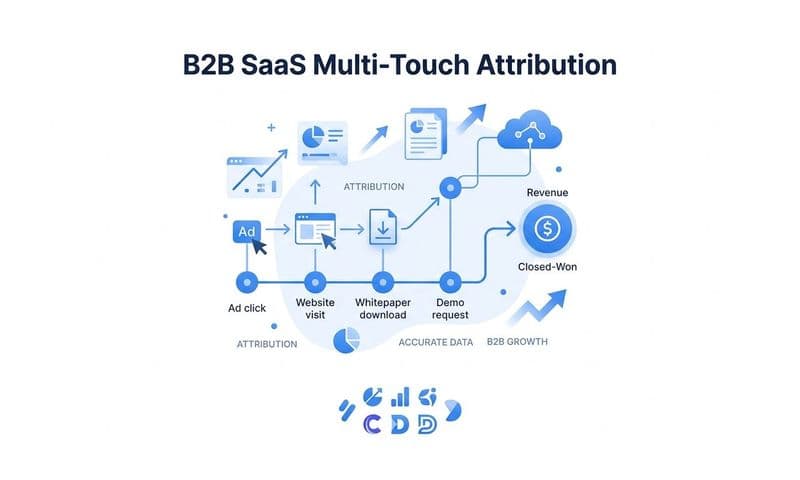
Ensure your system can track the complete journey from initial ad click through final CRM conversion. This is where platforms like Cometly excel—connecting ad platforms, website activity, and CRM events into unified customer journeys that show exactly what's driving revenue, not just what's driving clicks.
The most common pitfall at this stage is inconsistent UTM parameters breaking cross-platform attribution. If your Facebook campaigns use different parameter structures than your Google campaigns, your attribution system can't properly connect touchpoints. Understanding what UTM tracking is and how UTMs help your marketing will help you establish naming conventions and enforce them rigorously across all campaigns and team members.
Step 6: Validate Data Accuracy and Troubleshoot Gaps
Your cookieless tracking infrastructure is configured, but before you trust it for optimization decisions, you need to validate that it's actually accurate.
Start with a ground truth comparison. Pull conversion counts from your payment processor, CRM, or order management system—sources that represent actual business outcomes independent of marketing tracking. Compare these known conversion counts against what your server-side tracking reports. The numbers should match within a small margin of error.
If you see significant discrepancies, identify where conversions are being lost or duplicated. Check your server logs to see if conversion events are being captured at all. Verify that your data pipelines aren't dropping events during transmission. Confirm that deduplication logic isn't over-aggressive, removing legitimate conversions.
Next, compare server-side data against platform-reported conversions. Your server-side tracking will typically show more conversions than ad platforms report through their pixels, because server-side methods capture events that browser restrictions block. This is expected and actually demonstrates that your implementation is working—you're recovering attribution that cookie-based tracking missed.
Test tracking across different browsers, devices, and user consent scenarios. Have team members complete test conversions using Safari with tracking prevention enabled, Firefox with strict privacy settings, and mobile devices with various ad tracking preferences. Your server-side tracking should capture all these conversions regardless of browser restrictions.
Set up ongoing monitoring alerts for data quality issues. Configure notifications if conversion volume drops suddenly, if the ratio between ad clicks and conversions changes dramatically, or if specific platforms stop receiving data. Following best practices for tracking conversions accurately helps you catch problems quickly and prevents them from silently corrupting your data for extended periods.
Document your validation process thoroughly. Record what you tested, what results you expected, and what you actually observed. This documentation serves two purposes: it provides confidence that your system works correctly, and it creates a reference for future troubleshooting when something inevitably breaks.
Create a regular audit schedule—monthly or quarterly—to revalidate data accuracy. Platforms change their APIs, browsers introduce new privacy restrictions, and your own infrastructure evolves. Periodic validation ensures your tracking remains accurate over time.
Putting It All Together
Let's review the complete implementation checklist. First, audit your existing tracking infrastructure and document every gap you're currently experiencing. Second, select your server-side architecture approach—whether building custom infrastructure or leveraging an attribution platform. Third, configure server endpoints and first-party data collection across all conversion points. Fourth, connect ad platform conversion APIs with proper deduplication to prevent double-counting. Fifth, set up unified attribution logic across channels that reflects your actual customer journeys. Finally, validate data accuracy against known conversion sources and establish ongoing monitoring.
With cookieless tracking properly implemented, you'll actually gain capabilities you never had with cookie-based systems. You'll see accurate cross-device attribution that follows customers from mobile to desktop. You'll capture conversion data that survives browser restrictions and privacy updates. You'll feed enriched first-party data back to ad platforms, improving their targeting algorithms and your campaign performance.
The marketers who make this transition now will have a significant competitive advantage as privacy changes accelerate. While others struggle with degraded tracking and blind optimization, you'll have clear visibility into what's actually driving revenue across every channel and touchpoint.
The technical complexity of server-side tracking can feel daunting, especially when you're managing campaigns, analyzing performance, and trying to hit growth targets. Building and maintaining custom infrastructure requires dedicated engineering resources that most marketing teams simply don't have.
Ready to implement server-side tracking without building everything from scratch? Cometly's attribution platform handles the technical complexity—capturing every touchpoint from ad clicks to CRM conversions—while giving you clear visibility into what's actually driving revenue. Our AI analyzes your complete customer journey data and provides actionable recommendations for scaling your best-performing campaigns with confidence. Get your free demo today and start capturing every touchpoint to maximize your conversions.