
Your Facebook Ads dashboard shows a 4.2 ROAS. Google Analytics credits organic search for 60% of conversions. Your email platform claims a 35% conversion rate on the last campaign. Meanwhile, your actual revenue sits 40% below what these numbers suggest it should be.
This isn't a tracking error. It's the reality of fragmented attribution.
Every marketing platform operates in its own data silo, claiming credit for conversions using different attribution windows, methodologies, and tracking mechanisms. Facebook counts a conversion if someone clicked your ad within 7 days. Google Analytics gives credit to the last non-direct click. Your email platform attributes any purchase within 30 days of an email open. They're all technically correct—and simultaneously creating a completely distorted picture of what's actually driving revenue.
The cost of this fragmentation goes far beyond confusing reports. You're making budget allocation decisions based on incomplete data. That "winning" Facebook campaign might be getting credit for conversions that actually started with a Google search and were nurtured through email. Or your email sequences could be doing the heavy lifting while paid ads get the attribution glory. Without visibility into how channels work together across the complete customer journey, you're essentially optimizing in the dark.
Cross-channel tracking implementation solves this by creating a unified attribution system that captures every touchpoint—from initial ad click through email engagement to final purchase—and connects them to actual revenue outcomes. Instead of conflicting platform reports, you get a single source of truth that shows exactly how your marketing channels interact to drive conversions.
This guide walks you through the complete implementation process: building the server-side tracking foundation that captures accurate data in a privacy-first environment, connecting every marketing channel into a unified system, configuring multi-touch attribution models that reflect real customer journeys, and leveraging AI-powered insights to optimize performance. By the end, you'll have a tracking system that eliminates attribution blind spots and enables confident, data-driven budget decisions.
Let's walk through how to implement cross-channel tracking that actually works.
Building Your Tracking Foundation
Before you can track customer journeys across channels, you need infrastructure that actually captures accurate data. Most marketers skip this step and jump straight to connecting platforms—which is like building a house on sand. The foundation determines everything that comes after.
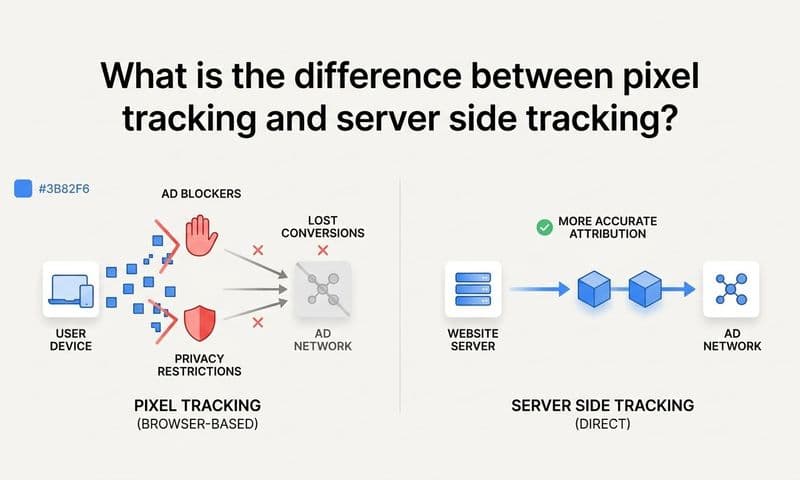
Server-side tracking forms the backbone of reliable cross-channel attribution. Here's why: client-side tracking relies on browser cookies and JavaScript that execute in the user's browser. Safari's Intelligent Tracking Prevention blocks third-party cookies after 7 days. Firefox Enhanced Tracking Protection does the same. iOS 14.5+ requires explicit user permission for app tracking, and most users decline. When your tracking depends on browser cooperation, you're missing 30-50% of your conversion data before you even start analyzing attribution.
Understanding why server-side tracking is more accurate helps justify the infrastructure investment required for reliable attribution. Server-side tracking captures conversion data on your server before browser restrictions can interfere, sending it directly to advertising platforms and analytics tools through secure APIs.
The technical requirements are straightforward but non-negotiable. You need a server environment that can receive conversion events from your website or app, process them in real-time, and forward them to your marketing platforms. Modern server-side tracking tools provide the technical foundation needed to capture conversion data before privacy restrictions interfere with attribution accuracy.
Set up your server-side tracking by implementing conversion APIs for each major platform. Facebook's Conversions API, Google's Enhanced Conversions, and TikTok's Events API all require server-to-server connections that bypass browser limitations. Configure these to receive the same conversion events your website fires, but send them directly from your server with additional customer data that browsers can't access—like email addresses, phone numbers, and customer IDs that improve match rates.
The second foundational element is UTM parameter standardization. Every link in every campaign needs consistent, structured UTM tags that enable accurate channel attribution. This sounds basic, but inconsistent UTM naming is the number one reason cross-channel tracking fails even with perfect technical setup.
Create a UTM naming convention document that your entire team follows religiously. Structure it hierarchically: utmsource identifies the platform (facebook, google, linkedin), utmmedium identifies the channel type (cpc, email, social), utmcampaign identifies the specific campaign, and utmcontent identifies the creative variation. Use lowercase, replace spaces with underscores, and never deviate from the structure.
Common UTM mistakes break attribution completely. Using "Facebook" in one campaign and "facebook" in another creates two separate sources in your analytics. Changing campaign names mid-flight splits your data. Forgetting UTM parameters on some links creates "direct" traffic that obscures true attribution. Standardized UTM parameters only deliver value when paired with tracking infrastructure that can capture and process this data accurately, which is why selecting the right conversion tracking tools ensures your carefully structured UTM parameters translate into actionable attribution insights rather than unused data points.
Configure cross-domain tracking if your customer journey spans multiple domains—like moving from a marketing site to a checkout subdomain or separate e-commerce platform
Building Your Tracking Foundation
Before you can track customer journeys across channels, you need infrastructure that actually captures accurate data. Most marketers skip this step and jump straight to connecting platforms—which is like building a house on sand. The foundation determines everything that comes after.
Essential Infrastructure Setup
Server-side tracking forms the backbone of reliable cross-channel attribution. Here's why: client-side tracking relies on browser cookies and JavaScript that execute in the user's browser. Safari's Intelligent Tracking Prevention blocks third-party cookies after 7 days. Firefox Enhanced Tracking Protection does the same. iOS 14.5+ requires explicit user permission for app tracking, and most users decline.
The shift from client-side to server-side tracking represents the most significant change in attribution methodology since iOS 14.5 privacy updates. Understanding why server-side tracking is more accurate helps justify the infrastructure investment and ensures proper implementation priorities.
Server-side tracking captures conversion data on your server before browser restrictions can interfere. When someone clicks your ad, the conversion event fires from your server directly to the ad platform's API—no browser cookies required. This means you capture accurate attribution data even when users have tracking prevention enabled or use privacy-focused browsers.
Implementing reliable server-side tracking requires selecting the right infrastructure that can handle real-time data capture without browser limitations. Modern server-side tracking tools provide the technical foundation needed to capture conversion data before privacy restrictions interfere with attribution accuracy.
Your infrastructure needs three core components: a server-side tracking solution that can receive conversion events, API connections to each advertising platform, and a data layer that standardizes how conversion information flows through your system. Without all three working together, you'll have gaps in your attribution data that make cross-channel tracking impossible.
UTM Parameter Standardization
UTM parameters are the DNA of cross-channel attribution. They tell your tracking system exactly where each visitor came from—which campaign, which ad, which specific link. But only if you use them consistently.
Create a standardized naming convention before launching any campaigns. Your structure should include five parameters: utmsource (the platform), utmmedium (the channel type), utmcampaign (the specific campaign name), utmterm (for paid search keywords), and utm_content (for A/B testing different ads). The key is consistency—"facebook" and "Facebook" and "fb" all look like different sources to your tracking system.
Here's a practical structure: utmsource=facebook, utmmedium=paidsocial, utmcampaign=q1retargeting, utmcontent=videoadv2. Every Facebook ad uses "facebook" as the source. Every paid social campaign uses "paid_social" as the medium. Campaign names follow a consistent format with time period and objective. Content tags identify specific creative variations.
Document your UTM conventions in a shared spreadsheet that your entire team can access. Include examples for each channel and campaign type. When someone creates a new campaign, they should be able to reference this guide and build UTMs that match your existing structure perfectly.
The most common UTM mistake is inconsistency.
Connecting Your Marketing Channels
Your tracking foundation is built. Now comes the part where most implementations fall apart: connecting every marketing channel into a unified attribution system without creating data gaps or attribution conflicts.
The integration sequence matters more than most marketers realize. Connect platforms in the wrong order, and you'll spend weeks troubleshooting data discrepancies. Skip critical configuration steps, and you'll have channels reporting conversions that your attribution system never sees. Let's walk through the exact integration approach that ensures complete data capture across every channel.
Paid Advertising Platform Integration
Start with your paid advertising platforms because they generate the highest volume of trackable touchpoints and require the most complex integration setup. Each platform has specific requirements for accurate conversion tracking in a privacy-first environment.
Facebook and Instagram require Conversions API implementation to capture accurate conversion data beyond what the pixel can track. The pixel alone misses 20-30% of conversions due to iOS privacy restrictions and browser tracking prevention. Set up your Conversions API to send server-side conversion events that include customer information parameters—email, phone, external ID—for event matching. Configure your attribution window to match your customer journey length: 7-day click for direct response campaigns, 28-day click for longer consideration cycles.
Each advertising platform operates with its own tracking methodology, creating data silos that obscure true campaign performance. Implementing cross-platform analytics that unifies Facebook, Google, LinkedIn, and other channel data is essential for understanding how platforms work together to drive conversions.
Google Ads integration requires offline conversion imports to connect ad clicks to revenue outcomes that happen outside the browser. Set up enhanced conversions to send hashed customer data with each conversion event, improving match rates and attribution accuracy. Configure conversion actions for each stage of your funnel—lead form submissions, trial signups, purchases—and assign appropriate values based on actual revenue data from your CRM.
LinkedIn, TikTok, and other platforms each have their own conversion tracking requirements. LinkedIn Insight Tag needs proper event tracking setup for B2B lead attribution. TikTok Events API requires server-side event configuration similar to Facebook's Conversions API. The key is ensuring every platform sends conversion data to your unified attribution system, not just to its own reporting dashboard.
CRM and Email Attribution Setup
CRM integration transforms disconnected touchpoints into a cohesive narrative of how customers actually make purchase decisions. Effective customer journey tracking requires connecting every interaction—from initial ad click through email nurture sequences to final purchase—into a unified attribution system.
Configure webhooks from your CRM to send real-time lead and revenue events to your attribution platform. When a lead converts to an opportunity, your attribution system needs to receive that event immediately with the associated revenue value and deal stage. When an opportunity closes, the final revenue amount must flow back to attribute credit across every touchpoint that influenced that conversion.
Email platform integration captures the nurture sequence attribution that most marketers completely miss. Your welcome series, educational content, and promotional campaigns all influence purchase decisions, but without proper tracking, these touchpoints remain invisible in your attribution data. Integrate your email platform to send engagement events—opens, clicks, specific link interactions—that connect to
Implementing Multi-Touch Attribution Models
Your tracking infrastructure captures every touchpoint. Your channels feed data into a unified system. Now comes the critical question: how do you actually assign credit for conversions across this complex web of interactions?
This is where most marketers make a costly mistake. They either stick with default last-click attribution (giving all credit to the final touchpoint) or randomly select a multi-touch model without understanding how it matches their actual customer journey. The result? Attribution that technically works but fundamentally misrepresents what's driving revenue.
Attribution model selection isn't a technical checkbox—it's a strategic decision that determines how you allocate millions in marketing spend. Choose wrong, and you'll systematically underfund the channels doing the heavy lifting while pouring budget into touchpoints that simply close deals others initiated.
Choosing the Right Attribution Model for Your Business
Different attribution models serve fundamentally different business objectives. First-touch attribution gives 100% credit to the initial interaction—perfect for measuring awareness campaign effectiveness and understanding what brings new prospects into your funnel. If you're running top-of-funnel brand campaigns and need to prove their value, first-touch shows exactly which channels are generating new customer relationships.
Last-touch attribution does the opposite, crediting only the final interaction before conversion. This works for businesses with short, simple customer journeys—think impulse purchases or single-session conversions. If most customers convert within hours of first contact, last-touch accurately reflects reality.
But here's where it gets interesting: most businesses operate somewhere between these extremes. Your customers discover you through a Facebook ad, research via Google search, engage with email nurture sequences, and convert after clicking a retargeting ad. Which touchpoint deserves credit?
Time-decay attribution solves this by giving more credit to touchpoints closer to conversion, acknowledging that recent interactions typically have stronger influence on purchase decisions. Position-based (U-shaped) attribution credits both first and last touchpoints heavily while distributing remaining credit across middle interactions—ideal for B2B companies where initial contact and final close both matter significantly.
Modern marketing tracking systems leverage artificial intelligence to identify attribution patterns and optimize models based on actual performance data rather than predetermined rules.
The key is matching model to customer journey complexity. E-commerce with 3-7 day consideration periods? Time-decay works well. B2B SaaS with 60-90 day sales cycles involving multiple stakeholders? Position-based or custom algorithmic models capture the reality better. The model should reflect how customers actually make decisions in your specific business.
Connecting Attribution to Actual Revenue
Attribution models mean nothing if they don't connect to revenue. This is where most implementations fail—they track conversions beautifully but never validate whether attributed conversions actually generated revenue.
Revenue attribution requires connecting your attribution system directly to your source of truth for financial data—typically your CRM for B2B businesses or e-commerce platform for retail. When a conversion happens, your system needs to track not just the event but the actual dollar value, then follow that customer through their lifecycle to capture total revenue impact.
For subscription businesses, this gets more complex. That initial $50/month signup attributed to your Facebook campaign might generate $600 in year-one
Step 3: Connecting Your Marketing Channels
Your tracking foundation is live. Now comes the part where most implementations either unlock complete attribution visibility or create new data silos—connecting every marketing channel into your unified system.
The integration order matters more than most marketers realize. Start with paid advertising platforms because they generate the highest volume of trackable touchpoints and provide the clearest test cases for validating your server-side tracking setup. Once paid channels are flowing clean data, layer in CRM and email attribution to connect marketing touchpoints to revenue outcomes. Finish with organic channels to capture the complete customer journey.
Paid Advertising Platform Integration
Each advertising platform requires a specific integration approach because they all handle conversion data differently. Facebook's Conversions API bypasses browser tracking limitations entirely by sending conversion events directly from your server to Facebook's systems. This means you capture accurate attribution data even when iOS users have opted out of tracking or when Safari blocks third-party cookies.
Google Ads requires offline conversion imports to connect your CRM revenue data back to the original ad clicks. Set up automated conversion imports that send purchase values, lead quality scores, and customer lifetime value back to Google Ads within your attribution window. This feeds Google's bidding algorithms with actual revenue outcomes instead of just form submissions or thank-you page visits.
LinkedIn and other B2B platforms need similar server-side event tracking configured through their conversion APIs. The key is maintaining consistent event naming across all platforms—a "purchase" event in Facebook should match your "purchase" event in Google Ads and your CRM. Inconsistent naming breaks cross-platform attribution before you even start analyzing data.
Configure webhooks that fire in real-time when leads enter your CRM, move through pipeline stages, or convert to customers. These webhooks send conversion events back to your attribution platform with the original UTM parameters and click IDs preserved. This creates the direct link between a Facebook ad click three weeks ago and the deal that closed today.
Email platform integration captures nurture sequence attribution that most systems completely miss. When someone clicks your ad, downloads a lead magnet, receives six nurture emails, then purchases after clicking email number four—your attribution system needs to see all of those touchpoints, not just the final email click. Integrate your email platform's tracking pixel and configure it to pass through original source parameters instead of overwriting them.
The critical piece most marketers skip: revenue attribution from CRM back to marketing channels. Set up automated revenue syncing that sends deal values, customer lifetime value, and churn data back to your attribution platform. This transforms your marketing metrics from "we generated 500 leads" to "we generated $47,000 in attribute
Connecting Your Marketing Channels
With your tracking foundation in place, it's time to connect the channels where your customers actually interact with your brand. This is where most implementations fall apart—not from technical failure, but from approaching integration in the wrong order.
Here's what happens when you connect channels randomly: Facebook sends conversion data that doesn't match your CRM records. Google Ads attributes conversions that your email platform also claims credit for. LinkedIn reports engagement that never appears in your analytics. You end up with more data but less clarity.
Channel integration order matters because each platform builds on the data foundation established by previous connections. Start with paid advertising platforms where conversion tracking directly impacts campaign optimization. Move to CRM integration that connects marketing touchpoints to revenue outcomes. Then layer in email attribution and organic channel tracking. This sequence ensures each integration validates the previous one, creating a self-checking system that catches data discrepancies before they corrupt your attribution models.
Paid Advertising Platform Integration
Facebook, Google, LinkedIn, and other paid platforms require platform-specific integration approaches because each handles conversion data differently. Facebook's Conversions API bypasses browser limitations by sending conversion events directly from your server to Facebook's servers. This captures conversions that iOS privacy restrictions would otherwise block, ensuring your Facebook campaigns optimize against complete data rather than a fraction of actual results.
Google Ads requires offline conversion imports to connect phone calls, in-store purchases, and CRM conversions back to the original ad clicks. Without this connection, Google's algorithm optimizes for clicks and website conversions while remaining blind to the revenue outcomes that actually matter. Each advertising platform operates with its own tracking methodology, creating data silos that obscure true campaign performance. Implementing cross-platform analytics that unifies Facebook, Google, LinkedIn, and other channel data is essential for understanding how platforms work together to drive conversions.
The technical setup varies by platform, but the principle remains constant: send conversion events with consistent user identifiers and timestamp data. Facebook needs the fbp cookie value and event timestamp. Google requires GCLID parameters and conversion time. LinkedIn uses matched audiences with email hashes. When these identifiers align across platforms, you can track individual users across their complete journey rather than treating each platform interaction as an isolated event.
CRM and Email Attribution Setup
CRM integration transforms marketing metrics from vanity numbers to revenue-connected insights. When a lead enters your CRM, that event should trigger a webhook that sends lead data back to your attribution system with all associated marketing touchpoints. This connection enables you to track which ad campaigns, email sequences, and content pieces contributed to qualified leads rather than just form submissions. Effective customer journey tracking requires connecting every interaction—from initial ad click through email nurture sequences to final purchase—into a unified attribution system.
 Cross Channel Tracking Implementation: How To Build A Unified Attribution System That Reveals True Marketing ROI
Email platform integration captures the nurture sequence contribution that paid platforms miss entirely. When someone clicks your Facebook ad, subscribes to your email list, receives five nurture emails over two weeks, then purchases after clicking an email link—Facebook claims the conversion, but email did the actual selling. Without email attribution, you'll systematically undervalue nurture sequences and over-invest in top-of-funnel acquisition.
Configure your email platform to send engagement events (opens, clicks, conversions) to
Your Path to Attribution Clarity
You've just walked through the complete framework for implementing cross-channel tracking that actually works—from server-side infrastructure through AI-powered optimization. The technical complexity is real, but so is the payoff: complete visibility into how your marketing channels work together to drive revenue.
Here's what changes when you implement this correctly: You stop making budget decisions based on conflicting platform reports. You understand which channel combinations drive your highest-value customers. You optimize campaigns based on actual revenue attribution instead of platform-claimed conversions. Most importantly, you gain the confidence to scale what's working and cut what isn't.
The challenge is that building this system manually requires significant technical resources, ongoing maintenance, and constant validation to ensure accuracy. Each integration needs monitoring. Attribution models require testing and refinement. Data quality demands continuous attention.
Cometly automates this entire process. Our platform handles server-side tracking infrastructure, connects all your marketing channels automatically, applies AI-powered attribution modeling, and delivers real-time insights that show exactly which campaigns drive revenue. You get the complete attribution system described in this guide without the technical complexity or ongoing maintenance burden.
Ready to see how your marketing channels actually work together? Get your free demo and discover which campaigns are really driving your growth.