What if you could see exactly which marketing touchpoint convinced your customer to buy? Not just the last click before purchase, but the entire journey from first impression to final conversion?
Most marketers are flying blind when it comes to attribution. They're spending thousands on ads across multiple platforms, but can't definitively say which campaigns are actually driving revenue. With iOS updates limiting pixel tracking and third-party cookies disappearing, the attribution landscape has become even murkier.
The result? Marketing budgets get wasted on campaigns that look good in platform dashboards but don't actually drive sales. Teams make decisions based on incomplete data, scaling the wrong ads while pausing profitable ones.
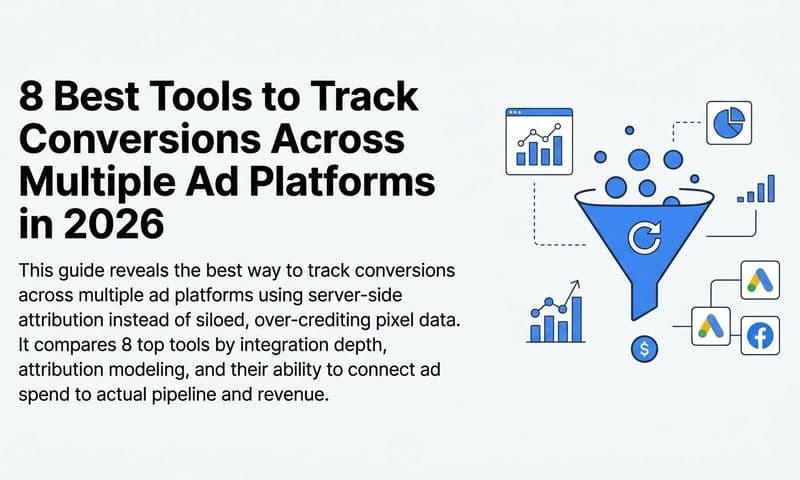
Modern conversion tracking tools solve this problem by connecting every touchpoint in your customer journey. They track users across devices and platforms, survive cookie restrictions, and show you which marketing efforts truly impact your bottom line. The best tools don't just collect data—they use AI to analyze patterns and recommend where to invest your ad spend for maximum ROI.
Here are the leading conversion tracking platforms that marketing teams rely on to scale their campaigns with confidence.
1. Cometly
Best for: AI-powered marketing attribution that connects every touchpoint to revenue
Cometly is a comprehensive marketing attribution platform that tracks the complete customer journey from first ad impression to final purchase, using AI to transform raw marketing data into actionable optimization recommendations.
 8 Best Conversion Tracking Tools To Maximize ROI In 2026
Where This Tool Shines
Cometly excels at solving the attribution accuracy problem that plagues modern marketers. While most tracking tools struggle with iOS restrictions and cookie limitations, Cometly's server-side tracking infrastructure captures conversion data that browser-based pixels miss entirely. This technical advantage means you're making decisions based on complete data, not the 60-70% of conversions that traditional pixel tracking captures.
The platform's AI engine analyzes every marketing touchpoint across your entire stack—from social media ads to email campaigns to organic search—creating a unified view of what actually drives revenue. Instead of seeing fragmented data from each ad platform claiming credit for the same conversion, Cometly deduplicates and attributes conversions accurately across channels. The real-time dashboard shows which specific ads, keywords, and campaigns contribute to revenue, not just vanity metrics like clicks or impressions.
Key Features & Capabilities
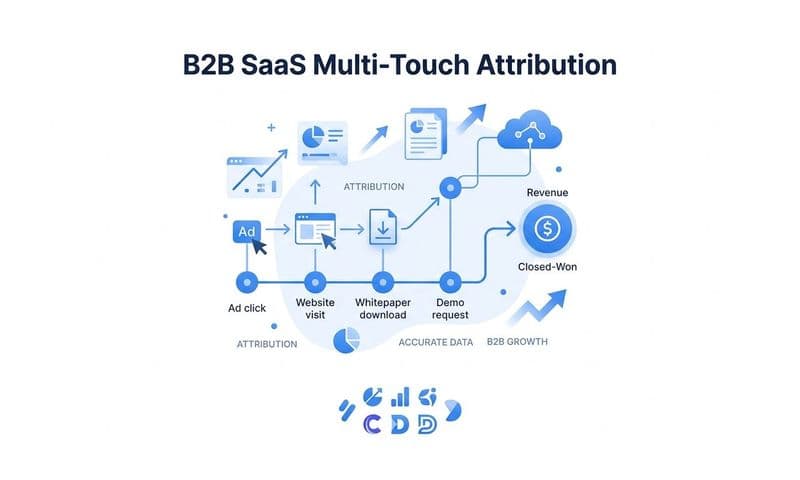
Multi-Touch Attribution Across All Channels: Tracks customer journeys across every marketing touchpoint and device, providing complete visibility into how customers discover and convert.
Server-Side Tracking Technology: Bypasses iOS App Tracking Transparency limitations and browser cookie restrictions to maintain data accuracy even when client-side tracking fails.
AI-Powered Campaign Recommendations: Machine learning algorithms analyze attribution data to identify high-performing campaigns and suggest specific budget allocation adjustments based on true revenue impact.
Conversion Sync to Ad Platforms: Sends enriched, accurate conversion data back to Facebook, Google, and other ad platforms, improving their AI optimization algorithms and campaign performance.
CRM Integration for Revenue Attribution: Connects with your CRM to track leads through your entire sales funnel, attributing closed deals back to the marketing touchpoints that generated them.
Custom Attribution Models: Offers flexible attribution modeling tailored to your specific business cycle, whether you need time-decay for long sales cycles or position-based for multi-touch journeys.
Lifetime Value Tracking: Monitors customer lifetime value and attributes it back to acquisition sources, helping you optimize for long-term profitability rather than just initial conversion.
Best For / Ideal Users
Cometly is ideal for marketing teams and agencies running multi-channel campaigns who need accurate attribution data to scale profitably. The platform delivers maximum value for businesses spending $10,000+ monthly on ads across multiple platforms where understanding true cross-channel impact justifies the investment in advanced attribution.
It's particularly valuable for businesses with longer sales cycles or high customer lifetime values where understanding the complete journey matters more than last-click attribution. E-commerce brands, SaaS companies, and B2B businesses with complex customer journeys benefit most from Cometly's comprehensive tracking and AI-powered insights.
Pricing
Cometly offers tiered pricing based on monthly tracked conversions, starting with a free trial that lets you test attribution accuracy for your specific campaigns before committing to a paid plan.
2. Google Analytics 4
Best for: Free website analytics with basic conversion tracking capabilities
Google Analytics 4 provides fundamental conversion tracking and attribution insights for businesses already invested in the Google ecosystem.
 10 Best Enterprise Channel Analytics Software To Maximize Marketing ROI
Where This Tool Shines
GA4's strength lies in its integration with Google Ads and its machine learning capabilities for filling attribution gaps. The platform automatically tracks key events like purchases, sign-ups, and form submissions while providing insights into user behavior across your website. Its enhanced ecommerce tracking shows which marketing channels drive the most valuable customers, and the attribution modeling feature lets you compare different attribution approaches.
For businesses heavily using Google Ads, the seamless data sharing improves campaign optimization. GA4 sends conversion data directly back to Google Ads, helping the platform's algorithm identify better audiences and optimize bidding strategies. The platform's cross-device tracking using Google signals attempts to connect user behavior across devices when users are logged into Google accounts.
Key Features & Capabilities
Free Conversion Tracking: Track unlimited website events and conversions without platform costs, making it accessible for businesses of any size.
Google Ads Integration: Automatic conversion import to Google Ads enables enhanced bidding strategies and audience optimization based on actual conversion data.
Machine Learning Models: GA4 uses predictive metrics like purchase probability and churn probability to fill gaps where user consent limits tracking.
Attribution Comparison Tool: Compare last-click, first-click, linear, time-decay, and data-driven attribution models side-by-side to understand channel impact.
Enhanced Ecommerce Tracking: Track product views, add-to-cart actions, checkout steps, and purchase completion with revenue and product-level details.
If you're evaluating vendors, our ecommerce ad automation tool breakdown can help.
Best For / Ideal Users
GA4 works best for small to medium businesses primarily using Google Ads who need basic conversion tracking without additional costs. It's suitable for companies with straightforward attribution needs and limited marketing channels.
The platform is particularly valuable for businesses just starting with setting up conversion tracking or those with tight budgets who can't justify dedicated attribution software. If your marketing stack centers around Google products, GA4 provides sufficient attribution insights for most optimization decisions.
Pricing
Google Analytics 4 is free for most businesses, with Google Analytics 360 available for enterprise clients requiring advanced features, higher data limits, and dedicated support.
3. HubSpot Marketing Analytics
Best for: All-in-one marketing attribution within a complete CRM ecosystem
HubSpot Marketing Analytics provides conversion tracking integrated directly with sales data, email marketing, and customer relationship management in a unified platform.
 8 Best Conversion Tracking Tools To Maximize ROI In 2026
Where This Tool Shines
HubSpot's attribution reporting excels at connecting marketing touchpoints directly to closed deals and customer lifetime value. Unlike standalone tracking tools that stop at the lead generation stage, HubSpot follows prospects through your entire sales pipeline to show which marketing channels actually drive revenue.
The platform's contact timeline reveals every interaction a prospect had with your marketing before becoming a customer—from the first blog post they read to the email campaign that prompted their demo request. This closed-loop reporting helps marketing teams prove ROI based on actual revenue, not just lead volume or engagement metrics.
Key Features & Capabilities
Multi-Touch Attribution Reporting: Track customer journeys across all marketing channels with multiple attribution models.
Revenue Attribution: Connect marketing efforts directly to closed deals and actual revenue generated.
Contact Timeline Visualization: View complete customer journey with every marketing interaction documented.
Campaign ROI Analysis: Calculate return on investment using real revenue data from closed deals.
Attribution Model Flexibility: Choose between first-touch, last-touch, linear, and custom attribution models.
Sales Pipeline Integration: Track leads from first touch through every deal stage to closure.
Automated Lead Scoring: Score leads based on attribution insights and engagement patterns.
Best For / Ideal Users
HubSpot attribution is perfect for B2B companies with longer sales cycles who need to connect marketing activities to actual revenue. Marketing teams that work closely with sales benefit from seeing how their campaigns influence deals throughout the pipeline.
It's particularly valuable for businesses already using HubSpot's CRM or marketing automation tools, as the attribution features integrate seamlessly with existing workflows. Companies that need to demonstrate marketing ROI to executives will appreciate the revenue-focused reporting.
Pricing
HubSpot's attribution features are included in Marketing Hub Professional and Enterprise plans, with pricing based on the number of marketing contacts in your database.
4. Triple Whale
Best for: E-commerce attribution and profit tracking for online stores
Triple Whale is an attribution platform built specifically for e-commerce businesses that need to track profit, not just revenue.
 6 Best Attribution Reporting Software Tools To Maximize ROI
Where This Tool Shines
Triple Whale distinguishes itself by calculating true profit attribution rather than stopping at revenue tracking. The platform automatically factors in your cost of goods sold, shipping expenses, payment processing fees, and advertising costs to show which campaigns actually generate profit versus those that drive sales but destroy margins.
This profit-first approach prevents the common trap where e-commerce brands scale campaigns that look successful in revenue terms but actually lose money when all costs are considered. Triple Whale's combination of pixel and server side tracking tools maintains accuracy despite iOS limitations, while its creative-level analysis identifies which specific ad creatives attract the most profitable customer segments.
We compare the leading options in our WooCommerce ad creative tool roundup.
Key Features & Capabilities
Profit Attribution Tracking: Automatically calculates true profit by incorporating COGS, shipping, fees, and ad spend into attribution models.
Creative Performance Analysis: Tracks which ad creatives drive the highest profit margins and customer lifetime value.
Hybrid Tracking System: Combines pixel and server-side tracking for comprehensive data collection across all devices.
Real-Time Profit Dashboards: Displays campaign-level profit breakdowns updated in real-time for immediate optimization decisions.
Customer Cohort Analysis: Tracks lifetime value and repeat purchase behavior by acquisition source and campaign.
Platform Integrations: Connects with Shopify, WooCommerce, Facebook, Google, TikTok, and other major e-commerce and advertising platforms.
Automated Recommendations: AI-powered suggestions for budget reallocation based on profit performance rather than revenue alone.
Best For / Ideal Users
Triple Whale is designed for e-commerce brands and agencies managing online stores where profit margins vary significantly across products. It's particularly valuable for businesses selling multiple product lines with different cost structures, where understanding which campaigns drive profitable customers matters more than total revenue generated.
The platform works best for stores doing at least $50,000 in monthly revenue with active paid advertising campaigns across multiple channels.
Pricing
Triple Whale offers tiered pricing based on monthly revenue tracked, starting with plans for growing e-commerce businesses and scaling to enterprise-level retailers managing multiple stores.
5. Northbeam
Best for: Performance marketers who need machine learning-powered attribution to optimize complex, multi-channel campaigns
Northbeam is a marketing intelligence platform that combines multi-touch attribution with media mix modeling to help businesses understand which marketing efforts actually drive profitable growth.
 8 Best Conversion Tracking Tools To Maximize ROI In 2026
Where This Tool Shines
Northbeam's real power lies in its machine learning models that go beyond simple touchpoint tracking. While most attribution tools simply record which ads a customer clicked, Northbeam's algorithms analyze patterns across thousands of customer journeys to determine which touchpoints actually influenced purchase decisions versus those that just happened to be present.
The platform's incrementality testing capabilities set it apart from basic attribution tools. Instead of assuming every touchpoint contributed equally, Northbeam helps you understand which campaigns drive additional sales versus those that simply capture demand that would have converted anyway. This distinction is critical when deciding where to scale your ad spend.
Northbeam Apex takes attribution a step further by feeding your first-party data directly back to ad platform algorithms. This creates a feedback loop where platforms like Facebook and Google receive enriched conversion data, improving their targeting and optimization capabilities. The result is better ad performance driven by more accurate data about what actually converts.
Key Features & Capabilities
Multi-Touch Attribution with Machine Learning: Industry-leading ML models that weight touchpoints based on actual influence rather than position in the customer journey.
Media Mix Modeling: Understand how different marketing channels work together and identify optimal budget allocation across your entire marketing mix.
Creative Analytics: Identify which ad creatives, messaging angles, and visual elements perform best across all your marketing channels in one unified view.
Product Analytics: Discover which specific products or product categories drive the best performance in your advertising campaigns.
Profit Benchmarks: Track campaign profitability with built-in cost analysis to optimize for profit margins, not just revenue.
Attribution for Awareness Campaigns: Attribute revenue to top-of-funnel campaigns using both clicks and deterministic view-through tracking, solving the "brand advertising ROI" problem.
Correlation Analysis: Built-in statistical tools to prove halo effects and understand how different marketing activities influence each other.
Best For / Ideal Users
Northbeam is designed for performance marketing teams and agencies managing substantial advertising budgets across multiple channels who need sophisticated attribution insights to make data-driven optimization decisions.
Our roundup of the best performance marketing software options can help you shortlist.
The platform is particularly valuable for e-commerce brands and direct-to-consumer companies running complex campaigns where understanding the interplay between awareness, consideration, and conversion marketing is critical to profitable scaling.
Marketing teams that have outgrown basic attribution tools and need machine learning-powered insights to optimize campaigns at scale will find Northbeam's advanced capabilities essential for maintaining profitability as they grow.
Pricing
Northbeam offers custom pricing based on data volume and attribution complexity, typically serving mid-market to enterprise clients with substantial advertising spend who need advanced attribution capabilities.
6. Ruler Analytics
Best for: B2B marketing attribution connecting phone calls and form submissions to revenue
Ruler Analytics is a marketing measurement platform that closes the loop between marketing activities and revenue outcomes, specializing in tracking offline conversions that most attribution tools miss.
 6 Best Attribution Modeling For Marketing Platforms That Track Real ROI
Where This Tool Shines
Ruler Analytics excels at solving the B2B attribution puzzle where conversions happen through phone calls, form submissions, and in-person meetings rather than instant online purchases. The platform assigns unique phone numbers to different marketing campaigns using dynamic number insertion, so when a prospect calls after seeing your Google Ad, you know exactly which campaign drove that conversation.
What makes Ruler particularly valuable is its closed-loop attribution capability. When integrated with your CRM, it tracks the complete journey from anonymous website visitor through multiple touchpoints to final deal closure. This means you can see not just which campaigns generate leads, but which campaigns generate revenue. For B2B companies where sales cycles span weeks or months, this connection between marketing spend and actual closed deals transforms budget allocation decisions.
Key Features & Capabilities
Call Tracking with Dynamic Number Insertion: Automatically displays unique phone numbers based on marketing source, attributing calls to specific campaigns.
Form Submission Attribution: Tracks which marketing touchpoints influenced each form submission across your website.
CRM Integration for Revenue Attribution: Connects marketing data to sales outcomes, showing which campaigns drive closed deals.
Multi-Touch Attribution Models: Distributes conversion credit across online and offline touchpoints throughout the customer journey.
Lead Scoring and Management: Prioritizes leads based on their marketing engagement history and predicted conversion likelihood.
Marketing Mix Modelling: Analyzes the combined impact of all marketing channels on business outcomes.
Real-Time Conversion Alerts: Notifies teams immediately when high-value conversions occur from specific campaigns.
Best For / Ideal Users
Ruler Analytics is perfect for B2B service businesses, agencies, consultancies, and professional services firms where phone conversations and personal interactions are critical conversion points. It's ideal for companies with sales teams who need to prove which marketing efforts actually generate qualified leads that close into customers.
The platform works particularly well for businesses with longer sales cycles where understanding the full customer journey tracking—from first website visit through multiple touchpoints to final purchase—is essential for optimizing marketing spend.
Pricing
Ruler Analytics offers tiered pricing based on the number of monthly website visitors tracked and the quantity of phone numbers required for call attribution across different campaigns.
7. Mixpanel
Best for: Product teams and SaaS companies tracking in-app behavior and conversion optimization
Mixpanel is a product analytics platform that tracks user behavior through custom events, providing detailed insights into how people interact with your product before converting.
 8 Best Enterprise Marketing Attribution Tools To Track Complex B2b Journeys
Where This Tool Shines
Mixpanel takes a fundamentally different approach to conversion tracking by focusing on user actions rather than just page views. While most attribution tools track which marketing channels drive traffic, Mixpanel reveals what users actually do once they arrive—which features they engage with, where they get stuck, and which behaviors correlate with conversion.
This event-based methodology proves particularly valuable for optimizing product-led growth strategies. You can track specific actions like "clicked pricing page," "started free trial," "invited team member," or "used feature X" and see exactly how these behaviors influence conversion rates. The platform's funnel analysis identifies precise drop-off points in your conversion process, while cohort analysis reveals how different user segments behave over time and which acquisition sources produce the most engaged customers.
Key Features & Capabilities
Custom Event Tracking: Define and track any user action that matters to your business, from button clicks to feature usage patterns.
Funnel Analysis: Visualize conversion paths and identify exactly where users abandon the process, with conversion rates between each step.
Cohort Analysis: Group users by shared characteristics or behaviors to understand retention patterns and lifetime value by acquisition source.
User Journey Visualization: See the complete path individual users take through your product, revealing unexpected conversion patterns.
A/B Testing Integration: Connect experiments directly to conversion outcomes and user behavior metrics for data-driven optimization.
Predictive Analytics: Machine learning identifies users most likely to convert or churn based on behavioral patterns.
Best For / Ideal Users
Mixpanel excels for SaaS companies, mobile apps, and digital products where understanding in-product behavior drives conversion optimization. It's particularly valuable for product managers and growth teams running product-led growth strategies who need to optimize the user experience itself, not just the marketing that drives traffic.
The platform works best when you have clearly defined conversion events within your product and want to understand which user behaviors predict success. If your conversion happens primarily through product usage rather than traditional marketing funnels, Mixpanel provides insights that marketing attribution tools miss.
Pricing
Mixpanel offers a free tier supporting up to 20 million monthly events, making it accessible for startups and small products. Paid plans scale based on monthly tracked users and data retention requirements, with growth and enterprise tiers available for larger operations.
8. Adobe Analytics
Best for: Enterprise-level attribution analysis with advanced segmentation capabilities
Adobe Analytics provides comprehensive conversion tracking and attribution modeling for large organizations with complex marketing operations and massive data volumes.
 10 Best Enterprise Channel Analytics Software To Maximize Marketing ROI
Where This Tool Shines
Adobe Analytics delivers enterprise-grade attribution analysis through its Attribution IQ feature, which lets you compare up to 10 different attribution models simultaneously on the same dataset. This side-by-side comparison reveals how different models would credit your marketing touchpoints, helping you understand which approach best reflects your actual customer decision-making process.
The platform's real-time processing engine handles billions of data points while maintaining accuracy across global operations. Unlike tools that batch-process data hourly or daily, Adobe Analytics provides immediate insights that enable rapid campaign adjustments. Its advanced segmentation capabilities allow you to analyze conversion patterns for specific customer groups, geographic regions, or product categories—critical for enterprises with diverse customer bases and multiple business units.
Key Features & Capabilities
Attribution IQ with Custom Models: Create custom attribution models based on your specific business logic, not just pre-built templates.
Real-Time Data Processing: Access conversion data and attribution insights immediately without waiting for batch processing delays.
Advanced Segmentation Engine: Analyze conversion patterns across unlimited customer segments with complex filtering logic.
Cross-Device Identity Resolution: Track users across devices using Adobe's Experience Cloud ID Service for unified attribution.
Marketing Cloud Integration: Seamless data sharing with Adobe Campaign, Target, and Audience Manager for unified marketing operations.
Predictive Analytics: Machine learning models identify conversion probability and detect anomalies in attribution patterns automatically.
Enterprise Data Governance: Role-based access controls, data retention policies, and compliance features for regulated industries.
Best For / Ideal Users
Adobe Analytics is designed for large enterprises and global organizations with complex marketing operations spanning multiple regions, business units, and customer segments. It's particularly valuable for companies requiring advanced customization, extensive data governance, and integration with Adobe's broader marketing technology ecosystem.
Organizations with dedicated analytics teams who can leverage the platform's sophisticated features and customize attribution models to match specific business requirements will see the most value.
Pricing
Adobe Analytics uses custom enterprise pricing based on data volume, number of report suites, feature requirements, and implementation complexity. Pricing typically reflects enterprise-level investments suitable for organizations with substantial marketing budgets.
Making the Right Choice
Selecting the right conversion tracking tool comes down to three factors: your business model, attribution complexity, and budget reality. E-commerce brands scaling profitably need platforms like Cometly or Triple Whale that track profit attribution, not just revenue. B2B companies with longer sales cycles benefit from HubSpot or Ruler Analytics, which connect marketing touchpoints to actual closed deals and revenue outcomes.
If you're just starting with attribution, Google Analytics 4 provides a solid foundation—especially if Google Ads drives most of your traffic. But as your marketing spans multiple channels and your ad spend grows, dedicated attribution platforms deliver the accuracy needed to scale without waste.
The best conversion tracking tools don't just collect data—they tell you what to do next. Look for platforms that use AI to recommend budget reallocation, identify high-performing creative elements, and optimize your conversion funnel based on actual revenue impact. Cometly's AI-powered attribution does exactly this, capturing every touchpoint and feeding enriched conversion data back to your ad platforms for better optimization.
Consider your primary conversion types: online purchases, phone calls, or form submissions? Think about your sales cycle length and whether customers interact across multiple devices before buying. Match these needs to the tool's strengths.
Ready to see which marketing efforts truly drive your revenue? Get your free demo and discover how AI-powered attribution transforms marketing guesswork into data-driven growth decisions.