Your Meta Ads Manager says one thing. Your Google Analytics says another. Your CRM tells a completely different story. And somewhere in that mess of conflicting numbers, you're supposed to make confident decisions about where to spend your marketing budget.
Sound familiar?
This isn't just frustrating—it's costing you money. Every day, marketers are scaling campaigns that don't actually work while pausing the ones that drive real revenue. The culprit? The collapse of third-party tracking has left most marketing teams flying blind, making decisions based on incomplete or downright inaccurate data.
First party data tracking is the solution that puts you back in control. Instead of relying on browser cookies that get blocked or platform estimates that miss half your conversions, you collect data directly from your own systems—your website, your CRM, your actual revenue. This guide will show you exactly what first party data tracking is, why the old methods are failing, and how to build a system that gives you accurate attribution and better ad performance.
Let's get your data working for you again.
The Data You Own: Understanding First Party Data Tracking
First party data is information you collect directly from your audience through channels you control. When someone fills out a form on your website, makes a purchase in your app, opens your email, or becomes a customer in your CRM—that's first party data. You gathered it. You own it. And critically, the person gave it to you directly.
This stands in sharp contrast to third-party data, which comes from external sources you don't control. Third-party data is collected by companies across the web, aggregated, and sold to advertisers. Think of those "audience segments" you can buy from data brokers—people who visited travel sites, or fit certain demographic profiles. You didn't collect this information yourself, and you have no direct relationship with these individuals.
Second-party data falls somewhere in between—it's essentially someone else's first party data that they share with you through a partnership. If a complementary business shares their customer list with you, that's second-party data.
First party data tracking is the process of capturing user interactions, behaviors, and conversions across the properties you own. Every page view, every button click, every form submission, every purchase—when these happen on your website or app, you can track them directly. More importantly, you can connect these individual actions into complete customer journeys.
Here's what makes this powerful: you're not estimating or sampling. You're recording actual behavior from real people who chose to engage with your business. When someone clicks your Facebook ad, lands on your website, downloads a guide, and eventually becomes a customer three weeks later, first party data tracking can capture that entire sequence.
The technical implementation typically involves tracking pixels or SDKs on your website and app, integration with your CRM and email platform, and systems that unify all this data into a single view. But the core principle remains simple: collect data directly from your own channels, where you have complete visibility and control.
This ownership matters more than ever because the external tracking ecosystem is crumbling.
Why Third-Party Tracking Is Failing Marketers
In April 2021, Apple released iOS 14.5 with App Tracking Transparency. Suddenly, every iPhone app had to ask users for explicit permission to track them across other apps and websites. The result? Most users said no.
For platforms like Meta that built their advertising empire on tracking users across the internet, this was catastrophic. Advertisers immediately saw their attribution windows shrink, their lookalike audiences degrade, and their conversion tracking become unreliable. The data that powered Facebook's legendary targeting and optimization algorithms was suddenly cut off for most iOS users.
But Apple wasn't alone. Safari had already implemented Intelligent Tracking Prevention (ITP) years earlier, severely limiting third-party cookies. Firefox rolled out Enhanced Tracking Protection. And Google, despite multiple delays, continues to plan the deprecation of third-party cookies in Chrome—the world's most popular browser.
The technical details matter less than the practical impact: browser-based tracking simply doesn't work reliably anymore. When someone clicks your ad on their iPhone, visits your website in Safari, and converts three days later, traditional tracking often misses the connection entirely.
This creates what marketers call the "attribution gap"—the difference between what actually happened and what your ad platforms can see. Meta might report 50 conversions from a campaign that actually drove 100. Or worse, it might attribute conversions to the wrong campaign entirely, leading you to scale ads that don't actually work while killing your best performers.
The platforms themselves know their data is incomplete. That's why Meta introduced "modeled conversions"—statistical estimates of conversions they think happened but couldn't actually track. Google uses similar modeling. But here's the problem: you're making real budget decisions based on educated guesses.
Meanwhile, your CRM shows customers coming from sources the ad platforms never reported. Your payment processor records revenue that doesn't match any platform's conversion count. And you're stuck trying to reconcile three different versions of reality. Understanding first party vs third party cookies is essential to navigating this new landscape.
This isn't a temporary glitch waiting for a fix. Browser restrictions and privacy regulations are only getting stricter. Third-party tracking is fundamentally broken, and it's not coming back.
The Strategic Advantages of First Party Data
When you track conversions through your own systems, you're recording actual events, not estimates. A purchase in your database is a real purchase. A lead in your CRM is a real lead. There's no modeling, no sampling, no statistical guesswork—just facts about what actually happened.
This accuracy transforms how you make decisions. Instead of wondering whether Meta's reported ROAS is real or modeled, you can compare ad spend directly against actual revenue in your payment system. Instead of guessing which campaigns drive qualified leads, you can see exactly which ads led to customers who closed deals in your CRM.
The reliability advantage extends beyond just counting conversions. First party data lets you track the complete customer journey across every touchpoint you control. You can see that someone clicked a Google ad, read three blog posts, downloaded a guide, attended a webinar, and then purchased—all connected to the same person. This complete view is impossible with third-party cookies that get deleted or blocked at various points.
Privacy compliance is another major advantage. When you collect first party data with proper consent mechanisms, you're on solid legal ground with GDPR, CCPA, and emerging privacy regulations. You're transparent about what data you collect, users can opt out, and you're not relying on opaque third-party data practices that regulators increasingly scrutinize.
GDPR, which took effect in 2018, requires clear consent for data collection and gives users rights over their information. CCPA, California's privacy law from 2020, provides similar protections. Multiple other US states have passed their own privacy legislation. First party data collection, when done correctly, aligns with these frameworks because you have a direct relationship with the user and clear consent.
Perhaps most importantly, you own and control your first party data. Platform policy changes can't take it away. Browser updates can't block it. When Apple releases iOS 18 or Google changes Chrome's tracking rules, your first party data collection keeps working because it doesn't depend on their infrastructure. Building a comprehensive first party data strategy ensures long-term marketing success.
This ownership also means you can use your data across any platform or channel. The same conversion data can feed Meta's optimization algorithm, inform Google's bidding, improve your email segmentation, and power your analytics dashboard. You're not locked into any single platform's walled garden.
Server-Side Tracking: The Foundation of Modern First Party Data
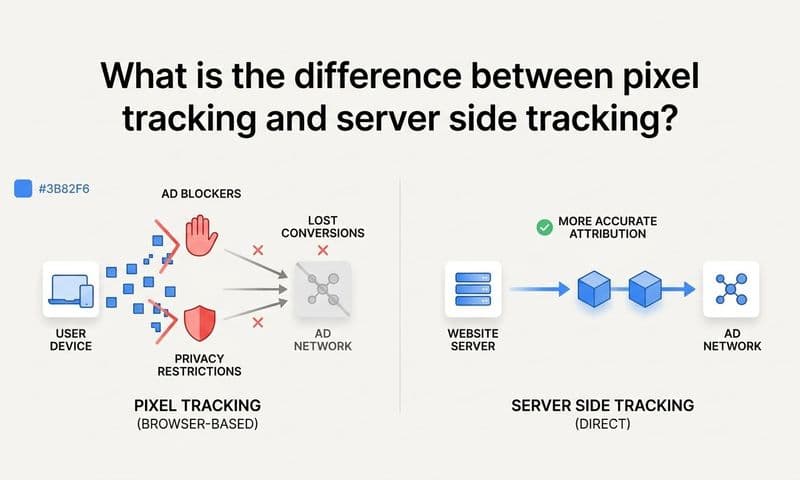
Traditional tracking happens in the browser—that's called client-side tracking. A pixel fires when someone loads your webpage, a cookie gets set, and data gets sent directly from the user's browser to the ad platform. This approach worked fine for years, but it's now fundamentally broken by the privacy restrictions we've discussed.
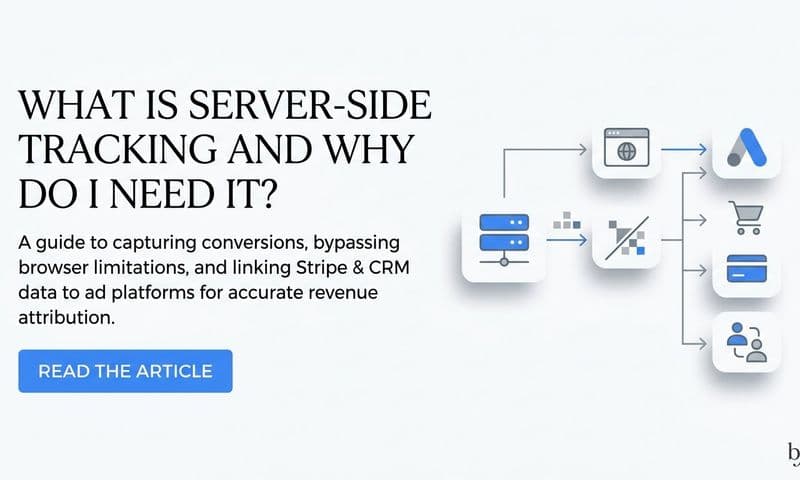
Server-side tracking takes a completely different approach. Instead of relying on browser cookies and pixels, your server captures user actions and sends that data to ad platforms through official APIs. The user's browser never talks directly to Facebook or Google—your server does all the communication.
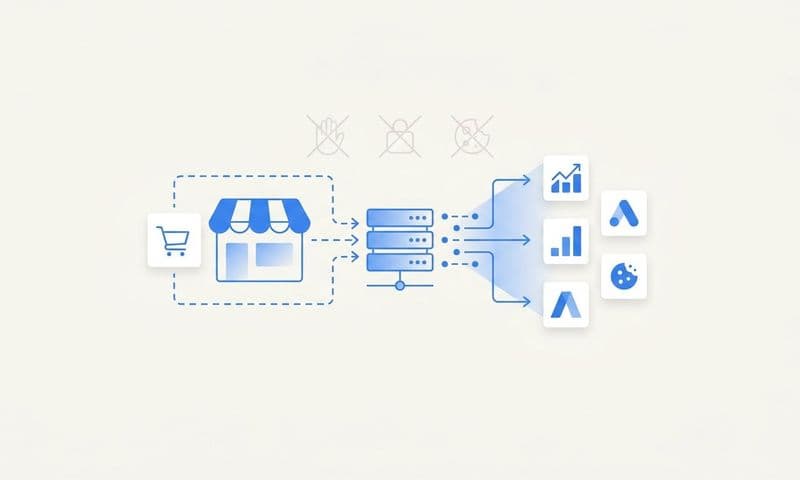
Here's how it works in practice. Someone clicks your Meta ad and lands on your website. Your website tracking (which can be a lightweight pixel or script) records this visit and sends the data to your server. When that person converts—makes a purchase, submits a lead form, signs up for a trial—your server captures that conversion event. Your server then sends this conversion data to Meta using the Conversions API, which is Meta's official server-side tracking method.
The critical difference: this all happens server-to-server. Ad blockers can't interfere because nothing is being blocked in the browser. Safari's Intelligent Tracking Prevention doesn't matter because you're not using Safari cookies. iOS restrictions are irrelevant because you're not tracking across apps—you're recording events on your own server and reporting them through official channels.
Google offers similar server-side solutions through Google Ads API and Google Analytics 4's Measurement Protocol. TikTok has Events API. Every major ad platform now provides and actively encourages server-side tracking because they know client-side tracking is dying. For a complete walkthrough, see our server side tracking implementation guide.
The technical flow looks like this: User action → Your website/app → Your server → Platform API → Ad platform receives conversion data. Each step happens on infrastructure you control or through official APIs, making the entire process more reliable and accurate.
Server-side tracking also lets you send enriched data. When a conversion happens, you can include information from your CRM, your payment system, or other internal sources. You might send the actual purchase value, the customer's lifetime value, whether they're a repeat customer, or which product they bought. This enriched data helps ad platforms optimize better because they understand the quality of conversions, not just the quantity.
There's one important consideration: server-side tracking requires proper implementation and infrastructure. You need a server that can receive events, process them, and send them to platform APIs. Many businesses use tag management systems with server-side containers, dedicated attribution platforms, or custom-built solutions. The technical lift is higher than dropping a pixel on your website, but the data quality improvement is substantial.
Building Your First Party Data Tracking System
Every effective first party data system starts with website tracking. You need a way to capture user interactions on your site—page views, button clicks, form submissions, purchases. This typically means implementing a tracking pixel or JavaScript tag that records these events. The key is ensuring this tracking is lightweight and privacy-compliant while capturing the data you need for attribution.
Next comes CRM integration. Your CRM holds the truth about which leads actually converted into customers, which deals closed, and what revenue you generated. Connecting your website tracking to your CRM creates the bridge between marketing activities and business outcomes. When someone fills out a form on your website, that lead should flow into your CRM with all the marketing source data attached—which ad they clicked, which campaign they came from, what content they engaged with.
Conversion event mapping is where you define what matters. Not every action is equally valuable. A newsletter signup is different from a demo request, which is different from a purchase. You need to map out your conversion events, assign them appropriate values, and ensure they're tracked consistently across all your systems. This mapping becomes the foundation for accurate attribution.
Data unification is perhaps the most critical piece. A customer's journey doesn't happen in one session. They might click your Instagram ad on Monday, visit your website from Google on Wednesday, open your email on Friday, and convert the following week. First party data tracking needs to connect these touchpoints into a single customer journey.
This requires identity resolution—figuring out that the person who clicked the ad, the person who visited from Google, and the person who opened the email are all the same individual. Email addresses become powerful identifiers when someone submits a form. Logged-in sessions help connect activity. And probabilistic matching can link anonymous sessions based on patterns and signals. Proper customer attribution tracking makes this connection possible.
The technical architecture typically involves a data layer that captures events, a database or data warehouse that stores them, and integration logic that sends relevant data to your ad platforms, analytics tools, and other systems. Many businesses use customer data platforms (CDPs) or attribution platforms to handle this complexity, rather than building everything from scratch.
Quality assurance is non-negotiable. Bad data is worse than no data because it leads you to make wrong decisions with confidence. You need to verify that events are firing correctly, that values are accurate, and that attribution is logical. This means testing your tracking implementation, monitoring for discrepancies, and setting up deduplication rules. Learning how to fix attribution discrepancies is crucial for maintaining data integrity.
Deduplication matters because the same conversion might get reported multiple times through different channels. Your website pixel might send a purchase event, and your server-side integration might send the same purchase. Without deduplication logic, you'd count it twice and over-report your results. Proper deduplication uses event IDs or timestamps to ensure each conversion is counted exactly once.
Data governance and privacy controls round out the system. You need clear policies about what data you collect, how long you retain it, and how users can access or delete their information. Privacy regulations aren't optional, and building compliance into your tracking system from the start is far easier than retrofitting it later.
Turning First Party Data Into Better Ad Performance
Collecting accurate first party data is only half the battle. The real value comes from using that data to improve your advertising performance. This starts with feeding enriched conversion data back to ad platforms through their server-side APIs.
When you send conversion events to Meta via Conversions API or to Google via their conversion tracking API, you're giving their optimization algorithms better information to work with. Instead of modeled estimates, they receive actual conversion data. Instead of just knowing someone converted, they learn the conversion value, the product purchased, or the customer quality. This process is known as first party data activation.
This enriched data dramatically improves how platforms optimize your campaigns. Meta's algorithm can learn to target people more likely to make high-value purchases, not just any purchase. Google's Smart Bidding can optimize for actual revenue, not just conversion volume. The platforms get smarter about who to show your ads to and how much to bid.
The impact on campaign performance can be significant. Many marketers report improved ROAS and lower cost per acquisition after implementing proper server-side tracking, simply because the ad platforms can finally see which conversions actually happened and optimize accordingly.
Accurate attribution transforms your decision-making. When you know which campaigns actually drive revenue—not which ones get credit under last-click attribution or modeled conversions—you can confidently scale what works and cut what doesn't.
First party data enables true multi-touch attribution models. You can see that someone discovered you through a Facebook ad, researched through Google, and converted after clicking an email. Instead of giving all credit to the last click (the email), you can attribute value across all the touchpoints that contributed to the conversion. This reveals the true performance of your awareness campaigns, not just your bottom-funnel retargeting.
With accurate data, scaling becomes a strategic decision rather than a gamble. When you trust that a campaign genuinely drives $5 in revenue for every $1 spent, you can confidently increase the budget. Without that trust, scaling feels risky because you're never sure if the reported performance is real. Discover how ad tracking tools can help you scale ads with confidence.
First party data also enables more sophisticated optimization strategies. You can create lookalike audiences based on your actual best customers, not just people who clicked. You can exclude recent converters to avoid wasting budget on people who just bought. You can build retargeting segments based on specific behaviors tracked on your website.
The feedback loop becomes tighter and more reliable. You launch a campaign, see real results in your CRM and payment system, feed that data back to the platform, and watch the algorithm improve. This cycle of measurement, learning, and optimization is how modern marketing teams gain competitive advantages.
Taking Control of Your Marketing Data
First party data tracking isn't just a workaround for disappearing cookies and privacy restrictions. It's a fundamental upgrade to how you measure and optimize marketing performance. When you own your data, collect it directly from your channels, and track it through systems you control, you gain accuracy, reliability, and strategic advantages that third-party tracking never provided.
The benefits are clear: you make decisions based on actual conversions, not modeled estimates. You stay compliant with privacy regulations while maintaining measurement capabilities. You're insulated from platform policy changes and browser restrictions. And you can feed better data back to ad platforms, improving their optimization and your results.
The marketers who embrace first party data tracking now are building a competitive moat. While others struggle with incomplete data and unreliable attribution, you'll have a clear view of what's working and the confidence to scale it. As privacy regulations tighten and third-party tracking continues to degrade, this advantage will only grow.
Server-side tracking, CRM integration, proper event mapping, and data unification might sound complex, but they're becoming table stakes for serious marketing teams. The technical investment pays for itself in better decisions, improved ad performance, and eliminated waste on campaigns that don't actually drive results.
Your data is the foundation of every marketing decision you make. When that foundation is built on first party data you own and control, everything else becomes clearer. You know which channels drive revenue. You understand your customer journey. You can optimize with confidence instead of guessing.
Ready to elevate your marketing game with precision and confidence? Discover how Cometly's AI-driven recommendations can transform your ad strategy—Get your free demo today and start capturing every touchpoint to maximize your conversions.