You're running ads across Meta, Google, LinkedIn, and TikTok. Leads are coming in. Revenue is growing. But here's the question that keeps you up at night: which campaigns are actually driving those conversions?
Most marketers are flying blind. They see a sale come through and credit the last ad someone clicked. Meanwhile, the awareness campaign that introduced the prospect three weeks ago gets zero recognition. The retargeting ad that rekindled interest after a week of silence? Ignored. The email that finally pushed them over the edge? Invisible in your reporting.
This is the black box problem of modern marketing. Revenue appears, but the path to it remains frustratingly unclear. You're making million-dollar budget decisions based on incomplete data, crediting channels that closed deals while starving the ones that opened doors.
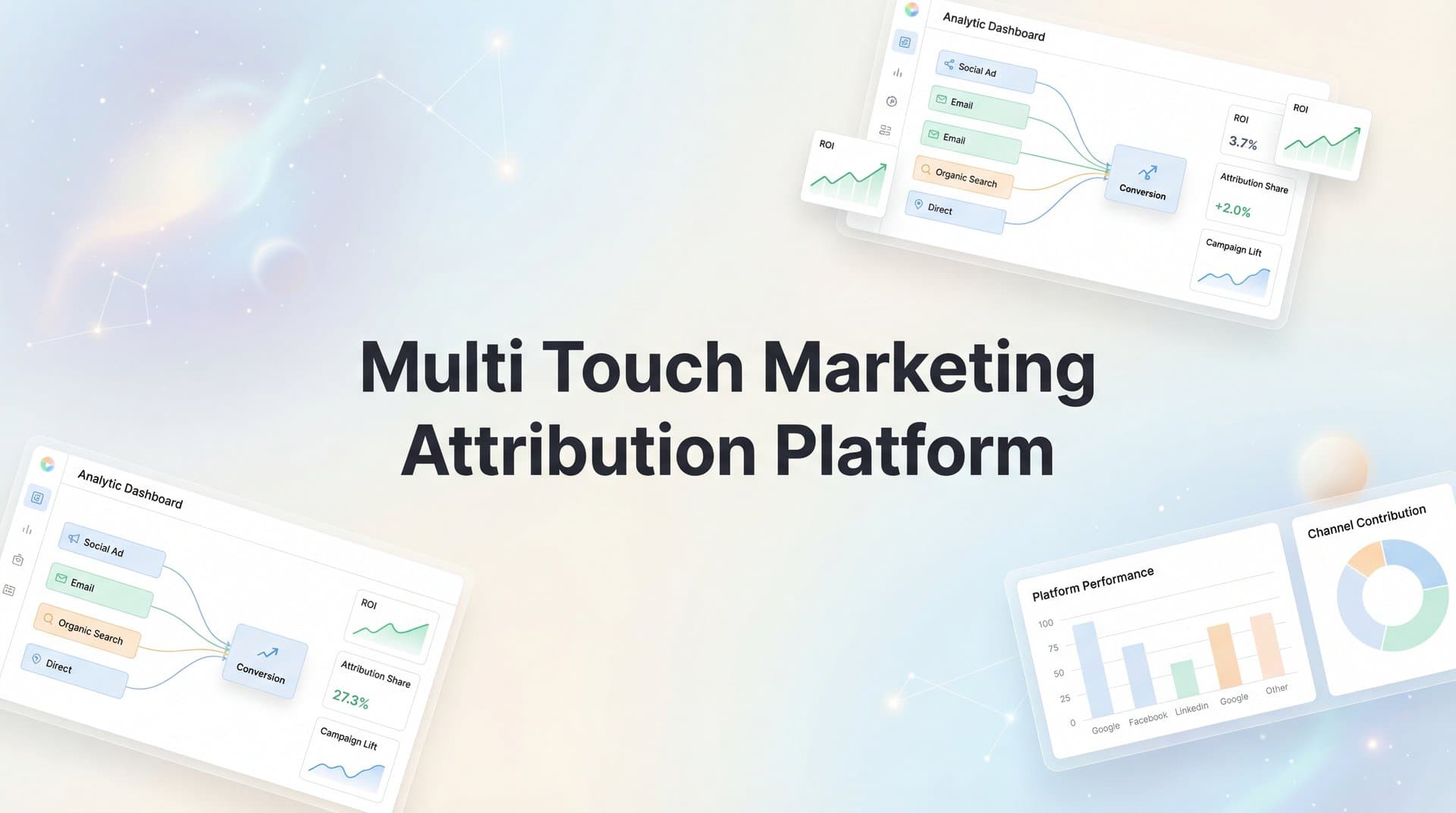
Multi touch marketing attribution platforms solve this by connecting every touchpoint in the customer journey to actual revenue outcomes. They track the first ad impression, the website visits, the content downloads, the retargeting clicks, and the CRM events—then show you exactly how these pieces fit together to drive conversions. This guide will show you how these platforms work, why they matter, and how to implement one that transforms your marketing from educated guessing into data-driven growth.
The Fatal Flaw in Last-Click Attribution
Last-click attribution operates on a simple but deeply flawed premise: whoever touched the customer last gets all the credit. It's like watching a basketball game and only crediting the player who made the final shot, ignoring the assists, the defensive stops, and the plays that created the scoring opportunity.
In reality, most purchase journeys involve multiple touchpoints spread across days or weeks. A prospect might discover your brand through a LinkedIn ad, visit your website twice over the next week, click a retargeting ad, download a case study, receive three nurture emails, and finally convert after clicking a Google search ad. Last-click attribution gives 100% credit to that final Google ad while treating everything else as irrelevant noise.
The consequences ripple through your entire marketing strategy. You over-invest in bottom-funnel channels that capture demand you've already created elsewhere. Your awareness campaigns get slashed because they rarely receive last-click credit, even though they're introducing thousands of potential customers to your brand. Your retargeting budget shrinks despite its crucial role in bringing back interested prospects.
First-click attribution flips the problem but doesn't solve it. Now you're crediting only the initial touchpoint and ignoring everything that happened afterward. The nurture campaign that educated the prospect? The comparison content that addressed their objections? The limited-time offer that created urgency? None of it matters in first-click world.
Single-touch attribution models force you to choose between two incomplete stories. Multi touch marketing attribution platforms tell the complete story by analyzing every touchpoint and understanding how they work together to drive conversions.
How Attribution Platforms Connect Your Entire Marketing Ecosystem
Multi touch marketing attribution platforms function as a unified data layer that sits above your disconnected marketing tools. They capture signals from ad platforms, website analytics, CRM systems, and offline channels—then stitch these fragments into complete customer journeys.
The technical foundation starts with tracking infrastructure. When someone clicks your Meta ad, the platform captures that interaction along with campaign details, ad creative, audience segment, and timestamp. When that same person visits your website, tracking pixels or server-side events record their behavior: pages viewed, time spent, content engaged with. When they fill out a form, the platform connects that conversion back to their original ad click and all the touchpoints in between.
This is where server-side tracking becomes critical. Browser-based tracking faces increasing limitations from iOS privacy changes, ad blockers, and third-party cookie restrictions. Server-side tracking bypasses these obstacles by sending data directly from your servers to the attribution platform, maintaining accuracy even when browser-level tracking fails.
CRM integration completes the picture by connecting marketing touchpoints to actual business outcomes. When a lead becomes an opportunity, when they book a demo, when they close as a customer—these events flow back into the attribution platform. Now you're not just tracking clicks and form fills; you're tracking revenue. You can see which campaigns drove high-value customers versus tire-kickers, which channels generate qualified pipeline versus dead-end leads. Understanding marketing attribution platforms revenue tracking capabilities is essential for this level of insight.
The platform maintains persistent user identities across devices and sessions. When someone clicks your ad on mobile, visits your site on desktop the next day, and converts via email a week later, the attribution platform recognizes these as the same person and builds their complete journey. This cross-device, cross-session tracking is what makes multi-touch attribution possible.
Modern platforms also capture post-conversion touchpoints. After someone becomes a customer, their continued engagement with your content, support interactions, and expansion opportunities all feed into attribution models. This helps you understand not just what drives initial conversions, but what drives customer lifetime value.
The result is a comprehensive view of how prospects interact with your marketing ecosystem over time. Instead of seeing isolated events in separate platforms, you see connected journeys that reveal patterns, identify high-impact touchpoints, and show you exactly where to invest your next dollar.
Choosing the Right Attribution Model for Your Business
Attribution models are the rules that determine how credit gets distributed across touchpoints in a customer journey. Different models tell different stories about which channels deserve recognition. Understanding these models helps you choose the right lens for analyzing your marketing performance.
Linear attribution takes the democratic approach: every touchpoint gets equal credit. If someone had five interactions before converting, each touchpoint receives 20% of the credit. This model works well when you believe every touchpoint contributes equally to the conversion, or when you're just starting with multi-touch attribution and want a simple, fair distribution. The downside? It treats your first brand awareness ad the same as the final conversion-driving offer, which may not reflect reality. Learn more about linear model marketing attribution to determine if this approach fits your needs.
Time-decay attribution recognizes that touchpoints closer to conversion typically have more influence on the final decision. It assigns exponentially more credit to recent interactions. If someone converts after seeing your ad four weeks ago, visiting your site two weeks ago, and clicking a retargeting ad yesterday, the retargeting ad gets the most credit, the website visit gets less, and the initial ad gets the least. This model suits businesses with shorter consideration periods where recency matters, but it can undervalue the awareness campaigns that started the journey.
Position-based attribution, often called U-shaped attribution, operates on the principle that the first and last touchpoints deserve special recognition. The most common configuration gives 40% credit to the first touchpoint, 40% to the last, and distributes the remaining 20% evenly across middle interactions. This model acknowledges that introducing someone to your brand and closing the deal are both critical moments, while still giving some credit to the nurturing touchpoints in between. It works particularly well for B2B companies where both awareness and conversion events carry significant weight.
Data-driven attribution uses machine learning to analyze thousands of conversion paths and determine which touchpoints actually influence outcomes. Instead of applying a predetermined rule, the algorithm identifies patterns: "When prospects see this type of ad, then visit this page, then engage with this content, they convert at 3x the rate of other paths." It assigns credit based on the actual incremental impact each touchpoint has on conversion probability.
Data-driven models require significant data volume to work effectively—typically hundreds of conversions per month minimum. But when you have that volume, they provide the most accurate view of what's actually driving results. The algorithm accounts for factors human-designed models miss: the synergy between certain channel combinations, the optimal timing between touchpoints, the specific content that moves prospects forward.
Choosing the right model depends on your sales cycle and business context. For e-commerce with short consideration periods, time-decay or data-driven models often work best. For B2B with long sales cycles involving multiple stakeholders, position-based models help balance awareness and conversion efforts. For complex ecosystems with many touchpoints, data-driven attribution cuts through the noise to reveal true impact. Our multi touch attribution models guide provides deeper insights into selecting the optimal approach.
The most sophisticated approach is comparing multiple models side-by-side. When you see a channel perform well across all attribution models, you know it's genuinely driving results. When a channel's performance varies dramatically between models, you can make informed decisions about how to weight that information based on your business priorities.
Essential Platform Capabilities That Drive Real Results
Not all multi touch marketing attribution platforms are created equal. The difference between basic tracking and transformative insights comes down to specific capabilities that separate good platforms from great ones.
Real-time analytics means seeing performance as it happens, not days later when the opportunity to optimize has passed. When you launch a new campaign, real-time platforms show you within hours whether it's attracting the right audience and driving quality touchpoints. You can adjust targeting, creative, or budget while the campaign is still fresh, rather than discovering problems in next week's report. This immediacy transforms attribution from a retrospective analysis tool into an active optimization engine.
Conversion sync capabilities create a feedback loop that improves ad platform performance. The platform sends enriched conversion data back to Meta, Google, and other ad platforms through their Conversion APIs. This means the algorithms optimizing your campaigns receive better signals about what constitutes a valuable conversion. Instead of just knowing someone filled out a form, the ad platform learns that this person became a qualified lead worth $5,000 in pipeline value. The algorithm can then find more prospects who match that profile, improving targeting and reducing cost per acquisition.
AI-powered recommendations turn attribution data into actionable insights. Rather than staring at dashboards trying to spot patterns, the AI identifies high-performing campaigns that deserve more budget, underperforming segments that need creative refreshes, and hidden opportunities where small optimizations could drive outsized returns. These recommendations consider not just surface metrics but the full attribution picture: which campaigns assist conversions, which channels work synergistically, which touchpoint sequences drive the highest customer value.
Multi-model comparison views let you analyze performance through different attribution lenses simultaneously. You can see how a channel performs under linear, time-decay, position-based, and data-driven models side-by-side. This prevents over-reliance on any single perspective and helps you make more nuanced budget decisions. When a channel shows strong performance across all models, that's a clear signal to scale. When performance varies dramatically between models, you can dig deeper to understand why.
Flexible conversion window settings acknowledge that different businesses have different sales cycles. A platform should let you analyze attribution over custom timeframes—7 days for e-commerce, 90 days for B2B software, 180 days for enterprise sales. This flexibility ensures the attribution model matches your actual customer journey length rather than forcing your analysis into arbitrary windows.
Offline touchpoint integration matters for businesses that blend digital and traditional marketing. The platform should capture trade show interactions, sales calls, direct mail responses, and in-person demos alongside digital touchpoints. This creates a truly complete view of the customer journey rather than just the online portion. When comparing marketing attribution software features, ensure offline integration is on your checklist.
These capabilities combine to create a platform that doesn't just track attribution—it actively helps you make better marketing decisions every day.
Your Implementation Roadmap: From Setup to Optimization
Implementing a multi touch marketing attribution platform requires careful planning and execution. Rush the process, and you'll end up with incomplete data and inaccurate insights. Follow a structured approach, and you'll build a foundation for data-driven marketing decisions.
Start with a tracking audit. Document every place customers interact with your brand: ad platforms, website pages, landing pages, forms, email campaigns, CRM touchpoints. Identify which tracking is already in place and where gaps exist. Many companies discover they're missing critical touchpoints or tracking the same event multiple times with inconsistent naming, creating data chaos.
Connect your data sources systematically. Begin with your major ad platforms—Meta, Google, LinkedIn, TikTok—since these typically drive the most trackable touchpoints. Integrate your CRM next to connect marketing touchpoints to revenue outcomes. Add your website tracking, email platform, and any other significant touchpoint sources. Each integration should be tested thoroughly before moving to the next. Trying to connect everything simultaneously leads to configuration errors that corrupt your data.
Configure attribution windows based on your actual sales cycle. If prospects typically convert within two weeks of first interaction, a 14-day window makes sense. If your B2B sales cycle runs 90 days, you need a longer window. Analyze a sample of recent conversions to understand the typical time from first touchpoint to conversion, then set your attribution window to capture most of that journey.
Validate data accuracy before making decisions. Compare attribution platform data against source platforms for the first few weeks. Check that conversion counts match, that revenue figures align, that major campaigns appear correctly. Small discrepancies are normal due to different tracking methodologies, but large gaps indicate configuration issues that need fixing. This validation period prevents you from making budget decisions based on flawed data.
Avoid the common pitfall of incomplete integrations. Many teams connect their ad platforms but forget about organic social, email, or offline touchpoints. This creates a skewed attribution picture where paid channels appear to drive everything simply because they're the only ones being tracked. Ensure every significant marketing channel is represented in your attribution data. Understanding attribution challenges in marketing analytics helps you anticipate and avoid these common mistakes.
Establish clear conversion definitions across your team. What counts as a qualified lead? When does an opportunity become pipeline? What constitutes a closed deal? Misaligned definitions create confusion and undermine trust in attribution data. Document these definitions and ensure they're consistently applied across marketing, sales, and the attribution platform.
Build team buy-in by starting with insights, not criticism. When presenting attribution data for the first time, focus on opportunities discovered rather than channels that underperformed. Show how attribution reveals hidden gems and optimization opportunities. This creates enthusiasm for the new data source rather than defensiveness about past decisions. Our guide on multi touch attribution for teams offers strategies for organizational adoption.
Designate attribution as the source of truth gradually. Don't immediately abandon existing reporting in favor of attribution data. Run them in parallel for a period, understand where they differ and why, then transition to attribution-based decision making as confidence builds. This measured approach prevents disruption while establishing the new system.
Transforming Insights into Revenue Growth
Attribution data only creates value when it changes your marketing decisions. The goal isn't better dashboards—it's better results. Here's how to turn attribution insights into measurable revenue growth.
Reallocate budget from underperforming to high-impact channels. Attribution reveals which channels drive conversions and which just capture demand created elsewhere. When you discover that your display ads rarely assist or close conversions, you can confidently shift that budget to channels showing stronger attribution performance. This isn't about gut feeling—it's about following the data to where customers actually convert.
Identify hidden gems that assist conversions without getting last-click credit. Many channels excel at moving prospects forward in the journey but rarely get credit in last-click reporting. Content marketing, awareness campaigns, and retargeting often fall into this category. Attribution data shows their true impact: they may not close deals, but they create and nurture the pipeline that eventually converts. These channels deserve continued investment even if they don't dominate last-click reports.
Optimize channel combinations based on synergy patterns. Attribution reveals which channel sequences drive the highest conversion rates. Maybe prospects who see a LinkedIn ad, then visit your blog, then click a Google search ad convert at twice the rate of other paths. You can deliberately create more of these high-performing sequences by adjusting your channel mix and targeting. A cross channel marketing attribution software solution makes identifying these patterns significantly easier.
Time your campaigns based on attribution insights. Data might reveal that prospects who convert typically have touchpoints spread over three weeks with specific intervals between them. You can use this insight to structure your retargeting windows, email cadences, and campaign flights to match the natural rhythm of your customer journey.
Build a continuous optimization loop. Review attribution data weekly to identify trends early. Test hypotheses about what drives performance. Measure the impact of changes. Iterate based on results. This transforms attribution from a reporting tool into an active optimization engine that constantly improves your marketing efficiency.
Use attribution to inform creative decisions. When certain ad creatives consistently appear in high-value conversion paths, that signals what messaging resonates. When specific content pieces frequently assist conversions, that indicates topics worth expanding. Attribution data guides not just where you spend, but what you say and show. Explore how to use multi touch attribution models to maximize these creative insights.
The competitive advantage of multi touch marketing attribution isn't just knowing what happened—it's using that knowledge to make your next campaign more effective than your last.
Moving from Guesswork to Growth
Multi touch marketing attribution platforms transform marketing from an art based on intuition into a science based on data. They reveal the complete customer journey, show you which touchpoints actually drive revenue, and provide the insights needed to optimize every dollar you spend.
The marketers who embrace attribution gain a decisive advantage. While competitors argue about which channel "deserves" budget based on incomplete data, you're making decisions based on complete conversion paths. While they over-invest in last-click channels and starve awareness campaigns, you're funding the full journey that drives revenue. While they wonder which campaigns work, you know—and you're scaling the winners with confidence.
The shift to privacy-first tracking, the proliferation of marketing channels, and the complexity of modern customer journeys make attribution platforms essential rather than optional. The question isn't whether you need multi-touch attribution—it's whether you'll implement it before or after your competitors do.
Ready to elevate your marketing game with precision and confidence? Discover how Cometly captures every touchpoint from ad clicks through CRM events, reveals true revenue drivers with AI-powered recommendations, and feeds enriched data back to ad platforms for better optimization. Get your free demo today and start transforming attribution insights into measurable revenue growth.