Your customer clicks a Meta ad on their iPhone during lunch. Later that evening, they Google your brand on their laptop and convert. Without cross-device tracking, Meta gets zero credit—and you keep cutting budget from a channel that's actually driving sales.
This isn't a hypothetical problem. It's happening right now in your campaigns.
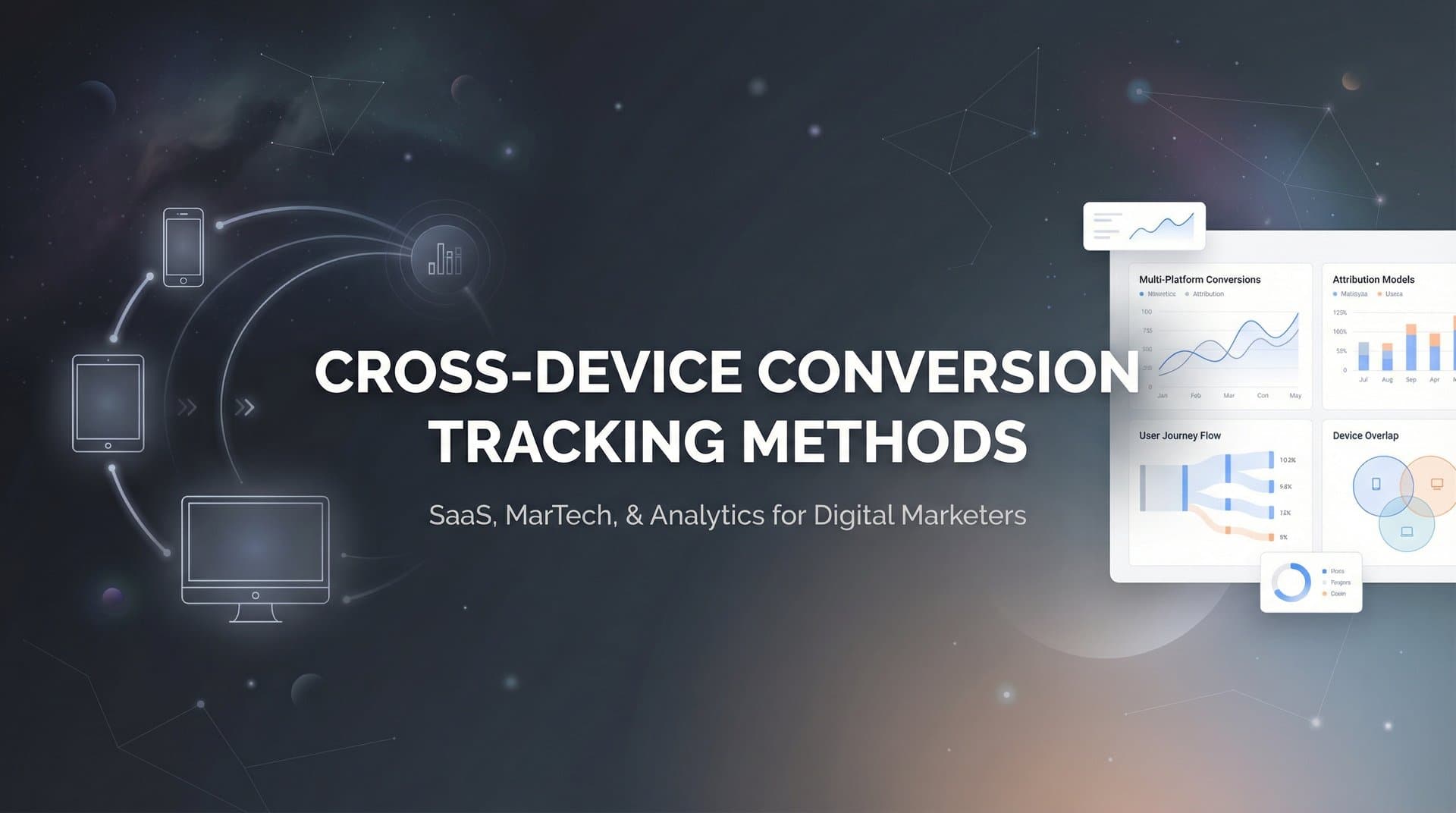
The modern customer journey spans multiple devices, browsers, and sessions before conversion. Single-device attribution misses these connections entirely, leading to misallocated budgets and underperforming campaigns. The solution? Cross-device conversion tracking methods that connect every touchpoint across the entire customer journey.
Here are the top cross-device conversion tracking tools and methods available in 2026, from server-side attribution platforms to mobile-first solutions designed for today's fragmented digital landscape.
1. Cometly
Best for: Multi-platform advertisers who need accurate attribution and AI-powered optimization recommendations
Cometly is a marketing attribution platform that tracks the complete customer journey across devices using server-side technology and AI-powered analysis.
 9 Best Cross-Device Conversion Tracking Methods in 2026
Where This Tool Shines
Cometly solves the cross-device attribution problem by combining server-side tracking with AI analysis. While most platforms struggle with iOS privacy restrictions and cookie limitations, Cometly's server-side approach captures conversion data directly from your backend systems—bypassing browser and device restrictions entirely.
The platform doesn't just track conversions; it feeds enriched conversion data back to your ad platforms. This means Meta, Google, and TikTok receive better signals to optimize their algorithms, improving targeting and campaign performance over time.
Key Features
Server-Side Tracking: Captures conversions directly from your server, avoiding iOS tracking limitations and browser cookie restrictions that plague client-side tracking.
Multi-Touch Attribution: Maps the complete customer journey across all devices, channels, and touchpoints to show which marketing efforts actually drive revenue.
AI Recommendations: Analyzes cross-device conversion patterns and provides specific optimization suggestions for scaling high-performing campaigns.
Conversion Sync: Sends enriched, accurate conversion events back to Meta, Google, and other ad platforms to improve their targeting algorithms.
Real-Time Journey Tracking: Monitors customer interactions as they happen across devices, providing immediate visibility into campaign performance.
Best For
Growth-focused marketing teams and agencies running multi-channel campaigns who need accurate attribution data to make confident budget decisions. Particularly valuable for businesses spending heavily on paid advertising across Meta, Google, TikTok, and other platforms where accurate conversion tracking directly impacts ROAS.
Pricing
Custom pricing based on monthly ad spend. Demo available to explore features and discuss specific tracking requirements for your marketing stack.
2. Google Analytics 4
Best for: Businesses invested in Google's ecosystem seeking free cross-device tracking capabilities
Google Analytics 4 is Google's analytics platform with built-in cross-device tracking through User-ID and Google Signals technology.
 11 Best Conversion Optimization Tools to Boost Your ROI in 2026
Where This Tool Shines
GA4 offers two approaches to cross-device tracking: deterministic matching through User-ID (when users log into your site) and probabilistic matching through Google Signals (using data from users signed into Google accounts). This dual approach captures more of the customer journey than single-method platforms.
The cross-device conversion paths report shows exactly how users move between devices before converting. You can see patterns like mobile discovery leading to desktop purchases, helping you understand which devices play which roles in your funnel.
Key Features
User-ID Tracking: Creates deterministic cross-device connections for logged-in users, providing the most accurate cross-device attribution possible.
Google Signals: Uses aggregated data from Google accounts to identify probable cross-device journeys through probabilistic matching.
Cross-Device Reports: Dedicated reporting interface showing device overlap, conversion paths, and attribution across mobile, tablet, and desktop.
Native Google Ads Integration: Automatically shares cross-device conversion data with Google Ads for improved campaign optimization.
Free Core Platform: Full cross-device tracking capabilities available at no cost for most businesses.
Best For
Companies already using Google Ads and comfortable with Google's analytics ecosystem. Works especially well for businesses with logged-in user experiences (SaaS platforms, membership sites, ecommerce stores with accounts) where User-ID tracking provides deterministic matching.
Pricing
Free for standard implementation. Google Analytics 360 (enterprise version) starts at $50,000 annually and includes advanced features, higher data limits, and dedicated support.
3. Segment
Best for: Enterprise teams needing unified customer profiles across hundreds of tools and touchpoints
Segment is a customer data platform that unifies user identities across devices and channels with enterprise-grade identity resolution.
 9 Best Cross-Device Conversion Tracking Methods in 2026
Where This Tool Shines
Segment approaches cross-device tracking as an identity resolution problem. The platform collects data from every source—web, mobile apps, backend systems, CRM—and merges these disparate identifiers into unified customer profiles. When a user interacts on mobile then desktop, Segment recognizes it's the same person.
The real power comes from Segment's 400+ integrations. Once it resolves a cross-device identity, that unified profile flows to every tool in your stack—your analytics platform, ad platforms, CRM, email system, and more. Everyone works from the same customer view.
Key Features
Identity Resolution Engine: Automatically merges user identifiers across devices, platforms, and data sources into single customer profiles.
Real-Time Data Streaming: Sends unified customer data to 400+ downstream tools instantly as events occur across devices.
Profiles API: Provides programmatic access to unified customer profiles for building custom cross-device experiences.
Privacy Controls: Manages consent and data governance across all connected tools to maintain compliance as users move between devices.
Warehouse-First Option: Routes all data through your data warehouse first, giving you complete control over identity resolution logic.
Best For
Mid-market to enterprise companies with complex marketing stacks who need a single source of truth for customer data across dozens of tools. Particularly valuable for businesses with both web and mobile app presences requiring unified tracking.
Pricing
Free tier available for startups with basic needs. Team plan starts at $120 monthly. Business and enterprise pricing scales with data volume and typically ranges from several hundred to thousands monthly.
4. AppsFlyer
Best for: Mobile-first businesses tracking users from app install through web conversion
AppsFlyer is a mobile attribution platform with People-Based Attribution for tracking users across mobile apps and web properties.
 9 Best Cross-Device Conversion Tracking Methods in 2026
Where This Tool Shines
AppsFlyer specializes in the mobile-to-web journey that traditional analytics platforms struggle with. Their People-Based Attribution connects app installs, in-app events, and web conversions into unified user journeys—critical for businesses where customers discover on mobile but convert on desktop.
The platform includes deep linking technology that creates seamless experiences across devices. A user clicking a mobile ad lands exactly where intended in your app, and AppsFlyer tracks the entire sequence from click to conversion, even if the final purchase happens on web days later.
Key Features
People-Based Attribution: Links app and web activity to individual users across devices using deterministic and probabilistic matching methods.
Deep Linking: Creates seamless user experiences from ads to specific app content while maintaining attribution throughout cross-device journeys.
SKAdNetwork Support: Navigates iOS privacy restrictions with Privacy Cloud technology that supplements limited SKAdNetwork data.
Built-In Fraud Protection: Identifies and blocks fraudulent installs and conversions before they contaminate your cross-device attribution data.
Web-to-App Attribution: Tracks users who discover your brand on web then later install and convert through your mobile app.
Best For
Mobile app developers and mobile-first businesses where significant user journeys span from app to web or vice versa. Essential for gaming companies, fintech apps, and consumer apps with both mobile and web presences.
Pricing
Free tier available for early-stage startups with limited conversion volume. Paid plans use custom pricing based on monthly attributed conversions across devices.
5. Adjust
Best for: App marketers prioritizing fraud prevention alongside cross-device attribution
Adjust is a mobile measurement partner offering cross-device attribution with comprehensive fraud prevention for app and web marketers.
 9 Best Cross-Device Conversion Tracking Methods in 2026
Where This Tool Shines
Adjust combines cross-device attribution with industry-leading fraud prevention—a critical pairing since fraudulent activity often spans multiple devices. The platform's cross-device graph uses both deterministic matching (logged-in users) and probabilistic signals (device fingerprinting) to connect user journeys accurately.
The unified dashboard presents app and web data side-by-side, making it easy to spot cross-device patterns. You can see which acquisition channels drive users who engage on mobile but convert on desktop, or vice versa, helping optimize spend across the full funnel.
Key Features
Cross-Device Graph: Combines deterministic user logins with probabilistic device signals to map complete customer journeys across platforms.
Fraud Prevention Suite: Detects and blocks fraudulent installs, clicks, and conversions in real-time before they distort attribution data.
Unified Dashboard: Presents web and app attribution data in a single interface for holistic cross-device campaign analysis.
Deep Linking: Maintains attribution context as users move between devices and platforms through intelligent link routing.
Privacy-First Measurement: Adapts to iOS App Tracking Transparency and other privacy frameworks while maintaining attribution accuracy.
Best For
Mobile app marketers concerned about attribution fraud who need reliable cross-device tracking. Particularly valuable for apps in competitive categories with high fraud rates like gaming, dating, and finance.
Pricing
Custom pricing based on monthly attributed installs across all devices. Pricing scales with app size and complexity of attribution requirements.
6. Rockerbox
Best for: DTC brands combining cross-device attribution with marketing mix modeling
Rockerbox is a marketing attribution platform that combines multi-touch attribution with marketing mix modeling for direct-to-consumer brands.
 9 Best Ad Performance Tracking Solutions in 2026
Where This Tool Shines
Rockerbox takes a dual approach to cross-device tracking: granular user-level attribution for digital channels plus marketing mix modeling for channels like TV and podcast that are harder to track at the individual level. This combination gives DTC brands a complete view of how all marketing works together across devices.
The platform specializes in first-party data collection, using its own tracking infrastructure to capture cross-device conversions directly. This reduces dependence on third-party cookies and platform pixels that increasingly fail due to privacy restrictions.
Key Features
Cross-Device Journey Mapping: Visualizes complete customer paths from first touch to conversion across all devices and channels.
Marketing Mix Modeling: Supplements user-level attribution with statistical modeling to measure offline and hard-to-track channels.
First-Party Data Collection: Uses proprietary tracking to capture conversions directly, reducing reliance on third-party cookies and platform pixels.
Ad Platform Integrations: Connects with Meta, Google, TikTok, Pinterest, and other platforms to pull spend and performance data automatically.
Offline Conversion Tracking: Links online cross-device journeys to offline purchases through integrations with point-of-sale systems.
Best For
Direct-to-consumer brands with significant ad spend across multiple channels who need attribution that accounts for both digital cross-device journeys and harder-to-track channels like TV, podcast, and direct mail.
Pricing
Custom pricing based on monthly ad spend and data complexity. Typically starts around $1,000 monthly for smaller DTC brands and scales with advertising budget.
7. Triple Whale
Best for: Shopify merchants seeking simple cross-device tracking with real-time profit analytics
Triple Whale is an ecommerce analytics platform with first-party pixel tracking designed specifically for Shopify merchants.
 11 Best Marketing Attribution Companies to Track Your Ad ROI in 2026
Where This Tool Shines
Triple Whale's first-party pixel captures conversion data directly from your Shopify store, then matches it with ad platform data to create cross-device attribution. Since the pixel runs on your domain, it's less affected by iOS tracking restrictions and cookie blocking than standard platform pixels.
The platform combines cross-device attribution with real-time profit tracking—showing not just which devices drive conversions, but which drive profitable conversions after accounting for COGS, shipping, and ad spend. This profit-first approach helps Shopify merchants make smarter cross-device budget decisions.
Key Features
First-Party Pixel: Tracks conversions directly from your Shopify store domain, improving attribution accuracy across devices compared to third-party pixels.
Multiple Attribution Models: Compare cross-device journeys using first-click, last-click, linear, and other attribution models in real-time.
Real-Time Profit Tracking: Shows profit margins by device, channel, and campaign—not just revenue—for better cross-device budget allocation.
Shopify-Native Integration: Pulls order, customer, and product data automatically from Shopify without complex setup.
Creative Analytics: Links specific ad creatives to cross-device conversion paths to identify which assets drive multi-device journeys.
Best For
Shopify merchants running paid advertising who want straightforward cross-device attribution without enterprise complexity. Particularly valuable for stores focused on profit optimization rather than just revenue growth.
Pricing
Starts at $129 monthly for stores with basic needs. Pricing scales based on monthly revenue, with higher tiers offering advanced features and higher data limits.
8. Northbeam
Best for: Ecommerce brands prioritizing incrementality testing alongside cross-device attribution
Northbeam is a machine learning-powered attribution platform focused on incrementality and cross-device tracking for ecommerce businesses.
Where This Tool Shines
Northbeam applies machine learning to cross-device attribution, identifying patterns in customer journeys that rule-based systems miss. The platform doesn't just show which devices were involved in conversions—it estimates which touchpoints actually influenced the decision versus those that would have happened anyway.
The cross-device journey visualization makes complex multi-device paths understandable at a glance. You can see cohorts of users who follow similar cross-device patterns and analyze which acquisition channels start journeys that end in high-value conversions days later on different devices.
Key Features
ML-Powered Attribution: Uses machine learning to identify causal relationships in cross-device journeys rather than just correlation.
Journey Visualization: Presents complex multi-device conversion paths in intuitive visual formats for quick pattern recognition.
Incrementality Testing: Measures which cross-device touchpoints actually drive additional conversions versus those that just capture existing demand.
Cohort Analysis: Groups users by cross-device behavior patterns to identify which acquisition channels drive the most valuable multi-device journeys.
Custom Attribution Windows: Adjusts lookback windows by device and channel to match your actual customer journey length.
Best For
Ecommerce brands with sophisticated marketing teams who want to understand not just what happened across devices, but which cross-device touchpoints actually created incremental value.
Pricing
Custom pricing based on monthly tracked conversions and data complexity. Typically starts around $1,000 monthly and scales with business size.
9. Branch
Best for: Mobile-first brands focusing on deep linking and web-to-app cross-device experiences
Branch is a mobile linking platform with cross-device attribution, specializing in deep linking and web-to-app tracking.
Where This Tool Shines
Branch excels at the specific cross-device challenge of moving users from web discovery to app conversion. Their deep links maintain context and attribution as users transition between browsers, social apps, and your mobile app—even across different devices.
The platform's predictive cross-device matching uses behavioral signals and device fingerprinting to identify when a user who clicked a link on mobile later opens your app on a different device. This captures attribution that simpler systems miss entirely.
Key Features
Deep Linking with Attribution: Creates intelligent links that route users to the right content while maintaining attribution across device switches.
Cross-Platform Journey Tracking: Follows users from web to app and across devices, connecting disparate touchpoints into unified conversion paths.
Predictive Matching: Uses behavioral and device signals to probabilistically match users across devices when deterministic matching isn't possible.
QR Code Attribution: Tracks conversions from QR codes scanned on one device that lead to conversions on another device.
Referral Analytics: Measures cross-device sharing and referral behavior to identify which users drive multi-device viral growth.
Best For
Mobile app developers and mobile-first brands where user acquisition happens on web but conversion happens in-app, often across different devices. Particularly valuable for apps with strong sharing and referral components.
Pricing
Free tier available for apps with basic deep linking needs. Paid plans scale based on monthly active users across all devices and platforms.
Making the Right Choice
The right cross-device tracking method depends on where your customers actually convert and which platforms drive your growth.
For multi-platform advertisers running campaigns across Meta, Google, TikTok, and other channels, Cometly provides the most comprehensive solution. Its server-side tracking bypasses iOS and browser limitations that plague other methods, while AI recommendations help you scale what's actually working across devices. The conversion sync feature feeds better data back to ad platforms, improving their targeting algorithms over time.
Google Analytics 4 makes sense if you're already invested in Google's ecosystem and comfortable with its learning curve. The combination of User-ID and Google Signals captures many cross-device journeys, especially for businesses with logged-in experiences. Just be prepared for the complexity.
Mobile-first companies should look at AppsFlyer, Adjust, or Branch depending on priorities. AppsFlyer and Adjust offer comprehensive mobile attribution with strong web integration, while Branch specializes in the deep linking and web-to-app transitions that define mobile user experiences.
DTC and ecommerce brands have strong options in Rockerbox, Triple Whale, and Northbeam. Rockerbox combines digital attribution with marketing mix modeling for brands using both online and offline channels. Triple Whale keeps things simple for Shopify merchants with its profit-first approach. Northbeam appeals to sophisticated teams who want incrementality testing alongside attribution.
Whatever you choose, implement cross-device tracking before your next campaign launch. Every day without it means conversions attributed to the wrong channels and budgets allocated based on incomplete data. The customer journey spans multiple devices—your attribution should too.
Ready to elevate your marketing game with precision and confidence? Discover how Cometly's AI-driven recommendations can transform your ad strategy—Get your free demo today and start capturing every touchpoint to maximize your conversions.