Your Meta Ads dashboard shows 50 conversions this month. Your CRM says you closed 73 deals. That 23-conversion gap? It's not just a tracking glitch—it's costing you real money. When ad platforms can't see your actual conversions, their algorithms optimize blind, pushing budget toward audiences that look good on paper but don't convert in reality.
This is the new normal of digital advertising. iOS privacy updates block roughly 40-60% of browser-based tracking. Cookie restrictions continue tightening. Ad blockers are standard. The result: incomplete conversion data that undermines everything from audience targeting to bid optimization.
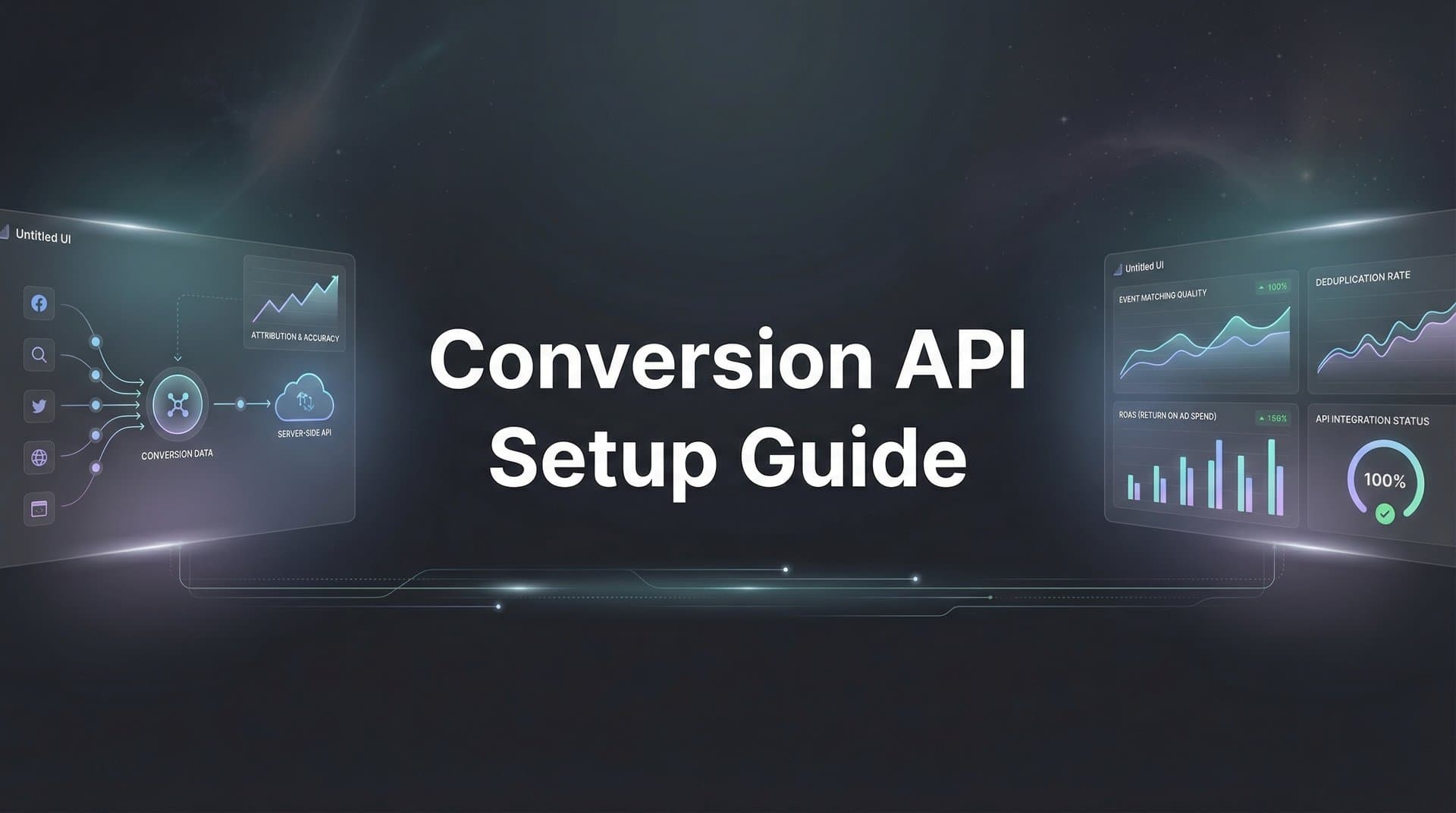
Conversion API changes this equation entirely. Instead of relying on browsers to report conversions, CAPI sends event data directly from your server to ad platforms—capturing conversions that browser pixels miss completely. Meta, Google, TikTok, and other platforms now prioritize server-side data specifically because it's more reliable and complete.
The technical barrier that once made server-side tracking a developer-only project has dropped significantly. Whether you're working with an engineering team, using a partner platform, or implementing through tag management tools, you can have accurate conversion tracking running within hours rather than weeks.
This guide walks through the complete setup process step by step. You'll learn exactly what credentials you need, how to choose the right implementation method for your situation, and how to verify everything works before scaling across your ad platforms. Let's get your conversion data flowing reliably.
Step 1: Gather Your Platform Credentials and Access Requirements
Before writing a single line of code or clicking through integration settings, you need the right access and credentials for each platform you're tracking. Missing even one piece here means delays later when you're trying to test.
Start by listing every ad platform where you need conversion tracking. Most marketers focus on Meta (Facebook and Instagram) and Google Ads first, but depending on your strategy, you might also need TikTok, Snapchat, Pinterest, or LinkedIn. Each platform has its own credential requirements.
For Meta Conversions API: You'll need your Pixel ID (found in Events Manager under Data Sources), a Dataset ID for the specific pixel, and an access token generated through Business Settings. The access token requires "Ads Management" and "Events Management" permissions. Navigate to Business Settings > System Users, create a new system user if needed, and generate a token with these permissions. Save this token immediately—Meta won't show it again. For a deeper dive into Meta Conversions API configuration, understanding the nuances of token management is essential.
For Google Enhanced Conversions: Locate your Google Ads Conversion Action ID and Measurement ID (if using Google Analytics 4). You'll also need API access enabled in your Google Ads account. Go to Tools & Settings > Setup > API Center to verify access is enabled and note your customer ID. Understanding enhanced conversions Google Ads requirements will help you maximize data quality from the start.
For TikTok Events API: Find your Pixel ID in Events Manager and generate an access token under Settings > Generate Access Token. TikTok's token generation is straightforward but requires advertiser-level permissions.
Beyond platform credentials, document your website's technical infrastructure. Are you running WordPress, Shopify, a custom application, or a headless commerce setup? This determines which implementation methods are feasible. If you're using a CRM like HubSpot, Salesforce, or Pipedrive, note which plan you're on—some integrations require specific tier access.
Verify you have admin access to both your ad account business settings and your website backend or server environment. For server-side tracking, you need the ability to send HTTP requests from your server to platform APIs. If you're working with a development team, confirm they can access your production server and implement webhook listeners or API calls.
Create a simple spreadsheet tracking each platform, its required credentials, where you found them, and your access level. This becomes your reference document throughout setup and invaluable when troubleshooting later. The 15 minutes spent organizing this information now saves hours of searching through settings when you're halfway through implementation.
Step 2: Choose Your Implementation Method
How you implement Conversion API matters as much as whether you implement it. Three primary approaches exist, each with distinct tradeoffs around setup time, technical requirements, ongoing maintenance, and data quality.
Direct API Integration: This approach means your development team writes code that sends HTTP POST requests directly to platform APIs. You control every aspect—event timing, parameter inclusion, error handling, retry logic. For teams with strong engineering resources and highly custom conversion events, this offers maximum flexibility. The downside: you're responsible for maintaining connections to multiple platforms, handling API version updates, managing authentication token refresh, and building your own deduplication logic. Implementation time typically ranges from 2-4 weeks for a single platform, longer for multiple platforms.
Partner Integration Platforms: Tools like Cometly handle the server-side connection automatically. You connect your ad platforms and data sources through a dashboard interface, map your conversion events once, and the platform manages API calls, authentication, deduplication, and multi-platform syncing. Setup time drops to hours instead of weeks. The key advantage beyond speed: these platforms often enrich your event data automatically, adding parameters that improve Event Match Quality scores without additional development work. They also provide unified attribution across all platforms, showing you the complete customer journey rather than platform-specific siloed data. Explore our conversion API implementation tool guide for more details on streamlined approaches.
Tag Manager Server Containers: Google Tag Manager's server-side option sits between direct integration and partner platforms. You deploy a server container (typically on Google Cloud Platform or your own infrastructure), then configure tags that forward events to ad platforms. This works well if you're already using GTM for browser-side tracking and want to extend that familiarity to server-side. The learning curve is moderate—less technical than direct API work but more complex than partner platforms. You'll need to understand container deployment, tag configuration, and platform-specific variable mapping.
Choose based on three factors: technical resources available, number of platforms you're tracking, and how much ongoing maintenance you can handle. If you have dedicated developers and track only one or two platforms with straightforward conversion events, direct integration might make sense. If you're managing multiple platforms, want faster implementation, or lack deep technical resources, partner platforms deliver better results with less overhead.
Consider also the data quality advantage. Platforms built specifically for attribution often include advanced features like automatic customer data enrichment, intelligent event deduplication across multiple touchpoints, and unified reporting that shows cross-platform performance. These capabilities would take months to build internally but come standard with specialized tools.
For most marketing teams, partner platforms offer the best balance of speed, reliability, and data quality. You're not just implementing Conversion API—you're building a foundation for accurate attribution that informs every advertising decision you make.
Step 3: Configure Your Server-Side Event Tracking
Server-side events need precise configuration to deliver value. Each platform expects specific event names, parameters, and data formats. Getting this right means ad algorithms receive actionable signals they can actually optimize against.
Start by mapping your business conversion events to platform-specific standard event names. Meta uses events like "Purchase," "Lead," "AddToCart," "InitiateCheckout," and "CompleteRegistration." Google uses similar conventions with "purchase," "generate_lead," and "add_to_cart." Using standard names rather than custom events ensures platforms recognize your conversions and can leverage them for optimization features like Advantage+ campaigns or automated bidding.
For each event, define the required parameters. Purchase events need value and currency at minimum, but should include content_ids (product SKUs), content_type, and num_items when available. Lead events should capture lead source, form name, and any qualification data you collect. The more context you provide, the better platforms can identify patterns in your converting audience.
Customer information parameters require special attention. These improve event matching but must be hashed for privacy compliance. You'll typically send email addresses, phone numbers, first name, last name, city, state, zip code, and country. Before transmission, hash these values using SHA-256 encryption and normalize the format—lowercase emails, remove spaces from phone numbers, use two-letter country codes.
Here's what this looks like in practice: A raw email "John.Smith@Example.com" becomes "john.smith@example.com" (normalized), then gets hashed to "a665a45920422f9d417e4867efdc4fb8a04a1f3fff1fa07e998e86f7f7a27ae3" before sending to the platform. Most implementation methods handle hashing automatically, but verify this is happening—sending unhashed personal data violates privacy regulations and platform policies.
Event deduplication prevents counting the same conversion twice when both your browser pixel and server event fire. Implement this by passing an event_id parameter that's identical between browser and server versions of the same event. When Meta or Google receives two events with the same event_id within the deduplication window (typically 48 hours), they count it once. Generate event_ids using a combination of timestamp and transaction ID to ensure uniqueness across different conversions while matching for the same conversion.
Before deploying to production, test your event payloads in platform sandbox environments. Meta's Test Events tool in Events Manager lets you send sample events and see exactly how they'll be processed. Google's Tag Assistant can validate server-side events. Check that all parameters appear correctly, hashing works properly, and event names match expectations.
Pay particular attention to timing. Send events as close to the actual conversion moment as possible, ideally within minutes. Delayed events reduce optimization effectiveness—if a purchase happens Monday but the event reaches Meta on Wednesday, the algorithm can't connect it to the ad exposure that drove it.
Step 4: Connect Your CRM and Backend Systems
Browser pixels only see what happens on your website. The real conversion story often unfolds in your CRM, payment processor, or backend systems. Connecting these sources completes your conversion picture and unlocks offline conversion tracking.
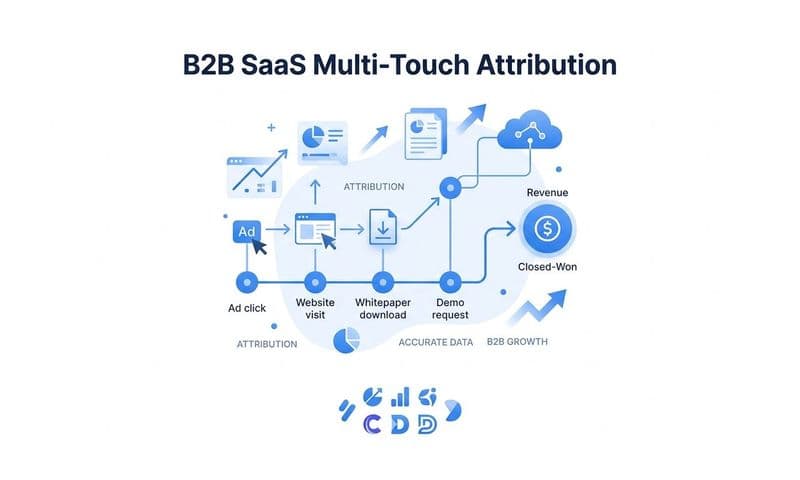
Your CRM holds critical conversion data that browsers never see. A lead fills out a form, gets nurtured through email sequences, takes a demo call, and closes three weeks later. Without CRM integration, ad platforms only see the initial form fill—they have no idea which campaigns drive actual revenue. Connecting your CRM means platforms learn which audiences and ads lead to closed deals, not just form submissions.
Set up webhook triggers for key conversion moments. When a deal stage changes to "Closed Won" in your CRM, trigger a server-side Purchase event. When a lead gets marked as "Sales Qualified," send a custom conversion event. When someone books a demo, fire a "Schedule" event. These triggers ensure conversion data flows to ad platforms in real-time, not days later through manual exports.
The technical implementation varies by CRM. Salesforce, HubSpot, and Pipedrive all support webhook creation in their automation tools. You'll configure the webhook to send relevant data (deal value, contact information, source campaign) to your Conversion API endpoint whenever specific triggers fire. If you're using a partner platform like Cometly, this often means pointing the webhook to their API, which then distributes events to all connected ad platforms automatically.
Customer journey identifiers are critical for attribution accuracy. When someone clicks your ad, capture the click ID (fbclp for Meta, gclid for Google) and store it with their contact record. Pass this identifier through form submissions, CRM entries, and purchase events. This lets platforms connect backend conversions to the specific ad click that started the journey, even if weeks passed between click and conversion. Learning how to sync conversions to ad platforms effectively requires mastering this identifier management.
Configure attribution windows that match your actual sales cycle. If your average time-to-close is 30 days, ensure your server-side events include timestamps and that platform attribution windows extend far enough to capture these delayed conversions. Meta's default 7-day click window might miss conversions from longer sales cycles—you can extend this when sending events with proper timestamp data. Understanding conversion window attribution helps you configure these settings correctly.
Enable real-time syncing wherever possible. The faster conversion data reaches ad platforms, the faster their algorithms can adjust. Real-time syncing means a conversion that happens at 2 PM influences bidding and optimization by 2:15 PM, not tomorrow or next week. This responsiveness dramatically improves campaign performance, especially for campaigns using automated bidding strategies that rely on conversion signals.
Test the complete flow: trigger a test conversion in your CRM, verify the webhook fires, confirm the event reaches your Conversion API implementation, and check that it appears in platform reporting. This end-to-end verification catches integration gaps before they cost you real conversion data.
Step 5: Verify Data Flow and Event Quality
Implementation doesn't end when you flip the switch. Verification ensures your Conversion API actually works and delivers the data quality needed for effective optimization.
Start with Meta Events Manager if you're tracking to Meta platforms. Navigate to your pixel's overview and look for server events appearing in the activity log. You should see events marked with a server icon, distinct from browser pixel events. Click into individual events to inspect their parameters—verify that customer information, event values, and custom parameters all appear correctly.
For Google, use Tag Assistant or the Google Ads conversion tracking interface. Server-side events should appear in your conversion action reports with appropriate attribution. Check that enhanced conversion data is being received by looking for the "Enhanced" label on your conversion actions.
Event Match Quality (EMQ) scores indicate how well your customer data matches platform records. In Meta Events Manager, EMQ scores range from Poor to Great. Scores above 6.0 are considered good, above 7.5 is excellent. Low scores mean platforms can't reliably match your conversion events to user profiles, which limits optimization effectiveness. Understanding CAPI match rate metrics helps you interpret these scores and identify improvement opportunities.
Compare server-side event volume against browser pixel data to identify gaps. If your browser pixel shows 100 purchases but server-side only shows 75, investigate why 25 conversions aren't flowing through your server implementation. Common causes: incomplete webhook coverage, events firing before your Conversion API integration was fully deployed, or technical errors preventing some events from sending. Our guide on fixing conversion tracking gaps covers troubleshooting strategies for these scenarios.
Verify deduplication works correctly by triggering a test conversion that fires both browser and server events. Check platform reporting—you should see one conversion counted, not two. If you see duplicates, review your event_id implementation. The event_id must be identical between browser and server versions and must be generated consistently.
Monitor for common errors in platform diagnostic tools. Authentication failures typically mean your access token expired or lacks proper permissions—regenerate tokens and verify permission settings. Malformed payload errors indicate parameter formatting issues—check that values match expected data types (numbers for value fields, strings for IDs, properly formatted ISO timestamps for event_time). Missing parameter warnings suggest you're not including recommended fields that would improve match quality.
Set up ongoing monitoring so you catch issues quickly. Most platforms offer event diagnostics that flag problems. Partner platforms typically include monitoring dashboards that alert you to connection issues, authentication problems, or sudden drops in event volume. Regular verification—weekly at first, then monthly once stable—ensures your tracking stays reliable as you make website changes or update integrations.
Step 6: Optimize for Maximum Event Match Quality
Getting Conversion API working is step one. Maximizing its effectiveness requires ongoing optimization focused on Event Match Quality and data completeness.
Add every available customer identifier to improve matching rates. Beyond standard email and phone, include external_id (your internal customer ID), subscription_id, or any persistent identifier you track. Platforms use multiple matching methods—the more identifiers you provide, the higher the chance of successful matching even when individual parameters don't match perfectly.
Implement advanced matching parameters when your data sources support them. Client IP address and user agent string help with matching when personal information is incomplete. Click IDs (fbp, fbc for Meta; gclid for Google) provide direct connection to ad clicks. If you collect any of these through your website or CRM, include them in your server events. Mastering cross-device conversion tracking methods becomes essential when users interact across multiple devices.
Adjust event timing to capture the most accurate conversion timestamps. Send the actual conversion time, not when your server processes the event. If a purchase happens at 3:47 PM but your nightly batch process sends it at 2:00 AM the next day, pass the 3:47 PM timestamp. Accurate timing improves attribution and helps platforms connect conversions to the ads that influenced them.
Set up redundancy for critical conversion events. Send purchase events from both your e-commerce platform and your payment processor. If one integration fails temporarily, the other captures the conversion. This redundancy ensures you don't lose high-value conversion data during technical issues or integration updates.
Review platform recommendations regularly. Meta's Events Manager highlights specific improvements for your pixel—missing parameters, low-quality matches, opportunities to add customer information. Google provides similar guidance in conversion tracking settings. Address these recommendations systematically, starting with changes that impact the most events.
Track your Event Match Quality trend over time. Improving from 6.0 to 7.5 often correlates with measurable campaign performance improvements—better audience targeting, more efficient bidding, higher conversion rates. If EMQ drops suddenly, investigate immediately. Drops usually indicate a technical issue like broken webhooks, expired tokens, or code changes that removed customer information parameters.
For multi-platform setups, ensure consistency across all platforms. If you're sending email and phone to Meta but only email to Google, you're creating optimization disparities. Platforms with more complete data will optimize more effectively, potentially skewing your cross-platform performance comparison. Standardize your event configuration so every platform receives the same quality data. Our guide to tracking conversions across multiple ad platforms provides detailed strategies for maintaining this consistency.
Your Path to Reliable Conversion Tracking
You now have the complete roadmap for implementing Conversion API across your ad platforms. Let's recap the essential checkpoints that ensure success.
Platform credentials gathered and access tokens generated with proper permissions. This foundation prevents authentication headaches during implementation and testing. Keep these credentials documented and secure—they're the keys to your conversion data flow.
Implementation method chosen based on your technical resources and platform requirements. Whether you went with direct API integration, a partner platform, or tag manager server containers, you've matched the approach to your team's capabilities and maintenance capacity.
Server-side events configured with proper parameters, customer information hashing, and deduplication logic. Your events now flow reliably to ad platforms with the data quality needed for effective optimization, regardless of browser limitations or privacy restrictions.
CRM and backend systems connected for complete journey tracking. You're capturing offline conversions, delayed conversions, and the full context that browsers miss—giving ad algorithms the complete picture they need to identify your best audiences and optimize toward real revenue.
Data flow verified with strong Event Match Quality scores and ongoing monitoring. You've confirmed events reach platforms correctly, deduplication prevents double-counting, and the customer information you're sending matches platform records at rates that support effective optimization.
With server-side tracking in place, you're now feeding ad platforms the accurate conversion data they need to optimize effectively. This translates directly to better audience targeting—platforms can identify lookalike audiences based on actual customers, not just website visitors. Smarter bidding follows naturally when algorithms can see which clicks lead to revenue. The result: higher ROAS and more efficient budget allocation across your campaigns.
The difference becomes clear within weeks. Campaigns that struggled with limited conversion data suddenly have enough signal to optimize. Automated bidding strategies that underperformed due to incomplete data start delivering results. Your attribution reporting finally matches your actual business results instead of showing mysterious gaps.
For marketers managing multiple ad platforms, the complexity of maintaining separate Conversion API implementations across Meta, Google, TikTok, and others can become overwhelming. Tools like Cometly streamline this entire process—automatically syncing enriched conversion data across all your platforms while providing unified attribution insights that show the complete customer journey. Instead of managing separate implementations and trying to piece together cross-platform attribution manually, you get a single source of truth that captures every touchpoint from first click to final conversion.
Start with one platform to build confidence and verify your implementation works correctly. Once you've confirmed events flow properly, Event Match Quality scores are strong, and you're seeing the data in platform reporting, expand your server-side tracking across your full ad stack. The investment in proper Conversion API setup pays dividends in campaign performance, optimization effectiveness, and ultimately revenue growth.
Ready to elevate your marketing game with precision and confidence? Discover how Cometly's AI-driven recommendations can transform your ad strategy—Get your free demo today and start capturing every touchpoint to maximize your conversions.