You've just reviewed your Meta Ads Manager, and something feels off. Your pixel shows 50 conversions this month, but your CRM says you closed 73 deals. That's 23 conversions—and potentially thousands in ad spend optimization—completely invisible to Facebook's algorithm. This isn't a tracking glitch. It's the reality of browser-based tracking in 2026.
iOS privacy updates block roughly 30% of conversion tracking. Cookie restrictions prevent cross-device attribution. Ad blockers strip pixels entirely. The result? Ad platforms optimize campaigns with incomplete data, targeting audiences based on a fraction of your actual conversions.
Conversion API implementation solves this by sending event data directly from your server to ad platforms, bypassing browsers entirely. Instead of relying on pixels that fire when users load pages, your server communicates conversion events the moment they happen in your backend systems—whether that's a Stripe payment, a CRM lead creation, or a subscription upgrade.
This isn't just about fixing tracking gaps. Better data means smarter ad algorithms. When Meta, Google, or TikTok receive complete conversion signals, their machine learning models identify high-intent audiences more accurately, reduce cost per acquisition, and stop wasting budget on segments that don't convert.
This guide walks you through implementing a conversion API tool from start to finish. You'll learn how to audit your current tracking, choose the right implementation approach, configure server-side events, integrate your CRM, verify data accuracy, and optimize campaign performance with better signals. Whether you're implementing Meta's Conversions API, Google's enhanced conversions, or a unified attribution platform that handles multiple channels, you'll have a clear roadmap.
By the end, you'll have server-side tracking running alongside your pixel, feeding ad platforms the complete conversion data they need to optimize effectively.
Step 1: Audit Your Current Tracking Setup and Identify Gaps
Before implementing any new tracking, you need to understand exactly what you're missing. Start by reviewing your existing pixel implementation across all ad platforms. Log into Meta Events Manager, Google Ads conversion tracking, and any other platforms where you run campaigns. Document every conversion event currently tracked: purchases, leads, sign-ups, demo requests, add-to-carts.
Now compare those numbers against reality. Pull your actual conversion data from your CRM, payment processor, or backend database for the past 30 days. How many purchases did Stripe process versus what Meta's pixel recorded? How many leads entered your CRM versus what Google Ads reported? This gap represents your tracking loss—the conversions happening that ad platforms never see.
For most businesses, this exercise reveals uncomfortable truths. You might discover that 20-40% of conversions aren't being captured by pixels, especially from mobile iOS users, returning customers who cleared cookies, or users browsing in private mode. These invisible conversions mean ad algorithms are optimizing with blinders on, unable to identify which audiences actually convert.
Document which conversion events matter most for your campaigns. If you're an e-commerce brand, purchases are critical. For B2B SaaS, qualified leads and demo bookings drive pipeline. For subscription businesses, trial starts and paid conversions are key. Prioritize events that directly impact revenue or qualified pipeline—these are what you'll implement via conversion API first.
Assess your technical requirements honestly. Do you have server access where conversion events occur? Can your development team implement API calls when events fire in your backend? Do you have customer identifiers like email addresses or user IDs that can match conversions to ad interactions? Understanding your technical landscape determines which implementation approach makes sense.
Create a simple spreadsheet with three columns: Event Name, Current Pixel Count (last 30 days), Actual Backend Count (last 30 days). Calculate the percentage gap for each event. This becomes your tracking loss baseline—the metric you'll improve with conversion API implementation.
Success looks like a clear list of priority events to track via API, documented gaps between pixel and reality, and honest assessment of your technical resources. If your tracking loss exceeds 15-20%, conversion API implementation will significantly improve your ad optimization capabilities.
Step 2: Choose Your Implementation Approach
You have three main paths for implementing conversion API tracking, each with distinct trade-offs in complexity, control, and maintenance requirements.
Option A: Direct API Integration
This approach means your developers write code that sends conversion events directly to ad platform APIs when events occur in your backend. When a customer completes checkout, your server immediately fires an API call to Meta's Conversions API with purchase details. When a lead submits a form, your CRM triggers an API call to Google's enhanced conversions endpoint.
Direct integration offers maximum control and customization. You can send any event parameter, implement complex deduplication logic, and optimize for minimal latency. You own the entire data flow without relying on third-party tools. The downside? This requires significant developer resources, ongoing maintenance as APIs evolve, and separate implementations for each ad platform you use.
Choose direct integration if you have strong engineering capacity, need highly customized tracking logic, or have unique data requirements that third-party tools can't accommodate. Expect 40-80 hours of development time for initial implementation across major platforms.
Option B: Platform Connectors
Tools like Zapier, Segment, or Webhooks allow you to connect your systems to ad platforms without custom code. When an event fires in your CRM or e-commerce platform, these connectors automatically format and send it to the appropriate conversion API. Setup involves configuring triggers and mapping data fields rather than writing code.
Platform connectors reduce implementation time significantly—often from weeks to days. They handle API authentication, error handling, and updates automatically. However, you're limited to the events and parameters these tools support. Complex deduplication logic may be challenging, and you're adding another service in your data flow that could introduce latency or reliability issues.
This approach works well for teams without dedicated developers, businesses with straightforward conversion events, or companies testing conversion API benefits before committing to custom development. Consider potential costs as event volumes scale—some connectors charge based on monthly events processed.
Option C: Dedicated Attribution Platforms
Attribution tools like Cometly handle server-side tracking automatically across multiple ad platforms. You implement one tracking script, connect your ad accounts and CRM, and the platform manages conversion API implementation for Meta, Google, TikTok, and other channels simultaneously. These tools typically include deduplication, user matching, and attribution modeling built-in.
This approach simplifies multi-platform tracking dramatically. Instead of implementing and maintaining separate conversion APIs for each ad network, you manage one integration. Attribution platforms also provide unified reporting across all channels, showing complete customer journeys from first touch to conversion. The trade-off is subscription cost and reliance on the platform's event schema.
Choose dedicated attribution platforms if you advertise across multiple channels, want unified tracking and reporting, or need attribution insights beyond basic conversion API functionality. This approach makes most sense for businesses spending significantly on paid advertising across several platforms. For a deeper dive into available options, explore our marketing attribution tools comparison.
Evaluate your decision based on three factors: technical resources available, number of ad platforms you use, and complexity of your conversion events. If you're implementing conversion API for Meta only and have developers, direct integration might be most efficient. If you're tracking across Meta, Google, TikTok, and Pinterest, a unified attribution platform saves substantial time and maintenance effort.
Step 3: Configure Server-Side Event Tracking
Now you're ready to configure the actual events that will flow from your server to ad platforms. This step requires precision—poorly configured events won't match users to ad interactions, defeating the entire purpose of conversion API implementation.
Start with event structure. Every conversion API event needs four core components: event name, timestamp, user identifiers, and event parameters. Event names should match what your pixel uses—if your pixel fires "Purchase," your API event should also be "Purchase." This consistency enables proper deduplication later.
Timestamps must be accurate to the second when the conversion occurred. Don't send events hours or days after they happen—latency reduces match quality and prevents real-time optimization. If you're sending offline conversions that occurred days ago, most platforms accept events within a specific attribution window, but fresher data always performs better.
User matching is where conversion API implementation succeeds or fails. Ad platforms need to connect your server-side conversion event to the person who clicked your ad. You accomplish this by sending user identifiers: email addresses, phone numbers, or customer IDs. These must be hashed using SHA-256 before transmission for privacy compliance.
Send multiple identifiers when possible. An event with email, phone, and customer ID has higher match probability than one with email alone. Normalize data before hashing—lowercase emails, remove spaces from phone numbers, use consistent formatting. Small inconsistencies prevent matches that should succeed.
Include the user's IP address and user agent string if available. These help platforms match conversions to ad clicks when direct identifiers don't match perfectly. Browser-based pixels capture these automatically, but server-side events require you to pass them explicitly from your application.
Event parameters provide context that improves optimization. For purchase events, send total value, currency, and product details. For lead events, send lead quality indicators or source information. Richer event data helps algorithms understand which conversions are most valuable, enabling them to optimize for high-value customers rather than just conversion volume.
Configure deduplication carefully. When both your pixel and conversion API fire for the same event, platforms need to recognize they represent one conversion, not two. Include an event_id parameter—a unique identifier for each conversion event. When the pixel and API both send events with the same event_id, platforms count it once.
Generate event_ids in your backend when conversions occur, then pass that ID to both your pixel (via dataLayer or direct pixel parameters) and your API call. This ensures both tracking methods reference the same conversion with the same identifier. Without proper deduplication, you'll inflate conversion counts and distort campaign performance metrics.
Test everything in sandbox mode before going live. Meta provides Test Events in Events Manager where you can send API calls and verify they're structured correctly. Google offers conversion testing in Google Ads. Send test events for each conversion type you'll track, verify parameters appear correctly, and confirm user matching works before enabling production tracking.
Success at this step means test events appearing correctly in ad platform event managers with good match quality scores. You should see your event name, parameters, and user information flowing through. If match quality is low during testing, troubleshoot user identifier formatting before proceeding to production.
Step 4: Connect Your Data Sources and CRM
Server-side tracking becomes truly powerful when you connect your entire customer journey, not just website conversions. This step integrates your CRM and backend systems so ad platforms see what happens after the initial conversion—qualification, demos, closed deals, subscription renewals.
Start by mapping your CRM stages to conversion events. If you use Salesforce, HubSpot, or Pipedrive, identify which stage changes represent meaningful conversions worth sending to ad platforms. When a lead moves from "New" to "Qualified," that's a conversion event. When an opportunity reaches "Closed-Won," that's your most valuable conversion event.
These downstream conversions are critical for optimization. Ad platforms can optimize for purchases or lead submissions, but they optimize far more effectively when they know which leads actually closed into revenue. Sending qualified leads and closed deals as conversion events trains algorithms to find people who don't just convert—they convert into customers who buy.
Configure your CRM integration to trigger conversion API calls when these stage changes occur. Most modern CRMs offer webhook functionality or native integrations with attribution platforms. When a sales rep marks a deal as closed-won, your system should immediately send a conversion event to Meta, Google, and other platforms with the deal value and customer information. Learning how to sync conversions to ad platforms effectively is essential for this process.
Set up proper attribution windows that align with your sales cycle. If your average sale takes 30 days from first touch, ensure your tracking can attribute conversions back to ad interactions that occurred a month ago. Most platforms support attribution windows from 1 to 28 days for clicks and 1 to 7 days for views—configure these based on your actual customer journey length.
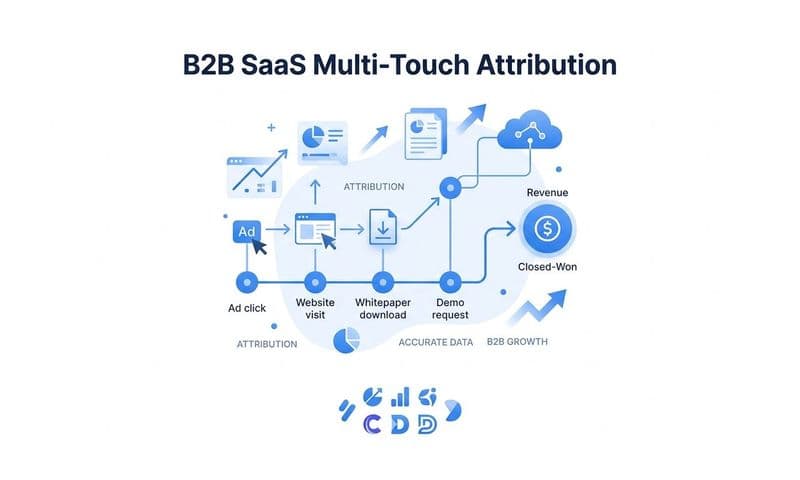
For B2B companies with long sales cycles, this might mean sending multiple conversion events throughout the funnel. Ad platforms receive "Lead Created" when someone fills out a form, "Lead Qualified" when SDRs verify fit, "Demo Completed" when they attend a product walkthrough, and "Deal Closed" when they sign a contract. This progressive conversion data helps algorithms understand the complete journey from ad click to revenue.
Implement proper value tracking for revenue events. When sending closed deals, include the actual contract value or purchase amount. This enables value-based optimization where algorithms prioritize audiences likely to generate higher-value conversions. A customer who spends $10,000 is worth more than one who spends $100—value data lets platforms optimize accordingly.
Ensure customer journey data flows continuously. Set up automated processes so conversions sync to ad platforms without manual intervention. If you're using an attribution platform, this typically means connecting your CRM once and letting the platform handle ongoing event synchronization. Leveraging customer journey analytics tools can provide deeper visibility into these touchpoints. If you're implementing directly, build reliable webhook or scheduled sync processes that catch every conversion.
Test the full funnel flow. Create a test lead in your CRM, move it through each stage, and verify that corresponding conversion events appear in ad platform reporting. Check that values, timestamps, and user matching work correctly for each funnel stage. This end-to-end testing catches integration issues before they affect live campaign optimization.
Success looks like complete visibility from first ad click through final revenue. You should see not just website conversions, but qualified leads, closed deals, and any other business outcomes that matter for your campaigns. Ad platforms now have the full picture of what happens after someone clicks your ad.
Step 5: Verify Data Accuracy and Troubleshoot Common Issues
Implementation is complete, but your work isn't finished until you verify data is flowing accurately. This step catches issues before they corrupt campaign optimization or reporting.
Start with platform diagnostic tools. Meta's Events Manager shows match quality scores for each event—the percentage of conversions that successfully matched to a person. Aim for match quality above 70%. Lower scores mean many conversions aren't being attributed to ad interactions, limiting optimization effectiveness. Google Ads shows similar metrics in the conversion tracking interface.
Compare server-side events against pixel events to ensure consistency. Pull a report of conversions from both sources for the same time period. Total numbers won't match exactly due to deduplication, but you should see your conversion API capturing events that pixels miss. If API events are significantly lower than pixel events, something is wrong with your server-side implementation.
Check for common user matching issues. Low match quality typically stems from poorly formatted user identifiers. Verify that emails are lowercase and trimmed of whitespace before hashing. Confirm phone numbers include country codes and remove all formatting characters. Test your hashing implementation against platform documentation to ensure you're generating correct SHA-256 hashes.
Monitor for parameter mismatches. Event names must match exactly between pixel and API for deduplication to work. "Purchase" and "purchase" are different events. Currency codes must follow ISO 4217 standards—"USD" not "usd" or "dollars." Small inconsistencies prevent proper deduplication and attribution.
Watch for timezone and timestamp issues. Events sent with incorrect timestamps may fall outside attribution windows or appear in wrong reporting periods. Ensure your server sends timestamps in Unix format (seconds since epoch) or ISO 8601 format, depending on platform requirements. Test that events appear in reporting for the correct date and time.
Troubleshoot delayed events if conversions aren't appearing immediately. Some platforms process server-side events with slight latency, but events should appear within minutes. If you're seeing hours of delay, check your implementation for batching logic that might be holding events too long before sending. Real-time event transmission enables real-time optimization.
Address data discrepancies between your system and ad platform reporting. Small differences are normal due to attribution methodology and deduplication, but large gaps indicate problems. If your backend shows 100 conversions but ad platforms report 60, investigate whether events are failing to send, user matching is poor, or events are being rejected due to formatting errors. Understanding how to track conversions across platforms helps identify where breakdowns occur.
Set up monitoring alerts for tracking issues. Configure notifications if match quality drops below thresholds, event volumes decrease unexpectedly, or API errors increase. Catching tracking problems quickly prevents them from affecting campaign optimization for extended periods.
Review error logs regularly. Most conversion API implementations generate error responses when events are rejected or improperly formatted. Monitor these logs to identify systematic issues. A single malformed event is normal, but consistent errors for specific event types indicate implementation problems that need fixing.
Success means match quality scores consistently above platform thresholds, event volumes matching your backend conversion data (accounting for deduplication), and minimal errors in transmission. You should have confidence that every conversion occurring in your systems is being captured and sent to ad platforms for optimization.
Step 6: Optimize Ad Platform Performance with Better Data
With accurate conversion API tracking running, you can now leverage better data to improve campaign performance. This isn't instant—algorithms need time to learn from improved signals—but the impact compounds over time.
Expect a learning period as ad platforms adjust to higher-quality conversion data. When you first implement conversion API, platforms suddenly see conversions they were missing before. This changes the optimization landscape. Campaigns that seemed to perform poorly might actually be driving conversions that weren't tracked. Algorithms need time to recalibrate based on complete data.
Don't make major campaign changes immediately after implementing conversion API. Give platforms 7-14 days to process the new data and adjust optimization. During this period, monitor performance closely but avoid reactionary decisions based on temporary fluctuations. You're essentially teaching algorithms what good performance looks like with complete data.
After the learning period, review campaign performance changes. You should see improved match rates between your backend conversions and platform reporting. Campaigns might show different cost-per-acquisition numbers as previously invisible conversions are now attributed correctly. Some campaigns may perform better than you thought, others worse—now you're seeing reality.
Adjust bidding strategies to leverage higher-quality conversion data. If you were using manual bidding because conversion data was unreliable, consider switching to automated bidding strategies like Target CPA or Target ROAS. These strategies work best with accurate, complete conversion data—exactly what conversion API provides. Algorithms can now optimize confidently because they're not flying blind.
Refine audience targeting based on better attribution. With complete conversion data, look-alike audiences become more accurate because they're modeled from people who actually converted, not just those whose conversions were tracked. Retargeting becomes more precise because platforms know who completed valuable actions beyond initial website visits. Explore AI-powered tools for optimizing ad targeting to maximize these improvements.
Implement value-based optimization if you're sending revenue data. Instead of optimizing for conversion volume, optimize for conversion value. This shifts algorithm focus toward finding customers who spend more, not just customers who convert. For businesses with variable order values or contract sizes, this dramatically improves return on ad spend.
Monitor ongoing performance to catch tracking issues quickly. Set up weekly reviews of match quality scores, event volumes, and conversion attribution. If match quality suddenly drops or event volumes decrease, investigate immediately. Tracking problems that go unnoticed for weeks can significantly impact campaign optimization.
Compare performance across campaigns using pixel-only tracking versus those benefiting from conversion API data. If you have some campaigns running to audiences where pixel tracking works well (desktop users, non-iOS), compare their efficiency to campaigns targeting iOS users or mobile-heavy audiences. You should see conversion API closing the performance gap as previously invisible conversions are now captured.
Scale winning campaigns with confidence. Better data means better optimization, which means more predictable performance as you increase budgets. When algorithms have complete conversion data, scaling typically maintains efficiency better than when they're optimizing with incomplete signals. Test budget increases on campaigns showing improved performance post-implementation. Reviewing the best PPC software tools can help you identify additional optimization opportunities.
Success looks like improved match rates, more efficient ad spend, and better audience targeting as platforms receive complete conversion signals. You should see the gap between your backend conversions and platform-reported conversions narrow significantly, giving you confidence that optimization is based on reality, not partial data.
Putting It All Together: Your Implementation Checklist
You now have a complete roadmap for implementing conversion API tracking that captures accurate conversion data and improves ad platform optimization. Let's review the essential steps to ensure nothing falls through the cracks.
Your implementation checklist should cover: tracking audit completed with documented gaps between pixel and backend data, implementation approach selected based on technical resources and platform requirements, server-side events configured with proper user matching and deduplication, CRM integration established for full-funnel conversion tracking, verification completed with match quality scores above thresholds, and ongoing monitoring set up to catch issues quickly.
Remember that conversion API implementation isn't a one-time project. It requires ongoing maintenance as your business evolves, ad platforms update their APIs, and your conversion events change. Schedule quarterly reviews of your tracking setup to ensure it still captures what matters most for your campaigns. For step-by-step technical guidance, our conversion API implementation tutorial provides detailed instructions.
For teams managing multiple ad platforms, the complexity multiplies quickly. Implementing and maintaining separate conversion APIs for Meta, Google, TikTok, Pinterest, and other channels demands significant resources. Each platform has different requirements, authentication methods, and event schemas. Keeping everything synchronized and working correctly becomes a full-time job.
This is where unified attribution platforms provide substantial value. Instead of managing five separate conversion API implementations, you implement one tracking system that handles server-side tracking across all channels simultaneously. Your team focuses on strategy and optimization rather than maintaining complex technical integrations. The best marketing attribution tools handle this complexity automatically.
Cometly simplifies this entire process by handling server-side tracking automatically across every major ad platform. From ad clicks to CRM events, Cometly captures every touchpoint in the customer journey, providing AI-driven insights that show exactly which campaigns drive real revenue. You get complete visibility from first touch to closed deal, with enriched conversion data flowing back to ad platforms to improve targeting and optimization.
The platform's AI analyzes your complete attribution data to identify high-performing ads and campaigns across every channel, then provides specific recommendations for scaling with confidence. Instead of guessing which campaigns work based on incomplete pixel data, you make decisions based on complete, accurate attribution that connects every touchpoint to revenue.
Ready to elevate your marketing game with precision and confidence? Discover how Cometly's AI-driven recommendations can transform your ad strategy—Get your free demo today and start capturing every touchpoint to maximize your conversions.