You're running ads on Meta, Google, TikTok, and LinkedIn. Each platform's dashboard shows impressive conversion numbers. You add them up, feeling confident about your marketing performance. Then you check your actual sales data and realize something's off—way off. The platforms are claiming credit for far more conversions than you actually generated.
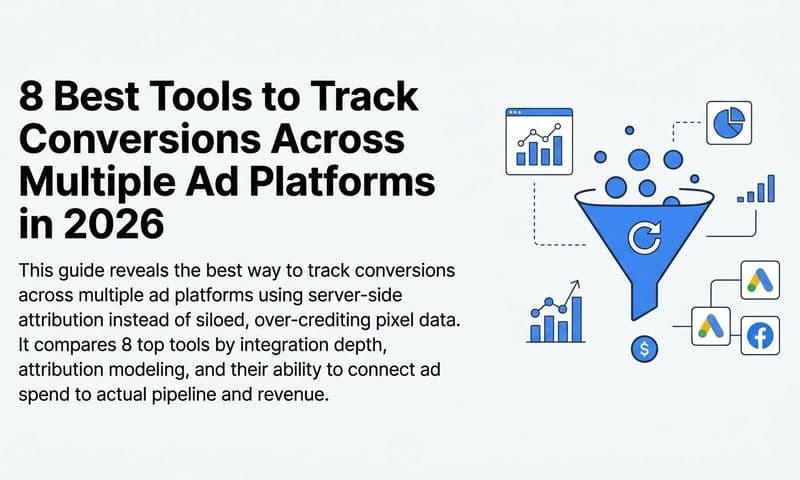
This is the reality of multi-platform advertising in 2026. Every ad platform operates in its own silo, using different attribution windows and methodologies. Meta might claim credit for a conversion that happened within seven days of an ad click. Google might count the same conversion within its 30-day window. TikTok adds it to their numbers too. Suddenly, one customer purchase gets counted three or four times across your dashboards.
The problem goes deeper than inflated numbers. Without a unified view of your conversion data, you can't make confident decisions about where to allocate budget. You don't know which channels truly drive revenue versus which ones simply touch customers who were already going to convert. You're essentially flying blind while spending thousands or millions on advertising.
Add iOS privacy changes and cookie deprecation to this mix, and traditional pixel-based tracking has become increasingly unreliable. Browser-based tracking that worked perfectly in 2020 now captures only a fraction of your actual conversions. Ad blockers, privacy features, and cross-device journeys create massive blind spots in your data.
This guide walks you through building a comprehensive system for tracking conversions across all your marketing channels with accurate attribution. You'll learn how to unify fragmented data, implement reliable tracking that works despite privacy restrictions, and finally understand which platforms genuinely drive your business results. By the end, you'll have a complete roadmap for conversion tracking that gives you confidence in every marketing decision.
Step 1: Audit Your Current Tracking Setup and Identify Gaps
Before you can fix your tracking, you need to understand exactly what's broken. Start by documenting every ad platform where you're currently running campaigns. Create a simple spreadsheet with columns for platform name, tracking method, implementation status, and known issues.
For each platform, verify whether their pixel or tracking tag is properly installed on your website. Open your website in Chrome or Firefox, right-click anywhere on the page, and select "Inspect" or "Inspect Element." Navigate to the Network tab and reload the page. Look for requests to Meta's pixel (facebook.com/tr), Google Analytics (google-analytics.com/collect), TikTok pixel, LinkedIn Insight Tag, and any other tracking scripts you should have installed. Understanding what a tracking pixel is and how it works will help you identify these requests more effectively.
If you see the requests firing, the pixels are technically present. But presence doesn't equal proper configuration. Check whether they're tracking the right events. Visit your key conversion pages—product pages, checkout, thank you page—and watch the Network tab to see which events fire. Many marketers discover their pixel fires on the homepage but fails completely on the actual conversion pages that matter.
Next, identify where your customer journey data breaks down. The most common gaps occur at three critical points. First, the disconnect between your website tracking and CRM. A lead fills out a form on your website, but that data never flows into your CRM with the proper source attribution. Second, offline conversions that happen over the phone or in person never get connected back to the original ad click. Third, cross-device tracking failures when someone clicks an ad on mobile but converts later on desktop.
Document these gaps explicitly in your spreadsheet. For each platform, note which conversion events are successfully tracked and which ones go dark. Be brutally honest about what you don't know. If you're unsure whether phone call conversions are properly attributed, write that down as a known gap.
Your success indicator for this step is a complete inventory that shows what's tracked versus what's missing. You should be able to look at your spreadsheet and immediately see where data flows smoothly and where it breaks. This clarity is essential because you can't fix problems you haven't identified. Most marketers skip this audit and jump straight to adding more tracking, which just creates more fragmented data on top of an already broken foundation.
Step 2: Define Your Conversion Events and Funnel Stages
Now that you know what's broken, you need to define what success actually looks like. Map out your complete customer journey from the moment someone first encounters your brand to the final conversion that generates revenue. Learning how to track customer journey touchpoints is essential for this process. This isn't a theoretical exercise—you need to identify every meaningful action a customer takes along the way.
Start by categorizing your conversions into micro-conversions and macro-conversions. Micro-conversions are the small steps that indicate interest: viewing a product page, watching a video, adding an item to cart, or downloading a resource. Macro-conversions are the big wins: completing a purchase, booking a demo, signing up for a trial, or submitting a qualified lead form.
Both matter, but they matter differently. Micro-conversions help you understand which marketing touchpoints build awareness and consideration. Macro-conversions tell you what actually drives business results. You need to track both to understand the full picture, but you should never treat them equally when evaluating performance.
Assign a monetary value to each conversion type. For e-commerce, this is straightforward—a purchase is worth its transaction value. For lead generation businesses, calculate the average value of a qualified lead based on your close rate and customer lifetime value. If ten percent of your demo requests become customers worth $5,000 each, then each demo request is worth $500 to your business.
Even micro-conversions deserve values. If you know that five percent of people who view your pricing page eventually convert, and the average customer is worth $1,000, then each pricing page view is worth $50. These values don't need to be perfect—they need to be consistent enough to make meaningful comparisons across channels.
Standardize your event naming conventions across all platforms. This is where most tracking setups fall apart. One team calls it "Purchase" in Meta, another calls it "Conversion" in Google Ads, and a third calls it "Order Complete" in your analytics. When you try to unify this data later, you'll waste hours mapping these inconsistent names to each other.
Create a naming standard and stick to it religiously. Use clear, descriptive names like "add_to_cart," "begin_checkout," "purchase," "lead_form_submit," and "demo_booked." Share this document with everyone who touches your marketing stack—your ads team, developers, analytics specialists, and agency partners. Make it the single source of truth for how conversion events are named.
Your success indicator for this step is a clear conversion hierarchy with defined values for each event. You should be able to hand your conversion map to anyone on your team and have them immediately understand which events matter most and how much each one contributes to business goals.
Step 3: Implement Server-Side Tracking for Reliable Data Collection
Browser-based pixels worked well in 2020. In 2026, they're fundamentally broken for accurate conversion tracking. Ad blockers strip out tracking scripts before they can fire. iOS privacy features prevent pixels from accessing critical data. Cookie restrictions mean you can't reliably track users across sessions. Cross-device journeys create massive attribution gaps. If you're still relying primarily on client-side pixels, you're missing a significant portion of your actual conversions.
Server-side tracking solves these problems by sending conversion data directly from your website's backend to ad platforms and analytics tools. Instead of relying on a user's browser to execute JavaScript and fire a pixel, your server sends the conversion information directly through secure API connections. This approach bypasses ad blockers, works regardless of browser privacy settings, and provides much more reliable data. For a detailed walkthrough, check out our guide on how to set up server-side tracking.
Setting up server-side tracking requires coordination between your marketing and development teams. Your website backend needs to capture conversion events when they happen—a form submission, a completed purchase, a trial signup—and send that data to your tracking destinations. This can be done through direct API integrations with platforms like Meta's Conversions API (CAPI) or Google's Enhanced Conversions, or through a centralized tracking platform that handles the connections for you.
The key advantage is first-party data collection. When your server sends conversion data, it can include information that browser pixels can't access: hashed email addresses, phone numbers, customer IDs, and other identifiers that help platforms match conversions to the right users. This improves match rates significantly compared to cookie-based tracking, which means platforms can optimize your campaigns more effectively.
Configure your server-side tracking to capture both online and offline conversions. When someone fills out a lead form on your website, that data should flow to your CRM with the original source attribution intact. When a sales rep closes a deal three weeks later, that conversion should be sent back to your ad platforms with the full customer journey history. This closed-loop tracking is impossible with browser pixels alone but becomes straightforward with server-side implementation.
Don't abandon client-side tracking entirely—use it as a complement to server-side tracking. Browser pixels can still capture valuable behavioral data like page views and engagement metrics. The combination of both approaches gives you the most complete picture. But for critical conversion events that determine your ROI, server-side tracking should be your primary method. Explore the best server-side tracking tools to find the right solution for your tech stack.
Your success indicator for this step is conversion data flowing from your server regardless of browser restrictions. Test this by using a browser with aggressive ad blocking and privacy settings enabled. Complete a conversion on your website and verify that it still appears in your tracking systems. If it does, your server-side implementation is working correctly. If it doesn't, you're still dependent on fragile browser-based tracking.
Step 4: Connect All Ad Platforms to a Centralized Attribution System
You've fixed your tracking foundation. Now you need to unify all that data in one place where you can actually analyze it. Each ad platform—Meta, Google, TikTok, LinkedIn, Pinterest—stores its data in separate silos. To understand your true cross-platform performance, you need a centralized attribution system that pulls everything together.
Start by integrating each ad platform into your chosen attribution system through API connections. These connections should pull both cost data and conversion data automatically. You want to see exactly how much you spent on each platform alongside the conversions those platforms drove. Manual data exports and spreadsheet gymnastics might work for a week, but they're not sustainable for ongoing analysis. The best software for tracking marketing attribution handles these integrations automatically.
Establish strict UTM parameter standards for every campaign you launch. UTM parameters are the tags you add to your campaign URLs that identify the source, medium, campaign, and content. They look like this: utm_source=facebook&utm_medium=paid&utm_campaign=spring_sale&utm_content=video_ad_1. These parameters travel with the user through their journey and help you track which specific ads drove conversions. Understanding what UTM tracking is and how it can help your marketing is fundamental to proper attribution.
The critical part is consistency. If your Meta team uses "facebook" as the source while your Google team uses "google_ads" but your TikTok team uses "tiktok_ads," you'll struggle to compare performance across platforms. Create a naming convention document that specifies exactly how each platform, campaign type, and ad format should be tagged. Make it mandatory for every campaign launch.
Configure your attribution system to pull cost data directly from each platform's API. This is essential because you need to calculate true ROAS (return on ad spend) by comparing revenue against actual spend. If you're manually entering spend data or updating it weekly, your ROAS calculations will always be out of date and potentially wrong. Automated cost data syncing ensures your performance metrics stay current.
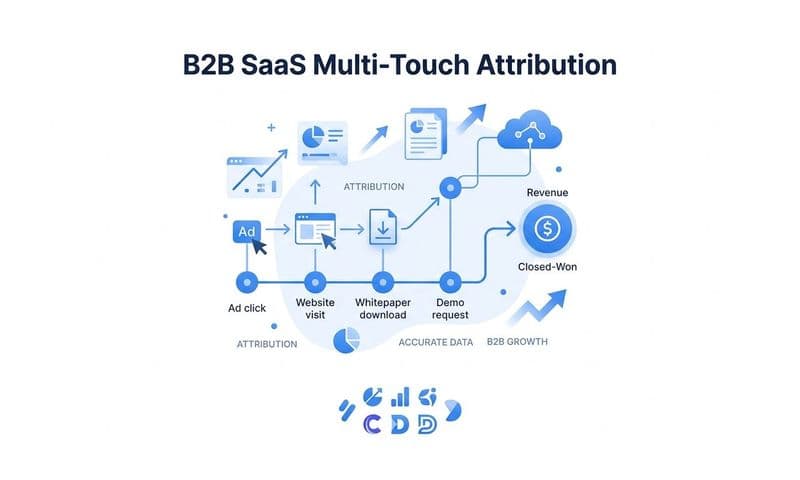
Enable cross-platform deduplication to prevent counting the same conversion multiple times. This is the whole point of centralized attribution. When a user clicks your Meta ad on Monday, your Google ad on Wednesday, and your TikTok ad on Friday before converting on Saturday, each platform's native reporting will claim credit for that conversion. Your attribution system needs to recognize this as one conversion and distribute credit appropriately based on your chosen attribution model.
Your success indicator for this step is all platform data visible in one unified view with accurate spend and conversion counts. You should be able to open a single dashboard and see your complete marketing performance across every channel without switching between platform interfaces. The total conversions in your centralized system should match your actual business results, not the inflated sum of what each platform claims independently.
Step 5: Choose and Configure Your Attribution Model
Now comes the strategic decision that determines how credit gets distributed across your marketing touchpoints. Attribution models are the rules that decide which channels get credit when a customer interacts with multiple ads before converting. Choose the wrong model, and you'll systematically over-invest in channels that don't actually drive results while starving the ones that do.
Understanding your options is essential. Last-touch attribution gives all credit to the final touchpoint before conversion. It's simple and tells you which channel closed the deal, but it completely ignores the awareness and consideration channels that made that final click possible. First-touch attribution does the opposite—it credits the initial touchpoint that introduced the customer to your brand while ignoring everything that happened afterward. Linear attribution splits credit equally across all touchpoints, which sounds fair but treats a casual social media impression the same as the retargeting ad that actually drove the purchase.
Time-decay attribution gives more credit to touchpoints closer to the conversion, recognizing that recent interactions typically matter more than distant ones. Data-driven attribution uses machine learning to analyze your actual conversion paths and assign credit based on which touchpoints statistically increase conversion likelihood. This last option is the most sophisticated but requires enough conversion volume to generate meaningful patterns. Learn more about how to use GA4 for marketing attribution if you're leveraging Google's analytics platform.
Select the model that matches your sales cycle. If you sell low-cost products with short consideration periods—customers see an ad and buy within hours—last-touch attribution often makes sense because the customer journey is simple. If you sell high-value products or services with longer sales cycles involving multiple research sessions and touchpoints over weeks or months, multi-touch attribution becomes essential to understand the full journey.
Configure lookback windows appropriate for your business. A lookback window determines how far back in time you'll consider touchpoints when attributing conversions. A seven-day window means only touchpoints within the past week count. A 30-day window includes touchpoints from the past month. Shorter windows are appropriate for impulse purchases and fast-moving products. Longer windows make sense for considered purchases where customers take time to research and compare options.
Set up comparison views to analyze how different models value your channels. This is crucial because no single attribution model reveals the complete truth. Run reports that show the same data under last-touch, first-touch, and multi-touch models side by side. You'll often discover that certain channels perform dramatically differently depending on the model. A channel that looks mediocre under last-touch attribution might be your top awareness driver under first-touch analysis.
Your success indicator for this step is an attribution model actively distributing credit across touchpoints according to your chosen methodology. Test it by reviewing recent conversions and verifying that credit is being assigned as expected. If you chose time-decay attribution, touchpoints closer to conversion should receive more credit. If you chose linear, credit should be split evenly. The model should be working automatically on every conversion without manual intervention.
Step 6: Sync Enriched Conversion Data Back to Ad Platforms
You've built a system that accurately tracks conversions across platforms. Now you need to use that superior data to improve your actual ad performance. The most powerful way to do this is by sending enriched conversion signals back to the ad platforms themselves through their conversion APIs. This closes the optimization loop and helps platform algorithms target and bid more effectively.
Configure connections to Meta's Conversions API, Google's Enhanced Conversions API, and similar features on other platforms you use. These APIs allow you to send first-party conversion data directly from your server to the ad platforms. Unlike browser pixels that can be blocked or fail to fire, API-based conversion events are reliable and include richer data that improves match rates. For Meta specifically, dedicated Facebook tracking software can streamline this integration.
Include customer value data in your conversion events. Don't just tell Meta that a conversion happened—tell them it was a $500 purchase versus a $50 purchase. This value data allows platform algorithms to optimize for high-value conversions rather than just maximizing conversion volume. Over time, the algorithm learns which audiences and creative approaches drive more valuable customers and shifts budget accordingly.
Configure event match quality to ensure strong signal strength. Event match quality measures how well the conversion data you send can be matched to a specific user in the platform's system. Higher match quality means better attribution and more effective optimization. Improve match quality by including multiple customer identifiers—hashed email, phone number, click ID, browser information—with each conversion event. The more matching parameters you provide, the more confident the platform can be about which user converted.
Set up automated syncing to keep platform data fresh without manual uploads. Your conversion data should flow to ad platforms in real-time or near-real-time. When a customer completes a purchase at 2pm, that conversion signal should reach Meta and Google within minutes, not days later when you remember to upload a CSV file. Automated syncing ensures platforms always have current data to optimize against.
This feedback loop is particularly important for addressing iOS tracking limitations. When browser-based pixels fail to capture conversions from iOS users, your server-side conversion API events fill those gaps. Platforms receive conversion signals they would have missed entirely, which means their optimization algorithms can target iOS users effectively instead of treating them as a black box.
Your success indicator for this step is ad platforms receiving high-quality conversion data that improves targeting and bidding. Check your Meta Events Manager or Google Ads conversion tracking to verify that API-based events are flowing in with high match quality scores. Monitor your campaign performance over the following weeks—you should see improved ROAS as platform algorithms optimize with better data.
Step 7: Validate Your Setup and Establish Ongoing Monitoring
Your tracking system is built and running. But tracking is never a set-it-and-forget-it project. Pixels break when developers push website updates. API connections fail when authentication tokens expire. Platform changes roll out that affect how data flows. Without ongoing validation and monitoring, your carefully built system will degrade into unreliability within months.
Run test conversions through each platform to verify everything works correctly. Create a test campaign in Meta with a tiny budget targeting yourself or your team. Click the ad, complete a conversion on your website, and verify that the conversion appears in your centralized attribution system with the correct source attribution. Repeat this process for Google, TikTok, and every other platform you track. These manual tests catch obvious breaks before they cost you real money.
Compare platform-reported conversions against your centralized attribution data. Some variance is normal and expected—platforms use different attribution windows and methodologies. But major discrepancies signal problems. If Meta reports 100 conversions but your attribution system only shows 60 from Meta, something is broken. Either conversions aren't flowing to your central system, or Meta's pixel is firing incorrectly. Investigate discrepancies above 20 percent immediately. Knowing how to improve ad tracking accuracy will help you troubleshoot these issues.
Set up a weekly review cadence to catch tracking breaks early. Every Monday morning, review your tracking health dashboard. Check that conversion volumes are within expected ranges. Verify that all platforms are sending data. Look for sudden drops that might indicate a broken pixel or failed API connection. The sooner you catch these issues, the less data you lose and the less budget you waste on campaigns that aren't being tracked properly.
Create alerts for significant drops in conversion volume or data quality. Configure your attribution system to notify you when conversion volume drops more than 30 percent compared to the previous week, or when event match quality scores fall below acceptable thresholds. Using KPI tracking software can automate these alerts and keep your team informed of any anomalies.
Document your tracking setup thoroughly and keep the documentation current. When a developer asks how conversion tracking works, you should be able to point them to clear documentation showing which pixels are installed, which API connections are configured, and which events are tracked where. When team members change or agencies rotate, this documentation prevents institutional knowledge from walking out the door.
Your success indicator for this step is consistent data flow with documented variance thresholds. You should have confidence that your tracking system is working correctly not because you hope it is, but because you actively verify it on a regular schedule. When tracking breaks—and it will eventually—you catch it within days, not months.
Your Cross-Platform Tracking Checklist
You now have a complete system for tracking conversions across all your marketing platforms with reliable attribution. Here's your quick-reference checklist to ensure nothing was missed:
✓ Complete audit of current tracking setup with documented gaps
✓ Defined conversion events with assigned values and standardized naming
✓ Server-side tracking implemented for reliable data collection
✓ All ad platforms connected to centralized attribution system
✓ Attribution model configured with appropriate lookback windows
✓ Conversion data syncing back to ad platforms via APIs
✓ Regular validation and monitoring schedule established
Remember that accurate cross-platform tracking is an ongoing process, not a one-time setup. Marketing technology evolves constantly. Platforms change their APIs and tracking requirements. Privacy regulations introduce new restrictions. Your business launches new products and conversion paths. Your tracking system needs to evolve alongside these changes.
The effort is worth it. With unified attribution, you finally know which marketing channels genuinely drive revenue versus which ones simply touch customers who were already converting. You can confidently shift budget from underperforming channels to high-performers. You make decisions based on complete data rather than fragmented platform reports that inflate results.
Cometly simplifies this entire workflow by connecting your ad platforms, CRM, and website tracking in one unified system. Server-side tracking and conversion sync are built in, so you don't need to coordinate between multiple vendors or manage complex technical implementations. From ad clicks to CRM events, Cometly tracks every touchpoint and provides AI-driven recommendations to help you scale campaigns with confidence. The platform feeds enriched conversion data back to Meta, Google, and other ad platforms, improving their targeting and optimization while giving you a complete view of what's actually driving results.
Ready to elevate your marketing game with precision and confidence? Discover how Cometly's AI-driven recommendations can transform your ad strategy—Get your free demo today and start capturing every touchpoint to maximize your conversions.