

In a data-driven business environment, simply setting Key Performance Indicators (KPIs) is not enough to guarantee success. Without the right tools, you're essentially flying blind, unable to see real-time performance, connect marketing spend to revenue, or make agile, informed decisions. Generic spreadsheets and basic analytics platforms often lead to data silos, inaccurate reporting, and critical missed opportunities. The gap between hitting ambitious growth targets and falling short frequently comes down to the software you use to monitor progress.
Effective KPI tracking software is the bridge between raw data and strategic action. It transforms complex datasets into a clear narrative, revealing precisely what’s working, what isn’t, and where to allocate your resources for maximum impact. A well-designed KPI strategy culminates in clear, actionable dashboards that provide this clarity at a glance. For some inspiring performance dashboard examples that showcase the power of effective visualization, explore this resource. These visual tools are the end product of a robust tracking system.
This guide cuts through the noise to help you find that system. We will evaluate 12 of the best KPI tracking software platforms available today, from agile solutions for startups to enterprise-grade business intelligence tools. We will analyze their unique strengths, ideal use cases (SaaS, D2C, agencies), and honest limitations. You'll find direct links and screenshots for each tool, helping you find the perfect solution to centralize your metrics, achieve full-funnel visibility, and drive sustainable growth.
1. Cometly
Cometly stands out as a premier KPI tracking software, particularly for businesses that need to connect marketing activities directly to revenue outcomes. It operates as a full-stack attribution platform, designed to unify every touchpoint in the customer journey. This provides unparalleled clarity on which channels, campaigns, and ads are truly driving sales, moving beyond surface-level metrics to deliver a comprehensive view of marketing ROI.
 The 12 Best KPI Tracking Software Solutions for 2026
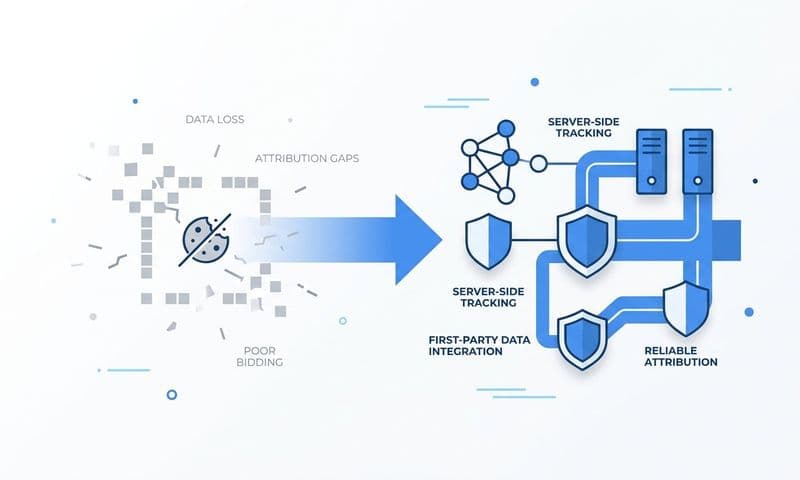
What sets Cometly apart is its powerful combination of robust tracking technology and intelligent automation. The platform features built-in server-side tracking, which mitigates data loss from privacy updates like iOS changes. This accurate data is then synchronized with major ad platforms like Meta and Google using one-click integrations, improving the ad platforms' own optimization algorithms. You can explore a deeper dive into their approach to marketing attribution on their blog.
Key Features & Use Cases
Cometly's feature set is built for performance-driven teams. Its AI-powered Ads Manager provides actionable recommendations, suggesting budget shifts to high-performing campaigns and ads. This transforms raw KPI data into strategic guidance.
- Best For: SaaS, D2C/ecommerce brands, and performance marketing agencies that depend on accurate ad spend attribution.
- Multi-Touch Attribution: Go beyond last-click models to see the full customer journey and understand how different channels work together.
- Centralized Dashboards: Consolidate data from over 100 integrations (including Shopify, Stripe, and Salesforce) into a single, customizable view.
- AI-Powered Insights: Use the AI Chat to ask questions about your ad and conversion data in natural language, receiving instant, data-backed answers.
Implementation and Pricing
The platform boasts a zero-code setup and offers personalized onboarding to ensure users can get value quickly. While pricing is not publicly listed, Cometly offers a free trial and customized quotes based on monthly ad spend. This tailored approach ensures the plan fits the scale of your operations.
- Accurate, end-to-end attribution with reliable server-side tracking.
- AI-driven tools that provide actionable budget and optimization recommendations.
- Seamless integration and conversion sync with major ad platforms.
- No transparent pricing on the website; requires a demo or trial for a quote.
- May be overly robust for businesses with minimal ad spend or simple tracking needs.
Website: https://www.cometly.com
2. Databox
Databox excels at making key performance indicators accessible to everyone on your team, not just data analysts. Its core strength lies in its rapid setup and vast library of pre-built dashboard templates. This allows marketing, sales, and executive teams to connect data sources like Google Analytics, HubSpot, or Facebook Ads and visualize critical metrics in minutes, bypassing the steep learning curve often associated with business intelligence tools.
 The 12 Best KPI Tracking Software Solutions for 2026
The platform is particularly effective for agencies managing multiple clients and for cross-functional teams needing a unified view of performance. Features like Goals, Alerts, and Scorecards help operationalize data by setting targets and notifying you when metrics are off-track. For teams that want to get straight to insights, Databox is a powerful piece of KPI tracking software.
Key Features & Considerations
- Integrations: Over 100 native integrations with a simple connection process.
- Usability: The template-driven approach makes it one of the easiest platforms to deploy for standard KPIs.
- Collaboration: A major benefit is that all plans include unlimited users, promoting data transparency across the organization.
However, Databox is not a full-blown BI tool. Its data modeling and transformation capabilities are limited compared to platforms like Power BI or Tableau. Its pricing model, which scales based on the number of connected data sources, can become costly for organizations with complex data ecosystems. To dive deeper into structuring your dashboards, explore these essential marketing dashboard KPIs for guidance.
Best For: Marketing agencies, SMBs, and teams needing fast, shareable KPI dashboards without dedicated BI resources.
Website: https://databox.com
3. Klipfolio (PowerMetrics/Klips)
Klipfolio is a mature business intelligence platform that splits its offering into two core products: PowerMetrics for creating a catalog of reusable, reliable metrics, and Klips for building highly customized, pixel-perfect dashboards. This dual approach makes it a flexible choice for organizations that need both standardized metric tracking and bespoke reporting. Its strength lies in its robust data modeling capabilities and extensive distribution options, making it a go-to for agencies and data-savvy teams.
 The 12 Best KPI Tracking Software Solutions for 2026
The platform is designed for teams that require more than just pre-built templates. Klipfolio allows users to join different data sources, write custom formulas, and control every aspect of a dashboard's appearance. Features like scheduled PDF reports, shareable links, and white-labeling are particularly valuable for agencies managing client reporting. For companies looking to build a reliable data culture, Klipfolio provides powerful KPI tracking software that bridges the gap between simple dashboards and complex BI.
Key Features & Considerations
- Integrations: Over 130 pre-built connectors, with advanced options to connect to SQL databases and use REST APIs.
- Customization: The Klip Editor offers deep control over data visualization, layout, and branding.
- Distribution: A major benefit is its wide range of sharing options, including embedding, scheduled exports, and white-label domains for client-facing reports.
However, Klipfolio's power comes with a steeper learning curve compared to template-driven tools. Unlocking its full potential requires an understanding of data modeling and the platform's formula syntax. The pricing model, with its various add-ons for governance and branding, can also become complex and costly as an organization scales its usage.
Best For: Data-driven teams, agencies requiring white-labeled client reports, and companies needing deep customization over their KPI dashboards.
Website: https://www.klipfolio.com
4. Geckoboard
Geckoboard specializes in making KPI data highly visible and easily digestible, primarily through real-time dashboards designed for large TV screens. Its philosophy is built around simplicity and team visibility, allowing businesses to display critical metrics on office walls, production floors, or in call centers. This focus makes it exceptionally good at keeping frontline teams aligned and motivated by showcasing live performance against key targets.
 The 12 Best KPI Tracking Software Solutions for 2026
The platform shines in environments where immediate, at-a-glance awareness of metrics is more important than deep-dive analysis. Features like TV dashboard loops, simple sharing via Slack or public links, and quick connectors to over 90 common data sources enable organizations to get crucial data in front of their teams with minimal friction. For companies wanting to foster a data-aware culture, Geckoboard is an effective piece of KPI tracking software that prioritizes clarity and accessibility.
Key Features & Considerations
- Integrations: Over 90 pre-built integrations with popular services like Google Sheets, Salesforce, and Zendesk.
- Usability: Building clean, readable dashboards for TV screens is remarkably fast and intuitive, requiring no technical expertise.
- Collaboration: Designed for sharing, with easy options to send snapshots to Slack, embed dashboards, or create public links for stakeholders.
However, Geckoboard is not built for complex business intelligence or granular data exploration. Its customization and data manipulation capabilities are limited compared to more robust BI tools. This makes it less suitable for data analysts who need to perform deep investigations. The platform’s value is squarely in its display and communication strengths rather than its analytical power.
Best For: Customer support teams, sales floors, and companies that want to display real-time KPIs on TV wallboards for maximum team visibility.
Website: https://www.geckoboard.com
5. Plecto
Plecto differentiates itself by integrating gamification directly into its KPI dashboards, making it a motivational tool for performance-driven teams. Its primary focus is on sales and customer support, where real-time leaderboards, contests, and achievement notifications can directly influence employee engagement and productivity. The platform is designed to make performance visible and celebrated, turning data tracking into a team-building activity.
 The 12 Best KPI Tracking Software Solutions for 2026
The ability to broadcast dashboards on TVs around the office is a core feature, reinforcing targets and celebrating wins in a highly visible manner. With add-ons for coaching and performance management, Plecto goes beyond simple data visualization to provide a framework for employee development. This focus makes it an excellent piece of KPI tracking software for managers aiming to foster a competitive yet collaborative team environment.
Key Features & Considerations
- Gamification: A major benefit is its suite of built-in contests, leaderboards, and a reward store to directly incentivize performance.
- Pricing Model: Its tracked-licenses model is cost-effective, as you only pay for users whose data is being tracked, while unlimited viewers are free.
- Team Focus: Purpose-built for sales and support environments, with coaching modules and TV display capabilities to enhance team motivation.
However, Plecto's specialized focus means it's less suited for complex business intelligence or deep data analysis compared to more versatile platforms. The pricing starts higher than many basic dashboard tools, which could be a barrier for smaller teams or those not needing the gamification features. It's best utilized where real-time performance motivation is the primary goal.
Best For: Sales and customer support teams, call centers, and organizations looking to boost employee engagement through data visualization and gamification.
Website: https://www.plecto.com
6. Tableau (Salesforce)
Tableau is an enterprise-grade analytics powerhouse designed for deep data exploration and visualization. Its strength lies in its ability to handle complex datasets and create highly customized, interactive KPI dashboards. Unlike simpler tools, Tableau allows users to perform sophisticated data analysis, blending information from dozens of sources to uncover granular insights, making it a go-to for data-driven organizations.
The platform is built for governed, scalable KPI reporting across large departments. With features like Tableau Prep for data cleansing and AI-driven insights from Tableau Pulse, it moves beyond basic reporting into predictive analytics. This makes it an exceptional piece of KPI tracking software for organizations that need rigorous data governance and have dedicated analyst resources to leverage its full potential.
Key Features & Considerations
- Deployment Flexibility: Offers both Tableau Cloud (SaaS) and Tableau Server (on-premise/private cloud) to meet different security and infrastructure needs.
- Data Preparation: Tableau Prep Builder provides robust ETL (Extract, Transform, Load) capabilities to clean and shape complex data before analysis.
- Licensing Model: Role-based licenses (Creator, Explorer, Viewer) allow organizations to manage costs by providing different levels of access and functionality to users.
However, Tableau's power comes with a steeper learning curve and a higher total cost of ownership. The setup, administration, and governance require specialized expertise, making it less suitable for teams needing a quick, plug-and-play solution. For more context on how it fits into the broader analytics landscape, you can explore other top business intelligence tools and compare capabilities.
Best For: Enterprises, data science teams, and organizations requiring deep analytical capabilities and strong data governance.
Website: https://www.tableau.com
7. Microsoft Power BI
As a pillar of the business intelligence world, Microsoft Power BI is a dominant force for enterprise-level KPI reporting and data analysis. Its greatest strength is its deep integration within the Microsoft ecosystem, allowing for seamless connections with Excel, Azure, and Teams. This makes it a natural choice for organizations already invested in Microsoft's technology stack, providing a familiar yet powerful environment for building complex data models and interactive dashboards from the ground up.
Power BI moves beyond simple metric display, offering advanced AI and data transformation capabilities through its Power Query editor. This allows analysts to clean, shape, and model data from disparate sources, creating a single source of truth for performance measurement. For companies needing robust, scalable, and embeddable analytics, Power BI serves as a comprehensive KPI tracking software solution.
Key Features & Considerations
- Integrations: Unrivaled connectivity with Microsoft products (Excel, Azure, Fabric, Teams) and hundreds of other data sources.
- Usability: Power BI Desktop offers a free and powerful authoring tool, though mastering its DAX language presents a steep learning curve.
- Scalability: Offers various licensing tiers, including Pro, Premium, and Embedded, designed to support everything from individual analysts to entire enterprises.
However, navigating its licensing structure can be complex, with different costs for users, capacity, and embedding. The nuances between Pro and Premium licenses, along with specific pricing for government or non-profit entities, require careful consideration to manage costs effectively. While incredibly powerful, it demands more technical expertise than template-driven alternatives.
Best For: Enterprises, data analysts, and companies deeply integrated with the Microsoft software ecosystem needing advanced BI and governance.
Website: https://www.microsoft.com/power-platform/products/power-bi
8. Google Looker Studio (Free) + Looker Studio Pro
Google Looker Studio (formerly Data Studio) is the go-to choice for businesses deeply integrated into the Google ecosystem. Its primary strength is the powerful, free tier that allows anyone to build and share unlimited reports by connecting seamlessly to sources like Google Analytics, Google Ads, and Google Sheets. This makes it an incredibly accessible entry point for teams looking to visualize their core marketing and operational metrics without an initial software investment.
 12 Best Client Reporting Tools for Agencies in 2025
As organizations scale, the Looker Studio Pro version addresses common governance and collaboration challenges. It introduces team workspaces, organizational content ownership, and dedicated support, which are critical for larger teams that need reliability and control over their assets. While it doesn't have the advanced data modeling of its enterprise Looker counterpart, Looker Studio serves as a highly capable piece of KPI tracking software for visualizing data directly from its source or a data warehouse like BigQuery.
Key Features & Considerations
- Integrations: Native, free connectors for all major Google products (GA4, Ads, Sheets, BigQuery) and a vast marketplace of partner connectors.
- Governance: The Pro tier adds essential enterprise features like asset management, team workspaces, and SSO for better control and security.
- Cost-Effectiveness: The free version is extremely powerful for many KPI reporting needs, offering a significant advantage for startups and SMBs.
The platform's reliance on third-party connectors for non-Google data can introduce additional costs and complexity. Furthermore, the setup for Looker Studio Pro is managed within the Google Cloud Platform billing context, which may be a hurdle for teams unfamiliar with that environment.
Best For: Teams heavily invested in the Google marketing stack, organizations using BigQuery as a data warehouse, and businesses needing a powerful, free reporting solution.
Website: https://lookerstudio.google.com
9. Mixpanel
Mixpanel focuses on product analytics, offering a powerful event-based approach to understanding user behavior. Unlike general business intelligence tools, it’s built to track granular actions within a SaaS platform or mobile app, making it ideal for product, engineering, and growth teams. It excels at answering questions about user activation, feature adoption, and retention by visualizing user journeys through funnels, flows, and cohort analysis.
 The 12 Best KPI Tracking Software Solutions for 2026
The platform empowers teams to define and track specific product KPIs without relying heavily on engineering resources once the initial event tracking is implemented. Features like Session Replay and the AI-powered query builder, Spark, make deep dives into user behavior more accessible. For organizations where product engagement is the primary driver of revenue and growth, Mixpanel is a top-tier piece of KPI tracking software that provides essential insights into the user experience.
Key Features & Considerations
- Analytics Focus: Specialized in user journey analysis with powerful funnels, retention tables, and cohort segmentation.
- Generous Free Tier: Offers a substantial free plan (up to 20M events/month) that allows startups and small teams to get started without initial investment.
- Implementation: Requires upfront technical work to define and implement event tracking, which has a learning curve to ensure data quality.
While excellent for product KPIs, Mixpanel is less suited for tracking high-level financial or operational metrics from non-product data sources. Its usage-based pricing can also become expensive for applications with extremely high event volumes. To see how it fits within the broader analytics landscape, explore this overview of marketing analytics software.
Best For: SaaS companies, mobile app developers, and product teams focused on user engagement, conversion funnels, and retention.
Website: https://mixpanel.com
10. Amplitude
Amplitude is a product analytics platform designed to help digital product and growth teams understand user behavior in granular detail. While not a general-purpose BI tool, it excels as a specialized KPI tracking software for metrics tied to user engagement, retention, and monetization. Its strength lies in connecting user actions to business outcomes, making it invaluable for SaaS and product-led companies looking to optimize the customer journey from acquisition to advocacy.
 The 12 Best KPI Tracking Software Solutions for 2026
The platform provides out-of-the-box charts and templates for analyzing funnels, user cohorts, and feature adoption. By combining analytics with experimentation and feature flag capabilities, teams can move quickly from insight to action within a single ecosystem. This integrated approach helps product managers and marketers understand the direct impact of their initiatives on key performance indicators, providing clarity that general analytics tools often lack.
Key Features & Considerations
- Product Analytics Focus: Deep features for behavioral cohort analysis, session replays, and user journey mapping.
- Integrated Platform: Combines analytics, A/B testing (Experiment), and feature flags in one suite.
- Accessibility: Offers a generous free plan (Starter) that allows teams to get started without an initial investment.
However, a successful Amplitude implementation requires disciplined event tracking and data taxonomy from the start. Its event-based pricing can also become expensive for high-volume applications, requiring careful planning around data collection. For teams focused on tying product usage back to acquisition costs, understanding how to measure marketing ROI is a critical first step.
Best For: Product-led SaaS companies, mobile app developers, and growth teams focused on user behavior and retention KPIs.
Website: https://www.amplitude.com
11. Domo
Domo operates as a full-stack, cloud-native business intelligence platform, designed for organizations that need a single solution to manage everything from data integration to executive KPI dashboards. It distinguishes itself by combining data pipelines, analytics, and app-building capabilities into one environment. This integrated approach allows enterprises to connect disparate data sources, govern access at scale, and deliver real-time insights to decision-makers without relying on multiple, fragmented tools.
 The 12 Best KPI Tracking Software Solutions for 2026
The platform is particularly powerful for large-scale deployments where data governance, security, and controlled sharing are paramount. With features like embedded analytics and a robust set of connectors, Domo is more than just KPI tracking software; it's an ecosystem for building data-driven applications. The emphasis on community, training, and a large partner network also provides significant support for complex implementations.
Key Features & Considerations
- Full-Stack Platform: Domo provides an end-to-end solution that includes data connection, storage, transformation, and visualization.
- Governance & Security: Strong focus on enterprise-grade roles, permissions, and data governance to ensure data integrity and controlled access.
- Embedded Analytics: Offers the ability to embed dashboards and analytics directly into other applications, portals, or products.
However, Domo's comprehensive nature comes with a higher price tag and a steeper implementation curve compared to more lightweight tools. Its pricing is sales-led and consumption-based, making it a better fit for larger organizations with significant BI budgets and dedicated data teams. The administrative effort required for complex deployments can be substantial.
Best For: Enterprises and large agencies needing a governed, all-in-one BI platform for complex data integration and distribution.
Website: https://www.domo.com
12. Grafana Cloud
Grafana Cloud is a powerful observability platform that excels in real-time data visualization, making it a strong choice for technical teams needing to monitor operational KPIs. While its roots are in IT and DevOps for tracking system health, its flexible and powerful dashboards can be adapted to visualize business and product metrics, such as user engagement, application performance, and infrastructure costs. It unifies logs, metrics, and traces, providing a complete picture of system performance.
 The 12 Best KPI Tracking Software Solutions for 2026
This platform is ideal for engineering, product, and operations teams who want to connect performance metrics directly to business outcomes. The open-source nature of Grafana means it has a vast ecosystem of plugins and a high degree of customizability. For organizations that need to track KPIs tied to live systems and user activity, Grafana Cloud provides an unparalleled level of detail, making it an excellent piece of KPI tracking software for technical use cases.
Key Features & Considerations
- Unified Observability: Combines metrics, logs, and traces in a single platform, offering deep context for technical KPIs.
- Customization: Highly extensible with a vast library of community and enterprise plugins and data sources.
- Alerting: Features a robust, integrated alerting system to notify teams of critical changes in their KPIs.
However, Grafana Cloud has a steeper learning curve for non-technical users compared to no-code BI tools. Its primary focus is on time-series data, which may not be ideal for standard business reporting from sources like CRM or marketing platforms without significant configuration. The Pro tier is usage-based, which is cost-effective for startups but can scale unpredictably with high data volumes.
Best For: Engineering, DevOps, and product teams that need to monitor real-time operational and performance KPIs.
Website: https://grafana.com
Top 12 KPI Tracking Tools — Comparison
Product | Core features | UX & quality | Value / Unique selling points | Target audience | Pricing (💰) |
|---|---|---|---|---|---|
🏆 Cometly | Real-time MTA, server-side tracking, AI Ads Manager, 100+ integrations | ★★★★★ | 🏆 ✨ One-click conversion sync, AI recommendations, unified touchpoints | 👥 Performance marketers, DTC, SaaS, agencies | 💰 Free trial; custom plans by ad spend (no public pricing) |
Databox | KPI dashboards, templates, 100+ connectors, goals & alerts | ★★★★ | ✨ Fast setup, scorecards & mobile-ready dashboards | 👥 Business teams & agencies | 💰 Tiered; pricing scales with data sources |
Klipfolio (PowerMetrics) | Custom "Klips", PowerMetrics catalog, SQL-like modeling, scheduled reports | ★★★ | ✨ White-label, embedding & advanced data joins | 👥 Agencies, reporting teams | 💰 Tiered + add-ons; pricing matrix can be complex |
Geckoboard | Real-time TV dashboards, quick connectors, Slack/Teams sharing | ★★★★ | ✨ TV-ready wallboards, very fast to build readable KPIs | 👥 Frontline teams, ops, execs | 💰 Simple tiers; enterprise SSO on higher plans |
Plecto | Unlimited dashboards, gamification (leaderboards, contests), coaching add-ons | ★★★★ | ✨ Built-in gamification & reward store to motivate teams | 👥 Sales & support teams | 💰 Higher starting price; tracked-license model |
Tableau (Salesforce) | Enterprise analytics, Prep Builder, Tableau Pulse AI, governance | ★★★★★ | ✨ Deep analytics, governance & enterprise scalability | 👥 Enterprise BI & analytics teams | 💰 Enterprise pricing; higher TCO |
Microsoft Power BI | Desktop authoring, Fabric/Excel/Azure integration, embedding | ★★★★ | ✨ Strong MS ecosystem, competitive per-user options | 👥 Microsoft-centric enterprises | 💰 Per-user/capacity tiers; competitive bundles |
Looker Studio (Free / Pro) | Free reports + connectors, Pro adds org ownership & workspaces | ★★★★ | ✨ Powerful free tier; Pro for enterprise controls | 👥 Marketing, execs, Google-stack users | 💰 Free tier; Pro via Google Cloud billing |
Mixpanel | Event-driven funnels, retention, cohorts, session replay, Spark AI | ★★★★ | ✨ Self-serve product analytics with generous free tier | 👥 Product & growth teams (SaaS, e-commerce) | 💰 Generous free tier; usage-based scaling |
Amplitude | Behavioral analytics, experimentation, feature flags, warehouse-native | ★★★★ | ✨ Feature flags + activation templates for growth teams | 👥 Product-led teams & growth orgs | 💰 Free starter; MTU/event pricing for scale |
Domo | End-to-end BI: pipelines, connectors, apps, governed sharing | ★★★★ | ✨ Full-stack enterprise BI from data to dashboard | 👥 Large enterprises & agencies | 💰 Sales-led pricing; typically higher cost |
Grafana Cloud | Dashboards, alerts, logs & traces; observability + metrics | ★★★★ | ✨ Open-source extensibility; real-time metrics & alerts | 👥 Engineering, DevOps, product teams | 💰 Free tier; usage-based Pro/Enterprise plans |
From Data Points to Decisions: Making Your Final Choice
Navigating the landscape of KPI tracking software can feel overwhelming. We've explored a dozen powerful platforms, from the accessible data visualization of Google Looker Studio to the enterprise-grade business intelligence of Tableau and Microsoft Power BI. Your journey from a simple spreadsheet to a dynamic, real-time dashboard is not just about adopting new technology; it's about fundamentally changing how your organization interacts with data.
The core takeaway is that there is no single "best" KPI tracking software for everyone. The right choice is deeply intertwined with your company's specific context, technical resources, and strategic goals. A fast-moving agency might prioritize the effortless, shareable dashboards of Geckoboard, while a product-led SaaS company will find indispensable insights in the user behavior analytics of Mixpanel or Amplitude.
As you move toward a final decision, distill your evaluation process into a few critical, guiding questions. Answering these honestly will illuminate the path forward and prevent you from investing in a tool that either underwhelms or overcomplicates your workflow.
Your Final Evaluation Checklist
Before you commit, revisit your initial goals and run your shortlisted vendors through this final filter. This is the last step in ensuring the software you choose will be a catalyst for growth, not a source of friction.
- Scalability and Future Needs: Does this platform solve today's problems while also offering a growth path for tomorrow? Consider not just your current data volume but where you expect to be in 18-24 months. A tool like Domo or Tableau is built for massive scale, while others may be better suited for startup velocity.
- Integration Ecosystem: How seamlessly does the software connect with your existing tech stack? Native, one-click integrations are ideal. If an API is required, do you have the development resources available to build and maintain those connections? This is a critical factor for achieving a single source of truth.
- True Cost of Ownership: Look beyond the monthly subscription fee. Factor in potential implementation costs, employee training time, and any required consulting fees. A "free" tool like Google Looker Studio might incur significant time costs in setup and maintenance.
- Department-Specific Use Cases: Does the software serve the unique needs of different teams? While a central BI tool is powerful, some departments may require specialized analytics. For specific departmental needs, you might also consider specialized platforms like SupportGPT, which can offer tailored insights into customer support performance and help track relevant KPIs.
- Attribution vs. Visualization: This is perhaps the most crucial distinction. Are you simply trying to see your data, or do you need to understand what drives your results? For performance marketers, D2C brands, and agencies, this is non-negotiable. Standard KPI dashboards can show you what happened, but attribution-focused platforms like Cometly tell you why it happened by connecting ad spend directly to revenue.
Ultimately, the goal of implementing any kpi tracking software is to empower your team to move from reactive reporting to proactive, data-informed decision-making. The right platform transforms raw data into a strategic asset, providing the clarity needed to pivot quickly, double down on what works, and drive sustainable growth. Choose the tool that not only presents your key performance indicators but also helps you understand the levers you can pull to influence them.
Ready to move beyond simple dashboards and unlock true marketing ROI? See how Cometly provides unparalleled ad attribution and revenue tracking to help you make smarter, more profitable decisions. Explore Cometly to discover how the top performance marketers connect spend to sales with precision.