You've spent thousands on ads this month. Traffic is up. Clicks look good. But when you check your bank account, the math doesn't add up. Where did all those prospects go? Which ads actually drove purchases? And why does your ad platform say you got 50 conversions while your CRM only shows 32 sales?
This disconnect costs marketers millions every year. Without proper conversion funnel tracking, you're essentially flying blind—making budget decisions based on incomplete data and hoping for the best.
Conversion funnel tracking transforms this chaos into clarity. It connects every click, scroll, and form submission into a complete story of how prospects become customers. You can finally see which touchpoints drive revenue, where prospects drop off, and which campaigns deserve more budget.
The stakes are higher than ever. Privacy changes from iOS 14.5 and cookie deprecation have made browser-based tracking unreliable. The marketers who adapt—who implement server-side tracking and unified attribution—are the ones who'll scale profitably while competitors waste spend on campaigns that look good but don't convert.
This guide walks you through setting up comprehensive conversion funnel tracking from scratch. You'll learn how to map your funnel stages, implement tracking infrastructure, configure conversion events, connect attribution, and feed data back to ad platforms for better optimization. Whether you're running paid ads across Meta, Google, and TikTok or managing a complex B2B sales cycle, these steps will give you the visibility you need to optimize every stage and scale what actually works.
Step 1: Map Your Customer Journey and Define Funnel Stages
Before you install a single tracking pixel, you need to understand exactly what you're tracking. This starts with mapping the complete journey your customers take from first awareness to final purchase.
Think of your customer journey like a road trip. You wouldn't just track the destination—you'd want to know every stop along the way, where people took breaks, and where some travelers decided to turn around and go home.
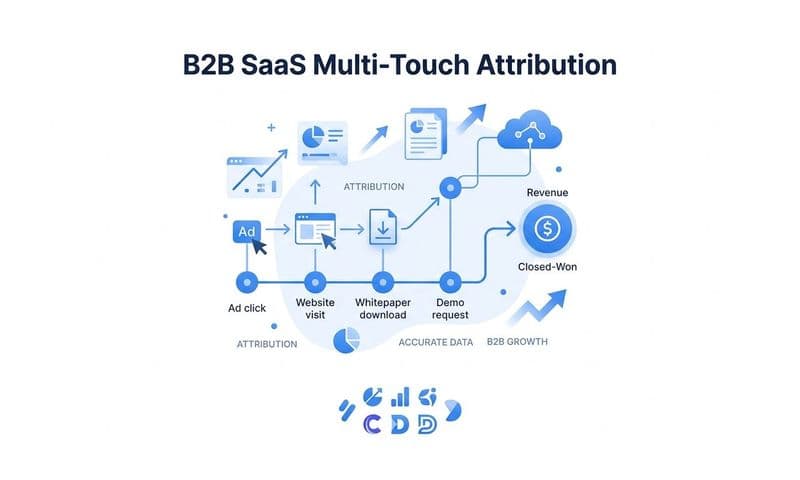
Start by identifying your key conversion events. For an e-commerce brand, this might look like: ad impression → website visit → product page view → add to cart → checkout initiated → purchase completed. For a B2B SaaS company, it's probably more like: content download → email signup → demo request → sales call booked → trial started → subscription purchased.
Document every touchpoint where prospects interact with your brand. This includes obvious ones like landing pages and checkout forms, but also the subtle interactions: email opens, social media engagement, retargeting ad clicks, customer support chats, and phone calls. Many marketers make the mistake of only tracking the big moments while missing the micro-interactions that actually influence buying decisions.
Here's where it gets strategic: assign monetary values to each stage based on your historical conversion rates. If 10% of email signups eventually become $1,000 customers, each email signup is worth $100 to your business. This valuation helps you make smarter budget allocation decisions later.
Create a visual funnel map that your entire team can reference. Use a simple spreadsheet or diagramming tool to show each stage, the actions that move prospects forward, typical conversion rates between stages, and the assigned value. This becomes your single source of truth for what matters in your funnel. Understanding conversion funnel analytics at this stage sets the foundation for everything that follows.
The mistake most teams make? They define their funnel based on what's easy to track rather than what actually matters. Don't let your analytics tools dictate your strategy. Define the customer journey first, then figure out how to track it.
Your funnel map should answer three questions: What actions indicate a prospect is moving closer to purchase? Where do we typically lose people? And which stages have the biggest impact on final conversion rates?
Once you have this map, share it with your marketing, sales, and product teams. Everyone should understand what you're optimizing for and why. This alignment prevents the common scenario where marketing celebrates 1,000 new leads while sales complains about lead quality.
Step 2: Set Up Your Tracking Infrastructure
Now comes the technical foundation that makes everything else possible. Your tracking infrastructure is the nervous system of your marketing operation—it needs to capture every signal accurately and reliably.
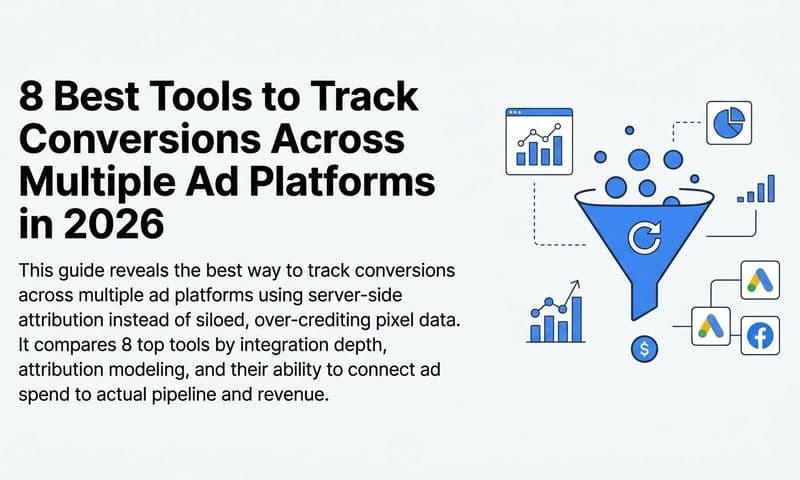
The first critical decision: implement server-side tracking alongside your existing client-side pixels. This isn't optional anymore. Browser-based tracking alone misses 20-40% of conversions due to ad blockers, iOS privacy settings, and cookie restrictions. Server-side tracking captures data directly from your server to tracking platforms, bypassing these limitations entirely. Learn more about Google Analytics vs server side tracking to understand why this matters.
Server-side tracking works by sending conversion data from your website's backend directly to ad platforms and analytics tools. When someone completes a purchase, your server sends that event data to Meta, Google, and your attribution platform—regardless of whether their browser allowed the tracking pixel to fire.
Next, establish consistent UTM parameter conventions across all campaigns and channels. Create a standardized naming structure that your entire team follows. For example: utm_source for the platform (facebook, google, tiktok), utm_medium for the campaign type (cpc, social, email), utm_campaign for the specific campaign name, and utm_content for ad variations.
The key word here is consistent. If one person uses "Facebook" while another uses "facebook" and a third uses "fb," your reporting becomes a nightmare. Document your UTM structure and make it mandatory for everyone launching campaigns.
Now connect your ad platforms, website analytics, and CRM into a unified tracking system. This integration is what transforms isolated data points into a complete customer journey. Your tracking platform should pull data from Meta Ads, Google Ads, TikTok Ads, LinkedIn Ads, your website analytics, and your CRM—then connect all these touchpoints to individual customer profiles.
Before launching any campaigns with your new tracking setup, verify everything is working correctly. Send test conversions through your funnel and confirm they appear in all connected platforms. Check that UTM parameters are being captured properly. Verify that server-side events are firing when they should. If you need guidance, explore conversion tracking setup help resources.
Use debugging tools to validate your setup. Most ad platforms offer event testing tools that show you exactly what data is being received. For Meta, use the Events Manager test events feature. For Google, use the Tag Assistant. These tools will catch configuration issues before they cost you money.
The most common tracking mistakes happen at this infrastructure stage: pixels firing on the wrong pages, duplicate tracking causing inflated numbers, or server-side events not matching client-side events properly. Spend the time to get this right now, because fixing tracking issues after you've been running campaigns for months means all that historical data is unreliable.
Think of this step as building the foundation of a house. Nobody sees it, but if you cut corners here, everything built on top will be unstable.
Step 3: Configure Conversion Events at Each Funnel Stage
With your infrastructure in place, it's time to configure the specific conversion events that matter at each stage of your funnel. This is where you translate your customer journey map into actual trackable actions.
Start at the top of your funnel with micro-conversions. These are the small actions that indicate interest but don't represent commitment yet. Set up tracking for page views on key content, video watch thresholds (like 25%, 50%, 75% completion), scroll depth on landing pages, and time spent on site. Understanding event tracking in Google Analytics helps you capture these granular interactions.
Why track these seemingly minor interactions? Because they give you early signals about campaign performance before you've spent your entire budget. If people aren't even scrolling halfway down your landing page, you know there's a messaging problem before they ever reach your signup form.
Move to mid-funnel actions where prospects show real interest. Configure events for email signups, content downloads, webinar registrations, demo requests, free trial starts, and product comparison page visits. These events represent the consideration stage where prospects are actively evaluating whether you're the right solution.
For each mid-funnel event, capture additional context that helps you understand quality. When someone requests a demo, track which page they came from, what content they viewed beforehand, and how long they've been in your ecosystem. This context helps you prioritize follow-up and understand what drives high-quality leads.
Now configure your bottom-funnel events—the actions that directly generate revenue. Set up tracking for purchases, subscription sign-ups, contract signatures, and upsells. Critically, make sure you're passing revenue values with each conversion event, not just counting the conversion itself.
Revenue tracking is what separates amateur analytics from professional marketing intelligence. Your ad platforms need to know that one conversion was worth $50 while another was worth $5,000—otherwise, they'll optimize for volume rather than value.
After configuring each event, test it thoroughly using debugging tools. Complete each action yourself and verify the event fires correctly with all the right parameters. Check that the data appears in your analytics platform, your ad platforms, and your CRM. Following best practices for tracking conversions accurately ensures your data remains reliable.
Common testing mistakes include: events firing multiple times for a single action, events not capturing revenue values correctly, or events firing on page load rather than actual user action. Catch these issues in testing, not after you've spent thousands on campaigns.
Create a conversion event documentation sheet that lists every event, what triggers it, what data it captures, and where it sends that data. This becomes essential when troubleshooting issues or onboarding new team members.
Step 4: Connect Attribution to See the Full Picture
You're tracking conversions at every funnel stage. But here's the million-dollar question: which marketing touchpoints actually deserve credit for those conversions? This is where attribution transforms data into actionable insights.
The first step is linking your tracking data to actual revenue outcomes in your CRM. When someone becomes a customer, your attribution platform needs to know their complete journey: every ad they clicked, every email they opened, every page they visited, and every touchpoint along the way.
This connection between marketing activity and CRM revenue is what separates surface-level reporting from true marketing intelligence. Without it, you're just counting clicks and hoping they matter. A comprehensive attribution marketing tracking complete guide can help you understand these connections.
Now compare different attribution models to understand which channels deserve credit. Last-click attribution gives all credit to the final touchpoint before conversion—useful for understanding what closes deals but terrible for valuing upper-funnel awareness campaigns. First-click attribution does the opposite, crediting the initial touchpoint that brought someone into your ecosystem.
Neither tells the complete story. This is where multi-touch attribution becomes essential. It distributes credit across all the touchpoints that contributed to a conversion, reflecting the reality that modern customer journeys involve multiple interactions across multiple channels before someone buys.
Linear attribution gives equal credit to every touchpoint. Time-decay attribution gives more credit to recent interactions. Position-based attribution emphasizes the first and last touches while still crediting middle interactions. Each model reveals different insights about your marketing performance. Explore different attribution tracking methods to find what works for your business.
The marketers who win don't pick one attribution model and call it truth. They compare multiple models to understand the full picture. Maybe last-click shows Google Ads driving most conversions, but first-click reveals that Facebook awareness campaigns are actually introducing most customers to your brand. Both insights matter for budget allocation.
Set up multi-touch attribution to see how touchpoints work together. You might discover that customers who see a Facebook ad, then read a blog post, then click a Google search ad convert at 3x the rate of those who only interact through a single channel. This insight changes how you structure campaigns and budget.
Build dashboards that show funnel performance by source and campaign. Create views that answer questions like: Which channels drive the most top-funnel awareness? Which campaigns generate the highest-quality mid-funnel leads? Which touchpoint combinations lead to the fastest sales cycles?
The goal isn't to find a single "best" channel. It's to understand how your channels work together to drive conversions, then optimize the entire system rather than individual parts.
Step 5: Feed Conversion Data Back to Ad Platforms
Here's where conversion funnel tracking goes from passive reporting to active optimization. The data you're collecting doesn't just help you make better decisions—it also makes your ad platforms smarter.
Set up conversion sync to send enriched data back to Meta, Google, and other ad platforms. This process, sometimes called server-side conversion API or offline conversion tracking, feeds the conversion events you're capturing back to the platforms running your ads.
Why does this matter? Ad platform algorithms optimize based on the conversion data they receive. If they only see partial data due to iOS privacy settings or ad blockers, they're optimizing with one hand tied behind their back. When you send complete, server-side conversion data back to them, their machine learning algorithms can identify patterns more accurately and find better audiences.
Configure offline conversion tracking for sales that happen outside your website. If your sales team closes deals over the phone or in person, those conversions need to be fed back to the ad platforms that generated the initial leads. Otherwise, your campaigns look like they're failing when they're actually driving valuable business.
The technical implementation typically involves matching conversion events to ad clicks using identifiers like email addresses, phone numbers, or click IDs. Your attribution platform handles this matching process, then sends the conversion data back to ad platforms via their APIs.
This feedback loop dramatically improves ad platform optimization. When Meta's algorithm knows that certain audience characteristics lead to high-value conversions, it can find more people like that. When Google Ads understands which search queries drive qualified leads, it can adjust bidding strategies accordingly. Proper Google Ads conversion tracking setup is essential for this optimization loop.
Monitor match rates and data quality to ensure optimization works. Match rate is the percentage of conversions that successfully link back to ad clicks. If your match rate is below 60%, you have a data quality problem that's limiting optimization effectiveness.
Common match rate issues include: email addresses not being captured consistently, phone numbers in different formats, or significant delays between ad click and conversion event. Address these data quality issues to improve match rates and give ad platforms better signals.
The difference in campaign performance between marketers who feed conversion data back and those who don't is substantial. Better data leads to better targeting, which leads to lower acquisition costs and higher return on ad spend. This step is what separates campaigns that plateau from campaigns that scale profitably.
Step 6: Analyze, Optimize, and Scale Your Funnel
You've built the tracking infrastructure. Now comes the ongoing work of using that data to improve performance. This is where conversion funnel tracking delivers its real value.
Start by identifying drop-off points where prospects abandon the funnel. Look at conversion rates between each stage. If 1,000 people visit your landing page but only 50 add items to cart, you have a 95% drop-off rate that demands attention. Maybe your pricing is unclear, your value proposition isn't compelling, or your page loads too slowly. Understanding how to fix conversion tracking gaps helps you identify where data might be missing.
Use your tracking data to diagnose why people leave. Are they bouncing immediately, suggesting a traffic quality or messaging mismatch? Are they scrolling but not clicking, indicating interest but no clear call-to-action? Are they adding items to cart but abandoning at checkout, pointing to friction in your purchase process?
Each drop-off point tells you where to focus optimization efforts. Don't try to fix everything at once. Prioritize the stages with the biggest volume of prospects and the worst conversion rates—that's where improvements will have the most impact on your bottom line.
Use conversion data to reallocate budget toward highest-performing channels. Your attribution data now shows which campaigns drive the most valuable customers at the lowest cost. Double down on what's working. If TikTok ads are driving awareness that leads to conversions three touches later, that channel deserves more budget even if it doesn't get last-click credit.
A/B test funnel stages based on tracking insights. If your data shows people dropping off at a specific page, test different versions. Change the headline, adjust the call-to-action, simplify the form, or add social proof. Let your conversion data tell you what to test rather than guessing based on best practices.
Set up automated alerts for significant changes in conversion rates. If your checkout conversion rate suddenly drops from 3% to 1%, you need to know immediately—not when you review reports next week. Automated alerts catch technical issues, seasonal changes, or campaign problems before they cost you serious money. Implementing real time data tracking makes this level of responsiveness possible.
Build a regular optimization rhythm. Review funnel performance weekly to catch issues early. Analyze attribution data monthly to understand longer-term trends. Conduct deep-dive quarterly reviews to identify strategic opportunities for improvement.
The marketers who excel at funnel optimization don't just collect data—they act on it systematically. They test hypotheses, measure results, and continuously refine their approach based on what the data reveals.
Putting It All Together: Your Conversion Funnel Tracking Checklist
You now have the complete framework for conversion funnel tracking that transforms marketing from guesswork into science. Let's recap what you've built.
Your funnel stages are mapped with assigned values, giving your team a shared understanding of what matters and why. Your tracking infrastructure captures every touchpoint through server-side tracking that bypasses privacy limitations. Conversion events are configured at each funnel stage, from micro-conversions to revenue-generating actions. Attribution is connected to your CRM, showing the complete customer journey across all touchpoints. Conversion sync feeds enriched data back to ad platforms, improving their optimization algorithms. And you have dashboards built for ongoing analysis and optimization.
This foundation separates data-driven marketing from expensive guessing. You can now answer the questions that matter: Which campaigns drive qualified leads? Where are prospects dropping off? Which channels work together to drive conversions? And most importantly, where should you invest more budget to scale profitably?
The marketers who win in 2026 aren't necessarily spending more than their competitors. They're the ones who can see exactly what's working and double down with confidence. They're the ones who catch problems early through automated alerts. They're the ones who optimize based on complete data rather than partial signals.
Start with step one today. Map your customer journey and define your funnel stages. Then move systematically through infrastructure setup, event configuration, attribution connection, and conversion sync. Within a week, you'll have the tracking foundation that transforms how you make marketing decisions.
The gap between marketers with comprehensive funnel tracking and those without grows wider every year. Privacy changes, platform updates, and increasing competition make accurate data more valuable than ever. The time you invest in proper tracking setup pays dividends every single day through better optimization, smarter budget allocation, and confident scaling decisions.
Ready to elevate your marketing game with precision and confidence? Discover how Cometly's AI-driven recommendations can transform your ad strategy—Get your free demo today and start capturing every touchpoint to maximize your conversions.