
Paying for an ad performance tracking subscription is one thing. Actually getting value from it is another. Many marketers sign up for tracking tools, connect their ad accounts, and then wonder why their data still feels incomplete or their optimization decisions still feel like guesswork.
The gap between having access to tracking data and using it to drive real revenue growth comes down to strategy. Whether you just invested in a new tracking subscription or want to squeeze more value from your current setup, these seven strategies will help you transform raw tracking data into actionable insights that improve campaign performance and prove marketing ROI.
1. Connect Every Data Source Before Launching Campaigns
The Challenge It Solves
Launching campaigns before your tracking infrastructure is fully connected creates attribution blind spots that persist for weeks or months. You end up making optimization decisions based on incomplete data, often cutting budgets from channels that actually contribute to conversions but don't get credit in your fragmented tracking setup.
These blind spots compound over time. The longer you run campaigns without complete integration, the more historical data you lose and the harder it becomes to establish accurate performance baselines.
The Strategy Explained
Complete data source integration means connecting every platform where customer interactions happen before you spend your first dollar on ads. This includes your ad platforms like Meta, Google, and TikTok, your CRM where leads and sales are recorded, your website analytics, and any other systems that capture customer behavior.
The goal is creating a unified view of the customer journey from the moment someone clicks an ad through every touchpoint until they become a customer. When all these systems communicate with your tracking subscription, you eliminate the gaps that cause revenue to be attributed to "direct" or "unknown" sources.
Think of it like building a house. You wouldn't pour the foundation after the walls are up. Your tracking infrastructure is the foundation for every optimization decision you'll make.
Implementation Steps
1. Audit every platform where customer interactions occur and create a comprehensive list of required integrations including ad platforms, CRM, email marketing tools, and website analytics.
2. Prioritize integrations based on budget allocation by connecting your highest-spend ad platforms first, followed by your CRM and conversion tracking systems.
3. Test each integration by running small test campaigns and verifying that conversions appear correctly in your tracking dashboard with full attribution data including source, medium, and campaign parameters.
4. Document your integration architecture so team members understand where data flows from and how different systems connect to your tracking subscription.
Pro Tips
Set up a staging environment to test new integrations before pushing them live. This prevents data gaps during the testing phase. Also, establish a monthly integration audit to catch disconnections early, especially after platform updates or API changes that can break existing connections.
2. Implement Server-Side Tracking to Capture Lost Conversions
The Challenge It Solves
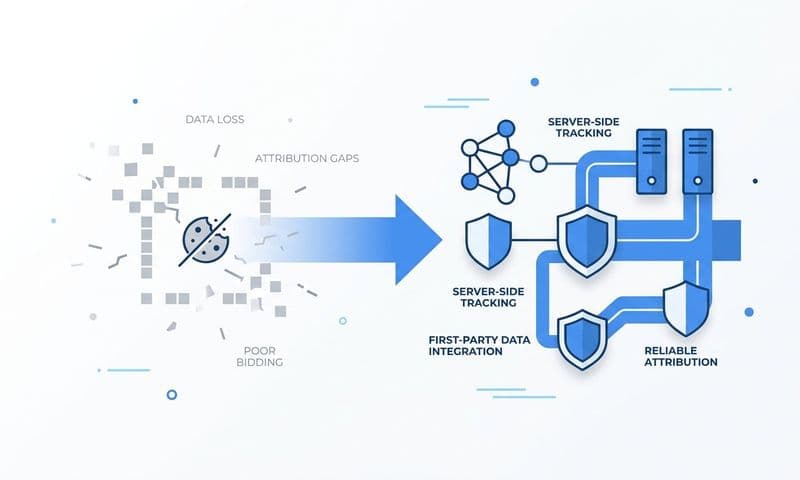
Browser-based tracking has become increasingly unreliable due to privacy restrictions introduced by iOS updates and browser policies. When users opt out of tracking or use browsers with built-in ad blockers, traditional pixel-based tracking simply stops working.
This means you're likely missing a significant portion of your actual conversions. The conversions still happen, customers still buy, but your tracking subscription never sees them because the browser blocks the tracking pixel from firing.
The Strategy Explained
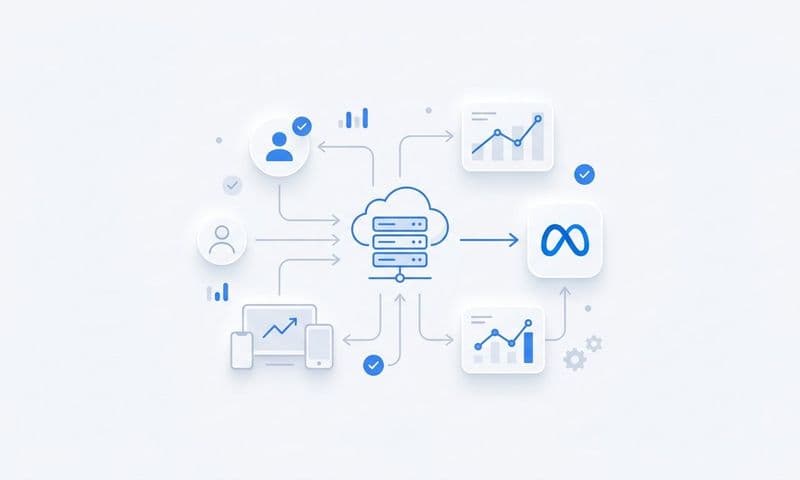
Server-side tracking moves conversion tracking from the browser to your server, bypassing browser restrictions entirely. Instead of relying on a pixel that loads in the user's browser, your server sends conversion data directly to your tracking platform.
This approach captures conversions that browser-based tracking misses, giving you a more accurate picture of campaign performance. It's particularly valuable for iOS traffic and users browsing in privacy-focused browsers like Safari and Firefox. Many businesses now rely on a first party data tracking platform to maintain accurate attribution in this privacy-first environment.
The technical implementation involves setting up a server that receives conversion events from your website or app, then forwards those events to your tracking subscription and ad platforms. This server acts as a middleman that isn't subject to browser restrictions.
Implementation Steps
1. Evaluate your current conversion tracking accuracy by comparing browser-based conversion data against actual sales or leads recorded in your CRM to identify the gap.
2. Choose a server-side tracking solution that integrates with your existing tracking subscription, whether that's a built-in feature or a third-party implementation tool.
3. Configure your server to receive conversion events from your website backend and forward them to your tracking platform with proper event parameters and user identifiers.
4. Run parallel tracking for two weeks with both browser-based and server-side tracking active to validate that server-side implementation captures additional conversions without creating duplicates.
Pro Tips
Don't disable browser-based tracking when you implement server-side tracking. Run both in parallel because browser-based tracking still works for many users and provides valuable redundancy. Focus your server-side implementation on high-value conversion events first, then expand to secondary events once the foundation is stable.
3. Map Your Full Customer Journey Across Touchpoints
The Challenge It Solves
Last-click attribution gives all credit to the final touchpoint before conversion, completely ignoring the ads and channels that introduced customers to your brand and nurtured them through the consideration phase. This creates a distorted view of what's actually working.
When you optimize based on last-click data, you systematically underfund top-of-funnel channels that drive awareness and overinvest in bottom-funnel channels that simply capture demand you've already created elsewhere.
The Strategy Explained
Customer journey mapping involves tracking and analyzing every touchpoint a customer has with your brand before converting. This includes the first ad they saw, the blog post they read three days later, the email they opened, and the retargeting ad they finally clicked before purchasing.
Your tracking subscription should show you these complete paths, not just the last step. Understanding these journeys reveals which channels work together to drive conversions and how different touchpoints contribute at different stages. Implementing cross platform marketing performance tracking ensures you capture every interaction regardless of where it occurs.
Picture a customer who sees your Facebook ad, visits your site but doesn't convert, receives a nurture email, clicks a Google ad two weeks later, and finally converts. Last-click gives Google all the credit. Journey mapping shows you that Facebook initiated the relationship and email kept them engaged.
Implementation Steps
1. Enable multi-touch attribution in your tracking subscription and select an attribution model that distributes credit across touchpoints rather than assigning everything to the last click.
2. Analyze your most valuable customer journeys by filtering for high-value conversions and examining the sequence of touchpoints that led to those conversions.
3. Identify common patterns in successful journeys, such as specific channel combinations that consistently appear together or typical time gaps between touchpoints.
4. Map these insights to your campaign strategy by ensuring you're investing in the full sequence of touchpoints that drive conversions, not just the final step.
Pro Tips
Start with a simple position-based attribution model that gives credit to both the first and last touchpoints while distributing some credit to middle interactions. This provides a more balanced view than last-click without the complexity of custom attribution models. As you get comfortable with journey analysis, you can experiment with more sophisticated attribution approaches.
4. Create Custom Conversion Events That Match Business Goals
The Challenge It Solves
Default conversion tracking focuses on generic events like page views, form submissions, or purchases without distinguishing between high-value and low-value actions. This makes it impossible to optimize for what actually matters to your business.
A demo request from an enterprise prospect is worth far more than a whitepaper download from a student, but default tracking treats them identically. You need conversion events that reflect these differences so you can optimize campaigns toward revenue, not just activity.
The Strategy Explained
Custom conversion events are tracking points you define based on your specific business model and goals. Instead of tracking every form submission the same way, you create distinct events for high-intent actions like demo requests, trial signups, or qualified lead submissions.
These custom events can include additional data like deal value, product interest, company size, or any other attribute that helps you understand conversion quality. When your tracking subscription captures this enriched data, you can segment performance by what actually drives revenue. For subscription-based businesses, implementing conversion tracking for subscription businesses is essential for measuring recurring revenue impact.
Think about what actions predict future revenue in your business. Those are the events worth tracking as distinct conversions, not just generic "leads" or "signups."
Implementation Steps
1. List all conversion actions that happen on your website or in your sales process, then categorize them by business value and likelihood to convert to revenue.
2. Define custom events for your highest-value actions with descriptive names that reflect their business importance, such as "Enterprise Demo Request" or "High-Value Trial Signup."
3. Implement tracking code that fires these custom events and includes relevant parameters like product interest, company size, or estimated deal value when that information is available.
4. Create segments in your tracking dashboard based on these custom events so you can analyze campaign performance by conversion quality, not just conversion volume.
Pro Tips
Start with three to five custom events that represent your most important business outcomes. Too many custom events creates complexity without adding insight. Focus on the conversions that your sales team actually cares about and that correlate most strongly with closed revenue.
5. Feed Enriched Data Back to Ad Platform Algorithms
The Challenge It Solves
Ad platforms like Meta and Google use conversion data to optimize who sees your ads and what bids to place. When they only receive basic conversion signals without quality indicators, their algorithms can't distinguish between valuable conversions and low-quality ones.
This leads to campaigns that drive volume but not value. The algorithm optimizes for getting you more conversions, but it doesn't know which conversions actually lead to revenue, so it treats a $10,000 deal the same as a spam submission.
The Strategy Explained
Conversion sync, also called Conversions API or server-side conversion sharing, sends enriched conversion data from your tracking subscription back to ad platforms. This includes not just that a conversion happened, but details like conversion value, lead quality scores, or whether the lead eventually became a customer.
When ad platforms receive this enriched data, their machine learning algorithms can optimize toward the conversions that actually matter. They learn to find more users who look like your high-value converters and bid more aggressively when they identify those opportunities. Using conversion tracking software for multiple ad platforms streamlines this process across all your advertising channels.
The feedback loop works like this: Your tracking subscription captures complete conversion data including quality signals, sends that data back to ad platforms, and those platforms use it to improve targeting and bidding for future impressions.
Implementation Steps
1. Verify that your tracking subscription supports conversion sync or Conversions API integration with your primary ad platforms.
2. Configure which conversion events to share back to each platform, prioritizing events that represent genuine business value over vanity metrics.
3. Include conversion value data in your sync setup so ad platforms can optimize for revenue, not just conversion count, especially important for e-commerce or businesses with variable deal sizes.
4. Monitor ad platform learning after enabling conversion sync and give algorithms at least two weeks to adjust their optimization based on the new, enriched conversion signals.
Pro Tips
Enable conversion sync for completed sales or qualified opportunities, not just initial leads. This teaches ad platforms to optimize for outcomes, not just top-of-funnel volume. You'll typically see a brief dip in conversion volume as algorithms adjust, followed by an improvement in conversion quality and overall ROI.
6. Build Attribution Dashboards for Different Stakeholders
The Challenge It Solves
A single dashboard that tries to serve everyone ends up serving no one effectively. Executives need high-level ROI metrics and trend analysis, while campaign managers need granular performance data and optimization opportunities. When both groups look at the same dashboard, neither gets what they need.
This leads to inefficient meetings where half the attendees are bored by details they don't need while the other half can't find the specific metrics required to make decisions.
The Strategy Explained
Purpose-built dashboards are customized views of your tracking data designed for specific roles and decision types. An executive dashboard shows overall marketing ROI, cost per acquisition trends, and revenue attribution by channel at a monthly or quarterly level.
A campaign manager dashboard shows daily performance by campaign, ad set, and creative with granular metrics like cost per click, conversion rate, and ROAS. A content team dashboard focuses on engagement metrics and assisted conversions from content touchpoints. The right marketing performance tracking platform makes building these role-specific views straightforward.
Each dashboard answers the specific questions that stakeholder needs to answer, presented in a format that drives their particular decisions. This transforms your tracking subscription from a data repository into a decision-making tool.
Implementation Steps
1. Interview key stakeholders to understand what decisions they make regularly and what data they need to make those decisions confidently.
2. Design dashboard layouts that prioritize the most important metrics for each role, placing critical data at the top and supporting details below.
3. Set appropriate date ranges and comparison periods for each dashboard type, with executives typically viewing monthly or quarterly data while campaign managers need daily or weekly views.
4. Schedule automated dashboard delivery so stakeholders receive their relevant view on a consistent cadence without needing to log in and navigate to it manually.
Pro Tips
Limit each dashboard to five to seven key metrics to prevent analysis paralysis. If a metric doesn't directly inform a decision that stakeholder makes, leave it off their dashboard. You can always create additional detailed views for deep-dive analysis, but the primary dashboard should enable quick, confident decision-making.
7. Schedule Weekly Data Reviews to Drive Optimization Decisions
The Challenge It Solves
Access to tracking data doesn't automatically translate into better campaign performance. Many teams collect extensive data but fail to establish consistent processes for reviewing it and taking action based on what they find.
Without structured review processes, insights get lost in the noise. You might notice that a particular channel is underperforming, but by the time you act on it, another week of budget has been wasted. Optimization becomes reactive rather than proactive.
The Strategy Explained
Weekly data reviews are scheduled meetings where your team systematically examines tracking data, identifies trends and anomalies, and documents specific optimization actions. These aren't casual check-ins, they're structured sessions with a consistent agenda and clear outputs.
The review process involves comparing current performance against benchmarks, investigating significant changes in key metrics, identifying underperforming campaigns or channels, and deciding on specific budget shifts or creative tests to implement. Understanding tracking ROI for performance marketing ensures your reviews focus on metrics that matter most to revenue.
What makes this powerful is the combination of consistency and accountability. When reviews happen every week at the same time with the same framework, optimization becomes a habit rather than something you do when you remember to check the dashboard.
Implementation Steps
1. Block a recurring weekly meeting time dedicated to data review and optimization planning, ideally early in the week so you can implement changes before the weekend.
2. Create a standard review template that covers key metrics, week-over-week changes, budget pacing, top performers, and bottom performers across channels and campaigns.
3. Establish decision thresholds that trigger action, such as pausing campaigns that exceed target CPA by 30% or increasing budgets for campaigns performing 20% better than target.
4. Document every optimization decision in a shared log that includes what you changed, why you changed it, and when you'll review the impact, creating an optimization history you can learn from.
Pro Tips
Start each review by examining your highest-spend campaigns first since optimizations there have the biggest impact on overall performance. End each session by assigning specific action items with owners and deadlines. The goal isn't just to discuss the data, it's to make documented decisions that improve performance.
Putting It All Together
Getting full value from your ad performance tracking subscription requires more than just connecting accounts and checking dashboards. Start by auditing your current integrations and implementing server-side tracking to capture the conversions you're currently missing.
Then focus on mapping your customer journey and creating custom conversion events that reflect your actual business goals. Once your data foundation is solid, feed that enriched data back to ad platforms and build dashboards that drive specific decisions.
The marketers who treat their tracking subscription as an active optimization tool rather than a passive reporting system consistently outperform those who simply watch the numbers. Pick one strategy from this list, implement it this week, and measure the impact before moving to the next.
Your tracking subscription is only as valuable as the actions you take based on the data it provides. Weekly reviews turn insights into optimizations, custom events ensure you're measuring what matters, and complete integrations eliminate the blind spots that lead to wasted budget.
Ready to elevate your marketing game with precision and confidence? Discover how Cometly's AI-driven recommendations can transform your ad strategy. Get your free demo today and start capturing every touchpoint to maximize your conversions.