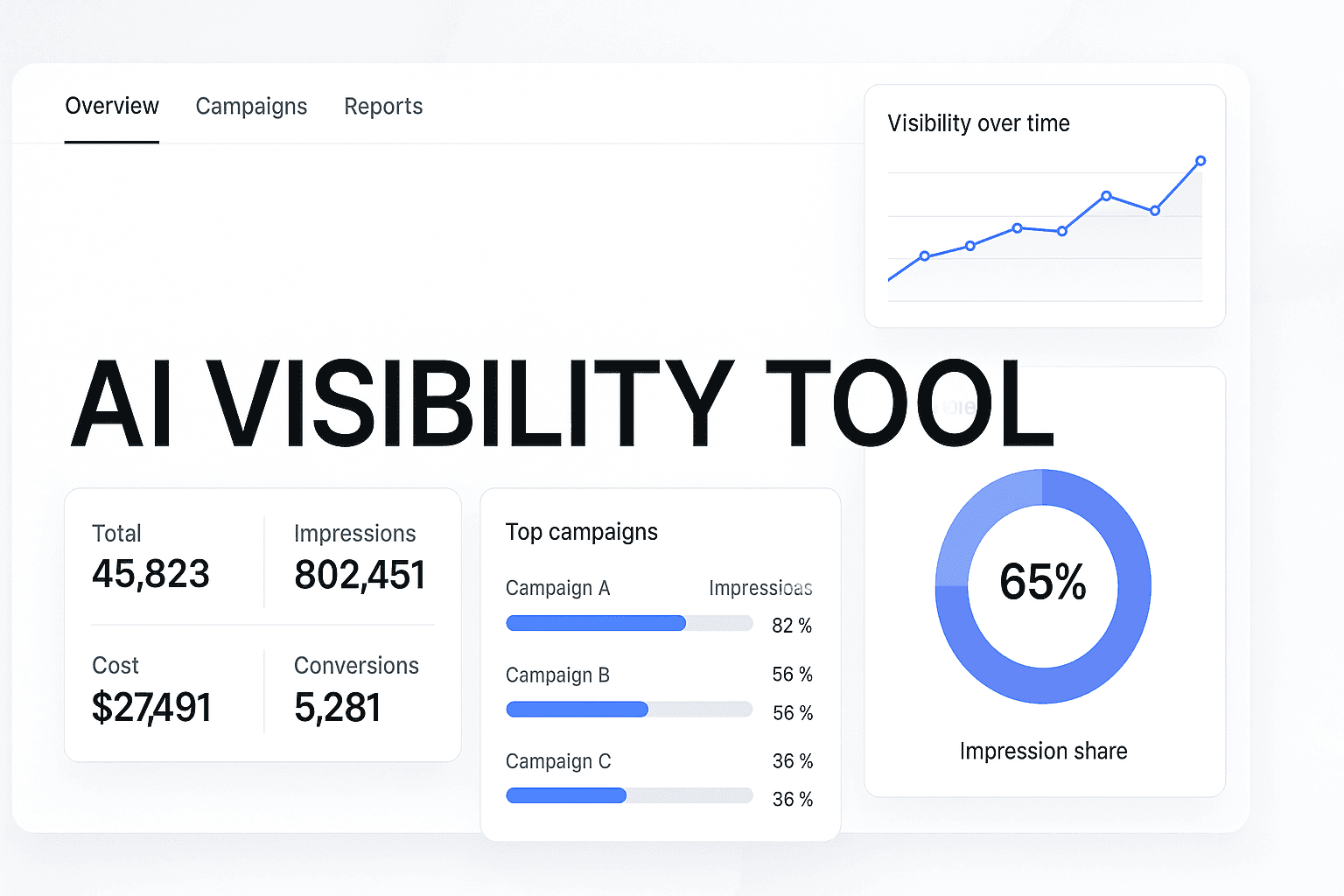
When a prospect asks ChatGPT "What's the best marketing attribution platform?" your brand is either in that answer or it doesn't exist. AI search engines like ChatGPT, Perplexity, and Google's AI Overviews now handle billions of queries monthly, generating instant recommendations that shape purchase decisions before prospects ever visit a website.
Traditional SEO tracked keyword rankings. AI visibility tracking monitors something more fundamental: whether language models cite your brand when answering questions that matter to your business. This isn't about SERP positions—it's about brand presence in conversational answers that directly influence consideration.
The challenge? AI-generated responses are dynamic, contextual, and impossible to monitor manually. You need specialized platforms that query AI engines at scale, track citation patterns across models, and identify the content gaps costing you visibility. For marketers running paid campaigns, this visibility gap compounds your attribution challenge—you're spending thousands building awareness, but if AI models don't mention you when prospects ask for recommendations, that awareness never converts to consideration.
Here are seven AI visibility tools that help you track, analyze, and improve how your brand appears when it matters most—in the AI-generated answers shaping your market.
1. Sight AI
Best for: Marketers who need both visibility tracking and AI-optimized content creation in one platform
Sight AI combines comprehensive AI visibility monitoring with built-in content creation tools designed specifically for generative engine optimization (GEO).
 7 AI Visibility Tool Platforms That Track Your Brand In Chatgpt And Perplexity
Where This Tool Shines
Sight AI's integrated approach solves the visibility-to-action gap that plagues most monitoring tools. The platform tracks your brand mentions across ChatGPT, Perplexity, Claude, and other AI engines, then uses those insights to guide content creation.
Its AI writing assistant generates articles optimized for citation by language models—not just traditional search engines. This means you're creating content structured with the entity relationships, factual density, and semantic patterns that AI models prefer when generating answers. For marketing teams managing marketing attribution data and ad performance content, this dual capability eliminates the workflow gap between identifying visibility problems and fixing them.
Key Features & Capabilities
Multi-Engine Tracking: Monitor brand mentions across ChatGPT, Perplexity, Claude, Gemini, and emerging AI search platforms with daily visibility updates.
AI-Optimized Content Editor: Built-in writing tools with GEO scoring and citation probability analysis guide content creation for maximum AI visibility.
Competitive Visibility Benchmarking: Track share of voice in AI answers, comparing your brand's presence against competitors in real time.
Query Suggestion Engine: Identifies high-value questions where your brand should appear but currently doesn't, prioritizing content opportunities.
Sentiment Analysis: Tracks how AI models characterize your brand—positive, neutral, or negative—across different query categories.
Publishing Workflow: Integrated SEO/GEO optimization built directly into the content creation process, eliminating the need to switch between tools.
Citation Tracking: Shows which content pieces earn AI mentions and which get ignored, helping refine content strategies based on actual performance.
Best For / Ideal Users
Sight AI works best for content marketing teams and growth marketers who need to both monitor visibility and scale content production. If you're running paid campaigns and want to ensure organic AI visibility supports your ad spend, Sight AI's content creation features help you build the citation-worthy assets that traditional tracking tools only measure.
Agencies managing multiple clients benefit from the platform's ability to produce optimized content at scale while tracking competitive positioning. The integrated workflow means your team can identify visibility gaps and create solutions without switching between separate monitoring and content creation tools.
2. Promptwatch
Best for: Performance marketers who need to connect AI visibility directly to website traffic and conversion data
Promptwatch bridges the gap between AI brand mentions and actual business outcomes by tracking not just where your brand appears in AI answers, but whether those mentions drive measurable traffic and conversions.
 7 AI Visibility Tool Platforms That Track Your Brand In Chatgpt And Perplexity
Where This Tool Shines
Most AI visibility tools stop at tracking mentions—Promptwatch connects those mentions to your analytics stack. The platform monitors your brand's presence in AI search results across major engines, then correlates visibility patterns with website traffic spikes, conversion events, and revenue attribution.
For marketers managing paid campaigns alongside organic visibility efforts, Promptwatch adds the AI discovery layer that traditional attribution misses. When someone asks ChatGPT or Perplexity for tool recommendations and your brand appears in the answer, Promptwatch tracks whether that mention translates to actual website visits and conversions. This visibility-to-conversion tracking helps you quantify the ROI of improving your AI presence, moving beyond vanity metrics to actual business impact.
Key Features & Capabilities
Real-time brand mention tracking: Monitors your presence across ChatGPT, Perplexity, and AI-powered search engines with continuous updates.
Traffic correlation analysis: Links AI visibility spikes to website session increases, showing which mentions drive actual visits.
Conversion attribution: Tracks which AI mentions contribute to leads, demo requests, and revenue events in your funnel.
Competitive share-of-voice metrics: Compares your AI presence to competitors, revealing where you're gaining or losing mention share.
Alert system: Notifies you when visibility drops significantly or competitors gain prominence in critical query categories.
Integration capabilities: Connects with Google Analytics and marketing attribution platforms to combine AI visibility data with existing analytics workflows.
Historical trending: Shows visibility changes over weeks and months, helping identify seasonal patterns or the impact of content updates.
Best For / Ideal Users
Promptwatch is ideal for performance marketers and growth teams who need to justify AI visibility investments with concrete ROI data. If you're already tracking ad performance and conversion paths, Promptwatch extends that attribution mindset to organic AI visibility.
Marketing leaders managing budgets across paid and organic channels benefit from the platform's ability to show how AI citations contribute to pipeline and revenue alongside traditional channels. The traffic correlation features help answer the critical question: "Is improving our AI visibility actually driving business results?"
Teams using marketing attribution software will appreciate how Promptwatch fills the AI discovery gap in their attribution models, providing visibility into a touchpoint that traditional tracking misses entirely.
3. Profound
Best for: Enterprise brands requiring comprehensive AI visibility monitoring with advanced governance and reporting
Profound delivers enterprise-grade AI visibility tracking with the security, compliance, and reporting depth that large organizations require when monitoring brand presence across AI platforms.
 7 AI Visibility Tool Platforms That Track Your Brand In Chatgpt And Perplexity
Where This Tool Shines
Profound's enterprise architecture addresses the governance and compliance requirements that smaller visibility tools simply can't handle. The platform provides role-based access controls, detailed audit trails, and security features that meet the standards of regulated industries and Fortune 500 organizations.
For enterprise marketing teams managing complex brand portfolios, Profound offers consolidated visibility tracking across multiple brands, product lines, and geographic regions within a single platform. This multi-brand capability matters when you're monitoring how AI engines represent different products under your corporate umbrella—each with distinct positioning, competitive landscapes, and target audiences.
The platform's API-first architecture integrates with existing marketing technology stacks, feeding AI visibility data into business intelligence tools and executive dashboards. This integration capability means AI visibility metrics sit alongside traditional marketing performance data, enabling comprehensive analysis of how AI discovery complements paid advertising, traditional search, and other channels.
Key Features & Capabilities
Enterprise-Scale Monitoring: Tracks brand mentions across ChatGPT, Perplexity, Claude, Gemini, and custom AI implementations with the query volume capacity required by large organizations.
Multi-Brand Portfolio Tracking: Consolidated reporting and cross-portfolio competitive analysis for organizations managing multiple brands, product lines, or regional variations.
Advanced Security & Compliance: Role-based access controls, audit logging, and security features meeting SOC 2 and enterprise compliance requirements.
Sophisticated Sentiment Analysis: Brand safety monitoring with risk alerting when AI models characterize brands negatively or inaccurately.
Custom Query Libraries: Tailored monitoring for specific industries, product categories, or competitive landscapes based on your strategic priorities.
API & Integration Capabilities: Full API access for integrating visibility data into existing BI platforms, marketing analytics tools, and custom reporting systems.
Strategic Implementation Support: White-glove onboarding and dedicated account management ensuring successful deployment across complex organizational structures.
Best For / Ideal Users
Profound serves enterprise marketing organizations, Fortune 500 brands, and large agencies managing substantial client portfolios. If your organization requires SOC 2 compliance, detailed audit trails, or multi-stakeholder reporting workflows, Profound's enterprise architecture supports those operational requirements.
Marketing leaders coordinating visibility strategies across multiple business units benefit from the platform's consolidated tracking and hierarchical reporting structure. The ability to monitor how AI engines represent different brands within your portfolio—and compare competitive positioning across product lines—provides strategic insights that single-brand tools cannot deliver.
4. Peec AI
Best for: Competitive intelligence teams focused on benchmarking AI visibility against industry rivals
Peec AI specializes in competitive AI visibility analysis, measuring your brand's presence in AI search results against competitors using visibility scores, position tracking, and sentiment comparison metrics.
 7 AI Visibility Tool Platforms That Track Your Brand In Chatgpt And Perplexity
Where This Tool Shines
Peec AI's competitive benchmarking goes beyond simple mention counting to analyze position, prominence, and sentiment in AI-generated answers. The platform assigns visibility scores based on where your brand appears in AI responses—first mention versus buried in a list—and how prominently it's featured.
This nuanced competitive analysis helps marketing teams understand not just whether they're visible, but how their AI presence compares to competitors on dimensions that actually influence buyer consideration. For brands competing in crowded categories, Peec AI's benchmarking reveals visibility gaps and opportunities that raw mention counts miss entirely.
Key Features & Capabilities
Competitive Visibility Scoring: Ranks brands by AI presence strength across query categories, showing relative positioning in your market.
Position Tracking: Shows whether your brand appears first, middle, or last in AI answer lists when prospects ask relevant questions.
Sentiment Benchmarking: Compares how AI models characterize your brand versus competitors—recommended versus mentioned as alternative.
Share-of-Voice Metrics: Quantifies your percentage of total AI mentions in your category, similar to traditional market share analysis.
Trend Analysis: Identifies competitors gaining or losing AI visibility over time, revealing strategic shifts in the competitive landscape.
Query Category Performance: Shows which question types favor your brand versus competitors, helping prioritize optimization efforts.
Automated Competitive Reports: Highlights visibility shifts and emerging threats without manual monitoring across multiple AI platforms.
Best For / Ideal Users
Peec AI works best for competitive intelligence teams, category leaders defending market position, and challenger brands trying to gain visibility share. If your marketing strategy depends on understanding competitive positioning, Peec AI's benchmarking provides the AI visibility equivalent of traditional market share analysis.
Brand managers tracking competitive threats benefit from automated alerts when competitors gain prominence in AI answers for critical queries. Marketing leaders coordinating visibility strategies across product lines can use the platform's comparative data to prioritize optimization investments where competitive gaps are largest.
Pricing
Peec AI pricing is based on the number of competitors tracked, query volume, and reporting frequency. Plans range from basic competitive tracking for small teams to comprehensive category monitoring for enterprise competitive intelligence operations.
5. Nimt AI
Best for: Brands seeking actionable recommendations to improve AI visibility, not just tracking data
Nimt AI continuously monitors how brands appear in AI-powered search and provides prescriptive recommendations to improve generative visibility across ChatGPT, Perplexity, and other AI engines.
 7 AI Brand Visibility Tracking Tools That Show Where You Rank In Chatgpt And AI Search
Where This Tool Shines
Nimt AI solves the interpretation gap that leaves most marketing teams staring at visibility data without knowing what to do next. The platform doesn't just show you where your brand appears or doesn't appear—it tells you exactly what content to create, which topics to cover, and how to structure that content for maximum citation probability.
This prescriptive approach transforms raw tracking data into strategic action plans. When the platform identifies queries where competitors appear but you don't, it doesn't stop at the gap analysis. It recommends specific content angles, entity relationships to emphasize, and semantic patterns that will improve your chances of citation. For marketing teams managing both paid campaigns and organic visibility, these recommendations help prioritize content investments that build AI presence alongside advertising efforts.
Key Features & Capabilities
Continuous Monitoring: Daily visibility tracking across major AI search engines with automated updates on mention frequency and positioning changes.
Gap Analysis: Identification of high-value queries where your brand should logically appear based on your offerings but currently doesn't earn citations.
Content Recommendations: Specific guidance on topics, formats, and optimization tactics needed to improve visibility for identified gaps.
Entity Relationship Mapping: Analysis showing how to structure content with clear entity connections that AI models prefer when selecting citations.
Competitive Opportunity Identification: Highlighting queries where competitors show weak visibility, creating openings for your brand to gain citation share.
Progress Tracking: Measurement of visibility improvements after implementing recommendations, showing which strategies drive results.
Priority Scoring: Ranking recommendations by potential impact and implementation effort to help teams focus on highest-value opportunities first.
Best For / Ideal Users
Nimt AI works best for content strategists and SEO teams transitioning to generative engine optimization who need clear direction rather than raw data dumps. If your team lacks specialized expertise in how AI models select citations, the platform's prescriptive recommendations provide the strategic guidance needed to improve visibility systematically.
Growth marketers coordinating content and paid strategies benefit from the platform's ability to identify content gaps that, once filled, support broader marketing objectives. Marketing leaders who need to justify content investments will appreciate recommendations that connect directly to visibility improvements and competitive positioning.
Pricing
Nimt AI offers subscription pricing based on monitoring frequency, recommendation volume, and team size. Plans scale from individual practitioners to enterprise marketing organizations requiring comprehensive visibility strategies.
6. Writesonic
Best for: Content teams needing integrated AI visibility tracking and content creation workflows
Writesonic combines its established AI writing platform with visibility tracking features, allowing teams to monitor brand mentions and create optimized content within a single workflow.
 7 AI Visibility Tool Platforms That Track Your Brand In Chatgpt And Perplexity
Where This Tool Shines
Writesonic's integration of visibility tracking with content creation eliminates tool-switching friction that slows content operations. The platform monitors your AI visibility across search engines, identifies content gaps, then provides AI writing tools specifically tuned to create citation-worthy content for those gaps.
Unlike standalone tracking tools that require separate content creation processes, Writesonic's unified workflow means visibility insights directly inform content production. When the platform identifies queries where your brand should appear but doesn't, you can immediately generate optimized content without leaving the interface or switching to another tool.
Key Features & Capabilities
AI Visibility Monitoring: Tracks brand mentions across ChatGPT, Perplexity, and major AI search engines with regular visibility updates.
Integrated AI Writing Tools: Generates content optimized for both GEO and traditional SEO using the same interface where you monitor visibility.
Content Optimization Scoring: Evaluates citation probability before publishing, helping writers understand what makes content citation-worthy.
Competitive Content Analysis: Shows what content formats and topics earn competitor citations, revealing strategic opportunities.
Bulk Content Creation: Scales production of AI-optimized articles for teams managing high content volumes across multiple topics.
Multi-Language Support: Tracks visibility and creates optimized content across regions for brands operating internationally.
Publishing Integrations: Connects directly to WordPress, HubSpot, and major CMS platforms for streamlined content deployment.
Best For / Ideal Users
Writesonic works best for content marketing teams producing high volumes of articles, landing pages, and marketing copy who want to ensure that content is optimized for AI visibility from creation. If you're already using AI writing tools, Writesonic's visibility tracking adds strategic direction to content production.
Agencies managing content for multiple clients benefit from the platform's ability to track visibility and produce optimized content at scale within one system. Marketing teams coordinating paid campaigns with organic content strategies can use Writesonic to ensure their content investments support broader visibility goals.
The platform suits organizations where content creation is distributed across multiple team members who need consistent optimization guidance and quality standards.
Pricing
Writesonic offers tiered pricing based on content generation volume and visibility tracking scope. Plans range from individual creator tiers with basic tracking to enterprise plans with unlimited content generation and comprehensive visibility monitoring.
7. Scrunch
Best for: Brands focused on shaping how AI models understand and represent their core value propositions
Scrunch takes a strategic approach to AI visibility by helping brands create content structures and entity relationships that influence how large language models conceptualize and describe their products, services, and value propositions.
 7 AI Brand Visibility Tracking Tools That Show Where You Rank In Chatgpt And AI Search
Where This Tool Shines
Scrunch focuses on the foundational layer of AI visibility—ensuring language models have accurate, comprehensive understanding of your brand before they generate answers. The platform analyzes how AI models currently represent your brand, identifies knowledge gaps or mischaracterizations, then helps you create content structures that correct and enhance that understanding.
This strategic approach goes beyond chasing individual query visibility to shape the underlying brand representation in AI training data and retrieval systems. For brands in complex categories or those frequently misunderstood by AI models, Scrunch's entity-focused optimization helps establish accurate brand positioning that influences visibility across thousands of potential queries. When AI models have clear, structured understanding of what your brand does and how it differs from competitors, they're more likely to cite you appropriately across diverse question types.
Key Features & Capabilities
Entity Analysis: Shows how AI models currently understand your brand, products, and category positioning.
Knowledge Gap Identification: Reveals missing or inaccurate brand information in AI systems that limit visibility.
Content Structure Recommendations: Optimizes for entity relationship clarity and factual density that AI models prefer.
Brand Positioning Frameworks: Ensures AI models understand your differentiation and value propositions accurately.
Semantic Optimization Tools: Structures content for maximum AI comprehension and citation probability.
Representation Monitoring: Tracks brand representation changes as AI models update and evolve over time.
Competitive Entity Analysis: Shows how rivals structure content for AI understanding and where gaps exist.
Best For / Ideal Users
Scrunch serves brand strategists, product marketers, and companies in technical or complex categories where AI models frequently misunderstand or misrepresent offerings. If your brand suffers from category confusion, inaccurate AI descriptions, or invisibility despite strong traditional SEO, Scrunch's entity-focused approach addresses the root cause.
Marketing leaders coordinating brand positioning across channels benefit from ensuring AI models understand and represent the brand consistently with other marketing efforts. This becomes particularly valuable when your product category is emerging, your differentiation is nuanced, or AI models tend to conflate your brand with competitors.
Pricing
Scrunch pricing is customized based on brand complexity, category competitiveness, and the scope of entity optimization required. The platform typically serves mid-market to enterprise brands with strategic positioning challenges.
Putting It All Together
The right AI visibility tool depends on what you need to accomplish. If you're building a content operation that needs both tracking and creation, Sight AI's integrated platform delivers the most complete workflow. Performance marketers who need to prove ROI should prioritize Promptwatch's conversion attribution capabilities. Enterprise teams requiring governance and multi-brand tracking will find Profound's architecture matches their complexity.
For competitive intelligence, Peec AI's benchmarking reveals exactly where you stand against rivals. Teams lacking GEO expertise benefit from Nimt AI's prescriptive recommendations that tell you what to fix, not just what's broken. Content teams already using AI writing tools can consolidate workflows with Writesonic's combined approach. Brands struggling with AI misrepresentation should consider Scrunch's entity-focused strategy.
Most marketing teams will benefit from starting with visibility tracking, then expanding to content optimization as they understand their gaps. The platforms that combine measurement with actionable guidance—Sight AI, Nimt AI, and Writesonic—accelerate this learning curve by connecting insights directly to improvements.
While these tools track AI visibility, platforms like Cometly ensure you're measuring the full customer journey from initial awareness through conversion. When you're investing in both paid campaigns and organic AI visibility, attribution tracking shows which channels actually drive revenue. Get your free demo to see how accurate attribution data complements your visibility strategy and helps you scale what's working across every marketing channel.