Marketing teams pour millions into campaigns across Meta, Google, TikTok, and countless other channels. Yet when leadership asks which efforts actually drive revenue, the answers get fuzzy. Different platforms report different numbers. Analytics tools contradict each other. And somewhere in that chaos, profitable campaigns get paused while money-losers scale.
Attribution analytics solves this by connecting every marketing touchpoint to real business outcomes. But here's the thing: simply having attribution data doesn't guarantee clarity. The difference between actionable insights and misleading metrics comes down to how you collect, analyze, and act on that data.
These seven best practices will help you build an attribution framework that reveals true campaign performance, eliminates wasted spend, and gives your team the confidence to scale what works. Let's break down exactly how to make attribution analytics work for your business.
1. Establish a Single Source of Truth for All Marketing Data
The Challenge It Solves
Every marketing platform reports conversions differently. Meta says you got 50 leads. Google claims 42. Your CRM shows 38. When data conflicts across systems, teams waste hours reconciling reports instead of optimizing campaigns. Worse, budget decisions get made on incomplete or inaccurate information.
This fragmentation happens because each platform tracks differently and attributes credit using its own rules. The result? Nobody trusts the numbers, and strategic decisions become guesswork.
The Strategy Explained
Centralizing all marketing data into one unified tracking system creates a consistent view of campaign performance. This means connecting your ad platforms, website analytics, CRM, and payment systems to flow into a single attribution platform.
When every touchpoint feeds into one system, you eliminate conflicting reports. Your team sees the same conversion numbers whether they're analyzing Meta campaigns or Google Ads performance. This consistency builds confidence in the data and speeds up decision-making.
The key is choosing an attribution platform that can ingest data from all your marketing channels and normalize it according to consistent rules. This gives you one version of truth that everyone can reference.
Implementation Steps
1. Audit all current data sources including ad platforms, analytics tools, CRM systems, and payment processors to understand what needs to connect.
2. Select an attribution platform that offers native integrations with your key marketing channels and can handle server-side tracking for accuracy.
3. Configure tracking parameters consistently across all campaigns using UTM codes or platform-specific identifiers that flow through to your attribution system.
4. Set up automated data syncs so conversion events from your CRM and payment systems flow back into your attribution platform in real time.
Pro Tips
Start with your highest-spend channels first rather than trying to connect everything at once. Get those working perfectly, then expand. Also, document your tracking conventions in a shared resource so everyone on the team uses consistent parameter naming.
2. Track the Complete Customer Journey, Not Just Last Clicks
The Challenge It Solves
Last-click attribution gives all credit to the final touchpoint before conversion. This approach systematically undervalues awareness campaigns and earlier funnel activities that actually started the customer journey.
When you only credit the last click, you might pause profitable top-of-funnel campaigns because they don't show direct conversions. Meanwhile, bottom-funnel tactics get all the glory even though they're just capturing demand that earlier touchpoints created.
The Strategy Explained
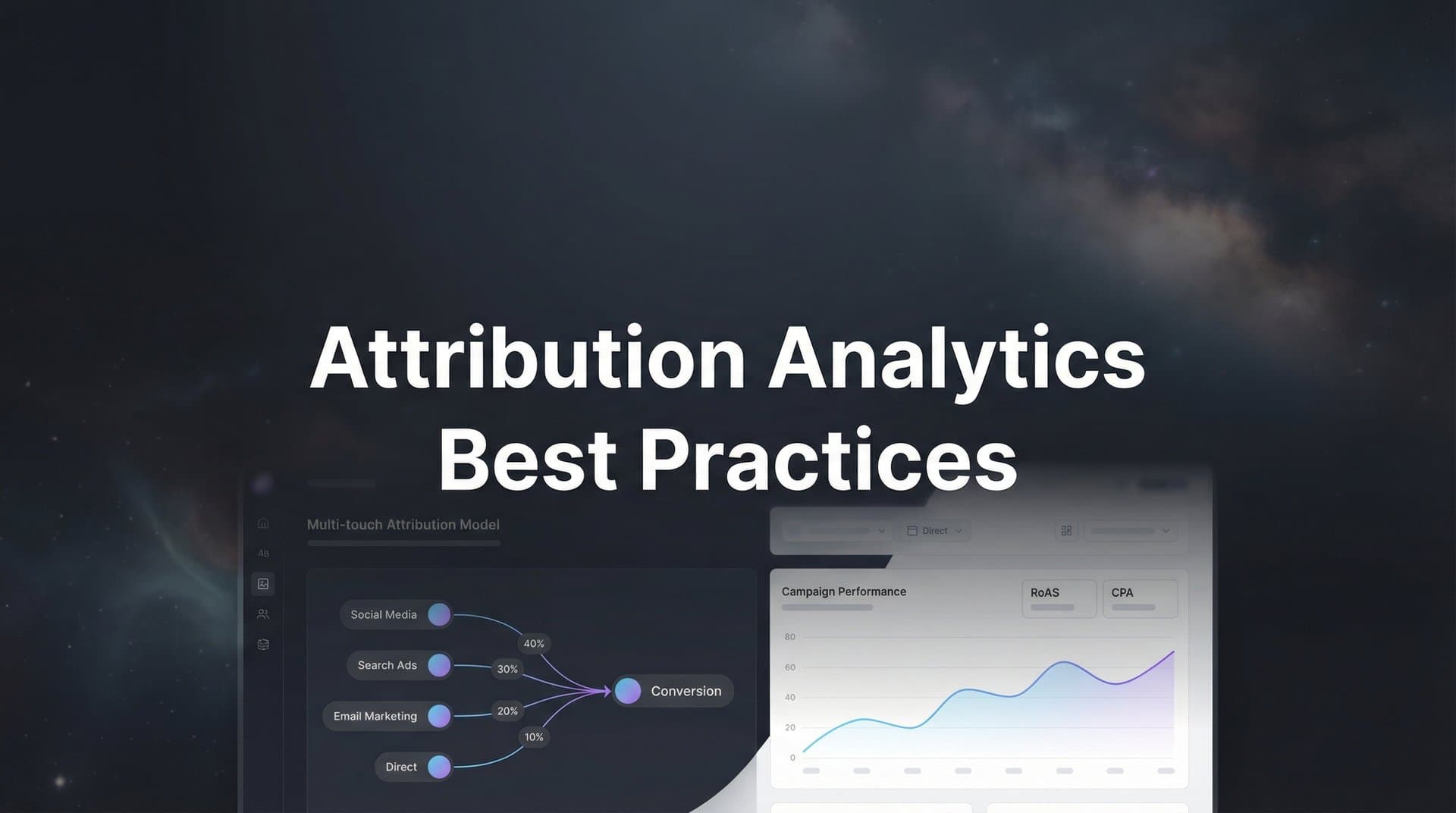
Multi-touch attribution assigns credit across every interaction in the customer journey. Someone might first see your brand through a Facebook ad, research you via Google search, read comparison content, then finally convert through a retargeting ad. Multi-touch attribution recognizes that each step contributed to the conversion.
For a deeper dive into this space, see our ad optimization software comparison guide.
This approach reveals which channels work together to drive results. You might discover that LinkedIn ads rarely get last-click credit but consistently introduce prospects who later convert through other channels. Without multi-touch tracking, you'd never see this relationship.
The goal is capturing every touchpoint from initial awareness through final purchase, then analyzing how different channels contribute at different stages.
Implementation Steps
1. Implement tracking that captures all ad impressions, clicks, and website visits across every marketing channel you use.
2. Set up user identification that can connect anonymous visitors to known leads once they provide contact information, creating a complete journey view.
3. Configure your attribution platform to track and store every touchpoint rather than just the conversion event itself.
4. Define your attribution window—the time period during which touchpoints receive credit—based on your typical sales cycle length.
Pro Tips
Longer attribution windows favor awareness campaigns while shorter windows favor conversion-focused tactics. Many businesses find that 30-day windows work well for e-commerce while B2B companies often need 90+ days to capture complete enterprise sales cycles.
3. Connect Attribution Data Directly to Revenue, Not Proxies
The Challenge It Solves
Optimizing for proxy metrics like form fills or demo requests sounds logical until you realize that not all leads generate equal revenue. The campaign driving 100 leads at $50 each might actually be less valuable than the one generating 30 leads at $500 each.
When attribution only tracks top-of-funnel actions, you can't see which campaigns drive profitable customers versus tire-kickers who never buy. This leads to budget allocation based on volume rather than value.
The Strategy Explained
Revenue attribution connects actual dollars earned to specific marketing touchpoints. Instead of just knowing a campaign generated 50 leads, you see that those leads produced $75,000 in closed revenue.
This requires integrating your CRM and payment systems with your attribution platform. When deals close or purchases complete, that revenue data flows back and gets attributed to the marketing touchpoints that influenced those customers.
The result is a clear view of marketing ROI at the campaign level. You can confidently increase budgets for campaigns that drive high-value customers and reduce spend on those that attract low-value leads.
Implementation Steps
1. Integrate your CRM system with your attribution platform so deal values and closed-won status sync automatically.
2. Set up conversion value tracking on your website and in your attribution system to capture transaction amounts for e-commerce purchases.
3. Configure revenue attribution rules that assign dollar values to the touchpoints that influenced each customer based on your chosen attribution model.
4. Create dashboards that display revenue per campaign, channel, and ad creative rather than just conversion counts.
Pro Tips
Don't forget to track customer lifetime value, not just initial purchase amounts. The campaign that drives customers with 80% retention rates is more valuable than one generating customers who churn after three months, even if initial purchase values look similar.
4. Compare Multiple Attribution Models Before Making Decisions
The Challenge It Solves
No single attribution model tells the complete story. First-click models favor awareness campaigns. Last-click models favor conversion tactics. Linear models spread credit evenly, which might not reflect reality. Relying on just one model gives you a limited perspective.
Different channels naturally perform different roles in the customer journey. Your attribution model choice can make a profitable channel look unprofitable or vice versa, leading to bad optimization decisions.
The Strategy Explained
Running parallel attribution models means analyzing your data through multiple lenses simultaneously. You might compare first-click, last-click, linear, time-decay, and position-based models to understand how each channel contributes at different funnel stages.
When you see that LinkedIn gets significant first-click credit but minimal last-click credit, you understand it's an awareness channel. When Google Search gets strong last-click credit, you know it captures demand. This nuanced view prevents you from cutting channels that play important but non-obvious roles.
The goal isn't finding the "right" model but understanding how your marketing ecosystem works from multiple perspectives.
Implementation Steps
1. Set up your attribution platform to calculate conversions and revenue using at least three different attribution models simultaneously.
2. Create comparison reports that show how each channel performs under different models side by side.
3. Analyze channels that perform very differently across models to understand their specific role in the customer journey.
4. Use model comparison insights to set appropriate KPIs for each channel based on where it naturally contributes value.
Pro Tips
Pay special attention to channels that show strong first-click or mid-journey credit but weak last-click credit. These are often undervalued by teams who only look at last-click data, yet they play crucial roles in starting and nurturing customer journeys.
5. Feed Enriched Conversion Data Back to Ad Platforms
The Challenge It Solves
Ad platform algorithms need quality conversion data to optimize effectively. Browser-based tracking has become less reliable due to iOS privacy updates, cookie restrictions, and ad blockers. When platforms can't see conversions accurately, their optimization suffers and your campaigns underperform.
This creates a vicious cycle: incomplete data leads to poor optimization, which leads to worse results, which makes you question whether the channel works at all.
The Strategy Explained
Server-side tracking and conversion APIs allow you to send accurate, enriched conversion data directly from your servers to ad platforms like Meta and Google. This bypasses browser limitations and gives platforms complete visibility into campaign performance.
When ad platforms receive quality conversion data, their algorithms can better identify which audiences, placements, and creative variations drive results. This improves automated bidding, audience targeting, and optimization recommendations.
The key is implementing solutions like Meta's Conversions API and Google's Enhanced Conversions to supplement or replace traditional pixel-based tracking.
Implementation Steps
1. Implement server-side tracking that captures conversion events on your server rather than relying solely on browser pixels.
2. Set up Conversions API integrations for Meta and Enhanced Conversions for Google to send conversion data directly from your servers.
3. Enrich conversion events with additional data like purchase values, lead quality scores, or customer lifetime value before sending to platforms.
4. Monitor event match quality scores in each platform to ensure your server-side data is matching properly with platform users.
Pro Tips
Include as many customer identifiers as possible in your server-side events—email, phone, address, etc. The more matching parameters you provide, the better platforms can connect conversions to specific ads and optimize accordingly.
6. Audit and Clean Your Tracking Setup Regularly
The Challenge It Solves
Tracking setups degrade over time. Someone launches a campaign with incorrect UTM parameters. A developer accidentally removes tracking code during a website update. An integration breaks and nobody notices for weeks. Small tracking errors compound into major data quality issues.
When your tracking data is unreliable, every analysis and decision built on that data becomes questionable. You might pause profitable campaigns or scale unprofitable ones based on incorrect information.
The Strategy Explained
Systematic tracking audits catch issues before they corrupt your data. Monthly reviews of tracking parameters, pixel implementations, and data connections ensure your attribution system captures accurate information.
This proactive approach prevents the "garbage in, garbage out" problem. When you know your tracking works correctly, you can trust the insights and act on them confidently.
Regular audits also help you spot new tracking opportunities as you add marketing channels or launch new campaigns.
Implementation Steps
1. Create a tracking audit checklist that covers all tracking pixels, UTM parameters, integration connections, and data flows in your marketing stack.
2. Schedule monthly audits where someone reviews recent campaigns to verify tracking parameters match your conventions and all data flows correctly.
3. Test conversion tracking on your website by completing test purchases or form submissions to ensure events fire properly and appear in all connected systems.
4. Set up automated alerts that notify you when data volumes drop unexpectedly or integrations disconnect, catching issues immediately.
Pro Tips
Document your tracking standards in a shared guide that includes UTM naming conventions, required parameters for each channel, and troubleshooting steps. This helps team members implement tracking correctly from the start and reduces audit workload.
7. Act on Attribution Insights with Clear Optimization Workflows
The Challenge It Solves
Many teams invest in attribution analytics but struggle to translate insights into action. They generate beautiful reports showing which campaigns drive revenue, then continue making budget decisions based on gut feel or surface metrics.
Attribution data only creates value when it changes behavior. Without systematic workflows that connect insights to optimization actions, your attribution investment generates interesting dashboards but no business impact.
The Strategy Explained
Optimization workflows create repeatable processes for acting on attribution findings. When you discover a campaign driving high-value customers, your workflow defines exactly how to scale it. When another campaign shows poor revenue attribution, your workflow specifies how to test improvements or reallocate budget.
These workflows transform attribution from a reporting tool into an optimization engine. Instead of just knowing what happened, you have clear processes for making things better.
The goal is building habits where attribution insights automatically trigger specific optimization actions rather than just generating discussion.
Implementation Steps
1. Define clear decision rules based on attribution metrics, such as "increase budget 20% for campaigns showing 3x+ ROAS" or "pause campaigns with sub-1x ROAS after 30 days."
2. Schedule weekly optimization reviews where the team analyzes attribution data and makes specific budget, creative, or targeting adjustments based on findings.
3. Create templates for common optimization actions like budget reallocation requests, creative refresh briefs, or audience expansion plans that reference attribution insights.
4. Document optimization decisions and their attribution-based rationale so you can later measure whether actions improved performance.
Pro Tips
Start with simple workflows focused on the highest-impact decisions—usually budget allocation across channels. Get those working smoothly before adding complexity like creative optimization or audience refinement workflows.
Putting It All Together
Attribution analytics transforms from a nice-to-have reporting tool into a strategic advantage when you implement these seven best practices systematically. Start with the foundation: centralize your marketing data into a single source of truth and implement tracking that captures complete customer journeys. This gives you accurate, comprehensive data to work with.
Build upward by connecting attribution to actual revenue rather than proxy metrics. Compare multiple attribution models to understand how different channels contribute at different funnel stages. Feed enriched conversion data back to your ad platforms so their algorithms can optimize more effectively.
Maintain data quality through regular tracking audits. Small issues caught early prevent major data problems later. Finally, translate insights into action with clear optimization workflows that systematically improve campaign performance based on attribution findings.
The marketers who master attribution analytics don't just report on what happened—they continuously improve performance with confidence. They know which campaigns drive profitable customers, which channels work together to create conversions, and exactly where to invest next month's budget for maximum return.
Ready to elevate your marketing game with precision and confidence? Discover how Cometly's AI-driven recommendations can transform your ad strategy—Get your free demo today and start capturing every touchpoint to maximize your conversions.