You're staring at three browser tabs: Meta Ads Manager showing a campaign that's crushing it, Google Ads with another that's bleeding money, and TikTok Ads where performance just went sideways in the last hour. You know you should shift budget from the underperformer to the winner, but which one? How much? And by the time you make that call, will the opportunity still be there?
This is the daily reality for digital marketers managing paid media at scale. You're making budget decisions based on snapshots of data that are already outdated, trying to predict which campaigns deserve more spend while juggling platform-specific quirks and reporting delays.
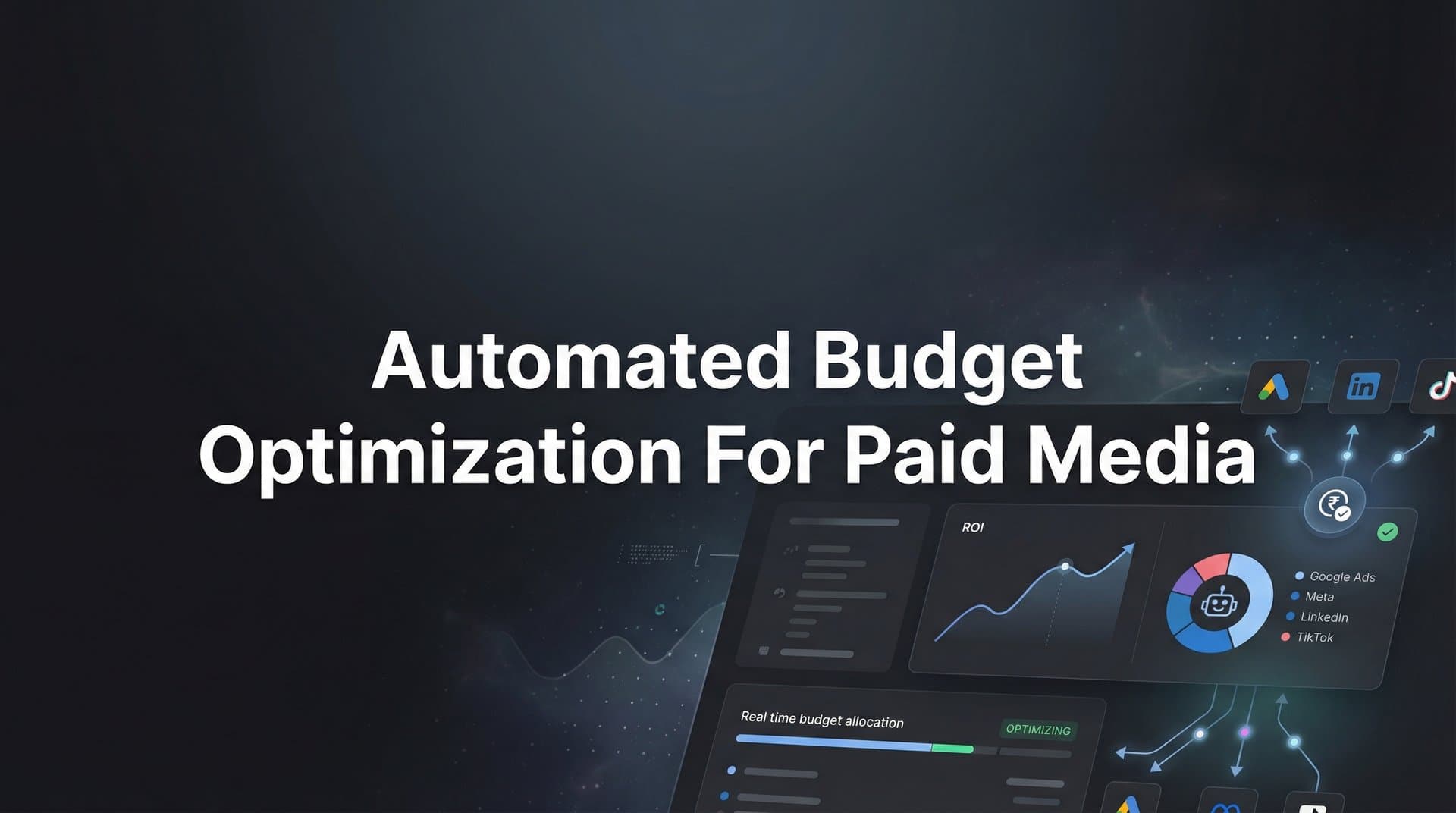
Automated budget optimization changes this entire equation. Instead of manually shuffling dollars between campaigns after reviewing yesterday's performance, AI-driven systems make those decisions in real-time—reacting to conversion signals, engagement patterns, and cost fluctuations as they happen. The result? Your budget flows to high-performing opportunities before they cool off, and away from underperformers before they drain your monthly allocation.
The Mechanics Behind Smart Budget Allocation
At its core, automated budget optimization works by continuously analyzing performance signals across your campaigns and making micro-adjustments to spending based on what the data reveals. Think of it as having a tireless analyst watching every conversion, click, and cost-per-action across all your campaigns simultaneously, then instantly moving budget toward whatever's working best right now.
The system monitors multiple performance indicators at once: conversion rates, cost per acquisition, engagement metrics, revenue attribution, and even time-of-day patterns. When a campaign starts converting at a rate that exceeds your target ROAS, the algorithm recognizes this opportunity and increases budget allocation. Conversely, when performance dips below acceptable thresholds, spending automatically scales back before you waste significant budget.
Modern systems use machine learning to go beyond simple if-then rules. Rather than just reacting to what happened, they predict what's likely to happen next. The algorithms learn from historical patterns—recognizing that certain campaigns perform better on weekends, or that specific ad creatives tend to fatigue after three days of heavy spend, or that particular audience segments convert more efficiently during certain hours.
This predictive capability is what separates AI-driven optimization from basic rule-based automation. A rule-based system might say "if CPA exceeds $50, reduce budget by 20%." That's useful, but it's reactive and rigid. An AI system analyzes hundreds of variables simultaneously and recognizes patterns: "This campaign's CPA is currently $55, but based on historical performance at this time of day and these engagement signals, it's likely to improve within the next two hours. Maintain current spend and monitor closely."
The technical foundation involves continuous data ingestion from all connected ad platforms, real-time calculation of performance metrics against your defined goals, and automated API calls that adjust campaign budgets within minutes of detecting significant performance shifts. The speed advantage here is massive—while you're in a meeting or reviewing last week's performance, the system is making dozens of optimization decisions based on what's happening right now.
Why Manual Budget Management Falls Short at Scale
Let's be honest about the limitations we're working with as human marketers. You can effectively monitor maybe three to five campaigns at once with genuine attention to detail. Beyond that, you're skimming dashboards and hoping nothing breaks catastrophically before you notice.
The cognitive load of managing budgets across multiple platforms is simply unsustainable at scale. Each platform has its own interface, reporting quirks, and optimization levers. Meta's campaign budget optimization works differently than Google's shared budgets, which work differently than TikTok's budget pacing. You're context-switching constantly, trying to maintain a coherent strategy across fragmented systems.
But the real killer is time lag. By the time you log into Meta Ads Manager on Tuesday morning and notice that Sunday's campaign performance was exceptional, that window of opportunity has likely closed. Consumer behavior shifts, auction dynamics change, and the conditions that made Sunday profitable are already different. You're always making decisions based on historical data, reacting to what happened rather than optimizing for what's happening.
This delay compounds when you're managing cross-platform budgets. Maybe your Meta campaigns crushed it yesterday while Google Search underperformed. Should you shift budget from Google to Meta? That analysis takes time—you need to pull reports, compare performance, consider whether the difference is meaningful or just normal variance, then actually implement the change. By the time you've done all that, the performance landscape has shifted again.
There's also the blind spot problem. When you're managing platforms in isolation, you miss the bigger picture of how they work together. A customer might see your Meta ad, research on Google, then convert through a direct visit. If you're only looking at last-click attribution within each platform, you might conclude that Meta is underperforming and cut its budget—not realizing it's actually driving valuable awareness that converts through other channels.
Manual management also introduces inconsistency. Your Tuesday morning optimization session might be thorough and data-driven. Your Friday afternoon review when you're mentally checked out? Probably less rigorous. Automated systems don't have good days and bad days—they apply the same analytical rigor to every decision, every time.
Core Capabilities of Modern Budget Optimization Tools
The most powerful budget optimization platforms operate across three key dimensions: real-time responsiveness, cross-channel intelligence, and predictive analytics. Understanding how these capabilities work together helps you evaluate tools and implement them effectively.
Real-Time Bid and Budget Adjustments: Modern tools connect directly to ad platform APIs, enabling them to adjust campaign budgets and bid strategies within minutes of detecting performance changes. When a campaign's conversion rate spikes, the system can immediately increase daily budget allocation or raise bid caps to capitalize on the opportunity. When costs rise above acceptable thresholds, spending scales back automatically—protecting your budget without requiring manual intervention.
This real-time capability extends to intraday patterns. The system learns that your e-commerce campaigns convert best between 7-9 PM, so it automatically increases budget allocation during those windows and reduces spend during lower-performing hours. You're not just optimizing day-to-day; you're optimizing hour-by-hour based on when your audience is most likely to convert.
Cross-Channel Budget Shifting: The real power emerges when optimization tools can move budget between platforms, not just between campaigns on the same platform. This requires unified performance tracking that shows you which channels are driving the best results at any given moment.
Imagine your Google Search campaigns are delivering a 4.5x ROAS today while Meta sits at 2.8x. A sophisticated automated budget reallocation system recognizes this disparity and suggests reallocating budget from Meta to Google to maximize overall return. The next day, if those numbers flip, the system adapts accordingly. You're always funneling spend toward whatever's working best right now, across your entire paid media ecosystem.
This cross-platform intelligence also helps you avoid platform-specific blind spots. Some tools can identify when a particular platform is experiencing auction pressure (higher CPMs, more competition) and temporarily shift budget to platforms with better efficiency until conditions improve.
Predictive Performance Forecasting: The most advanced systems don't just react to current performance—they predict future outcomes before you commit additional spend. Using machine learning models trained on your historical data, these tools forecast how campaigns are likely to perform with increased budget allocation.
This predictive capability prevents a common mistake: over-investing in a campaign that's already reaching its natural ceiling. Just because a campaign is performing well at $500/day doesn't mean it will maintain that efficiency at $2,000/day. Predictive models help you identify the optimal budget level for each campaign—the point where adding more spend starts delivering diminishing returns.
The system can also forecast when campaigns are likely to fatigue, suggesting creative refreshes or audience expansions before performance degrades. This proactive approach keeps your campaigns healthy rather than constantly playing catch-up with declining metrics.
The Attribution Foundation: Why Accurate Data Drives Better Automation
Here's the uncomfortable truth about automated budget optimization: if you're feeding the system bad data, you're just automating bad decisions at scale. The quality of your attribution directly determines the quality of your automated outcomes.
Think about what happens when your tracking is incomplete or inaccurate. Your optimization tool sees that Campaign A generated 50 conversions while Campaign B generated 30, so it allocates more budget to Campaign A. But what if Campaign B actually drives high-quality awareness that leads to conversions days later through other channels? Your automation system doesn't see that full picture—it optimizes based on incomplete data, potentially starving campaigns that are actually valuable to your overall marketing mix.
This is why multi-touch attribution becomes essential for effective automation. You need to see the entire customer journey from first interaction to final conversion. When someone sees your Meta ad on Monday, clicks your Google ad on Wednesday, and converts via direct traffic on Friday, your optimization system needs to understand that all three touchpoints played a role. Without that visibility, you're optimizing toward misleading signals.
Server-side tracking has become particularly critical as browser-based tracking faces increasing limitations. iOS privacy changes, cookie restrictions, and ad blockers create gaps in conversion data that undermine optimization decisions. When your tracking only captures 60% of actual conversions, your automation system is making budget decisions based on an incomplete picture of reality.
Server-side tracking solves this by capturing conversion events directly on your server and sending them to ad platforms through APIs, bypassing browser limitations entirely. This creates a more complete, accurate data foundation that automation tools can trust. When Cometly tracks the full customer journey and feeds enriched conversion data back to your ad platforms, both platform-native optimization and third-party budget tools work more effectively.
The data quality issue extends beyond just conversion tracking. Your automation system needs accurate revenue attribution, not just conversion counts. A campaign might generate lots of conversions, but if those customers have low lifetime value or high return rates, it's not actually your best performer. Tools that connect conversion data to revenue outcomes enable optimization toward profitability, not just volume.
This is where unified attribution platforms provide the foundation for effective automation. By connecting your ad platforms, CRM, and website tracking into a single source of truth, you give optimization tools the complete, accurate data they need to make intelligent budget decisions.
Implementing Automated Budget Optimization: A Practical Framework
Successfully implementing automated budget optimization isn't about flipping a switch and letting algorithms run wild. It requires deliberate setup, clear objectives, and appropriate guardrails that keep automation aligned with your business goals.
Step 1: Establish Accurate Conversion Tracking and Attribution
Before you automate anything, you need reliable data. Start by auditing your current tracking setup across all platforms. Verify that conversion events fire correctly, that they're being attributed to the right campaigns, and that you're capturing the full customer journey—not just last-click interactions.
Implement server-side tracking to ensure data completeness despite browser limitations. Connect your CRM to your attribution platform so you can track conversions beyond the initial purchase—including revenue, customer lifetime value, and other business outcomes that matter to your actual profitability.
Test your tracking thoroughly before enabling automation. Run campaigns manually for at least two weeks while monitoring data quality. Verify that the conversions you see in your attribution platform match what you see in your ad platforms and your actual business systems. Any discrepancies need to be resolved before automation begins making decisions based on that data.
Step 2: Define Clear Optimization Goals and Constraints
Automation systems need explicit targets to optimize toward. Define your key performance indicators: target ROAS, maximum acceptable CPA, minimum conversion volume, or revenue thresholds. Be specific—"improve performance" is too vague, but "maintain 3.5x ROAS while scaling to $10,000 daily spend" gives the system clear parameters.
Set campaign-level and account-level constraints that prevent automation from making decisions you'd consider unacceptable. Establish minimum and maximum daily budgets for individual campaigns so the system can't accidentally allocate your entire monthly budget to a single ad set. Define spending caps that ensure budget gets distributed across multiple channels even if one platform is temporarily outperforming others.
Consider time-based rules for certain campaigns. Maybe you want to maintain consistent presence in branded search regardless of efficiency, or you need to ensure certain product categories always receive minimum budget allocation. These strategic considerations should be built into your automation parameters rather than left to pure algorithmic optimization.
Step 3: Start Conservative, Then Scale Gradually
Don't immediately hand full budget control to automation. Begin with limited authority—perhaps allowing the system to adjust budgets by up to 20% daily while you monitor results. This gives you time to verify that optimization decisions align with your expectations and business logic.
Run automated optimization in parallel with manual management for the first week or two. Let the system make recommendations and implement changes, but review every decision and compare outcomes against what you would have done manually. This validation period builds confidence and helps you identify any adjustments needed to your optimization parameters.
As results prove reliable, gradually increase the system's authority. Expand budget adjustment ranges, add more campaigns to automated management, and reduce the frequency of manual reviews. The goal is reaching a state where automation handles day-to-day optimization while you focus on strategy, creative development, and high-level performance analysis.
Establish clear monitoring protocols from day one. Set up alerts that notify you when significant changes occur—like campaigns being paused due to poor performance, budget being shifted dramatically between channels, or spending approaching defined limits. You want to maintain oversight without micromanaging every decision.
Measuring Success and Refining Your Approach
The true value of automated budget optimization becomes clear when you measure it against realistic alternatives. The question isn't whether automation is perfect—it's whether it outperforms what you could accomplish manually with the same time investment.
Track Incremental ROAS Lift: Compare your overall return on ad spend during automated periods against previous manual management. The meaningful metric is incremental improvement—how much better are you performing now versus before implementing automation? Many marketers see ROAS improvements of 15-30% simply from faster response to performance changes and better cross-channel budget allocation.
Measure Time Savings: Calculate how many hours per week you previously spent on budget management tasks—reviewing performance, making allocation decisions, implementing changes across platforms. This time now becomes available for higher-value activities like strategy development, creative testing, and audience research. For marketing teams, this efficiency gain often justifies automation investment even before considering performance improvements.
Evaluate Budget Utilization Efficiency: Track how consistently you're hitting your intended spend levels. Manual management often results in either overspending (when you're not monitoring closely enough) or underspending (when you're too conservative or don't react quickly to opportunities). Automated systems typically achieve 95%+ budget utilization while maintaining performance targets—you're actually deploying the capital you allocated rather than leaving money on the table.
Compare automated decisions against counterfactual scenarios. When the system shifts budget from Channel A to Channel B, analyze whether that decision improved overall outcomes versus maintaining the previous allocation. This requires some analytical rigor, but it helps you understand whether automation is making genuinely better decisions or just different ones.
Use AI-powered recommendations to identify scaling opportunities you might have missed manually. Modern platforms analyze your performance data to suggest campaigns that could profitably handle increased budget, audiences worth expanding, or timing patterns worth exploiting. These insights help you continuously improve your strategy rather than just maintaining current performance.
Review your optimization parameters quarterly. As your business evolves, your target metrics should evolve too. Maybe your acceptable CPA increases because you've improved customer lifetime value, or your ROAS targets shift because you're prioritizing growth over immediate profitability. Keep your automation goals aligned with current business objectives.
Making Automation Work for Your Marketing Strategy
Automated budget optimization represents a fundamental shift in how digital marketers operate. You're moving from reactive budget management—reviewing yesterday's data and making adjustments for tomorrow—to proactive optimization that responds to opportunities and challenges in real-time.
But here's what separates marketers who get transformative results from those who see marginal improvements: the quality of data feeding their automation systems. When you combine accurate multi-touch attribution with AI-powered optimization, you create a competitive advantage that compounds over time. You're not just automating budget decisions—you're automating intelligent budget decisions based on complete, accurate understanding of what's actually driving revenue.
The human role doesn't disappear; it evolves. You shift from making hundreds of tactical budget adjustments to setting strategic direction, defining optimization goals, and analyzing results at a higher level. You focus on the questions automation can't answer: Which new channels should we test? What creative approaches resonate with our audience? How should our marketing strategy adapt to changing business priorities?
This is where platforms like Cometly become essential. By capturing every touchpoint across your customer journey and feeding enriched conversion data back to your ad platforms, Cometly provides the attribution foundation that makes automation truly effective. The AI recommendations help you identify scaling opportunities, the unified dashboard shows you cross-platform performance at a glance, and the server-side tracking ensures you're optimizing based on complete data rather than fragmented signals.
Ready to elevate your marketing game with precision and confidence? Discover how Cometly's AI-driven recommendations can transform your ad strategy—Get your free demo today and start capturing every touchpoint to maximize your conversions.