You're spending thousands—maybe millions—on ads every month. Your dashboards show clicks, impressions, and conversions. But here's the question that keeps you up at night: which campaigns are actually driving revenue?
If you can't answer that with confidence, you're not alone. The digital advertising landscape has fundamentally shifted. iOS privacy updates block tracking by default. Third-party cookies are disappearing. Customer journeys now span multiple devices, platforms, and weeks of touchpoints before a single conversion happens.
Traditional conversion tracking methods weren't built for this complexity. They miss conversions, misattribute revenue, and leave you optimizing campaigns based on incomplete data. The result? You're scaling the wrong ads, cutting budgets from your best performers, and wondering why your ROI keeps declining despite doing "everything right."
The marketers winning in 2026 aren't just tracking more data—they're tracking smarter. They've moved beyond basic pixel implementations to strategies that capture the complete customer journey, connect ad clicks to actual revenue, and feed high-quality signals back to ad platforms for better optimization.
This guide breaks down seven conversion tracking strategies that separate amateur campaigns from revenue-generating machines. These aren't theoretical concepts—they're practical approaches you can implement to finally see which ads deserve more budget and which ones are burning cash.
Let's start with the foundation that makes everything else possible.
1. Implement Server-Side Tracking
The Challenge It Solves
Browser-based tracking pixels are dying a slow, painful death. Ad blockers strip them out. Privacy settings block them by default. Safari's Intelligent Tracking Prevention limits their lifespan to just 24 hours. Even when they do fire, they're increasingly unreliable.
The result? You're losing visibility into 20-40% of your conversions before you even know they happened. Your attribution data is incomplete, your optimization decisions are based on partial information, and your ad platforms are learning from a fraction of the actual conversion events.
The Strategy Explained
Server-side tracking moves conversion tracking from the browser to your server. Instead of relying on JavaScript pixels that run in your visitor's browser, your server sends conversion data directly to ad platforms through their APIs.
Think of it like this: browser tracking is like asking someone to deliver a message while they're being followed by people trying to stop them. Server-side tracking is like calling directly—no intermediaries, no blockers, no privacy restrictions getting in the way.
Because the data flows server-to-server, it bypasses ad blockers entirely. It's not affected by browser privacy settings. And it captures conversions that happen offline or in your CRM, not just on your website.
Implementation Steps
1. Set up Conversion APIs with your primary ad platforms (Meta's Conversions API, Google's Enhanced Conversions, TikTok Events API). These are the server-side equivalents of their browser pixels.
2. Configure your tracking to send conversion events from your server to these APIs whenever a valuable action occurs—purchases, form submissions, phone calls, demo bookings.
3. Include user identifiers (hashed email addresses, phone numbers, or platform-specific IDs) with each conversion event so ad platforms can match the conversion back to the original ad click.
4. Implement deduplication logic to prevent double-counting when both browser pixels and server-side tracking fire for the same conversion.
5. Test your implementation by triggering test conversions and verifying they appear in your ad platform's event manager within minutes.
Pro Tips
Don't completely remove your browser pixels when you implement server-side tracking. Run both in parallel—the browser pixel acts as a backup for conversions your server might miss, while server-side tracking captures what the pixel can't see. The combination gives you the most complete data set possible.
2. Define Revenue-Focused Conversion Events
The Challenge It Solves
Many marketers track everything that moves. Page views, button clicks, video plays, newsletter signups. Their dashboards overflow with "conversions" that don't actually correlate with revenue.
The problem isn't collecting too much data—it's optimizing for the wrong signals. When you tell ad platforms to optimize for newsletter signups, they'll find you people who love signing up for newsletters. But those people might never buy anything.
The Strategy Explained
Revenue-focused conversion events are actions that directly predict or represent actual revenue. For e-commerce, that's purchases. For B2B SaaS, it might be demo requests from qualified companies or trial signups that include payment information.
The key is working backward from revenue. Look at your closed deals from the past six months. What actions did those customers take before they bought? Those actions become your primary conversion events.
This doesn't mean ignoring top-of-funnel metrics entirely. It means creating a hierarchy: primary conversions that directly drive revenue, and secondary conversions that indicate interest but don't guarantee value.
Implementation Steps
1. Analyze your customer data to identify which actions correlate most strongly with eventual purchases. Look for patterns in your highest-value customers' journeys.
2. Define 2-3 primary conversion events that represent real revenue potential. For e-commerce: purchases and add-to-carts from high-intent products. For B2B: demo bookings, qualified lead form submissions, or free trial starts.
3. Configure your ad platforms to optimize primarily for these high-value events. Set them as your campaign conversion goals and assign them the highest value in your conversion tracking.
4. Create secondary conversion events for earlier-funnel actions, but assign them lower values or use them only for audience building, not campaign optimization.
5. Review conversion performance monthly. If an event stops correlating with revenue, stop optimizing for it.
Pro Tips
Assign actual dollar values to your conversion events based on historical data. If demo requests convert to customers at 20% and your average customer value is $5,000, assign each demo request a $1,000 value. This lets ad platforms optimize for revenue, not just conversion volume.
3. Connect Your CRM for Full Journey Visibility
The Challenge It Solves
Your website tells you someone filled out a form. Your CRM tells you they became a $50,000 customer three months later. But your ad platform? It has no idea those two events are connected.
This disconnect is catastrophic for B2B marketers and anyone with a sales cycle longer than a few days. You're optimizing campaigns based on lead volume when you should be optimizing for revenue. You're cutting budget from campaigns that drive your best customers because you can't see the full picture.
The Strategy Explained
CRM integration connects your customer relationship management system to your attribution platform, creating a closed loop from ad click through to closed deal. When someone clicks your ad, fills out a form, talks to sales, and eventually becomes a customer, every step is tracked and attributed back to the original marketing source.
This visibility transforms your decision-making. Instead of asking "which campaign generated the most leads?" you can ask "which campaign generated the most revenue?" Those are very different questions with very different answers.
Companies that implement CRM integration typically discover that their highest-volume lead sources aren't their highest-revenue sources. The campaigns they were about to cut were actually their best performers.
Implementation Steps
1. Choose an attribution platform that integrates with your CRM (Salesforce, HubSpot, Pipedrive, or whatever system holds your customer data). The platform needs to sync both ways—pulling customer data and pushing attribution data back.
2. Map your customer journey stages in the CRM to your attribution model. Define what constitutes a Marketing Qualified Lead, Sales Qualified Lead, Opportunity, and Closed Won deal.
3. Configure the integration to pass key data points: deal value, close date, product purchased, and customer lifetime value if available. This data becomes the foundation for revenue attribution.
4. Set up automated syncing so new deals and status changes flow into your attribution platform in near real-time. Stale data leads to stale decisions.
5. Create revenue-based reports that show which campaigns, channels, and individual ads drive not just conversions, but actual closed revenue and customer acquisition cost.
Pro Tips
Don't wait until deals close to analyze performance. Track leading indicators like SQL conversion rates and opportunity values by campaign source. This gives you faster feedback loops while still maintaining the connection to revenue outcomes.
4. Use Multi-Touch Attribution Models
The Challenge It Solves
Last-click attribution is a lie. It tells you that the bottom-funnel retargeting ad that someone clicked right before purchasing deserves 100% of the credit. Meanwhile, the awareness campaign that introduced them to your brand three weeks earlier gets zero credit.
This creates a vicious cycle. You over-invest in bottom-funnel tactics because they get all the attribution. Your top-funnel campaigns look ineffective, so you cut their budgets. Then you wonder why your retargeting audiences are shrinking and your cost per acquisition is climbing.
The Strategy Explained
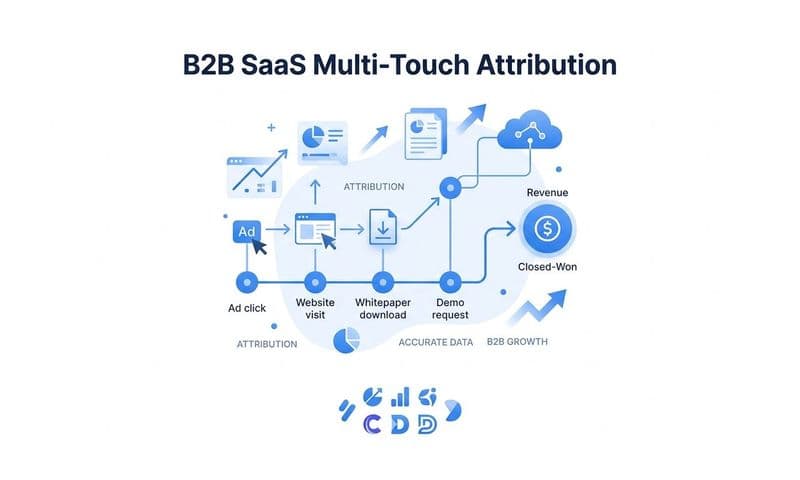
Multi-touch attribution distributes credit across all the touchpoints in a customer's journey. If someone saw your Facebook ad, clicked a Google search ad, visited from an email, and then converted through a retargeting ad, all four touchpoints receive credit.
Different models distribute credit differently. Linear attribution gives equal credit to every touchpoint. Time-decay gives more credit to recent touchpoints. U-shaped gives the most credit to the first and last touchpoints. The right model depends on your business, but any multi-touch model is better than last-click.
This approach reveals the true performance of your full-funnel strategy. You can finally see which awareness campaigns are actually starting customer journeys, which middle-funnel content is moving people forward, and which closing tactics are sealing the deal.
Implementation Steps
1. Implement tracking that captures all touchpoints in the customer journey, not just the last one. This requires consistent UTM parameters across all campaigns and a platform that stores the full interaction history.
2. Choose an attribution model that matches your sales cycle. Short cycles (e-commerce) often work well with time-decay. Longer cycles (B2B) might benefit from U-shaped or W-shaped models that emphasize key conversion moments.
3. Run your historical data through multiple attribution models to see how credit distribution changes. Compare last-click, first-click, linear, and time-decay to understand which campaigns are being over- or under-credited.
4. Make budget decisions based on your chosen multi-touch model, not default last-click reporting. Shift investment toward campaigns that consistently appear early in high-value customer journeys.
5. Review attribution model performance quarterly. As your marketing mix evolves, the model that made sense six months ago might need adjustment.
Pro Tips
Don't get paralyzed trying to find the "perfect" attribution model. Start with linear or time-decay, then refine based on what you learn. The goal isn't perfect precision—it's better decisions than last-click attribution would give you.
5. Feed Enriched Data Back to Ad Platforms
The Challenge It Solves
Ad platform algorithms are powerful, but they're only as good as the data they receive. When you send basic conversion signals—"someone converted, that's all I know"—the algorithm can't distinguish between a $10 customer and a $10,000 customer.
This leads to optimization drift. The algorithm finds more people like your converters, but it doesn't know which converters actually generated profit. You get more conversions, but your revenue stays flat or declines because you're attracting low-value customers.
For a deeper dive into this space, see our ad optimization software comparison guide.
The Strategy Explained
Enriched data means sending detailed, valuable information back to ad platforms through their Conversion APIs. Instead of just "purchase," you send "purchase with $500 value from a customer in the enterprise segment who's likely to have a $5,000 lifetime value."
This enrichment comes from combining your website conversion data with information from your CRM, customer database, and attribution platform. You're teaching the ad algorithm not just who converts, but who converts profitably.
When ad platforms receive this enriched data, their algorithms can optimize for the outcomes you actually care about. They learn to find more high-value customers and fewer low-value ones. Your cost per acquisition might increase slightly, but your revenue per acquisition increases dramatically.
Implementation Steps
1. Identify the data points that predict customer value in your business. This might include purchase amount, product category, customer segment, lead score, or qualification criteria from your CRM.
2. Configure your server-side tracking to include these data points with every conversion event sent to ad platforms. Most Conversion APIs support custom parameters for exactly this purpose.
3. Send value data with every conversion. For e-commerce, send actual purchase values. For lead generation, send your calculated lead value based on historical conversion rates and average deal sizes.
4. Implement offline conversion tracking to send CRM events back to ad platforms. When a lead becomes a customer weeks after the initial conversion, send that signal back so the algorithm knows that ad click led to revenue.
5. Use value-based optimization in your campaign settings. Tell ad platforms to optimize for conversion value, not just conversion volume, so they actively seek higher-value customers.
Pro Tips
Start sending enriched data even if you're not ready to optimize for it yet. Ad platforms need time to collect this data before their algorithms can use it effectively. Build the data foundation now, then switch to value-based optimization once you have enough conversion history.
6. Implement Cross-Platform Unified Tracking
The Challenge It Solves
You're running ads on Meta, Google, LinkedIn, and TikTok. Each platform has its own tracking pixel, its own attribution window, and its own way of counting conversions. When you try to compare performance, you're comparing apples to oranges to pineapples.
Meta might claim 100 conversions with a 7-day click, 1-day view window. Google claims 85 conversions with a 30-day click window. LinkedIn claims 50 conversions with a 90-day window. Which platform is actually performing better? You have no idea because they're measuring different things.
The Strategy Explained
Cross-platform unified tracking means using a single source of truth for conversion tracking across all your ad platforms. Instead of relying on each platform's native tracking, you implement a centralized attribution system that tracks conversions consistently regardless of which platform drove the click.
This approach uses a consistent methodology—same attribution window, same conversion definitions, same deduplication logic—across every channel. Now when you compare Meta to Google, you're actually comparing performance, not measurement differences.
You still send data to each platform's native tracking for optimization purposes, but you make budget decisions based on your unified tracking data. This separation lets ad algorithms optimize effectively while giving you accurate cross-platform insights.
Implementation Steps
1. Choose a centralized attribution platform that can track conversions from all your ad sources. This becomes your single source of truth for performance reporting and budget allocation decisions.
2. Implement consistent UTM parameters across all platforms. Use the same naming conventions, the same parameter structure, and the same campaign taxonomy so conversions can be properly attributed regardless of source.
3. Define standard attribution windows that apply to all platforms in your reporting. A common approach is 7-day click, 1-day view, but choose windows that match your typical customer journey length.
4. Set up deduplication rules so that when multiple platforms claim the same conversion, your unified tracking assigns it to a single source based on your chosen attribution model.
5. Create cross-platform performance reports that show true apples-to-apples comparisons. Track metrics like cost per acquisition, return on ad spend, and customer acquisition cost using your unified data, not platform-reported numbers.
Pro Tips
Keep running native platform tracking in parallel with your unified tracking. Use unified tracking for strategic decisions and budget allocation, but let each platform's native tracking guide its own optimization algorithm. This hybrid approach gives you accurate insights while maintaining strong campaign performance.
7. Audit and Validate Tracking Regularly
The Challenge It Solves
Your tracking was working perfectly last month. Then your developer pushed a website update. Or your marketing team launched a new landing page. Or a browser update changed how cookies work. And suddenly, silently, your conversion tracking breaks.
The worst part? You might not notice for weeks. Your dashboards still show data—just less of it. Your campaigns seem to be performing worse, so you make budget decisions based on incomplete information. By the time you discover the tracking issue, you've already wasted thousands of dollars optimizing based on bad data.
The Strategy Explained
Regular tracking audits are systematic checks to verify that your conversion tracking is capturing data accurately and completely. This isn't a one-time setup task—it's an ongoing maintenance process that catches issues before they corrupt your decision-making.
Think of it like checking your car's oil. You don't wait until the engine seizes to see if there's a problem. You check regularly, catch small issues early, and avoid catastrophic failures. Tracking audits work the same way.
These audits involve testing conversion flows, comparing data sources, checking for tracking gaps, and validating that the numbers in your attribution platform match the numbers in your CRM and ad platforms. When discrepancies appear, you investigate immediately.
Implementation Steps
1. Create a weekly tracking validation checklist. Test your primary conversion flows by completing them yourself and verifying the conversions appear in all your tracking systems within the expected timeframe.
2. Set up automated alerts for tracking anomalies. Configure notifications when conversion volume drops more than 20% day-over-day or when key conversion events stop firing entirely.
3. Compare conversion counts across systems monthly. Pull conversion data from your attribution platform, CRM, and ad platforms. Investigate any discrepancies larger than 10-15% (some variance is normal due to different attribution methodologies).
4. Review your UTM parameter implementation quarterly. Check recent campaigns to ensure marketing teams are using consistent, correct parameters. One typo in a UTM tag can make an entire campaign untrackable.
5. Document your tracking setup completely. When issues arise, you need to know exactly how everything should work to identify what's broken. Keep updated diagrams of your tracking architecture and pixel implementations.
Pro Tips
Build tracking validation into your deployment process. Before any website update goes live, someone should test all conversion flows and verify tracking still works. This five-minute check can prevent weeks of corrupted data and bad optimization decisions.
Your Implementation Roadmap
You now have seven strategies that separate amateur conversion tracking from revenue-generating precision. But where do you start?
Begin with server-side tracking. This is your foundation. Without it, you're building on sand—privacy restrictions and ad blockers will undermine everything else you try to implement. Get server-side tracking working with your primary ad platforms first.
Next, define your revenue-focused conversion events. Stop optimizing for vanity metrics and start tracking actions that actually predict revenue. This shift alone will transform your campaign performance within weeks.
Then layer in CRM integration and multi-touch attribution. These give you the visibility to understand your full customer journey and make budget decisions based on revenue, not just lead volume. Companies that implement both typically see their true cost per acquisition drop by 20-30% as they stop over-investing in low-value channels.
The remaining strategies—enriched data, unified tracking, and regular audits—are force multipliers. They make everything else work better and protect your data quality over time.
Here's the reality: your competitors are implementing these strategies right now. The marketers who master conversion tracking in 2026 will have an unfair advantage. They'll know exactly which campaigns drive revenue while their competitors are still guessing. They'll optimize with confidence while others waste budget on hunches.
The best conversion tracking isn't just about collecting data. It's about connecting that data to revenue decisions, feeding it back to ad platforms for better optimization, and maintaining its accuracy over time. It's about finally answering that question that keeps you up at night: which campaigns are actually driving revenue?
Ready to elevate your marketing game with precision and confidence? Discover how Cometly's AI-driven recommendations can transform your ad strategy—Get your free demo today and start capturing every touchpoint to maximize your conversions.