
Every click costs money, but not every click creates customers. The gap between ad spend and actual revenue often comes down to one critical capability: understanding which touchpoints truly drive conversions.
For digital marketers managing campaigns across Meta, Google, TikTok, and beyond, fragmented data creates blind spots that drain budgets and obscure winning strategies. You're making decisions with incomplete information, wondering why your reported conversions don't match your actual revenue.
Conversion tracking analytics bridges this gap by connecting marketing activities to measurable business outcomes. But basic pixel tracking no longer cuts it in an era of privacy restrictions, cross-device journeys, and multi-touch customer paths.
This guide delivers seven actionable strategies to transform your conversion tracking from a data collection exercise into a revenue optimization engine. Whether you're struggling with attribution accuracy, iOS tracking limitations, or simply making sense of cross-platform performance, these approaches will help you see exactly what's working—and scale it with confidence.
1. Implement Server-Side Tracking
The Challenge It Solves
Browser-based tracking has become increasingly unreliable. Ad blockers strip pixels before they fire. iOS privacy settings block third-party cookies. Users clear their browsing data regularly. The result? Your conversion tracking reports show a fraction of actual conversions, leaving you blind to what's truly driving results.
Traditional pixel tracking relies on JavaScript code that runs in the user's browser. When that code gets blocked or fails to execute, the conversion never gets recorded—even though the customer completed the action.
The Strategy Explained
Server-side tracking bypasses browser limitations entirely by sending conversion data directly from your server infrastructure to ad platforms and analytics tools. When a user completes a conversion, your server captures that event and transmits it through a direct API connection.
Think of it like this: browser tracking is like sending a letter through multiple post offices where it might get lost. Server-side tracking is a direct phone call—the message gets through regardless of external interference.
This approach captures conversions that browser-based pixels miss, giving you a more complete picture of campaign performance. You're no longer guessing which ads drove results based on incomplete data.
Implementation Steps
1. Set up a server-side tracking infrastructure using a platform like Cometly that handles the technical complexity of connecting your server to multiple ad platforms simultaneously.
2. Configure conversion events on your server to fire when users complete key actions—form submissions, purchases, sign-ups—ensuring each event includes necessary parameters like conversion value and user identifiers.
3. Test your implementation by completing test conversions and verifying they appear in both your analytics dashboard and ad platform reporting, comparing server-side data against any remaining browser pixels to identify the tracking gap you were missing.
Pro Tips
Start with your highest-value conversion events first rather than trying to track everything at once. Focus on purchases or qualified leads where accurate tracking has the biggest impact on budget decisions. Once you've validated those core events, expand to secondary actions.
2. Connect Your CRM for Revenue Attribution
The Challenge It Solves
Your ad platforms show hundreds of leads, but your sales team closes only a fraction of them. Without connecting marketing data to actual revenue, you're optimizing for volume instead of value. You might be scaling campaigns that generate low-quality leads while underfunding channels that bring in your best customers.
This disconnect becomes especially painful in B2B marketing or any business with a sales process. The lead that converts today might have clicked your ad three weeks ago—a connection that disappears without proper attribution infrastructure.
The Strategy Explained
CRM integration closes the loop between marketing activities and revenue outcomes. By connecting your customer relationship management system to your conversion tracking, you can trace closed deals back to their original marketing source.
When a lead becomes a customer, that revenue data flows back into your attribution model. Suddenly you're not just seeing which ads generated leads—you're seeing which ads generated paying customers, and how much revenue each marketing channel actually produced.
This visibility transforms budget allocation decisions. Instead of guessing which campaigns drive quality, you have definitive data showing revenue per ad dollar spent across every channel.
Implementation Steps
1. Integrate your CRM system with your conversion tracking platform using native integrations or API connections that sync customer data bidirectionally, ensuring marketing identifiers persist through the sales process.
2. Map CRM stages to conversion events so that key milestones—qualified lead, opportunity created, deal closed—trigger tracking events that credit the original marketing touchpoints.
3. Configure revenue value tracking to pass deal amounts back to your attribution system, enabling true ROI calculations that show not just conversion rates but actual dollars returned per marketing dollar invested.
Pro Tips
Don't wait for perfect data to start. Even if your historical data is incomplete, begin tracking CRM conversions now so you're building a revenue attribution dataset for future decisions. The sooner you start, the sooner you'll have statistically significant insights about which channels drive profitable growth.
3. Adopt Multi-Touch Attribution
The Challenge It Solves
Last-click attribution gives all credit to the final touchpoint before conversion, completely ignoring the awareness and consideration channels that introduced customers to your brand. Your top-of-funnel campaigns appear to perform poorly even though they're essential for generating the demand that bottom-funnel campaigns convert.
This creates a dangerous optimization trap. You cut budgets from awareness channels because they don't show direct conversions, then wonder why your retargeting campaigns stop performing—they've lost the audience pipeline that fed them.
The Strategy Explained
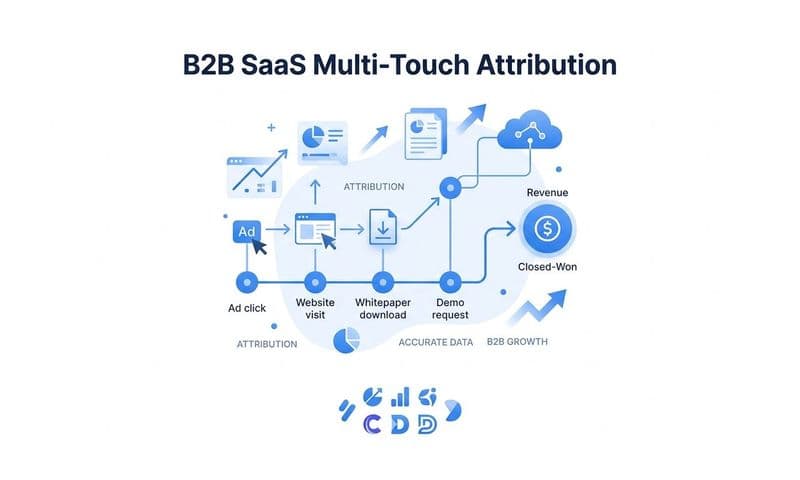
Multi-touch attribution distributes conversion credit across all touchpoints in the customer journey. Instead of giving 100% credit to the last click, it recognizes that customers interact with multiple channels before converting.
Different attribution models allocate credit differently. Linear attribution splits credit equally across all touchpoints. Time-decay gives more credit to recent interactions. Position-based models emphasize first and last touch while acknowledging middle interactions. The right model depends on your specific customer journey patterns.
With multi-touch visibility, you can see how awareness channels like display ads or social media content contribute to conversions that ultimately happen through search or direct visits. This prevents you from accidentally defunding the channels that fill your pipeline.
Implementation Steps
1. Enable cross-channel tracking that captures all customer interactions across paid ads, organic channels, email, and direct visits, creating a unified customer journey map that connects anonymous visitors to identified leads.
2. Compare multiple attribution models side-by-side to understand how credit distribution changes your channel performance assessment, revealing which channels drive awareness versus conversion and how they work together.
3. Adjust budget allocation based on multi-touch insights rather than last-click data alone, recognizing that top-funnel channels deserve investment even when they don't show direct last-click conversions.
Pro Tips
Use position-based attribution as a starting point if you're new to multi-touch models. It balances recognition of first-touch awareness and last-touch conversion while acknowledging the nurturing journey in between. As you gather more data, you can refine your model based on actual customer journey patterns.
4. Feed Enriched Data Back to Ad Platforms
The Challenge It Solves
Ad platform algorithms optimize based on the conversion signals you send them. If you only report basic lead events without quality indicators or revenue values, the algorithms treat all conversions equally—optimizing for volume rather than value. You end up with more leads, but not necessarily better leads.
This becomes especially problematic when offline conversions happen outside the platform's visibility. Meta and Google have no idea which leads turned into customers unless you tell them, so their machine learning continues optimizing for patterns that generate leads, not patterns that generate revenue.
The Strategy Explained
Conversion API implementations let you send enriched conversion data back to ad platforms, including offline events, revenue values, and customer lifetime value signals. This feedback loop dramatically improves algorithmic targeting and optimization.
When you tell Meta that certain leads became $10,000 customers while others never converted, its algorithm learns to find more people who match your high-value customer profile. The platform's machine learning gets smarter because you're giving it better training data.
This creates a compounding effect. Better data leads to better targeting, which generates higher-quality conversions, which provides even better data for the algorithm to learn from. Your campaigns become progressively more efficient over time.
Implementation Steps
1. Set up Conversions API connections to Meta, Google, and other platforms through a conversion tracking system that can send server-side events directly to platform APIs with proper event matching and deduplication.
2. Configure offline conversion imports that send CRM events back to ad platforms when leads progress through your sales funnel, ensuring platforms receive signals about qualified opportunities and closed deals days or weeks after the initial ad interaction.
3. Include revenue values in your conversion events rather than just binary conversion signals, passing actual deal amounts or customer lifetime value predictions so algorithms can optimize for high-value conversions specifically.
Pro Tips
Start sending revenue data even if your values are estimates rather than exact amounts. An approximate value signal is infinitely better than no value signal. The algorithm learns to distinguish between high-value and low-value conversion patterns, even if your numbers aren't perfectly precise.
5. Build Custom Conversion Events
The Challenge It Solves
Standard conversion events like "page view" or "add to cart" don't capture the nuances of your specific business model. A demo request isn't the same as a trial signup. A $100 purchase isn't equivalent to a $10,000 enterprise deal. When you track everything with generic events, you lose the ability to optimize for what actually matters to your business.
This generic tracking forces you to analyze performance using metrics that don't align with your revenue model. You're measuring activity instead of outcomes, making it nearly impossible to identify which campaigns drive meaningful business results.
The Strategy Explained
Custom conversion events let you define tracking that matches your specific funnel and business model. You can create events for high-intent actions like "pricing page viewed for 30+ seconds" or "calculator tool used" that indicate genuine interest beyond passive browsing.
Weight these events based on business value. A qualified demo request might be worth 10x a generic contact form submission. An enterprise plan trial is worth more than a basic plan trial. By assigning values to different conversion types, you create a scoring system that reflects actual business impact.
This specificity enables precise optimization. Instead of maximizing generic conversions, you can optimize campaigns specifically for the high-value actions that correlate with revenue. Your tracking becomes a strategic asset rather than a data collection exercise.
Implementation Steps
1. Map your customer journey to identify the specific actions that indicate genuine buying intent versus casual browsing, focusing on behaviors that historically correlate with eventual purchases or high-value customer relationships.
2. Create custom events for these high-intent actions using descriptive names and consistent parameters, ensuring each event captures relevant context like product category, value tier, or lead quality indicators.
3. Assign weighted values to different conversion types based on their historical conversion-to-revenue rates, enabling your tracking system to calculate a quality-adjusted conversion metric that reflects true business value rather than raw volume.
Pro Tips
Review your custom events quarterly as your business evolves. The actions that indicate buying intent today might change as your product, market, or customer base shifts. Keep your conversion tracking aligned with current business priorities rather than tracking legacy metrics that no longer drive decisions.
6. Establish Cross-Platform Unified Reporting
The Challenge It Solves
Each ad platform reports conversions differently. Meta uses a default 7-day click attribution window. Google Ads uses last-click by default. TikTok has its own methodology. When you try to compare performance across platforms, you're comparing apples to oranges—the numbers simply don't reconcile.
This fragmentation makes budget allocation decisions nearly impossible. You can't confidently shift spend from Google to Meta when you're not certain whether the performance difference is real or just an artifact of different counting methodologies.
The Strategy Explained
Unified reporting creates a single source of truth by standardizing conversion counting across all platforms. Instead of relying on each platform's native reporting, you track all conversions through a centralized system that applies consistent attribution rules.
This approach lets you compare true performance. When every platform's conversions are measured using the same attribution window and methodology, you can finally see which channels actually deliver better results per dollar spent.
Unified dashboards also surface insights that platform-specific reporting obscures. You might discover that customers who interact with both Meta and Google ads convert at higher rates than single-channel touchpoints—an insight impossible to see when analyzing platforms in isolation.
Implementation Steps
1. Implement a cross-platform attribution system like Cometly that captures conversion data from all marketing channels in one place, creating a unified customer journey view that connects touchpoints across platforms.
2. Standardize your attribution methodology across all channels by selecting consistent attribution windows and models, ensuring performance comparisons reflect actual differences rather than measurement inconsistencies.
3. Build consolidated dashboards that display key metrics—cost per acquisition, return on ad spend, conversion rates—using your unified data rather than platform-reported numbers, enabling confident budget allocation decisions based on comparable performance data.
Pro Tips
Don't abandon platform-native reporting entirely. Use unified reporting for strategic decisions and budget allocation, but continue monitoring platform dashboards for campaign optimization and tactical adjustments. Each has its place in a comprehensive analytics strategy.
7. Use AI-Powered Analysis
The Challenge It Solves
Conversion data complexity grows exponentially as you scale. You're tracking multiple platforms, dozens of campaigns, hundreds of ad sets, and thousands of individual ads. Manually analyzing this data to find optimization opportunities becomes impossible—there's simply too much information for human analysis to process effectively.
Important patterns hide in the noise. A particular audience segment might be converting at 3x your average rate, but you'll never notice it buried among hundreds of other data points. Opportunities to scale winning strategies slip past while you're focused on obvious metrics.
The Strategy Explained
AI-powered analysis processes your entire conversion dataset simultaneously, identifying patterns and opportunities that would take humans weeks to uncover manually. Machine learning algorithms detect subtle correlations between campaign variables and conversion outcomes.
These systems surface actionable recommendations: "Audience X converts at 2.5x your average rate—consider creating a dedicated campaign." Or "Your ads perform significantly better on weekends—adjust dayparting schedules." The AI does the heavy analytical lifting, translating raw data into specific actions you can take.
Advanced platforms go beyond simple pattern detection to provide optimization suggestions based on your specific goals and constraints. The AI understands your budget, your performance targets, and your business model, then recommends the highest-impact changes you can make right now.
Implementation Steps
1. Implement an AI-powered attribution platform that includes automated analysis capabilities, ensuring it has access to your complete conversion data across all channels and sufficient historical data to identify statistically significant patterns.
2. Configure the AI with your specific business context including target metrics, budget constraints, and strategic priorities so recommendations align with your actual goals rather than generic optimization suggestions.
3. Review AI-generated insights regularly and act on high-confidence recommendations, tracking the performance impact of AI-suggested changes to validate the system's accuracy and build confidence in its guidance over time.
Pro Tips
Start by testing AI recommendations on smaller budget segments before applying them across your entire account. This lets you validate the system's suggestions with limited risk while building the data that makes future recommendations even more accurate. As confidence grows, expand AI-driven optimization to larger portions of your budget.
Putting It All Together
Mastering conversion tracking analytics isn't about collecting more data—it's about connecting the right data to revenue outcomes. The seven strategies in this guide work together to create a comprehensive tracking infrastructure that reveals exactly what drives your growth.
Start by implementing server-side tracking to establish a reliable data foundation that captures conversions browser pixels miss. This solves your most immediate problem: incomplete data that undermines every decision you make.
Next, connect your CRM to see which marketing efforts actually close deals, not just which ones generate leads. This shift from activity metrics to revenue metrics transforms how you evaluate channel performance.
Layer in multi-touch attribution to understand the full customer journey, recognizing that awareness channels deserve credit even when they don't get the last click. Then feed that enriched data back to ad platforms so their algorithms can optimize for what truly matters—high-value customers, not just high-volume conversions.
Build custom conversion events that reflect your specific business goals, creating a measurement framework aligned with actual revenue drivers rather than generic metrics. Unify reporting across platforms for clear performance visibility that enables confident budget allocation decisions based on comparable data.
Finally, leverage AI to surface opportunities you'd otherwise miss, letting machine learning process the complexity of multi-platform conversion data while you focus on strategic decisions.
The marketers who thrive in 2026 won't be those with the most data—they'll be those who can trace every touchpoint to its true impact on revenue. Each strategy you implement compounds the value of the others, creating a tracking infrastructure that becomes more powerful as your data grows richer.
Ready to elevate your marketing game with precision and confidence? Discover how Cometly's AI-driven recommendations can transform your ad strategy—Get your free demo today and start capturing every touchpoint to maximize your conversions.