The third-party cookie is dying, but your marketing data doesn't have to die with it. With major browsers phasing out cookie-based tracking and privacy regulations tightening globally, marketers face a critical challenge: how do you accurately measure campaign performance when traditional tracking methods become obsolete?
The good news is that cookieless tracking alternatives aren't just workarounds—many actually provide more accurate, privacy-compliant data than cookies ever did.
This guide explores seven battle-tested strategies that forward-thinking marketing teams are using right now to maintain attribution accuracy while respecting user privacy. Whether you're running paid campaigns across Meta, Google, or multiple platforms, these approaches will help you capture the data you need to optimize spend and prove ROI.
1. Server-Side Tracking
The Challenge It Solves
Browser-based tracking has become increasingly unreliable. Ad blockers, browser restrictions, and privacy settings prevent pixels and cookies from firing consistently. Safari's Intelligent Tracking Prevention and Firefox's Enhanced Tracking Protection already block third-party cookies by default, creating blind spots in your attribution data that can represent 30-50% of your actual traffic.
When your tracking relies entirely on what happens in the browser, you're essentially hoping users haven't taken steps to protect their privacy—a hope that becomes less realistic every day.
The Strategy Explained
Server-side tracking flips the script entirely. Instead of relying on browser pixels to send data to analytics platforms, your server captures user interactions and sends that information directly to your tracking tools. Think of it like moving from sending postcards (browser-side) to making direct phone calls (server-side)—the message gets through regardless of what happens in between.
When a user clicks your ad and lands on your site, your server records that session. When they convert, your server sends that conversion event directly to your attribution platform and ad networks. No browser restrictions. No ad blockers. No iOS limitations getting in the way.
This approach captures significantly more complete data because it operates independently of browser behavior. Many marketing teams report that switching to server-side tracking reveals conversions they never knew existed—purchases and leads that browser-based pixels simply missed.
Implementation Steps
1. Set up a tracking server or use a tag management solution with server-side capabilities that can receive events from your website and forward them to your analytics and advertising platforms.
2. Configure your website to send user interaction data to your server using secure endpoints, ensuring you capture clicks, page views, form submissions, and conversion events with appropriate user consent mechanisms in place.
3. Connect your server to your ad platforms and attribution tools using their server-to-server APIs, allowing you to send conversion data directly without relying on browser pixels or cookies.
Pro Tips
Start with your highest-value conversion events first—purchases, lead submissions, and demo requests. Once those are flowing reliably through your server-side setup, expand to secondary events. Make sure you're capturing and passing through relevant user identifiers like email addresses (when provided) and first-party IDs to maintain attribution accuracy across sessions.
2. First-Party Data Collection and Enrichment
The Challenge It Solves
Third-party cookies allowed marketers to track users across different websites, building profiles from browsing behavior on sites they didn't own. That era is ending. The alternative isn't less data—it's owning your data directly through relationships with your actual customers and prospects.
The challenge is that many businesses have underinvested in capturing and organizing first-party data, relying instead on third-party tracking to fill the gaps. Without a strong first-party foundation, you're building on sand.
The Strategy Explained
First-party data is information users share directly with you—email addresses, phone numbers, account details, purchase history, and preferences. This data comes from forms, account registrations, newsletter signups, purchases, and authenticated sessions on your website or app.
The key is creating value exchanges that encourage users to share information willingly. When someone creates an account, subscribes to your newsletter, or makes a purchase, they're giving you permission to track their journey across sessions and devices—no cookies required.
Data enrichment takes this further. When you connect a user's email address to their browsing sessions, purchase history, and ad interactions, you build a complete picture of their journey. Your CRM becomes the central hub that ties everything together, allowing you to attribute conversions accurately even when users switch devices or clear their cookies.
Implementation Steps
1. Audit every touchpoint where users interact with your brand and identify opportunities to capture first-party data through value-driven exchanges like account creation, content downloads, or personalized recommendations.
2. Implement a customer data platform or CRM system that unifies data from your website, email marketing, ad platforms, and sales tools, creating single customer records that persist across sessions and devices.
3. Build progressive profiling into your user experience, gathering additional information over time rather than demanding everything upfront, and use authentication to connect anonymous sessions to known user profiles whenever possible.
Pro Tips
Focus on creating genuine value for users who share their information. A gated piece of content should be worth the email address. Account benefits should justify the registration process. When users see tangible benefits from sharing data, they're more likely to opt in and stay engaged. Also, make sure you're connecting your first-party data to your attribution platform so you can track how authenticated users interact with your ads across their entire journey.
3. Conversion APIs
The Challenge It Solves
Ad platforms like Meta and Google rely on conversion data to optimize campaign performance. Their algorithms need to know which ads drive results so they can show your ads to more people likely to convert. Browser-based pixels increasingly fail to report conversions accurately due to tracking restrictions, which means ad platforms receive incomplete signals and optimize based on partial data.
When your conversion tracking has gaps, your campaigns suffer. The algorithm might think an ad set isn't working when it actually drives conversions that simply aren't being reported.
The Strategy Explained
Conversion APIs allow you to send conversion events directly from your server to ad platforms, bypassing browser limitations entirely. Meta's Conversions API (CAPI) and Google's Enhanced Conversions work by receiving conversion data through secure server-to-server connections.
Here's how it works in practice: A user clicks your Meta ad, visits your site, and makes a purchase. Your server captures that conversion and sends the event directly to Meta's servers along with matching parameters like email address or phone number. Meta can then match that conversion back to the original ad click, even if browser tracking failed.
This approach provides ad platforms with more complete conversion data, which improves campaign optimization and gives you more accurate performance metrics. Many marketers find that implementing Conversion APIs reveals conversions that browser pixels missed, sometimes significantly increasing reported conversion volumes.
Implementation Steps
1. Set up Meta's Conversions API and Google's Enhanced Conversions by generating access tokens and configuring your server or tag management system to send conversion events with user identifiers like hashed email addresses.
2. Configure event matching by ensuring your server sends relevant customer information parameters that allow ad platforms to match conversions back to ad interactions, including hashed email, phone number, and user agent data when available.
If you're evaluating vendors, our AI advertising agent breakdown can help.
3. Implement deduplication logic to prevent counting the same conversion twice when both your browser pixel and Conversion API report the same event, using event IDs to identify duplicates.
Pro Tips
Always use both browser pixels and Conversion APIs together—this redundancy ensures maximum data capture. The browser pixel catches conversions when tracking works normally, while the Conversion API fills gaps when it doesn't. Make sure you're passing as many matching parameters as possible with each conversion event to improve match rates and attribution accuracy.
4. Probabilistic and Statistical Attribution Models
The Challenge It Solves
Traditional attribution relies on deterministic tracking—following individual users through their exact journey from ad click to conversion. When that individual-level tracking becomes impossible, many marketers assume accurate attribution is impossible too.
But here's the thing: you don't always need to track every individual user to understand what's working. Statistical methods can measure campaign impact at an aggregate level, providing reliable insights without tracking individuals across the web.
The Strategy Explained
Probabilistic attribution uses statistical modeling and machine learning to infer which marketing activities drive conversions, even without perfect individual tracking. Instead of saying "User X clicked Ad Y and converted," it says "When we increased spend on Channel Y by this amount, we saw this corresponding lift in conversions."
Media Mix Modeling (MMM) analyzes how different marketing channels contribute to overall business outcomes by examining historical data patterns. Incrementality testing uses controlled experiments—running campaigns in some regions but not others, or to some audience segments but not others—to measure the true lift your marketing creates.
These approaches work at scale. They're particularly valuable for understanding brand awareness campaigns, upper-funnel activities, and channels that are difficult to track deterministically. While they don't provide the granular, individual-level insights that cookies once enabled, they answer the most important question: what's actually driving results?
Implementation Steps
1. Implement media mix modeling by collecting historical data on marketing spend across all channels alongside business outcome data, then use statistical analysis to identify which channels and tactics correlate most strongly with conversions and revenue.
2. Design incrementality tests by creating holdout groups or geo-based experiments where you can measure the difference in conversion rates between audiences exposed to your marketing and control groups that aren't.
3. Combine probabilistic models with your deterministic tracking data to create a more complete attribution picture, using statistical methods to fill gaps where individual tracking fails while maintaining granular insights where it succeeds.
Pro Tips
Media mix modeling works best with at least 12-24 months of historical data and requires consistency in how you track and categorize marketing activities. For incrementality testing, make sure your test and control groups are truly comparable and large enough to produce statistically significant results. These methods complement rather than replace other attribution approaches—use them together for the most complete picture.
5. Contextual Targeting and Measurement
The Challenge It Solves
Behavioral targeting relies on tracking users across websites to build profiles of their interests and intent. As that becomes harder, many marketers worry they'll lose the ability to reach relevant audiences effectively.
The reality is that behavioral targeting was never the only way to reach the right people. Before cookies dominated digital advertising, contextual targeting—showing ads based on the content someone is currently viewing—was the standard approach. It's making a comeback, and for good reason.
The Strategy Explained
Contextual targeting places your ads alongside relevant content rather than following users around the web. If you sell running shoes, you advertise on running blogs, fitness content, and marathon training articles. The context indicates interest without requiring individual tracking.
Modern contextual targeting goes beyond simple keyword matching. AI-powered solutions analyze page content, sentiment, and meaning to place ads in genuinely relevant environments. Someone reading an article about preparing for their first 5K race is probably interested in running gear, even if they've never visited a running website before.
Measurement shifts too. Instead of tracking individual user journeys, you measure performance by context—which types of content, which publishers, which topics drive the best results. This aggregate measurement respects privacy while still providing actionable insights about what's working.
Implementation Steps
1. Identify content categories, topics, and publisher types that align with your target audience's interests and intent, focusing on contextual relevance rather than behavioral signals.
2. Implement contextual targeting in your ad campaigns using platform-provided contextual categories or third-party contextual targeting solutions that analyze page content in real-time.
3. Measure performance by context rather than individual user behavior, analyzing which content types, topics, and placements drive the best conversion rates and ROI.
Pro Tips
Don't just target obvious category matches—think about adjacent contexts where your audience spends time. A B2B SaaS product might perform well not just on business technology sites but also on productivity blogs and remote work content. Test different contextual categories systematically to discover unexpected high-performers. Combine contextual targeting with first-party data when users are authenticated for even better results.
6. Unified ID Solutions
The Challenge It Solves
Third-party cookies provided a common identifier that allowed tracking across different websites and platforms. Without them, connecting a user's journey across different touchpoints becomes significantly harder. You might see someone click your ad, visit your site, and convert—but not realize they're the same person if each interaction uses different identifiers.
This fragmentation makes attribution nearly impossible and prevents you from understanding true customer journeys or avoiding wasted spend on users who've already converted.
The Strategy Explained
Unified ID solutions create privacy-safe identifiers that work across participating websites and platforms. Unlike third-party cookies, these solutions typically require user consent and work with authenticated traffic—users who've logged in or provided an email address.
When a user authenticates on your site, a unified ID is created based on their email address or other provided information. This ID can then be recognized across other participating sites and platforms where the user is also authenticated. The key difference from third-party cookies is transparency and consent—users know they're being recognized and have control over the process.
Several industry solutions have emerged in this space, each with different approaches to privacy, consent, and technical implementation. Some rely on hashed email addresses as universal identifiers. Others use privacy-preserving techniques that allow matching without sharing actual user information between parties.
Implementation Steps
1. Research available unified ID solutions that align with your privacy standards and technical capabilities, evaluating factors like adoption among your key advertising partners and compliance with relevant privacy regulations.
2. Implement the chosen ID solution on your website with proper consent mechanisms, ensuring users understand how their data will be used and can opt out if desired.
3. Integrate unified IDs with your attribution platform and ad networks to enable cross-site recognition for authenticated traffic, allowing you to track user journeys across participating properties while respecting privacy choices.
Pro Tips
Unified ID solutions work best when combined with strong first-party data strategies—the more authenticated traffic you have, the more valuable these solutions become. Focus on increasing authentication rates through account creation incentives and gated content. Also, stay informed about the evolving unified ID landscape, as industry standards and adoption are still developing rapidly.
7. Multi-Touch Attribution Platforms
The Challenge It Solves
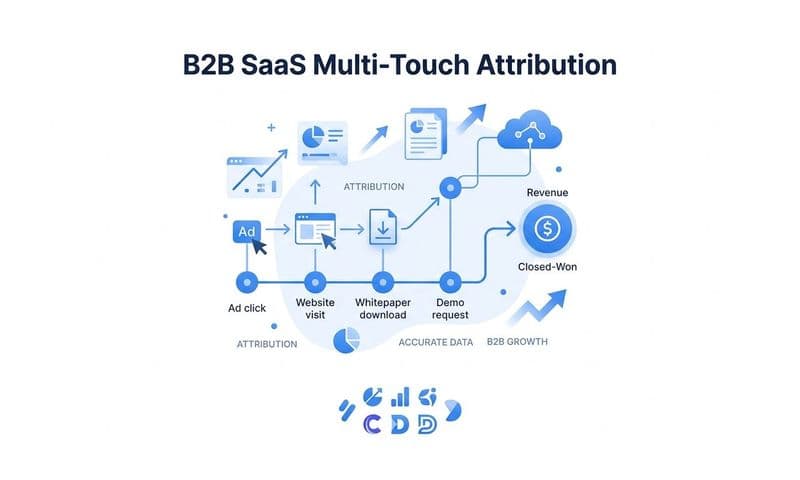
Modern customer journeys involve multiple touchpoints across different channels, devices, and time periods. Someone might see your Instagram ad on mobile, click a Google search ad on their laptop, and convert after receiving an email—all over several days or weeks.
Tracking these complex journeys becomes exponentially harder in a cookieless world. Individual platform analytics show you what happened within their ecosystem but can't connect the dots across channels. You need a unified view that captures the complete journey while respecting privacy constraints.
The Strategy Explained
Modern attribution platforms are built for the cookieless era. They connect data from all your marketing channels, your website, your CRM, and your ad platforms—using server-side tracking, first-party data, and Conversion APIs to maintain attribution accuracy despite browser restrictions.
These platforms don't rely on a single tracking method. They combine multiple cookieless approaches: server-side tracking captures website interactions, first-party data connects authenticated sessions, Conversion APIs ensure ad platforms receive conversion data, and probabilistic modeling fills remaining gaps.
The result is a comprehensive view of how your marketing channels work together to drive conversions. You can see which ad platforms, campaigns, and keywords contribute to the customer journey at different stages. You can compare attribution models to understand whether first-touch, last-touch, or multi-touch attribution makes the most sense for your business.
Cometly exemplifies this approach by capturing every touchpoint—from ad clicks to CRM events—and using AI to provide a complete, enriched view of every customer journey. The platform connects all your data sources while maintaining privacy compliance, then uses AI to identify high-performing ads and campaigns across every channel.
Implementation Steps
1. Select an attribution platform that supports multiple cookieless tracking methods including server-side tracking, first-party data integration, and Conversion API connections to major ad platforms.
2. Connect all your marketing data sources to the platform including ad accounts from Meta, Google, and other channels, your website analytics, your CRM system, and any other tools that capture customer interactions.
3. Configure attribution models that align with your business goals and customer journey complexity, testing different approaches like time-decay or position-based attribution to find what provides the most actionable insights.
Pro Tips
The most powerful attribution platforms don't just track what happened—they help you make better decisions with that data. Look for solutions that provide AI-driven recommendations about which campaigns to scale, which audiences to target, and how to allocate budget. Also, ensure your chosen platform can send enriched conversion data back to your ad platforms through Conversion APIs, creating a feedback loop that improves campaign optimization.
Putting It All Together: Building Your Cookieless Tracking Stack
The transition away from third-party cookies isn't a crisis—it's an opportunity to build a more accurate, privacy-respecting attribution system. The strategies outlined here aren't mutually exclusive. The most effective approach combines multiple methods into a comprehensive tracking stack.
Start with the foundation: implement server-side tracking and begin building your first-party data strategy. These two approaches form the backbone of cookieless attribution and provide immediate improvements in data accuracy.
Next, connect your server-side tracking to ad platforms through Conversion APIs. This ensures Meta, Google, and other platforms receive the conversion data they need to optimize your campaigns effectively. Many marketers find this combination—server-side tracking plus Conversion APIs—solves 80% of their attribution challenges.
From there, layer in additional approaches based on your specific needs. If you run brand awareness campaigns or struggle to track upper-funnel impact, add probabilistic attribution models. If you're in industries where contextual targeting makes sense, explore modern contextual solutions. If you have high authentication rates, unified ID solutions might provide additional value.
The key is starting now rather than waiting for cookie deprecation to force your hand. Marketing teams that build cookieless attribution systems today gain competitive advantages: more complete data, better campaign optimization, and future-proof measurement that doesn't depend on tracking methods that are already failing.
Remember that attribution accuracy matters most when it drives better decisions. The goal isn't perfect tracking of every user interaction—it's having enough reliable data to understand what's working, optimize your spend effectively, and prove marketing ROI to stakeholders.
Ready to elevate your marketing game with precision and confidence? Discover how Cometly's AI-driven recommendations can transform your ad strategy—Get your free demo today and start capturing every touchpoint to maximize your conversions.