In 2026, running a successful digital marketing agency means operating with a precision-engineered tech stack. The right combination of software doesn't just automate tasks; it unlocks efficiency, delivers deeper insights, and provides a tangible competitive edge. With clients demanding greater transparency and better return on investment than ever before, relying on a patchwork of disconnected tools is no longer a viable strategy.
This guide moves beyond surface-level recommendations to provide a curated list of essential digital marketing agency tools that address the core pillars of agency operations. We cover everything from flawless ad attribution and SEO dominance to streamlined client reporting and scalable campaign management. For each platform, we provide a direct, no-fluff analysis designed to help you make informed decisions quickly and confidently.
Inside this resource, you will find:
- Practical Use Cases: Discover how top agencies deploy each tool for maximum impact.
- Honest Pros & Cons: Understand the specific strengths and limitations before you commit.
- Integration Insights: Learn how these tools connect to form a cohesive, high-performance ecosystem.
- Pricing Breakdowns: Get a clear picture of the investment required for each solution.
We've structured this list to be a definitive resource, complete with screenshots and direct links, enabling you to evaluate and select the best websites and platforms for your agency’s unique needs. Our goal is to help you build a tech stack that not only meets client expectations but consistently exceeds them, solidifying your agency's position as an indispensable partner. Let's dive into the tools that will define high-performance agencies this year.
1. Cometly
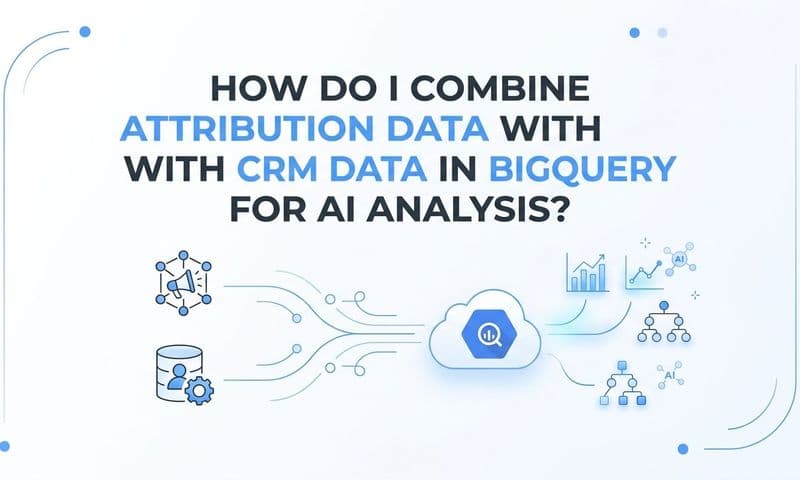
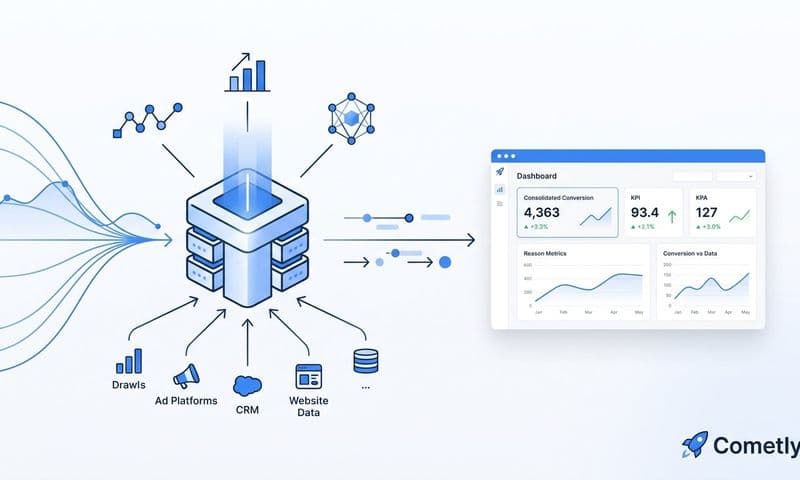
Cometly stands out as a premier, all-in-one attribution and analytics platform, making it one of the most powerful digital marketing agency tools available for achieving data clarity and maximizing ad performance. It provides a unified view of the entire customer journey by combining multi-touch attribution, server-side tracking, and AI-powered optimization tools into a single, cohesive ecosystem. This allows agencies to move beyond the fragmented data provided by native ad platforms and understand precisely which campaigns are driving revenue.
 The Top 12 Digital Marketing Agency Tools for Scalable Growth in 2026
The platform is engineered to solve the core challenges of modern advertising, such as signal loss from iOS updates and browser restrictions. By implementing its own zero-code server-side tracking, Cometly captures a more complete and accurate dataset. This enriched conversion data is then synced back to platforms like Meta and Google, which significantly improves their algorithm's ability to find high-value customers, directly boosting ROAS for agency clients.
Core Strengths & Use Cases
- Accurate End-to-End Attribution: Agencies can finally connect ad spend to actual sales revenue from platforms like Stripe or Shopify. This provides clear, defensible ROI metrics for client reporting and strategic planning.
- AI-Driven Ad Optimization: The built-in AI Ads Manager analyzes performance across channels and delivers actionable recommendations. Agencies can use these insights to confidently reallocate budgets to winning campaigns and pause underperformers faster.
- Simplified Technical Setup: Its one-click integrations with over 100 apps (including CRMs, e-commerce platforms, and funnel builders) and zero-code installation make it remarkably accessible. An agency can get a new client’s tracking live in minutes, not weeks. For a deeper understanding of this crucial feature, you can read about the benefits of server-side tracking.
- Enhanced Ad Platform Performance: The Conversion Sync feature feeds higher-quality conversion data back to ad networks. This leads to more effective audience targeting, smarter bidding, and ultimately, a lower cost per acquisition for clients.
Considerations
The primary drawback is the lack of public pricing, as a demo is required to get a custom quote. This can add a step for agencies looking for quick, off-the-shelf solutions. Additionally, its advanced feature set provides the most value to agencies managing significant multi-channel ad spend or complex sales funnels; it may be overly robust for very small clients with simple needs.
Feature | Analysis | Agency Benefit |
|---|---|---|
Multi-Touch Attribution | Tracks and assigns value across every customer touchpoint. | Provides a complete view of all touchpoints, proving the value of top-of-funnel and mid-funnel campaigns in client reports. |
AI Performance Reports | Uses AI to analyze trends and performance changes automatically. | Generates automated, data-backed narratives to explain performance changes, saving hours on manual analysis and reporting. |
Unified Analytics Dashboard | Aggregates data from paid, organic, and email channels. | Consolidates all major marketing data in one place, enabling holistic strategy development without juggling multiple tools. |
Website: https://www.cometly.com
2. HubSpot – Marketing Hub
HubSpot’s Marketing Hub is a comprehensive, all-in-one platform designed to manage the entire marketing funnel, making it one of the most powerful digital marketing agency tools available. It combines CRM, email marketing, social media management, landing pages, and sophisticated automation into a single, unified interface. This integration eliminates the need for agencies to stitch together multiple point solutions, providing a seamless workflow from lead capture to customer conversion.
 The Top 12 Digital Marketing Agency Tools for Scalable Growth in 2026
For agencies managing multiple clients, HubSpot excels with features like team governance, user roles, and partitionable assets. Its native CRM provides deep insights into the customer journey, enabling multi-touch attribution reporting that clarifies which marketing efforts drive revenue. The platform's real strength lies in its scalability; an agency can start a client on a free or starter plan and seamlessly upgrade to Professional or Enterprise tiers as their needs grow, without a disruptive migration.
Key Details & Pricing
- Use Case: End-to-end inbound marketing campaign management, lead nurturing, and marketing automation.
- Pros: Mature, well-documented ecosystem with extensive training (HubSpot Academy); unified view of the entire customer lifecycle; strong integration marketplace.
- Cons: Costs can escalate quickly based on contact list size and required add-ons; mandatory one-time onboarding fees for Professional and Enterprise plans can be substantial.
- Pricing: Tiers range from a limited free plan to comprehensive Enterprise packages starting at $3,600/month. The popular Professional plan starts at $800/month.
The platform is a leader in its category, especially for agencies seeking to build robust, scalable marketing programs. To dive deeper into its capabilities, you can learn more about marketing automation for agencies and how it fits into a modern tech stack.
Website: https://www.hubspot.com/products/marketing
3. Semrush – Online Visibility Platform
Semrush is a comprehensive online visibility management platform that provides agencies with an extensive suite of tools for SEO, PPC, content, and competitive research. As one of the most versatile digital marketing agency tools, it allows teams to conduct in-depth keyword research, perform technical site audits, track SERP positions, and analyze backlink profiles. Its power lies in its competitive intelligence capabilities, enabling agencies to deconstruct competitor strategies across both organic and paid channels.
For agencies, Semrush centralizes critical data points needed for strategy development and client reporting. The platform's toolkit approach lets agencies scale services for each client, from local SEO and social media management to advanced market and traffic intelligence. By identifying competitor ad copy, top organic keywords, and content gaps, agencies can formulate data-driven campaigns that capture market share and deliver measurable results. This holistic view makes it an indispensable asset for building and executing growth strategies.
For a deeper dive into this space, see our AI ad copy guide.
Key Details & Pricing
- Use Case: SEO audits, keyword research, rank tracking, competitive analysis for paid and organic search.
- Pros: Deep competitive and SERP intelligence; the toolkit approach allows function expansion per client; 7-day trials are available for most toolkits to validate fit.
- Cons: Costs can increase with add-on pricing and extra user seats; advanced data like Traffic/Market intelligence requires higher-priced plans.
- Pricing: Plans start at $129.95/month for the Pro tier, with Guru and Business plans offering more features and higher limits.
The platform is exceptional for benchmarking performance and understanding market positioning. To better leverage its competitive data, agencies can learn more about how to calculate share of voice to quantify a client's visibility against rivals.
Website: https://www.semrush.com
4. Ahrefs – SEO Suite
Ahrefs is a premium SEO toolkit renowned among agencies for its powerful site auditing, competitive analysis, and keyword research capabilities. Powered by one of the largest and most active web crawlers in the industry, it provides exceptionally deep backlink intelligence and historical SERP data. For agencies, Ahrefs is a go-to platform for diagnosing technical SEO issues, discovering link-building opportunities, and tracking keyword performance for multiple clients with high accuracy.
 The Top 12 Digital Marketing Agency Tools for Scalable Growth in 2026
The platform’s core strengths lie in its Site Explorer, which reveals a complete backlink profile for any URL, and its Keywords Explorer, which offers advanced insights into search volume, keyword difficulty, and user intent. These features make it one of the most indispensable digital marketing agency tools for crafting data-driven SEO strategies. The clear plan limits and straightforward reporting capabilities allow agencies to manage client projects efficiently, exporting data to build compelling performance reports that showcase tangible results and justify retainers.
Key Details & Pricing
- Use Case: Comprehensive SEO analysis, including backlink auditing, keyword research, rank tracking, and competitive intelligence.
- Pros: Industry-leading link index and historical data; strong reporting and export capabilities on higher tiers; intuitive user interface that simplifies complex data.
- Cons: Entry prices are higher than some lightweight tools; costs increase with add-ons for extra users or specialized features.
- Pricing: Plans start at $99/month for the Lite tier. The popular Standard plan, suitable for most small to mid-sized agencies, is priced at $199/month.
Website: https://ahrefs.com
5. Google Ads – Self‑serve Ads Platform
As the cornerstone of paid acquisition, Google Ads is an indispensable platform for nearly every digital marketing agency. This self-serve advertising powerhouse enables agencies to tap into unparalleled user intent across Search, YouTube, Shopping, and the Google Display Network. For agencies, its Manager Account (MCC) is crucial for overseeing multiple client accounts, managing budgets, and implementing campaigns from a centralized dashboard, making it one of the most fundamental digital marketing agency tools.
 The Top 12 Digital Marketing Agency Tools for Scalable Growth in 2026
The platform's strength for agencies lies in its scalability and deep integration capabilities. It seamlessly connects with Google Analytics, Tag Manager, and Looker Studio, enabling robust, closed-loop reporting. Features like AI-powered bidding strategies, Performance Max campaigns, and flexible billing options (including monthly invoicing for eligible accounts) allow agencies to manage client ad spend efficiently and effectively. This direct control over campaign levers allows for precise optimization tailored to specific client goals, from lead generation to e-commerce sales.
We compare the leading options in our ad optimization software comparison roundup.
Key Details & Pricing
- Use Case: High-intent lead generation, e-commerce sales, and brand awareness campaigns across search, video, and display networks.
- Pros: Massive reach with detailed intent signals; no platform minimums and fully self-serve; enterprise billing options for eligible accounts.
- Cons: Auction costs can vary widely by market; the learning curve for new teams can be steep; requires ongoing attention to brand safety and creative iteration.
- Pricing: Pay-per-click model with no minimum spend. Costs are determined by auction dynamics, budget, and bidding strategy.
Mastering the platform is key to performance, which is why agencies need to understand the nuances of Google Ads conversion tracking to prove ROI for their clients.
Website: https://ads.google.com
6. Meta Ads Manager (Facebook & Instagram)
Meta Ads Manager is the indispensable central console for creating, managing, and optimizing paid campaigns across Facebook, Instagram, Messenger, and the Audience Network. For agencies, it serves as one of the most fundamental digital marketing agency tools for reaching vast, highly-targeted audiences. The platform allows for granular control over audience demographics, interests, and behaviors, making it a powerful engine for driving brand awareness, lead generation, and direct sales for a diverse range of clients.
Its true value for agencies lies in its sophisticated optimization and automation capabilities. Features like Advantage+ campaigns leverage Meta's AI to dynamically allocate budgets and select placements, which significantly reduces manual oversight and often lowers conversion costs. This allows agency teams to focus on higher-level strategy and creative development rather than constant bid adjustments. The platform’s direct integration with Pixel and Conversions API is also critical for tracking user actions and proving campaign ROI.
For a deeper dive into this space, see our AI ad optimization platform guide.
Key Details & Pricing
- Use Case: Executing paid social campaigns with precise audience targeting, creative testing, and performance optimization.
- Pros: Enormous audience reach with robust, engaging creative formats; powerful automation features reduce micromanagement; low barrier to entry, making it feasible to test with small budgets.
- Cons: Performance can fluctuate significantly with iOS-related signal loss and creative fatigue; the initial learning and optimization periods may require multi-day budgets to stabilize.
- Pricing: Free to use the platform. Campaign costs are based on a flexible, auction-based model where agencies set their own daily or lifetime budgets.
Effectively navigating its complexities is key, especially when it comes to attribution. You can learn more about improving Facebook ad tracking to maximize the data you receive from the platform.
Website: https://www.facebook.com/business/tools/ads-manager
7. Mailchimp – Email and SMS Marketing
Mailchimp has long been a go-to platform for email marketing, known for its user-friendly interface and robust feature set tailored for small to medium-sized businesses. For agencies, it serves as an accessible and powerful tool for managing client email campaigns, from newsletters to complex automated journeys. Its core strength lies in simplifying the process of creating, sending, and analyzing email marketing efforts, making it one of the most efficient digital marketing agency tools for client onboarding and management.
 The Top 12 Digital Marketing Agency Tools for Scalable Growth in 2026
The platform offers a drag-and-drop email builder, an extensive template library, and segmentation capabilities that allow for targeted messaging. Agencies can manage multiple client accounts under a single login, streamlining workflows and reporting. With the addition of SMS marketing and flexible pricing models, including pay-as-you-go credits, Mailchimp provides the scalability needed to support clients with varying list sizes and sending frequencies, from seasonal campaigns to consistent daily communication.
Key Details & Pricing
- Use Case: Email and SMS campaign management, marketing automation, and audience segmentation for SMB clients.
- Pros: Flexible pricing models (monthly tiers or pay-as-you-go), easy to onboard non-technical users with a large template ecosystem, viable for SMB clients that don’t need enterprise features.
- Cons: Advanced analytics and deep personalization require higher tiers, contact-based pricing can rise quickly as lists grow.
- Pricing: Offers a limited free plan. Paid plans start at $13/month for the Essentials tier and scale up based on contact count and features.
Website: https://mailchimp.com
8. Klaviyo – Email, SMS, and Customer Data for Commerce
Klaviyo is an essential commerce-centric platform that empowers agencies to drive revenue through highly personalized email and SMS marketing. It stands out among digital marketing agency tools for its deep integration with ecommerce platforms like Shopify and BigCommerce, syncing real-time customer data, catalog information, and behavioral triggers. This allows for the creation of sophisticated, revenue-driven lifecycle automations, such as cart abandonment, post-purchase follow-ups, and win-back campaigns that are directly tied to sales performance.
 The Top 12 Digital Marketing Agency Tools for Scalable Growth in 2026
For agencies managing DTC and ecommerce clients, Klaviyo’s unified customer profiles provide a single source of truth for building powerful segments based on purchase history, browsing behavior, and predictive analytics. Its robust A/B testing and analytics dashboards make it easy to demonstrate ROI and optimize campaigns for higher conversions. The platform is built to scale alongside a growing brand, handling expanding customer lists and product catalogs without friction.
Key Details & Pricing
- Use Case: Advanced email and SMS automation, behavioral segmentation, and lifecycle marketing for ecommerce brands.
- Pros: Strong revenue-driven flows and deep behavioral segmentation; scales with brands as lists and SKUs grow; tight ecommerce integrations for accurate attribution.
- Cons: SMS pricing varies by destination and can add material cost; advanced support tiers require higher monthly spend.
- Pricing: A free plan is available for up to 250 contacts. Paid plans are flexible and based on the number of contacts and SMS credits needed, typically starting around $20/month.
Website: https://www.klaviyo.com
9. Unbounce – Landing Page Builder and Optimization
Unbounce is a dedicated landing page platform that empowers agencies to rapidly design, launch, and optimize high-converting pages for paid campaigns. Its core strength lies in decoupling landing page creation from web development cycles, allowing marketers to build and test variants without touching a line of code. This makes it one of the most essential digital marketing agency tools for performance-focused teams that need to iterate quickly to improve ad spend efficiency and conversion rates for their clients.
 The Top 12 Digital Marketing Agency Tools for Scalable Growth in 2026
The platform is built for speed and conversion, featuring a flexible drag-and-drop builder, built-in A/B testing, and dynamic text replacement to match ad copy to page headlines. For agencies, features like popups, sticky bars, and AI-powered copywriting assistants streamline the entire process of capturing leads. Unbounce's focus on a single, critical function-landing page optimization-allows it to deliver a more refined and powerful feature set compared to the landing page builders found within broader marketing suites.
Key Details & Pricing
- Use Case: Rapid creation and A/B testing of dedicated landing pages for PPC, social, and email marketing campaigns.
- Pros: Quick deployment for client campaigns and experiments; unlimited conversions across all paid plans; concierge services are available for complex onboarding and migrations.
- Cons: Plans are limited by traffic volume, with potential overage fees for high-traffic campaigns; lower-tier plans are restricted to a single user without add-ons.
- Pricing: Plans start at $99/month for the Launch plan, with higher tiers like Optimize ($145/month) and Accelerate ($240/month) offering more traffic and features.
Website: https://unbounce.com
10. VWO – Experimentation & Conversion Optimization Platform
VWO is a comprehensive conversion rate optimization (CRO) suite that equips agencies with the tools needed to scientifically improve client website performance. It moves beyond simple analytics by combining quantitative data from A/B testing with qualitative insights from heatmaps, session recordings, and surveys. This integrated approach makes VWO one of the most effective digital marketing agency tools for agencies focused on delivering measurable bottom-line results, like increased leads and sales, through data-driven experimentation.
 The Top 12 Digital Marketing Agency Tools for Scalable Growth in 2026
The platform is built for agencies that manage diverse client portfolios, offering a unified dashboard to run experiments and gather user behavior insights across multiple domains. Its strength lies in its all-in-one nature; an agency can propose a testing hypothesis, validate it with an A/B test, understand user friction through session recordings, and then use personalization features to deploy the winning variation. The recent addition of an AI-powered ideation assistant, VWO Copilot, further accelerates the process of building a robust testing pipeline for clients.
Key Details & Pricing
- Use Case: End-to-end conversion optimization, including A/B testing, personalization, and qualitative user behavior analysis.
- Pros: Combines quantitative and qualitative CRO tools in one platform; pricing scales with Monthly Tracked Users (MTUs), making it adaptable for clients of different sizes; AI features help accelerate test ideation.
- Cons: Public pricing is limited, often requiring custom quotes which can slow down the sales process; accessing the most advanced features and statistical models may require higher-tier plans.
- Pricing: VWO offers multiple product lines (Testing, Insights, Personalize) with various tiers. Pricing is typically customized based on Monthly Tracked Users and required features.
Website: https://vwo.com
11. G2 – Software Marketplace and Reviews
G2 is the largest and most trusted software marketplace, serving as an essential resource for agencies researching, comparing, and selecting new digital marketing agency tools. It provides an exhaustive library of software categories, from CRMs to SEO platforms, supported by a massive volume of buyer-verified reviews. This allows agencies to move beyond vendor marketing copy and gain authentic insights into a tool's performance, usability, and support based on real-world user experiences.
For digital marketing agencies, G2's value lies in its powerful filtering capabilities and peer-driven validation. An agency can quickly create a shortlist of potential tools by filtering for specific features, integrations, or company size suitability. The platform's Grid Reports, which map out market leaders versus contenders based on user satisfaction and market presence, offer a clear visual guide for making informed purchasing decisions. This data-backed approach de-risks the process of adopting new technology for both the agency and its clients.
Key Details & Pricing
- Use Case: Vendor research, software comparison, and gathering social proof for tool recommendations.
- Pros: Enormous breadth of software categories and user reviews; robust filtering options to narrow down choices; provides direct social proof to justify technology investments to clients.
- Cons: Ratings can sometimes be influenced by vendors who actively run review-gathering campaigns; sponsored placements can affect the visibility of some products.
- Pricing: Free to browse and use for research. Vendors pay for enhanced profiles and marketing features.
G2 streamlines the critical task of building the perfect tech stack, ensuring that agencies invest in solutions that are validated by a community of their peers.
Website: https://www.g2.com
12. AppSumo – Deals Marketplace for Marketing Tools
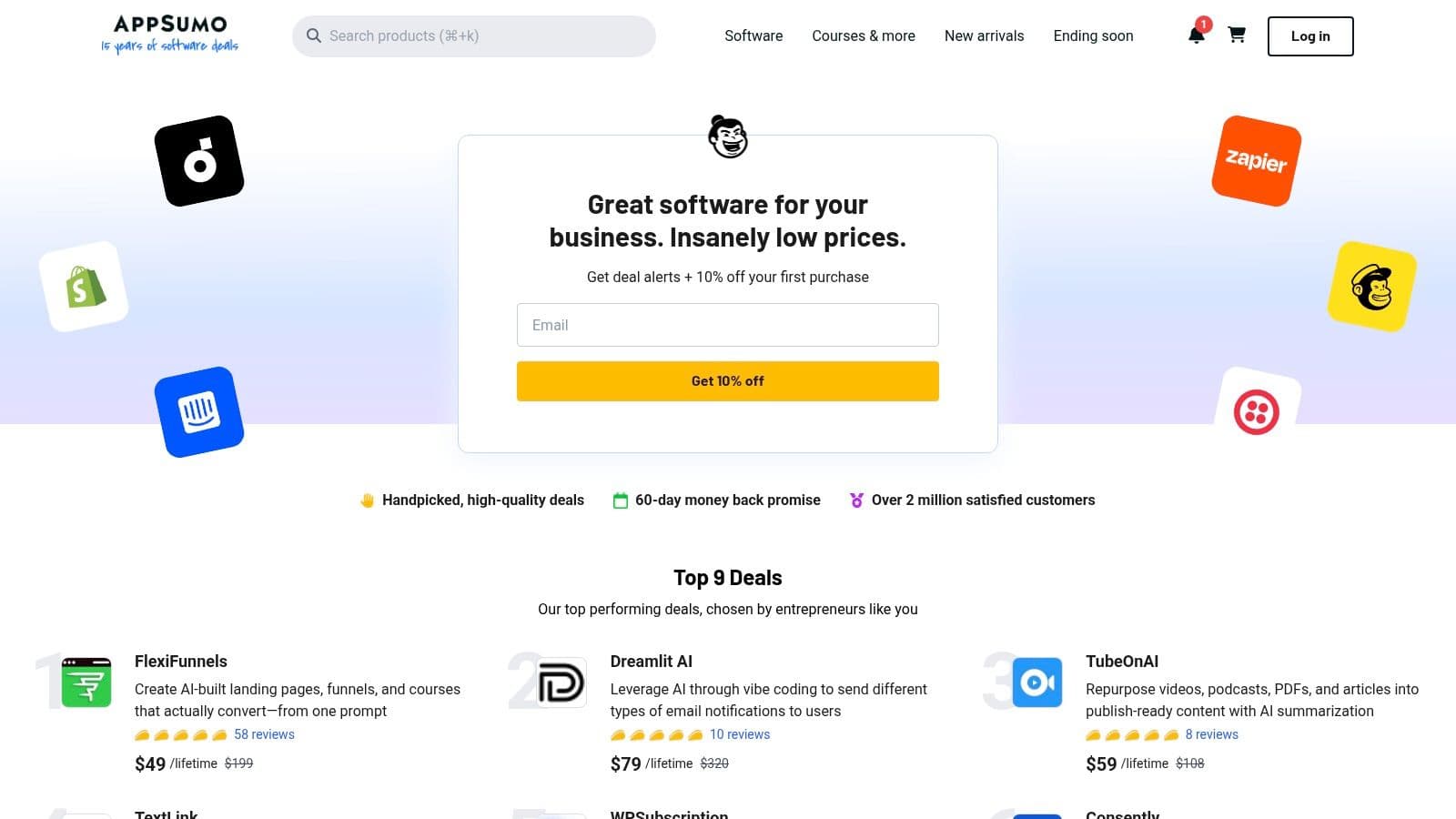
AppSumo is a unique marketplace that has become a valuable resource for agencies looking to expand their toolkit without committing to expensive monthly subscriptions. It specializes in offering lifetime and heavily discounted annual deals on emerging software, making it one of the most cost-effective sources for digital marketing agency tools. For an agency, this platform provides a low-risk way to pilot new technologies for everything from AI-powered copywriting and SEO analysis to social media scheduling and project management.
 The Top 12 Digital Marketing Agency Tools for Scalable Growth in 2026
The primary advantage for agencies is the ability to acquire powerful, niche tools that can solve specific client problems or improve internal workflows at a fraction of their standard cost. Instead of adding another recurring SaaS fee to the balance sheet, a one-time purchase can secure a tool for the entire team. With a typical 60-day money-back guarantee, agencies can thoroughly test a tool's capabilities and its fit within their existing tech stack before making a final commitment, significantly de-risking the software adoption process.
Key Details & Pricing
- Use Case: Acquiring niche marketing, SEO, AI, and productivity tools at a low one-time cost to supplement an agency's core tech stack.
- Pros: Extremely cost-effective for piloting and standardizing new software; discovers emerging tools before they become mainstream; 60-day refund policy minimizes risk.
- Cons: Lifetime deals are dependent on the vendor's long-term viability; some tools are early-stage and may lack the polish or support of enterprise-grade software.
- Pricing: Varies per deal, but often features lifetime access for a one-time fee ranging from $49 to several hundred dollars, compared to recurring monthly or annual subscriptions.
Website: https://appsumo.com
Top 12 Digital Marketing Agency Tools — Feature & Pricing Comparison
Tool | Core Capabilities ✨ | Quality / Ease ★ | Value / Pricing 💰 | Target Audience 👥 | Unique Selling Point |
|---|---|---|---|---|---|
Cometly 🏆 | Real-time multi-touch attribution, server-side tracking, one-click conversion sync, AI Ads/Chat | ★★★★☆ — Accurate attribution, fast setup | Custom quote; free trial/demo | SaaS, e-commerce, agencies, performance teams | End-to-end attribution + enriched conversion sync to ad platforms; 100+ integrations |
HubSpot – Marketing Hub | Marketing automation, native CRM, landing pages, reporting | ★★★★☆ — Mature UI & training | Tiered (free → enterprise); costs rise with contacts/seats | SMB → enterprise, agencies | All-in-one marketing + CRM with strong governance & education |
Semrush – Online Visibility Platform | SEO, PPC research, market & traffic intelligence, social tools | ★★★★☆ — Deep competitive data | Tiered toolkits; add-ons add cost | SEO/ads agencies, content & market teams | Competitive intelligence + keyword & market benchmarking |
Ahrefs – SEO Suite | Site Explorer, backlink index, keyword research, audits | ★★★★☆ — Industry-leading link data | Higher entry price; clear plan limits | SEO agencies, in-house SEO teams | Massive backlink index and historical SERP data |
Google Ads – Self-serve | Search, Performance Max, YouTube, Shopping, Display | ★★★★☆ — Massive intent & reach | Pay-per-click (ad spend); no platform minimum | Performance marketers, e-commerce, agencies | Scale intent-based acquisition with flexible bidding & billing |
Meta Ads Manager | Facebook/Instagram ads, Advantage+ automations, Pixel/CAPI | ★★★★☆ — Broad creative formats & automation | Pay-per-click; flexible budgets | DTC brands, performance teams, agencies | Rich creative placements + automation to reduce manual work |
Mailchimp – Email & SMS | Drag-drop email builder, journeys, A/B testing, SMS add-on | ★★★☆☆ — Easy for non-technical users | Free tier; contact-based pricing grows | SMBs, small agencies | Simple onboarding + pay-as-you-go credits for seasonal senders |
Klaviyo – Commerce CDP | Email & SMS flows, customer profiles, predictive metrics | ★★★★☆ — Revenue-driven automation | Contact/usage-based; SMS extra | DTC/e-commerce brands, Shopify agencies | Deep commerce integrations and lifecycle revenue focus |
Unbounce – Landing Pages | Drag-and-drop builder, A/B testing, AI copy, popups | ★★★★☆ — Rapid page iteration | Tiered; visitor caps/overages | Paid-traffic teams, agencies | Fast no-dev landing pages with AI copy & testing |
VWO – Experimentation | A/B/n testing, personalization, heatmaps, session replays | ★★★★☆ — Full CRO + qualitative insights | Custom pricing; MTU scaling | CRO teams, enterprise agencies | End-to-end experimentation plus session analytics |
G2 – Reviews Marketplace | Buyer-verified reviews, category rankings, filters | ★★★☆☆ — Broad, up-to-date user feedback | Free to browse; vendor plans paid | Buyers, procurement, agencies | Largest software review marketplace for shortlists |
AppSumo – Deals Marketplace | Time-limited deals, lifetime licenses, refunds (~60d) | ★★★☆☆ — Cost-effective, mixed maturity | Discounted/lifetime deals; money-back window | Small agencies, tool scouts, startups | Low-cost way to pilot niche marketing & AI tools |
From Tools to Transformation: Activating Your Agency's Potential
Navigating the vast landscape of digital marketing agency tools can feel overwhelming, but the journey from a disjointed collection of software to a streamlined, intelligent tech stack is where true competitive advantage is born. Throughout this guide, we've explored a curated selection of platforms, from the attribution powerhouse of Cometly to the comprehensive SEO suites of Semrush and Ahrefs, and the conversion-focused platforms like Unbounce and VWO. The core lesson is clear: individual tools are powerful, but an integrated ecosystem is transformative.
The most successful agencies don't just use tools; they build strategic frameworks around them. They understand that a CRM like HubSpot is not just a database, but the central nervous system for client relationships. They recognize that advertising platforms like Google and Meta Ads Manager are only as effective as the attribution data that informs them, highlighting the critical role of platforms that provide clarity on what's truly driving results. Your choice of digital marketing agency tools directly impacts your team's efficiency, your strategic capabilities, and, most importantly, the tangible outcomes you deliver for clients.
Synthesizing Your Strategy: From Selection to Integration
The path forward involves more than just picking the tools with the most features. It requires a thoughtful evaluation of your agency's unique needs, client profiles, and growth ambitions. A startup-focused agency might prioritize a nimble, cost-effective stack, while an enterprise-level firm will need tools with robust security, scalability, and complex reporting features.
As you finalize your decisions, consider these key implementation factors:
- Integration is Non-Negotiable: Before committing, map out how your chosen tools will communicate. Does your CRM seamlessly sync with your email marketing platform? Can your ad attribution data flow into your reporting dashboards? A lack of native integration can lead to data silos, manual work, and missed insights, undermining the very purpose of your investment.
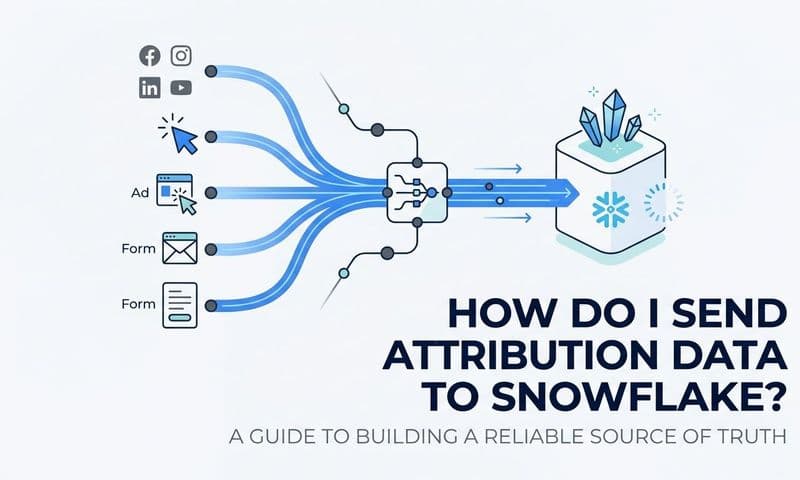
- Prioritize a Single Source of Truth: Data confusion is the enemy of performance. For an agency, this often comes down to attribution. Establishing a single, reliable source of truth for ad performance, like Cometly, eliminates conflicting reports from different ad platforms and provides a unified view of what's driving conversions. This clarity is foundational for making smart, profitable decisions.
- Factor in Team Adoption and Training: The most powerful software is useless if your team doesn't know how to leverage it. Allocate time and resources for comprehensive training. Choose tools with intuitive interfaces and strong customer support to reduce the learning curve and accelerate your team’s path to proficiency.
- Build for Scalability: The tech stack that serves you today with ten clients should be able to support you with fifty. Evaluate pricing tiers, feature limitations, and the platform’s ability to grow alongside your agency. Avoid solutions that will require a costly and disruptive migration in a year or two.
Your Blueprint for Agency Growth
Ultimately, the right collection of digital marketing agency tools is your blueprint for scalable success. It empowers your team to move beyond tedious manual tasks and focus on high-impact strategy. It provides the data-driven proof points that build unshakable client trust and justify your value. By thoughtfully selecting and integrating the platforms that align with your agency's vision, you are not just buying software; you are investing in a future of greater efficiency, deeper insights, and unparalleled client results.
Ready to eliminate ad-spend guesswork and prove your agency's true impact? See how Cometly provides the crystal-clear, click-level attribution you need to optimize campaigns and scale client results with confidence. Discover the single source of truth that top agencies rely on by visiting Cometly today.