E-commerce data analytics software is your business's central command center. It takes all the chaotic data from customer clicks, ads, and purchases and turns it into a clear picture of what’s actually driving growth. Think of it as the single source of truth that lets you make confident, data-backed decisions to scale your brand.
Why E-Commerce Data Analytics Software Is a Game Changer
Ever tried to navigate a massive ship through thick fog with nothing but a blurry, outdated map? That’s what running an e-commerce brand feels like when you're relying on the native dashboards of your ad platforms. You have bits and pieces of information, but no unified view of where you are or where you're heading.
This mess is caused by data silos. Your Facebook Ads manager tells one story, your Google Ads dashboard tells another, and Shopify analytics presents a third version of the truth. Each platform scrambles to take credit for a sale, leaving you to guess which channel really earned your marketing budget. This problem has only gotten worse as privacy updates make old-school pixel tracking less and less reliable.
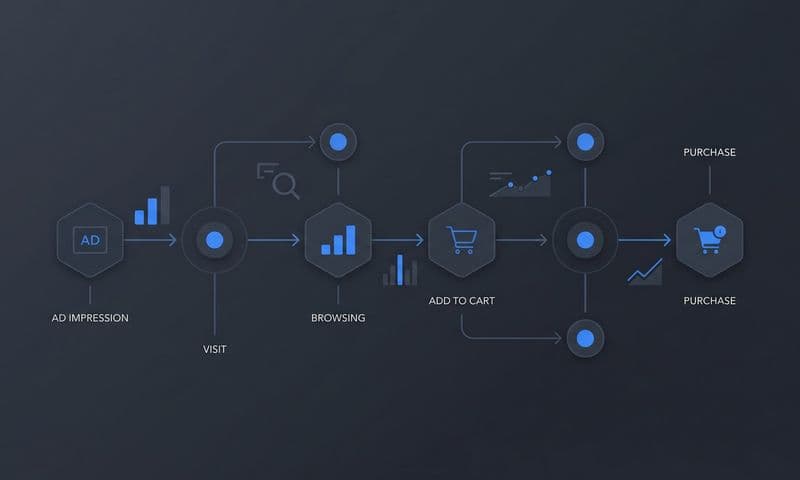
E-commerce data analytics software cuts right through that fog. It’s like having an advanced navigation and control tower for your business. It tracks every single customer interaction—from their very first ad click to their final purchase and beyond—and pieces together the complete journey.
The Shift From Niche Tool to Core Infrastructure
This desperate need for clarity has fueled a massive industry shift. Sometime between the mid-2010s and today, e-commerce analytics software went from a nice-to-have add-on to a core, non-negotiable part of the modern retail tech stack.
The numbers don't lie. The global e-commerce analytics software market was valued at around USD 6.5 billion in 2023 and is projected to hit USD 18.2 billion by 2032. You can dig into more of the market data on Coherent Market Insights.
This explosive growth isn't just about collecting more data; it's about turning raw data into actual intelligence. The real job of this software is to solve the critical attribution and tracking problems that basic dashboards were never designed to handle.
The goal is to move beyond just reporting numbers and start understanding the story behind them. A unified analytics platform connects the dots, showing you not just what happened, but why it happened and what you should do next.
Overcoming Common Data Frustrations
Sticking with fragmented data sources leads to specific, expensive problems that a dedicated analytics platform is built to solve. Here’s a quick look at the common challenges businesses face and how a modern analytics solution steps in.
Key Problems Solved by Dedicated Analytics Platforms
One of the biggest e-commerce challenges is inaccurate attribution, because ad platforms can over-report or under-report conversions due to privacy updates, tracking blockers, and missing signals. Basic analytics can’t reliably connect conversions back to the true source, which leads to bad budget decisions. E-commerce analytics software solves this by creating a single, unbiased source of truth, combining pixel tracking with server-side tracking to deliver near-perfect accuracy.
Another common issue is a broken customer journey, where you can’t clearly see how different channels work together. In basic analytics, top-of-funnel ads often get undervalued simply because they didn’t earn the last click, even if they created the demand that led to the purchase. E-commerce analytics software fixes this by using multi-touch attribution models that show the full customer path and give credit to every touchpoint that influenced the sale.
Wasted ad spend is also a major problem, because without a reliable ROAS metric you’re essentially guessing and gambling with your marketing budget. Basic analytics often leaves you with incomplete or conflicting performance signals, which slows down optimization and makes scaling risky. E-commerce analytics software solves this by delivering a clear, unified view of performance so you can confidently scale what’s working and cut losing campaigns quickly.
Finally, many teams struggle with data silos and confusion, because every platform reports performance differently and it becomes impossible to align internally on what’s actually working. Basic analytics forces you to stitch together reports manually, which creates inconsistencies and missed insights. E-commerce analytics software eliminates this by integrating all marketing channels and your store into one dashboard, removing guesswork and giving you a single version of reality.
Ultimately, trying to scale an e-commerce business on fragmented data is like flying blind. A dedicated analytics platform transforms those raw, confusing numbers into actionable data. It delivers the clarity you need to not just survive, but to thrive by making every single marketing dollar count.
The Core Features of High-Performance Analytics Software
What really separates a powerful e-commerce analytics tool from a basic reporting dashboard? It’s not just about more charts and graphs. The difference is a set of core, non-negotiable features that turn raw numbers into a clear roadmap for growth.
Think of it this way: the best e-commerce data analytics software is built on four pillars. Together, they deliver an accurate, complete, and actionable view of your marketing performance. These pillars move you beyond simple vanity metrics to solve the real challenges e-commerce brands face every day, from fragmented data to the slow death of pixel-based tracking.
Understanding these features is the first step toward choosing a platform that will actually impact your bottom line. As you can see below, the problems are real—disconnected data, broken customer journeys, and bad attribution are costing brands money.
 Mastering Growth with E Commerce Data Analytics Software
This is what modern analytics software is built to fix.
Unified Tracking and Attribution
The foundation of any great analytics platform is its ability to create a single, reliable source of truth. For years, marketers leaned on browser-based pixels to track conversions. But with privacy updates and ad blockers, that method is leaking data like a sieve, leading to misattributed sales and wasted ad spend.
High-performance software solves this with server-side tracking. Instead of depending on the customer's browser, it sends conversion data directly from your server to the analytics platform. This approach is far more accurate and resilient, capturing conversions that pixels miss and getting your data as close to perfect as possible.
Advanced Attribution Models
Imagine a customer sees your TikTok ad on Monday, clicks a Google search ad on Wednesday, and finally buys from an email you sent on Friday. Who gets the credit? Basic "last-click" attribution gives 100% of the credit to the email, completely ignoring the crucial roles the other ads played.
This is where advanced attribution models become a game-changer.
- Multi-Touch Attribution: This model distributes credit across multiple touchpoints in the customer journey. It understands that the first ad created awareness, the search ad captured intent, and the email prompted the final action.
- Data-Driven Models: The smartest models use algorithms to assign value to each touchpoint based on its actual impact on the sale, giving you a much more accurate picture of what’s really working.
By seeing the full path to purchase, you can finally value your top-of-funnel campaigns correctly and make smarter budget decisions. If you want to dive deeper into presenting this kind of data clearly, these 10 Data Visualization Best Practices are a great resource.
Seamless Tech Stack Integrations
Your e-commerce business runs on a stack of tools—your storefront (like Shopify), ad platforms (Facebook, Google, TikTok), email service, and CRM. An analytics platform that can’t talk to these tools is like a brain without eyes or ears; it might have processing power, but it has no real-world information to work with.
Seamless, one-click integrations are non-negotiable. Pulling data from every part of your stack into one unified dashboard is what finally breaks down those data silos. This holistic view lets you see how a new ad campaign impacts your email sign-ups or how a small tweak to your checkout process affects customer lifetime value.
A truly integrated system doesn't just collect data; it connects it. It ties your ad spend directly to your sales revenue, giving you a clear, undeniable return on ad spend (ROAS) that you can actually trust.
AI-Powered Strategic Insights
Finally, the best e-commerce data analytics software doesn't just report what happened. It uses Artificial Intelligence (AI) to tell you why it happened and what you should do about it. This is the crucial jump from data to intelligence.
Instead of forcing you to drown in spreadsheets, AI-powered features can:
- Identify Trends: Automatically tell you which campaigns are trending up or down in performance.
- Provide Recommendations: Suggest where to scale your budget for maximum ROI and which ads to cut before they burn more cash.
- Forecast Performance: Use predictive analytics to estimate future results based on current data.
These capabilities turn your analytics platform into a strategic advisor, helping you make faster, smarter decisions. A comprehensive analytics features suite should empower you to act, not just analyze. By combining these four core features, modern software gives you the clarity you need to scale your business with confidence.
How to Choose the Right Software for Your Business
Trying to find the right e-commerce data analytics software can feel like navigating a minefield. Dozens of platforms are out there, all promising a "single source of truth." So, how do you tell the real game-changers from the glorified dashboards? Picking the right tool isn't just a tech decision; it's a strategic move that will either help you scale profitably or hold you back.
The trick is to look past the flashy feature lists and use a practical evaluation framework. Think of it like test-driving a car. You wouldn't buy one without popping the hood, seeing how it handles on the road, and making sure it actually fits your needs. Your analytics software needs the same level of scrutiny—for its core engine (data accuracy), its performance under pressure (scalability), and its day-to-day drivability (usability).
With a structured approach, you'll know exactly what questions to ask during demos and trials. This ensures you end up with a tool that solves your real-world problems and slots right into your existing workflow.
Prioritize Unshakeable Data Accuracy
The absolute, non-negotiable foundation of any analytics platform is the quality of its data. If your numbers are wrong, every single decision you make based on them will be wrong, too. This is exactly where so many businesses get burned by tools that lean on outdated, browser-based tracking pixels.
Your very first question on any demo should be: “How do you guarantee data accuracy with all the recent privacy updates?”
The only answer you should accept is server-side tracking. This method sends conversion data directly from your server to the ad platforms, completely bypassing the browser-level chaos from ad blockers and privacy settings that cause pixels to misfire.
A platform without robust server-side tracking is building its insights on a foundation of sand. Inaccurate data leads to misallocated budgets, undervalued campaigns, and a fundamentally flawed understanding of your return on ad spend (ROAS).
This focus on the software layer of data interpretation is becoming increasingly critical. The growth in e-commerce data analytics software mirrors the rapid expansion of Big Data in the retail sector. By 2034, the market for Big Data in e-commerce is projected to reach USD 17.2 billion. Software's dominance, capturing over 68% of this market in 2024, shows that value lies not just in collecting data, but in the tools that accurately process and visualize it for decision-makers. You can read the full research about Big Data's impact on e-commerce on market.us.
Evaluate Scalability for Future Growth
The right software shouldn’t just solve today's problems; it needs to grow alongside you. A platform that feels great when you're spending $10,000 a month on ads might completely fall apart under the pressure of a $100,000 budget. Scalability isn't just about handling more data volume—it's about maintaining performance, speed, and clarity as your business gets more complex.
Here are a few things to consider:
- Ad Spend Capacity: Can the platform handle a 10x or 50x increase in your ad spend without slowing down or becoming impossible to navigate?
- Team Access: Does it offer user roles and permissions that let your entire team—from marketing managers to agency partners—get the insights they need without compromising data security?
- Business Model Flexibility: Is the software built for your specific business type? A direct-to-consumer (DTC) brand has completely different needs than a marketing agency managing dozens of client accounts. Our guide on choosing marketing analytics platforms goes into more detail on this.
Insist on an Intuitive User Experience
Finally, remember that the most powerful data in the world is useless if your team can't easily access and understand it. The best e-commerce data analytics software is built for marketers, not data scientists. The user interface (UI) should be intuitive, translating complex attribution models and performance metrics into clear, actionable insights.
When you’re in a trial, see if you can answer critical business questions in minutes, not hours. Can you build a custom dashboard quickly? Can you easily compare campaign performance across different channels? If the interface feels clunky or has a steep learning curve, it’s going to create a bottleneck instead of empowering your team.
A truly intuitive platform democratizes data, making everyone on your team more effective at making fast, data-driven decisions.
A Step-By-Step Guide to Implementing Your Analytics Platform
Getting a powerful new analytics tool up and running shouldn’t feel like a massive engineering project. The best e‑commerce data analytics software is built for marketers, not developers, turning what used to be a technical headache into a simple, straightforward setup. This guide breaks down the four key steps to get you from initial setup to actionable insights in record time.
 Mastering Growth with E Commerce Data Analytics Software
The whole point of this process is to move quickly from connecting your data to making data-driven decisions. It's about getting the clarity you need to stop guessing and start winning.
1. Connect Your Data Sources
First things first: you need to bring all your scattered data into one place. Modern platforms have made this incredibly simple with one-click integrations. You don't have to wrestle with APIs or write a single line of code.
Just connect your essential accounts:
- Your E-commerce Store: Link your Shopify, WooCommerce, or other storefronts to pull in sales, order, and customer data.
- Your Ad Platforms: Integrate your Facebook Ads, Google Ads, and TikTok Ads accounts to track spend and campaign performance.
- Your Payment Processors: Connect tools like Stripe to make sure every single transaction is perfectly matched to its source.
This initial connection creates your single source of truth, finally breaking down the data silos that cause so much confusion and misattribution.
2. Configure Your Tracking
With your sources connected, the next crucial step is making sure your tracking is bulletproof. This is where you set up your system to capture every important conversion event without fail.
The goal here is to move beyond unreliable, browser-based pixels. Top-tier analytics software uses server-side tracking, which sends data directly from your server to the ad platforms. This method is far more accurate and isn't affected by iOS updates or ad blockers.
Setting this up usually involves adding a small script to your website and verifying your domain. The real engine behind accurate server-side tracking is the Conversion API (CAPI) setup. For anyone looking to get into the weeds, our comprehensive Conversion API implementation tutorial offers a deep dive.
3. Build Your First Insightful Dashboards
Once clean, accurate data starts flowing in, it’s time to visualize it in a way that gives you instant clarity. Forget generic, out-of-the-box reports. This is about building dashboards that monitor the metrics that actually matter to the health of your business.
Your first dashboard should focus on the big three:
- Return on Ad Spend (ROAS): See a true, blended ROAS across all your ad channels in one view.
- Customer Acquisition Cost (CAC): Track exactly how much you’re spending to acquire each new customer.
- Customer Lifetime Value (LTV): Understand the long-term value of the customers your campaigns are bringing in.
A great platform makes this easy with drag-and-drop widgets and pre-built templates, letting you build a command center tailored to your specific goals in minutes.
4. Launch Your First Data-Driven Campaign
The final step is to put all this newfound clarity into action. With a reliable, unified view of your marketing performance, you can now make budget decisions with confidence instead of guesswork.
Use your insights to pinpoint your most profitable campaigns, ads, and audiences. Double down on what’s working by scaling the budget for high-ROAS campaigns. At the same time, you can quickly spot the underperformers and cut wasted ad spend before it bleeds your budget dry.
This is the moment your analytics tool stops being just a reporting tool and becomes a strategic growth engine.
Real-World Wins: Unlocking Growth with Data Analytics
Theory and features are one thing, but the real test of any e‑commerce data analytics software is whether it delivers tangible results. Numbers on a dashboard are just noise until they translate into smarter decisions, higher profits, and sustainable growth. This is where we move from abstract ideas to concrete, real-world wins that show the power of unified data.
 Mastering Growth with E Commerce Data Analytics Software
These success stories aren't about complex algorithms; they're about gaining the clarity you need to act with confidence. They show how having a single source of truth empowers brands to stop gambling with their marketing budgets and start investing with precision.
Uncovering Hidden Waste and Scaling Winners
Think about a common headache for digital marketing agencies. They’re managing a client spending thousands a day on ads, and the native ad manager is reporting healthy profits. The problem? The client’s bank account tells a completely different story. This gap is a classic symptom of broken attribution.
By plugging in a robust analytics platform with server-side tracking, the agency can finally see the true, unbiased performance of every single campaign.
- The Problem: Facebook’s dashboard reported several ad campaigns as highly profitable, encouraging the team to pump more money into them.
- The Truth: Unified analytics revealed those same campaigns were actually losing money. The ad platform was taking credit for sales it never generated.
- The Action: The agency immediately cut the bleeding campaigns and reallocated over $5,000 in wasted daily ad spend to the campaigns that were actually driving profitable growth.
This single insight didn't just save the client money; it transformed their entire marketing strategy from guesswork into a precise, data-driven operation. For deeper insights and expert guidance on maximizing your data's potential, consider engaging with Business Intelligence Consulting services to unlock real growth.
Proving the Value of Top-of-Funnel Marketing
Here's another powerful example: a direct-to-consumer (DTC) brand was struggling to justify its brand-building efforts. Their top-of-funnel video ads on platforms like TikTok and YouTube weren't getting the last click before a sale, so last-click attribution models marked them as failures. The team knew these ads were driving awareness but couldn't prove it.
Multi-touch attribution changed the entire conversation. By visualizing the complete customer journey, the brand could finally see how those initial video ads were introducing new customers who would later convert through a search or email campaign.
This visibility gave them the confidence to invest more heavily in their top-of-funnel strategy, understanding its crucial role in filling the pipeline with future buyers. Seeing this full picture is what separates thriving brands from those stuck optimizing for the last click. Many brands have shared similar experiences, and you can explore more of these transformations by reviewing Cometly's case studies.
Fueling Growth with Predictive Power
These real-world wins are increasingly powered by predictive analytics, one of the fastest-growing segments of the software market. Specialized e‑commerce predictive analytics—used for forecasting, personalization, and performance modeling—is becoming a key differentiator. From 2024 to 2029, this market segment is expected to add USD 5.54 billion in value, expanding at an impressive 28.3% CAGR. Retailers that effectively deploy these models for merchandising and marketing report an average 15% increase in sales. Discover more insights about the rise of predictive analytics on technavio.com.
Ultimately, these examples show that the right analytics software isn't just a reporting tool. It’s a growth engine that uncovers opportunities, eliminates waste, and provides the undeniable proof needed to scale a business profitably.
Frequently Asked Questions About E-Commerce Analytics
Adopting new e-commerce data analytics software can feel like a big step, but it's often the single most impactful decision a growing brand can make. To help clear up any lingering questions, we’ve put together straightforward answers to some of the most common concerns marketers and business owners have. This should help you move forward with confidence.
How Is This Different From Google Analytics?
It’s a great question. While Google Analytics is a fantastic tool for understanding website traffic and on-site user behavior, it was never built to be a marketing attribution platform.
Dedicated e-commerce analytics software focuses intensely on one thing: giving you an accurate, dollar-for-dollar return on ad spend (ROAS) for your paid campaigns. It achieves this with far more accurate methods like server-side tracking and direct integrations with ad platforms, providing a level of financial clarity that general website analytics tools simply can’t match.
How Long Does It Take to See Results?
You begin collecting accurate data almost the moment you complete the setup. The real, game-changing insights, however, start to emerge as the platform gathers enough data to spot trends.
Most businesses report being able to make more confident, data-backed budget decisions within the first 30 days. This is typically enough time for the software to see your campaigns in action and highlight clear performance patterns and optimization opportunities.
Is This Type of Software Only for Large Companies?
Absolutely not. It's a common myth that only huge enterprises need this level of data accuracy. Modern e-commerce data analytics software is designed to be highly scalable, serving everyone from startups spending their first few thousand on ads to established brands managing massive budgets.
The fundamental need for accurate, reliable data is universal. A dollar of wasted ad spend hurts a small business even more than it hurts a large one, making a clear source of truth essential at every stage of growth.
What Technical Skills Are Needed to Use These Platforms?
The best platforms are built for marketers, not developers. The whole point is to make data accessible, not lock it behind a wall of code. Look for solutions that offer:
- Zero-Code Setup: You shouldn't need a developer to get started.
- One-Click Integrations: Connecting your store and ad accounts should be simple and intuitive.
- An Intuitive User Interface: The dashboard should be easy to navigate, allowing you to find answers quickly without a training manual.
The right software empowers you to get insights from your data without ever needing to rely on an engineering team for support or custom reports.
Ready to get a crystal-clear view of your marketing performance? Cometly offers a powerful, easy-to-use platform with server-side tracking, one-click integrations, and AI-powered insights to help you eliminate wasted ad spend and scale with confidence. Learn more and see what you've been missing at https://www.cometly.com.