Requesting an enterprise attribution software demo is easy—getting real value from it is another story. Many marketing teams walk into demos unprepared, passively watching a sales presentation instead of actively evaluating whether the platform solves their specific attribution challenges. The result? Wasted time, unclear comparisons between vendors, and decisions based on flashy features rather than actual business fit.
This guide changes that.
You'll learn exactly how to prepare for, conduct, and evaluate an enterprise attribution demo so you can make a confident, data-driven decision. Whether you're comparing multiple vendors or conducting your first demo, these steps ensure you extract maximum value from every minute of the evaluation process. Think of this as your framework for turning vendor presentations into genuine business evaluations.
The difference between a productive demo and a wasted hour often comes down to preparation. When you know what to look for, what questions to ask, and how to score what you see, you transform the entire evaluation process from reactive to strategic.
Step 1: Define Your Attribution Requirements Before Scheduling
Before you book a single demo, you need clarity on what you're actually trying to solve. Too many teams start with vendor research when they should start with internal assessment. What's broken in your current attribution setup? Where are the gaps that cost you money or clarity?
Start by documenting your specific attribution pain points. Are you struggling to connect ad clicks to closed deals? Can you not see which touchpoints actually contribute to conversions? Is your team making budget decisions based on incomplete data? Write these down with specific examples—not vague statements like "we need better tracking," but concrete scenarios like "we can't see which Meta ads lead to demo requests that convert to customers."
Next, map your complete tech stack. List every ad platform you use (Meta, Google Ads, LinkedIn, TikTok), your CRM system, your website analytics tool, and any existing tracking solutions. Understanding your technical ecosystem helps you evaluate how easily a new enterprise attribution tracking software will integrate with what you already have.
Now distinguish between must-haves and nice-to-haves. Must-haves are non-negotiable: if the platform can't do this, it's automatically disqualified. Common must-haves include multi-touch attribution models, server-side tracking capabilities, real-time data processing, and specific integrations with your core platforms. Nice-to-haves might include advanced AI features, custom reporting templates, or white-label capabilities.
Establish clear success criteria for your demo evaluation. What would make a demo session genuinely valuable? Perhaps you need to see exactly how the platform handles iOS tracking limitations, or you need proof that it can attribute revenue back to specific ad campaigns. Define what "success" looks like before you start watching presentations.
Create a written requirements document that captures all of this. It doesn't need to be formal—a shared document with clear sections works perfectly. The act of writing forces clarity, and you'll reference this document throughout your entire evaluation process.
How to verify you've completed this step: You have a written requirements document that any team member could pick up and understand exactly what you're looking for and why it matters to your business.
Step 2: Prepare Your Demo Team and Stakeholder Questions
Enterprise attribution software impacts multiple departments, so your demo team should reflect that reality. A solo evaluation by one marketing manager rarely captures all the perspectives needed for a smart decision.
Identify who needs to attend based on how they'll interact with the platform. Your paid media managers need to see campaign-level attribution and understand how data flows back to ad platforms. Marketing operations needs to evaluate integration complexity and ongoing maintenance requirements. Data analysts want to explore reporting depth and data export capabilities. If the platform will influence budget allocation decisions, finance stakeholders should participate to assess ROI validation features.
Here's where most teams make a mistake: they invite everyone but don't assign specific roles. Instead, give each attendee a clear evaluation responsibility. One person focuses on technical questions about data accuracy and tracking methodology. Another evaluates user experience and daily usability. Someone else assesses integration requirements and implementation complexity.
Each stakeholder should prepare 2-3 specific questions before the demo starts. These shouldn't be generic questions like "How does your attribution work?" but targeted inquiries like "How do you handle attribution when a user clicks a Meta ad on mobile, researches on desktop, and converts via phone call?" or "Can I see how you'd integrate with Salesforce to track deals back to original ad touchpoints?"
Compile these questions into a shared document organized by topic: technical capabilities, integration requirements, user experience, support and training, pricing and scalability. Share this with your team before the demo so everyone knows what will be covered.
Take this preparation one step further: send your compiled questions to the vendor before the demo. Request a customized demo agenda that addresses your specific concerns rather than their standard presentation deck. Good vendors will appreciate this—it shows you're a serious buyer and helps them prepare a more relevant demonstration.
How to verify you've completed this step: Each demo attendee has written down 2-3 specific questions they need answered, and you've shared an agenda with the vendor at least 48 hours before the scheduled demo.
Step 3: Request a Customized Demo Using Your Actual Use Cases
Generic demos waste everyone's time. You don't need to see how attribution software works in theory—you need to see how it solves your specific challenges. The difference between a customized demo and a standard presentation is the difference between genuine evaluation and passive entertainment.
Share your specific attribution scenarios with the vendor before the demo. Describe your customer journey: "Our typical buyer sees a LinkedIn ad, visits our website twice over two weeks, downloads a whitepaper, attends a webinar, then books a demo that converts to a deal 30 days later. We need to see how your platform attributes revenue across all these touchpoints." The more specific you are, the more valuable the demo becomes.
Ask to see the platform configured for your industry or a similar business model. Attribution needs vary significantly between e-commerce, SaaS, and lead-generation businesses. If you're a B2B company with a 60-day sales cycle, you don't want to watch a demo built around e-commerce transactions. Request examples and configurations relevant to how your business actually operates. For SaaS companies specifically, understanding how marketing attribution software for SaaS handles longer sales cycles is essential.
Push vendors to demonstrate your most complex attribution challenge, not just the easy wins. Everyone can show you basic last-click attribution. Instead, ask them to walk through scenarios like: "Show me how you handle attribution when someone uses an ad blocker," or "What happens when a customer interacts with our ads across three different devices before converting?" These edge cases reveal platform depth and data accuracy.
Request a detailed walkthrough of the integration process with your specific tech stack. Don't accept vague assurances that "we integrate with everything." Ask to see the actual integration flow: "Walk me through connecting this to our Meta Ads account, our Google Ads campaigns, and our HubSpot CRM. What data points transfer? How long does setup take? What ongoing maintenance is required?"
The goal is to transform the demo from a vendor presentation into a working session where you're actively evaluating whether this platform fits your reality.
How to verify you've completed this step: The demo addresses your submitted use cases with specific examples, and the vendor demonstrates functionality using scenarios that match your actual business model and attribution challenges.
Step 4: Evaluate Core Functionality During the Live Demo
Once the demo starts, shift from passive observer to active evaluator. You're not there to be impressed by features—you're there to assess whether this platform solves your problems better than alternatives.
Start with data accuracy, which matters more than any other feature. Ask direct questions about tracking methodology: "How do you handle cross-device tracking when users aren't logged in? What's your approach to iOS tracking given Apple's privacy restrictions? How do you ensure data accuracy when browser-based tracking fails?" Listen carefully to the answers. Vendors who speak in vague generalities about "advanced algorithms" are less credible than those who explain specific technical approaches like server-side tracking and probabilistic matching.
Test attribution model flexibility in real time. Ask the vendor to show you the same campaign data using first-touch, last-touch, and multi-touch attribution models. Can they switch between models instantly? Do the insights change meaningfully? Can you create custom attribution models weighted to your specific business priorities? This flexibility matters because different questions require different attribution lenses. Understanding multi-touch attribution modeling software capabilities is critical for sophisticated marketing teams.
Evaluate the user interface with brutal honesty. Forget about being polite—ask yourself whether your team could realistically use this platform daily without extensive training. Is the navigation intuitive? Can you find key metrics quickly? Does the interface feel cluttered or clean? Picture your paid media manager opening this dashboard every morning: would they find it helpful or frustrating?
Examine reporting depth by asking to drill down from high-level metrics to granular details. Start with a campaign-level view, then ask to see ad set performance, individual ad performance, and ultimately the specific customer touchpoints that led to conversions. Platforms that only show surface-level data won't help you make sophisticated optimization decisions.
Pay attention to how the platform handles your specific attribution challenges. If you mentioned iOS tracking limitations in your pre-demo questions, watch closely when they address it. Are they showing you real solutions or glossing over the complexity?
How to verify you've completed this step: You can clearly visualize your team using this platform for daily decision-making, and you've seen specific demonstrations of how it addresses your documented attribution challenges.
Step 5: Probe Integration Depth and Data Flow
Attribution software is only as valuable as the data it can access and the actions it can enable. This step focuses on understanding exactly how data moves through the system and what's required to make it work in your environment.
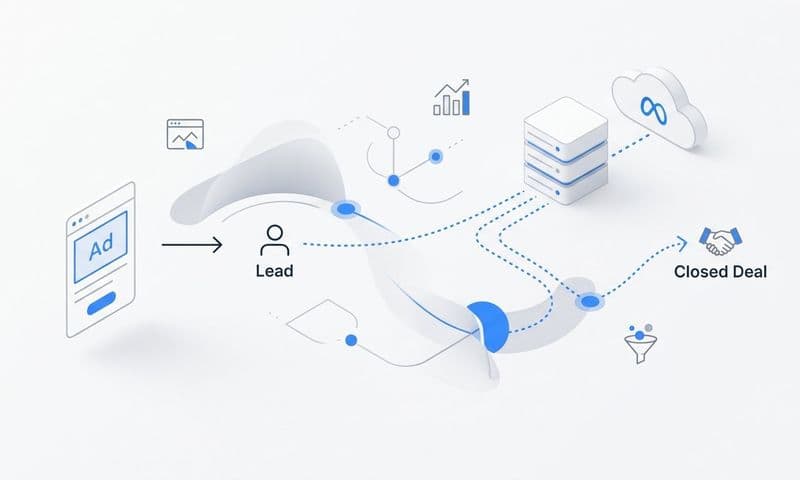
Ask the vendor to map out the complete data flow: "Show me how data moves from a Meta ad click, through your tracking system, into your attribution platform, and ultimately into our CRM as a closed deal." Understanding this flow reveals potential data gaps, latency issues, and integration complexity. Good platforms should provide a clear visual representation of how data connects across your entire marketing ecosystem.
Dig deep into server-side tracking capabilities. As browser-based tracking becomes less reliable due to privacy restrictions and ad blockers, server-side tracking has become essential for accurate attribution. Ask specific questions: "How does your server-side tracking work? What percentage of conversions do you typically capture compared to browser-based tracking alone? How do you handle the technical implementation?"
Evaluate conversion sync features carefully. The most sophisticated attribution platforms don't just collect data—they send enriched conversion data back to ad platforms like Meta and Google to improve algorithmic optimization. Ask to see this in action: "Show me how you sync conversion data back to Meta. What data points do you send? How does this improve ad platform performance?" This bidirectional data flow can significantly impact your ad ROI.
Get concrete about implementation requirements. Ask for a realistic timeline: "How long does implementation typically take for a company with our tech stack? What resources do we need internally—developers, marketing ops, data analysts? What's the most common implementation challenge, and how do you address it?" Vendors who promise unrealistically fast implementation often underestimate complexity.
Request information about ongoing maintenance and data quality monitoring. Attribution platforms require continuous attention to ensure tracking stays accurate as your marketing evolves. Ask: "What ongoing maintenance is required? How do you alert us to tracking issues? What happens when we add new ad platforms or change our CRM?"
How to verify you've completed this step: You understand exactly how data moves through the system, what technical resources you'll need for implementation, and how the platform maintains data accuracy over time.
Step 6: Score and Compare Vendors Using a Structured Framework
After watching multiple demos, details blur together. Without a structured scoring system, you'll make decisions based on recency bias or superficial impressions rather than objective evaluation. This final step ensures you can compare vendors systematically.
Create a scoring matrix before you start demos, not after. Include categories that matter to your business: data accuracy and tracking methodology, integration depth and ease, user interface and daily usability, reporting capabilities and flexibility, customer support and training resources, pricing structure and scalability, and implementation timeline and complexity. Assign weights to each category based on your priorities—if data accuracy matters more than interface design, weight it accordingly.
Rate each vendor immediately after the demo while details are still fresh. Use a consistent scale (1-10 or 1-5) and write specific notes justifying each score. Don't just write "8/10 for usability"—write "8/10 for usability because the dashboard was intuitive, but the reporting builder required multiple clicks to access basic metrics." These details become invaluable when you're comparing three vendors two weeks later.
Document specific strengths and concerns for each platform. What did this vendor do exceptionally well? Where did they struggle to answer your questions? Were there any red flags—vague answers about data accuracy, unwillingness to discuss pricing, or pressure to sign quickly? Note both positive differentiators and potential deal-breakers. A thorough marketing attribution software comparison requires this level of detailed documentation.
Request follow-up materials to fill knowledge gaps. Ask for case studies from companies similar to yours, technical documentation about integration requirements, and references from current customers you can contact. Good vendors will provide these readily. Hesitation might indicate they lack relevant case studies or satisfied customers.
Schedule a debrief with your demo team within 24 hours. Compare scores, discuss disagreements, and identify any questions that remain unanswered. Often, different stakeholders notice different strengths and weaknesses—the collective evaluation is more valuable than any individual perspective.
Use your scoring matrix to create a shortlist of top candidates. If you've evaluated five platforms, narrow it to the top two or three for deeper evaluation. Request extended trials, additional technical deep-dives, or conversations with their customer success teams to validate your initial impressions. Many vendors offer an attribution software free trial that allows you to test the platform with your actual data before committing.
How to verify you've completed this step: You have a completed scorecard for each vendor that enables objective comparison, and your team agrees on the top candidates worth deeper evaluation.
Putting It All Together
A successful enterprise attribution demo isn't about being impressed—it's about being informed. By defining requirements upfront, assembling the right team, requesting customized demonstrations, and scoring vendors systematically, you transform demos from passive presentations into active evaluations that lead to confident decisions.
The difference between teams that choose the right attribution platform and those that regret their decision often comes down to evaluation discipline. When you follow this structured approach, you avoid common pitfalls: choosing based on flashy features that you'll never use, underestimating implementation complexity, or overlooking data accuracy issues that become apparent only after you've signed a contract.
Use this checklist to ensure you're ready for your next enterprise attribution software demo: ✓ Requirements document completed with specific pain points and must-have features. ✓ Stakeholder questions prepared and shared with the vendor beforehand. ✓ Use cases shared so the demo addresses your actual attribution challenges. ✓ Scoring framework ready to capture objective evaluations. ✓ Follow-up questions documented for deeper technical discussions.
Remember that the best attribution platform isn't the one with the most features—it's the one that solves your specific challenges, integrates seamlessly with your existing tech stack, and empowers your team to make smarter marketing decisions every day. For a comprehensive overview of what leading platforms offer, explore our guide to comparing marketing attribution software features.
Ready to see how Cometly handles your specific attribution challenges? Our platform captures every touchpoint across your customer journey, connects ad spend to actual revenue with multi-touch attribution models, and feeds enriched conversion data back to ad platforms to improve algorithmic optimization. Get your free demo today and put these evaluation steps into practice with a customized walkthrough built around your actual use cases.