
Picture this: Your enterprise just spent $2.3 million on digital advertising across 15 platforms last quarter, but you can't definitively say which campaigns actually drove revenue. Sound familiar?
Enterprise conversion tracking has become the holy grail of modern marketing operations. With iOS privacy updates, cookie deprecation, and increasingly complex customer journeys spanning multiple touchpoints, traditional analytics tools are leaving massive blind spots in your attribution data.
The stakes couldn't be higher. Marketing teams are under intense pressure to prove ROI while navigating privacy-first tracking, server-side implementation, and the need for real-time optimization across channels.
What separates enterprise-grade conversion tracking from basic analytics? It's the ability to capture every touchpoint, connect fragmented data sources, and provide actionable insights that actually influence budget allocation. The best solutions don't just track conversions—they enrich your data, feed smarter algorithms back to ad platforms, and give you the confidence to scale winning campaigns.
Here are the leading enterprise conversion tracking solutions helping marketing teams reclaim visibility in 2026.
1. Cometly
Best for: AI-powered attribution with real-time optimization and enhanced ad platform integration
Cometly transforms how enterprises track and optimize their marketing performance by providing complete visibility into every customer touchpoint.
 8 Best Enterprise Conversion Tracking Solutions To Prove Marketing ROI In 2026
Where This Tool Shines
Cometly excels at capturing the complete customer journey from first ad click to final conversion, then using AI to identify patterns that drive revenue. Unlike traditional analytics that show what happened, Cometly's AI engine analyzes performance data to recommend which campaigns deserve more budget and which creative elements are actually converting.
The platform's server-side tracking ensures data accuracy even with iOS privacy restrictions, while its Conversion API integration feeds enriched data back to Meta, Google, and other ad platforms for improved targeting and optimization.
Key Features & Capabilities
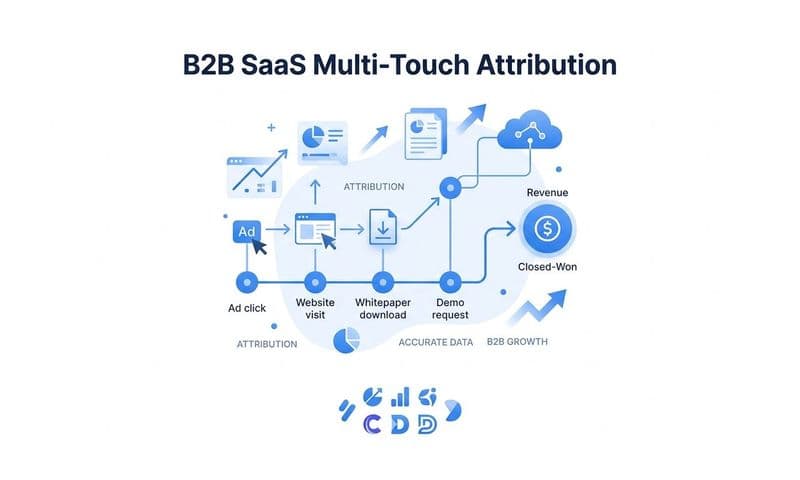
Complete Journey Tracking: Captures every touchpoint across all devices and platforms, building a comprehensive view of how customers interact with your marketing before converting.
AI-Powered Recommendations: Analyzes performance patterns to suggest which campaigns should receive more budget and which creative elements drive the highest-converting audiences.
Server-Side Implementation: Bypasses browser limitations and privacy restrictions through direct server-to-server tracking that maintains accuracy despite iOS updates and cookie deprecation.
Enhanced Platform Integration: Sends enriched conversion data back to Meta, Google, and major ad platforms through Conversion APIs, improving their algorithmic optimization and targeting capabilities.
Multi-Touch Attribution: Provides customizable attribution modeling across email, social, search, and display channels with flexible attribution windows that match your sales cycle.
Revenue Connection: Integrates with CRM systems to connect marketing touchpoints with actual closed revenue, proving marketing ROI with real business outcomes.
Audience Intelligence: Builds advanced audience segments based on high-converting customer patterns, enabling more precise targeting and remarketing strategies.
Best For / Ideal Users
Cometly is ideal for performance marketing teams and agencies managing significant ad spend across multiple platforms. The platform delivers the most value for organizations running complex campaigns where traditional last-click attribution fails to capture the full customer journey.
It's particularly valuable for businesses affected by iOS privacy updates who need accurate tracking despite browser restrictions, and for teams that want actionable AI recommendations rather than just raw data.
Pricing
Cometly offers flexible pricing based on tracked events and attribution complexity, with enterprise plans including dedicated support and custom integrations tailored to your specific tracking requirements.
2. Google Analytics 4
Best for: Comprehensive web analytics with built-in Google Ads integration and machine learning insights
Google Analytics 4 represents Google's evolution toward privacy-first measurement, offering enhanced conversion tracking capabilities for enterprises already invested in the Google ecosystem.
 10 Best Enterprise Channel Analytics Software To Maximize Marketing ROI
Where This Tool Shines
GA4's strength lies in its seamless integration with Google's advertising platforms and its machine learning capabilities for predictive insights. The platform automatically tracks enhanced ecommerce events, provides cross-device measurement, and offers sophisticated audience building for remarketing campaigns.
Its BigQuery integration allows enterprises to export raw data for custom analysis, while enhanced conversions help recover lost conversion data from privacy restrictions. The platform's real-time reporting and customizable dashboards make it accessible for both technical and non-technical team members.
Key Features & Capabilities
Enhanced Ecommerce Tracking: Automatically collects purchase events, product performance data, and shopping behavior without extensive manual configuration.
Cross-Device Measurement: Tracks user journeys across web and mobile app properties using Google's identity resolution technology.
Machine Learning Insights: Provides predictive metrics for churn probability, purchase likelihood, and customer lifetime value based on behavioral patterns.
BigQuery Integration: Exports raw event data for custom analysis, advanced segmentation, and integration with data warehouses.
Enhanced Conversions: Recovers lost tracking data by sending hashed first-party data to improve attribution accuracy despite privacy restrictions.
Advanced Audience Building: Creates sophisticated remarketing audiences based on events, user properties, and predictive metrics for campaign optimization.
Real-Time Reporting: Monitors conversion activity as it happens with customizable dashboard views for immediate performance insights.
Privacy-Focused Architecture: Built to adapt to evolving privacy regulations with cookieless measurement options and consent mode integration.
Best For / Ideal Users
GA4 works best for enterprises heavily using Google Ads, YouTube, and other Google marketing tools. It's particularly valuable for ecommerce businesses needing product-level performance data and organizations with both web and mobile app properties.
We compare the leading options in our ecommerce ad automation tool roundup.
The platform is ideal for teams requiring free, scalable analytics infrastructure with machine learning capabilities. Organizations with dedicated analytics teams can leverage its advanced features like BigQuery integration for custom reporting.
Pricing
Google Analytics 4 is free for most enterprises, with Google Analytics 360 offering enhanced features, higher data limits, service level agreements, and dedicated support for large-scale operations requiring enterprise-grade capabilities.
3. Adobe Analytics
Best for: Enterprise-grade analytics with advanced segmentation and real-time personalization capabilities
Adobe Analytics delivers sophisticated conversion tracking and customer journey analysis as part of the Adobe Experience Cloud ecosystem, designed for organizations requiring enterprise-level data governance and customization.
 10 Best Enterprise Channel Analytics Software To Maximize Marketing ROI
Where This Tool Shines
Adobe Analytics excels at providing deep customer insights through its Analysis Workspace, which allows marketing teams to build custom reports and visualizations without relying on IT resources. The platform's real-time data processing capabilities enable immediate personalization based on conversion behavior, while its integration with Adobe Target and Adobe Campaign creates a closed-loop system for testing and optimization.
The platform's strength lies in handling massive data volumes while maintaining granular segmentation capabilities. Marketing teams can create sophisticated audience segments based on behavioral patterns, then activate those segments across Adobe's marketing automation tools for personalized experiences that drive conversions.
Key Features & Capabilities
Analysis Workspace: Drag-and-drop interface for building custom reports and visualizations without SQL knowledge.
Real-Time Segmentation: Create and activate audience segments instantly based on conversion behavior and engagement patterns.
Multi-Touch Attribution: Customizable attribution models that assign conversion credit across the entire customer journey.
Predictive Analytics: AI-powered anomaly detection and forecasting to identify conversion trends before they become obvious.
Cross-Channel Journey Analysis: Track customer interactions across web, mobile apps, email, and offline touchpoints in unified reports.
Enterprise API Access: Comprehensive API for custom integrations, automated reporting, and data warehouse exports.
Best For / Ideal Users
Adobe Analytics is designed for large enterprises with dedicated analytics teams and complex, multi-touchpoint customer journeys. The platform delivers maximum value for organizations already using other Adobe Experience Cloud products, where the integration creates a unified marketing and analytics ecosystem.
It's particularly valuable for businesses requiring advanced customization, strict data governance, and the ability to process millions of events daily while maintaining real-time reporting capabilities.
Pricing
Adobe Analytics uses custom enterprise pricing based on data volume, feature requirements, and support level, with implementations typically requiring significant investment in both licensing and technical resources.
4. HubSpot Marketing Analytics
Best for: Integrated CRM and marketing analytics with lead-to-revenue attribution
HubSpot Marketing Analytics delivers comprehensive conversion tracking within a unified CRM and marketing automation ecosystem, connecting every touchpoint from initial website visit through closed deal.
 7 Best Enterprise Marketing Data Analytics Software Tools To Maximize ROI
Where This Tool Shines
HubSpot's power lies in eliminating data silos between marketing and sales. The platform automatically captures email opens, website visits, form submissions, and social media interactions, then connects these touchpoints directly to contact records in your CRM. This unified approach means you can see exactly which blog post a customer read before requesting a demo, or which email sequence moved them from marketing qualified lead to sales opportunity.
The attribution reporting shows which channels and campaigns generate qualified leads versus which ones actually close deals. This distinction matters enormously for B2B companies where lead quality trumps lead quantity. The built-in ROI calculator connects marketing spend to actual revenue, giving you concrete numbers when defending budget allocation decisions.
Key Features & Capabilities
Unified Contact Timeline: Every interaction—email clicks, page views, form submissions, sales calls—appears on a single contact record, providing complete journey visibility.
Multi-Touch Attribution Reports: Compare first-touch, last-touch, and multi-touch models to understand which channels initiate relationships versus which ones close deals.
Revenue Attribution: Connect closed deals back to original marketing sources, showing actual revenue generated by each campaign and channel.
Campaign Performance Dashboards: Real-time visibility into email performance, landing page conversions, and lead generation metrics across all marketing activities.
Automated Lead Scoring: Assign point values to different behaviors and characteristics, automatically identifying which contacts are sales-ready based on engagement patterns.
Best For / Ideal Users
HubSpot excels for B2B companies with sales cycles spanning weeks or months where nurturing matters. It's particularly valuable when your sales team needs context about what marketing touchpoints influenced each lead before they pick up the phone.
The platform works best for organizations that want marketing and sales working from the same data rather than separate systems. If your current challenge is proving which marketing activities actually contribute to closed revenue, HubSpot's integrated approach solves this directly.
Pricing
HubSpot offers free CRM and basic marketing tools, with Marketing Hub Professional starting around $800/month and Enterprise plans providing advanced attribution, custom reporting, and predictive lead scoring capabilities.
5. Mixpanel
Best for: Event-based analytics with advanced cohort analysis and user behavior tracking for product-led growth
Mixpanel is a product analytics platform that provides event tracking and digital analytics to help teams track, analyze, and act on user behavior to drive acquisition, growth, and retention.
 8 Best Enterprise Conversion Tracking Solutions To Prove Marketing ROI In 2026
Where This Tool Shines
Mixpanel's event-based tracking model captures granular user interactions that traditional pageview analytics completely miss. While most analytics platforms tell you how many people visited your site, Mixpanel shows you exactly what they did—which features they used, how they navigated your product, and which actions preceded conversion.
The platform excels at tracking micro-conversions and engagement events that lead to major conversions. This means you can optimize the entire customer experience, not just the final purchase moment. Its cohort analysis capabilities help identify which acquisition channels bring users who actually stick around and generate long-term value, while funnel analysis reveals exactly where potential customers drop off in multi-step conversion processes.
Key Features & Capabilities
Event-Based Tracking: Captures every user action as a discrete event with custom properties for detailed behavioral analysis.
Advanced Cohort Analysis: Groups users by shared characteristics to measure retention, lifetime value, and behavioral patterns over time.
Funnel Analysis: Visualizes multi-step conversion processes to identify drop-off points and optimization opportunities.
Real-Time Segmentation: Creates dynamic user segments based on actions, properties, and behavioral patterns for targeted analysis.
Cross-Platform Tracking: Unifies user behavior across web and mobile applications for complete journey visibility.
Predictive Analytics: Uses machine learning to identify users at risk of churning and opportunities for growth.
Custom Dashboards: Builds automated reporting with alerts for significant changes in user behavior or conversion metrics.
Best For / Ideal Users
Mixpanel is designed for SaaS companies, mobile apps, and digital products where user engagement and retention are critical success metrics. It's particularly valuable for product-led growth strategies where the product itself drives acquisition and expansion.
The platform works best for subscription businesses and freemium models that need to understand which user behaviors predict long-term value. Product managers and growth teams use Mixpanel to make data-driven decisions about feature development and user experience optimization.
Pricing
Mixpanel offers a free tier for smaller implementations with up to 20 million events per month. Paid plans scale based on data volume and advanced features, with enterprise options including dedicated support and custom integrations for large-scale operations.
6. Ruler Analytics
Best for: Marketing attribution with phone call tracking and offline conversion measurement for B2B and service businesses
Ruler Analytics closes the loop between marketing activities and revenue by tracking both online and offline conversions, with particular strength in phone call attribution and lead management.
 6 Best Attribution Modeling For Marketing Platforms That Track Real ROI
Where This Tool Shines
Ruler Analytics excels at solving a problem most attribution platforms ignore: what happens when your highest-value conversions happen over the phone rather than through web forms. The platform captures the complete customer journey from initial website visit through phone calls, form submissions, and eventual sales, then connects this data back to the original marketing source.
Its CRM integration ensures that marketing teams get credit for all conversions, not just online transactions. This makes it invaluable for businesses where phone-based sales processes drive significant revenue but traditional analytics platforms leave massive attribution blind spots.
Key Features & Capabilities
Phone Call Tracking: Dynamic number insertion tracks which marketing source drove each phone call, with conversation analytics to qualify lead quality.
Multi-Touch Attribution: Connects online and offline touchpoints to show the complete path to conversion across all channels.
CRM Integration: Links marketing touchpoints with sales outcomes to prove which campaigns drive actual revenue, not just leads.
Visitor Identification: Tracks website behavior and engagement patterns to understand what content influences conversions.
Marketing Mix Modelling: Analyzes the combined impact of all marketing activities to optimize budget allocation across channels.
Campaign ROI Reporting: Shows actual revenue generated by each campaign, not just vanity metrics like clicks or impressions.
Lead Scoring: Automatically qualifies marketing qualified leads based on engagement signals and conversion likelihood.
Best For / Ideal Users
Ruler Analytics is designed for B2B companies, professional services firms, and organizations where phone calls represent a significant conversion channel. It's particularly valuable for businesses with sales teams handling inbound leads and longer conversion cycles that span multiple touchpoints.
The platform works best for companies that have struggled to prove marketing ROI because their conversions happen offline or through channels that traditional analytics tools can't track effectively.
Pricing
Ruler Analytics offers tiered pricing based on website traffic volume and call tracking requirements, with enterprise plans including advanced attribution features and dedicated support.
7. Triple Whale
Best for: Ecommerce-focused attribution with profit tracking and creative analysis for Shopify and Amazon sellers
Triple Whale delivers comprehensive ecommerce analytics built specifically for online retailers who need to understand not just revenue, but actual profitability across their marketing channels.
 10 Best Enterprise Channel Analytics Software To Maximize Marketing ROI
Where This Tool Shines
Triple Whale distinguishes itself by focusing on what ecommerce brands actually care about: profit, not just revenue. The platform automatically calculates true profit margins by factoring in product costs, shipping expenses, and advertising spend across every channel. This profit-first approach helps brands avoid the common trap of scaling unprofitable campaigns that look good on revenue metrics but destroy margins.
The platform's creative analysis capabilities provide unique value for brands running visual advertising on Meta and TikTok. It tracks which specific ad creatives, audiences, and messaging angles drive the most profitable customers—not just the most conversions. This distinction becomes critical when scaling, as high-converting audiences don't always translate to high-value customers.
Key Features & Capabilities
Profit-Focused Attribution: Tracks customer acquisition costs and lifetime value with real-time margin calculations across all marketing channels.
Creative Performance Analysis: Identifies which ad creatives and audience segments drive the highest-profit customers, not just the most clicks.
Multi-Touch Attribution: Maps complex ecommerce customer journeys from first touchpoint through repeat purchases and subscription renewals.
Inventory-Aware Tracking: Factors stock levels into attribution decisions, preventing budget allocation to out-of-stock products.
Subscription Analytics: Provides detailed retention and churn analysis for subscription-based ecommerce models.
Best For / Ideal Users
Triple Whale is designed specifically for ecommerce brands selling on Shopify or Amazon. It's most valuable for businesses running significant advertising spend across Meta, Google, and TikTok who need to optimize for profitability rather than just revenue growth.
The platform works particularly well for brands with multiple product lines at different margin levels, where understanding which products drive profitable growth becomes essential for smart scaling decisions.
Pricing
Triple Whale offers tiered pricing based on monthly store revenue, starting with plans for growing brands and scaling to enterprise-level features for high-volume sellers.
8. Northbeam
Best for: Machine learning-powered attribution with privacy-compliant tracking for performance marketers
Northbeam is a marketing intelligence platform that uses machine learning models to deliver accurate multi-touch attribution and media mix modeling in a privacy-first environment.
 8 Best Enterprise Conversion Tracking Solutions To Prove Marketing ROI In 2026
Where This Tool Shines
Northbeam's algorithmic approach to attribution sets it apart in the post-iOS 14 landscape. While traditional tracking methods struggle with privacy restrictions, Northbeam's machine learning models analyze patterns in customer behavior and conversion data to fill attribution gaps left by cookie limitations and browser restrictions.
The platform's Northbeam Apex feature optimizes ad algorithms using first-party data, feeding enriched conversion signals back to advertising platforms for improved targeting. Its creative analytics capabilities identify which specific ad assets and messaging elements drive the highest-converting audiences across channels, helping performance marketers scale winning campaigns with confidence.
Key Features & Capabilities
Multi-Touch Attribution (MTA): Tracks complete customer journeys across all channels, campaigns, and ads in a unified view.
Media Mix Modeling: Uses statistical analysis to understand marketing effectiveness and optimize budget allocation.
Machine Learning Attribution: Industry-leading ML models adapt to privacy restrictions and incomplete data.
Creative Analytics: Identifies best-performing ad assets across channels with correlation analysis.
Northbeam Apex: Optimizes ad platform algorithms using enriched first-party conversion data.
Top-of-Funnel Attribution: Attributes revenue to awareness campaigns and upper-funnel activities.
Profit Benchmarks: Provides profitability insights to increase campaign ROI beyond revenue metrics.
Halo Effect Analysis: Built-in correlation analysis proves cross-channel influence and brand lift.
Best For / Ideal Users
Northbeam is designed for performance marketing teams and agencies managing substantial ad spend across multiple platforms who need sophisticated attribution despite privacy limitations. The platform is particularly valuable for direct-to-consumer brands and ecommerce businesses affected by iOS tracking restrictions.
It's ideal for organizations that have moved beyond basic last-click attribution and need machine learning capabilities to understand complex customer journeys. Teams focused on creative optimization and those running significant awareness campaigns benefit from Northbeam's ability to attribute revenue to top-of-funnel activities.
Pricing
Northbeam offers custom pricing based on ad spend volume, data complexity, and attribution requirements, with enterprise plans including dedicated support and advanced machine learning features.
Making the Right Choice
Selecting the right enterprise conversion tracking solution depends on your specific business model, technical requirements, and marketing objectives. Each platform offers unique strengths that align with different organizational needs and growth stages.
For enterprises seeking AI-powered insights with enhanced ad platform integration, Cometly provides the most comprehensive solution for modern marketing attribution challenges. Its ability to capture complete customer journeys while feeding optimized data back to advertising platforms makes it particularly valuable for performance-focused teams.
Google Analytics 4 remains the foundation for most enterprise tracking strategies, especially for organizations heavily invested in Google's advertising ecosystem. However, it works best when combined with specialized attribution tools for complete visibility. Adobe Analytics and HubSpot serve enterprises with complex customer journeys and integrated marketing operations, while Mixpanel excels for product-led growth strategies.
Ruler Analytics bridges online and offline conversions, Triple Whale focuses on ecommerce profitability, and Northbeam provides cutting-edge machine learning attribution. The key is understanding your primary conversion channels, technical capabilities, and reporting requirements.
Consider starting with a comprehensive platform like Cometly that can grow with your attribution needs, then supplementing with specialized tools as your requirements evolve. Get your free demo to see how AI-powered attribution can transform your marketing performance.