
Your CMO walks into Monday's board meeting with a simple question that makes your stomach drop: "Which of our $2.3 million in marketing spend actually drove revenue last quarter?" If you're scrambling for answers beyond vanity metrics and surface-level attribution, you're not alone.
Enterprise marketing teams are drowning in data but starving for insights. With customers touching 8-12 touchpoints before converting, traditional analytics tools show you clicks and impressions while revenue attribution remains a black box. The result? Marketing budgets get slashed because leadership can't see the connection between ad spend and actual business outcomes.
The stakes couldn't be higher. Companies using advanced marketing ROI analytics tools report 15-20% better campaign performance and significantly more confident budget allocation decisions. But with dozens of platforms claiming to solve attribution, how do you separate the signal from the noise?
This guide breaks down eight enterprise-grade marketing ROI analytics tools that go beyond surface metrics to show you which campaigns, channels, and touchpoints actually drive revenue. Whether you're managing multi-million dollar ad budgets across Meta, Google, and LinkedIn, or trying to prove marketing's impact on pipeline and revenue, these platforms represent the cutting edge of marketing attribution technology.
1. Cometly
Best for: Real-time marketing attribution with AI-powered optimization recommendations
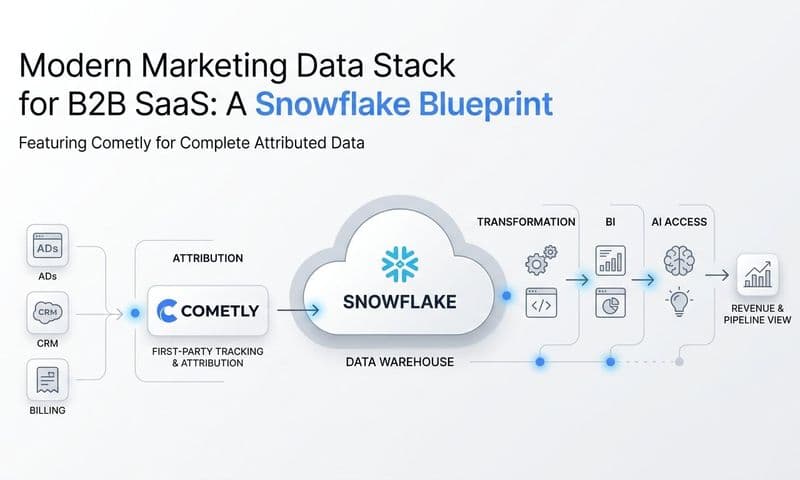
Cometly is a marketing attribution and analytics platform that shows exactly which ads and channels drive leads and revenue by connecting your ad platforms, CRM, and website to track the entire customer journey in real time.
 8 Best Enterprise Marketing ROI Analytics Tools To Prove Campaign Value
Where This Tool Shines
Cometly excels at capturing every touchpoint in complex B2B customer journeys, from initial ad click through CRM events and final conversion. The platform's AI engine analyzes this complete data set to identify high-performing ads and campaigns across every channel, then provides specific recommendations for scaling successful initiatives.
Unlike traditional analytics tools that lose attribution data in the handoff between marketing and sales, Cometly maintains connection visibility throughout the entire revenue cycle. This makes it invaluable for enterprise teams managing sophisticated multi-channel campaigns where understanding the full customer journey is critical for budget optimization.
Key Features & Capabilities
Complete Customer Journey Tracking: Captures every touchpoint from ad click to CRM conversion, providing enriched data that shows the complete path to revenue.
AI-Powered Optimization Recommendations: The AI Ads Manager analyzes performance across all channels and provides specific recommendations for scaling high-performing campaigns.
Enhanced Conversion Data Sync: Feeds enriched, conversion-ready events back to Meta, Google, and other ad platforms, improving their targeting algorithms and optimization capabilities.
Real-Time Attribution Modeling: Provides immediate visibility into campaign performance with customizable attribution windows that match your actual sales cycle.
Executive-Level Revenue Reporting: Delivers clear ROI metrics with drill-down capabilities that connect marketing spend to actual revenue outcomes.
Best For / Ideal Users
Cometly is ideal for enterprise marketing teams and agencies managing significant ad spend across multiple channels who need to prove marketing's impact on actual revenue. The platform particularly excels for B2B companies with longer sales cycles where traditional last-click attribution fails to capture the full customer journey.
Growth-minded marketers who want to move beyond vanity metrics and understand which campaigns truly drive business outcomes will find Cometly's AI-powered insights especially valuable for confident scaling decisions.
Pricing
Cometly offers custom enterprise pricing based on monthly tracked conversions and required integrations, with plans typically starting in the mid-four figures annually for enterprise implementations.
2. HubSpot Marketing Analytics
Best for: Integrated marketing and sales attribution within a comprehensive CRM ecosystem
HubSpot Marketing Analytics provides attribution reporting, campaign ROI analysis, and revenue tracking built directly into their CRM platform, offering seamless integration between marketing activities and sales outcomes.
 7 Best Conversion Attribution Software To Track Multi-Channel ROI In 2026
Where This Tool Shines
HubSpot's strength lies in its native integration between marketing automation, sales CRM, and analytics reporting. Since all customer data lives within the same ecosystem, attribution tracking maintains accuracy from first touch through closed deal without data fragmentation.
The platform automatically connects email campaigns, social media efforts, paid advertising, and content marketing to actual revenue outcomes. For companies already using HubSpot's CRM, the marketing analytics tools become incredibly powerful because there's no data loss between marketing qualified leads and sales qualified opportunities.
Key Features & Capabilities
Native CRM Integration: Complete lead-to-revenue tracking without third-party connectors or data exports.
Multi-Touch Attribution Reporting: Compare first-touch, last-touch, and custom attribution models across all marketing channels.
Campaign ROI Analysis: Track revenue generated by specific campaigns with customizable attribution windows.
We cover this in more depth in our guide to generate ad variations with AI.
Automated Lead Scoring: AI-powered scoring predicts which leads are most likely to convert based on engagement patterns.
We compare the leading options in our AI ad variation generator roundup.
Contact Timeline Visibility: Complete marketing interaction history for every contact, showing all touchpoints chronologically.
Custom Dashboard Creation: Build executive-level reports that connect marketing spend to pipeline and revenue.
Ad Platform Integration: Connect Meta, Google, and LinkedIn campaigns for unified paid advertising attribution.
Best For / Ideal Users
HubSpot Marketing Analytics works best for mid-market to enterprise companies already using HubSpot's CRM or considering a unified marketing and sales platform. It's particularly effective for B2B organizations that want marketing analytics and reporting in one integrated system without managing multiple point solutions.
The platform is ideal for marketing teams who need to prove ROI to leadership but don't have dedicated data engineering resources. The native integration eliminates the technical complexity of connecting disparate systems.
Pricing
Marketing analytics capabilities are included in HubSpot's Marketing Hub Professional ($890/month) and Enterprise ($3,600/month) plans, with CRM integration included at all levels.
3. Salesforce Marketing Cloud Analytics
Best for: Enterprise-scale marketing attribution with deep CRM integration and advanced AI insights
Salesforce Marketing Cloud Analytics delivers comprehensive marketing ROI measurement through Einstein AI-powered insights, connecting marketing activities directly to Salesforce CRM opportunity and revenue data.
 8 Best Enterprise Channel Attribution Software Tools To Maximize ROI
Where This Tool Shines
Salesforce Marketing Cloud Analytics leverages the world's most widely-used enterprise CRM to provide unmatched attribution accuracy for complex B2B sales cycles. The platform's Einstein AI analyzes customer interaction data to identify patterns and predict which marketing activities will drive the highest ROI.
With native Salesforce integration, marketing teams can track attribution from initial awareness through closed-won deals without data silos or manual data transfers. The platform excels at handling enterprise sales cycles with multiple decision makers, long consideration periods, and high-value transactions where accurate attribution is critical for budget optimization.
Key Features & Capabilities
Einstein AI-Powered Predictive Analytics: Machine learning identifies which marketing activities correlate with highest-value opportunities and predicts future campaign performance.
Native Salesforce CRM Integration: Complete opportunity tracking connects marketing touches to actual revenue without third-party integrations or data exports.
Advanced Multi-Touch Attribution: Sophisticated attribution models account for complex B2B buying processes across all marketing channels and touchpoints.
Real-Time Campaign Performance Monitoring: Live dashboards show campaign ROI and revenue influence as opportunities progress through your sales pipeline.
Custom Attribution Model Creation: Configure attribution logic to match your unique sales process, deal stages, and revenue recognition requirements.
Executive Revenue Reporting: Pre-built dashboards with drill-down capabilities translate marketing metrics into revenue language executives understand.
Best For / Ideal Users
Salesforce Marketing Cloud Analytics is designed for large enterprises already using Salesforce CRM who need sophisticated marketing attribution capabilities. The platform requires Salesforce ecosystem investment but delivers unmatched attribution accuracy for organizations with that foundation.
It's particularly valuable for organizations with complex, high-value sales processes requiring detailed attribution analysis across multiple stakeholders and long consideration periods. Companies managing significant marketing budgets where small optimization improvements yield substantial returns will find the investment worthwhile.
Pricing
Marketing Cloud Analytics pricing starts around $1,250 per month for basic attribution features, with enterprise implementations typically ranging from $3,000-$15,000+ monthly depending on data volume, user count, and advanced features required.
4. Google Analytics 4 with Enhanced Ecommerce
Best for: Free enterprise-grade analytics with advanced attribution modeling and Google Ads integration
Google Analytics 4 provides sophisticated marketing attribution and ROI tracking capabilities at no cost, with enhanced ecommerce tracking and integration across Google's advertising ecosystem.
 10 Best Enterprise Channel Analytics Software To Maximize Marketing ROI
Where This Tool Shines
GA4's greatest strength is its combination of enterprise-level capabilities with zero cost, making advanced attribution accessible to organizations of any size. The platform's machine learning automatically fills data gaps from iOS 14.5+ privacy changes and cookie restrictions, providing more complete attribution than traditional analytics.
With native Google Ads integration, GA4 shows exactly which keywords, campaigns, and audiences drive the highest value customers. The enhanced ecommerce tracking captures detailed customer journey data, while the attribution modeling compares first-click, last-click, and data-driven attribution to show marketing's true impact on revenue.
Related reading: our complete guide to AI ad generator for ecommerce.
Key Features & Capabilities
Advanced Attribution Modeling: Compare multiple attribution models side-by-side to understand how different approaches assign credit across your customer journey.
Machine Learning Insights: Predictive metrics identify customers likely to convert and audiences with highest revenue potential based on behavioral patterns.
Enhanced Ecommerce Tracking: Detailed revenue attribution shows which products, campaigns, and channels drive actual sales, not just traffic.
Google Ads Integration: Direct connection to Google Ads reveals complete paid search ROI with keyword-level revenue attribution.
Cross-Device Journey Tracking: User-ID tracking connects customer interactions across devices and platforms for complete attribution visibility.
Custom Conversion Configuration: Define specific business goals and track attribution for events that matter to your revenue model.
Best For / Ideal Users
GA4 is ideal for enterprises wanting sophisticated marketing attribution without additional software costs, particularly those heavily invested in Google's advertising ecosystem. It works well for ecommerce companies needing detailed product-level attribution and B2B organizations with online conversion tracking.
The platform is particularly valuable for marketing teams managing significant Google Ads spend who need to prove ROI and optimize campaigns based on actual revenue data rather than vanity metrics.
Pricing
Google Analytics 4 is completely free for most enterprise use cases, with Google Analytics 360 available for organizations requiring advanced features, guaranteed SLA, and dedicated support.
5. Adobe Analytics
Best for: Advanced segmentation and attribution analysis with powerful data visualization capabilities
Adobe Analytics provides enterprise-level marketing attribution and customer journey analysis through advanced segmentation, real-time reporting, and sophisticated attribution modeling capabilities.
 8 Best Enterprise Lead Attribution Software To Maximize Marketing ROI
Where This Tool Shines
Adobe Analytics excels at deep-dive analysis and advanced segmentation that reveals hidden patterns in customer behavior and marketing performance. The platform's Analysis Workspace allows marketing teams to create custom attribution models, compare different attribution approaches side-by-side, and analyze customer segments with unprecedented granularity.
The platform's algorithmic attribution uses machine learning to weight touchpoints based on their actual influence on conversions, providing more accurate ROI measurement than rules-based models. Adobe handles massive data volumes while maintaining real-time reporting capabilities, making it ideal for enterprises with complex attribution requirements across multiple brands, regions, or business units.
Key Features & Capabilities
Algorithmic Attribution Modeling: Machine learning analyzes conversion paths to assign credit based on actual influence rather than arbitrary rules.
Analysis Workspace: Drag-and-drop interface for building custom reports, comparing attribution models, and creating advanced visualizations.
Advanced Segmentation: Create sophisticated customer segments based on behavior, demographics, and conversion patterns for targeted analysis.
Real-Time Reporting: Access up-to-the-minute attribution data with unlimited historical data retention for trend analysis.
Cross-Device Journey Tracking: Follow customers across devices and platforms to understand complete conversion paths.
Custom Attribution Models: Build attribution models tailored to your specific sales process and customer journey characteristics.
Best For / Ideal Users
Adobe Analytics is best suited for large enterprises with dedicated analytics teams who need advanced attribution modeling and deep customer behavior analysis. The platform requires significant expertise to leverage its full capabilities.
It's particularly valuable for companies with complex customer journeys requiring sophisticated segmentation, multi-brand organizations needing unified attribution across properties, and businesses where detailed behavioral analysis drives strategic decisions.
Pricing
Adobe Analytics pricing is custom-quoted based on server calls and features, typically starting around $48,000 annually for enterprise implementations, with costs scaling based on data volume and advanced capabilities required.
6. Ruler Analytics
Best for: B2B marketing attribution connecting phone calls, form fills, and offline conversions to revenue
Ruler Analytics is a marketing measurement platform that closes the loop between marketing activities and revenue by tracking multi-touch attribution, impression attribution, and marketing mix modeling across all conversion types.
 8 Best Enterprise Marketing ROI Analytics Tools To Prove Campaign Value
Where This Tool Shines
Ruler Analytics solves a critical blind spot in B2B marketing attribution: tracking phone calls back to their original marketing sources. While most analytics platforms lose attribution when prospects pick up the phone, Ruler uses dynamic number insertion to connect inbound calls to specific campaigns, keywords, and touchpoints. This capability transforms attribution accuracy for service-based businesses where phone conversations drive significant revenue.
The platform's closed-loop reporting connects marketing qualified leads to sales opportunities and closed deals in your CRM, providing clear ROI measurement for every marketing channel. Ruler automatically reveals which marketing channels drive the best leads by tracking the complete journey from initial touchpoint through final conversion, whether that happens via form fill, live chat, or phone call.
Key Features & Capabilities
Phone Call Attribution: Dynamic number insertion and call tracking connect inbound calls to specific campaigns and keywords.
Multi-Touch Attribution: Track customer journeys across online and offline conversion points with customizable attribution models.
Closed-Loop Revenue Tracking: Connect marketing touches to CRM opportunities and closed revenue for complete ROI visibility.
Lead Source Management: Track attribution for form fills, calls, live chat conversations, and all marketing touchpoints.
Marketing Mix Modeling: Analyze aggregate channel performance to optimize budget allocation across marketing investments.
CRM Integration: Native integration with major CRM platforms enables complete lead-to-revenue tracking without data gaps.
Best For / Ideal Users
Ruler Analytics is ideal for B2B companies where phone calls drive significant revenue and traditional web analytics miss crucial conversion data. Service-based businesses, professional services firms, and high-consideration B2B sales benefit most from Ruler's phone attribution capabilities.
The platform works particularly well for organizations with longer sales cycles requiring detailed attribution analysis across multiple touchpoints before conversion.
Pricing
Ruler Analytics pricing starts around $199 per month for basic attribution features, with enterprise plans ranging from $499-$999+ monthly based on call volume and advanced attribution requirements.
7. Bizible (now Marketo Measure)
Best for: B2B marketing attribution with deep CRM integration and multi-touch revenue tracking
Marketo Measure (formerly Bizible) provides comprehensive B2B marketing attribution by connecting marketing touchpoints to CRM opportunities and closed revenue across complex enterprise sales cycles.
 8 Best Enterprise Marketing ROI Analytics Tools To Prove Campaign Value
Where This Tool Shines
Marketo Measure excels at solving B2B attribution challenges that traditional analytics can't handle—particularly tracking marketing's influence on deals with multiple stakeholders and long sales cycles. The platform captures every marketing touchpoint across all channels and connects them to specific opportunities and revenue outcomes in your CRM.
What sets this platform apart is its sophisticated understanding of B2B buying processes. When multiple people from the same account research solutions over months before making decisions, Marketo Measure tracks each interaction and assigns appropriate credit. The platform's strength lies in proving marketing's impact on pipeline generation and revenue acceleration, not just lead generation metrics that don't tell the full story.
Key Features & Capabilities
Multi-Touch Attribution Models: Configure custom attribution models that reflect your unique sales process, from first-touch through opportunity creation and closed-won revenue.
Deep CRM Integration: Native integration with Salesforce and Microsoft Dynamics connects marketing touchpoints directly to opportunity and revenue data without data loss.
Account-Based Marketing Attribution: Track marketing influence at the account level, showing how campaigns affect entire buying committees rather than individual contacts.
Pipeline Influence Tracking: Measure marketing's impact on pipeline velocity, showing which campaigns accelerate deals through sales stages.
Revenue Stage Reporting: Attribute revenue to marketing activities at every stage—from opportunity creation through closed-won deals and expansion revenue.
Best For / Ideal Users
Marketo Measure is designed for B2B enterprises with complex sales processes, multiple decision makers, and long consideration cycles. It's particularly valuable for companies using account-based marketing strategies that require detailed attribution analysis showing marketing's influence on target accounts.
The platform works best for organizations where sales cycles span months, deal values justify sophisticated attribution investment, and proving marketing's pipeline contribution is critical for budget decisions.
Pricing
Marketo Measure pricing starts around $1,800 per month for basic B2B attribution features, with enterprise implementations typically ranging from $3,000-$8,000+ monthly based on CRM complexity and data requirements.
8. Triple Whale
Best for: Ecommerce marketing attribution with real-time profit tracking and creative performance analysis
Triple Whale provides comprehensive ecommerce marketing attribution, connecting ad spend to actual profit while tracking creative performance and customer lifetime value across all marketing channels.
 10 Best Enterprise Channel Analytics Software To Maximize Marketing ROI
Where This Tool Shines
Triple Whale specializes in ecommerce attribution challenges, particularly tracking marketing performance in the post-iOS 14.5 landscape where traditional attribution breaks down. The platform combines first-party data collection with advanced modeling to provide accurate attribution even when pixels and tracking fail.
The platform's unique strength is profit-based attribution rather than just revenue tracking. Triple Whale accounts for product costs, shipping expenses, and other factors to show true marketing ROI. This distinction matters enormously for ecommerce brands where a $100 sale might generate only $20 in actual profit after costs.
Key Features & Capabilities
Profit-Based Attribution: Tracks actual profit margins by accounting for product costs, shipping, and fees—not just revenue numbers.
Creative Performance Analysis: Identifies which specific ad creatives, audiences, and campaigns drive the highest-value customers across platforms.
Customer Lifetime Value Tracking: Analyzes cohort performance and LTV to show which acquisition channels bring the most valuable long-term customers.
Multi-Touch Attribution: Connects touchpoints across Meta, Google, TikTok, and other platforms to show the complete customer journey.
Real-Time Profit Reporting: Provides immediate visibility into campaign profitability, enabling rapid budget reallocation decisions.
Best For / Ideal Users
Triple Whale is ideal for ecommerce brands and agencies managing significant ad spend across Meta, Google, TikTok, and other platforms. It's particularly valuable for direct-to-consumer brands needing profit-based attribution and creative performance insights.
The platform works best for businesses with established product cost data and those running multiple ad variations where identifying top performers drives meaningful optimization opportunities.
Pricing
Triple Whale pricing starts at $99 per month for basic attribution features, with advanced plans ranging from $299-$999+ monthly based on revenue volume and required integrations.
Making the Right Choice for Your Enterprise
The right marketing ROI analytics tool depends on your specific attribution challenges and existing technology stack. Each platform in this guide solves different pieces of the enterprise attribution puzzle.
For comprehensive attribution with AI-powered optimization, Cometly provides the most advanced real-time tracking and recommendation engine, capturing every touchpoint from ad click to revenue. Organizations already invested in HubSpot or Salesforce ecosystems should leverage their native marketing analytics for seamless CRM integration. Budget-conscious enterprises can achieve sophisticated attribution through Google Analytics 4, while companies requiring deep-dive analysis should consider Adobe Analytics.
B2B organizations with complex sales cycles benefit most from specialized platforms like Ruler Analytics or Marketo Measure that handle phone attribution and multi-stakeholder buying processes. Ecommerce brands should prioritize Triple Whale's profit-based attribution and creative performance tracking.
The key is matching your attribution complexity to platform capabilities. Simple attribution needs don't require enterprise-level complexity, while sophisticated B2B sales processes demand platforms built for multi-touch, long-cycle attribution.
Ready to see which marketing activities actually drive revenue? Get your free demo and discover how AI-powered attribution can transform your marketing ROI analysis.