Your Facebook Ads Manager shows a beautiful 4.2x ROAS. You spent $10,000 last month, and the dashboard says you generated $42,000 in revenue. The numbers look incredible. You're already planning how to scale.
Then you check your bank account.
Only $28,000 actually came in. Where did the other $14,000 go? You refresh Ads Manager, double-check your Shopify dashboard, and stare at the spreadsheet trying to make the math work. It doesn't.
This isn't a glitch in your tracking. It's the new reality of Facebook advertising in 2026.
Since iOS 14.5 rolled out Apple's App Tracking Transparency framework, the gap between what Facebook reports and what actually happens in your business has grown wider. Facebook can only see Facebook touchpoints. When a customer sees your ad, searches your brand name on Google, receives your email, clicks a retargeting ad, and then purchases—Facebook claims full credit for that sale. So does Google. Your email platform takes credit too.
The math becomes impossible. Three platforms each report 100 conversions, but you only had 140 actual sales.
Browser-based tracking misses significant conversion data now. Customers using Safari or iOS devices often don't get tracked by Facebook's Pixel. The attribution windows Facebook uses—7 days for clicks, 1 day for views—are arbitrary business decisions that don't reflect how your customers actually buy. For many businesses, the real sales cycle is 30, 60, or even 90 days.
You're making budget decisions based on incomplete data. Profitable campaigns get killed because they look weak in the first week. Money-losing campaigns get scaled because the attribution window makes them look like winners.
The solution isn't abandoning Facebook Ads. It's building an independent tracking system that shows you exactly which campaigns drive real revenue, not just platform-reported conversions.
This guide walks you through creating that system step by step. You'll learn how to calculate your true cost per acquisition including all hidden costs, implement attribution tracking that captures the complete customer journey, and analyze performance over realistic time windows that match your actual sales cycle.
By the end, you'll know exactly which Facebook campaigns deserve more budget and which ones are quietly draining your profitability. You'll make decisions based on what's actually happening in your business, not what Facebook's algorithm wants you to believe.
Let's start with what you need to have in place before you can track ROI accurately.
Step 1: Calculate Your True Cost Per Acquisition
Here's the uncomfortable truth: that $50 cost per acquisition you're celebrating in Facebook Ads Manager? It's probably closer to $75 when you account for everything you're actually spending.
Most marketers only track ad spend when calculating CPA. They divide their Facebook ad budget by the number of conversions and call it a day. But your business doesn't run on ad spend alone. Every campaign requires creative production, management time, software subscriptions, and internal resources that never show up in Ads Manager.
These hidden costs typically add 30-50% to your true acquisition cost. Ignore them, and you'll scale campaigns that look profitable in the dashboard but quietly drain your business.
Identify Every Dollar You're Actually Spending
Start by documenting four cost categories beyond your ad spend. These aren't optional expenses—they're real money leaving your business to support your Facebook campaigns.
Creative Production Costs: Design work runs $500-2,000 per month for most businesses. Video production adds another $1,000-5,000 monthly. Copywriting for ad variations costs $300-1,500. Even if you're doing some of this in-house, your time has a dollar value.
We compare the leading options in our Shopify advertising creative tool roundup.
Management Fees: Agency retainers typically run $2,000-10,000 monthly, or 10-20% of ad spend. Freelance specialists charge $1,000-5,000 per month. If you're managing campaigns yourself, allocate 20-40% of your salary to this cost category. Many businesses work with a facebook ads company to handle campaign optimization and strategic planning.
Software Subscriptions: Attribution platforms cost $200-1,000 monthly. Creative tools like Canva Pro or Adobe Creative Cloud add $50-100. Analytics platforms run $100-500. These tools enable your campaigns—they're part of your true acquisition cost. When evaluating different facebook ads companies, factor in their technology stack and what software costs you'll still need to cover.
For a deeper dive into this space, see our AI advertising creative tool guide.
Internal Team Time: Your marketing manager spends 20-40% of their time on Facebook campaigns. Your analyst dedicates 10-20% to reporting and optimization. Calculate the proportional salary cost and include it.
Let's say you're spending $5,000 monthly on Facebook ads. Add $800 for creative production, $200 for software tools, and $1,000 in allocated team time. Your true monthly investment is $7,000—40% higher than what shows in Ads Manager.
Calculate Your Real CPA With Complete Numbers
Now take that total investment and divide it by your actual conversions—not what Facebook reports, but what actually happened in your business.
The formula: (Total Ad Spend + Creative Costs + Management Fees + Software Costs + Team Time) ÷ Actual Conversions = True CPA
Here's where it gets critical. You must use actual conversions from your CRM or e-commerce platform. Facebook might report 100 conversions, but your Shopify dashboard shows only 85 actual orders. That 15-conversion gap represents iOS users, cross-device journeys, and attribution window limitations.
Understanding the complete economics of facebook ppc ads requires accounting for every dollar invested, not just the ad spend visible in your dashboard. The right facebook ads software can help you track these hidden costs automatically and calculate true CPA across all your campaigns.
Step 2: Implement Multi-Touch Attribution Tracking
Facebook's attribution model gives you a dangerously incomplete picture of how customers actually find and buy from you. The platform only tracks what happens within its own ecosystem, missing every other touchpoint in your customer's journey.
A customer might see your Facebook ad on Monday, search your brand on Google Tuesday, receive your email Wednesday, click a retargeting ad Thursday, and purchase Friday. Facebook claims 100% credit for that sale. So does Google. Your email platform reports it as an email conversion.
You're not getting three sales—you're getting one sale that three platforms are fighting over. Without multi-touch attribution, you can't see which channels actually work together to drive conversions.
Multi-touch attribution tracks every touchpoint in the customer journey and assigns appropriate credit to each channel. Instead of giving 100% credit to the last click, you see the complete path: Facebook introduced them, Google search showed intent, email nurtured them, and retargeting closed the deal.
This visibility changes everything about how you allocate budget. That "underperforming" prospecting campaign might be driving 60% of your conversions when you look at first-touch attribution instead of last-click only. Learning how to run facebook ads effectively means understanding their role in the complete customer journey, not just looking at last-click conversions.
Set Up Server-Side Tracking With Conversions API
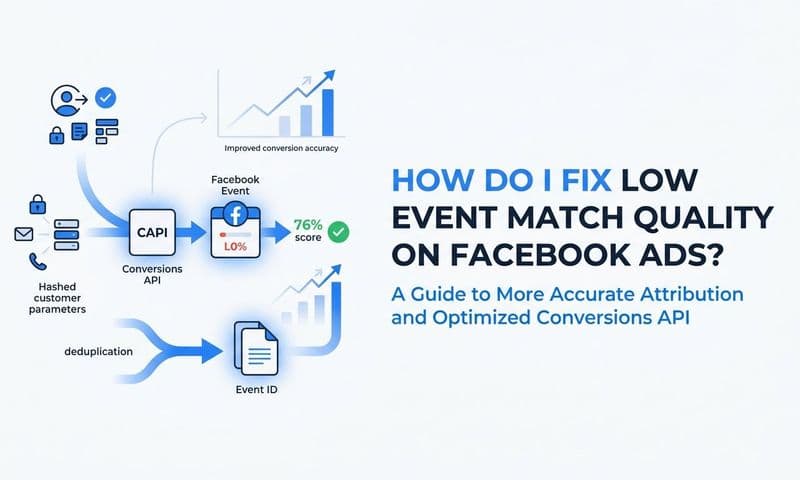
Facebook's browser-based Pixel misses 20-40% of conversions from iOS users and Safari browsers. Server-side tracking through Conversions API captures what the Pixel can't see.
The Conversions API sends conversion data directly from your server to Facebook, bypassing browser limitations entirely. When a customer purchases on your website, your server tells Facebook about it—regardless of whether the Pixel fired or tracking was blocked.
Implementation requires technical setup but delivers immediate improvements in data accuracy. You'll see your true conversion volume, improve your campaign optimization, and get better attribution for iOS traffic.
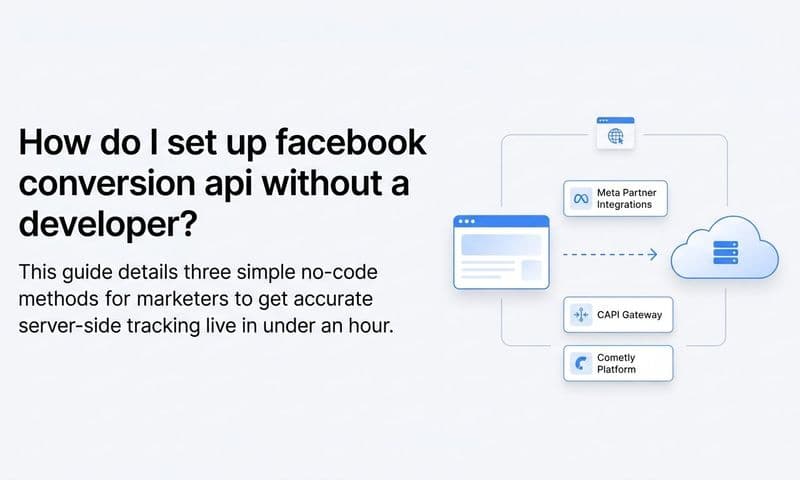
Most e-commerce platforms offer native Conversions API integrations. Shopify, WooCommerce, and BigCommerce all have one-click setup options. If you're on a custom platform, you'll need developer help to implement the server-side tracking code.
Connect Your CRM to Close the Attribution Loop
Your CRM holds the truth about which leads actually convert into customers. Facebook might report 100 leads, but your CRM shows only 15 became paying customers. That 85% gap represents lead quality—and it's invisible without CRM integration.
Connecting your CRM to your attribution system lets you track the complete journey from ad click to closed deal. You see which campaigns generate leads that actually convert, not just leads that fill out forms.
For B2B businesses with long sales cycles, this connection is non-negotiable. A lead might take 90 days to close, but Facebook's 7-day attribution window will never give that campaign credit. Your CRM data shows the real story. A comprehensive facebook ads reporting dashboard should integrate CRM data to show you lead quality and conversion rates, not just lead volume.
Step 3: Analyze Performance Over Your Real Sales Cycle
Facebook's default 7-day click attribution window is a business decision, not a reflection of how your customers actually buy. For many businesses, the real sales cycle is 30, 60, or even 90 days—but you're evaluating campaigns at 7 days and killing profitable ones before they mature.
A customer sees your ad on January 1st. They visit your website, browse products, leave. They come back on January 15th through organic search, add items to cart, abandon. They receive your cart abandonment email on January 20th, click through, and purchase on January 25th.
Facebook's 7-day window gives that campaign zero credit. The conversion happened 25 days after the initial ad click, far beyond the attribution window. In Facebook's data, that campaign looks like a failure. In reality, it started the journey that led to a sale.
You need to analyze performance over time windows that match your actual sales cycle. If your average customer takes 30 days to purchase, evaluate campaigns at 30 days—not 7.
Calculate Your True Sales Cycle Length
Pull data from your CRM or analytics platform showing the time between first touch and purchase for your last 100 customers. Calculate the average, median, and 75th percentile.
The median tells you what's typical. The 75th percentile shows you how long your slower buyers take. Use the 75th percentile as your analysis window—it captures most of your conversions without waiting forever for outliers.
For e-commerce businesses, this might be 14-30 days. For B2B SaaS, it could be 60-90 days. For high-ticket coaching or consulting, it might stretch to 120 days or more.
Whatever your number is, that's your real attribution window. Evaluate campaigns at that timeframe, not Facebook's arbitrary 7-day default. When running facebook ads for clients, understanding their specific sales cycle is critical for accurate performance reporting and optimization decisions.
Track Cohort Performance Over Time
Cohort analysis shows you how groups of customers acquired in the same time period perform over weeks and months. Instead of looking at aggregate numbers, you see how January's ad spend performs in February, March, and April.
Create weekly or monthly cohorts based on first ad click date. Track each cohort's conversion rate, revenue, and ROI as time passes. You'll see patterns emerge: campaigns that look weak at 7 days often strengthen at 30 or 60 days.
This analysis reveals which campaigns have staying power versus which ones front-load conversions. Some campaigns drive immediate purchases but no long-term value. Others build slowly but deliver consistent returns for months.
Step 4: Build Your ROI Dashboard
All the tracking infrastructure in the world means nothing if you can't see the data clearly and make decisions from it. You need a dashboard that shows true ROI—not Facebook's reported numbers, but what's actually happening in your business.
Your ROI dashboard should answer five critical questions at a glance: What's my true cost per acquisition including all hidden costs? Which campaigns drive actual revenue versus platform-reported conversions? How do different attribution models change my understanding of performance? What's my ROI over my real sales cycle, not Facebook's 7-day window? Which campaigns should get more budget and which should be cut?
Most businesses try to answer these questions by exporting data from multiple platforms into spreadsheets. Facebook Ads Manager gives you ad spend and conversions. Google Analytics shows website behavior. Your CRM has lead and customer data. Your e-commerce platform holds revenue numbers.
You spend hours each week copying data between systems, building formulas, and creating reports that are outdated the moment you finish them. By the time you spot a problem, you've already wasted budget on underperforming campaigns.
Connect All Your Data Sources
Your dashboard needs direct connections to every platform that holds relevant data: Facebook Ads Manager for ad spend and platform conversions, Google Analytics for website behavior and traffic sources, your CRM for lead quality and customer data, your e-commerce platform for actual revenue, and your attribution platform for multi-touch tracking.
These connections should update automatically—daily at minimum, hourly if possible. Manual data exports create gaps where problems hide. Automated connections give you real-time visibility into campaign performance. Many agencies offering a facebook ads management service provide custom dashboards that integrate all these data sources automatically, giving you real-time visibility into true ROI.
Set Up Automated Alerts for Performance Changes
You can't watch your dashboard 24/7. Automated alerts notify you when important metrics move outside normal ranges, letting you catch problems early and capitalize on opportunities fast.
Set alerts for: CPA increasing more than 20% week-over-week, conversion rate dropping below your target threshold, daily spend exceeding budget by more than 10%, ROAS falling below your profitability benchmark, and any campaign spending more than $500 with zero conversions.
These alerts catch issues before they become expensive mistakes. A campaign that's suddenly driving up your CPA gets flagged immediately, not three weeks later when you finally review the monthly report.
Putting It All Together
You now have the complete system for tracking Facebook Ads ROI that actually matches your bank account. No more celebrating a 4x ROAS in Ads Manager while wondering why your business account tells a different story.
The foundation starts with proper infrastructure—Facebook Pixel, Conversions API, your CRM, and an attribution platform working together to capture the complete customer journey. Without server-side tracking, you're missing 20-40% of conversions from iOS users alone.
Your true CPA calculation includes everything: ad spend, creative production, software subscriptions, and team time. That $50 CPA you thought you had? It's probably $75-85 when you account for all costs. This number determines whether your campaigns are actually profitable or just look profitable on paper.
Multi-touch attribution shows you which campaigns assist conversions versus which ones close them. That "underperforming" prospecting campaign might be driving 60% of your revenue when you look at first-touch attribution instead of last-click only.
Time-based analysis reveals your real sales cycle. If customers take 30 days to convert but you're evaluating campaigns at 7 days, you're killing profitable campaigns before they mature. Extend your analysis window to match your actual buying cycle.
The difference between guessing at ROI and knowing it with certainty is having the right tracking infrastructure in place. Cometly connects your ad platforms, CRM, and website to track every touchpoint from first click to final purchase, giving you the complete attribution picture that Facebook's native tracking can't provide.
Ready to see exactly which campaigns drive real revenue? Get your free demo and start tracking Facebook Ads ROI the right way—with data you can actually trust to make budget decisions.