
You've just spent $500 on Facebook ads. The dashboard looks promising: 10,000 impressions, 250 clicks, 15 conversions. But here's the question that keeps you up at night: which of those conversions actually became paying customers? And more importantly, which specific ad, audience, or placement drove them?
This isn't just beginner confusion. Even experienced advertisers face this challenge daily. Facebook's native reporting shows you activity—clicks, impressions, form fills—but it doesn't show you business outcomes. There's a dangerous gap between what Facebook's dashboard reports and what actually deposits into your bank account.
In December 2025, this gap has widened. iOS privacy updates continue to limit pixel-based tracking. Browser restrictions on cookies have tightened. The advertisers still relying on pixel-only tracking are missing significant conversion data, which means Facebook's AI is optimizing based on incomplete signals. Server-side tracking isn't optional anymore—it's the foundation that separates profitable campaigns from expensive guesswork.
This guide provides a complete system for creating Facebook ads that generate trackable, attributable revenue. Not just ads that look good or generate clicks, but ads you can prove drive business results. We'll walk through everything from tracking infrastructure through creative testing to scaling winners. Each step builds on the previous one, creating a framework that eliminates the attribution black hole most advertisers operate in.
Let's walk through how to create Facebook ads that don't just generate clicks—they generate trackable, attributable revenue. Seven concrete steps from foundation to scaling. We'll start with the most overlooked element: the tracking infrastructure that determines whether you'll ever know what actually works.
Step 1: Build Your Tracking Foundation First
Here's the mistake that costs advertisers thousands: launching ads before implementing proper tracking. You're essentially flying blind, making every optimization decision based on incomplete data. Professional advertisers flip this sequence—they build measurement systems first, then spend money.
Think of tracking infrastructure like a security camera system. Installing cameras after the robbery doesn't help you catch the thief. Similarly, setting up tracking after launching ads means you've permanently lost attribution data for your first conversions. Those early learnings about which audiences respond, which creative works, and which placements convert? Gone forever.
Your tracking foundation needs three layers working together: Facebook Pixel for browser-based tracking, Conversions API for server-side data, and an attribution software that connects ad clicks to actual revenue. Each layer captures data the others miss, creating a complete picture of what's actually working.
Choose Your Primary Conversion Event
Your conversion event selection determines how Facebook's algorithm optimizes your ads. Choose wrong, and you're teaching Facebook to find the wrong people. An online course creator learned this the expensive way—they optimized for "landing page views" because they wanted traffic. After two weeks and $800 spent, they had plenty of visitors but zero enrollments.
When they switched to optimizing for "purchase" events and implemented proper tracking, their cost per enrollment dropped 60% within the first week. Facebook's algorithm finally understood what success looked like. Modern ad tracking tools make it easier to set up, test, and validate conversion events across platforms, ensuring your optimization signals are accurate from day one.
Choose the conversion event closest to revenue. If you sell products, optimize for purchases. If you generate leads, optimize for form submissions that historically convert to customers—not just any form fill. Optimizing for clicks or page views teaches Facebook to find people who click, not people who buy.
Implement Server-Side Tracking with Conversions API
Facebook Pixel alone misses significant conversion data in December 2025's privacy landscape. A fitness supplement brand discovered this when Facebook reported 30 purchases from their ads, but their Shopify dashboard showed 47 orders from Facebook traffic. The 17 missing conversions—worth $1,200 in revenue—were invisible to Facebook's algorithm because pixel tracking failed on iOS devices.
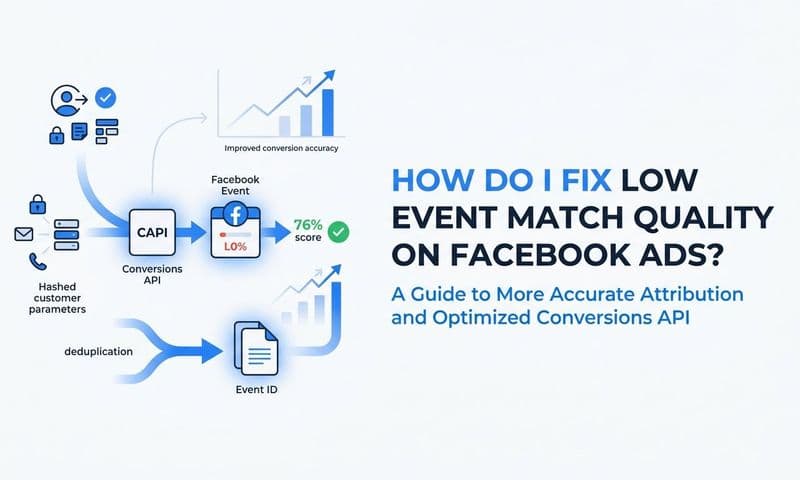
After implementing Conversions API (CAPI), Facebook could see and optimize for all conversions, improving their ROAS by 40%. CAPI sends conversion data directly from your server to Facebook, bypassing browser limitations that block pixels. It's not optional anymore—it's essential for accurate tracking and effective optimization.
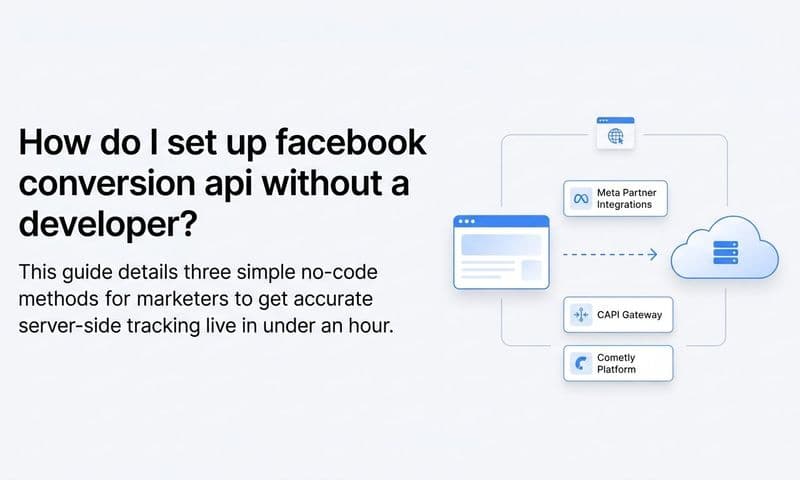
Implementation options include native integrations through platforms like Shopify, Google Tag Manager Server for custom setups, or specialized attribution tools for marketing that handle server-side tracking automatically—eliminating the technical barriers that prevent many advertisers from implementing proper tracking. Budget 2-3 hours for proper setup, then verify events appear in Events Manager with "Server" as the source.
Connect Ad Clicks to Actual Revenue
Facebook's standard attribution window—7-day click, 1-day view—misses conversions that happen outside these timeframes. Understanding how to measure touchpoints across the entire customer journey reveals which ads contribute to conversions even when they're not the final click. This complete view of the customer journey transforms how you evaluate ad performance and allocate budget.
Step 2: Research and Define Your Target Audience
Most advertisers build Facebook audiences based on assumptions: "Our customers are probably 25-45, interested in fitness, living in major cities." Then they wonder why their cost per conversion is three times higher than it should be. The difference between profitable campaigns and expensive guesswork? Starting with data instead of demographics.
Your tracking foundation from Step 1 now gives you something most advertisers don't have: actual conversion data showing who generates revenue, not just who clicks. This transforms audience building from educated guessing into pattern recognition. You're looking for the characteristics that separate buyers from browsers, high-value customers from one-time purchasers.
Here's the process that works: analyze existing customer patterns, create distinct audience hypotheses for testing, then let Facebook's algorithm reveal which segments actually convert. You'll build 5-8 audiences representing different targeting approaches, knowing that 2-3 will dramatically outperform the others.
Analyze Your Best Customers for Patterns
Export your customer list from your CRM or e-commerce platform. You're looking for patterns in who actually converts and generates revenue. Sort by customer lifetime value, not just purchase count—a customer who bought once for $50 is fundamentally different from one who's spent $500 across multiple purchases.
Look at demographics first: age ranges, gender splits, geographic concentration. Then dig deeper into behavioral patterns. What job titles appear repeatedly? Which industries? What other interests or characteristics show up consistently? The goal is finding commonalities you can translate into Facebook targeting parameters.
A productivity software company assumed their audience was "entrepreneurs and small business owners, ages 25-45." But analyzing their highest-paying annual subscribers revealed 60% were actually corporate employees ages 35-55 using the tool for personal project management. This insight led them to create audience segments around corporate job titles and interests like "project management" and "professional development," cutting their cost per acquisition in half.
For businesses with sales teams, sales tracking software that connects lead sources to closed deals reveals which Facebook audiences generate not just leads, but revenue-generating customers. This sales-level data transforms audience building from guesswork into science.
Spend 30-60 minutes on this analysis before building any Facebook audiences. What you discover will likely challenge your assumptions and dramatically improve your targeting accuracy. Look specifically for unexpected patterns—these often become your highest-performing audience segments.
Build Core Audience Segments for Testing
Create 3-5 distinct audience segments based on different targeting hypotheses. Each segment should represent a different approach: demographic-focused, interest-based, behavior-driven. This variety lets Facebook's algorithm reveal which targeting strategy actually drives conversions for your specific offer.
Start with demographic targeting: age ranges, gender, location, language. Then layer in interests—pages they like, topics they follow, behaviors they exhibit. Facebook's Audience Insights tool shows audience size as you add parameters. You're aiming for 50,000-500,000 people per segment for most campaigns. Smaller audiences limit Facebook's algorithm learning; larger audiences dilute relevance.
A meal kit delivery service created four distinct test segments: (1) Health & Fitness enthusiasts, 25-45, (2) Busy parents, 30-50, interested in meal planning and time-saving solutions, (3) Foodies who follow cooking pages and celebrity chefs, and (4) Environmental advocates interested in sustainability and organic food. The environmental segment—which they almost didn't test—became their highest-converting audience at 40% lower cost per acquisition than the others.
When you're ready to understand which touchpoints in your funnel drive the most value, implementing B2B marketing attribution reveals how different audience segments interact with your content before converting. This insight helps you refine targeting and optimize budget allocation across segments.
Putting It All Together
Creating successful Facebook ads isn't about mastering one element—it's about building a system where tracking, targeting, creative, and optimization work together. The advertisers who win in December 2025 aren't necessarily the most creative or the biggest spenders. They're the ones who can prove what works and scale it with confidence.
Start with your tracking foundation. Without accurate conversion data flowing from your pixel, Conversions API, and attribution platform into Facebook's algorithm, every other optimization decision is guesswork. Then build data-driven audiences based on who actually converts, not assumptions about who should. Test creative variations systematically, letting performance data guide your decisions rather than personal preferences.
The difference between spending $500 and wondering what worked versus spending $500 and knowing exactly which ad, audience, and placement drove revenue? That's the system you've just learned to build.
Most advertisers will keep optimizing for clicks and impressions because that's what Facebook's dashboard shows them. You now know how to optimize for what actually matters: trackable, attributable revenue. That knowledge gap is your competitive advantage.
Ready to see which of your marketing channels are really driving revenue? Get your free demo and discover what your current tracking is missing.