You're running ads on Meta, Google, TikTok, and maybe LinkedIn. Your website traffic is up. Your sales team is closing deals. But here's the question that keeps you up at night: which of those ads actually drove the revenue?
Your Meta dashboard shows one conversion number. Google Analytics shows another. Your CRM tells a completely different story. And when your CEO asks where to invest next quarter's marketing budget, you're making educated guesses instead of data-driven decisions.
This is exactly the problem marketing attribution agencies solve. They're specialists who build the tracking infrastructure and analytical frameworks that connect every ad click, website visit, and form fill to actual revenue. They turn scattered data into a clear picture of what's working and what's burning budget.
Whether you need a full-service agency, a powerful software platform, or something in between depends on your team's capabilities, budget, and how complex your marketing ecosystem has become. Let's break down what attribution agencies actually do, when they make sense, and how to choose the right approach for your business.
How Attribution Agencies Connect Your Ad Spend to Real Revenue
At their core, marketing attribution agencies do one thing exceptionally well: they track the complete customer journey from the moment someone first sees your ad to the moment they become a paying customer.
Think of it like this. A potential customer sees your Facebook ad on Monday. They don't click. On Wednesday, they search for your product category on Google and click your ad. They browse your site but leave. On Friday, they come back through an email link and finally convert. Which channel gets credit for that sale?
Most ad platforms would claim full credit. Facebook says their impression started the journey. Google says their click drove the conversion. Your email platform celebrates the final touchpoint. Everyone's taking credit for the same customer, which means your attribution data is fundamentally broken.
Attribution agencies fix this by implementing tracking systems that follow individual users across every touchpoint. They set up pixels, configure server-side tracking, and integrate your ad platforms with your CRM to create a unified data picture. Instead of each platform reporting in its own silo, you get one source of truth that shows the actual path customers take.
The technical implementation is just the foundation. The real value comes from what happens next: agencies help you understand which marketing efforts genuinely drive business results versus which ones are getting false credit because they happened to be the last click before conversion.
This distinction matters enormously when you're allocating budget. If your bottom-of-funnel branded search campaigns are getting all the credit but your top-of-funnel awareness campaigns are actually creating the demand that makes those searches happen, you'll systematically underfund the channels that are building your business.
Attribution agencies bring the expertise to spot these patterns, configure the right tracking to capture them, and translate the data into decisions about where to invest more and where to pull back.
The Technical and Strategic Services Attribution Specialists Deliver
When you work with a marketing attribution agency, you're typically getting a combination of technical implementation and strategic guidance. Let's break down what that actually looks like in practice.
Technical Infrastructure Setup: This is where most agencies start. They implement pixel tracking across your website, configure server-side tracking to overcome iOS limitations and browser privacy restrictions, and set up Conversion APIs that send data directly from your server to ad platforms. This matters because traditional browser-based tracking has become increasingly unreliable since iOS 14.5 introduced App Tracking Transparency.
Many businesses discover their tracking is capturing only 60-70% of actual conversions because users are opting out of tracking or using privacy-focused browsers. Server-side tracking solves this by capturing conversion data on your server before it ever touches a user's browser, then sending that enriched data to your ad platforms through official APIs.
Attribution Model Configuration: Once the tracking foundation is solid, agencies help you choose and customize attribution models that match how your customers actually buy. First-touch attribution gives all credit to the initial touchpoint—useful if you're focused on brand awareness and want to understand what's bringing new people into your funnel. Last-touch attribution credits the final interaction before conversion—helpful for understanding what's closing deals.
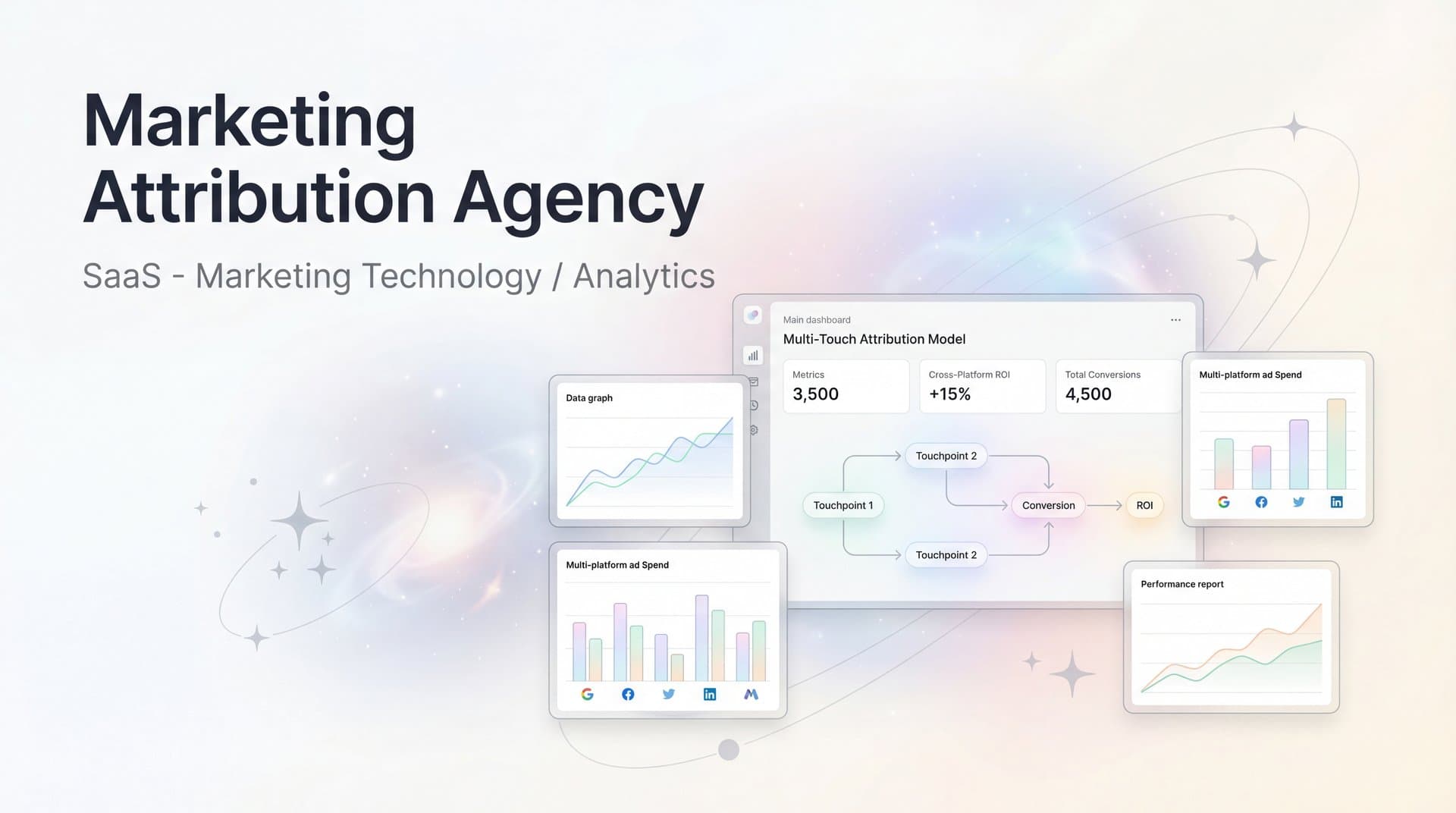
But most customer journeys aren't that simple. Someone might see your LinkedIn ad, click a Google search ad three days later, read your blog post, download a lead magnet, and then convert through a retargeting ad. Multi-touch attribution models distribute credit across these touchpoints based on their actual influence on the final decision.
Agencies typically help businesses implement position-based models (giving more weight to first and last touch), time-decay models (giving more credit to recent interactions), or data-driven models that use machine learning to determine which touchpoints actually influenced the outcome.
Ongoing Analysis and Optimization: The most valuable work happens after implementation. Attribution agencies continuously analyze your data to surface insights you can act on. They might discover that your YouTube awareness campaigns don't drive immediate conversions but dramatically increase conversion rates on retargeting campaigns three weeks later. Or that customers who engage with your content marketing before seeing ads convert at 3x the rate of cold traffic.
These insights inform specific recommendations: shift budget from underperforming channels, test new audience segments on your best-performing platforms, adjust your creative strategy based on what's resonating at different funnel stages. The goal is turning attribution data into better marketing decisions every week.
Clear Signals That Your Business Needs Attribution Expertise
Not every business needs a specialized attribution solution right away. If you're running a single ad platform with straightforward tracking and clear results, you might be fine with native platform reporting. But there are specific situations where attribution becomes critical.
You're scaling spend but can't confidently allocate budget: This is the most common trigger. You're investing $50K, $100K, or more per month across multiple channels. Your CEO wants to know which channels deserve more budget and which should be cut. But when you look at the data, every platform claims to be driving results, and the numbers don't add up to your actual revenue.
You're stuck making decisions based on incomplete information. Should you double down on Meta because it shows the most conversions, or is it just getting last-click credit for customers that other channels actually brought in? Without proper attribution, you're flying blind at exactly the moment when smart budget allocation could dramatically improve your ROI.
Your platforms report different numbers than your business reality: Here's a scenario that happens constantly. Your ad platforms collectively report 500 conversions last month. Your CRM shows 300 new customers. Your revenue data confirms about 280 actual purchases. So which number is real?
This discrepancy usually means your tracking is either double-counting conversions (multiple platforms claiming credit for the same customer) or your conversion events aren't properly aligned with actual business outcomes. Maybe your ad platforms are counting email signups as conversions, but only 40% of signups actually turn into customers. Attribution systems fix this by connecting ad interactions all the way through to closed deals or completed purchases, giving you data that matches business reality.
You're running cross-channel campaigns and can't measure impact: Modern marketing rarely happens in a single channel. You're running awareness campaigns on YouTube and TikTok, retargeting on Meta and Google Display, conversion campaigns on search, and nurturing leads through email. Each channel plays a different role, but you have no way to understand how they work together.
Does your YouTube spending actually increase conversion rates on your search campaigns? Are customers who see your TikTok content more likely to convert when they later see a retargeting ad? Without cross-channel attribution, you're optimizing each platform in isolation instead of understanding how they combine to drive results. This often leads to cutting channels that seem inefficient on their own but are actually critical parts of a larger customer journey.
Choosing Between Attribution Agencies and Software Platforms
Once you've determined you need better attribution, the next question is whether to hire an agency or implement attribution software directly. Both approaches work, but they fit different business situations.
When Full-Service Agencies Make Sense: Agencies excel in complex scenarios where you need hands-on expertise. If you're an enterprise running campaigns across 8+ platforms with multiple product lines and complex customer journeys, an agency can handle the entire implementation while you focus on running your business. They bring experience from working with dozens of similar companies, so they've already solved the problems you're about to encounter.
Agencies also make sense when your internal team lacks technical resources. Setting up proper server-side tracking, configuring Conversion APIs, and integrating your CRM with ad platforms requires real technical capability. If your marketing team is already stretched thin and your engineering team has a six-month backlog, an agency can own the implementation without pulling your team away from their core work.
The strategic guidance agencies provide can be particularly valuable for businesses new to attribution. They'll help you choose the right models, interpret what the data is telling you, and translate insights into specific actions. You're essentially renting expertise that would take years to build internally.
When Attribution Software Makes More Sense: Direct software implementations work well for teams that have technical capability and want real-time access to their data. If you have a marketing operations person who can handle technical setup or engineering resources that can support implementation, software gives you complete control over your attribution data without the ongoing agency fees.
Software platforms also make sense when you need immediate access to data for daily optimization decisions. Agencies typically provide reports and recommendations on a weekly or monthly basis. With direct software access, your team can log in anytime to check attribution data, explore different models, and make budget adjustments based on what they're seeing right now.
Cost structure matters too. Agencies usually charge retainer fees that can range from several thousand to tens of thousands per month depending on complexity. Software platforms typically charge based on your tracked revenue or number of conversions, which can be more economical for mid-sized businesses that have the internal capability to manage the platform themselves.
The Hybrid Approach That Often Works Best: Many businesses find success using powerful attribution software while getting expert guidance during setup. You implement a platform that gives you direct access to attribution data, but you work with specialists during the initial configuration to ensure you're tracking the right events, choosing appropriate models, and integrating everything correctly.
This approach combines the control and cost-efficiency of software with the expertise of specialists when you need it most—during implementation and when interpreting complex attribution scenarios. Once your system is running smoothly, your team can manage day-to-day optimization while having the option to consult with experts when questions arise.
Evaluating Attribution Partners: What Actually Matters
Whether you're choosing an agency or a software platform, certain capabilities separate solutions that deliver real value from those that create more confusion than clarity.
Server-Side Tracking and Privacy-Compliant Data Capture: This is non-negotiable in the current environment. Any attribution solution that relies solely on browser-based tracking is fundamentally broken. With iOS privacy changes and increasing browser restrictions, you need server-side tracking that captures conversion data before it hits privacy limitations. Ask potential partners specifically how they handle iOS traffic and what percentage of conversions they typically capture compared to browser-only tracking.
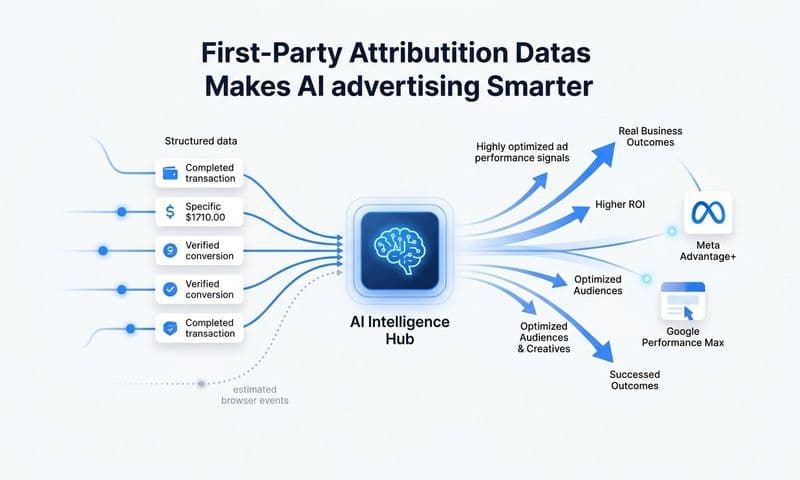
The best solutions implement Conversion APIs for major platforms like Meta and Google, sending enriched conversion data directly from your server to ad platforms. This not only improves your attribution accuracy but also feeds better data back to ad platform algorithms, improving their ability to find and convert similar customers.
Multi-Touch Attribution Capabilities: Single-touch attribution models are simple but rarely reflect reality. Your attribution partner should support multiple models including first-touch, last-touch, linear, position-based, time-decay, and ideally data-driven attribution that uses actual conversion patterns to weight touchpoints appropriately.
More importantly, they should help you understand which attribution model makes sense for your business. A company with a 3-day sales cycle will need different attribution than one with a 6-month enterprise sales process. Your partner should ask about your customer journey before recommending models, not just default to whatever's easiest to implement.
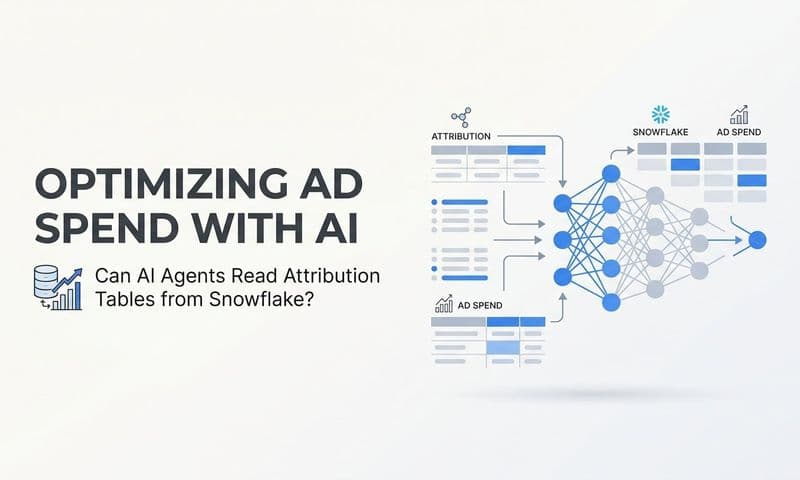
Integration with Your Specific Tech Stack: Attribution only works if it connects all your systems. Verify that any solution you're considering integrates with your specific ad platforms, CRM, and analytics tools. If you're running ads on TikTok, using Salesforce as your CRM, and analyzing data in Looker, your attribution system needs to pull data from all of these sources to create a complete picture.
Ask about the integration process. Is it a simple OAuth connection or does it require custom development? How long does implementation typically take? What happens when platforms change their APIs or introduce new features? Partners with robust integration capabilities will have clear answers and proven processes.
Transparency in Attribution Methodology: This is where many solutions fall short. You need to understand exactly how conversions are being attributed and why. If an agency or platform can't clearly explain their attribution logic, you're essentially trusting a black box—which defeats the entire purpose of getting attribution clarity.
Ask specific questions: How do you handle situations where a customer interacts with multiple channels? What happens when someone converts through a direct visit after seeing ads? How do you prevent double-counting when multiple platforms claim the same conversion? The best partners will walk you through their methodology in plain language and show you exactly how attribution decisions are made.
Turning Attribution Data Into Better Marketing Decisions
Having attribution data is only valuable if you actually use it to make better decisions. Here's how to ensure your attribution investment translates into improved marketing performance.
Start with Clear Decision-Making Goals: Before implementing any attribution system, define what decisions you want the data to inform. Are you trying to allocate budget more effectively across channels? Understand which creative approaches drive the best results? Determine optimal audience targeting? Identify which content marketing efforts influence conversions?
Your goals should shape your implementation. If you primarily need to allocate budget across channels, you might focus on channel-level attribution. If you want to optimize creative, you need ad-level tracking. If you're trying to understand content marketing impact, you need to track specific page visits and content engagement as part of the customer journey.
Ensure Clean Data Before Making Decisions: Attribution is only as good as the data feeding it. Before you start reallocating budget based on attribution insights, verify that your tracking is actually capturing conversions accurately. Test your conversion events, confirm that your CRM integration is working properly, and validate that the numbers in your attribution platform roughly match your business reality.
Many businesses make the mistake of implementing attribution and immediately acting on the data without first confirming it's accurate. Spend at least a few weeks validating data quality before making major decisions. Compare attributed conversions to actual customers in your CRM. Check that revenue numbers align. Ensure that conversion events are firing consistently.
Use Insights to Take Specific Actions: Attribution data should lead to concrete changes in how you run marketing. When you discover that customers who engage with your blog content before seeing ads convert at higher rates, create campaigns specifically targeting people who've visited your content. When you find that YouTube awareness campaigns don't directly drive conversions but significantly improve retargeting performance, maintain that YouTube spend even if it looks inefficient in isolation.
The most successful marketing teams use attribution data to inform weekly optimization decisions. They're constantly asking: What did we learn this week? Which channels are performing better or worse than expected? Where should we test increasing spend? What's underperforming enough that we should cut it? Attribution turns these questions from guesswork into data-driven decisions.
Finding Your Path to Attribution Clarity
Whether you choose a full-service agency, implement attribution software directly, or take a hybrid approach, the fundamental goal remains the same: understanding which marketing efforts actually drive revenue so you can invest with confidence instead of guessing.
The right approach depends on your team's capabilities, the complexity of your marketing ecosystem, and how hands-on you want to be with your attribution data. Agencies provide expertise and handle implementation for you. Software platforms give you direct control and real-time access. Many businesses find that starting with powerful software while consulting with experts during setup delivers the best of both worlds.
What matters most is taking action. Every day you operate without clear attribution is another day of budget decisions based on incomplete data. You're either overfunding channels that are getting false credit or underfunding the channels that are actually building your business. That uncertainty compounds over time into hundreds of thousands in wasted spend.
Modern attribution solutions solve the core challenges that have made marketing measurement so difficult: iOS tracking limitations, cross-platform customer journeys, and the gap between what ad platforms report and what actually drives revenue. By implementing server-side tracking, capturing every touchpoint, and connecting ad interactions to actual business outcomes, you transform scattered data into clear insights.
The best attribution systems don't just show you what happened—they help you understand why it happened and what to do about it. They reveal which channels work together to drive results. They feed enriched conversion data back to ad platforms so algorithms can find and convert more of your best customers. They give you the confidence to scale what's working and cut what's not.
Ready to elevate your marketing game with precision and confidence? Discover how Cometly's AI-driven recommendations can transform your ad strategy—Get your free demo today and start capturing every touchpoint to maximize your conversions.