You're running ads on Facebook, Google, maybe LinkedIn. You're posting content, sending emails, investing in SEO. But when a customer finally converts, which touchpoint actually convinced them to buy? For small businesses, this question isn't academic—it's existential. Every marketing dollar needs to justify itself, yet most small business owners are flying blind, relying on last-click data from individual platforms or gut feelings about what's working.
The challenge is real: enterprise attribution tools assume you have a dedicated analytics team and unlimited budget. Meanwhile, you're wearing twelve hats and need answers today, not after months of implementation. The good news? Effective marketing attribution doesn't require enterprise resources or technical wizardry.
This guide delivers seven practical attribution strategies designed specifically for small businesses. These aren't theoretical frameworks—they're actionable approaches you can start implementing this week. You'll learn how to track customer journeys across channels, identify your highest-performing campaigns, and make confident decisions about where to invest your limited marketing budget.
Let's transform your marketing from guesswork into a data-driven revenue engine.
1. Start With First-Party Data Collection Before Anything Else
The Challenge It Solves
Browser privacy changes, iOS updates, and cookie restrictions have broken traditional tracking. If you're still relying solely on platform pixels, you're missing conversions. Many small businesses discover they're only capturing 60-70% of actual conversions because client-side tracking fails when users have privacy settings enabled or use ad blockers.
Without owned data, you're building your business on rented land. Ad platforms control what you see, how it's attributed, and whether you can access historical data. First-party data gives you independence and accuracy.
The Strategy Explained
First-party data collection means capturing customer interactions directly on your own systems before sending that data to ad platforms. This involves three core components: UTM parameters for source tracking, server-side tracking to capture events that client-side pixels miss, and a unified system that connects website visits to actual customer records.
Think of it like building your own security camera system instead of relying on your neighbor's doorbell cam. You control the footage, you decide what to track, and you maintain access regardless of what platforms change their policies.
Server-side tracking is particularly crucial. When someone converts on your website, server-side tracking captures that event from your server, not their browser. This means conversions get recorded even when browser privacy settings would normally block traditional pixels.
Implementation Steps
1. Create a UTM naming convention for all marketing links (campaign, source, medium, content, term) and document it in a shared spreadsheet. Use consistent naming across all channels so you can compare performance accurately.
2. Implement server-side tracking alongside your existing pixels. Modern attribution platforms like Cometly handle this automatically, capturing conversion events from your server and sending them to ad platforms with greater accuracy than browser-based tracking alone.
3. Set up conversion tracking on key actions beyond just purchases: form submissions, demo requests, email signups, phone calls. Every meaningful interaction should be captured in your first-party system.
4. Create a customer identifier that connects anonymous website visitors to known contacts once they provide information. This lets you track the full journey from first click to closed deal.
Pro Tips
Start simple with UTM parameters on all paid campaigns, then add server-side tracking once you see the value of organized data. Don't try to track everything at once—focus on your primary conversion events first. Many small businesses find that implementing proper first-party data collection reveals 20-30% more conversions than they were previously seeing in their ad platform dashboards.
2. Choose the Right Attribution Model for Your Sales Cycle
The Challenge It Solves
Last-click attribution gives all credit to the final touchpoint before conversion. This systematically undervalues awareness campaigns and early-stage content that introduce customers to your brand. If you sell high-consideration products or have a B2B sales cycle, last-click attribution makes your top-of-funnel marketing look worthless, even when it's essential to driving conversions.
The wrong attribution model leads to terrible budget decisions. You cut spending on campaigns that actually drive awareness, then wonder why your conversion volume drops weeks later.
The Strategy Explained
Attribution models determine how credit for conversions gets distributed across touchpoints. Your choice should match your customer journey. If customers typically convert within hours of first contact, last-click might work fine. If your sales cycle spans weeks or months with multiple touchpoints, you need multi-touch attribution that credits earlier interactions.
Common models include first-click (credits the initial touchpoint), linear (equal credit to all touchpoints), time-decay (more credit to recent touchpoints), and position-based (extra credit to first and last touchpoints). Each tells a different story about campaign performance.
Here's the key insight: different models work for different business types. E-commerce with impulse purchases might use last-click or time-decay. B2B companies with long sales cycles typically benefit from position-based or linear models that recognize the awareness stage.
Implementation Steps
1. Map your typical customer journey. How many touchpoints do customers usually have before converting? How long does the sales cycle take? If you're seeing 5+ touchpoints over several weeks, you need multi-touch attribution.
2. Compare the same campaign performance across different attribution models. Look at how your Facebook awareness campaign performs in last-click versus linear attribution. This reveals whether you're undervaluing top-of-funnel efforts.
3. Choose a primary model based on your sales cycle, but review alternative models monthly. Position-based attribution often works well for small businesses because it credits both the touchpoint that introduced the customer and the one that closed them.
4. Use your chosen model consistently for at least 60 days before changing. Attribution insights compound over time as you gather more journey data.
Pro Tips
Don't overthink this. If you're currently using last-click attribution from individual platforms, switching to any multi-touch model will reveal valuable insights. Start with position-based attribution if you're unsure—it balances awareness and conversion credit effectively for most small businesses. The goal isn't perfection, it's getting closer to reality than last-click guesswork.
3. Connect Your CRM to See Revenue, Not Just Clicks
The Challenge It Solves
Ad platforms report conversions, but conversions aren't revenue. A lead from Facebook and a lead from Google might convert at the same rate according to platform data, but one might close at twice the deal size or have three times the lifetime value. Without CRM integration, you're optimizing for lead volume when you should be optimizing for revenue quality.
This disconnect causes small businesses to pour budget into channels that generate leads but not customers. You celebrate conversion rate improvements while customer acquisition cost quietly destroys profitability.
The Strategy Explained
CRM integration connects your attribution data to actual business outcomes. When a lead closes, your CRM records the deal value and customer details. By connecting that back to the marketing touchpoints that generated the lead, you see which campaigns drive revenue, not just form fills.
This reveals transformative insights. You might discover that LinkedIn ads generate fewer leads than Facebook but close at higher rates and larger deal sizes. Or that organic search leads have twice the lifetime value of paid search leads. These insights only exist when you track beyond the conversion event to actual revenue.
Modern attribution platforms can automatically sync CRM data, updating campaign performance metrics as leads move through your pipeline. This means your marketing dashboard shows real-time revenue attribution, not just conversion counts from last week.
Implementation Steps
1. Ensure every lead in your CRM includes source information. Create custom fields for original source, campaign, ad set, and ad creative. This data should flow automatically from your attribution system.
2. Set up automated CRM sync with your attribution platform. Cometly, for example, connects directly to popular CRMs and updates conversion values as deals progress, giving you revenue-based attribution without manual data entry.
3. Create a dashboard that shows revenue by source, not just leads by source. Calculate customer acquisition cost and lifetime value by channel. This becomes your primary decision-making tool for budget allocation.
4. Review closed deals monthly to identify patterns. Which campaigns generate customers that stick around? Which sources produce one-time buyers versus repeat customers? Use these insights to refine targeting and budget distribution.
Pro Tips
Start by manually tagging 20-30 recent customers with their source data, then calculate revenue by channel. This quick exercise often reveals surprising insights that justify investing in automated CRM integration. Many small businesses discover that their "best performing" channel by conversion volume is actually their worst performer by revenue quality.
4. Build a Cross-Channel View Without Enterprise Tools
The Challenge It Solves
You're running campaigns on multiple platforms, but analyzing each in isolation. Facebook Ads Manager shows Facebook performance. Google Ads shows Google performance. Your email platform shows email performance. But customers don't experience channels in isolation—they see your Facebook ad, search for your brand, read your content, then convert via email.
Siloed reporting makes channels compete for credit when they're actually working together. You might cut Facebook spend because conversions look low, not realizing it's driving brand searches that convert in Google Ads.
The Strategy Explained
Cross-channel attribution consolidates data from all marketing platforms into a unified view. Instead of logging into five dashboards, you see all touchpoints in one customer journey map. This reveals how channels assist each other and which combinations drive the best results.
The key is connecting touchpoints to individual customer journeys. When someone clicks your Facebook ad, visits your site, leaves, receives your email, clicks through, and converts, you need to see that entire sequence. Only then can you understand whether Facebook was worthless or essential to the conversion.
Small businesses often assume this requires expensive enterprise software. It doesn't. Modern attribution platforms designed for growing businesses provide cross-channel tracking at accessible price points, with setup that takes hours, not months.
Implementation Steps
1. List every marketing channel you're currently using: paid social, paid search, organic search, email, content marketing, display ads, affiliate programs. These all need to feed into your unified view.
2. Connect each platform to your attribution system. Most modern tools offer native integrations with major ad platforms, automatically pulling in campaign data without manual exports.
3. Review customer journeys for your last 50 conversions. Look for patterns in touchpoint sequences. You'll likely discover that certain channels consistently appear together in successful journeys.
4. Create a cross-channel dashboard showing how channels interact. Look for metrics like "assist rate" (how often a channel appears in journeys but isn't the last click) and "channel combinations" (which pairs of channels work best together).
Pro Tips
Focus on your top three channels first. If you're spending 80% of your budget on Facebook, Google, and email, start by connecting those three. You'll gain immediate insights without getting overwhelmed by data. Once you're comfortable with cross-channel analysis, add secondary channels. The goal is actionable insights, not comprehensive data collection for its own sake.
5. Use Conversion Sync to Improve Ad Platform Performance
The Challenge It Solves
Ad platform algorithms optimize based on the conversion data they receive. If they only see basic "purchase" events without quality signals, they optimize for any purchase, not valuable purchases. This leads to campaigns that hit conversion targets while customer acquisition cost spirals upward because the algorithm is finding cheap conversions, not profitable customers.
The disconnect between what you know about lead quality and what ad platforms know creates inefficient spending. You're manually adjusting bids and audiences while the platform's AI works with incomplete information.
The Strategy Explained
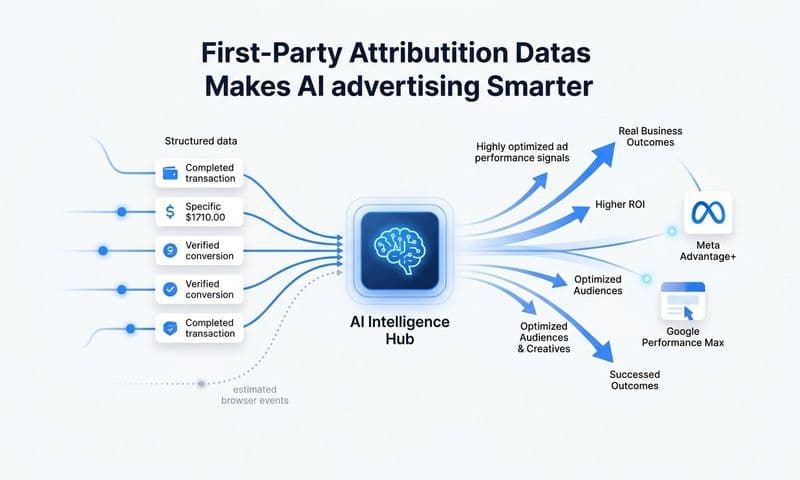
Conversion sync (also called server-side conversion API or enhanced conversions) sends enriched conversion data back to ad platforms. Instead of just "purchase completed," you send "purchase completed, $500 value, existing customer, high lifetime value score." This teaches platform algorithms to find more customers like your best customers, not just more customers.
When Meta's algorithm knows that certain conversions lead to repeat purchases while others don't, it adjusts targeting to find more of the valuable ones. When Google's algorithm sees which conversions close at higher deal sizes, it optimizes for revenue quality, not just conversion volume.
This creates a feedback loop: better data leads to better targeting, which generates better leads, which provides more quality signals for the algorithm. Over time, your campaigns become increasingly efficient without constant manual optimization.
Implementation Steps
1. Identify which conversion quality signals matter for your business. This might include deal size, customer lifetime value, product category, subscription tier, or lead score. These are the signals you'll send back to ad platforms.
2. Set up server-side conversion tracking through your attribution platform. This ensures conversion data gets sent reliably even when browser tracking fails, and allows you to include enriched data that client-side pixels can't access.
3. Configure conversion sync for your primary ad platforms. Cometly's Conversion Sync feature, for example, automatically sends enriched conversion data back to Meta, Google, and other platforms, feeding their algorithms better information for optimization.
4. Monitor campaign performance over 2-3 weeks as algorithms adjust to the new data. You should see improvements in lead quality metrics (higher deal sizes, better close rates) even if conversion volume stays similar.
Pro Tips
Start with one platform and one conversion quality signal. If you're running Meta ads, begin by sending purchase value data back to Meta's Conversion API. Once you see the algorithm responding (usually within 7-14 days), add additional quality signals like customer lifetime value or repeat purchase indicators. The goal is progressive improvement, not perfect implementation on day one.
6. Focus on High-Impact Metrics Instead of Vanity Numbers
The Challenge It Solves
It's easy to celebrate metrics that look good but don't drive business results. Your Facebook campaign reached 100,000 people—great, but how many became customers? Your blog post got 5,000 views—wonderful, but did any of those visitors convert? Vanity metrics create the illusion of success while your customer acquisition cost climbs and revenue stagnates.
Small businesses can't afford to optimize for the wrong metrics. Every dollar needs to drive measurable business outcomes, not just engagement or awareness that never converts.
The Strategy Explained
High-impact metrics connect directly to business outcomes: customer acquisition cost, return on ad spend, revenue by channel, customer lifetime value, and conversion rate by source. These metrics tell you whether marketing is profitable, not just active.
The shift from vanity to value metrics requires tracking conversions through to revenue. Instead of celebrating 1,000 new email subscribers, you measure how many subscribers become customers and what they're worth. Instead of tracking impressions, you track cost per customer acquired.
This doesn't mean awareness metrics are worthless—brand awareness matters for long-term growth. But awareness should be measured by its eventual impact on conversions, not by impressions alone. Multi-touch attribution reveals which awareness campaigns assist conversions down the line.
Implementation Steps
1. Calculate your current customer acquisition cost by channel. Take total spending per channel and divide by customers acquired (not leads or conversions, actual customers). This becomes your baseline for improvement.
2. Set up automated ROAS tracking that updates as CRM deals close. Your attribution dashboard should show real-time return on ad spend based on actual revenue, not just conversion values from ad platforms.
3. Create a weekly scorecard with five metrics: total revenue by source, customer acquisition cost by channel, conversion rate by source, average deal size by source, and customer lifetime value by source. Review these every Monday to guide budget decisions.
4. Stop reporting on vanity metrics in team meetings. Replace "we got 50,000 impressions" with "we acquired 12 customers at $150 CAC, 25% below target." This focuses everyone on outcomes that matter.
Pro Tips
If you don't yet have enough conversion data to calculate accurate CAC by channel, start with cost per lead by channel while you build history. The key is moving toward revenue metrics as quickly as your data allows. Many small businesses find that switching from vanity to value metrics immediately reveals budget waste—campaigns that looked successful by engagement metrics often show poor ROI when measured by customer acquisition cost.
7. Test and Iterate Using Attribution Insights
The Challenge It Solves
Most small businesses test randomly: try a new ad creative, see if conversions go up, move on to the next test. Without attribution data guiding your tests, you're shooting in the dark. You might improve Facebook performance while accidentally breaking the Google campaigns that were assisting those Facebook conversions.
Random testing wastes time and budget. Strategic testing compounds results because each experiment builds on previous insights, creating a continuous improvement loop that systematically increases marketing efficiency.
The Strategy Explained
Attribution-driven testing uses journey data to identify specific optimization opportunities. Instead of guessing what to test, you analyze customer paths to find friction points and opportunities. You might discover that customers who see your Facebook ad and then visit via organic search convert at twice the rate of those who only see Facebook ads—suggesting you should test brand search campaigns.
This approach creates a testing roadmap based on actual customer behavior. You're not testing for the sake of testing; you're addressing specific gaps or amplifying proven patterns in your attribution data.
The iteration cycle becomes: analyze attribution data, identify opportunity, design test, measure results in attribution system, implement winning variant, repeat. Each cycle makes your marketing more efficient because you're building on validated insights rather than hunches.
Implementation Steps
1. Review your top 20 customer journeys monthly. Look for common patterns: which touchpoint sequences appear repeatedly? Which channels consistently appear together? These patterns reveal what's working and should be amplified.
2. Identify your biggest attribution gaps. Are there channels with high assist rates but low last-click credit? These might be undervalued and underfunded. Test increasing budget to see if conversions rise across all channels.
3. Design tests that address specific attribution insights. If data shows that customers who engage with email after clicking ads convert at higher rates, test increasing email frequency for ad clickers. If organic search assists many conversions, test expanding content marketing.
4. Measure test results using multi-touch attribution, not just last-click. A test might "fail" by last-click metrics while actually improving overall conversion rates when you account for assists.
5. Build a testing calendar based on attribution priorities. Focus on high-impact opportunities first: channels with strong assist rates, customer journey stages with high drop-off, or audience segments with exceptional performance.
Pro Tips
Start with budget reallocation tests before creative tests. Attribution data often reveals that your budget distribution is misaligned with actual performance—you're overspending on channels with low ROAS and underspending on channels with high ROAS. Simply shifting budget based on attribution insights often delivers bigger improvements than any creative optimization. Once budget is optimized, move to testing audience targeting, then messaging, then creative elements.
Putting It All Together
Marketing attribution for small businesses isn't about implementing every possible tracking method or analyzing data for its own sake. It's about gaining the clarity to make confident budget decisions that compound over time. The small businesses that thrive are those that know exactly which marketing efforts drive revenue, not just traffic or engagement.
Start with strategy one: build your first-party data foundation with proper UTM tracking and server-side conversion capture. This gives you accurate data to work with. Then choose an attribution model that matches your sales cycle, so you're crediting touchpoints appropriately. Connect your CRM to see which campaigns drive revenue, not just leads. Build a cross-channel view so you understand how your marketing works as a system, not isolated campaigns.
As your attribution system matures, implement conversion sync to feed better data back to ad platforms, improving their optimization over time. Focus relentlessly on high-impact metrics that connect to business outcomes. Use attribution insights to design strategic tests that systematically improve marketing efficiency.
The beauty of this approach is that it's progressive. Each strategy builds on the previous one. You don't need to implement everything at once. Start where you are, implement one strategy this week, see results, then add the next layer.
By connecting your ad platforms, website, and CRM into a unified attribution view, you'll make confident budget decisions backed by data instead of guesswork. You'll know which campaigns to scale, which to pause, and where to test next. This clarity is the competitive advantage that lets small businesses punch above their weight.
Ready to elevate your marketing game with precision and confidence? Discover how Cometly's AI-driven recommendations can transform your ad strategy—Get your free demo today and start capturing every touchpoint to maximize your conversions.