You're tracking impressions, clicks, conversions, and cost per acquisition across Meta, Google, and TikTok. Your dashboards are full of data. But when leadership asks which campaigns are actually driving revenue, you hesitate. The numbers don't tell the complete story.
This is the attribution gap—the disconnect between what platforms report and what actually happens in your business. Most marketers drown in metrics while starving for insights.
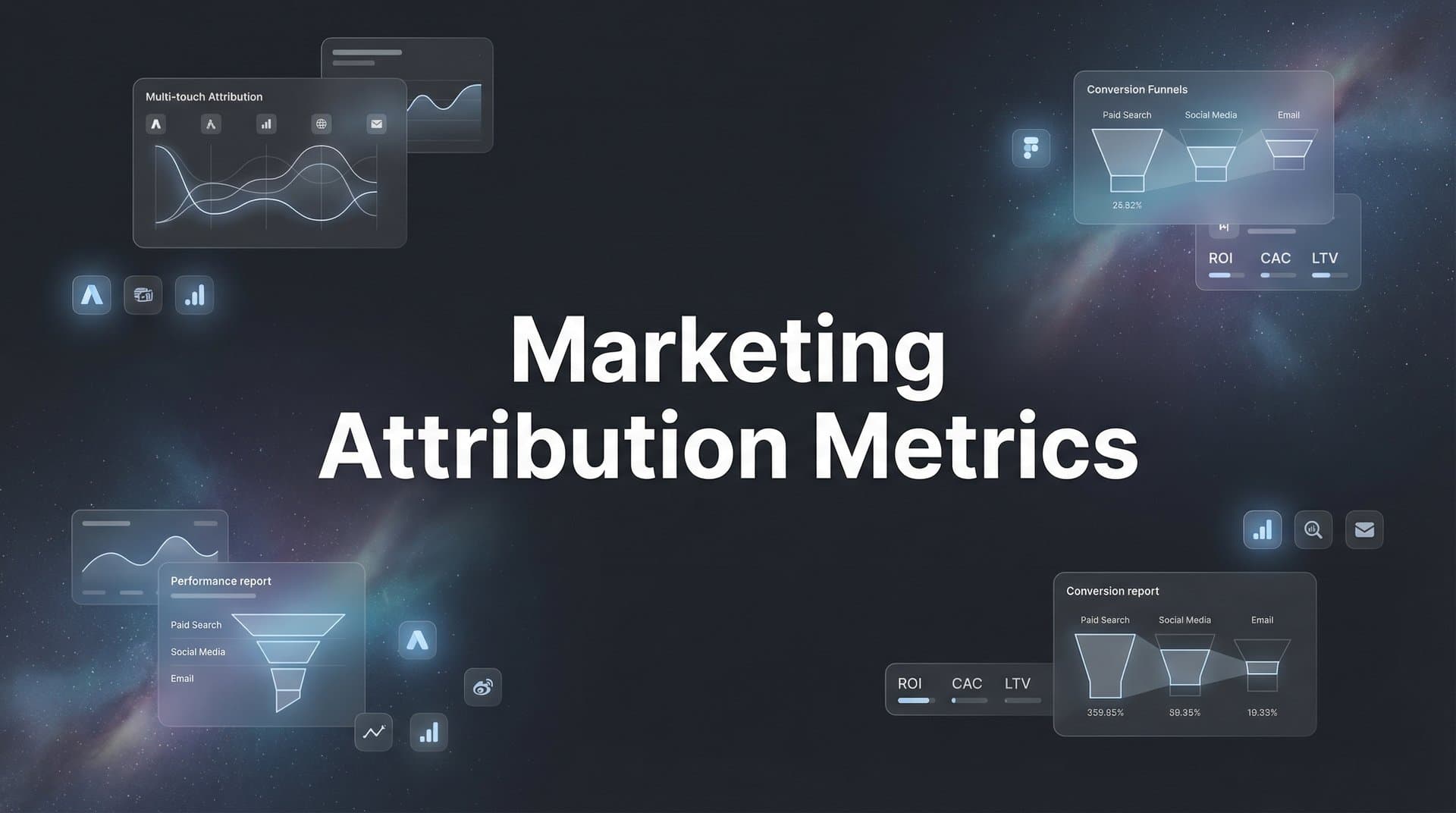
Marketing attribution metrics bridge this gap by connecting every touchpoint to real revenue outcomes. They show you which ads sparked initial interest, which content kept prospects engaged, and which campaigns closed the deal. When you track the right attribution metrics, budget decisions become clear: invest more in what drives revenue, cut what doesn't, and stop crediting the wrong channels for conversions they didn't earn.
This guide breaks down seven marketing attribution metrics that reveal what's actually working. Each one solves a specific blind spot in your current analytics. Whether you're managing campaigns across multiple platforms or trying to justify your marketing budget, these metrics transform data into actionable strategy.
1. Customer Acquisition Cost by Channel (True CAC)
The Challenge It Solves
Platform dashboards show you cost per conversion, but that's not the same as customer acquisition cost. A Meta ad might show a $30 conversion, but if that lead also clicked a Google ad, read three blog posts, and received two emails before purchasing, what's the real CAC?
Single-platform metrics create false economies. You might think one channel is profitable while another is wasteful, when in reality they're working together to drive conversions. True CAC accounts for every touchpoint in the customer journey, showing you the complete cost picture.
The Strategy Explained
True CAC divides your total marketing spend by the number of customers acquired, then attributes that cost across all channels based on their contribution to conversions. This gives you channel-specific CAC that reflects reality rather than platform reporting.
The difference matters significantly. A channel showing $50 CAC in its own dashboard might actually have $35 True CAC when you account for assisted conversions from other channels. Or it might be $75 when you factor in how many touchpoints it took to close each customer.
This metric reveals which channels genuinely acquire customers efficiently versus which ones look good in isolation but underperform in the full context of your marketing mix.
Implementation Steps
1. Connect all your marketing platforms to a unified attribution system that tracks the complete customer journey from first click to purchase.
2. Set a consistent time period for analysis—typically 30, 60, or 90 days depending on your sales cycle length—and calculate total marketing spend across all channels.
3. Use multi-touch attribution to distribute customer acquisition costs across every channel that contributed to each conversion, weighted by their actual influence on the purchase decision.
Pro Tips
Don't compare True CAC to your customer lifetime value in isolation. Look at the ratio between them—a healthy business typically sees LTV at least 3x higher than CAC. Also, segment True CAC by customer quality, not just quantity. A channel with higher CAC but better customer retention might be more valuable than one with cheap acquisitions that churn quickly.
2. Return on Ad Spend with Attribution Windows
The Challenge It Solves
Standard ROAS calculations use arbitrary time windows that rarely match your actual sales cycle. Meta defaults to 7-day click and 1-day view attribution. Google uses 30 days. But what if your customers take 45 days to convert? Or 3 days?
Mismatched attribution windows either overstate performance by cutting off before conversions happen, or understate it by including conversions that would have occurred anyway. You end up making budget decisions based on incomplete data.
The Strategy Explained
Attribution-window-adjusted ROAS measures return on ad spend using time windows that match your actual customer behavior. Instead of accepting platform defaults, you set attribution windows based on how long your customers actually take to convert.
This approach recognizes that different products and industries have vastly different conversion timelines. Ecommerce impulse purchases might convert within hours. B2B software deals might take months. Your attribution window should reflect your reality, not Meta's default settings.
We compare the leading options in our ecommerce Meta ad tool roundup.
When attribution windows align with actual conversion patterns, ROAS becomes a reliable metric for budget allocation. You see which campaigns drive profitable returns within realistic timeframes.
Implementation Steps
1. Analyze your historical conversion data to identify the median time between first ad interaction and purchase—this becomes your baseline attribution window.
2. Segment your attribution windows by product type, price point, and customer segment since different offerings often have different conversion timelines.
3. Recalculate ROAS for each campaign using your custom attribution windows, then compare these results to platform-reported ROAS to identify discrepancies.
Pro Tips
Run parallel tracking with multiple attribution windows—7-day, 14-day, 30-day, and 60-day—to understand how performance changes over time. This reveals whether campaigns have immediate impact or build value gradually. Also, adjust attribution windows seasonally since conversion behavior often changes during holidays, end-of-quarter, or industry-specific busy periods.
3. First-Touch vs. Last-Touch Conversion Value
The Challenge It Solves
Most platforms default to last-touch attribution, giving 100% credit to the final ad clicked before conversion. This systematically undervalues top-of-funnel campaigns that introduce customers to your brand while overvaluing bottom-funnel retargeting that simply reminds already-interested prospects to complete their purchase.
The result? You cut awareness campaigns that seem ineffective and pour budget into retargeting that looks incredibly efficient—until your pipeline dries up because no new prospects are entering the funnel.
The Strategy Explained
Comparing first-touch and last-touch conversion value shows you which channels excel at customer acquisition versus conversion acceleration. First-touch attribution credits the initial interaction that brought someone into your ecosystem. Last-touch credits the final push that closed the deal.
Neither model tells the complete story alone, but together they reveal channel specialization. Some channels—like prospecting campaigns on Meta or YouTube ads—typically show strong first-touch value but weak last-touch value. Others—like branded search or email remarketing—dominate last-touch attribution but rarely introduce new customers.
We compare the leading options in our AI YouTube ad generator roundup.
Understanding this distinction prevents you from making budget decisions that optimize for closing deals while starving the top of your funnel.
Implementation Steps
1. Run first-touch and last-touch attribution models side by side for the same time period, tracking revenue attributed to each channel under both models.
2. Calculate the ratio between first-touch and last-touch value for each channel to identify whether it functions primarily as an acquisition channel, conversion channel, or balanced contributor.
3. Adjust your channel strategy and budget allocation based on these roles—maintain investment in high first-touch channels even if their last-touch performance seems weak, since they're feeding your funnel.
Pro Tips
Look for channels with high first-touch value but low last-touch value—these are your awareness drivers that deserve credit for starting customer journeys. Also, watch for channels with disproportionately high last-touch value compared to first-touch—these might be taking credit for conversions they didn't actually drive, just happened to be present at the end.
4. Multi-Touch Attribution Revenue Distribution
The Challenge It Solves
Single-touch attribution models force you to choose between crediting the first interaction or the last interaction. But most customer journeys involve multiple touchpoints—a prospect might see a Meta ad, click a Google search result, read blog content, receive an email, and then convert through a retargeting ad. Which one "caused" the conversion?
The answer is all of them, to varying degrees. Single-touch models create artificial winners and losers, leading to budget decisions that ignore how channels work together to drive conversions.
The Strategy Explained
Multi-touch attribution distributes conversion credit across all touchpoints in the customer journey, weighted by their actual contribution to the final outcome. Instead of giving 100% credit to one interaction, it might give 30% to the initial awareness ad, 20% to the educational content, 25% to the consideration-stage email, and 25% to the final retargeting ad.
This approach reveals the complete picture of campaign performance. Channels that seemed ineffective in last-touch models often show significant value when you account for their role in the broader journey. Budget optimization becomes more sophisticated—you're not just funding the last click, you're investing in the entire conversion path.
Different multi-touch models weight touchpoints differently. Linear models distribute credit equally. Time-decay models give more credit to recent interactions. Position-based models emphasize first and last touches while acknowledging middle interactions. The right model depends on your business and sales cycle.
Implementation Steps
1. Implement tracking that captures every touchpoint in the customer journey—ad clicks, page views, content downloads, email opens, and any other meaningful interactions across all channels.
2. Choose a multi-touch attribution model that aligns with your business reality—time-decay for short sales cycles, position-based for longer journeys with distinct awareness and decision phases.
3. Analyze revenue distribution across channels using your chosen model, then compare these results to single-touch attribution to identify channels that were previously undervalued or overvalued.
Pro Tips
Don't assume one multi-touch model is universally correct. Test multiple models—linear, time-decay, position-based, and algorithmic—to understand how different weighting approaches change your channel valuations. Also, segment multi-touch analysis by customer value, not just conversion volume. High-value customers often have different journey patterns than low-value ones.
5. Time to Conversion by Source
The Challenge It Solves
You launch a new campaign and check performance after one week. The numbers look disappointing, so you cut the budget or pause the campaign entirely. Three weeks later, conversions from that campaign start rolling in—but you've already moved on.
Different channels and campaign types have vastly different conversion timelines. Expecting all channels to perform on the same schedule leads to premature optimization decisions that kill campaigns before they have time to work.
The Strategy Explained
Time to conversion by source measures how long it takes each channel to generate conversions after the initial interaction. This metric reveals the natural conversion rhythm of different marketing channels, helping you set appropriate evaluation periods.
Some channels convert quickly. A branded search ad might drive conversions within hours. Other channels work slowly. A cold prospecting campaign on LinkedIn might take 60 days to show meaningful results. Understanding these timelines prevents you from judging slow-burn channels by fast-conversion standards.
When you know each channel's typical time to conversion, you can set realistic expectations, allocate budget with appropriate patience, and avoid the cycle of launching campaigns, panicking at early results, and cutting them before they mature.
Implementation Steps
1. Track the time elapsed between first ad interaction and conversion for every customer, then calculate median time to conversion for each traffic source and campaign type.
2. Create channel-specific evaluation windows based on these conversion timelines—evaluate fast-converting channels weekly, slow-burning channels monthly or quarterly.
3. Set up delayed reporting that shows campaign performance at multiple time intervals after launch, not just immediately, so you can see how results develop over time.
Pro Tips
Segment time to conversion by customer value and product type. High-ticket offerings typically have longer conversion windows than low-cost products. Also, monitor how time to conversion changes over time—if a channel's conversion speed is increasing, it might indicate improving campaign quality or audience targeting. Slowing conversion times often signal audience fatigue or declining creative effectiveness.
6. Assisted Conversion Rate
The Challenge It Solves
Last-touch attribution makes some channels look completely ineffective. Your content marketing shows zero conversions. Your YouTube ads report minimal results. Your display campaigns appear to waste budget. So you cut them.
Then your overall conversion rate drops. Those "ineffective" channels weren't driving direct conversions, but they were influencing purchases by warming up prospects, building brand awareness, and moving people closer to a buying decision. You just couldn't see their impact in last-touch reporting.
The Strategy Explained
Assisted conversion rate measures how often a channel appears in the conversion path without being the final touchpoint. It reveals the hidden value of channels that influence purchases rather than close them directly.
A channel might have a 70% assisted conversion rate, meaning it appears in 70% of conversion paths even though it's rarely the last click. This channel is clearly valuable—it's just playing a different role than your direct-response campaigns.
Understanding assisted conversion rates helps you build a balanced marketing mix. You need channels that close deals and channels that set up those closes. Cutting all the setup channels because they don't show last-touch conversions is like firing your entire sales development team because they don't personally close deals.
Implementation Steps
1. Analyze conversion paths to identify which channels appear frequently in customer journeys without receiving last-touch credit—these are your high-assist channels.
2. Calculate the assisted conversion rate for each channel by dividing the number of conversions it assisted by the total number of conversions in your tracking period.
3. Reframe budget allocation discussions to include assisted conversion value, not just direct conversion value, ensuring high-assist channels receive appropriate investment.
Pro Tips
Look for channels with high assisted conversion rates but low direct conversion rates—these are specialists at moving prospects through the funnel. Also, analyze the position of assisted conversions in the customer journey. Channels that assist early in the path play different roles than those that assist late. Both matter, but they require different optimization strategies and budget considerations.
7. Attributed Revenue per Touchpoint
The Challenge It Solves
You know which campaigns drive clicks and conversions, but you don't know which ones drive profitable revenue. A campaign with 500 conversions at $50 each looks better than one with 100 conversions at $200 each—until you realize the second campaign generated twice the revenue.
Optimizing for conversion volume without considering conversion value leads to efficient unprofitability. You hit your conversion targets while missing your revenue goals.
The Strategy Explained
Attributed revenue per touchpoint connects specific ads and campaigns directly to the revenue they generate, not just the conversions they drive. This metric shows you which marketing activities produce valuable customers versus which ones attract low-value converters.
The calculation uses multi-touch attribution to distribute actual purchase revenue across all touchpoints in each customer's journey. Instead of seeing "Campaign A drove 200 conversions," you see "Campaign A contributed $45,000 in attributed revenue across those conversions."
This revenue-focused view transforms optimization decisions. You stop chasing cheap conversions and start investing in campaigns that drive valuable customers. Budget flows toward revenue generation, not just activity generation.
Implementation Steps
1. Connect your attribution platform to your actual revenue data—not just conversion events, but the monetary value of each transaction or customer.
2. Apply multi-touch attribution to distribute revenue across all touchpoints in each customer journey, creating a revenue attribution model that shows which campaigns contributed to which dollars.
3. Calculate attributed revenue per touchpoint for each campaign by dividing the total attributed revenue by the number of touchpoints that campaign generated, then use this metric to guide budget allocation toward high-revenue-per-touchpoint activities.
Pro Tips
Segment attributed revenue by customer lifetime value, not just initial purchase value. A campaign that drives lower initial revenue but attracts customers with higher retention rates might be more valuable long-term. Also, track attributed revenue per touchpoint over time to identify whether campaigns are attracting increasingly valuable customers or declining in quality. Rising revenue per touchpoint indicates improving targeting or creative effectiveness.
Putting It All Together
Tracking the right marketing attribution metrics transforms budget decisions from guesswork into strategy. Start with True CAC and attributed ROAS to establish baseline performance across channels. These two metrics alone will reveal which campaigns are genuinely profitable versus which ones look good in platform dashboards but underperform in reality.
Layer in multi-touch attribution analysis to understand your complete customer journey. First-touch versus last-touch comparison shows you which channels drive awareness versus which close deals. Multi-touch revenue distribution reveals how channels work together. Assisted conversion rate uncovers the hidden value of influencer channels that don't get last-click credit.
Use time to conversion data to set realistic evaluation periods for each channel. Stop judging slow-burn campaigns by fast-conversion standards. Give your marketing time to work, but measure that time appropriately.
The goal isn't to track more metrics—it's to track what matters. When you can see exactly which touchpoints drive revenue, scaling becomes straightforward. Invest more in what works, cut what doesn't, and stop giving credit to the wrong channels.
Attribution clarity creates confidence. You know which campaigns to scale, which to optimize, and which to cut. You can justify your marketing spend with revenue data, not just activity metrics. And you stop leaving money on the table by underinvesting in channels that drive real business results but don't show up in last-touch reporting.
Ready to elevate your marketing game with precision and confidence? Discover how Cometly's AI-driven recommendations can transform your ad strategy—Get your free demo today and start capturing every touchpoint to maximize your conversions.