The way marketers track and measure campaign performance is undergoing a fundamental shift. Between evolving privacy regulations, the deprecation of third-party cookies, and increasingly complex customer journeys spanning dozens of touchpoints, the attribution methods that worked even two years ago are becoming obsolete.
For digital marketers running paid campaigns across multiple platforms, staying ahead of these changes isn't optional. It's the difference between scaling profitably and flying blind.
This guide breaks down the most significant marketing attribution trends transforming the industry right now, with practical strategies you can implement to future-proof your measurement approach.
1. Server-Side Tracking Becomes the New Standard
The Challenge It Solves
Browser-based tracking is increasingly unreliable. Ad blockers, privacy-focused browsers, and iOS tracking restrictions create massive blind spots in your data. When a significant portion of your conversions go untracked, you're making budget decisions based on incomplete information.
The result? You're likely underfunding channels that actually drive revenue while overspending on channels that get credit simply because they're easier to track.
The Strategy Explained
Server-side tracking moves data collection from the user's browser to your server infrastructure. Instead of relying on cookies and pixels that can be blocked or deleted, conversion events are captured directly on your server and sent to analytics platforms and ad networks.
This approach bypasses browser limitations entirely. When a user converts, your server registers the event and transmits it to your tracking platforms—regardless of what's happening in the user's browser. The data is more accurate, more complete, and more actionable.
Think of it like switching from mailing letters that might get lost in transit to having a direct courier deliver each message. You gain certainty that your conversion data actually reaches its destination.
Implementation Steps
1. Audit your current tracking setup to identify which conversion events are most affected by browser-based limitations, particularly iOS traffic and users with ad blockers enabled.
2. Implement server-side tracking infrastructure that captures conversion events directly from your backend systems, ensuring every purchase, lead submission, and key action is logged server-side.
3. Configure your server to send enriched conversion data to your ad platforms and analytics tools using their respective APIs, maintaining the connection between user sessions and conversion outcomes.
Pro Tips
Start with your highest-value conversion events first. Don't try to move everything server-side at once. Focus on purchase completions, qualified lead submissions, and revenue-generating actions where tracking accuracy matters most for budget allocation decisions.
2. AI-Powered Attribution Models Replace Manual Analysis
The Challenge It Solves
Manual attribution analysis doesn't scale. When you're running campaigns across Meta, Google, TikTok, LinkedIn, and organic channels, identifying which combinations actually drive conversions becomes humanly impossible. Spreadsheets and gut feelings can't process the complexity of modern customer journeys.
Marketing teams waste hours analyzing data, often arriving at contradictory conclusions depending on which report they're viewing.
The Strategy Explained
AI-powered attribution uses machine learning to analyze massive datasets and identify patterns that human analysts would miss. These systems examine thousands of customer journeys simultaneously, recognizing which touchpoint sequences consistently lead to conversions.
Rather than applying rigid rules like "last click gets all the credit," AI models adapt based on actual conversion patterns in your data. They can identify that users who see a Facebook ad, then search your brand name, then click a retargeting ad are 4x more likely to convert than users who only see one touchpoint.
The AI continuously learns as it processes more data, refining its recommendations as your campaigns evolve and customer behavior shifts.
Implementation Steps
1. Choose an attribution platform with built-in AI capabilities that can analyze cross-channel journey data and surface optimization opportunities automatically.
2. Feed the AI system comprehensive data from all your marketing channels, including ad platforms, CRM events, website interactions, and offline conversions if applicable.
3. Review AI-generated insights weekly to identify underperforming campaigns to pause, high-performing segments to scale, and budget reallocation opportunities across channels.
Pro Tips
Let the AI run for at least two weeks before making major budget shifts. Machine learning models need sufficient data to identify reliable patterns. Acting on insights too quickly can lead to decisions based on statistical noise rather than genuine trends.
3. First-Party Data Strategies Take Center Stage
The Challenge It Solves
Third-party cookies are disappearing, and with them goes the ability to track users across different websites and platforms. For years, marketers relied on these cookies to build audience profiles, retarget visitors, and measure cross-site behavior. That foundation is crumbling.
Marketers who haven't built first-party data collection systems will lose visibility into their audience and struggle to maintain campaign performance as tracking signals degrade further.
The Strategy Explained
First-party data strategies focus on collecting information directly from your audience with their explicit consent. This includes email addresses, account registrations, quiz responses, and other data users willingly share when interacting with your brand.
Unlike third-party cookies that track behavior across the web, first-party data comes from your direct relationship with customers. You own it, control it, and can use it without worrying about browser restrictions or privacy regulations shutting it down.
The key is creating valuable exchanges where users benefit from sharing information. A personalized product recommendation quiz, exclusive content for email subscribers, or account features that require registration all generate first-party data while providing genuine value.
Implementation Steps
1. Create value-driven data collection points throughout your customer journey, such as account creation that unlocks saved preferences, email signup for exclusive content, or interactive tools that require minimal information to deliver personalized results.
2. Implement consent management that clearly explains what data you're collecting and how it benefits the user, ensuring compliance with privacy regulations while building trust.
3. Connect first-party data to your attribution system so conversion events are tied to known user profiles rather than anonymous cookies, creating a persistent identity that survives browser sessions and device switches.
Pro Tips
Focus on progressive profiling. Don't ask for everything upfront. Collect basic information initially, then gather additional details over time as users engage more deeply with your brand. This reduces friction while building comprehensive customer profiles.
4. Multi-Touch Attribution Evolves Beyond Simple Models
The Challenge It Solves
Last-click attribution is fundamentally misleading. It gives 100% credit to the final touchpoint before conversion, completely ignoring the awareness-building Facebook ad, the educational blog post, and the comparison shopping that actually influenced the decision. This leads to chronic underinvestment in top-of-funnel activities.
Simple multi-touch models like linear attribution (equal credit to all touchpoints) aren't much better. They treat a casual social media impression the same as a high-intent product demo request.
The Strategy Explained
Advanced multi-touch attribution assigns credit based on actual influence. Data-driven models analyze which touchpoint combinations consistently appear in converting journeys versus non-converting ones, then allocate credit accordingly.
These models recognize that different touchpoints play different roles. An initial awareness ad might deserve significant credit for introducing the brand, while a retargeting ad that appears after the user has already visited your site multiple times might deserve less credit despite being the final click.
The result is attribution that reflects reality. You see which channels are genuinely driving conversions versus which are simply present at the end of journeys initiated elsewhere.
Implementation Steps
1. Map your complete customer journey by tracking all touchpoints from initial awareness through conversion, including ad impressions, website visits, email opens, content downloads, and CRM interactions.
2. Implement a data-driven attribution model that weights touchpoints based on their statistical correlation with conversion outcomes rather than arbitrary rules.
3. Compare results across multiple attribution models (first-click, last-click, linear, time-decay, data-driven) to understand how different perspectives change your channel performance assessment and identify where last-click attribution is most misleading.
Pro Tips
Don't obsess over perfect attribution. Even advanced models are approximations. Use attribution insights to inform decisions, not dictate them. Combine quantitative attribution data with qualitative understanding of your customer journey for the most reliable budget allocation.
5. Conversion API Integrations Supercharge Ad Platform Performance
The Challenge It Solves
Ad platforms like Meta and Google rely on conversion data to optimize delivery. When tracking is incomplete due to browser restrictions, these algorithms receive partial information and struggle to identify high-value audiences. Your campaigns become less efficient because the platform doesn't know which users are actually converting.
This creates a vicious cycle: poor conversion data leads to poor optimization, which leads to worse results, which makes scaling nearly impossible.
The Strategy Explained
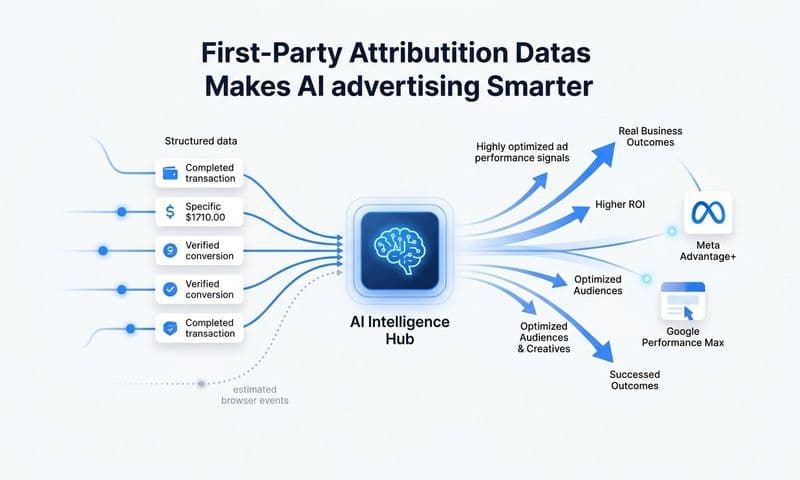
Conversion APIs allow you to send enriched conversion data directly from your server to ad platforms. Instead of relying solely on browser pixels that might be blocked, you're feeding platforms complete information about every conversion, including customer value, product details, and attribution data.
When Meta's algorithm knows that users who engage with carousel ads featuring specific products are converting at higher values, it can find more users who match that pattern. When Google knows which search queries lead to high-lifetime-value customers, it can prioritize those searches.
You're essentially giving ad platform algorithms better fuel, which results in better performance.
Implementation Steps
1. Set up Conversion API integrations with your primary ad platforms (Meta Conversions API, Google Enhanced Conversions, TikTok Events API) to send server-side conversion data that supplements browser-based tracking.
2. Enrich conversion events with additional parameters like customer lifetime value, product categories, order value, and user segments to help platform algorithms optimize for your most valuable outcomes.
3. Monitor platform-reported conversions versus your internal conversion data to identify discrepancies and ensure your Conversion API is transmitting data accurately and completely.
Pro Tips
Send conversion events in real-time rather than batching them. Ad platforms optimize delivery based on recent performance. The faster they receive conversion signals, the faster they can adjust targeting and bidding to improve results.
6. Cross-Platform Journey Mapping Becomes Essential
The Challenge It Solves
Customers don't convert in neat, single-channel journeys. They see your Instagram ad on mobile, research on desktop, compare options across multiple sessions, and finally convert after seeing a retargeting ad. When each platform only shows its own touchpoints, you're viewing fragments instead of the complete story.
This fragmented view leads to channel conflicts where multiple platforms claim credit for the same conversion, making it impossible to know what's actually working.
The Strategy Explained
Cross-platform journey mapping connects touchpoints across all channels into unified customer paths. You can see that a user's journey began with an organic social post, continued through a Google search, included three website visits, and converted after a Facebook retargeting ad.
This unified view reveals patterns like which channel combinations drive the highest conversion rates, how many touchpoints are typically required before conversion, and which channels work best at different funnel stages.
Instead of evaluating channels in isolation, you understand how they work together as a system.
Implementation Steps
1. Implement a unified tracking system that assigns persistent user identifiers across devices and sessions, connecting anonymous website visitors to known users once they provide identifying information.
2. Integrate data from all marketing channels (paid ads, organic social, email, search, content, CRM) into a centralized attribution platform that can reconstruct complete customer journeys.
3. Analyze journey patterns to identify which channel sequences consistently lead to conversions, which channels serve as effective entry points versus conversion drivers, and where users typically drop off in their journey.
Pro Tips
Look for assisted conversions, not just last-click conversions. Channels that rarely get last-click credit might be essential for initiating journeys or moving users through the funnel. Cross-platform journey mapping reveals these hidden contributors that single-channel reporting misses.
7. Revenue-Based Attribution Replaces Vanity Metrics
The Challenge It Solves
Clicks, impressions, and even conversions can be misleading metrics. A channel might generate lots of conversions, but if those customers have low lifetime value or high return rates, it's not actually profitable. Optimizing for conversions without considering revenue quality leads to efficient acquisition of unprofitable customers.
Marketing teams celebrate hitting conversion targets while the business struggles because those conversions don't translate to sustainable revenue.
The Strategy Explained
Revenue-based attribution assigns credit based on actual revenue outcomes rather than conversion counts. It tracks not just whether someone converted, but how much revenue they generated, whether they became repeat customers, and what their lifetime value looks like.
This approach reveals which channels attract high-value customers versus bargain hunters, which campaigns drive one-time purchases versus loyal customers, and which audience segments are actually profitable to acquire.
You shift from asking "which channel drives the most conversions?" to "which channel drives the most profitable customers?" That's a fundamentally different question with different answers.
Implementation Steps
1. Connect your attribution system to revenue data sources including your e-commerce platform, payment processor, and CRM to track not just conversions but actual revenue generated by each customer.
2. Calculate customer lifetime value by channel and campaign, tracking initial purchase value plus repeat purchases over time to understand which marketing sources drive the most valuable long-term customers.
3. Adjust budget allocation based on revenue contribution rather than conversion volume, prioritizing channels and campaigns that drive higher customer values even if their conversion counts are lower.
Pro Tips
Set different target metrics for different funnel stages. Top-of-funnel awareness campaigns might be evaluated on cost per qualified lead, while bottom-funnel campaigns should be judged on revenue per dollar spent. Not every campaign needs to drive immediate revenue to be valuable.
Putting It All Together
These seven trends aren't isolated changes. They're interconnected shifts that collectively represent a new approach to marketing measurement. Server-side tracking provides the foundation for accurate data collection. AI-powered models make sense of that data at scale. First-party strategies ensure you maintain visibility as third-party tracking disappears.
The question isn't whether to adopt these trends, but which to prioritize first.
Start with your biggest gap. If data accuracy is your primary challenge—you're seeing significant discrepancies between platform-reported conversions and actual revenue—implement server-side tracking immediately. If you're still heavily reliant on third-party cookies, focus on building first-party data collection systems before those cookies disappear completely.
For teams running complex multi-channel campaigns, cross-platform journey mapping should be the priority. You can't optimize what you can't see, and fragmented channel-by-channel reporting creates blind spots that lead to poor budget decisions.
The marketers who thrive won't be those who implement every trend simultaneously. They'll be the ones who systematically address their specific measurement gaps, building capabilities that compound over time.
Begin with one trend. Master it. Then layer on additional capabilities to build a measurement system that gives you genuine confidence in your scaling decisions.
Ready to elevate your marketing game with precision and confidence? Discover how Cometly's AI-driven recommendations can transform your ad strategy. Get your free demo today and start capturing every touchpoint to maximize your conversions.