Allocating your marketing budget often feels like a high-stakes guessing game. Do you pour more into the channels that seem to be working, or do you spread your bets thin and hope for the best? In a competitive market, the difference between explosive growth and stagnant results lies in precision. Guesswork is no longer a viable strategy; every dollar must be accountable, traceable, and optimized for maximum impact.
This guide moves beyond outdated, gut-feel decisions and introduces 10 proven marketing budget allocation best practices designed for modern growth teams. We are not just talking about theory. Instead, you'll discover actionable frameworks that top-performing companies use to turn their marketing spend into a predictable growth engine. We will detail specific methods for optimizing your channel mix, justifying every dollar with data, and building a resilient budget strategy that drives sustainable, profitable customer acquisition.
You will learn how to implement sophisticated models that connect your spending directly to results, such as:
- Multi-touch attribution-based allocation for a true understanding of the customer journey.
- Customer Lifetime Value (CLV) weighted models to invest more in acquiring your most valuable customers.
- Funnel-stage-based allocation to ensure you are nurturing leads from awareness to conversion.
- Zero-based budgeting to force a critical review of all marketing expenses.
By implementing these advanced practices, you can stop guessing and start growing with confidence. This listicle provides the blueprint to transform your budget from a simple expense line into your most powerful tool for scalable success.
1. Multi-Touch Attribution-Based Budget Allocation
Instead of relying on simplistic last-click data, one of the most effective marketing budget allocation best practices is to use a multi-touch attribution model. This method analyzes every touchpoint a customer interacts with on their path to conversion and assigns a proportional value to each one. It provides a holistic view of the customer journey, revealing how different channels work together to drive results.
This approach prevents the common mistake of overvaluing bottom-of-the-funnel channels while underfunding the top-of-funnel activities that initiate the customer relationship. By understanding the true influence of each interaction, you can allocate your budget with far greater precision and confidence, ensuring every dollar is invested where it has the most impact.
 10 Marketing Budget Allocation Best Practices for 2026
How It Works in Practice
Imagine an e-commerce brand discovers through a linear attribution model that organic search, while rarely the final click, consistently appears in 40% of all successful conversion paths. Armed with this insight, they can justifiably increase their SEO budget, knowing it plays a critical role in customer discovery. Similarly, a SaaS company might find that webinars, initially deemed expensive, actually attract customers with a 50% higher lifetime value than those acquired through paid search ads. This data empowers them to shift funds from lower-value ads to high-impact webinar production.
Actionable Implementation Tips
To effectively implement this strategy, follow these key steps:
- Start with First-Party Data: Prioritize data you collect directly from your audience (e.g., website behavior, CRM entries) to ensure the highest level of accuracy and privacy compliance.
- Choose the Right Model: For complex, multi-channel journeys, an algorithmic or data-driven model often provides the most accurate insights. Platforms like Cometly, Google Analytics 4, and Adobe Analytics offer various models to test.
- Integrate CRM Data: Connect your attribution tool with your CRM to go beyond simple conversions. Track the revenue influenced by each channel to understand which touchpoints drive high-value customers.
- Test Incrementally: Once your attribution model reveals an underperforming or overperforming channel, reallocate your budget in small increments (e.g., 5-10%) and measure the impact before making larger changes. You can explore a deeper dive into the nuances of marketing attribution modeling here.
2. Performance-Based Budget Reallocation (Data-Driven Optimization)
This dynamic approach moves beyond static annual or quarterly planning, making it one of the most agile marketing budget allocation best practices. It involves continuously reallocating funds away from underperforming channels toward those demonstrating the highest return on investment (ROI) and return on ad spend (ROAS). Instead of setting a budget and forgetting it, teams monitor performance metrics in near real-time and shift spend based on live data.
This methodology maximizes returns by capitalizing on what’s working right now and decisively cutting what isn't. It treats the marketing budget as a fluid asset, constantly optimized to achieve the best possible outcomes. This prevents wasted spend on campaigns that have lost momentum and doubles down on channels that are currently hitting their stride.
 10 Marketing Budget Allocation Best Practices for 2026
How It Works in Practice
For an e-commerce brand, this might mean reallocating 20% of the budget from underperforming display ads to a high-ROAS Google Shopping campaign mid-month. Similarly, a SaaS startup could notice its cost-per-qualified-lead from paid search has dropped significantly, prompting them to immediately shift funds from organic content promotion to capitalize on the efficiency. Agencies using this method might increase a client's TikTok ad spend by 40% after a video campaign hits 2.5x its target ROAS in the first week.
Actionable Implementation Tips
To effectively implement this strategy, follow these key steps:
- Set Clear KPIs: Before allocating any budget, establish firm ROAS, CPA, or cost-per-lead targets for each channel so you can objectively measure performance.
- Establish a Review Cadence: Review performance at consistent intervals. For fast-moving paid channels like social media and search ads, a weekly review is ideal.
- Use Automation Rules: Implement budget allocation rules directly within platforms like Google Ads and Meta Ads to automatically shift spend toward the best-performing ad sets or campaigns.
- Test Incrementally: When a channel is underperforming, avoid pulling 100% of its budget at once. Reallocate in smaller increments (e.g., 15-20%) and measure the impact.
- Ensure Clean Data: Use comprehensive UTM parameters and reliable conversion tracking to ensure every decision is based on accurate, trustworthy data. For more details on this data-driven approach, you can explore how to optimize marketing spend on Cometly.com.
3. Customer Lifetime Value (CLV) Weighted Budget Allocation
Moving beyond initial transaction value, another of the most forward-thinking marketing budget allocation best practices is to weigh spending based on Customer Lifetime Value (CLV). This sophisticated approach allocates more budget to the channels that acquire high-value, long-term customers, rather than just focusing on immediate conversion volume. It prioritizes profitability and sustainable growth over short-term acquisition metrics.
This method is crucial for businesses where customer value varies significantly across different acquisition sources, such as SaaS, subscription services, and e-commerce brands with high repeat purchase rates. By focusing on CLV, you invest in channels that build a loyal customer base, maximizing long-term return on investment instead of just chasing low-cost, low-value conversions.
How It Works in Practice
Imagine a subscription SaaS company discovers that customers acquired through its content marketing efforts have a 40% higher retention rate than those from paid search. This insight justifies shifting a larger portion of the budget toward content creation and SEO, even if the initial cost per acquisition is higher. Similarly, a direct-to-consumer beauty brand might find that customers from an affiliate channel spend three times more on repeat purchases than those from Facebook ads. This data empowers them to scale their affiliate program, knowing it delivers more profitable customers over time.
Related reading: our complete guide to AI talking avatar ads generator.
Actionable Implementation Tips
To effectively implement this strategy, follow these key steps:
- Calculate CLV Per Channel: Regularly analyze the average CLV of customers acquired from each specific marketing channel. Platforms like Cometly can link revenue data from your CRM directly to channel touchpoints, simplifying this calculation.
- Include All Relevant Metrics: Ensure your CLV calculation includes not just revenue but also churn rate, expansion revenue (upsells/cross-sells), and even customer support costs to get a true picture of profitability.
- Segment Your Analysis: If you offer multiple products or service tiers, segment your CLV analysis by product line. A channel that is great for acquiring entry-level customers may differ from one that drives high-value enterprise sales.
- Balance with Growth Needs: While CLV is critical, don't completely abandon channels that drive new customer volume. Balance your budget to support both high-value customer acquisition and top-of-funnel growth. You can find a complete guide to customer lifetime value analysis here.
4. Channel Mix Optimization (Balanced Portfolio Approach)
Rather than concentrating your entire budget on one or two high-performing channels, a superior strategy is to adopt a balanced portfolio approach. This method diversifies your investment across multiple channels like paid ads, organic search, email, and partnerships. This approach to marketing budget allocation best practices reduces your risk and prevents over-reliance on a single platform, making your strategy resilient to algorithm changes or shifts in market dynamics.
If you're evaluating vendors, our AI display ad generator breakdown can help.
This diversification ensures you are capturing customers at various stages of their journey and across different platforms. By intentionally maintaining a healthy channel mix, you build a more sustainable and robust marketing engine that isn't vulnerable to a single point of failure, such as sudden ad cost increases or tracking limitations. It allows for consistent growth while enabling agile adjustments based on holistic performance data.
How It Works in Practice
A direct-to-consumer fashion brand might allocate its budget as follows: 30% to paid social ads for top-of-funnel awareness, 25% to SEO and content for long-term organic growth, 20% to email and SMS for retention, 15% to influencer marketing for social proof, and 10% to affiliate partnerships. Similarly, a B2B SaaS company might dedicate 35% to account-based marketing, 30% to content that fuels inbound leads, 20% to paid search for high-intent queries, and 15% to virtual events for lead generation.
Actionable Implementation Tips
To build and maintain a balanced marketing portfolio, consider these steps:
- Start with Benchmarks: Begin by researching typical channel allocations for your industry and business model. Use these as a starting point, then adjust based on your specific performance data.
- Review Quarterly, Not Monthly: Avoid knee-jerk reactions to short-term performance dips. A quarterly review cadence allows you to make intentional, strategic shifts based on more substantial data trends.
- Maintain Strategic Minimums: Even if a channel's direct ROI is temporarily lower, maintain a minimum budget for it if it plays a crucial strategic role, such as brand building or top-of-funnel discovery.
- Balance Your Core Channels: For a truly balanced portfolio, it's essential to analyze strategic choices like Organic SEO vs. PPC investment strategies to maximize long-term and short-term returns.
- Document and Share: Create a clear document outlining your channel mix strategy, target allocations, and the reasoning behind them. Share it with stakeholders to ensure alignment. You can gain deeper insights by learning how to measure marketing channel effectiveness.
5. Experimentation and Testing Budget (Reserve Fund Approach)
One of the most forward-thinking marketing budget allocation best practices is to create a dedicated reserve fund for experimentation. This approach involves setting aside 10-15% of the total marketing budget specifically for testing new channels, creative formats, audience segments, and unproven campaigns. This "innovation fund" empowers marketers to discover emerging growth opportunities without jeopardizing the performance of established, revenue-driving channels.
This strategy ensures your marketing efforts never become stagnant. It builds a culture of continuous improvement, where successful tests are graduated into the core budget and unsuccessful ones provide valuable data before being quickly discontinued. By isolating risk, you can innovate with confidence and consistently find new pathways to scale.
 10 Marketing Budget Allocation Best Practices for 2026
How It Works in Practice
Imagine an e-commerce company allocates 5% of its budget to test TikTok Shop. It discovers a remarkable 3.2x ROAS, prompting a decision to scale that channel's allocation to 15% of the main budget. Similarly, a SaaS startup testing various outbound email sequences finds they generate a higher response rate than their existing paid search ads. This success justifies graduating the email strategy to a 25% budget share, fundamentally shifting their customer acquisition model. This method allows for data-backed pivots that unlock significant growth.
Actionable Implementation Tips
To effectively implement this strategy, follow these key steps:
- Define Clear Success Criteria: Before launching any test, establish what success looks like. This could be a minimum ROAS of 1.5x, a target cost-per-lead, or a specific engagement rate.
- Run Statistically Significant Tests: Ensure tests run long enough (typically 2-4 weeks) to gather meaningful data and avoid making decisions based on random fluctuations.
- Isolate Variables: Whenever possible, test one variable at a time (e.g., a new headline or a different audience segment) to accurately attribute performance changes.
- Document Everything: Maintain a central repository or spreadsheet detailing every experiment, including the hypothesis, results, and key learnings to inform future tests.
- Establish a Graduation Process: Create clear criteria for when a successful experiment moves from the test fund into the core marketing budget, ensuring a seamless transition for scaling. You can explore a deeper dive into building an accelerated testing strategy here.
6. Funnel-Stage-Based Budget Allocation (TOFU/MOFU/BOFU)
Rather than allocating funds channel-by-channel, a highly strategic marketing budget allocation best practice is to structure spending around the customer journey. This method assigns your budget to the three core stages of the marketing funnel: Top-of-Funnel (TOFU) for awareness, Middle-of-Funnel (MOFU) for consideration, and Bottom-of-Funnel (BOFU) for conversion. It ensures you are nurturing prospects from their first interaction to the final sale.
This funnel-based approach prevents over-investment in just one area, like last-click conversion ads, while neglecting the crucial awareness and consideration activities that feed your pipeline. By dedicating resources to each stage, you build a sustainable growth engine that consistently attracts, educates, and converts your target audience, ensuring a healthy flow of leads and customers over the long term.
How It Works in Practice
A B2B SaaS company might allocate its budget as 30% to TOFU (content marketing, webinars), 35% to MOFU (in-depth case studies, product demos), and 35% to BOFU (retargeting ads, sales enablement materials). In contrast, an e-commerce brand focused on faster conversions could dedicate 25% to awareness (influencer campaigns), 25% to consideration (comparison guides), and a hefty 50% to conversion (Google Shopping ads, abandoned cart emails). This framework adapts to your specific business model and sales cycle length.
Actionable Implementation Tips
To effectively implement this strategy, follow these key steps:
- Map Your Channels: Audit your current marketing activities and assign each one to its primary funnel stage (TOFU, MOFU, or BOFU) to see your current allocation.
- Set Stage-Specific Metrics: Measure the success of each stage differently. Track impressions and reach for TOFU, leads and engagement for MOFU, and conversions and revenue for BOFU.
- Account for Sales Cycle: Businesses with long sales cycles, like enterprise software, should allocate more to TOFU and MOFU to build trust over time. Shorter cycles may justify a heavier BOFU investment.
- Review and Adjust Quarterly: Your ideal funnel allocation will change as your business grows and market conditions shift. Regularly review performance data and rebalance your budget to optimize results. Platforms like Cometly can help you track how touchpoints at each stage influence final conversions.
7. Predictive Analytics and Forecasting-Based Allocation
Moving beyond reactive analysis, one of the most forward-thinking marketing budget allocation best practices involves leveraging predictive modeling and forecasting. This advanced method uses historical data, market trends, and external variables to anticipate which channels and campaigns will deliver the best returns in the future. Instead of just analyzing past performance, you proactively direct funds toward opportunities with the highest predicted success.
This data science-driven approach allows you to get ahead of market shifts and seasonal trends, making smarter decisions before a campaign even launches. By forecasting potential outcomes, you can mitigate risks associated with underperforming channels and double down on those projected to exceed benchmarks, maximizing your budget’s efficiency and impact from day one.
How It Works in Practice
An e-commerce company, for example, can use historical sales data to predict that its "back-to-school" season will see a significant ROAS shift from social media ads to search ads. Armed with this forecast, the team can pre-allocate a larger portion of its budget to Google Ads in late summer. Similarly, a SaaS company might forecast a seasonal dip in organic search volume for its primary keywords and proactively shift its budget toward paid social campaigns to maintain lead generation velocity during that period.
Actionable Implementation Tips
To effectively implement this strategy, follow these key steps:
- Build a Strong Data Foundation: Start by ensuring you have clean, well-organized historical data. Aim for at least 24 months of performance data for robust and reliable predictions.
- Start Simple: You don't need complex machine learning from the outset. Begin with simple regression models in spreadsheets or analytics tools to identify basic trends and correlations.
- Incorporate External Variables: Enhance your models by including external factors like holidays, seasonality, major industry events, and even competitor advertising spikes to create a more accurate forecast.
- Validate and Retrain Regularly: Predictive models are not "set it and forget it." Validate your forecasts against actual results quarterly and retrain your models with new data to maintain their accuracy and relevance.
8. Zero-Based Budget Allocation (Justify Every Dollar)
Instead of making incremental adjustments to last year's budget, zero-based budgeting (ZBB) forces teams to build their financial plan from scratch. This is a foundational marketing budget allocation best practice that requires every single dollar to be justified based on its expected contribution to current business objectives. It eliminates the inertia of "we've always done it this way" and ensures every investment is actively aligned with present goals.
This rigorous approach promotes financial discipline and forces a critical evaluation of every channel, campaign, and tactic. By building a business case for each expenditure, you ensure that your budget is lean, efficient, and laser-focused on activities with the highest potential return on investment (ROI), rather than perpetuating legacy spending that no longer serves the company's strategic direction.
How It Works in Practice
A hyper-growth SaaS startup might use ZBB to pivot from brand-focused spending to aggressive customer acquisition. After justifying every dollar, they might reallocate 60% of their budget to high-intent paid search and social ads, 30% to content that supports the sales funnel, and 10% for experimenting with new channels. Conversely, a mature software company could use ZBB to discover that long-tail retention channels, like customer success webinars, are far more valuable than previously thought and protect that funding from cuts.
Actionable Implementation Tips
To effectively implement zero-based budgeting, follow these key steps:
- Establish Clear Objectives: Start with non-negotiable business goals for the period, such as revenue targets, customer acquisition cost (CAC) limits, or market share growth.
- Build ROI-Based Cases: For each proposed channel or campaign, create a detailed model projecting its ROI, payback period, and contribution to key performance indicators (KPIs).
- Set Minimum Thresholds: Define clear criteria for funding approval, such as a minimum expected ROAS of 1.2x or a maximum payback period of six months. This creates an objective filter for all requests.
- Involve Cross-Functional Stakeholders: Engage finance and sales teams in prioritization discussions to ensure marketing plans align with broader company financials and sales capacity.
- Document Assumptions: Record the underlying assumptions for every allocation decision. This documentation provides a baseline for future reviews and helps you understand why specific choices were made. To learn more about building a data-first marketing plan, you can explore this guide on creating a marketing budget.
9. Win-Share and Competitive Parity Budgeting
In highly competitive industries, a reactive and context-aware approach is essential. One of the most strategic marketing budget allocation best practices for this environment is win-share and competitive parity budgeting. This method involves setting your marketing spend in direct relation to your competitors' activities and your desired market share. It treats budgeting not as an isolated internal decision, but as a strategic move on a competitive chessboard.
This approach ensures your brand maintains a sufficient "share of voice" to avoid being drowned out by rivals. By benchmarking against key players, you can make informed decisions to either defend your current market position or aggressively pursue a larger slice of the pie. It shifts the focus from purely internal ROI metrics to external market dynamics, which is critical in winner-take-all categories.
How It Works in Practice
Imagine a direct-to-consumer beauty brand notices its primary competitor has doubled its spending on TikTok influencer campaigns. Using a competitive parity model, the brand decides to increase its own TikTok budget to match, preventing a loss of market presence and customer attention. Similarly, a fintech startup might discover through tools like Semrush that its rivals are bidding aggressively on key search terms. In response, it could increase its paid search budget by 30% to maintain visibility and protect its lead generation pipeline from being eroded.
Actionable Implementation Tips
To effectively implement this strategy, follow these key steps:
- Identify Key Competitors: Focus on tracking the spending and channel mix of 3-5 direct competitors who are vying for the same audience.
- Leverage Competitive Intelligence Tools: Use platforms like Semrush, Similarweb, or Pathmatics to estimate competitor ad spend, channel allocation, and creative strategies.
- Calculate Share of Voice (SOV): Measure your brand's advertising presence against the total for your category. Compare your SOV to your market share; a significant gap can signal an opportunity or a threat.
- Balance with Internal Metrics: Do not blindly copy competitor spending. Always align competitive parity decisions with your own ROI goals and campaign efficiency to ensure you're not just matching spend, but outperforming it.
- Establish a Review Cadence: Monitor competitor spending quarterly to identify trends, but adjust your own budget on a semi-annual or annual basis to avoid knee-jerk reactions to short-term competitor tests.
10. CAC Payback Period and Profitability-Based Allocation
Focusing on how quickly you recoup your acquisition costs is one of the most financially disciplined marketing budget allocation best practices, especially for cash-conscious businesses. This method prioritizes channels based on their Customer Acquisition Cost (CAC) payback period, which is the time it takes for a customer's revenue to cover their acquisition cost. It directly links marketing spend to cash flow and profitability.
This approach shifts the focus from vanity metrics to the financial health of your acquisition strategy. By prioritizing channels that return capital quickly, you can sustainably fuel growth, reduce risk, and make smarter, data-backed decisions. It ensures your marketing engine isn't just acquiring customers, but acquiring profitable customers who contribute to the bottom line faster.
How It Works in Practice
A subscription SaaS company discovers that customers on monthly plans have an 8-month CAC payback, while those on annual plans pay back their acquisition cost in just 3 months. They reallocate their ad budget to heavily promote the annual plan, improving cash flow significantly. Similarly, a B2B startup with a limited runway might prioritize outbound sales with a 4-month payback over a content marketing strategy with a projected 12-month payback, ensuring they can operate longer while building brand presence more slowly.
Actionable Implementation Tips
To effectively implement this strategy, follow these key steps:
- Calculate Accurately: Use at least 6-12 months of historical data to calculate the CAC payback period for each channel. Include all associated costs, such as media spend, team salaries, tools, and overhead.
- Track Net Payback: Go beyond gross revenue and calculate payback based on net profit after accounting for the cost of goods sold (COGS). This gives you a true picture of profitability.
- Model Different Scenarios: Create budget models for different business goals, such as maximum growth versus cash preservation. Choose the allocation strategy that aligns with your current business stage and financial runway.
- Review Quarterly: CAC payback periods are not static. They can change with pricing updates, market shifts, or new product features. A quarterly review ensures your budget allocation remains optimized and responsive. To do this well, you must focus on accurately measuring marketing ROI for real business growth.
Marketing Budget Allocation: 10 Approaches
Multi-Touch Attribution-Based Budget Allocation has high implementation complexity because it requires strong tracking infrastructure and attribution modeling across multiple touchpoints. The setup is heavier upfront, but once it’s built, it delivers real-time insights that help you see true channel ROI and reduce wasted spend. This approach is ideal for businesses with complex customer journeys, like e-commerce and SaaS, because it reveals how each channel actually contributes to conversions and helps you allocate budget more accurately.
Performance-Based Budget Reallocation (Data-Driven Optimization) is a medium-complexity approach that relies on rule-based automation, consistent monitoring, and fast adjustments. It requires ongoing attention, but it’s quick to execute and produces strong short-term outcomes like improved ROAS and rapid performance gains. This is best for agile growth teams and paid-media-heavy businesses that want to move budget toward what’s working right now without overcomplicating the strategy.
Customer Lifetime Value (CLV) Weighted Budget Allocation is a high-complexity strategy because it depends on CRM integration, historical customer data, and modeling to predict long-term value. It tends to update slower than pure performance-based systems, but it leads to higher long-term profitability by prioritizing customers who stay longer and spend more. This is ideal for subscription businesses, SaaS, and retention-focused brands that want sustainable growth and are willing to optimize for value instead of just volume.
Channel Mix Optimization (Balanced Portfolio Approach) is medium complexity because it requires multi-channel governance and coordination, but it doesn’t demand advanced modeling. It typically runs on a moderate cadence and aims for steadier outcomes like reduced risk and more stable revenue streams. This approach is best for brands that want diversification and resilience, because it reduces dependence on a single channel and supports both performance marketing and long-term brand building.
Experimentation and Testing Budget (Reserve Fund Approach) is low to medium complexity because it mainly requires a structured testing framework rather than heavy infrastructure. It uses a small dedicated budget and can move quickly through test cycles, making it great for generating learnings and discovering new winners. This is ideal for growth teams and innovation-focused companies that want to explore new channels, creatives, or audiences safely without risking core performance.
Funnel-Stage-Based Budget Allocation (TOFU/MOFU/BOFU) is medium complexity because it requires mapping channels and campaigns to funnel stages and tracking stage-specific performance metrics. It moves at a moderate speed and produces balanced outcomes like consistent pipeline flow and better alignment between spend and the timeline of conversions. This works especially well for B2B SaaS and full-funnel businesses that need to maintain awareness, nurture, and conversion simultaneously.
Predictive Analytics and Forecasting-Based Allocation is very high complexity because it depends on clean historical data, machine learning models, and scenario planning. It takes longer to implement, but once working, it enables proactive budget decisions by predicting shifts before they happen. This approach is best for enterprise teams with at least 1–2 years of strong data who want forecasting, planning confidence, and the ability to simulate different growth scenarios.
Zero-Based Budget Allocation (Justify Every Dollar) is a high-complexity method because it requires intense planning and justification across every spend category. It is slower to execute but produces strong accountability and ensures budgets align with current priorities instead of historical habits. This approach is ideal for companies that need cost discipline, are going through a pivot, or want to eliminate waste by forcing every dollar to earn its place.
Win-Share and Competitive Parity Budgeting is medium complexity because it depends on competitive monitoring and spend estimates, often requiring external tools and market intelligence. It provides moderate agility and aims to protect or grow market share by benchmarking spend against competitors. This is best for highly competitive categories like CPG, fintech, and DTC where share of voice matters, and it helps justify spend based on market pressure rather than internal assumptions alone.
CAC Payback Period and Profitability-Based Allocation is medium to high complexity because it requires tight alignment between finance, attribution, and revenue tracking. It runs on a moderate cadence and produces outcomes focused on better cash flow and stronger short-term profitability. This is ideal for cash-constrained startups and SaaS companies with varying payback periods, because it prioritizes acquisition channels that return cash faster and support healthier scaling.
Turning Your Budget into a Strategic Growth Lever
Navigating the complexities of marketing budget allocation can feel like charting a course through a dense, ever-changing fog. However, as we've explored, the right frameworks and data-driven mindset can transform your budget from a simple line item into your most powerful strategic growth lever. The journey from static, assumption-based planning to dynamic, performance-based investment is the single most important transition a modern marketing team can make.
The core takeaway from these marketing budget allocation best practices is that there is no single "magic bullet" formula. Instead, excellence lies in creating a blended, adaptive system. It's about combining the forensic detail of multi-touch attribution with the forward-looking wisdom of CLV-weighted spending. It’s about anchoring your strategy with a balanced funnel-stage allocation (TOFU/MOFU/BOFU) while retaining the agility to reallocate funds based on real-time performance data. This hybrid approach moves you beyond just spending money to strategically investing it.
From Static Plan to Dynamic Engine
Think of your marketing budget not as a fixed contract signed at the start of the quarter, but as a fluid pool of capital ready to be deployed to the highest-performing initiatives. The practices we've discussed, from Zero-Based Budgeting that forces justification for every dollar to maintaining a dedicated Experimentation Fund, all share a common theme: active management.
Your budget should work for you, not the other way around. This requires a cultural shift towards continuous optimization, where data doesn’t just inform annual plans but shapes daily and weekly decisions.
Key Insight: The most effective marketers don't just "set and forget" their budgets. They treat allocation as an ongoing process of hypothesis, testing, measurement, and reallocation, creating a perpetual feedback loop that consistently improves ROI.
Your Actionable Roadmap to Smarter Allocation
Mastering these concepts is what separates market leaders from the rest of the pack. It allows you to confidently double down on winning channels, cut underperforming campaigns before they drain resources, and accurately forecast the impact of your marketing spend on the bottom line. It’s the difference between guessing where growth comes from and knowing precisely which levers to pull to create it.
To put these principles into practice, here are your immediate next steps:
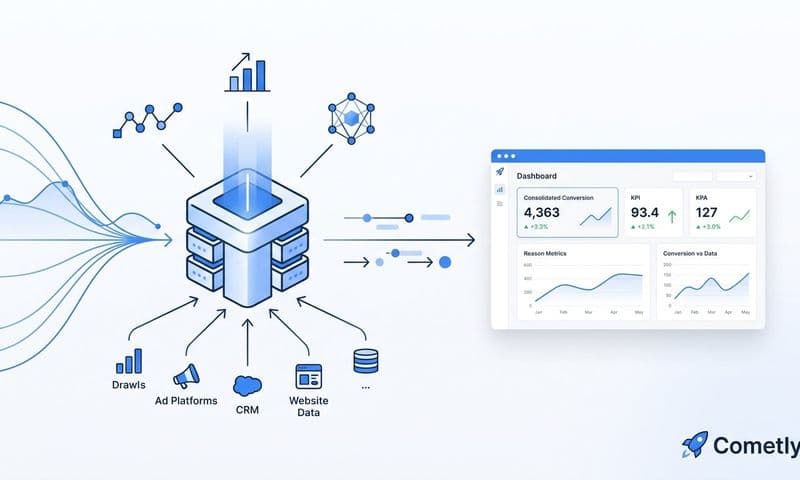
- Audit Your Data Stack: Can you accurately track a customer from their first touchpoint to their final purchase and beyond? If not, consolidating your data into a single source of truth is your top priority. True data-driven optimization is impossible with fragmented, unreliable information.
- Start Small with an Experimentation Fund: You don't need to overhaul your entire system overnight. Carve out just 5-10% of your budget for testing new channels, audiences, or creative. Use the insights from these controlled experiments to inform broader allocation decisions.
- Adopt a Profitability-First Metric: Move beyond surface-level metrics like CPL or ROAS. Start framing your success around metrics that directly tie to profitability, such as Customer Lifetime Value (CLV) and CAC Payback Period. This ensures your marketing efforts are building a sustainable, long-term business.
Ultimately, adopting these marketing budget allocation best practices is about building a system that provides clarity and confidence. When you know exactly how every dollar contributes to revenue and profit, you can invest boldly, pivot quickly, and consistently outmaneuver the competition. Your budget becomes more than just a plan; it becomes your strategic advantage in the marketplace.
Ready to eliminate the guesswork and gain crystal-clear visibility into your marketing ROI? Cometly provides the unified attribution and analytics platform you need to implement these advanced budget allocation strategies with confidence. See exactly which ads, channels, and funnels are driving sales and optimize your spend for maximum profitability by visiting Cometly to see how it works.