You're tracking clicks, impressions, conversion rates, and ROAS across Meta, Google, TikTok, and a dozen other platforms. Your dashboards are full of numbers. Your reports look impressive. But when your CEO asks which campaigns are actually driving revenue growth, you hesitate.
This is the paradox of modern marketing: we have more data than ever before, yet many teams struggle to answer the most fundamental question—what's actually working?
Marketing management analytics is the discipline that bridges this gap. It's not just about collecting data or building pretty dashboards. It's about creating a connected system that reveals the true story behind your marketing performance, connects every dollar spent to actual business outcomes, and gives you the confidence to make strategic decisions that drive growth.
Beyond Vanity Metrics: What Marketing Management Analytics Actually Means
Let's clear up what marketing management analytics really is. At its core, it's the practice of systematically collecting, measuring, and analyzing marketing data to optimize performance and prove ROI. But here's where most teams get it wrong: they confuse reporting with analytics.
Reporting tells you what happened. Your Facebook ads generated 500 clicks yesterday. Your email campaign had a 22% open rate. Your website traffic increased by 15% last month. These are facts, but they're not insights.
True marketing management analytics tells you why it happened and what to do next. It reveals that those 500 Facebook clicks came primarily from a specific audience segment that converts at 3x your average rate. It shows that your email subscribers who engage with product-focused content are 5x more likely to become customers than those who only read blog posts. It connects that 15% traffic increase to a specific campaign that's driving qualified leads, not just browsers.
The fundamental shift happening in marketing is from channel-specific metrics to unified, revenue-focused measurement. In the past, you might have celebrated a low cost-per-click on Google Ads without knowing whether those clicks turned into customers. You might have optimized for email open rates without tracking whether opened emails led to purchases.
Modern marketing management analytics connects every touchpoint to revenue outcomes. It shows you which channels, campaigns, and creative elements contribute to actual business growth. This shift matters because marketing budgets are under increasing scrutiny, and "we got a lot of engagement" no longer justifies spending.
Think of it like the difference between a fitness tracker that counts your steps versus one that analyzes your movement patterns, predicts injury risk, and recommends specific training adjustments. Both collect data, but only one transforms that data into actionable intelligence.
The Core Components Every Analytics System Needs
Building an effective marketing analytics system requires three foundational layers working in harmony. Miss any one of these, and you're building on shaky ground.
Data Collection Infrastructure: This is your foundation—the systems that capture what's actually happening across your marketing ecosystem. At minimum, you need tracking pixels on your website to monitor visitor behavior, but that's just the starting point. Server-side tracking has become essential as browser-based tracking faces increasing limitations from privacy changes and ad blockers.
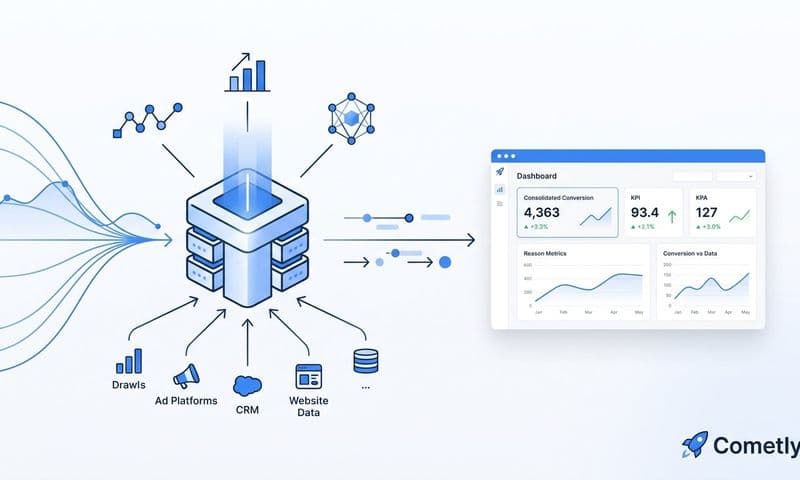
Your data collection infrastructure must connect your ad platforms (Meta, Google, TikTok, LinkedIn), your website or app, and your CRM. When these systems remain disconnected, you're essentially blind to the complete customer journey. A prospect might click your Facebook ad, visit your website three times over two weeks, receive a nurture email, and then convert through a Google search—but if your systems don't talk to each other, you'll never see this complete story.
Attribution Modeling: Once you're collecting data, you need a framework for understanding how different touchpoints contribute to conversions. This is where marketing attribution analytics comes in, and it's more nuanced than most marketers realize.
Should you give all the credit to the last touchpoint before conversion (last-click attribution)? Should you credit the first touchpoint that introduced the customer to your brand (first-click attribution)? Or should you distribute credit across multiple touchpoints (multi-touch attribution)?
The answer depends on your business model and sales cycle. A low-consideration impulse purchase might work fine with last-click attribution. A complex B2B sale with a six-month sales cycle absolutely requires multi-touch attribution to understand which marketing activities are actually influencing deals.
Multi-touch attribution reveals patterns that single-touch models miss entirely. You might discover that while your Google Search ads get credit for final conversions, your LinkedIn content campaigns are essential for getting prospects into your funnel in the first place. Without proper attribution, you might cut the LinkedIn budget and wonder why your overall conversions decline two months later.
Visualization and Reporting: The final layer is how you surface insights from all this data. This isn't about creating more dashboards—it's about building interfaces that highlight what actually matters and prompt specific actions.
Effective analytics dashboards answer specific questions: Which campaigns are driving qualified leads? What's our true customer acquisition cost by channel? Which audience segments have the highest lifetime value? Where should we reallocate budget for maximum impact?
The best analytics systems don't just display numbers—they surface anomalies, identify trends, and recommend specific optimizations. When your cost per acquisition suddenly spikes on a specific campaign, you shouldn't have to dig through ten reports to notice it. Your analytics system should flag it immediately and help you understand why it's happening.
Building Your Analytics Framework: From Chaos to Clarity
Moving from scattered data to a coherent analytics framework requires a methodical approach. Here's how to build yours from the ground up.
Step 1: Define Your Key Performance Indicators Tied Directly to Business Outcomes
Start by identifying what actually matters to your business. This sounds obvious, but many marketing teams track metrics that don't connect to revenue or profit. Impressions, reach, and engagement are interesting, but they're not KPIs—they're activity metrics.
Your core KPIs should ladder directly up to business outcomes. Revenue generated by channel. Customer acquisition cost. Customer lifetime value. Return on ad spend calculated using actual revenue, not platform-reported conversions. Contribution margin by campaign.
If you're a SaaS company, you might track metrics like cost per trial signup, trial-to-paid conversion rate, and monthly recurring revenue by acquisition source. If you're e-commerce, you're looking at cost per purchase, average order value, and repeat purchase rate by channel.
The key is ensuring every metric you track regularly answers the question: "How does this connect to our growth and profitability?" If you can't draw a clear line from a metric to business impact, it's probably not a KPI—it's just a number. Understanding marketing analytics metrics helps you distinguish between vanity metrics and those that drive real business value.
Step 2: Map Your Customer Journey and Identify Critical Touchpoints
Once you know what you're measuring, map out how customers actually move through your marketing ecosystem. This isn't about creating an idealized funnel diagram—it's about documenting the messy reality of how people discover, evaluate, and ultimately buy from you.
Start by analyzing a sample of recent customers. What was their first interaction with your brand? What content did they engage with? How many times did they visit your website before converting? Which channels were they exposed to along the way?
You'll likely discover that your customer journey is more complex than you thought. Customers rarely move in a straight line from awareness to purchase. They might discover you through organic search, ignore you for three months, see a retargeting ad, visit your website, leave, receive an email, come back through a direct visit, and finally convert.
Identify which touchpoints appear most frequently in successful customer journeys. These are your critical tracking points—the interactions you absolutely must measure accurately. Common critical touchpoints include initial website visit, product page views, email signups, content downloads, pricing page visits, and demo requests.
Step 3: Establish a Single Source of Truth
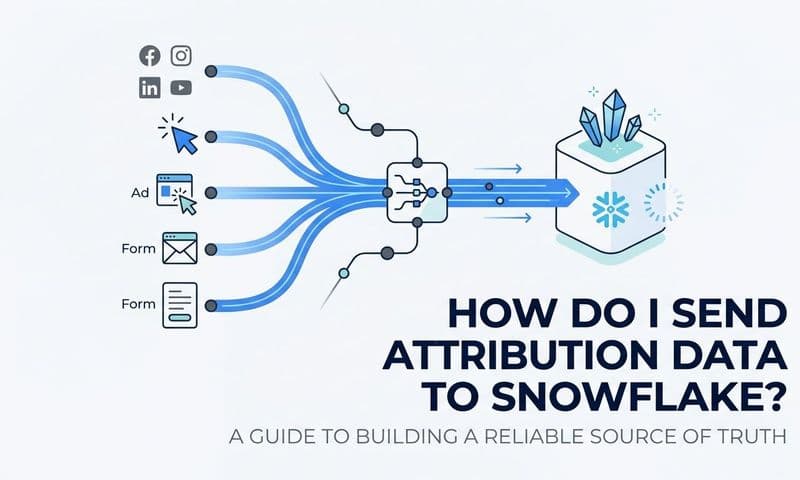
This is where most marketing teams struggle. You need one system that connects data from your ad platforms, website behavior tracking, and CRM to show the complete picture.
When these systems remain disconnected, you end up with conflicting data. Facebook reports 100 conversions. Google reports 80 conversions. Your CRM shows 120 new customers. Which number is correct? Without a unified system, you're constantly reconciling data instead of optimizing campaigns.
A true single source of truth captures every touchpoint—from the first ad click through website visits, email interactions, and finally to CRM events like deals closed and revenue generated. This connected view is what transforms scattered data into strategic intelligence. Choosing the right marketing data analytics software is essential for achieving this unified view.
The goal isn't perfection—it's having one system that your entire team trusts as the definitive record of marketing performance. When your CEO asks about marketing ROI, you should be able to point to one dashboard, not cobble together data from five different platforms.
Common Analytics Pitfalls That Sabotage Marketing Decisions
Even with solid infrastructure in place, several common traps can undermine your analytics accuracy and lead to poor decisions.
The iOS Tracking Gap: Since Apple's iOS 14.5 update introduced App Tracking Transparency, browser-based tracking has become increasingly unreliable. When users opt out of tracking, ad platforms lose visibility into conversions, leading to significant undercounting of actual results.
This creates a dangerous situation where your Facebook Ads Manager might report 50 conversions while your actual business records show 85 sales from Facebook traffic. If you optimize based on the platform data alone, you're making decisions on incomplete information.
Many marketers have responded by assuming their ads are performing worse than they actually are, cutting budgets on campaigns that are genuinely profitable. The solution isn't to ignore platform data—it's to implement server-side tracking that captures conversions regardless of browser limitations and feeds accurate data back to ad platforms.
Attribution Model Misalignment: Using the wrong attribution model for your business leads to systematically misallocated budgets. This happens more often than you'd think, and understanding the attribution challenges in marketing analytics is crucial for avoiding costly mistakes.
Imagine you're using last-click attribution for a product with a 30-day consideration period. Your brand awareness campaigns on Facebook introduce prospects to your product, but they don't convert immediately. Instead, they research, compare options, and eventually search for your brand name on Google and convert. Last-click attribution gives all the credit to that branded Google search and none to the Facebook campaign that started the journey.
Based on this data, you might conclude that Facebook isn't working and shift all your budget to Google. But here's the problem: without the Facebook awareness campaigns, people wouldn't be searching for your brand on Google in the first place. You've just defunded the top of your funnel based on flawed attribution.
The fix requires matching your attribution model to your actual customer journey. Longer sales cycles and higher-consideration purchases almost always require multi-touch attribution to understand what's really driving results.
Data Silos: This is perhaps the most expensive mistake in marketing analytics. When your ad platform data, website analytics, email platform, and CRM don't connect, you're forced to make decisions with partial information.
Data silos create blind spots that cost real money. You might be retargeting existing customers because your ad platform doesn't know they've already purchased. You might be spending heavily on channels that drive low-quality leads because you can't see which sources produce customers with high lifetime value. You might be celebrating a surge in conversions without realizing they're coming from a promotion that's destroying your profit margins.
The cost of disconnected systems isn't just inefficiency—it's strategic misalignment. When different teams are looking at different data, they optimize for different goals, often working against each other without realizing it.
Turning Insights Into Action: The Analytics-to-Optimization Loop
Analytics only creates value when it drives better decisions. The best marketing teams build a continuous loop where insights lead directly to optimization actions.
Identifying Underperformers and Reallocating Budget: Start by establishing clear thresholds for performance. What's your target customer acquisition cost? What ROAS makes a campaign profitable? Which conversion rates indicate a healthy funnel?
With these benchmarks in place, regularly review campaigns against them. When you identify underperformers, don't just pause them—understand why they're underperforming. Is the targeting wrong? Is the creative weak? Is the offer misaligned with the audience? Sometimes the fix is a simple adjustment rather than killing the entire campaign.
For campaigns that consistently underperform despite optimization attempts, reallocate that budget to your winners. But here's the nuance: scale your best campaigns gradually. Doubling budget overnight often increases costs and decreases efficiency as you exhaust your highest-intent audiences.
The most sophisticated marketers use true ROI calculations that account for profit margins, not just revenue. A campaign might generate impressive revenue but attract customers with high return rates or low repeat purchase rates. When you factor in the complete economics, that "winning" campaign might actually be destroying value. Learning how to boost sales with marketing analytics requires this deeper understanding of profitability.
Feeding Better Data to Ad Platform Algorithms: Modern ad platforms use machine learning to optimize delivery, but they can only work with the data you provide. When you feed them incomplete or inaccurate conversion data, their algorithms optimize for the wrong outcomes.
This is where server-side tracking and conversion APIs become strategic advantages. By sending enriched conversion data back to platforms—including conversions that browser-based tracking missed—you train their algorithms on a more complete picture of what success looks like.
The result is better targeting, more efficient optimization, and lower costs. When Facebook's algorithm has accurate data about which users actually convert, it gets better at finding similar high-value prospects. When Google knows which clicks led to purchases versus which led to bounces, it shifts delivery toward higher-intent searches.
Think of it as a feedback loop: better data leads to better optimization, which leads to better results, which generates more data to further improve optimization.
Creating a Regular Review Cadence: Effective analytics requires rhythm. Daily monitoring catches immediate issues—a broken tracking pixel, a sudden cost spike, a campaign that exhausted its budget too quickly. Weekly reviews identify trends and opportunities for tactical adjustments. Monthly deep dives reveal strategic insights that inform bigger decisions about budget allocation, audience strategy, and creative direction.
The key is balancing responsiveness with patience. Some marketers over-optimize, making constant changes that prevent campaigns from gathering enough data to reach statistical significance. Others under-optimize, letting underperforming campaigns run for weeks without intervention.
Establish clear decision rules: "If CAC exceeds target by 30% for three consecutive days, pause and investigate." "If a new campaign doesn't generate conversions within the first $500 spend, review targeting and creative." "If ROAS drops below 2.0 for two weeks, reallocate budget to better performers."
The Future of Marketing Analytics: AI and Predictive Insights
Marketing analytics is evolving from backward-looking reports to forward-looking intelligence. AI is transforming what's possible, shifting analytics from "what happened last month" to "what should we do tomorrow."
Traditional analytics tells you that Campaign A outperformed Campaign B by 20% last quarter. AI-powered marketing analytics tells you that based on current trends, increasing budget on Campaign A by 15% will likely improve overall ROAS by 8%, but only if you also adjust your creative rotation to emphasize the product benefits that resonate most with your highest-value audience segment.
This shift from descriptive to prescriptive analytics is already happening. Modern platforms analyze patterns across thousands of data points to surface recommendations that human analysts would miss. They identify subtle correlations between creative elements and conversion rates. They detect audience fatigue before performance drops. They predict which leads are most likely to convert based on behavioral signals.
Predictive Modeling: The most advanced marketing analytics systems now use predictive models to identify high-value opportunities before your competitors notice them. These models analyze historical patterns to forecast which audience segments, channels, or creative approaches are likely to outperform in the coming weeks.
Imagine your analytics system alerting you that based on seasonal patterns and current engagement trends, a specific product category is likely to see increased demand in the next two weeks. You can proactively shift budget and creative to capitalize on this opportunity before your competitors react.
Predictive modeling also helps with customer lifetime value forecasting. Instead of waiting months to see which acquisition sources produce valuable customers, predictive models identify early signals—specific behaviors, engagement patterns, or demographic characteristics—that indicate high lifetime value. This allows you to optimize for long-term value rather than just immediate conversions. Exploring data science for marketing analytics reveals how these advanced techniques transform campaign performance.
Enriched Data for Better Optimization: The future of marketing analytics isn't just about analyzing your own data better—it's about feeding richer, more accurate data back to the platforms you advertise on. When ad platforms have access to complete conversion data, including offline events, CRM outcomes, and customer lifetime value, their algorithms can optimize for business outcomes rather than just clicks or immediate conversions.
This creates a competitive advantage. While your competitors optimize for reported conversions that may be undercounted by 30-40% due to tracking limitations, you're optimizing based on complete, accurate data. Your campaigns target better audiences, your creative performs more efficiently, and your budget goes further.
Your Path to Analytics Clarity
Effective marketing management analytics isn't about drowning in more data—it's about surfacing the insights that actually matter. It's the difference between staring at dashboards full of numbers and confidently knowing which campaigns drive revenue, which audiences convert best, and where to allocate your next dollar for maximum impact.
The marketers who win in the coming years won't be those with the most data. They'll be those who connect their data sources into a unified view, implement accurate tracking that survives privacy changes, and use AI-powered insights to make faster, smarter decisions than their competitors.
Take a hard look at your current analytics setup. Can you definitively answer which campaigns drive your most valuable customers? Do you know your true customer acquisition cost by channel, accounting for the complete journey? Can you see which touchpoints matter most in your funnel? If you're hesitating on any of these questions, you're making decisions with incomplete information.
The good news is that building a robust analytics framework doesn't require starting from scratch. It requires connecting the systems you already use, implementing server-side tracking to capture accurate data, and establishing attribution models that reflect your actual customer journey.
Ready to elevate your marketing game with precision and confidence? Discover how Cometly's AI-driven recommendations can transform your ad strategy—Get your free demo today and start capturing every touchpoint to maximize your conversions.