You're tracking campaigns in HubSpot, watching contacts flow through your funnel, and yet when leadership asks "which channels are actually driving revenue?" you find yourself hedging. The data exists, but interpreting HubSpot's attribution models feels like reading tea leaves. Should you credit the first touch? The last? All of them equally?
Here's the reality: most marketers use attribution models without truly understanding what they're measuring or why. They pick a model because it's default, or because it shows their preferred channel in the best light. Meanwhile, budget decisions get made on incomplete data, high-performing channels get starved, and underperformers keep burning cash.
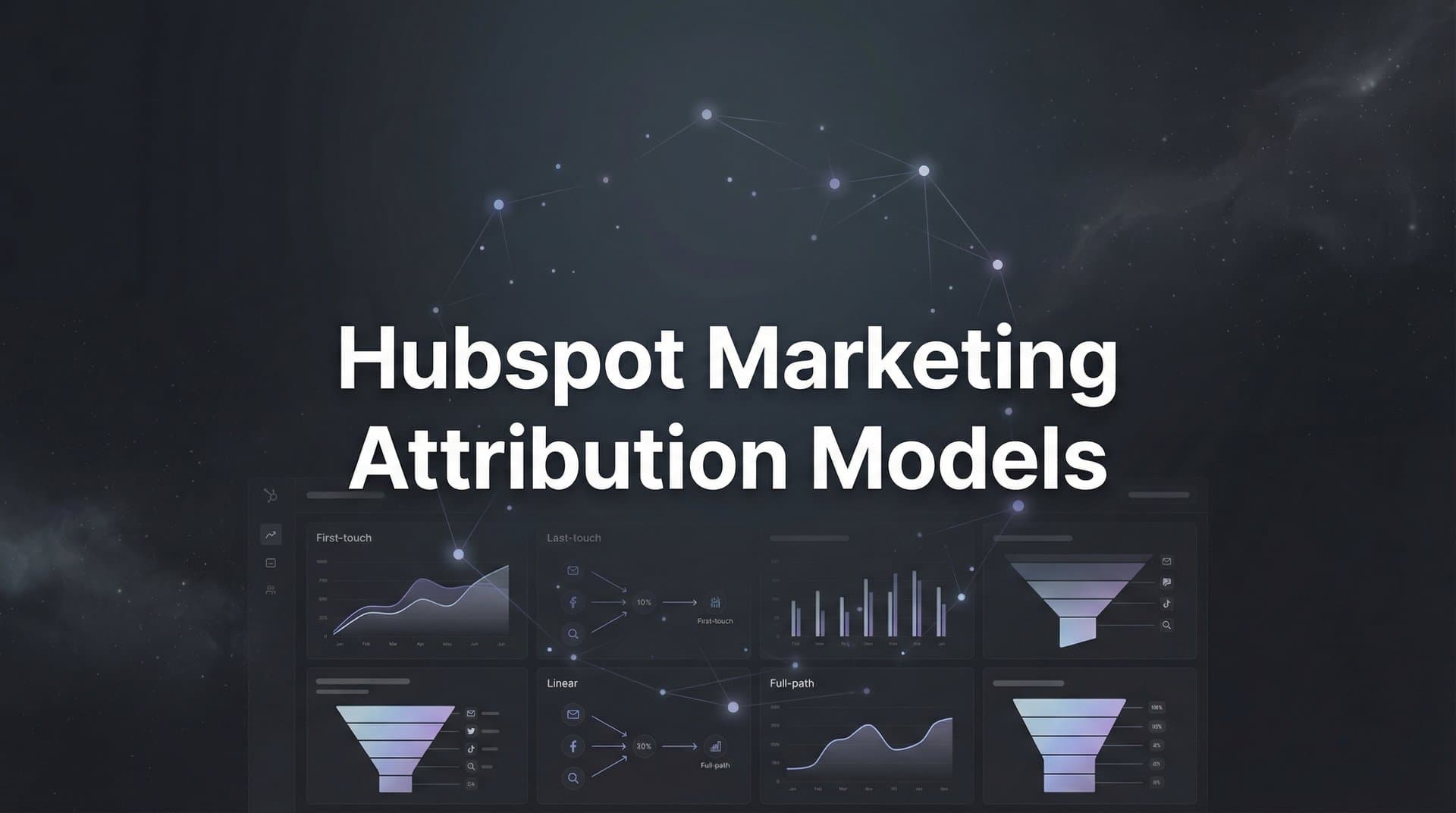
HubSpot offers seven different attribution models, each designed to answer specific questions about your marketing performance. But the platform won't tell you which model matches your business reality, how to ensure your data is actually accurate, or how to turn attribution insights into profitable action.
The strategies that follow will change how you approach marketing attribution. You'll learn to select models strategically based on your sales cycle, ensure your tracking foundation is solid, connect marketing touches to actual revenue, and use attribution data to optimize not just your internal decisions but your ad platform algorithms themselves. This isn't theory—it's the operational playbook for marketers who need attribution to drive real business outcomes.
1. Match Your Attribution Model to Your Sales Cycle Length
The Challenge It Solves
Choosing an attribution model without considering your sales cycle creates misleading data. If your typical customer researches for three months before buying, a last-touch model will wrongly credit only the final interaction, ignoring the webinar, blog posts, and email nurture that built trust over time. Conversely, if you sell low-ticket products with same-day conversions, multi-touch attribution adds complexity without insight.
The disconnect happens because attribution models were designed for different journey lengths. Using the wrong model doesn't just skew your reports—it leads to budget misallocation and strategic mistakes.
The Strategy Explained
Your sales cycle length should dictate your attribution approach. For sales cycles under two weeks with minimal touchpoints, single-touch models (first or last interaction) provide clear, actionable data. These models work well for e-commerce, lead generation offers, and transactional B2C services where customers decide quickly.
For sales cycles spanning one to three months with multiple research phases, U-shaped or W-shaped attribution makes sense. These models emphasize key conversion moments while acknowledging the nurture journey. They're ideal for B2B services, SaaS trials, and considered purchases.
For complex enterprise sales exceeding three months with extensive stakeholder involvement, full path or time decay models capture the reality of long nurture sequences, multiple decision-makers, and evolving pain points throughout the journey.
Implementation Steps
1. Calculate your average sales cycle by pulling deal data from HubSpot CRM, measuring time from first known touch to closed-won status across the last 100 deals to establish your baseline.
2. Map typical touchpoint counts by analyzing contact timelines for recent customers, noting how many interactions occur before conversion (if it's typically 2-3 touches, single-touch works; if it's 8-15, you need multi-touch).
3. Select your primary model in HubSpot by navigating to Reports > Analytics Tools > Attribution Report, choosing the model that matches your cycle length, and setting it as your default view for consistency.
Pro Tips
Run multiple models side-by-side initially to understand how they differ. If first-touch and last-touch attribution show dramatically different top channels, that's your signal that you need multi-touch. Document which model you use for which decisions so your team interprets data consistently across quarters.
2. Leverage Multi-Touch Attribution for Full Funnel Visibility
The Challenge It Solves
Single-touch attribution creates blind spots that lead to strategic errors. When you only credit the first touch, you might over-invest in awareness channels that attract tire-kickers while starving the retargeting campaigns that actually close deals. When you only credit the last touch, you'll cut content marketing and SEO that seed long-term pipeline because they rarely appear as the final interaction.
Both approaches ignore the reality that modern buyers interact with your brand 7-13 times before converting, with each touchpoint playing a distinct role in moving them forward.
The Strategy Explained
Multi-touch attribution distributes credit across the customer journey, revealing which channels work together to drive conversions. HubSpot offers three main multi-touch models, each with different emphasis.
Linear attribution splits credit equally across all touchpoints. This works when you want to value every interaction equally and understand overall channel contribution without bias toward specific funnel stages.
U-shaped attribution gives 40% credit to first and last touches, splitting the remaining 20% among middle interactions. This model suits businesses where awareness and conversion moments matter most, while nurture plays a supporting role.
W-shaped attribution distributes 30% each to first touch, lead creation, and opportunity creation, with remaining 10% split among other touches. This model excels for B2B companies with defined funnel stages where specific conversion moments (becoming a lead, becoming an opportunity) represent meaningful progress.
For a deeper dive into this space, see our AI UGC ad maker guide.
Implementation Steps
1. Enable multi-touch reporting in HubSpot by ensuring you have Marketing Hub Professional or Enterprise, then navigate to Reports > Attribution to access advanced models beyond first and last touch.
2. Define your key conversion moments by identifying which lifecycle stage changes matter most (subscriber to lead, lead to MQL, MQL to opportunity), as these become the weighted touchpoints in W-shaped models.
3. Create comparison reports showing the same time period under different models by building custom attribution reports with multiple model views, revealing which channels get over-credited or under-credited by single-touch approaches.
Pro Tips
Pay attention to channels that perform well in multi-touch but poorly in last-touch attribution—these are your unsung heroes that assist conversions without closing them. Content marketing, organic social, and educational webinars often fall into this category. Conversely, channels strong in last-touch but weak in multi-touch might be conversion scavengers that capture demand created elsewhere.
3. Integrate CRM Data to Connect Marketing Touches to Revenue
The Challenge It Solves
Contact-based attribution shows you which channels generate leads, but it can't tell you which channels generate profitable customers. A channel might create hundreds of contacts while contributing zero revenue, or it might generate just a few contacts who become your highest-value customers. Without connecting attribution to actual deal values, you're optimizing for volume instead of value.
This disconnect causes budget misallocation at scale. You'll invest heavily in channels that fill your pipeline with unqualified leads while under-funding channels that attract your ideal customer profile.
The Strategy Explained
Revenue attribution links marketing touchpoints to closed-won deal amounts, showing not just which channels drove conversions but which drove valuable conversions. This requires tight CRM integration where deal stages, amounts, and close dates flow seamlessly into your attribution reporting.
In HubSpot, this means ensuring your sales team consistently updates deal properties, particularly deal amount and close date. Your attribution reports can then weight channels not by contact count but by the revenue those contacts ultimately generated.
The insight shift is dramatic. You might discover that organic search generates 40% of leads but 65% of revenue because it attracts high-intent buyers. Or that a specific paid channel drives volume but attracts customers with 30% lower lifetime value than your average.
Implementation Steps
1. Audit your deal pipeline data quality by checking that closed-won deals from the last quarter have accurate deal amounts entered, as missing or placeholder values will corrupt your revenue attribution calculations.
2. Enable revenue reporting in attribution by navigating to your attribution report settings and switching from "Contacts Created" to "Revenue" as your primary metric, which requires deals to be associated with contacts.
3. Create deal-to-contact associations for historical data by running a workflow that associates deals with contacts based on company or email domain matching, filling gaps where sales didn't manually link contacts to opportunities.
Pro Tips
Segment revenue attribution by customer tier or deal size. Channels that drive small deals might differ entirely from those that land enterprise contracts. Run separate attribution reports for deals above and below your average contract value to reveal these patterns. This granularity transforms attribution from reporting to strategic intelligence.
4. Create Custom Attribution Reports for Stakeholder-Specific Insights
The Challenge It Solves
Your CFO doesn't care about click-through rates, and your paid ads manager doesn't need to see full customer journey maps. When everyone views the same generic attribution report, executives get overwhelmed by tactical details while channel managers lack the granularity they need to optimize. The result is attribution reports that get glanced at but never acted upon.
Different stakeholders need different views of the same attribution data, filtered and formatted for their specific decisions.
The Strategy Explained
Custom attribution dashboards translate raw data into role-specific insights. Build multiple report views from the same underlying attribution data, each designed for a specific audience and decision type.
For executives and finance teams, create high-level dashboards showing revenue by source, customer acquisition cost by channel, and ROI comparisons. These reports should answer "where should we invest more budget?" at a glance.
For marketing managers, build detailed channel performance reports showing attribution across models, conversion rates by touchpoint, and assist metrics that reveal how channels work together.
For channel specialists running paid ads or content programs, create tactical reports showing campaign-level attribution, keyword performance, and specific asset effectiveness within their domain.
Implementation Steps
1. Map stakeholder questions to required data by interviewing each team about what decisions they make monthly, then identifying which attribution metrics inform those decisions most directly.
2. Build custom reports in HubSpot by using the Custom Report Builder, filtering attribution data by the dimensions each stakeholder cares about (executives see channel groups, specialists see individual campaigns).
3. Schedule automated delivery by setting up email subscriptions for each custom report, ensuring stakeholders receive their relevant view weekly or monthly without needing to log into HubSpot.
Pro Tips
Name reports clearly by stakeholder and purpose: "Executive Revenue Attribution - Monthly" or "Paid Ads Channel Performance - Weekly." This prevents confusion when multiple attribution reports exist. Include brief interpretation notes in each report explaining what the numbers mean and what action thresholds to watch for.
5. Audit and Clean Your Tracking Setup Before Trusting Attribution Data
The Challenge It Solves
Attribution models only work when the underlying tracking data is accurate. If half your traffic shows as "direct" because UTM parameters are missing, if form submissions aren't capturing source data, or if your tracking code isn't firing on key landing pages, your attribution reports will mislead you into bad decisions.
The most sophisticated attribution model in the world can't fix garbage data. Most attribution problems aren't model selection issues—they're data collection failures.
The Strategy Explained
Quarterly tracking audits ensure your attribution foundation remains solid as campaigns evolve and websites change. This process systematically verifies that every traffic source, conversion point, and tracking mechanism is capturing accurate data.
Start with UTM parameter consistency. Every paid campaign, email, and social post should use standardized UTM parameters that follow your naming conventions. Inconsistent parameters create fragmented attribution where the same campaign appears as multiple sources.
Next, verify tracking code implementation across all conversion pages. Your HubSpot tracking code must fire on landing pages, thank you pages, and any page where meaningful interactions occur. Missing tracking on key pages creates attribution gaps.
Finally, test form submissions and conversion events to confirm source data flows through to contact records. Submit test forms from different sources and verify the original source data appears correctly on the contact record.
Implementation Steps
1. Run a traffic source audit by pulling a report of all traffic sources from the last 90 days, identifying any that appear as "direct," "other," or have inconsistent naming that suggests UTM parameter errors.
2. Verify tracking code presence by using browser developer tools or the HubSpot tracking code checker to confirm the tracking script loads on all key pages, particularly new landing pages launched in the last quarter.
3. Test the complete conversion flow by submitting forms from different sources (organic search, paid ad, email link) and checking that the contact's original source property matches the actual source you used.
Pro Tips
Create a UTM parameter template and share it with everyone who creates campaigns. Standardize your utm_source, utm_medium, and utm_campaign naming conventions in a shared document. Common mistakes include mixing capitalization, using spaces instead of underscores, and creating new source names instead of using existing ones. Consistency matters more than perfection.
6. Combine HubSpot Attribution with Server-Side Tracking for Complete Data
The Challenge It Solves
HubSpot's native tracking relies on browser cookies and client-side JavaScript, which means ad blockers, privacy settings, and iOS restrictions create blind spots in your attribution data. Industry estimates suggest 25-40% of web traffic now blocks or limits tracking scripts, meaning your attribution reports might be missing a significant portion of your actual customer journey.
These gaps aren't random—they disproportionately affect certain audiences. Privacy-conscious users, tech-savvy buyers, and iOS users are more likely to have tracking limitations, potentially skewing your attribution toward less sophisticated segments.
The Strategy Explained
Server-side tracking supplements browser-based tracking by capturing conversion events directly on your server before they reach the user's browser, bypassing client-side limitations. When someone converts, the event gets logged server-side and sent to your analytics platforms regardless of their browser settings or ad blockers.
This creates a more complete attribution picture. You'll still use HubSpot's native tracking for the data it captures well, but server-side tracking fills the gaps where client-side methods fail. The combination gives you higher data accuracy and more complete customer journey visibility.
Modern attribution platforms like Cometly specialize in server-side tracking that integrates with HubSpot, capturing conversion events that browser-based tracking misses and enriching your attribution data with complete journey information.
Implementation Steps
1. Identify your tracking gap size by comparing form submissions or purchases in your database to conversion events in HubSpot analytics, looking for discrepancies that suggest missed tracking.
2. Implement server-side conversion tracking by setting up a solution that captures conversion events on your server and sends them to both HubSpot and your ad platforms, ensuring every conversion gets tracked regardless of browser limitations.
3. Validate data completeness by running parallel reports comparing client-side and server-side conversion counts, confirming your server-side implementation is capturing events that client-side tracking missed.
Pro Tips
Focus server-side tracking on your highest-value conversion events first—purchases, demo requests, qualified lead submissions. These matter most for attribution accuracy. Lower-value interactions like newsletter signups can continue with client-side tracking alone. The goal is complete data for decisions that drive revenue.
7. Use Attribution Insights to Optimize Ad Platform Algorithms
The Challenge It Solves
Most marketers treat attribution as a reporting exercise—they look at which channels drove conversions, then make budget decisions. But attribution data has another powerful use: feeding accurate conversion information back to ad platforms like Meta and Google to improve their algorithmic optimization.
Ad platforms rely on conversion data to learn which audiences and placements perform best. When tracking gaps cause missed conversions or delayed conversion signals, the algorithms optimize on incomplete information, leading to poor targeting and wasted spend.
The Strategy Explained
Conversion sync takes your complete attribution data—including conversions captured server-side that ad platforms missed—and sends it back to those platforms as conversion events. This enriches their data sets and improves their machine learning optimization.
The impact compounds over time. Better conversion data means ad platforms show your ads to people more likely to convert, which improves your cost per acquisition, which gives you more budget to scale, which generates more conversion data to further improve the algorithms.
This requires a platform that can capture conversions accurately (including those missed by browser tracking) and has integrations to send that data back to ad platforms via their conversion APIs. Cometly specializes in this workflow, capturing complete conversion data and syncing it to Meta, Google, and other platforms to improve their targeting accuracy.
Implementation Steps
1. Audit your current conversion reporting accuracy by comparing conversions reported in Meta Ads Manager or Google Ads to actual conversions in your CRM, identifying gaps where platforms are missing conversion data.
2. Implement conversion API integration that sends server-side conversion events to your ad platforms, ensuring they receive complete conversion data including events missed by pixel-based tracking.
3. Monitor optimization improvements by tracking cost per conversion and conversion rates over the 30 days following implementation, as ad algorithms retrain on more complete data.
Pro Tips
Send conversion value data, not just conversion events. When ad platforms know which conversions generated $500 versus $5,000 in revenue, they can optimize for value instead of just volume. This shifts algorithmic targeting toward your highest-value customer segments automatically.
Putting It All Together
Attribution mastery isn't about finding the perfect model or the most sophisticated technology. It's about building a system where clean data flows into strategically selected models that inform real decisions. The marketers who win with attribution are those who treat it as an ongoing optimization process, not a one-time setup.
Start with your foundation. Audit your current tracking setup this week—check UTM parameters, verify tracking code implementation, and test your conversion flows. Fix the data collection issues before you worry about which attribution model to use.
Next, match your attribution approach to your business reality. If your sales cycle spans months with multiple touchpoints, single-touch attribution will mislead you. If you're selling products with same-day conversions, multi-touch attribution adds complexity without insight. Let your customer journey dictate your model choice.
Then connect attribution to revenue, not just contacts. Build reports that show which channels drive valuable customers, not just volume. Segment by deal size and customer tier to reveal patterns that generic attribution reports miss.
As you mature, address the gaps that browser-based tracking can't solve. Privacy changes and ad blockers aren't going away—they're accelerating. Server-side tracking isn't optional anymore for marketers who need complete data. The sooner you implement it, the sooner you'll have attribution data you can actually trust.
Finally, close the loop by feeding your attribution insights back to ad platforms. Your complete conversion data makes their algorithms smarter, which improves your targeting, which drives better results, which generates more data. This flywheel separates marketers who plateau from those who scale.
Ready to elevate your marketing game with precision and confidence? Discover how Cometly's AI-driven recommendations can transform your ad strategy—Get your free demo today and start capturing every touchpoint to maximize your conversions.