

Measuring digital marketing effectiveness isn't about chasing vanity metrics. It’s about building a framework that directly ties your marketing activities to revenue and real business goals. This means analyzing every single touchpoint—from the first ad impression to the final sale—so you can make every dollar you spend accountable.
Why Old Marketing Metrics No Longer Work
 Measuring Digital Marketing Effectiveness A Modern Guide
Let's be blunt: the old way of measuring marketing is broken. If you're still relying solely on the numbers you see inside Google or Facebook Ads, you're navigating with a faulty compass. In a world without third-party cookies and with ever-stricter privacy controls, those platform-reported metrics just don't cut it anymore.
Modern marketers are up against a ton of challenges that make accurate measurement feel like an uphill battle. Customer journeys have become incredibly fragmented, stretching across dozens of touchpoints—a podcast ad, a social media post, a blog review, and finally, a branded search. Every interaction plays a part, but traditional models just can't connect the dots.
The Data Disconnect
The data itself has become unreliable. The rise of ad blockers, paired with privacy updates like Apple's iOS changes, means a huge chunk of your conversion data never even makes it to your analytics tools. This leads to underreported sales, skewed performance metrics, and ultimately, wasted ad spend on channels that only look like they're working.
This isn't just a theory; it's the frustrating reality for marketing teams everywhere. There's constant pressure to prove marketing's value, but the tools we're given provide a dangerously incomplete picture. This is especially true for models that only give credit to the very last interaction. To see how this common issue can kill your campaigns, check out our detailed guide on last-click attribution.
The struggle is real. Recent insights from Gartner revealed that only 30% of CMOs feel confident in their ability to accurately measure marketing ROI. This stat perfectly captures the growing gap between the need for clear attribution and the messy reality of fragmented, privacy-altered data.
The Path to Clarity
So, what’s the fix? It’s not about finding some magical, all-in-one metric. It’s about building a unified measurement framework that pulls all your data together into a single source of truth.
This is how you get the clarity and confidence to answer the questions that actually matter:
- Which campaigns are really driving sales?
- What is our true customer acquisition cost?
- Where should we invest our next marketing dollar for the biggest impact?
By moving from guesswork to a data-backed strategy, you can transform your measurement process from a source of anxiety into your greatest competitive advantage. This guide will show you exactly how to build that framework.
Defining What Success Actually Looks Like
Before you even glance at a dashboard, the real work of measurement begins. It starts with a dead-simple, unified definition of what success actually means for your business. If you skip this part, you’re just tracking numbers, not driving outcomes.
The goal is to get past fluffy vanity metrics like "more traffic" and connect every single marketing dollar to a real business result.
It’s about asking the tough questions. Does a huge spike in website visitors matter if none of them sign up for a trial? Is a flood of social media likes valuable if it doesn't translate into actual sales? By tying every marketing activity to a core business objective, you create a straight line between your work and the company's bottom line.
From Business Goals to Marketing KPIs
The trick is to translate those high-level business goals into specific, measurable Key Performance Indicators (KPIs). These KPIs are the pulse of your marketing engine, telling you if you're on the right track or veering off a cliff.
And the right KPIs? They depend entirely on your business model.
Here are a few practical examples from the trenches:
- For a SaaS Company: Forget just tracking website traffic. Your focus needs to shift to metrics that signal real customer intent and revenue potential. That means obsessing over your Cost Per Trial and, more importantly, your Trial-to-Paid Conversion Rate. These numbers tell you exactly how efficiently you’re turning curious visitors into paying customers.
- For an E-commerce Brand: Page views are nice, but profit is everything. Success here is measured by metrics like Average Order Value (AOV) and Customer Lifetime Value (LTV). Crucially, you have to weigh these against your Customer Acquisition Cost (CAC) to make sure your campaigns are actually making money.
- For a Marketing Agency: Your success is your client's success. Period. This means focusing on client-centric KPIs that align with their goals. For a lead generation campaign, the metric that matters isn't clicks—it's Cost Per Qualified Lead (CPQL).
Choosing the right metrics is the foundation for accurately measuring anything in digital marketing. You can check out a ton of industry-specific marketing KPI examples to find the ones that best fit your business.
Your KPIs should tell a story about your business. If your Customer Acquisition Cost is rising but your Customer Lifetime Value isn't, you have a profitability problem. If your Cost Per Trial is low but your trial-to-paid conversion rate is dismal, you have a product or onboarding problem. The right KPIs reveal the why behind the numbers.
Tying Metrics to Financial Outcomes
At the end of the day, the most powerful way to define success is by connecting your KPIs directly to financial results. When you're figuring out what success really means, quantifying your return on investment is the final, critical piece of the puzzle.
Metrics like Return on Ad Spend (ROAS) and Marketing ROI provide the ultimate verdict on whether a campaign was a winner or a dud.
For a deeper dive, it’s worth learning how to calculate Marketing ROI to prove campaign value. This step ensures you can walk into any meeting and confidently report on marketing’s contribution to revenue.
Getting this framework right does more than just make your reports look better. It builds a culture of accountability and data-driven decision-making. Every person on the team knows exactly how their work connects to the bigger picture, aligning everyone toward the shared goal of sustainable growth.
This clarity is the first and most critical step in building a measurement system you can actually trust.
Building a Reliable Data Tracking System
Let's be honest: accurate measurement starts with accurate data. If your data pipeline is leaky, every report you build and every decision you make is on shaky ground. Getting the technical side of tracking right is the only way to measure your marketing effectiveness with any real confidence.
For a long time, most marketers got by with traditional, client-side tracking—think of the standard pixels you drop on your website from platforms like Meta or Google. These little snippets of code run in the user's browser, firing off data when someone clicks a button or makes a purchase. For years, that was good enough.
But the game has completely changed. The rise of ad blockers, strict privacy settings, and huge browser updates like Apple's Intelligent Tracking Prevention (ITP) now block a huge chunk of those browser-based signals. The result? Missing conversions, skewed metrics, and ad platforms that are basically flying blind, unable to optimize your campaigns.
The Shift from Client-Side to Server-Side Tracking
This is exactly where server-side tracking steps in. Instead of depending on the user's browser (the "client") to report a conversion, server-side tracking sends that information directly from your website's server to the ad platforms. It creates a far more durable and reliable connection.
Think of it like this:
- Client-Side Tracking: This is like sending a letter through the public mail system. It might get lost, intercepted, or just thrown out before it ever reaches its destination.
- Server-Side Tracking: This is like using a secure courier. The message goes directly from a trusted source (your server) straight to the recipient (the ad platform), bypassing all the noise and potential disruptions in between.
This direct line means your conversion data is far less likely to get lost in the shuffle of ad blockers or browser rules. If you want to really dig into this, it's worth understanding how server-side tracking works and why it's pretty much non-negotiable for serious marketers today.
To make the distinction crystal clear, here’s a quick breakdown of how these two methods stack up against each other.
Client-Side vs Server-Side Tracking: A Quick Comparison
Client-side tracking, like browser pixels, is more susceptible to ad blockers and modern browser privacy restrictions, which often leads to missing conversion data and lower overall accuracy. Server-side tracking, such as Cometly, is far more resilient because the data is sent from a controlled server environment, resulting in cleaner and more reliable tracking.
From a privacy compliance standpoint, client-side tracking can be heavily impacted by the phase-out of third-party cookies and user consent settings, which can limit what data you’re able to capture and use. Server-side tracking gives you more control over what data is shared and how it’s handled, making it easier to stay aligned with privacy requirements while still collecting the signals you need.
When it comes to data enrichment, client-side tracking is limited to what the browser can see, such as clicks, page views, and basic event activity. Server-side tracking can go much further by enriching events with offline data from CRMs or payment systems, including metrics like LTV, which gives you a much more complete picture of performance.
For ad platform optimization, client-side tracking often sends incomplete signals, which makes it harder for the algorithm to learn, optimize, and scale efficiently. Server-side tracking feeds clean, complete data back to ad platforms, improving targeting, attribution accuracy, and ultimately driving stronger ROAS.
As you can see, server-side tracking isn't just a minor upgrade—it's a fundamental shift in how we ensure data integrity in a privacy-first world.
How a Modern Data Pipeline Really Works
A modern data setup isn't just about making your reports look pretty; it’s about making your ad platforms perform better. When you feed platforms like Google and Meta clean, accurate, and complete conversion data, you're literally training their algorithms to find more people just like your best customers.
This creates a critical feedback loop. The machine learning systems behind these ad platforms depend on conversion signals to figure out who's buying your stuff. When that data is spotty or incomplete, their ability to find new, high-intent audiences tanks, leading directly to higher ad costs and lower returns.
Sending accurate conversion data from your server isn't just about fixing your reports. It's about giving the ad platforms the high-quality fuel they need to drive better performance, lower your customer acquisition costs, and find new pockets of growth you'd otherwise miss.
The diagram below shows how this all connects—from big-picture business goals all the way down to tangible growth, with accurate data as the engine.
 Measuring Digital Marketing Effectiveness A Modern Guide
This flow really drives home how your high-level business objectives have to be translated into measurable KPIs. Otherwise, you're just spending money without knowing if it's actually contributing to expansion.
Choosing the Right Marketing Attribution Model
Once you have clean, reliable data flowing into your system, the next question is a big one: how do you give credit for each conversion? This is the world of marketing attribution, and frankly, it’s where a lot of marketers get lost in the weeds.
But it doesn't have to be that complicated.
At its core, an attribution model is just the rule you use to assign credit for a sale among all the different touchpoints a customer interacts with. Getting this right is the key to understanding if your marketing is actually working.
The model you choose has a massive impact on your budget. If your model is flawed, you'll end up overinvesting in some channels and starving the ones that are actually doing the heavy lifting, crushing your ROI without you ever knowing why.
Common Single-Touch Attribution Models
The simplest models out there are "single-touch," meaning they give 100% of the credit to a single marketing interaction. They’re straightforward, but they often paint a dangerously incomplete picture of the customer journey.
Let's walk through a real-world scenario to see how they work.
Imagine a customer's journey looks like this:
- Day 1: Sees a Facebook ad for your SaaS product.
- Day 15: Reads a third-party blog review that links to your site.
- Day 40: Clicks on a Google search ad for your brand name.
- Day 40: Signs up for a free trial.
So, how would different models interpret this journey?
- First-Touch Attribution: This model gives all the credit to the very first interaction—in this case, the Facebook ad. It's great for understanding what initially brings people into your orbit but completely ignores every channel that nurtured them toward a decision.
- Last-Touch Attribution: This is the most common (and often most misleading) model. It gives all the credit to the final touchpoint—the Google search ad. It's useful for identifying what closes deals but fails to acknowledge the campaigns that created the initial demand.
A heavy reliance on last-touch attribution is a classic mistake. It often leads marketers to slash budgets for top-of-funnel activities like content and social media because they don't appear to be driving direct conversions, even when they are essential for introducing customers to your brand.
For a deeper dive into the different models and where they shine, check out our comprehensive guide to marketing attribution.
Moving Beyond Single-Touch with Multi-Touch Models
The reality is that most customer journeys aren't a straight line. They’re a messy, winding path of interactions, and multi-touch attribution models are built to reflect that reality by distributing credit across multiple touchpoints.
These models give you a much more balanced view of your marketing performance.
- Linear Attribution: This is the simplest of the multi-touch options. It gives equal credit to every single touchpoint in the journey. In our example, the Facebook ad, the blog review, and the Google ad would each get 33.3% of the credit.
- Time-Decay Attribution: This model gives more credit to the touchpoints that happened closer to the conversion. The Google ad would get the most credit, the blog review would get less, and the initial Facebook ad would get the least.
- Position-Based (U-Shaped) Attribution: This is a popular hybrid model. It typically assigns 40% of the credit to the first touch, 40% to the last touch, and distributes the remaining 20% among all the interactions in the middle.
How to Select the Right Model for Your Business
So, which model is best? The frustrating but honest answer is: it depends. The right choice is deeply tied to your business model and how long your sales cycle is.
Think about these scenarios:
- For an E-commerce Store (Impulse Buys): An e-commerce brand selling lower-priced items with a short sales cycle might find a Last-Touch or Time-Decay model works just fine. The purchase decision happens quickly, so the most recent interactions are often the most influential.
- For a B2B SaaS Company (Long Sales Cycle): A SaaS company with a six-month sales cycle needs a completely different approach. A Position-Based or Linear model would be far more appropriate because it acknowledges the importance of both the initial awareness-driving activities and the final closing touchpoints, which can be months apart.
Ultimately, the goal is to move beyond relying on a single, rigid model. Modern attribution platforms give you a multi-touch view, allowing you to compare models side-by-side and see every single interaction that contributes to a sale. This holistic perspective is the only way to truly understand how all your marketing channels work together to drive growth.
Creating Your Single Source of Truth
 Measuring Digital Marketing Effectiveness A Modern Guide
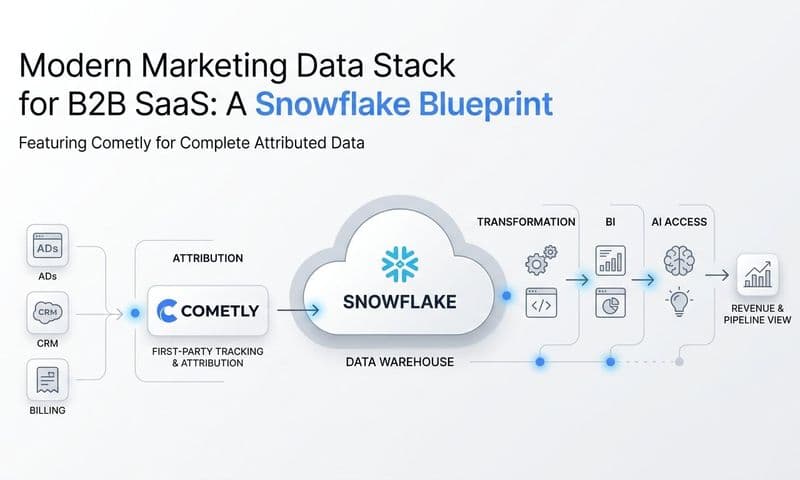
Let’s be honest: data scattered across a dozen different platforms isn't data you can actually use. It’s just noise. Once you have reliable tracking and a clear attribution model locked in, the final piece of the puzzle is bringing it all together. This is the moment you graduate from disjointed spreadsheets and platform-specific reports to a unified, real-time overview of your entire marketing engine.
This unified view is what we call a "single source of truth" (SSOT). Think of it as a centralized dashboard where data from every channel—paid ads on Google and Meta, organic search traffic, email campaigns, even offline efforts—all converges. Having this single, trusted view is absolutely fundamental if you want to measure your marketing effectiveness with any real confidence and speed.
Without an SSOT, you're stuck in a frustrating cycle of manually pulling data and wrestling with endless spreadsheet tabs. Not only is that painfully slow, but it’s also riddled with human error and makes it nearly impossible to see how your channels are actually working together.
The Power of a Unified Dashboard
A custom marketing dashboard does way more than just display numbers; it visualizes performance and tells the story of your business. It connects every single dollar you spend to the results it generates, letting you make faster, smarter decisions that actually fuel growth.
The real power here is the ability to provide tailored insights for different people in your organization. It's not a one-size-fits-all report.
- For a CMO or Founder: They need the big picture. Their dashboard should focus on high-level metrics like blended Customer Acquisition Cost (CAC), Marketing Efficiency Ratio (MER), and overall channel performance to make strategic budget decisions.
- For a Media Buyer or Campaign Manager: Their world is granular and tactical. They need to drill down into campaign-level Return on Ad Spend (ROAS), ad set performance, and even individual creative effectiveness to optimize daily spend.
This ability to zoom in and out—from a 30,000-foot view down to the nitty-gritty details—is what separates a true SSOT from a basic report. It gets everyone on the team working from the same validated dataset, finally ending the pointless debates over which platform’s numbers are "right."
A single source of truth isn't just a dashboard; it's a strategic asset. It ends the data chaos and replaces it with a clear, shared understanding of what is actually driving your business forward, aligning your entire team around the metrics that matter most.
From Disjointed Data to Actionable Insights
So, what does this actually look like? Imagine a SaaS company running campaigns on LinkedIn, Google Search, and sponsoring an industry newsletter. Without a unified view, the team has to log into three separate platforms, export the data, and try to stitch it all together in a spreadsheet.
It’s a nightmare. LinkedIn takes credit for a demo request, but so does Google Ads, because the user later searched for the brand name. Meanwhile, the newsletter sponsor gives you click data but has no clue what happened after someone clicked.
A single source of truth cuts through this mess. By integrating data from every touchpoint, it applies your chosen attribution model consistently across every single channel. This finally reveals the entire customer journey, showing how each interaction contributed to the conversion. To make this work, it's essential to follow sound data integration best practices to ensure your information flows cleanly into one central system.
This integrated approach unlocks powerful insights that were hiding in plain sight.
- True Channel Performance: You can finally see an apples-to-apples comparison of every marketing channel, based on unbiased, third-party data.
- Budget Optimization: It becomes painfully obvious where to shift your budget for maximum impact, letting you move funds from underperforming campaigns to the ones generating real ROI.
- Faster Decision-Making: With real-time data at your fingertips, you can spot trends, identify problems, and jump on opportunities in hours, not weeks.
Building this single source of truth is the last crucial step. It transforms your data from a confusing mess of numbers into your most powerful tool for measuring marketing effectiveness and accelerating growth.
Answering Your Top Measurement Questions
Even with the best framework, theory only takes you so far. The real test comes when you start applying these measurement principles in the wild. That's when the practical, day-to-day questions start popping up.
Measuring marketing effectiveness isn't a "set it and forget it" task; it’s a constant process of refinement. Let's tackle some of the most common hurdles and nagging uncertainties that can slow down even the sharpest teams.
How Often Should I Review My Marketing Effectiveness Reports?
There's no magic number here. The right cadence for checking your reports depends entirely on your business cycle and how fast you close deals. A one-size-fits-all answer will just lead you astray, but we can break it down by business model.
A fast-moving e-commerce brand running daily flash sales needs to be in their data constantly. They should be looking at metrics like Return on Ad Spend (ROAS) and checkout conversions every single day, maybe even multiple times a day. Their feedback loop is incredibly short, so making quick adjustments is the name of the game.
On the flip side, a B2B SaaS company with a six-month sales cycle would drive themselves nuts with daily check-ins. For them, a weekly review of leading indicators like Marketing Qualified Leads (MQLs) and trial sign-ups is much more productive. Then, they should do a deeper, monthly dive into lagging indicators like the Customer Acquisition Cost (CAC) to Customer Lifetime Value (LTV) ratio.
The goal isn't frequency for the sake of it. It's about finding a rhythm that lets you spot real trends and make timely decisions, without getting lost in the noise of random daily spikes and dips. A unified dashboard is what makes these check-ins both efficient and incredibly insightful.
What Is the Biggest Mistake Companies Make When Measuring Marketing ROI?
The single biggest—and most expensive—mistake is relying solely on platform-reported data. That means looking only at the conversion numbers inside Google Ads, Meta Ads, or whatever ad platform you're using and taking them as gospel.
Here’s the problem: these platforms have a massive blind spot. They can’t see the full customer journey that happens outside of their own ecosystem. Each platform is fundamentally incentivized to take as much credit as it can, which almost always leads to them over-reporting their own impact.
This skewed view leads directly to terrible budget decisions. You might end up pouring money into a channel that looks like a star performer in its own dashboard, while accidentally starving the channels that are actually creating all the initial demand. The fix is to use a centralized, third-party attribution tool as your unbiased "single source of truth."
Can I Measure Offline Marketing Effectiveness With Digital Tools?
Absolutely. The trick is to create a digital bridge for your offline activities so you can pull those interactions into your attribution system. You just need to give people from your offline audience a clear, trackable path into your digital world.
Here are a few proven ways to do this:
- Unique QR Codes: Put distinct QR codes on your print ads, direct mail, or event banners. When someone scans it, they land on a URL with tracking tags, and your system can attribute that first touch directly to that specific offline campaign.
- Dedicated Landing Pages: Create unique, easy-to-remember URLs for specific offline promotions (think
yourwebsite.com/podcast). This ensures anyone visiting that page is correctly tagged as coming from that offline source. - Vanity Coupon Codes: Offer special discount codes that are exclusive to an offline channel, like a podcast ad read. Tracking how often those codes are used gives you a direct line connecting that offline activity to online sales.
By tagging these digital entry points correctly, you can start measuring how your offline campaigns are actually contributing to online conversions and calculate a much more holistic marketing ROI.
How Do I Get Started If My Tracking Is a Complete Mess Right Now?
Staring down a tangled mess of old tracking codes and inconsistent data is overwhelming. We've all been there. The key is to forget about trying to fix everything at once—that’s a recipe for paralysis. Instead, start small and build momentum.
Think of it as a "data audit" with a very narrow focus.
- Map Your Core Journey: First, just map out the single most critical customer path for your business. For a SaaS company, that might be ad click -> landing page -> trial sign-up -> purchase.
- Isolate One Key Event: Next, pick the one conversion event in that journey that you absolutely must track accurately. This is usually the final sale or a demo request.
- Implement Reliable Tracking: Now, focus all your energy on getting that single event tracked perfectly using a reliable method like server-side tracking.
Once that foundational data stream is solid, you can breathe. From there, you can start expanding your tracking to include micro-conversions and other touchpoints one by one.
Cometly provides a zero-code setup that gets your most critical conversion events tracked accurately in minutes. Unify your marketing data and start making smarter decisions today.