You've spent the last hour toggling between browser tabs. Meta Ads Manager shows 47 conversions. Google Analytics reports 31. Your CRM says 22 deals closed. Same campaign. Same time period. Three completely different stories.
Which one is telling the truth?
This isn't just frustrating—it's expensive. When your marketing data lives in disconnected silos, every budget decision becomes a gamble. You're flying blind, making million-dollar calls based on incomplete information that only shows fragments of what's actually happening.
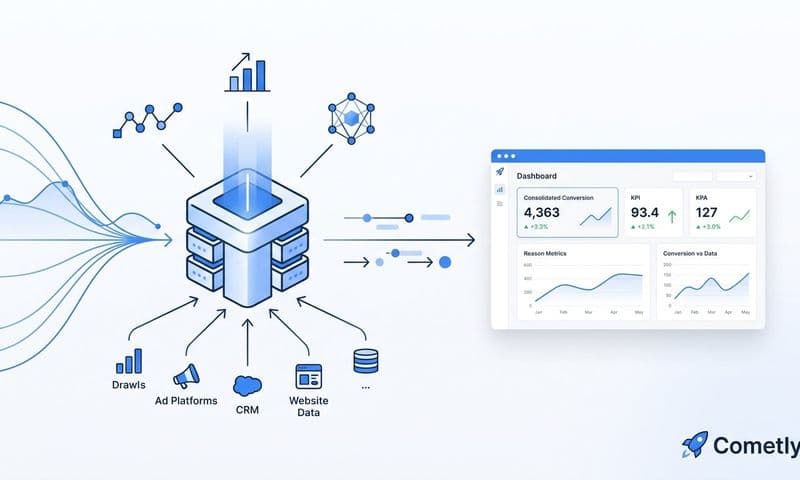
Multi channel analytics solves this by connecting every piece of your marketing ecosystem into one unified view. It tracks the complete customer journey—from that first Facebook ad impression to the final purchase—across every platform, device, and touchpoint. Instead of guessing which channels drive revenue, you'll know exactly where your best customers come from and how they got there.
This guide breaks down everything you need to understand about multi channel analytics: how it works technically, why attribution modeling matters, and most importantly, how to use unified data to make smarter marketing decisions. If you're tired of piecing together fragmented reports and ready to see the full picture, let's dive in.
Why Siloed Data Is Costing You More Than You Think
Here's the uncomfortable truth: incomplete data doesn't just slow you down. It actively steers you wrong.
When each platform only reports its own slice of the customer journey, you're making decisions based on a distorted reality. Meta takes credit for conversions that started with a Google search. Google claims conversions that were actually nurtured through email. Your CRM shows closed deals but can't tell you which ads brought them in.
The result? You pour budget into channels that look like winners but are actually just good at taking credit. Meanwhile, the channels doing the heavy lifting—the ones that introduce prospects to your brand or move them closer to conversion—get starved of investment because they don't show up in last-click attribution.
This creates a vicious cycle. Bad data leads to bad decisions. Bad decisions generate worse results. Worse results create more pressure to "fix" things, leading to more reactive changes based on the same incomplete information. You end up chasing metrics that don't matter while the metrics that do remain invisible.
Think about how this plays out in real campaigns. You see LinkedIn ads generating "expensive" clicks with few conversions, so you cut budget. What you don't see is that those LinkedIn clicks introduce high-value prospects who later convert through organic search. You just killed your best prospecting channel because you only measured the last click.
Or consider the opposite scenario: You scale Facebook spend because it's showing strong conversion numbers. But those conversions were already in your pipeline from other sources—Facebook just happened to show them a retargeting ad right before they bought. You're paying for conversions you would have gotten anyway, mistaking correlation for causation.
The hidden cost compounds over time. Every misallocated dollar could have gone to a channel that actually drives new customers. Every optimization based on partial data pushes you further from what actually works. The longer you operate with siloed analytics, the more you drift from reality.
This isn't just about wasted ad spend. It's about strategic blind spots that prevent you from scaling. You can't confidently increase budget when you don't trust your data. You can't test new channels effectively when you can't measure their true impact. You can't build a sustainable growth engine when you're making decisions in the dark.
How Multi Channel Analytics Actually Works
Multi channel analytics isn't magic—it's infrastructure. At its core, it's a system that connects all your marketing data sources into a unified tracking framework that follows customers across their entire journey.
The technical foundation starts with integration. Your ad platforms (Meta, Google, TikTok, LinkedIn), your website tracking, and your CRM all need to speak the same language. This means implementing tracking that captures events consistently across every touchpoint—ad clicks, page views, form submissions, email opens, CRM updates—and ties them all to individual customer journeys.
Here's where it gets interesting: modern multi channel analytics relies heavily on server-side tracking, not just the traditional browser-based tracking most marketers grew up with. This distinction matters more than ever.
Client-side tracking (the old way) runs in the user's browser. When someone clicks your ad, JavaScript fires in their browser to record the event. Simple enough, except browsers are increasingly hostile to this approach. Safari's Intelligent Tracking Prevention, Firefox's Enhanced Tracking Protection, and iOS 14+ privacy changes have systematically broken client-side tracking. Add in ad blockers, cookie consent requirements, and third-party cookie deprecation, and you're missing 30-40% of your actual traffic.
Server-side tracking solves this by moving data collection from the browser to your server. When someone interacts with your marketing, the data flows directly from your server to the analytics platform—no browser middleman to block or distort it. This means more accurate data collection, better attribution, and tracking that actually works across devices and sessions.
But capturing data is only half the equation. The real power comes from connecting those touchpoints into coherent customer journeys. This requires identity resolution—figuring out that the person who clicked your Facebook ad on mobile, visited your site on desktop, and submitted a form is the same person.
Modern platforms use multiple identifiers to stitch these journeys together: email addresses, phone numbers, device IDs, IP addresses, and behavioral patterns. When someone converts, the system traces backward through every touchpoint that led to that moment—the ad impressions, clicks, page views, and interactions across all channels.
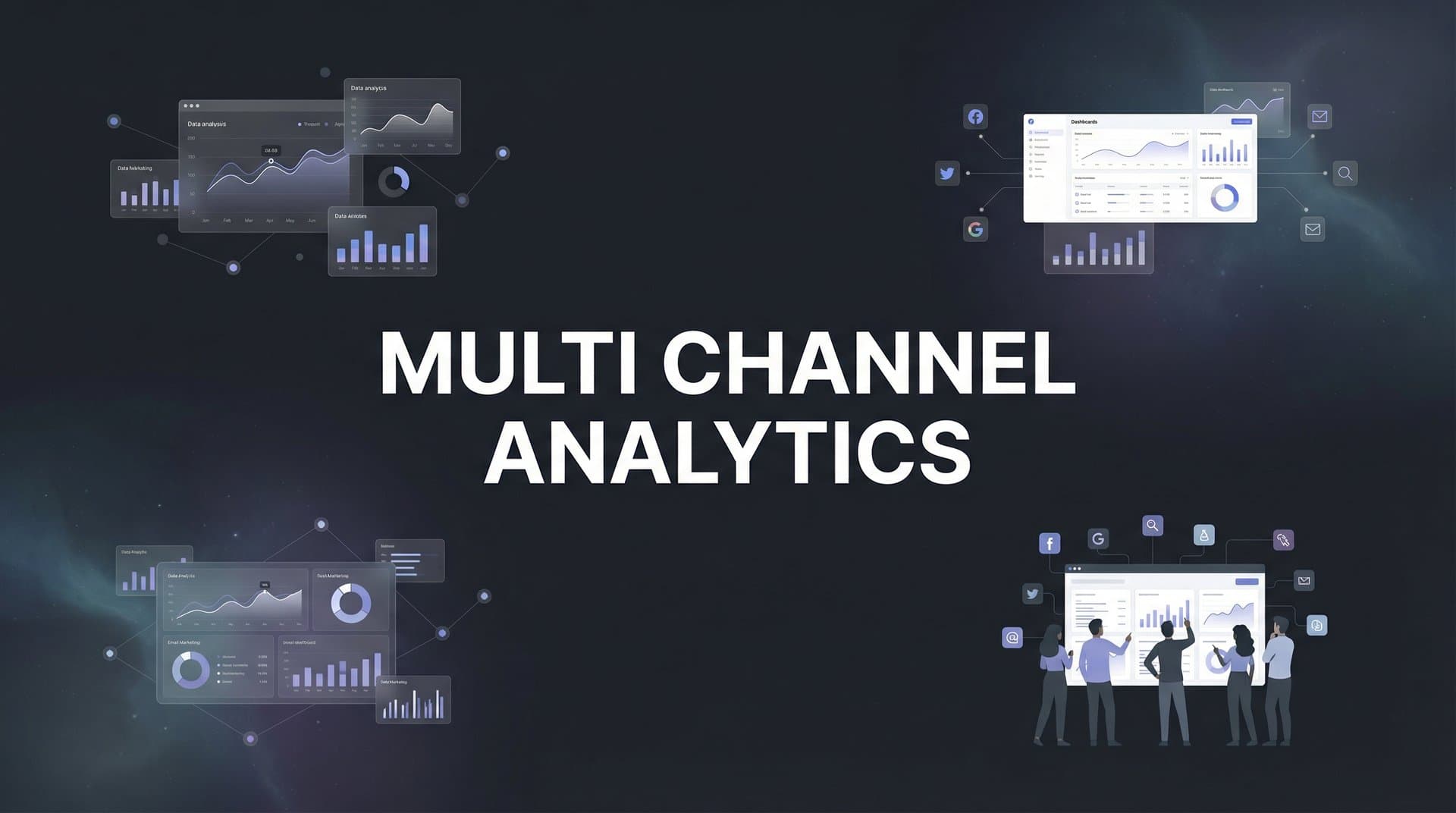
This creates a unified event stream where every action is timestamped, attributed to a specific customer journey, and connected to revenue outcomes. Instead of separate reports from separate platforms, you get one complete view showing exactly how prospects move through your marketing ecosystem. A well-designed multi channel marketing analytics dashboard makes this data accessible and actionable.
The data flows in real time. When someone clicks an ad, the event is captured immediately. When they convert, that conversion is instantly attributed back to the touchpoints that influenced it. When they become a customer and generate revenue, that revenue is connected to the marketing that drove it.
This real-time flow enables something powerful: feeding enriched conversion data back to your ad platforms. Instead of platforms guessing which conversions came from their ads, you're sending them accurate, server-side verified conversion events. This improves their optimization algorithms, leading to better targeting and better results. Better data creates better performance creates better data—a virtuous cycle that compounds over time.
The Customer Journey You're Not Seeing
Your best customers rarely convert on the first touch. They research. They compare. They come back multiple times across different devices before they're ready to buy.
But if you're only looking at platform-specific metrics, you're missing most of this journey. You see the final click that triggered the conversion, but not the five touchpoints that came before it. You see the channel that closed the deal, but not the channels that opened the door.
Let's walk through what a real customer journey looks like when you can actually see the whole thing. A prospect sees your LinkedIn ad while scrolling during lunch on their phone. They don't click—just notice your brand. Three days later, they Google your product category on their work laptop. Your paid search ad appears. They click through, browse your site, but don't convert.
Two weeks pass. They see a Facebook retargeting ad on their tablet. This time they click and read a case study. Still not ready. A week later, they receive your email newsletter (they subscribed during that first website visit). The email links to a webinar. They register on mobile, attend on desktop, and finally submit a demo request.
Which channel drove that conversion? If you're using last-click attribution, email gets all the credit. But LinkedIn introduced them to your brand. Google search showed intent. Facebook kept you top-of-mind. The email was just the final nudge in a multi-week, multi-channel journey.
This is the reality for most B2B purchases and many B2C decisions. The path to conversion involves multiple channels, multiple devices, and multiple sessions spread across days or weeks. Single-channel analytics can't see this. They're blind to everything except their own contribution.
Cross-device tracking reveals another layer of complexity. Prospects don't stick to one device. They discover you on mobile during commute time. They research on desktop during work hours. They convert on tablet from the couch. Without unified tracking that recognizes these as the same person, you're treating each device interaction as a separate, disconnected event.
The channels that don't get credit are often the ones doing the hardest work. Prospecting campaigns that introduce new audiences to your brand rarely show strong immediate conversion metrics. But they're essential for filling the top of your funnel. Content marketing and organic social might not drive last-click conversions, but they build trust and authority that makes paid conversions possible.
These "assist" channels are invisible in traditional analytics. They look like they're underperforming because they're measured on conversion metrics they were never designed to drive. Understanding multi channel attribution reveals their true value by showing how they influence conversions even when they don't get the final click.
Understanding the full journey changes how you evaluate channel performance. That expensive LinkedIn campaign that shows few direct conversions? It might be your best prospecting channel, introducing high-value leads who convert through other channels later. That "cheap" remarketing traffic with great conversion rates? It's only converting because other channels did the heavy lifting first.
Choosing the Right Attribution Model for Your Business
Attribution models are the rules that determine how conversion credit gets distributed across touchpoints. Get this wrong, and you're back to making decisions based on distorted data. Get it right, and you unlock insights that transform how you allocate budget.
Let's break down the main models and when each makes sense.
Last-touch attribution gives all credit to the final touchpoint before conversion. If someone clicks a retargeting ad and converts, that ad gets 100% credit. This is the default in most platforms because it's simple, but it systematically undervalues everything that happened earlier in the journey. Use last-touch only if your sales cycle is genuinely single-touch—which is rare outside of impulse purchases.
First-touch attribution does the opposite: all credit goes to the first touchpoint. If someone discovered you through a blog post, that content gets 100% credit even if they converted weeks later through a paid ad. This makes sense if you're primarily focused on measuring top-of-funnel effectiveness and brand awareness, but it ignores everything that happens after initial discovery.
Linear attribution spreads credit equally across all touchpoints. If there were five interactions before conversion, each gets 20%. This is more fair than first or last-touch, but it treats all touchpoints as equally important—which isn't realistic. The ad that introduced someone to your brand probably matters more than the fifth retargeting impression they saw.
Time-decay attribution gives more credit to touchpoints closer to conversion. The logic: recent interactions had more influence on the decision to buy. This works well for businesses with longer sales cycles where momentum builds over time. The challenge is that it can undervalue early-stage awareness activities that were actually crucial for starting the journey.
Position-based (U-shaped) attribution assigns 40% credit to the first touch, 40% to the last touch, and splits the remaining 20% among middle touchpoints. This recognizes that both discovery and closing matter most, while still acknowledging the nurturing that happens in between. It's a solid middle-ground approach for many businesses.
Multi-touch attribution uses algorithms to assign credit based on the actual impact each touchpoint had on conversion probability. Instead of predetermined rules, it analyzes patterns across thousands of customer journeys to determine which combinations of touchpoints correlate with conversions. Our guide to multi touch attribution explains how this sophisticated approach works in practice.
So which model should you use? Start by understanding your customer journey length and complexity. If you're selling low-consideration products with short sales cycles, simpler models might work fine. If you're in B2B with multi-month sales cycles involving multiple stakeholders, you need multi-touch attribution to see what's really happening.
The smartest approach is to compare multi channel attribution models side by side. Don't just pick one and assume it's correct. Look at the same data through different attribution lenses. If your conclusions about channel performance change dramatically based on the model, that's a signal that you need to dig deeper and understand why.
Test your attribution model against reality. If your model says Channel A is your best performer, try cutting budget there and see what happens to overall conversions. If conversions drop significantly, the model was right. If they don't, your model was giving credit to a channel that wasn't actually driving incremental results.
Remember that attribution models are tools for understanding, not absolute truth. They're frameworks that help you make sense of complex data. The goal isn't to find the "perfect" model—it's to find the model that best reflects your actual customer behavior and helps you make better decisions about where to invest.
Turning Analytics Into Action: Optimizing Your Channel Mix
Data without action is just noise. The real value of multi channel analytics comes from using unified data to make smarter decisions about where to spend your marketing budget.
Start by identifying your true top performers. With complete journey data, you can see which channels consistently appear in high-value customer paths. These aren't necessarily the channels with the best last-click conversion rates—they're the channels that reliably contribute to conversions when you account for the full journey.
Look for patterns in your best customers' journeys. Do they all discover you through the same channel? Do certain channel combinations correlate with higher lifetime value? Are there touchpoints that appear in almost every successful conversion path? These insights tell you where to double down.
Budget reallocation becomes confident instead of guesswork. When you know a channel drives real incremental conversions—not just takes credit for conversions that would have happened anyway—you can scale spend there without anxiety. When you know a channel is getting false credit through last-click attribution, you can trim budget without fear of losing real performance. Understanding multi channel attribution for ROI helps you make these decisions with confidence.
But here's where it gets really powerful: feeding enriched conversion data back to your ad platforms. Platforms like Meta and Google use conversion signals to optimize their algorithms. The better their data, the better they target. The problem is that standard tracking often sends incomplete or inaccurate conversion data due to browser limitations.
With server-side tracking and proper attribution, you can send platforms accurate, enriched conversion events that reflect real customer behavior. This means their algorithms learn from better data, leading to improved targeting, better ad delivery, and stronger performance. You're not just measuring better—you're actively improving your campaigns through better data.
This creates a feedback loop that compounds over time. Better attribution leads to better budget allocation. Better budget allocation leads to more efficient spending. More efficient spending generates better results. Better results create more data to refine attribution. The cycle continues, each iteration improving on the last.
Use your unified data to test new channels with confidence. When you can accurately measure incremental impact, you can experiment without risking your core performance. You'll know quickly whether a new channel is actually driving new customers or just redistributing credit from existing channels.
Build channel-specific strategies based on their role in the journey. Your prospecting channels need different creative and messaging than your retargeting channels. Your awareness channels should be measured on different metrics than your conversion channels. Effective multi channel marketing strategies recognize these distinct roles so you can optimize each channel for its actual purpose.
Monitor your data quality continuously. Even the best attribution setup can drift if tracking breaks, integrations fail, or platforms change their APIs. Set up alerts for sudden drops in tracked events or attribution anomalies. Regularly audit your data to ensure it's still accurate and complete.
The goal isn't perfection—it's continuous improvement. Every week, you should know more about what drives your business than you did the week before. Every month, your marketing should be more efficient because you're making decisions based on better information. That's the compound advantage of connected data.
Getting Started: Your Multi Channel Analytics Roadmap
You don't need to implement everything at once. Start with the integrations that will give you the biggest immediate clarity, then expand from there.
Phase One: Connect your core ad platforms. Start with wherever you're spending the most money—typically Meta and Google. Get these platforms feeding data into your unified analytics system. This alone will reveal discrepancies between what platforms report and what's actually converting. You'll immediately see which campaigns are getting false credit and which are being undervalued.
Phase Two: Implement server-side tracking on your website. This is non-negotiable for accurate data in today's privacy-focused environment. Server-side tracking ensures you're capturing the full picture, not just the fraction that makes it through browser restrictions. The setup requires some technical work, but the data quality improvement is worth it.
Phase Three: Connect your CRM. This is where attribution becomes truly powerful—when you can connect marketing touchpoints not just to leads, but to closed deals and revenue. CRM integration lets you analyze which channels drive your highest-value customers, not just your highest volume of conversions. Learn more about channel attribution in digital marketing revenue tracking to maximize this connection.
Phase Four: Add email and other owned channels. Once your paid advertising and website tracking are solid, bring in email, SMS, and other owned channels. This completes the picture of how you're nurturing prospects across every touchpoint.
In your first 30 days, focus on quick wins that build confidence in the system. Compare your unified attribution data against individual platform reports. You'll likely find significant discrepancies—this is normal and expected. Use these discrepancies to identify where platforms are over-reporting or under-reporting their true impact.
Look for obvious optimization opportunities. Are you heavily investing in channels that rarely appear in successful customer journeys? Are you underinvesting in channels that consistently show up as first-touch or assist touchpoints? Make small budget shifts based on these insights and monitor the results.
Watch for common pitfalls. The biggest mistake is assuming your attribution is correct without validating it. Run holdout tests where you deliberately cut budget from channels your attribution says are strong. If conversions don't drop, your attribution was wrong. This reality check keeps you honest about what's actually working. Understanding the attribution challenges in marketing analytics helps you avoid these traps.
Don't get paralyzed by attribution model choices. Start with something reasonable (position-based is a good default), use it consistently, and refine over time. Changing models constantly makes it impossible to track trends or measure improvement.
Avoid the temptation to over-complicate your setup. You don't need to track every possible touchpoint immediately. Start with the channels that matter most for your business, get those working perfectly, then expand. A simple system that works is infinitely better than a complex system that's broken.
Set realistic expectations for data volume. Multi-touch attribution needs sufficient data to be meaningful. If you're only generating a handful of conversions per week, you won't have enough signal to draw strong conclusions about complex customer journeys. In that case, focus on simpler attribution approaches until your volume increases.
The Clarity You've Been Missing
Multi channel analytics isn't about drowning in more data—it's about finally seeing the data that matters. It's the difference between guessing which channels drive revenue and knowing with certainty. Between reactive budget shuffling and strategic investment based on complete customer journeys.
Every day you operate with siloed analytics, you're making decisions in the dark. You're scaling channels that take credit without driving results. You're cutting channels that do the heavy lifting but don't show up in last-click reports. You're feeding ad platform algorithms incomplete conversion data that limits their ability to optimize.
The competitive advantage goes to marketers who understand the full picture. When you can see which channels truly drive your best customers, you can invest confidently. When you can track complete journeys across devices and platforms, you can optimize the entire funnel instead of just individual touchpoints. When you can feed platforms enriched conversion data, you unlock better performance through better targeting.
This isn't theoretical. Companies that implement proper multi channel analytics consistently find that their highest-spending channels aren't always their best performers. They discover assist channels that were getting zero credit but were essential for conversions. They identify optimization opportunities that were invisible in platform-specific reporting. Learning how to use data analytics in marketing transforms these insights into competitive advantage.
The path forward is clear: connect your data, implement proper attribution, and start making decisions based on complete customer journeys instead of fragmented platform metrics. The longer you wait, the more budget you waste on channels that look good in isolation but don't drive incremental results.
Ready to elevate your marketing game with precision and confidence? Discover how Cometly's AI-driven recommendations can transform your ad strategy—Get your free demo today and start capturing every touchpoint to maximize your conversions.