You're running Facebook ads, Google campaigns, LinkedIn outreach, and email nurture sequences. Traffic is flowing. Conversions are happening. But when your CFO asks which channels actually justify their budget, you're stuck guessing. Was it the Facebook ad they clicked last week? The Google search they did yesterday? The email they opened this morning? Without clear channel attribution in digital marketing, you're flying blind—spending money on channels that might be stealing credit from the ones doing the real work.
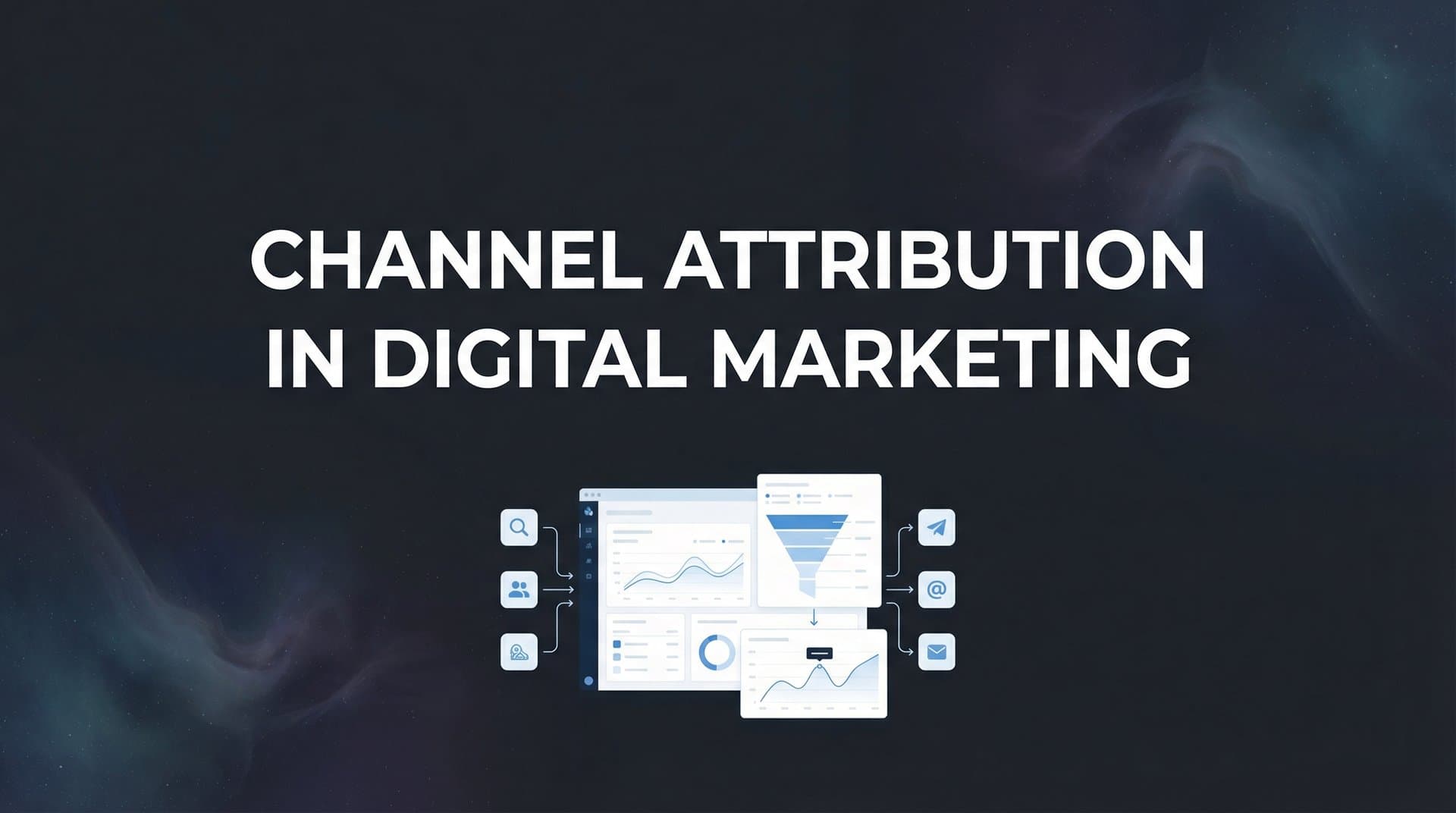
Channel attribution is the framework that connects every marketing touchpoint to actual revenue. It shows you which channels start conversations, which ones keep prospects engaged, and which ones close deals. More importantly, it reveals when channels work together in ways your individual platform dashboards will never show you.
This guide breaks down how attribution actually works, which models fit different business scenarios, and how to build the tracking infrastructure that turns scattered data into confident budget decisions. By the end, you'll understand exactly what you need to stop guessing and start knowing what drives revenue.
The Real Problem Channel Attribution Solves
Platform dashboards lie to you every day. Not intentionally, but by design. Facebook claims credit for conversions that happened after someone clicked your ad. Google does the same. LinkedIn takes credit too. Add them all up, and suddenly you've "generated" 300% of your actual conversions. Each platform only sees its own piece of the puzzle.
The truth is messier and more valuable. Your customer didn't convert because of one channel. They saw your Facebook ad during their morning scroll, searched your brand name on Google later that day, read three blog posts over the next week, opened two emails, and finally converted after clicking a retargeting ad. That's six touchpoints across four channels. Which one "worked"?
Traditional metrics make this problem worse. Clicks tell you someone was interested enough to visit. Impressions tell you someone saw your ad. Neither tells you if that interaction moved them closer to buying. You can have a channel with amazing click-through rates that contributes nothing to revenue, while another channel with modest engagement numbers quietly assists every high-value conversion.
This is why marketing teams waste budget on channels that look good in isolation but don't drive results. You optimize for clicks because clicks are easy to measure. You celebrate impressions because the numbers are big. Meanwhile, the channels actually building pipeline get starved of budget because their contribution isn't visible in last-click reports. Understanding the digital marketing attribution problem is the first step toward solving it.
Channel attribution solves this by tracking the entire customer journey across every touchpoint. It shows you the sequence of interactions that led to conversion, not just the last one. When you can see that 80% of your customers interact with paid search before converting through email, you stop treating those channels as competitors and start treating them as partners.
Attribution Models Explained: Choosing Your Lens
Attribution models are rules for distributing credit across touchpoints. Different models tell different stories about your marketing, and choosing the wrong one can lead you to terrible decisions. Here's what each model actually reveals.
First-Click Attribution: Gives 100% credit to the first touchpoint in the customer journey. This model answers one question: what made people aware of us? If you're focused on top-of-funnel performance and want to understand which channels start relationships, first-click makes sense. It's particularly useful for brand awareness campaigns where your goal is introducing new audiences to your product.
The limitation? It completely ignores everything that happened between discovery and conversion. That nurture email sequence that moved prospects from awareness to consideration? Invisible. The retargeting campaign that brought them back after they abandoned their cart? Doesn't exist in this model.
Last-Click Attribution: The opposite approach—100% credit to the final touchpoint before conversion. This is what most ad platforms report by default, and it's dangerously misleading. Last-click tells you what closed the deal, but it ignores the channels that made the prospect ready to buy.
Picture this: Someone discovers you through a Facebook ad, researches your product over two weeks across multiple channels, and finally converts after clicking a branded search ad. Last-click gives all credit to that branded search, even though they were already sold before they searched. You'd conclude that branded search is your top performer and scale it, when really you're just intercepting demand created by other channels.
Linear Attribution: Distributes credit equally across all touchpoints. If someone interacted with five channels before converting, each gets 20% credit. This model acknowledges that multiple channels contributed, which is more realistic than single-touch models. It works well when you believe each touchpoint played a roughly equal role in the conversion.
The weakness? Not all touchpoints are created equal. The blog post someone read six months ago probably didn't contribute as much as the demo video they watched yesterday. Linear attribution treats them the same, which can obscure important patterns. For a deeper dive into how different attribution models in digital marketing affect your insights, understanding each model's strengths matters.
Time-Decay Attribution: Gives more credit to touchpoints closer to conversion. A touchpoint from yesterday gets more credit than one from last week. This model reflects the reality that recent interactions often have more influence on buying decisions than older ones. It's particularly useful for longer sales cycles where early touchpoints might have less impact than the final push.
Position-Based Attribution: Also called U-shaped attribution. It gives 40% credit to the first touchpoint, 40% to the last, and splits the remaining 20% among middle interactions. This model values both the channel that started the relationship and the one that closed it, while acknowledging that middle touchpoints matter too.
Data-Driven Attribution: Uses machine learning to analyze thousands of conversion paths and assign credit based on actual patterns in your data. Instead of following predetermined rules, it identifies which touchpoints actually increase conversion probability. If your data shows that people who interact with paid search and then email are 3x more likely to convert than those who only see paid search, the model weights those touchpoints accordingly.
Data-driven attribution requires substantial conversion volume to work effectively—typically hundreds of conversions per month minimum. But when you have the data, it's the most accurate approach because it's based on your actual customer behavior, not generic assumptions. Learn more about attribution modeling in digital marketing to choose the right approach for your business.
Building Your Attribution Infrastructure
Attribution models are useless without accurate tracking. Before you worry about which model to use, you need infrastructure that captures every touchpoint in the customer journey. Here's what that requires.
UTM Parameters on Every External Link: UTM parameters are tags you add to URLs that tell analytics tools where traffic came from. Every link in your ads, emails, social posts, and partner placements needs consistent UTM tagging. Use utm_source for the platform, utm_medium for the channel type, and utm_campaign for the specific campaign. Without this, traffic shows up as "direct" or gets misattributed to the wrong source.
The key word is consistent. If you tag Facebook traffic as "facebook" in one campaign and "fb" in another, your attribution reports will split that channel into two separate sources. Create a tagging taxonomy and enforce it across your team. A comprehensive attribution marketing tracking guide can help you establish these standards.
Tracking Pixels on Your Website: Install tracking pixels from your ad platforms—Meta Pixel, Google Ads conversion tracking, LinkedIn Insight Tag. These pixels track when someone from an ad visits your site and what actions they take. They're the foundation of retargeting and conversion tracking.
But here's the problem: browser-based pixels are increasingly unreliable. Safari blocks third-party cookies by default. Firefox does too. iOS users can opt out of app tracking. You might be missing 40-50% of your actual conversions because browsers and devices block your pixels from firing.
Server-Side Tracking as a Solution: Server-side tracking sends conversion data directly from your server to ad platforms, bypassing browser restrictions. When someone converts on your website, your server sends that conversion event to Meta, Google, and other platforms through their APIs. This captures conversions that client-side pixels miss.
Server-side tracking requires more technical setup than dropping a pixel on your site, but it's becoming essential for accurate attribution. Without it, you're making budget decisions based on incomplete data, systematically undervaluing channels that drive conversions from privacy-conscious users.
CRM Integration for Complete Journey Visibility: Your website analytics and ad platforms only see part of the story. They know someone visited and converted, but they don't know if that lead became a customer or what they're worth. Connecting your CRM closes this loop.
When you integrate CRM data with marketing analytics, you can track attribution all the way to closed revenue. You discover that Channel A generates lots of leads but they rarely close, while Channel B generates fewer leads that convert at 3x the rate. Without CRM integration, you'd optimize for lead volume and waste budget on low-quality channels. Explore how marketing attribution platforms enable revenue tracking to connect these dots.
Cross-Device Identity Resolution: People research on mobile and buy on desktop. They click ads on their phone and convert on their laptop. Without cross-device tracking, these look like two different people, fragmenting your attribution data. Identity resolution technology connects these interactions to the same person, giving you accurate journey visibility.
From Attribution Data to Budget Decisions
You've built the tracking infrastructure. You've chosen an attribution model. Now you're staring at reports showing how credit distributes across channels. What do you actually do with this information?
Identify Your Workhorse Channels: Look for channels that consistently appear in conversion paths, even if they're not getting last-click credit. These are your workhorses—channels that build awareness, nurture consideration, or assist conversions even when they don't close them. A channel that appears in 70% of conversion paths but only gets 15% last-click credit is massively undervalued in traditional reporting.
Compare your attribution model report to your last-click report. The gaps reveal where you're misallocating budget. If paid social gets 40% credit in your multi-touch model but you're only spending 20% of budget there, that's a reallocation opportunity.
Distinguish Closers from Builders: Some channels close deals. Others build pipeline. Both matter, but they require different strategies. Branded search often looks like a superstar in last-click attribution because people search your brand name right before converting. But they're searching because other channels made them aware.
If you scale branded search based on last-click data, you'll capture more of the demand you're already creating, but you won't create new demand. Meanwhile, the awareness channels that built that demand get deprioritized because they don't show last-click conversions. You end up with a shrinking pool of prospects and confused about why scaling isn't working.
Attribution reports show you this pattern. When you see that 80% of branded search conversions had prior touchpoints with paid social or content marketing, you understand the relationship. Branded search is the closer. Paid social and content are the builders. Both need budget, but for different reasons. Understanding cross-channel attribution and marketing ROI helps you see these relationships clearly.
Calculate True Channel ROI: Traditional ROI calculations divide revenue by spend for each channel in isolation. Attribution-based ROI accounts for how channels work together. If paid social drives awareness that leads to email conversions, your email ROI is inflated and your paid social ROI is deflated in traditional calculations.
Use attributed revenue—the revenue each channel contributed to based on your attribution model—to calculate true ROI. This might show that a channel with mediocre standalone ROI actually drives strong returns when you account for its role in the broader journey.
Test Budget Reallocations Systematically: Attribution insights suggest where to shift budget, but don't make massive changes overnight. If your data shows that paid search is undervalued, increase its budget by 20-30% and measure the impact over several weeks. Watch for changes in overall conversion volume, not just conversions attributed to that channel.
Sometimes increasing spend on an awareness channel improves performance across multiple channels because you're feeding more prospects into the funnel. Other times, you discover that a channel was getting credit for conversions it didn't actually drive. Systematic testing reveals which insights translate to real improvements.
Common Attribution Mistakes That Waste Budget
Over-Optimizing for Last-Click Winners: The most expensive attribution mistake is treating last-click channels as your best performers and scaling them aggressively. You pour budget into retargeting, branded search, and email because they show great ROI in last-click reports. Conversions spike briefly, then plateau. You've scaled the channels that harvest demand without scaling the channels that create it.
This is how marketing teams end up with great "efficiency" metrics and declining revenue. They've optimized their way into a corner, capturing more of a shrinking audience instead of growing the audience itself. Recognizing attribution challenges in digital marketing helps you avoid these costly traps.
Ignoring Cross-Device Journeys: Your attribution reports show that mobile drives awareness but desktop drives conversions. You conclude that mobile isn't valuable and cut its budget. What you're actually seeing is that people discover you on mobile and convert on desktop later. Cutting mobile budget doesn't improve desktop efficiency—it kills the pipeline feeding desktop conversions.
Cross-device journeys are the norm, not the exception. Treating each device as a separate channel fragments your understanding of customer behavior and leads to terrible decisions.
Making Decisions on Incomplete Data: If your tracking only captures 60% of conversions due to browser restrictions and tracking gaps, your attribution model is making decisions based on a biased sample. The 40% you're missing might behave completely differently than the 60% you're seeing.
Privacy-conscious users who block tracking often have different characteristics than users who don't. If your data only represents trackable users, your attribution insights might not apply to your full audience. This is why server-side tracking and robust identity resolution matter—they reduce the blind spots that skew your data.
Choosing Attribution Models Based on Convenience: Many teams stick with last-click attribution because it's the default in their analytics platform, not because it's the right model for their business. Or they choose a multi-touch model without understanding what it reveals or obscures. Your attribution model should match your business reality—how long is your sales cycle, how many touchpoints do customers typically have, which channels play which roles?
A business with a 3-day sales cycle and 2-3 touchpoints per conversion might do fine with last-click or position-based attribution. A business with a 6-month sales cycle and 15+ touchpoints needs multi-touch or data-driven attribution to understand what's working. Using the wrong model doesn't just give you bad data—it gives you confidently wrong insights that drive poor decisions. Explore multi-touch marketing attribution software options if your customer journeys are complex.
Putting It All Together: Your Attribution Action Plan
Start with tracking infrastructure, not attribution models. The fanciest attribution model is worthless if you're only capturing 50% of your touchpoints. Audit your current tracking: Are UTM parameters consistent? Are pixels firing correctly? Do you have server-side tracking to capture conversions that browsers block? Can you connect website behavior to CRM outcomes?
Fix tracking gaps before you worry about which attribution model to use. Get your UTM tagging consistent across all channels. Implement server-side tracking to capture conversions that pixels miss. Connect your ad platforms, website analytics, and CRM so you can track the complete journey from first touch to closed revenue.
Once your tracking is solid, choose an attribution model that matches your customer journey. If you have a short sales cycle with few touchpoints, start with position-based attribution to value both awareness and conversion. If you have a longer, more complex journey, use time-decay or data-driven attribution to account for multiple touchpoints over time.
Test multiple models to understand how they change your channel story. Run reports using last-click, first-click, and your chosen multi-touch model. The differences reveal which channels are over-credited or under-credited in traditional reporting. These gaps show you where budget reallocations will have the biggest impact. The right marketing channel attribution tool makes this analysis straightforward.
Use attribution insights to improve ad platform targeting. When you send conversion data back to Meta, Google, and other platforms through server-side tracking, you're feeding their algorithms better information about what actually drives results. This improves their targeting and optimization, creating a feedback loop where better attribution leads to better ad performance.
Review attribution reports weekly, but make budget changes monthly. Attribution data shows trends over time—daily fluctuations don't mean much. Look for consistent patterns across weeks, then test budget reallocations systematically. Measure the impact on overall business outcomes, not just channel-specific metrics.
The Difference Between Guessing and Knowing
Channel attribution transforms marketing from educated guessing into data-driven decision-making. Instead of wondering which channels work, you know which ones start conversations, which ones nurture consideration, and which ones close deals. Instead of celebrating vanity metrics, you optimize for the touchpoints that actually drive revenue.
But attribution only works when you have the right infrastructure. Accurate tracking across all channels and devices. Server-side conversion tracking that captures what browsers block. Integration between your ad platforms, website, and CRM that connects marketing activity to business outcomes. Without these foundations, attribution models just organize incomplete data into confident-looking reports that lead you astray.
The marketers winning right now aren't the ones with the biggest budgets. They're the ones who understand their customer journeys, attribute value accurately across touchpoints, and make budget decisions based on what actually drives results. They've stopped optimizing for last-click metrics and started optimizing for revenue contribution across the full journey.
Ready to elevate your marketing game with precision and confidence? Discover how Cometly's AI-driven recommendations can transform your ad strategy—Get your free demo today and start capturing every touchpoint to maximize your conversions.