You're staring at three different dashboards, and they're telling three different stories. Google Ads says it drove 47 conversions this month. Meta's claiming credit for 52. Your CRM shows 38 new customers total. The math doesn't add up—it can't add up—because each platform is counting the same people multiple times, each one convinced it deserves the glory.
This is the digital marketing attribution problem, and it's costing you more than you think.
Every day, marketers make budget decisions based on incomplete, conflicting data. They scale campaigns that look like winners but actually lose money. They kill campaigns that quietly drive revenue because the numbers don't show their true impact. And the whole time, ad platform algorithms are optimizing on fragmented data, creating a feedback loop that makes everything worse.
The attribution problem isn't just a reporting headache. It's a fundamental challenge that determines whether you're building a profitable marketing engine or throwing money into a black hole. Let's break down why this problem exists, how it's gotten worse in recent years, and what you can actually do about it.
When Every Platform Claims the Win: Understanding Attribution Chaos
Marketing attribution is the process of identifying which touchpoints in a customer's journey deserve credit for a conversion. It sounds straightforward until you realize that modern customers don't follow straight lines.
Picture a typical B2B buyer: They see your LinkedIn ad on Monday morning during their commute. Tuesday afternoon, they Google your product category and click your search ad. Wednesday, they visit your site directly to read a blog post. Thursday, they get a retargeting ad on Meta and finally book a demo. Friday, they convert into a paying customer.
That's five touchpoints across four platforms in one week. Now ask yourself: which marketing effort actually drove that conversion?
Here's where it gets messy. LinkedIn will count that conversion because their ad was the first touchpoint. Google Ads will claim it because the user clicked their search ad. Meta will take credit because their retargeting ad was the last paid click before conversion. Your analytics might attribute it to direct traffic if the user typed your URL directly for that final visit.
Each platform is technically correct based on its own attribution logic. But when you add up all the conversions each platform claims, you end up with 200% of your actual results. This isn't a bug—it's how digital marketing works in 2026.
The attribution problem matters because it determines where you spend your money. If you believe Meta drove that conversion, you'll increase your Meta budget. If you think it was Google search, you'll bid more aggressively on keywords. Make the wrong call, and you're scaling the wrong campaigns while starving the channels that actually drive revenue.
For high-consideration purchases, the problem multiplies. A software buyer might interact with your brand 10-15 times over two months before converting. An e-commerce customer researching a major purchase might visit from mobile, desktop, and tablet before finally buying. Each device switch creates another tracking gap. Each week that passes makes it harder to connect early touchpoints to final conversions.
The fundamental challenge is this: multiple touchpoints, one conversion, and competing claims from every platform that touched the customer. Without a unified view of the complete journey, you're making decisions in the dark.
The Perfect Storm: Why Attribution Broke in the 2020s
The digital marketing attribution problem has always existed, but it's gotten dramatically worse in the past few years. Three major shifts created a perfect storm that fundamentally changed how we track marketing performance.
Apple's iOS 14.5 update in April 2021 introduced App Tracking Transparency, requiring apps to ask explicit permission before tracking users across other apps and websites. The result? Most users opted out. Overnight, platforms like Meta lost visibility into a huge portion of their mobile audience. The tracking that powered attribution simply stopped working for millions of users.
This wasn't just a minor data gap. It meant that conversions were happening, but platforms couldn't connect them back to the ads that drove them. Your Meta ads might have influenced someone who later converted, but if they opted out of tracking, Meta never knew about it. The platform showed fewer conversions than actually occurred, making profitable campaigns look like failures.
Browser privacy restrictions compounded the problem. Safari and Firefox already blocked third-party cookies by default. Google Chrome announced plans to phase them out entirely. When cookies disappear, so does the ability to track users across websites—the foundation of retargeting and cross-channel attribution.
Cookie lifespans also got shorter. Safari limits cookies to seven days. If someone clicks your ad, browses your site, then returns two weeks later to convert, that original ad click is gone from the tracking data. The conversion looks like it came from nowhere, or gets misattributed to whatever touchpoint happened within the tracking window.
Meanwhile, buyer journeys themselves have gotten longer and more complex. B2B purchases that once took a few days now span weeks or months as buying committees grow and approval processes extend. E-commerce customers research extensively before making purchases, comparing options across multiple sessions and devices.
Each device switch creates another attribution gap. When someone researches on their phone during lunch, continues on their work laptop that afternoon, and finally purchases on their home desktop that evening, tracking systems often see three different "users." The complete journey gets fragmented across devices, making it nearly impossible to understand what really drove the conversion.
These changes aren't temporary disruptions—they're the new normal. Privacy regulations will only get stricter. Buyer journeys will continue to span multiple touchpoints and devices. The marketers who thrive will be those who adapt their attribution systems to work within these new constraints.
The Hidden Cost of Getting Attribution Wrong
Bad attribution data doesn't just create reporting confusion. It actively destroys marketing performance by triggering a cascade of poor decisions that compound over time.
The most obvious cost is budget misallocation. When your data says Meta is driving 50 conversions but Google Ads is only driving 20, the natural decision is to shift budget from Google to Meta. But what if those numbers are inflated by overlapping attribution? What if Google's search ads are actually the critical touchpoint that makes people aware of your brand, and Meta's retargeting just gets the last click?
Scale the wrong channel based on faulty data, and you're not just wasting money—you're actively breaking what was working. You pour more budget into retargeting while cutting the prospecting campaigns that feed it. Performance drops, but your attribution data keeps telling you to double down on the wrong strategy.
The opposite problem is just as dangerous: killing campaigns that actually work. Top-of-funnel campaigns like awareness ads or content marketing often don't get direct conversion credit in last-click attribution. They introduce people to your brand, but the conversion happens later through a different channel. If you judge every campaign by immediate, directly attributed conversions, you'll cut the campaigns that build your pipeline.
This is how marketers end up in a death spiral: they kill awareness campaigns because they "don't convert," then watch their overall conversion volume drop because they've stopped filling the top of the funnel. The attribution data told them to make a smart optimization, but it was optimizing based on incomplete information.
Perhaps the most insidious cost is the feedback loop with ad platform algorithms. Platforms like Meta and Google use conversion data to optimize their targeting and bidding. When you send them incomplete conversion data—missing conversions that happened outside their tracking window, or conversions they can't connect back to ad clicks—their algorithms optimize based on a distorted picture of reality.
The algorithm thinks certain audiences and placements aren't converting, so it stops showing ads to them. In reality, those audiences are converting just fine—the platform just can't see it. Over time, the algorithm's targeting gets worse, driving down performance, which creates even more pressure to make budget decisions based on flawed attribution data.
Companies often don't realize how much this is costing them until they fix their attribution and suddenly see which campaigns were actually driving revenue all along. The cost isn't just wasted ad spend—it's the opportunity cost of not scaling what works and not learning what actually drives your business forward.
Traditional Attribution Models: Where They Fall Short
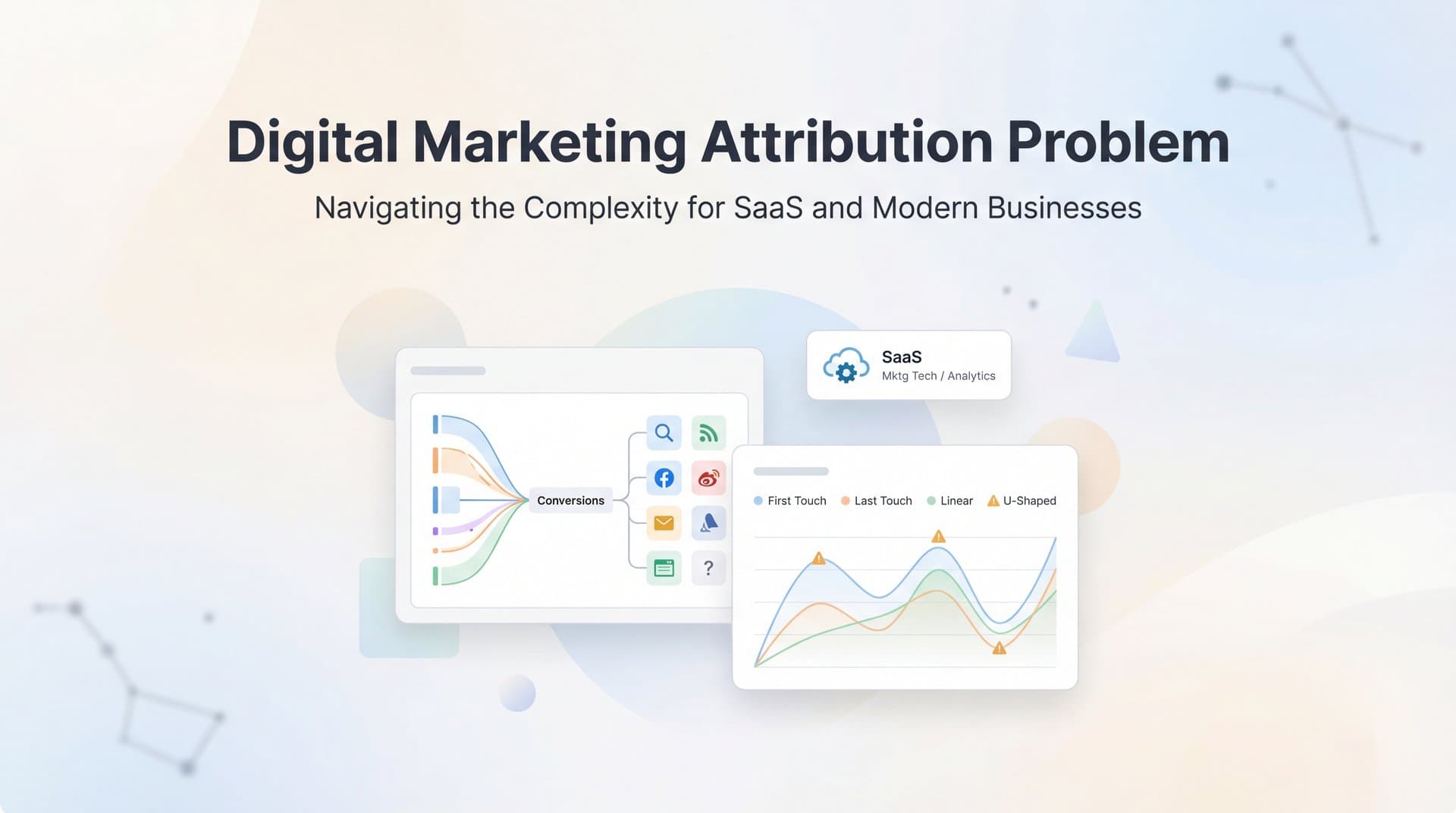
Most marketers know the standard attribution models: last-click, first-click, linear, time-decay, position-based. Each one offers a different way to distribute credit across touchpoints. The problem isn't that these models are wrong—it's that they're trying to solve an impossible problem with incomplete data.
Last-click attribution gives 100% of the credit to whatever touchpoint happened right before conversion. It's simple, and it tells you what finally pushed someone over the edge. But it completely ignores everything that came before—the awareness ads, the educational content, the nurturing emails that built trust over time.
Think about a customer who discovers your brand through a LinkedIn ad, reads three blog posts over two weeks, signs up for your email list, gets nurtured through a five-email sequence, and finally clicks a retargeting ad to convert. Last-click attribution gives all the credit to that final retargeting ad. The LinkedIn ad that started the whole journey? Zero credit. The content that educated them? Invisible. The email sequence that built trust? Doesn't exist in the data.
First-click attribution has the opposite problem. It gives all credit to the initial touchpoint, which tells you what made people aware of your brand but says nothing about what actually convinced them to convert. If your awareness campaigns are cheap but your conversion rates are terrible, first-click attribution will make those campaigns look brilliant while ignoring the fact that they're bringing in low-quality traffic.
Multi-touch attribution models try to solve this by distributing credit across multiple touchpoints. Linear attribution splits credit evenly. Time-decay gives more credit to touchpoints closer to conversion. Position-based models give extra weight to first and last touches while distributing the rest across the middle.
These models are more sophisticated, but they still rely on having complete, accurate data about the customer journey. And that's where everything falls apart in 2026.
When iOS tracking restrictions mean you're missing 40% of your mobile conversions, your attribution model is distributing credit across an incomplete journey. When cookie restrictions mean you can't connect a user's visit from two weeks ago to their conversion today, your time-decay model is working with fragments instead of the full story. When device switching means the same person looks like three different users, your multi-touch model is crediting touchpoints that never actually influenced each other.
Even data-driven attribution models—which use machine learning to assign credit based on historical patterns—struggle when the underlying data is fragmented. Machine learning can find patterns in data, but it can't create data that doesn't exist. If your tracking systems aren't capturing the complete journey, your data-driven model is just finding patterns in noise.
The hard truth is that attribution models are only as good as the data they're built on. Before you worry about which model to use, you need to solve the fundamental problem of capturing complete, accurate data about customer journeys. Understanding the types of marketing attribution models available is just the first step.
Building a Modern Attribution Stack That Actually Works
Fixing the digital marketing attribution problem requires rebuilding how you collect and connect data. The old approach—relying on browser pixels and cookies—can't handle the privacy restrictions and complex journeys that define modern marketing. Here's what actually works in 2026.
Start with server-side tracking. Instead of relying on JavaScript pixels that run in users' browsers—where they can be blocked by privacy features, ad blockers, and tracking restrictions—server-side tracking sends data directly from your servers to ad platforms and analytics tools. When someone converts on your site, your server sends that conversion data directly to Meta, Google, and your analytics platform.
This bypasses many of the privacy restrictions that break browser-based tracking. iOS can't block what happens on your server. Cookie restrictions don't matter when you're sending data server-to-server. The conversion data still reaches ad platforms even when browser-level tracking fails.
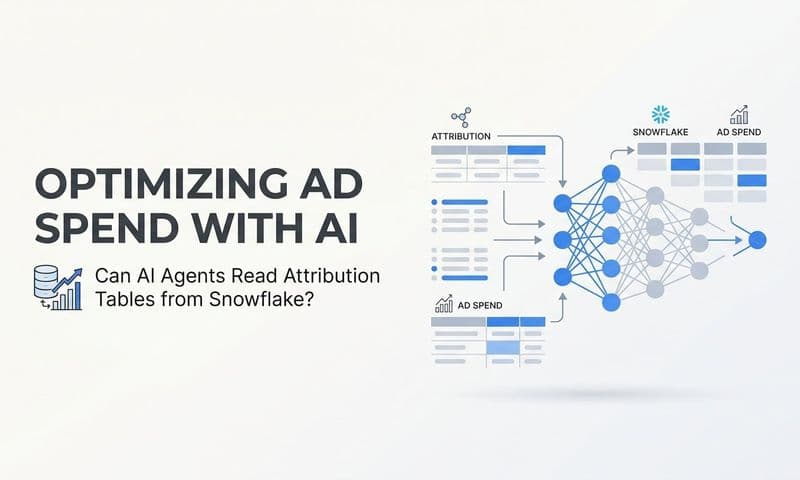
But server-side tracking is just the foundation. The real power comes from connecting data across your entire marketing stack—ad platforms, website analytics, CRM, and any other system that touches customer data.
When someone fills out a form on your site, that data should flow into your CRM. When they become a customer, that revenue data should connect back to the original marketing touchpoints. When they interact with your brand across multiple channels, all those touchpoints should be tied to a single customer record.
This unified view is what finally makes attribution possible. Instead of asking "which platform should get credit?" you can see the actual sequence of events: LinkedIn ad → blog post → email signup → nurture sequence → retargeting ad → demo → customer. Now you can make informed decisions about which touchpoints actually drive revenue.
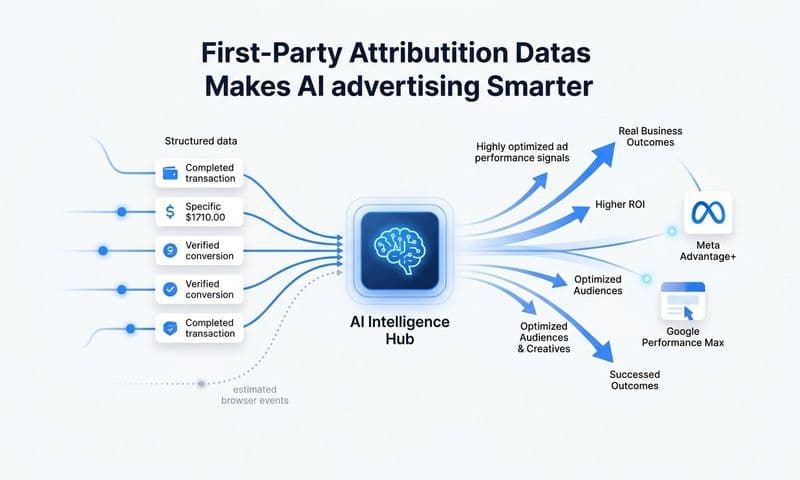
The next step is feeding that enriched conversion data back to ad platforms. Meta and Google's algorithms optimize based on the conversion data you send them. When you send back conversions with additional context—this customer is worth $5,000, or this lead became a qualified opportunity, or this purchase was a repeat customer—the algorithms can optimize for better outcomes instead of just more conversions.
This is where conversion APIs become critical. Instead of relying on the pixel to report conversions (which often fails due to tracking restrictions), you send conversion events directly from your server to the ad platform. You can include additional data points that the pixel never captured: customer lifetime value, lead quality scores, or whether someone actually became a customer versus just filling out a form.
The ad platform's algorithm uses this enriched data to find more people who look like your best customers, not just people who look like anyone who converted. Over time, targeting improves, cost per acquisition drops, and you're scaling based on actual revenue outcomes instead of vanity metrics.
Building this stack takes work. You need tracking infrastructure that captures data server-side. You need systems that connect your website, ad platforms, and CRM. You need processes to ensure data flows consistently and accurately across all these systems. But the alternative—making budget decisions based on fragmented, conflicting data—is far more expensive in the long run. Exploring software for tracking marketing attribution can help you identify the right tools for your needs.
From Attribution Confusion to Revenue Clarity
Once you have complete tracking infrastructure in place, the question becomes: how do you actually use this data to make better decisions? The answer isn't to pick one attribution model and treat it as gospel. It's to compare multiple views and let the patterns guide your strategy.
Start by looking at last-click attribution. Yes, it's flawed, but it tells you which touchpoints are closing deals. If your retargeting campaigns consistently show up as the last click before conversion, that's valuable information—not because they deserve all the credit, but because they're playing a critical role in pushing prospects over the finish line.
Then look at first-click attribution. This shows you which channels are best at introducing new people to your brand. If LinkedIn ads dominate first-click attribution but barely show up in last-click, you know they're a powerful awareness channel that needs other touchpoints to convert.
Compare these views side by side. When a channel performs well in first-click but poorly in last-click, you're looking at a top-of-funnel channel that builds awareness. When a channel dominates last-click but rarely appears in first-click, it's a closing channel that depends on other touchpoints to fill the pipeline. Both are valuable—they just play different roles.
Multi-touch attribution models add another layer of insight. Position-based attribution, for example, gives weight to both the first and last touchpoints while acknowledging the middle of the journey. This can reveal patterns about how different channels work together: maybe LinkedIn starts journeys, your blog content educates prospects, and Google search ads close the deal.
The goal isn't to find the "right" attribution model. It's to understand the complete customer journey and make decisions based on how different touchpoints contribute to that journey. A channel that looks mediocre in last-click attribution might be essential for filling your pipeline. A channel that dominates last-click might collapse without the awareness campaigns that feed it.
This is where AI-powered analysis becomes invaluable. Modern attribution platforms use machine learning in marketing attribution to identify patterns that humans miss in complex customer journeys. They can spot that customers who interact with three specific touchpoints convert at twice the rate of those who only hit two. They can identify that certain channel combinations drive higher customer lifetime value, even if the immediate conversion metrics look similar.
AI can also adapt to changes faster than manual analysis. When a new channel starts driving conversions, or when buyer behavior shifts, machine learning models pick up on these patterns and adjust recommendations accordingly. You're not locked into assumptions about what worked last quarter—you're optimizing based on what's working right now.
The key is to treat attribution as an ongoing learning process rather than a one-time setup. Review your attribution data regularly. Test new channels and watch how they integrate with your existing touchpoints. When you make budget changes, track how those changes ripple through the entire customer journey, not just the immediate metrics on one platform.
Revenue clarity comes from connecting marketing touchpoints to actual business outcomes. When you can see that LinkedIn ads cost $50 per click but those clicks turn into $10,000 customers at a 5% conversion rate, you know that channel is profitable even if other platforms claim credit for the same conversions. Implementing marketing attribution platforms with revenue tracking capabilities makes this connection possible. When you can track that customers who engage with three touchpoints have twice the lifetime value of those who only engage with one, you know that multi-touch strategies drive better long-term results.
Turning Attribution Chaos Into Strategic Advantage
The digital marketing attribution problem isn't going away. Privacy restrictions will continue to tighten. Buyer journeys will keep getting longer and more complex as customers research across more channels and devices. Cookie deprecation will eliminate even more tracking capabilities. The old approach of relying on browser pixels and last-click attribution is dead—it just doesn't know it yet.
But here's the opportunity: most marketers are still operating with broken attribution. They're making budget decisions based on conflicting reports from ad platforms, each claiming credit for the same conversions. They're scaling campaigns that look good in isolation but don't actually drive revenue. They're killing campaigns that quietly fill the pipeline because the attribution data doesn't show their true impact.
The marketers who build modern attribution systems—complete tracking infrastructure, unified data across all touchpoints, enriched conversion data feeding back to ad platforms—gain a massive competitive advantage. They know which campaigns actually drive revenue. They can scale with confidence because their data reflects reality, not fragments. Their ad platform algorithms optimize on complete information, improving targeting and lowering acquisition costs over time.
This isn't about finding the perfect attribution model or the magic formula that solves everything. It's about building systems that capture complete customer journeys and connect marketing touchpoints to real business outcomes. It's about comparing multiple attribution views to understand how different channels work together. It's about using AI to spot patterns in complex data that manual analysis would miss. Leveraging data analytics for digital marketing becomes essential in this process.
The attribution problem becomes a strategic advantage when you solve it and your competitors don't. While they're debating which platform's numbers to trust, you're making decisions based on complete journey data. While they're optimizing for vanity metrics, you're optimizing for revenue. While their ad algorithms work with fragmented data, yours are learning from enriched conversion signals that drive better targeting.
Ready to elevate your marketing game with precision and confidence? Discover how Cometly's AI-driven recommendations can transform your ad strategy—Get your free demo today and start capturing every touchpoint to maximize your conversions.