You're running Meta ads, Google campaigns, TikTok promotions, and email nurture sequences. A customer converts. Your dashboard lights up with a sale. But here's the question that keeps marketers up at night: which channel actually deserves the credit?
Was it the Facebook ad they clicked three weeks ago? The Google search they performed last Tuesday? The email they opened yesterday morning? Or maybe it was all of them working together in some mysterious combination you can't quite pin down.
This is the attribution puzzle—and it's costing you money every single day you don't solve it. Attribution modeling is the framework that cuts through this confusion by assigning conversion credit across your marketing touchpoints based on their actual contribution to results. It's not just academic theory. It's the difference between confidently scaling what works and accidentally doubling down on channels that are riding the coattails of your real performers.
The stakes have never been higher. iOS privacy changes have disrupted traditional tracking. Cookie deprecation continues to limit visibility. Customer journeys now span multiple devices, platforms, and weeks of consideration. The average B2B buyer interacts with a brand across numerous channels before converting, and even e-commerce purchases rarely happen after a single ad impression.
Without proper attribution modeling, you're essentially flying blind—making budget decisions based on incomplete data, last-click defaults that favor bottom-funnel channels, and platform-reported metrics that each claim credit for the same conversion. The result? Wasted budget on underperforming channels and chronic underinvestment in the touchpoints that actually move the needle.
This guide will walk you through how attribution modeling actually works, the different models available and what each reveals about your marketing performance, and most importantly, how to choose and implement the right approach for your specific business. By the end, you'll understand not just the theory behind attribution, but how to use it to make smarter, more profitable marketing decisions.
The Credit Assignment Problem Every Marketer Faces
Attribution modeling is the methodology for assigning conversion credit across the various marketing touchpoints a customer encounters on their path to purchase. Think of it as the referee in a heated debate between your marketing channels, each claiming they deserve credit for the win.
The problem is real and expensive. When you look at your conversion data through the lens of different platforms, you'll notice something bizarre: if you add up all the conversions each platform claims credit for, you'll often end up with 150% or more of your actual conversion total. Facebook says it drove 500 conversions. Google Ads claims 450. Your email platform reports 300. But you only had 600 actual conversions.
This isn't a glitch—it's the natural result of every platform using last-click attribution by default and operating in isolation. Each one sees only its own touchpoints and assumes that if someone clicked their ad and later converted, that ad must have been the deciding factor.
The reality is far more complex. Research consistently shows that B2B customer journeys now involve an average of multiple touchpoints across different channels before a purchase decision. Even for e-commerce and direct-to-consumer brands, the single-click conversion is increasingly rare. Customers discover your brand on social media, research on Google, compare options across review sites, revisit through retargeting, and finally convert through a branded search or direct visit.
The business impact of getting attribution wrong is significant. Misattribution leads directly to budget waste—you keep pouring money into channels that look good on paper but aren't actually driving incremental results. Simultaneously, you underinvest in the channels doing the heavy lifting of awareness, consideration, and nurturing because they don't show up in last-click reports. Understanding the digital marketing attribution problem is the first step toward solving it.
This is where attribution modeling becomes essential. Instead of accepting platform defaults or making budget decisions based on gut feeling, you implement a systematic framework for understanding which touchpoints genuinely contribute to conversions. The right model won't give you perfect certainty—no attribution approach can—but it will give you dramatically better visibility into what's actually working.
The challenge has intensified with privacy changes and tracking limitations. Browser restrictions, iOS App Tracking Transparency, and evolving regulations mean you're often working with incomplete data. This makes the choice of attribution model even more critical—you need an approach that works with the data you can actually capture while still providing actionable insights.
Single-Touch Models: Simple but Limited
Let's start with the simplest approaches: single-touch attribution models. These models assign 100% of the conversion credit to a single touchpoint in the customer journey. They're popular because they're easy to understand, simple to implement, and provide clear, unambiguous answers.
First-touch attribution gives all credit to the initial interaction a customer has with your brand. If someone first discovered you through a Facebook ad, that ad gets 100% credit for the eventual conversion, even if the actual purchase happened three weeks later after multiple other interactions.
The appeal of first-touch attribution is straightforward: it answers the question "Where do our customers come from?" This makes it valuable for understanding your awareness drivers and top-of-funnel performance. If you're investing heavily in brand awareness campaigns and want to measure their effectiveness at bringing new prospects into your ecosystem, first-touch attribution shows you which channels excel at that initial introduction.
But here's the limitation: first-touch attribution completely ignores everything that happens after that initial interaction. The nurture email sequence that kept them engaged? Doesn't count. The retargeting campaign that brought them back when they were ready to buy? Invisible. The comparison content that addressed their objections? Irrelevant. In first-touch world, only the introduction matters.
Last-touch attribution takes the opposite approach, assigning all credit to the final touchpoint before conversion. If a customer clicked a Google search ad and immediately purchased, that ad gets 100% credit—regardless of the Facebook ad they clicked last month, the blog post they read last week, or the email they opened yesterday.
Last-touch is the default attribution model in most advertising platforms, and for good reason from their perspective: it makes their results look great. The channel that gets the final click naturally looks like the hero, even if it's just catching customers who were already convinced by earlier touchpoints.
The advantage of last-touch attribution is that it clearly shows you what's driving immediate conversions. It answers "What pushed customers over the edge?" This can be valuable for understanding your bottom-funnel performance and optimizing for conversion efficiency.
The problem is obvious: last-touch attribution systematically undervalues everything that happens earlier in the journey. Your awareness campaigns that introduced the customer to your brand? Zero credit. Your educational content that built trust and authority? Worthless according to last-touch. Your consideration-stage retargeting that kept your brand top-of-mind? Doesn't exist in the data.
This creates a dangerous bias toward bottom-funnel channels. Branded search almost always looks amazing in last-touch attribution because customers who search for your brand name are already highly qualified and ready to convert. But if you cut your awareness and consideration campaigns based on last-touch data, you'll quickly discover that branded search volume drops—those customers didn't appear out of nowhere.
So when do single-touch models actually make sense? They can be appropriate for early-stage businesses with simple funnels where most conversions genuinely happen after one or two touchpoints. If you're running a straightforward direct-response campaign with a short sales cycle, the complexity of multi-touch attribution might not be necessary yet.
Single-touch models also work when you need quick directional insights and don't have the data volume or tracking infrastructure for more sophisticated approaches. Sometimes good enough is better than perfect, especially when you're just starting to move beyond basic platform reporting.
But for most businesses running multi-channel marketing with any kind of consideration period, single-touch attribution leaves massive blind spots in your understanding of what's actually driving results.
Multi-Touch Attribution: Seeing the Full Picture
Multi-touch attribution models solve the fundamental limitation of single-touch approaches by distributing conversion credit across multiple touchpoints in the customer journey. Instead of declaring one interaction the winner and ignoring everything else, these models acknowledge that conversions are typically the result of multiple influences working together.
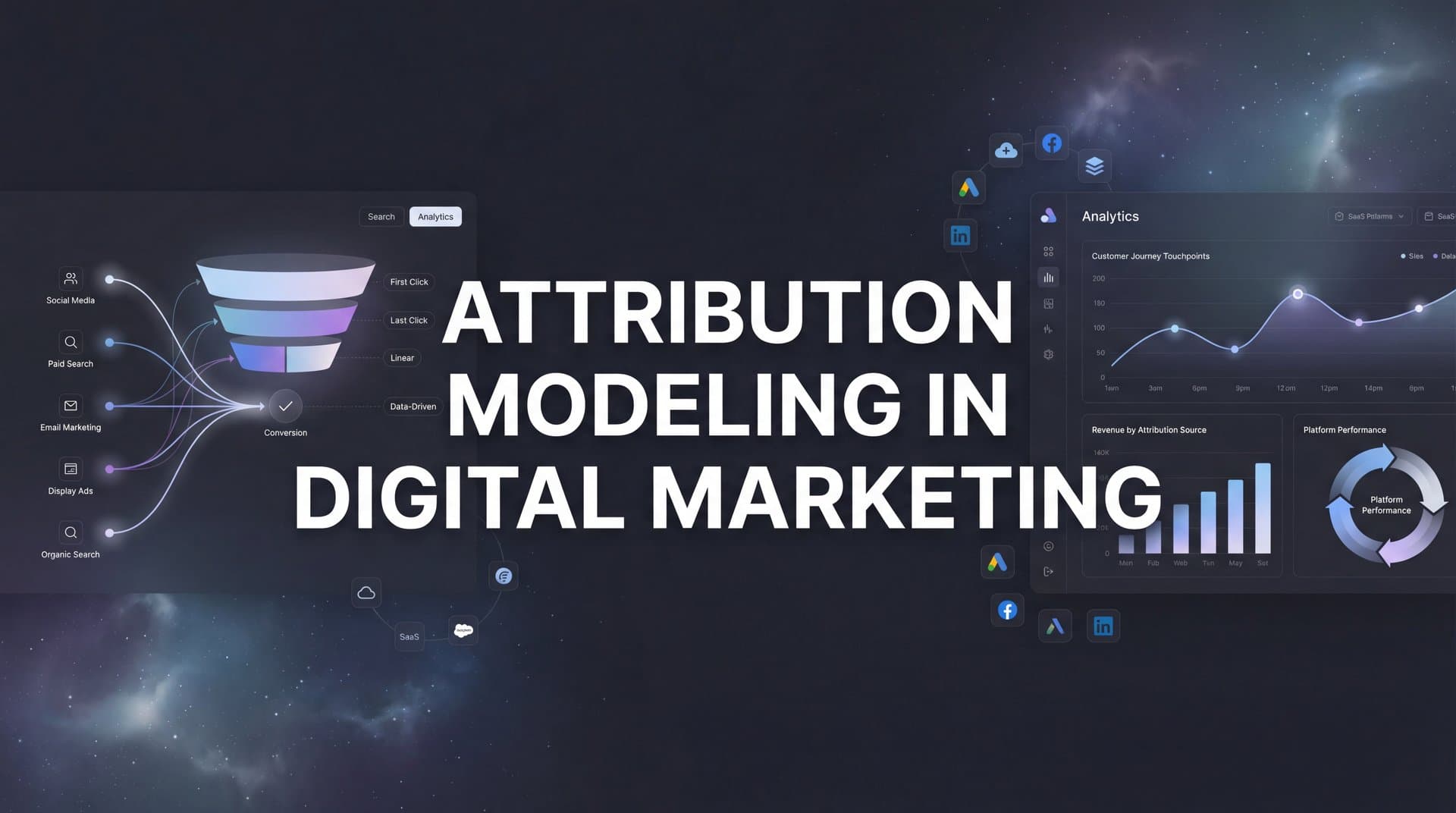
Linear attribution takes the most democratic approach: it distributes credit equally across all touchpoints. If a customer interacted with five different campaigns before converting, each one receives 20% credit. Simple, fair, and easy to understand.
The advantage of linear attribution is that it recognizes the contribution of every touchpoint without making assumptions about which ones matter more. Your awareness campaign gets credit. Your nurture emails get credit. Your retargeting gets credit. Everything counts.
But this equality is also the limitation. Linear attribution assumes that the first casual scroll past your Instagram ad had the same impact as the comparison guide they studied for twenty minutes or the demo video they watched the day before purchasing. In reality, not all touchpoints are created equal—some genuinely have more influence on the final decision than others. For a deeper dive into how linear model marketing attribution works, understanding its strengths and weaknesses is essential.
Time-decay attribution addresses this by weighting recent interactions more heavily than older ones. The model operates on the principle that touchpoints closer to the conversion had more influence on the decision. If someone interacted with your brand a month ago and then again yesterday before converting, the recent interaction receives significantly more credit.
This approach reflects a real psychological truth: recency matters. The ad someone saw this morning is fresh in their mind when they make a purchase decision. The blog post they read six weeks ago, while potentially important for initial awareness, has faded in influence.
Time-decay attribution works particularly well for businesses with moderate sales cycles where you want to recognize early touchpoints but appropriately weight the interactions that happened as the customer moved closer to a decision. It's a middle ground between the extreme equality of linear attribution and the tunnel vision of last-touch.
The challenge with time-decay is choosing the right decay rate. How quickly should credit diminish as you move backward in time? Different businesses and sales cycles require different decay curves, and there's no universal standard.
Position-based attribution, often called U-shaped attribution, takes a different approach by emphasizing the first and last touchpoints while still acknowledging everything in between. A common implementation gives 40% credit to the first interaction, 40% to the last interaction, and distributes the remaining 20% across all middle touchpoints.
The logic here is compelling: the first touchpoint matters because it introduced the customer to your brand and initiated the relationship. The last touchpoint matters because it was the final push that drove the conversion. Everything in between played a supporting role in nurturing and maintaining interest.
Position-based attribution balances awareness and conversion credit in a way that resonates with how many marketers think about their funnel. Your top-of-funnel campaigns get recognition for bringing customers in. Your bottom-funnel campaigns get credit for closing the deal. And your mid-funnel efforts aren't completely ignored.
This model works well for businesses that invest significantly in both awareness and conversion optimization, particularly those with clear top-funnel and bottom-funnel strategies. It helps prevent the systematic undervaluation of awareness campaigns that plagues last-touch attribution while still recognizing that closing touchpoints matter.
The limitation is that position-based attribution still makes assumptions—specifically that first and last touches are always the most important. For some customer journeys, the critical moment might actually be a middle interaction: the case study that addressed their main objection, the comparison content that differentiated you from competitors, or the educational resource that established your expertise.
Each of these multi-touch models reveals different aspects of your marketing performance. Linear shows you which channels are consistently present in converting journeys. Time-decay highlights what's driving near-term conversions. Position-based balances awareness and conversion contributions. The question isn't which model is "correct"—it's which one provides the most useful insights for your specific marketing mix and decision-making needs.
Data-Driven Attribution: Letting Algorithms Do the Math
Data-driven attribution represents the evolution beyond rule-based models. Instead of applying predetermined formulas for credit distribution, algorithmic attribution uses machine learning to analyze your actual conversion patterns and assign credit based on what the data reveals about touchpoint impact.
Here's how it works: the algorithm examines thousands of customer journeys—both those that converted and those that didn't. It identifies patterns in the data, looking at which combinations of touchpoints correlate with higher conversion rates. When it sees that customers who interact with a specific campaign or channel are significantly more likely to convert, that touchpoint receives more credit. When a touchpoint appears frequently but doesn't correlate with increased conversion likelihood, it receives less.
This is fundamentally different from rule-based models. Linear attribution doesn't care whether a touchpoint actually influenced the decision—it assigns equal credit regardless. Time-decay doesn't analyze whether recency actually matters for your specific customers—it assumes it does. Data-driven attribution lets the numbers tell the story.
The power of AI-powered attribution is that it adapts to your specific customer behavior rather than applying generic assumptions. Maybe for your business, the critical touchpoint isn't first or last—it's the third interaction, when customers typically watch your product demo video. A data-driven model would discover this pattern and assign credit accordingly. Rule-based models would miss it entirely. Exploring how machine learning can be used in marketing attribution reveals the full potential of these algorithmic approaches.
But data-driven attribution isn't magic, and it comes with requirements. First, you need sufficient conversion volume for the algorithm to identify meaningful patterns. With only a handful of conversions per month, there isn't enough data for machine learning to distinguish signal from noise. The general threshold is at least several hundred conversions, though more is always better.
Second, you need comprehensive tracking across all touchpoints. If the algorithm can't see a significant portion of the customer journey—because of tracking gaps, untagged campaigns, or platform limitations—it will draw conclusions from incomplete data. The old computer science principle applies: garbage in, garbage out.
Third, you need clean, consistent data. If your campaign naming is inconsistent, your UTM parameters are missing or malformed, or your conversion tracking fires unreliably, the algorithm will struggle to identify accurate patterns. Data-driven attribution amplifies the quality of your data infrastructure—both the good and the bad.
When these requirements are met, data-driven attribution provides insights that rule-based models simply can't match. It can reveal that your podcast sponsorships, while rarely the last touch, consistently appear in high-value customer journeys and deserve more credit than last-touch attribution suggests. It might show that certain ad creatives, when appearing early in the journey, significantly increase conversion likelihood even when other channels get the final click.
The challenge with algorithmic attribution is that it's less transparent than rule-based models. When linear attribution gives a touchpoint 20% credit, you know exactly why: it was one of five touchpoints. When a data-driven model assigns 35% credit, the reasoning is buried in algorithmic analysis that's difficult to explain to stakeholders who want simple answers.
This is where AI-powered platforms like Cometly become valuable. By combining comprehensive tracking across all touchpoints with machine learning analysis, you get attribution that reflects your actual customer behavior while maintaining visibility into the underlying data. The AI identifies patterns and provides optimization recommendations, but you retain the ability to understand and validate what the model is telling you.
Choosing the Right Model for Your Marketing Mix
The question isn't which attribution model is objectively best—it's which model provides the most useful insights for your specific business, sales cycle, and marketing strategy. The right choice depends on several factors that are unique to your situation.
Start by considering your sales cycle length. Quick e-commerce purchases with short consideration periods don't require the same attribution complexity as B2B software with six-month sales cycles. If most customers convert within days of first interaction, a simpler model like last-touch or linear might provide sufficient insight. If customers research for weeks or months across multiple channels before deciding, you need a more sophisticated approach that captures the full journey.
Channel diversity matters significantly. If you're primarily running a single-channel strategy—say, only Google Ads or only Facebook—multi-touch attribution won't reveal much because there aren't multiple touches to attribute across. But if you're running integrated campaigns across paid social, paid search, email, content marketing, and retargeting, understanding how these channels work together becomes critical. This is where cross-channel marketing attribution software becomes invaluable.
Think about your marketing maturity and data infrastructure. Data-driven attribution sounds appealing, but if you're still working on basic conversion tracking or don't have hundreds of conversions to analyze, you're not ready for algorithmic approaches. Start with rule-based multi-touch models, get your tracking solid, and graduate to data-driven attribution as your volume and infrastructure improve.
Consider what questions you're trying to answer. If your primary concern is understanding awareness drivers and top-funnel performance, first-touch or position-based attribution will be most useful. If you're focused on conversion optimization and bottom-funnel efficiency, last-touch or time-decay might provide better insights. If you're trying to balance awareness investment with conversion efficiency, position-based or data-driven attribution makes more sense.
Here's a practical approach: don't choose just one model. Run multiple attribution models simultaneously and compare how credit distribution changes across different approaches. This comparison reveals blind spots in your current thinking and helps you understand which channels are over-credited or under-credited depending on the model. Understanding the differences between attribution modeling vs marketing mix modeling can also help clarify which approach fits your needs.
When you see a channel that performs well across all attribution models, you can be confident it's genuinely driving results. When a channel looks amazing in last-touch but disappears in first-touch or linear attribution, you know it's primarily catching already-convinced customers rather than creating new demand. When a channel shows up strongly in first-touch but weakly in last-touch, it's doing important awareness work that bottom-funnel metrics miss.
This multi-model approach prevents you from over-indexing on any single perspective. You develop a more nuanced understanding of how your marketing actually works—which channels initiate relationships, which ones nurture consideration, and which ones drive final conversions.
The goal isn't to find the one perfect model that reveals absolute truth. Customer journeys are complex, tracking is imperfect, and attribution will always involve some level of estimation. The goal is to develop better visibility into what's working so you can make smarter budget allocation decisions and optimize your marketing mix with confidence.
Putting Attribution Insights Into Action
Attribution modeling is only valuable if it changes how you make decisions. The insights you gain should directly inform your budget allocation, campaign strategy, and optimization approach. Here's how to translate attribution data into better marketing performance.
Start with budget decisions. Use attribution data to identify channels that consistently contribute to conversions across different models. These are your reliable performers that deserve sustained or increased investment. Look for channels that are undervalued in last-touch attribution but show strong contribution in multi-touch models—these are often your awareness and consideration channels that are getting starved of budget because they don't show up in bottom-funnel reports.
The inverse matters too. If a channel looks great in last-touch but barely registers in first-touch or linear attribution, it might be primarily capturing demand created by other channels rather than generating incremental results. This doesn't mean you should cut it entirely—bottom-funnel efficiency matters—but it suggests you shouldn't dramatically increase investment expecting proportional returns.
Attribution insights become particularly powerful when you feed accurate conversion data back to ad platforms. Most advertising algorithms optimize based on the conversion signals they receive. When you're using last-click attribution and only crediting the final touchpoint, you're teaching algorithms that only bottom-funnel conversions matter. This creates a self-reinforcing cycle where platforms optimize for last-click conversions and undervalue the awareness and consideration work that makes those conversions possible.
By implementing server-side tracking and feeding more complete attribution data back to platforms, you enable their algorithms to optimize for actual contribution rather than just final clicks. This is where platforms like Cometly's Conversion Sync become valuable—they send enriched conversion events back to Meta, Google, and other platforms, improving targeting accuracy and optimization performance. Leveraging marketing attribution platforms for revenue tracking ensures you're measuring what truly matters.
Build a testing framework that uses attribution insights to form hypotheses. When your attribution data suggests a channel is underperforming, don't immediately cut budget—test whether the pattern holds. When attribution reveals a channel is contributing more than you thought, test whether increased investment drives proportional returns. Attribution provides direction, but controlled experiments provide validation.
Use attribution to inform creative strategy, not just budget allocation. If your data shows that certain ad creatives consistently appear in high-value customer journeys, even when they're not the final touch, that tells you something important about messaging effectiveness. Double down on those creative approaches and test variations that maintain the same core message.
Pay attention to cross-channel patterns. Attribution modeling can reveal that certain channel combinations work particularly well together. Maybe customers who interact with both your content marketing and paid social are significantly more likely to convert than those who only see one or the other. These insights should inform your integrated campaign strategy. Understanding cross-channel attribution and marketing ROI helps you optimize these synergies.
Remember that attribution is iterative. Your customer behavior evolves, your marketing mix changes, and external factors like platform updates or market conditions shift the landscape. Regularly review your attribution data, test different models, and adjust your approach as patterns change. What worked six months ago might not reflect current reality.
Moving Forward with Confidence
Attribution modeling isn't about finding the perfect model that reveals absolute truth about every marketing dollar you spend. It's about gaining clearer visibility into what drives results so you can make smarter, more confident budget decisions. The complexity of modern customer journeys—spanning multiple devices, platforms, and weeks of consideration—means you'll never have perfect certainty. But you can have dramatically better insight than platform defaults provide.
The best attribution approach combines the right model for your business context with comprehensive tracking across all touchpoints. Start with your sales cycle, channel diversity, and data maturity to choose an appropriate model. Run multiple models simultaneously to identify blind spots and develop nuanced understanding. Use the insights to inform budget allocation, feed better data to ad platforms, and build hypotheses for testing.
As customer journeys continue to grow more complex and privacy changes limit traditional tracking methods, the marketers who master attribution will have a significant competitive advantage. They'll know which channels genuinely drive incremental results, which ones are riding coattails, and where to invest for maximum return. They'll feed accurate signals to ad platform algorithms, improving targeting and optimization. And they'll make budget decisions based on data rather than gut feeling or platform-reported metrics that each claim credit for the same conversions.
The foundation of effective attribution is comprehensive tracking that captures every touchpoint across the customer journey. This is where modern attribution platforms become essential—they provide the tracking infrastructure, model flexibility, and AI-powered insights that turn attribution from theory into competitive advantage.
Ready to elevate your marketing game with precision and confidence? Discover how Cometly's AI-driven recommendations can transform your ad strategy—Get your free demo today and start capturing every touchpoint to maximize your conversions.