iOS 14.5 changed everything for digital marketers. Apple's App Tracking Transparency framework gave users the power to opt out of tracking—and the vast majority did. The result? Traditional pixel tracking became unreliable almost overnight. Marketers watched their attribution data crumble, ad performance metrics become inconsistent, and campaign optimization turn into guesswork.
But here's what many marketers miss: the death of pixel-based tracking isn't the end of measurement—it's the beginning of smarter, more privacy-compliant approaches.
The strategies in this guide represent battle-tested alternatives that leading marketing teams use to maintain accurate attribution despite iOS limitations. Whether you're running Meta ads, Google campaigns, or multi-channel strategies, these alternatives will help you regain visibility into what's actually driving conversions.
Think of this shift like moving from a single security camera to a network of sensors. You're not losing visibility—you're gaining a more complete, resilient view of customer behavior that no single platform change can disrupt.
1. Server-Side Tracking
The Challenge It Solves
Browser-based pixels live and die by user consent and platform restrictions. When iOS users decline tracking permissions, traditional pixels simply stop firing. Your conversion data disappears, your ad platforms lose optimization signals, and your attribution becomes a black box.
Server-side tracking bypasses this entire problem by sending conversion data directly from your server to ad platforms. No browser involvement, no iOS restrictions, no tracking prompts that users can decline.
The Strategy Explained
Server-side tracking works by capturing conversion events on your server—when someone completes a purchase, fills out a form, or takes any valuable action—and then sending that data directly to your ad platforms through their APIs. For Meta, this means using the Conversions API. For Google, it means implementing server-side tagging through Google Tag Manager.
The key difference from traditional pixels is where the data originates. Instead of relying on JavaScript code running in a user's browser (which can be blocked), your server acts as the source of truth. When a conversion happens, your server knows about it regardless of what's happening on the user's device.
This approach also gives you control over what data gets sent and when. You can enrich conversion events with additional customer information from your CRM, send delayed conversions that happen offline, and ensure data quality before it reaches ad platforms.
Implementation Steps
1. Set up Meta's Conversions API by generating an access token in Events Manager and configuring your server to send conversion events to Meta's endpoint whenever a valuable action occurs on your site.
2. Implement Google's server-side tagging by creating a server container in Google Tag Manager, deploying it to your server infrastructure, and configuring your client-side tags to send data through your server instead of directly to Google.
3. Match conversion events to users by capturing and hashing email addresses or phone numbers at conversion points, then including these identifiers when sending server-side events to help platforms connect conversions to ad clicks.
4. Test your implementation by triggering test conversions and verifying they appear in your ad platform dashboards with proper attribution to campaigns and ad sets.
Pro Tips
Run server-side tracking alongside your traditional pixels for the first 30 days. This redundancy ensures you don't lose data during the transition and helps you identify any implementation gaps. Most platforms recommend this dual approach as a best practice.
Focus on sending high-quality match parameters like hashed email addresses and phone numbers. The better your user matching, the more accurate your attribution will be.
2. First-Party Data Strategies
The Challenge It Solves
When you can't track users across the web, you need them to identify themselves directly. The problem is that most marketing funnels leak anonymous visitors at every stage. Someone clicks your ad, browses your site, and leaves without ever telling you who they are. When they convert later through a different channel, you have no way to connect the dots.
First-party data strategies solve this by creating multiple opportunities for users to identify themselves voluntarily, building a direct relationship that doesn't depend on third-party cookies or tracking pixels.
The Strategy Explained
First-party data collection means capturing information directly from your customers with their explicit consent. This includes email addresses, phone numbers, account creation, and any other information they willingly provide. Once you have this data, you own the relationship regardless of platform changes or privacy restrictions.
The strategy works by creating value exchanges throughout your customer journey. You offer something valuable—a content download, exclusive access, personalized recommendations, saved preferences—in exchange for contact information. Each interaction builds your first-party database and gives you more touchpoints to track across devices and sessions.
Think of it like building a membership club instead of relying on public surveillance. Your customers want to be part of the club because you provide value, and once they're members, you can track their entire journey through your owned systems.
Implementation Steps
1. Audit every page of your website to identify opportunities for email capture—not just at checkout, but at key decision points like pricing pages, comparison tools, and high-value content.
If you're evaluating vendors, our AI UGC content generator breakdown can help.
2. Create compelling lead magnets that provide immediate value in exchange for contact information, such as calculators, templates, exclusive guides, or early access to new features.
3. Implement progressive profiling in your forms by asking for minimal information initially (just email), then gradually collecting more data points as the relationship develops and trust builds.
4. Connect your email marketing platform and CRM to your analytics system so you can track the complete journey from anonymous visitor to identified lead to paying customer.
Pro Tips
Don't gate everything behind forms. The goal is to build trust first, then ask for information. Provide substantial value for free, then use strategic gates at high-intent moments when users are already invested in your solution.
Use your first-party data to create custom audiences in ad platforms. Upload email lists to Meta and Google for retargeting and lookalike modeling. This turns your owned data into advertising fuel that improves targeting without relying on pixels.
If you're evaluating vendors, our AI advertising generator breakdown can help.
3. Probabilistic Attribution and Statistical Modeling
The Challenge It Solves
Individual user tracking will never be as reliable as it was before iOS 14.5. You can implement every technical solution available and still face gaps in your attribution data. Some conversions will remain unattributable at the user level no matter what you do.
Statistical modeling accepts this reality and works around it by analyzing aggregate patterns instead of individual journeys. It answers the question: "What is the overall impact of this channel?" rather than "Which specific ad converted this specific user?"
The Strategy Explained
Media mix modeling uses statistical techniques to understand how different marketing channels contribute to overall business outcomes. Instead of tracking individual clicks and conversions, you analyze the relationship between your marketing spend across channels and your total conversion volume over time.
Incrementality testing takes this further by running controlled experiments. You increase or decrease spend in specific channels or regions, then measure how conversions change compared to control groups. This tells you what's actually driving incremental results versus what would have happened anyway.
These approaches work particularly well for understanding channel-level performance and making budget allocation decisions. They don't tell you which specific ad converted which specific customer, but they tell you something more valuable: which channels actually drive incremental revenue when you invest more.
Implementation Steps
1. Start collecting historical data on marketing spend by channel, conversion volume, and key external factors like seasonality, promotions, and competitive activity—you'll need at least several months of data for meaningful analysis.
2. Run simple incrementality tests by pausing spend in one channel or region for a controlled period and measuring how total conversions change compared to similar periods or control regions.
3. Use regression analysis or work with a data analyst to build a basic media mix model that quantifies the relationship between each marketing channel and your conversion outcomes.
4. Update your model regularly as you run more tests and collect more data, refining your understanding of what drives incremental results versus what's simply correlated.
Pro Tips
Don't abandon user-level attribution entirely. Use statistical modeling to validate and complement your other tracking methods. When your multi-touch attribution says Facebook is your top performer but your incrementality test shows minimal lift, you've uncovered a critical insight.
Start with simple tests before building complex models. A basic geo-holdout test—running ads in some cities but not others—can provide clear incrementality insights without requiring advanced statistical expertise.
4. Platform-Native Solutions (SKAN/AEM)
The Challenge It Solves
Fighting against platform restrictions is a losing battle. Apple and other platforms will continue tightening privacy controls, and trying to circumvent these changes puts you at risk of policy violations and data loss. You need solutions that work within the new privacy framework, not against it.
Platform-native solutions like Apple's SKAdNetwork and Meta's Aggregated Event Measurement provide privacy-compliant conversion data designed to work within iOS restrictions. They're limited compared to traditional tracking, but they're reliable and won't disappear with the next iOS update.
The Strategy Explained
SKAdNetwork is Apple's privacy-preserving attribution framework for iOS apps. Instead of tracking individual users, it provides aggregated, delayed conversion data that protects user privacy while still giving advertisers some visibility into campaign performance. The data arrives 24-72 hours after conversion and includes campaign-level information without identifying individual users.
Meta's Aggregated Event Measurement adapts to iOS restrictions by allowing you to configure up to eight conversion events per domain, ranked by priority. When tracking is limited, Meta reports on your highest-priority events first, ensuring you don't lose visibility into your most important conversions.
These solutions require you to think differently about attribution. You won't get the granular, real-time data you're used to, but you'll get reliable aggregate data that helps you understand campaign performance and optimize at the campaign level.
Implementation Steps
1. Configure your Aggregated Event Measurement settings in Meta Events Manager by prioritizing your eight most important conversion events based on business value—put purchases or qualified leads at the top.
2. Verify your domain in Meta Business Manager to ensure your AEM configuration takes effect and your priority events are properly tracked even when users opt out of tracking.
3. Adjust your optimization strategy to focus on campaign-level performance rather than ad-level granularity, since aggregated data provides less detailed breakdowns than traditional pixel tracking.
4. Set realistic expectations for attribution windows—iOS users will have shorter attribution windows than Android users, so compare performance within platform segments rather than across all users.
Pro Tips
Review your AEM event priorities quarterly as your business evolves. What matters most in Q1 might not be your priority in Q4. Keep your event configuration aligned with current business goals.
Use value optimization when possible instead of conversion optimization. If you're optimizing for purchases, optimize for purchase value rather than just purchase count. This helps platforms prioritize high-value conversions even with limited data.
5. UTM Parameter Strategies
The Challenge It Solves
When pixels fail to fire and platform attribution becomes unreliable, you need a backup system that captures campaign source data regardless of tracking restrictions. The problem is that most marketers treat UTM parameters as an afterthought—inconsistent naming, missing parameters, and no system for connecting UTM data to actual conversions.
A comprehensive UTM strategy solves this by creating a consistent taxonomy that captures campaign details in the URL itself, then connects that data to conversions through your CRM or analytics platform.
The Strategy Explained
UTM parameters are tags you add to your URLs that identify the source, medium, campaign, and other details about how someone arrived at your site. Unlike pixels, UTM parameters can't be blocked because they're part of the URL itself. When someone clicks a link with UTM parameters, those parameters travel with them and can be captured by your analytics platform.
The strategy works by implementing a strict UTM taxonomy across all marketing channels, capturing those parameters when users convert, and storing them in your CRM alongside customer records. This creates a self-reported attribution trail that doesn't depend on cross-site tracking or cookies.
Think of UTM parameters like writing the return address on every piece of mail you send. Even if the recipient throws away the envelope, you've captured where it came from in your own records.
Implementation Steps
1. Create a UTM naming convention document that defines exactly how your team will structure source, medium, campaign, content, and term parameters—then enforce it religiously across all campaigns and team members.
2. Build a UTM parameter generator tool or spreadsheet that your team uses for every campaign launch, ensuring consistency and preventing typos that break your attribution data.
For a deeper dive into this space, see our ecommerce ad generator tool guide.
3. Implement JavaScript on your conversion pages to capture UTM parameters from the URL and store them in hidden form fields, cookies, or local storage so they persist throughout the user session.
4. Pass captured UTM data to your CRM when conversions occur, creating a permanent record of the campaign source for each lead or customer that you can analyze independently of platform attribution.
Pro Tips
Use UTM parameters on all channels, not just paid ads. Apply them to email campaigns, social posts, partner links, and even QR codes. The more comprehensive your UTM coverage, the more complete your attribution picture becomes.
Store first-touch and last-touch UTM data separately in your CRM. Capture the UTM parameters from a user's first visit and update them with last-touch parameters at conversion. This gives you both attribution perspectives without requiring complex multi-touch tracking.
6. Offline Conversion Tracking
The Challenge It Solves
Ad platforms optimize based on the conversion data they receive. When pixel tracking breaks down, platforms lose visibility into which campaigns drive real business outcomes. They see ad clicks but don't see which clicks turned into qualified leads, closed deals, or high-value customers. This creates a disconnect between what platforms optimize for and what actually matters to your business.
Offline conversion tracking closes this loop by feeding your CRM conversion data back to ad platforms, teaching their algorithms what success actually looks like.
The Strategy Explained
Offline conversion tracking means uploading conversion data from your CRM or sales system back to your ad platforms after the conversion occurs. When a lead becomes a qualified opportunity or a trial user becomes a paying customer, you send that information back to Meta, Google, or other platforms along with identifiers that match the conversion to the original ad click.
This works by capturing click IDs from ad platforms when users first arrive at your site, storing those IDs in your CRM alongside customer records, then uploading conversion events back to platforms with those click IDs when valuable actions occur. Platforms use this data to understand which campaigns drive real business value and optimize accordingly.
The power of this approach is that you're training ad algorithms on your actual business outcomes, not just website actions. If one campaign drives lots of form fills but low-quality leads, while another drives fewer fills but high-value customers, offline conversion tracking helps platforms learn that distinction.
Implementation Steps
1. Capture ad platform click IDs (Facebook's fbclid, Google's gclid) when users arrive at your site and store them in your CRM alongside lead records—this creates the connection between ad clicks and CRM conversions.
2. Define your high-value conversion events in your CRM, such as qualified leads, opportunities created, demos completed, or purchases made—these are the outcomes you'll upload back to ad platforms.
3. Set up automated workflows or integrations that upload these conversion events back to ad platforms when they occur, including the stored click IDs and conversion values.
4. Configure your ad campaigns to optimize for these offline conversion events rather than just website conversions, allowing platforms to prioritize campaigns that drive real business outcomes.
Pro Tips
Include conversion values when uploading offline conversions. If you know a customer's lifetime value or deal size, send that information to help platforms optimize for high-value conversions rather than just conversion volume.
Upload conversions regularly but not obsessively. Daily uploads work well for most businesses. More frequent uploads create data processing overhead without meaningful improvement in optimization.
7. Multi-Touch Attribution Platforms
The Challenge It Solves
Every solution we've covered so far addresses one piece of the attribution puzzle. Server-side tracking captures conversions. First-party data identifies users. UTM parameters tag traffic sources. But you still face a fundamental challenge: stitching all these data sources together into a coherent view of the customer journey.
Multi-touch attribution platforms solve this by aggregating data from all your marketing touchpoints, connecting them across devices and sessions, and providing unified reporting that shows the complete path to conversion.
The Strategy Explained
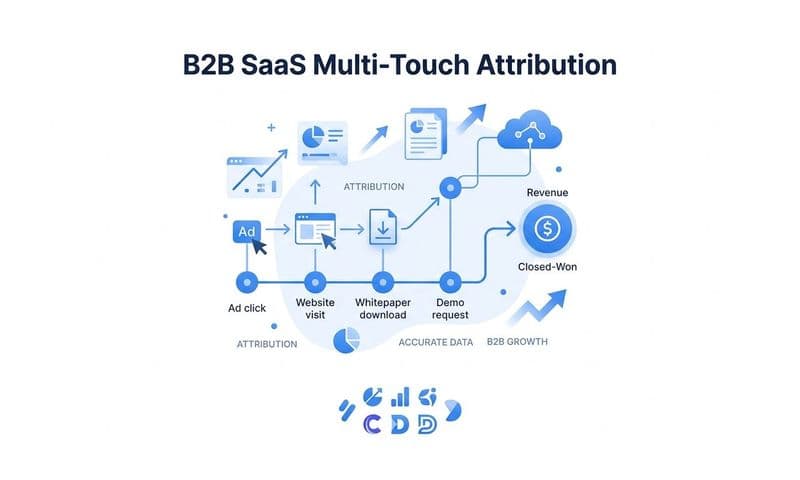
Multi-touch attribution platforms act as a central hub for all your marketing data. They integrate with your ad platforms, analytics tools, CRM, and website to capture every touchpoint a customer has with your brand. Then they use sophisticated identity resolution to connect those touchpoints across devices, browsers, and sessions—even when traditional tracking methods fail.
These platforms combine multiple tracking methods: server-side tracking for reliable conversion capture, first-party identity matching to connect known users across sessions, UTM parameter tracking for campaign source data, and CRM integration to tie everything back to actual customer value.
The result is attribution reporting that shows you which combinations of channels and touchpoints drive conversions. You can compare different attribution models, understand the role each channel plays in the customer journey, and make informed budget decisions based on comprehensive data rather than siloed platform reports.
Implementation Steps
1. Evaluate attribution platforms based on your specific needs—look for solutions that integrate with your existing ad platforms, support server-side tracking, and provide the attribution models most relevant to your business.
2. Implement the platform's tracking infrastructure, which typically includes a JavaScript snippet for your website, server-side API integration for conversion tracking, and connections to your ad platforms and CRM.
3. Configure your attribution settings by selecting attribution models, defining conversion events, setting attribution windows, and establishing rules for how the platform should handle data conflicts.
4. Run the platform in parallel with your existing attribution for at least 30 days to validate data accuracy and build confidence in the new reporting before making major budget decisions based on the new data.
Pro Tips
Don't expect perfect attribution. Even the best multi-touch attribution platforms can't capture every touchpoint. The goal is directionally accurate insights that help you make better decisions, not perfect tracking of every single interaction.
Use attribution data to inform strategy, not to create rigid rules. If your attribution shows Facebook drives 40% of conversions, that doesn't mean Facebook deserves exactly 40% of your budget. Consider factors like incrementality, market saturation, and growth opportunities alongside attribution data.
Putting It All Together
The shift away from pixel tracking isn't a temporary inconvenience—it's the new reality of digital marketing. The marketers who thrive will be those who embrace these alternatives rather than fighting against privacy changes.
Start with server-side tracking as your foundation. This single change will immediately improve your data reliability and give you control over what conversion data reaches your ad platforms. Implement Meta's Conversions API and Google's server-side tagging within the next 30 days.
Layer in first-party data strategies next. Audit your website for email capture opportunities and create compelling value exchanges that encourage users to identify themselves. This builds a direct relationship that no platform change can disrupt.
Then implement platform-native solutions like Aggregated Event Measurement and establish a comprehensive UTM parameter system. These provide reliable backup attribution when other methods fail.
For advanced attribution needs, invest in offline conversion tracking to train ad algorithms on real business outcomes, and consider a multi-touch attribution platform to stitch together the complete customer journey.
The goal isn't to replicate the old pixel-based world—it's to build something better: an attribution system that's more accurate, more privacy-compliant, and more resilient to future platform changes.
Take action this week: audit your current tracking setup, identify your biggest data gaps, and prioritize implementing the strategy that addresses your most critical blind spot. Whether that's server-side tracking, first-party data collection, or a comprehensive attribution platform, the important thing is to start now rather than waiting for the perfect solution.
Ready to elevate your marketing game with precision and confidence? Discover how Cometly's AI-driven recommendations can transform your ad strategy—Get your free demo today and start capturing every touchpoint to maximize your conversions.